
- 분류 전체보기 (4661)

| 일 | 월 | 화 | 수 | 목 | 금 | 토 |
|---|---|---|---|---|---|---|
| 1 | 2 | 3 | 4 | 5 | 6 | 7 |
| 8 | 9 | 10 | 11 | 12 | 13 | 14 |
| 15 | 16 | 17 | 18 | 19 | 20 | 21 |
| 22 | 23 | 24 | 25 | 26 | 27 | 28 |
- Right?
- please?
- hold on
- What Happened?
- Please
- Oh No
- Actually
- come up with
- make it
- oh
- set up
- By The Way
- entrance fee
- Yes
- too.
- well
- Sorry
- work out
- OKay
- pick up
- Sure
- Hey
- I'm glad to hear that.
- no
- I'm sorry
- Show Up
- I'm not sure
- please.
- Don't worry
- Yeah
- Today
- Total
인과함께
Day123 - responsibility, take responsibility, shirk responsibility, personal responsibility, social responsibility, corporate social responsibility (CSR), sense of responsibility, assume responsibility, legal responsibility, transfer responsibility, ultim 본문
Day123 - responsibility, take responsibility, shirk responsibility, personal responsibility, social responsibility, corporate social responsibility (CSR), sense of responsibility, assume responsibility, legal responsibility, transfer responsibility, ultim
미인생 2025. 11. 19. 12:34
AI Audio Overview
responsibility [rɪˌspɑːnsəˈbɪləti] 맡은 일을 끝까지 수행하려는 책임감을 뜻하는 단어.
(명사) 책임, 의무, 책무
'responsibility'는 기본적으로 "책임", "책무"라는 뜻으로 쓰이며, 특정 역할, 의무, 또는 행동에 대해 보고하거나 응답해야 하는 상태나 의무를 의미합니다. 윤리, 사회, 경영, 법률, 정치 등 광범위한 분야에서 가장 핵심적인 개념입니다.
1. take responsibility (책임을 지다/책임을 떠맡다)
- 해석: 특정 상황, 행동, 또는 결과에 대해 자신이 비난이나 의무를 받아들이고 감수하는 행위.
- 예문: A true leader must be willing to take responsibility when a project fails. (진정한 리더는 프로젝트가 실패했을 때 책임을 지려는 의지가 있어야 한다.)
- 예문: The company publicly apologized and took full responsibility for the data breach. (그 회사는 데이터 유출에 대해 공개적으로 사과하고 전적인 책임을 졌다.)
2. shirk responsibility (책임을 회피하다/지기를 거부하다)
- 해석: 자신에게 부여된 의무나 책임을 고의적으로 피하거나 게을리하는 행위. (윤리적 비판의 대상)
- 예문: The manager was criticized for shirking responsibility and blaming the junior staff for the error. (그 관리자는 책임을 회피하고 오류를 신입 직원에게 전가했다는 비판을 받았다.)
3. personal responsibility (개인적 책임)
- 해석: 개인의 선택, 행동, 또는 삶에 대해 스스로 지는 책임. (사회적 책임과 대비)
- 예문: The emphasis in modern education is often on personal responsibility for one's own learning outcomes. (현대 교육의 강조점은 종종 자신의 학습 결과에 대한 개인적 책임에 있다.)
4. social responsibility (사회적 책임)
- 해석: 개인이나 기업이 자신의 행동이 사회와 환경에 미치는 긍정적 또는 부정적 영향을 고려하고 이에 응답할 의무. (윤리, 사회 지문에서 가장 중요)
- 예문: Voting in elections is considered a fundamental social responsibility in a democracy. (선거에 투표하는 것은 민주주의에서 근본적인 사회적 책임으로 간주된다.)
5. corporate social responsibility (CSR) (기업의 사회적 책임)
- 해석: 기업이 경제적 이윤 추구 외에 환경 보호, 인권, 지역 사회 공헌 등에 기여할 윤리적 의무. (경영, 윤리 지문에서 중요)
- 예문: Engaging in meaningful Corporate Social Responsibility (CSR) activities can enhance a company's brand image. (의미 있는 기업의 사회적 책임(CSR) 활동에 참여하는 것은 기업의 브랜드 이미지를 향상시킬 수 있다.)
6. sense of responsibility (책임감)
- 해석: 자신에게 맡겨진 일이나 의무를 성실하게 수행해야 한다는 내적인 의식이나 태도. (심리, 동기 부여 지문에서 중요)
- 예문: A strong sense of responsibility drives the success of effective team leaders. (강한 책임감은 유능한 팀 리더의 성공을 이끌어낸다.)
7. assume responsibility (책임을 맡다/인수하다)
- 해석: 특정 역할이나 임무에 대한 책임을 공식적으로 수락하거나 넘겨받는 행위.
- 예문: The new department head had to assume responsibility for the projects initiated by her predecessor. (새 부서장은 전임자가 시작한 프로젝트에 대한 책임을 맡아야 했다.)
8. legal responsibility (법적 책임)
- 해석: 법률에 근거하여 특정 행동이나 결과에 대해 처벌이나 배상 의무를 지는 상태. (윤리적 책임과 대비)
- 예문: The driver faced legal responsibility for the accident caused by his negligence. (그 운전자는 자신의 태만으로 인한 사고에 대해 법적 책임을 졌다.)
9. transfer responsibility (책임을 전가하다/이관하다)
- 해석: 자신에게 부여된 책임을 다른 사람이나 부서로 넘기거나 떠넘기는 행위.
- 예문: The final report clearly outlined the need to transfer responsibility for data security to the IT department. (최종 보고서는 데이터 보안에 대한 책임을 IT 부서로 이관할 필요성을 명확히 설명했다.)
10. ultimate responsibility (궁극적인 책임/최종 책임)
- 해석: 조직이나 프로젝트에서 더 이상 전가할 수 없는, 가장 마지막에 귀결되는 최고 수준의 책임. (CEO, 최종 의사 결정권자)
- 예문: Although many people were involved, the ultimate responsibility for the failure rested with the board. (많은 사람들이 관련되었지만, 실패에 대한 궁극적인 책임은 이사회에 있었다.)

대한민국 입시 주요 POINT
'responsibility'는 윤리와 법률의 관계, 조직의 리더십, 개인의 자율성, 그리고 사회 시스템의 안정성을 다루는 사회, 윤리, 경영, 법률 지문에서 가장 핵심적인 개념입니다.
1. 책임의 윤리적 확장 (Personal/Social/Corporate Responsibility)
- personal responsibility와 social responsibility의 대비는 개인의 행동이 사회 전체에 미치는 영향을 논합니다. CSR은 기업이 이윤 추구와 공익 기여라는 이중의 책임을 져야 하는 현대 자본주의의 윤리적 요구를 반영합니다.
2. 리더십과 권위 (Take Responsibility / Ultimate Responsibility)
- take responsibility와 ultimate responsibility는 리더십의 자질을 평가하는 핵심 기준입니다. 진정한 리더는 실패를 피하기보다는 가장 높은 수준의 책임을 자발적으로 수용하는 도덕적 의무를 보여야 함을 강조합니다.
3. 책임의 종류와 법적 경계 (Legal Responsibility / Shirk Responsibility)
- legal responsibility는 윤리적 책임이 법적 의무로 전환되는 지점을 보여줍니다. shirk responsibility는 조직의 실패나 사회적 문제를 야기하는 비윤리적인 행위로 비판되며, 책임 회피를 방지하는 투명성과 규정의 필요성을 강조합니다.

responsibility [rɪˌspɑːnsəˈbɪləti] 맡은 일에 대해 끝까지 해야 하는 태도
핵심 뜻
맡은 일에 대해 의무적으로 지켜야 할 책임; 또는 어떤 행동이나 결정에 대해 비난이나 칭찬을 받을 만한 상태.

단어별 뉘앙스, 의미 연결 흐름 (표)
단어 구성 요소 의미 연결 흐름 뉘앙스 요약
| re- (접두사) | '다시', '되돌려' | 외부 요구에 대해 되돌려 행동함. | 대응 (Answer Back) |
| sponsus (라틴어: spondere의 과거분사형) | '약속하다', '보증하다' | 행동에 대한 결과를 보증할 의무. | 보증/의무 (Guarantee/Duty) |
| -ability (접미사) | '능력', '가능성' | 책임질 수 있는 능력이나 상태. | 능력/상태 (Capability/State) |
| 종합 뉘앙스 | 외부의 요구에 적절히 대응하고, 자신의 행동에 대해 결과를 감당할 의무와 능력. | '결과를 감당할 의무' |
단어 어원적 의미 핵심 뉘앙스 현대적 의미 연결 흐름
| 라틴어 respondere (응답하다, 책임지다) | "행동에 대해 대답할 의무" | 직무상의 책임/의무 → 도덕적 책임 → 원인 제공자 (책임 소재) |

품사별 의미와 쉬운 예문 (표)
품사 의미 상세 설명 쉬운 예문
| 명사 (N.) | 책임, 의무 | 직무상 또는 도덕적으로 수행해야 할 의무. | That project is his sole responsibility. (그 프로젝트는 그의 단독 책임이다.) |
| 명사 (N.) | 책임감 | 자신의 의무를 성실히 이행하려는 태도. | A sense of responsibility is important in a leader. (지도자에게는 책임감이 중요하다.) |
| 명사 (N.) | 책임 소재 | 잘못이나 성공의 원인이 귀착되는 상태. | We need to determine the responsibility for the error. (우리는 그 오류에 대한 책임 소재를 규명해야 한다.) |

활용 예문 (리스트)
- Parenting is a lifelong responsibility that requires great patience. (육아는 큰 인내심을 요하는 평생의 책임이다.)
- The company accepted full responsibility for the security breach. (그 회사는 보안 침해에 대한 전적인 책임을 인정했다.)
- Delegating authority means transferring responsibility to others. (권한을 위임하는 것은 책임을 타인에게 이전하는 것을 의미한다.)
- It is the responsibility of the government to protect its citizens. (시민을 보호하는 것은 정부의 책임/의무이다.)
- He showed great responsibility by completing the difficult task on time. (그는 어려운 과제를 제시간에 완수함으로써 큰 책임감을 보여주었다.)

전체 뉘앙스 설명
responsibility는 '응답하다(respond)'라는 동사에서 파생된 것처럼, 자신이 행한 일이나 맡은 의무에 대해 정당하게 설명하고 그 결과를 받아들여야 할 의무와 능력을 핵심으로 합니다. 이는 단순히 해야 할 '일(duty)'을 넘어, 그 일의 성패에 대한 도덕적, 법적 구속력을 의미합니다. 조직이나 사회에서 신뢰와 의무의 기반이 되는 가장 중요한 개념입니다.
마지막 핵심 정리
responsibility는 '맡은 일에 대한 의무와 결과에 대한 책임' 또는 '책임질 수 있는 능력'을 의미합니다.

파생어 (발음 포함) (리스트)
- responsible [rɪˈspɑːnsəbl] (형용사): 책임이 있는, 책임감 있는
- responsibly [rɪˈspɑːnsəbli] (부사): 책임감 있게
유의어 비교 (표)
단어 품사 뉘앙스 차이 및 사용 맥락
| Responsibility | 명사 | 결과를 감당하고 설명할 의무와 능력. (결과 수용 강조) |
| Duty | 명사 | 직위, 직업, 도덕 등에 의해 요구되는 의무나 본분. (규정된 의무 강조) |
| Obligation | 명사 | 법률, 계약, 약속 등에 의해 강제되는 의무나 책무. (법적/계약적 구속 강조) |
| Accountability | 명사 | 자신의 행동에 대해 설명하고 해명해야 할 의무. (투명한 해명 강조) |

유의어 예문 (해석 포함) (리스트)
- Duty: It is every citizen's duty to vote in elections. (선거에서 투표하는 것은 모든 시민의 의무이다.)
- Obligation: We have a contractual obligation to deliver the goods on time. (우리는 상품을 제때 배송해야 할 계약상 의무가 있다.)
- Accountability: The new law increases the accountability of public officials. (새 법은 공무원의 책임성/해명 의무를 증가시킨다.)
결론 정리
responsibility는 '응답할 수 있는 능력'이라는 어원을 통해, 자신의 행동과 결정에 대한 궁극적인 결과를 기꺼이 받아들이고 책임을 지겠다는 태도를 나타내는 핵심적인 개념입니다.

responsibility [rɪˌspɑːnsəˈbɪləti]
(명사) 책임, 의무, 책무
'특정'(specific) '임무'(duty), '행위'(action), 또는 '결정'(decision)에 대해 '결과'(consequence)를 '설명'(explain)하거나 '감수'(bear)해야 할 '의무'(obligation)나 '의무감'(sense of duty)을 의미합니다. 단순히 '잘못'(fault)에 대한 '비난'(blame)을 '받는'(receive) 것을 넘어, '사전'(advance)에 '주의'(attention)를 '기울이고', '문제'(problem) '해결'(solve)을 '보장'(guarantee)해야 하는 '도덕적'(moral) 및 '법적'(legal) '책무'(accountability)에 초점이 맞춰집니다.
- The manager took full responsibility for the project failure. (관리자는 프로젝트 실패에 대한 완전한 책임을 졌다.)
- The judge said every citizen has a responsibility to respect the law. (판사는 모든 시민은 법을 존중할 책임이 있다고 말했다.)
- The engineer assumed responsibility for the system design and testing. (엔지니어는 시스템 설계 및 시험에 대한 책임을 맡았다.)
- The professor emphasized the importance of personal responsibility in academic life. (교수님은 학업 생활에서 개인적인 책임의 중요성을 강조했다.)

take responsibility [teɪk rɪˌspɑːnsəˈbɪləti]
(숙어) 책임을 지다, 책임을 떠맡다
'발생'(happen)한 '문제'(problem), '잘못'(fault), 또는 '결과'(consequence)에 대해 '변명'(excuse)하거나 '회피'(avoid)하지 않고, '자신'(oneself)의 '잘못'(fault)이나 '역할'(role)을 '인정'(acceptance)하고 '그' '책무'(responsibility)를 '수용'(acceptance)하는 '능동적'(active)인 '행위'(act)를 의미합니다. '리더십'(leadership)과 '성숙함'(maturity)을 강조합니다.
- The manager showed courage by taking responsibility for the team's poor performance. (관리자는 팀의 저조한 성과에 대해 책임을 짐으로써 용기를 보여주었다.)
- I was disappointed when my partner refused to take responsibility for the error. (나는 내 파트너가 오류에 대해 책임을 지는 것을 거부했을 때 실망했다.)
- The judge said the defendant must take responsibility for his actions to receive leniency. (판사는 피고가 관용을 받기 위해 자신의 행동에 책임을 져야 한다고 말했다.)
- The engineer decided to take responsibility for the design flaw and remedy it. (엔지니어는 설계 결함에 대해 책임을 지고 그것을 해결하기로 결정했다.)

assume responsibility [əˈsuːm rɪˌspɑːnsəˈbɪləti]
(숙어) 책임을 맡다, 책무를 지다 (인계/부담의 의미)
'새로운'(new) '직위'(position), '임무'(duty), 또는 '과제'(task)와 관련된 '책임'(responsibility)을 '공식적'(official)으로 '인계받아'(take over), '그' '부담'(burden)을 '지지'(support)하기 '시작'(start)하는 행위를 의미합니다. '능동적인'(proactive) '역할'(role) '수용'과 '권한'(authority) '행사'(exercise)를 강조합니다.
- The new manager will assume responsibility for the entire branch office next month. (새로운 관리자는 다음 달 전체 지사에 대한 책임을 맡을 것이다.)
- The engineer was eager to assume responsibility for the critical phase of the project. (엔지니어는 프로젝트의 결정적인 단계에 대한 책임을 맡는 것을 열망했다.)
- The judge said the parent organization must assume responsibility for the subsidiary's debt. (판사는 모회사는 자회사의 부채에 대한 책임을 맡아야 한다고 말했다.)
- I believe that a leader must be willing to assume responsibility for failure. (나는 리더는 실패에 대한 책임을 맡을 의지가 있어야 한다고 믿는다.)

shirk responsibility [ʃɜːrk rɪˌspɑːnsəˈbɪləti]
(숙어) 책임을 회피하다, 의무를 게을리하다
'자신'(oneself)에게 '부여'(assign)되거나 '필수적'(essential)인 '책임'(responsibility), '의무'(duty), 또는 '임무'(task)를 '수행'(perform)하는 것을 '의도적'(intentional)으로 '피하거나'(avoid), '게을리'(neglect)하는 '부정적'(negative) '행위'(behavior)를 의미합니다. '비난'(blame)과 '징계'(discipline)를 '야기'(cause)하는 '무책임'(irresponsibility)을 강조합니다.
- The manager said shirking responsibility is a sign of a poor working attitude. (관리자는 책임을 회피하는 것은 형편없는 업무 태도의 징후라고 말했다.)
- The judge ruled that the defendant's actions were an attempt to shirk responsibility. (판사는 피고의 행동은 책임을 회피하려는 시도였다고 판결했다.)
- The engineer was warned not to shirk responsibility by blaming the junior staff. (엔지니어는 하급 직원을 비난함으로써 책임을 회피하지 말라고 경고받았다.)
- I believe that a leader who shirks responsibility will never win respect. (나는 책임을 회피하는 리더는 결코 존경을 얻지 못할 것이라고 믿는다.)
responsibility, take responsibility, assume responsibility, shirk responsibility
(명사) 책임, 의무 , (숙어) 책임을 지다, 책임을 맡다, 책임을 회피하다
'responsibility'는 '어떤 일에 대해' '의무를 가지거나' '그 결과에 대해 답해야 하는' '책임이나 의무'를 의미하는 가장 기본적인 단어입니다. 'take responsibility'와 'assume responsibility'는 '자발적으로나 공식적으로' '책임이나 의무를 맡는' 능동적인 행위를 나타냅니다. 'shirk responsibility'는 '마땅히 져야 할' '책임을 회피하거나' '게을리하는' 부정적인 행위를 의미합니다.
- You must take responsibility for your mistakes. (실수에 대해 책임을 져야 한다.)
- The new manager will officially assume responsibility for the department next week. (새 매니저는 다음 주에 공식적으로 부서 책임을 맡을 것이다.)
- He was criticized for trying to shirk responsibility. (그는 책임을 회피하려고 노력한 것에 대해 비난받았다.)
- Leadership requires the courage to assume responsibility for failure. (리더십은 실패에 대한 책임을 맡을 용기를 필요로 한다.)
- The politician was forced to take responsibility and resign. (그 정치인은 책임을 지고 사임하도록 강요받았다.)
- We must ensure that no one shirks responsibility for the environmental damage. (우리는 아무도 환경 피해에 대한 책임을 회피하지 않도록 해야 한다.)
- The project manager was ready to take responsibility for the delay. (프로젝트 관리자는 지연에 대해 책임을 질 준비가 되어 있었다.)
- She easily assumed responsibility for the whole event planning. (그녀는 전체 행사 계획에 대한 책임을 쉽게 맡았다.)
핵심 뜻
책임, 의무. 어떤 일에 대한 의무를 받아들이거나 회피하는 행위.
| responsibility | 책임, 의무 | 명사로, '의무' '의' '기본'. | '어떤' '행위' '의' '결과' '에' '대해' '답변' '하거나' '돌봐야' '할' '의무' '임을' '나타내는' '기본' '개념'. |
| take/assume | 지다/맡다 | 동사로, '수용'. | '책임' '을' '자발적' '으로' '받아들여' '자신' '의' '것' '으로' '삼는' '행위' '를' '나타냄'. |
| shirk | 회피하다 | 동사로, '거부'. | '마땅히' '해야' '할' '책임' '을' '의도적' '으로' '피하려' '는' '부정적' '인' '행위' '를' '강조함'. |
비슷한 어휘 깔끔하게 표로 정리하고 밑에 예문,해석 하나씩 나열하기
| accountability | 책임, 책임 소재 |
| burden | 부담, 짐 |
| evade | 회피하다 (shirk와 유사) |
accountability
예문: The committee lacks accountability for its decisions.
해석: 위원회는 결정에 대한 책임 소재가 부족하다.
burden
예문: The whole burden of proof rests with the prosecution.
해석: 모든 입증 부담은 검찰에게 있다.
evade
예문: He tried to evade paying taxes.
해석: 그는 세금 납부를 회피하려고 했다.

personal responsibility [ˈpɜːrsənl rɪˌspɑːnsəˈbɪləti]
(명사) 개인적인 책임, 자기 책임
'다른' 사람(person)이나 '외부'(external) '요인'(factor)의 '영향'(impact) '없이'(without), '오직'(solely) '개인'(individual)이 '자신의'(own) '행위'(action), '선택'(choice), 그리고 '삶'(life)의 '결과'(consequence)에 '대해' '지는'(assume) '책무'(responsibility)를 의미합니다. '자유'(freedom)와 '자기'(self) '결정'(determination)의 '원칙'(principle)을 강조합니다.
- The manager said employees must take personal responsibility for their professional development. (관리자는 직원들은 자신의 전문적인 발전에 대해 개인적인 책임을 져야 한다고 말했다.)
- The judge said the law holds every adult accountable for their personal responsibility. (판사는 법은 모든 성인에게 자신의 개인적인 책임에 대해 책임을 묻는다고 말했다.)
- The professor emphasized that personal responsibility is the core of a strong moral philosophy. (교수님은 개인적인 책임이 강력한 도덕 철학의 핵심이라고 강조했다.)
- I gained a sense of purpose by accepting my personal responsibility. (나는 나의 개인적인 책임을 수용함으로써 목적의식을 얻었다.)

social responsibility [ˈsoʊʃəl rɪˌspɑːnsəˈbɪləti]
(명사) 사회적 책임
'개인'(individual), '회사'(company), 또는 '조직'(organization)이 '자신들의'(their) '결정'(decision)이나 '행위'(action)가 '환경'(environment), '공공'(public) '보건'(health), 또는 '사회'(society) '전체'(whole)에 '미치는'(impact) '영향'(influence)을 '고려'(consideration)하고, '공동체'(community)의 '안녕'(well-being)을 위해 '노력'(effort)해야 할 '도덕적'(moral) '의무'(obligation)를 의미합니다. '윤리적'(ethical)인 '행위'(act)를 강조합니다.
- The manager said social responsibility is now an integral part of the company's mission. (관리자는 사회적 책임이 이제 회사 사명의 필수적인 부분이라고 말했다.)
- The professor's lecture covered the ethical implications of social responsibility in the media. (교수님의 강의는 언론에서의 사회적 책임의 윤리적 영향을 다루었다.)
- The judge ruled that the company violated its social responsibility by causing pollution. (판사는 회사가 오염을 야기함으로써 자신의 사회적 책임을 위반했다고 판결했다.)
- I believe that every person has a basic social responsibility to help the at-risk population. (나는 모든 사람이 위험에 처한 집단을 도울 기본적인 사회적 책임이 있다고 믿는다.)

corporate social responsibility (CSR) [ˈkɔːrpərət ˈsoʊʃəl rɪˌspɑːnsəˈbɪləti]
(명사) 기업의 사회적 책임 (CSR)
'기업'(corporate)이 '법률'(law)이 '요구'(require)하는 '최소'(minimum) '수준'(level)을 '넘어서'(beyond), '지역'(local) '공동체'(community), '환경'(environment), '인권'(human rights), 그리고 '노동'(labor) '관행'(practice)에 '긍정적'(positive) '영향'(impact)을 '미치기'(influence) 위해 '자발적'(voluntary)으로 '취하는'(take) '활동'(activity)을 의미합니다. '장기적'(long-term) '평판'(reputation)과 '윤리적'(ethical) '경영'(management)을 강조합니다.
- The manager presented the company's corporate social responsibility report to the public. (관리자는 회사의 기업의 사회적 책임 보고서를 대중에게 발표했다.)
- The professor's study analyzed the correlation between corporate social responsibility and profit margin. (교수님의 연구는 기업의 사회적 책임과 이윤폭 사이의 상관관계를 분석했다.)
- The judge said the company's effort in child protection was a good example of corporate social responsibility. (판사는 아동 보호에 대한 회사의 노력은 기업의 사회적 책임의 좋은 예였다고 말했다.)
- The new CEO promised to increase spending on corporate social responsibility programs. (새 CEO는 기업의 사회적 책임 프로그램에 대한 지출을 늘리겠다고 약속했다.)
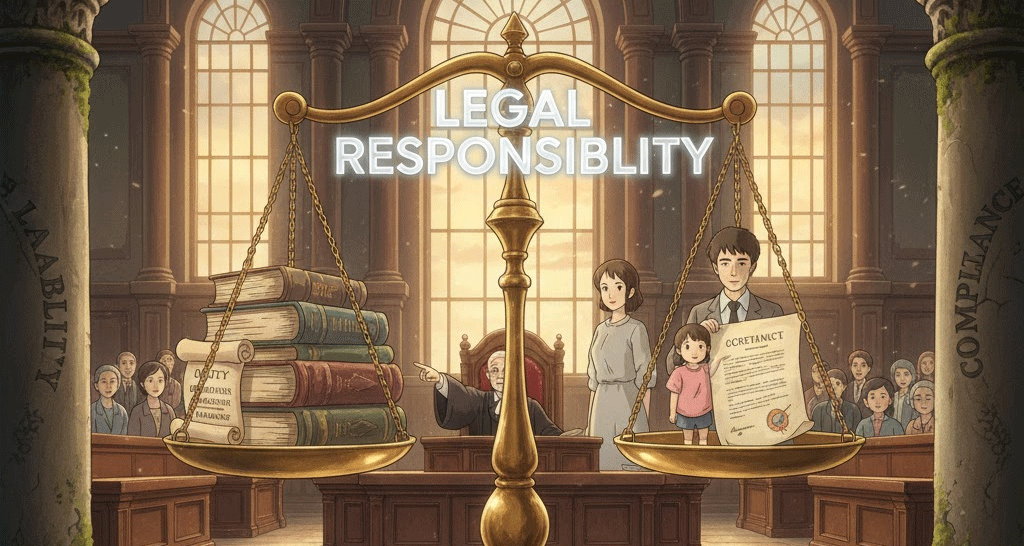
legal responsibility [ˈliːɡəl rɪˌspɑːnsəˈbɪləti]
(명사) 법적 책임, 법적 의무
'법률'(law), '규정'(regulation), 또는 '계약'(contract)에 '의해'(by) '공식적'(official)으로 '정의'(define)되고 '강제'(enforced)되는 '책무'(responsibility)를 의미합니다. '위반'(violation) 시 '벌금'(fine), '손해'(damage) '배상'(compensation), 또는 '징역형'(imprisonment)과 같은 '법적'(legal) '결과'(consequence)를 '감수'(bear)해야 합니다.
- The manager said the company bears the full legal responsibility for product defects. (관리자는 회사가 제품 결함에 대한 완전한 법적 책임을 진다고 말했다.)
- The judge ruled that the defendant had a legal responsibility to pay the rent arrears. (판사는 피고가 밀린 임대료를 지불할 법적 책임이 있다고 판결했다.)
- The lawyer advised the client on the legal responsibility of a general partner. (변호사는 의뢰인에게 무한 책임 파트너의 법적 책임에 대해 조언했다.)
- The engineer said the contract limits his personal legal responsibility. (엔지니어는 계약서가 자신의 개인적인 법적 책임을 제한한다고 말했다.)

ultimate responsibility [ˈʌltɪmət rɪˌspɑːnsəˈbɪləti]
(명사) 최종 책임, 궁극적인 책무
'조직'(organization), '팀'(team), 또는 '과정'(process)의 '결과'(outcome)에 대해 '다른' '누구'(no one else)도 '대신'(substitute) '할' '수' '없는', '가장'(most) '높은'(highest) '수준'(level)의 '결정'(decision) 및 '책무'(responsibility)를 의미합니다. 주로 '최고'(chief) '경영자'(executive officer) (CEO)와 같은 '최상위'(top) '직위'(position)에 초점이 맞춰집니다.
- The CEO bears the ultimate responsibility for the company's strategic direction. (CEO는 회사 전략적 방향에 대한 최종 책임을 진다.)
- The manager said the final decision rests with him as he has the ultimate responsibility. (관리자는 자신에게 최종 책임이 있으므로 최종 결정은 자신에게 달려 있다고 말했다.)
- The judge said the power behind the throne often avoids ultimate responsibility. (판사는 막후의 권력자는 종종 최종 책임을 회피한다고 말했다.)
- The engineer said the safety of the design is his ultimate responsibility. (엔지니어는 설계의 안전은 자신의 궁극적인 책임이라고 말했다.)

sense of responsibility [sens əv rɪˌspɑːnsəˈbɪləti]
(명사) 책임감, 책임 의식
'개인'(individual)이 '자신의'(one's) '의무'(duty)나 '행위'(action)의 '결과'(consequence)에 대해 '깊이'(deep) '인지'(recognize)하고, '그것'을 '수행'(perform)해야 할 '도덕적'(moral) '압박'(pressure)이나 '의무감'(sense)을 '내면적'(internal)으로 '느끼는'(feel) 상태를 의미합니다. '직업적'(professional) '윤리'(ethics)와 '성실성'(integrity)을 강조합니다.
- The manager praised the employee's strong sense of responsibility for the project. (관리자는 프로젝트에 대한 직원의 강한 책임감을 칭찬했다.)
- The professor said a sense of responsibility is vital to academic achievement. (교수님은 책임감이 학업 성취에 필수적이라고 말했다.)
- The judge said the defendant's lack of a sense of responsibility was a grim reminder. (판사는 피고의 책임감 부족은 냉혹한 경고였다고 말했다.)
- The lawyer's determination came from his strong sense of responsibility to his client. (변호사의 결단력은 자신의 의뢰인에 대한 강한 책임감에서 비롯되었다.)

transfer responsibility [trænsˈfɜːr rɪˌspɑːnsəˈbɪləti]
(숙어) 책임을 전가하다, 책임을 이전하다
'현재'(present) '책임'(responsibility)을 '지고'(bear) 있거나 '할당'(assigned)된 '주체'(entity)가 '그것'을 '다른'(other) '사람'(person)이나 '부서'(department)에게 '넘기는'(hand over) '행위'(act)를 의미합니다. '공식적'(official)인 '권한'(authority) '이양'(transfer)일 수도 있지만, 종종 '잘못'(fault)이나 '실패'(failure)에 대한 '비난'(blame)을 '회피'(avoid)하는 '부정적'(negative) 의미로 사용됩니다.
- The manager tried to transfer responsibility for the poor performance to the junior staff. (관리자는 저조한 성과에 대한 책임을 하급 직원에게 전가하려고 시도했다.)
- The judge ruled that the company cannot legally transfer responsibility to a third party. (판사는 회사는 법적으로 제3자에게 책임을 이전할 수 없다고 판결했다.)
- The engineer was eager to transfer responsibility for maintenance to the new team. (엔지니어는 유지 보수에 대한 책임을 새로운 팀에게 이전하기를 열망했다.)
- The professor said a true leader must never shirk responsibility by transferring it. (교수님은 진정한 리더는 책임을 이전함으로써 회피해서는 안 된다고 말했다.)
personal responsibility, social responsibility, corporate social responsibility (CSR), legal responsibility, ultimate responsibility, sense of responsibility, transfer responsibility
(숙어) 개인 책임, 사회적 책임, 기업의 사회적 책임, 법적 책임, 최종 책임, 책임감, 책임을 전가하다
이 표현들은 책임의 '주체', '범위', '법적 성격', '정도', '감정적 인지'를 나타냅니다. 'personal responsibility'는 '집단이 아닌' '개인 한 사람이 져야 할' 책임을, 'social responsibility'는 '사회 전체에 대한' '의무'를 의미합니다. 'corporate social responsibility (CSR)'은 '기업이 이윤 추구 외에' '사회 공헌을 해야 할' '윤리적 의무'를 뜻합니다. 'legal responsibility'는 '법률에 의해' '책임이 부과되는' 것을, 'ultimate responsibility'는 '가장 마지막에 져야 할' '최종 책임'을 강조합니다. 'sense of responsibility'는 '책임감이라는' '내면의 감정'을, 'transfer responsibility'는 '책임을 다른 사람에게' '넘겨주는' 행위를 의미합니다.
- Every citizen has a personal responsibility to vote. (개인 책임이 있다.)
- Corporate Social Responsibility (CSR) is a key part of the modern business model. (기업의 사회적 책임(CSR)은 현대 비즈니스 모델의 핵심이다.)
- The CEO holds the ultimate responsibility for the company's performance. (CEO가 회사 성과에 대한 최종 책임을 진다.)
- We must transfer responsibility to the local team for better management. (더 나은 관리를 위해 책임을 지역 팀에 전가해야 한다.)
- He acted out of a strong sense of responsibility. (그는 강한 책임감에서 행동했다.)
- The contract clearly defines the legal responsibility of each party. (계약은 각 당사자의 법적 책임을 명확히 정의한다.)
- We must not allow the company to transfer responsibility for the environmental damage. (우리는 그 회사가 환경 피해에 대한 책임을 전가하도록 허용해서는 안 된다.)
- Developing a strong sense of responsibility in children is important. (아이들에게 강한 책임감을 길러주는 것은 중요하다.)
핵심 뜻
책임의 구분과 관리. 주체(개인, 기업), 법적 의무, 최종적인 부담, 그리고 감정적 인지.
| personal/social | 개인/사회적 | 형용사로, '범위'. | '책임' '이' '개인' '에게' '국한' '되는지' '사회' '전체' '에' '확장' '되는지' '를' '나타냄'. |
| CSR | 기업의 사회적 책임 | 약어로, '윤리' '적' '의무'. | '기업' '이' '이윤' '외에' '사회' '와' '환경' '에' '대해' '가지는' '윤리' '적' '인' '책임' '임을' '강조함'. |
| ultimate | 최종적인 | 형용사로, '최종'. | '계층' '의' '가장' '끝' '에서' '궁극적' '으로' '져야' '할' '책임' '임을' '나타냄'. |
| sense of | ~감 | 명사로, '감정' '적' '인지'. | '책임' '이라는' '의무' '를' '내면' '적' '으로' '느끼는' '상태' '임을' '나조타냄'. |
| transfer | 전가하다 | 동사로, '이동'. | '책임' '을' '자신' '에게서' '다른' '사람에게로' '넘겨주는' '행위' '를' '나타냄'. |
| legal | 법적인 | 형용사로, '법률'. | '책임' '이' '법률' '에' '의해' '규정' '되고' '강제' '됨' '을' '강조함'. |
비슷한 어휘 깔끔하게 표로 정리하고 밑에 예문,해석 하나씩 나열하기
| individual accountability | 개인 책임 |
| final accountability | 최종 책임 |
| delegate | (책임을) 위임하다 (transfer 유사) |
individual accountability
예문: The manager emphasized individual accountability.
해석: 매니저는 개인 책임을 강조했다.
final accountability
예문: The CEO has final accountability for all decisions.
해석: CEO가 모든 결정에 대한 최종 책임을 진다.
delegate
예문: You should learn to delegate tasks to your team.
해석: 당신은 팀에게 업무를 위임하는 법을 배워야 한다.
결론 정리
'personal/social responsibility'는 책임의 범위를, 'CSR/legal responsibility'는 제도적 성격을, 'ultimate responsibility'는 최종 부담을, 'transfer responsibility'는 책임 전가 행위를 나타냅니다.


