
- 분류 전체보기 (5714)

| 일 | 월 | 화 | 수 | 목 | 금 | 토 |
|---|---|---|---|---|---|---|
| 1 | 2 | 3 | ||||
| 4 | 5 | 6 | 7 | 8 | 9 | 10 |
| 11 | 12 | 13 | 14 | 15 | 16 | 17 |
| 18 | 19 | 20 | 21 | 22 | 23 | 24 |
| 25 | 26 | 27 | 28 | 29 | 30 | 31 |
- please?
- Excuse me
- Don't worry
- I'm sorry
- I'm glad to hear that.
- come up with
- hold on
- OKay
- Please
- Sorry
- Show Up
- well
- Yes
- pick up
- Read between the lines
- Hey
- Right?
- make it
- too.
- work out
- please.
- Actually
- set up
- entrance fee
- By The Way
- Sure
- get through
- oh
- Yeah
- no
- Today
- Total
인과함께
Day442 , harsh, harsh criticism, harsh conditions, harsh punishment, harsh reality, harsh words, harsh treatment, harshly criticize, harsh environment, harsh measures, harsh truth 본문
Day442 , harsh, harsh criticism, harsh conditions, harsh punishment, harsh reality, harsh words, harsh treatment, harshly criticize, harsh environment, harsh measures, harsh truth
미인생 2026. 9. 30. 09:22
harsh [hɑːrʃ]
(형용사/부사파생) 가혹한, 거친, 혹독한, 냉혹한
단순히 "가혹한"으로만 외우면 수능에서 반드시 틀립니다. harsh는 "어떤 것이 편안하거나 부드럽거나 친절한 것과는 거리가 멀어서, 신체적으로나 감정적으로나 상황적으로 불편하거나 고통스럽거나 견디기 어려운 것 — 겉으로는 불쾌하고 날카롭고 강렬하지만 때로는 그것이 현실이거나 필요한 것" 이라는 핵심 이미지에서 출발해, 환경의 혹독함에서 비판의 가혹함·처벌의 엄격함·현실의 냉혹함·말의 거칠음까지 폭넓게 쓰이는 핵심 다의어입니다. 특히 harsh(가혹한·혹독한) vs. severe(엄격한·심각한) vs. strict(엄한·철저한) 의 뉘앙스 차이, harsh criticism(가혹한 비판), harsh reality(냉혹한 현실) 패턴은 수능 독해 사회·심리·환경·역사·교육 지문에서 핵심적으로 등장합니다.
'harsh'는 중세 영어 harsk(거친, 신맛 나는)에서 유래했으며 북유럽 언어 harsk(산패한, 쓴)의 영향을 받았습니다. 원래 "혀에 거칠게 느껴지거나 귀에 불쾌하게 들리는 것" 을 뜻했으며 감각적인 불쾌함에서 출발했습니다. harsh의 핵심 이미지는 "편안하거나 부드럽거나 친절한 것과는 정반대로, 신체적·감정적·상황적으로 거칠고 불편하며 견디기 어려운 것 — 현실이나 진실이나 환경이 우리를 달래거나 보호하지 않고 날것 그대로의 거칠고 냉혹한 상태로 우리 앞에 있는 것" 으로, 이 이미지에서 환경의 혹독함·비판의 가혹함·처벌의 엄격함·현실의 냉혹함·말의 거칠음이 모두 확장되었습니다.
1. harsh criticism [hɑːrʃ ˈkrɪtɪsɪzəm]
(교육/사회/수능) "가혹한 비판, 혹독한 비평"을 뜻합니다. 단순히 문제를 지적하는 것을 넘어 날카롭고 강하며 듣는 사람에게 고통스럽게 느껴지는 비판을 강조합니다. 수능 독해 교육·사회·심리 지문의 핵심 표현입니다.
The teacher's harsh criticism of the student's essay in front of the whole class did not motivate her to work harder — it made her afraid to try again, which is why most educational psychologists argue that feedback should be specific and constructive rather than simply negative. (선생님이 반 전체 앞에서 학생의 에세이에 대한 가혹한 비판은 그녀가 더 열심히 일하도록 동기를 부여하지 않았다 — 그것은 그녀가 다시 시도하는 것을 두렵게 만들었는데 이것이 왜 대부분의 교육 심리학자들이 피드백이 단순히 부정적이기보다 구체적이고 건설적이어야 한다고 주장하는 이유이다.)
2. harsh conditions [hɑːrʃ kənˈdɪʃənz]
(환경/역사/수능) "혹독한 조건, 거친 환경 상태"를 뜻합니다. 생존하거나 활동하기에 매우 불편하거나 위험한 상황을 강조합니다. 수능 독해 환경·역사·사회 지문의 핵심 표현입니다.
The explorers who crossed the Antarctic in the early twentieth century faced harsh conditions that modern equipment and communication systems have made significantly easier to manage — but the fundamental physical demands of operating in extreme cold, with limited supplies and no possibility of rescue, remain unchanged. (20세기 초에 남극을 횡단한 탐험가들은 현대 장비와 통신 시스템이 관리하기를 상당히 더 쉽게 만든 혹독한 조건들에 직면했다 — 하지만 극한의 추위에서 제한된 물자로 구조 가능성 없이 활동하는 것의 근본적인 신체적 요구는 변하지 않았다.)
3. harsh punishment [hɑːrʃ ˈpʌnɪʃmənt]
(사회/역사/수능) "가혹한 처벌, 혹독한 형벌"을 뜻합니다. 저지른 잘못에 비해 지나치게 엄격하거나 고통스러운 처벌을 강조합니다. 수능 독해 사회·역사·법률 지문의 핵심 표현입니다.
Researchers studying the relationship between harsh punishment and behaviour change consistently find that very severe penalties do not necessarily deter crime more effectively than moderate ones — what matters more is how certain potential offenders believe that detection and consequences are, not how extreme those consequences would be. (행동 변화와 가혹한 처벌 사이의 관계를 연구하는 연구자들은 매우 엄중한 처벌이 반드시 적당한 처벌보다 범죄를 더 효과적으로 억제하지 않는다는 것을 일관되게 발견한다 — 더 중요한 것은 잠재적 범죄자들이 적발과 결과가 얼마나 확실하다고 믿는지이지 그 결과가 얼마나 극단적일지가 아니다.)
4. harsh reality [hɑːrʃ rɪˈæləti]
(사회/심리/수능) "냉혹한 현실, 가혹한 실상"을 뜻합니다. 우리가 원하는 것과는 달리 실제는 불편하거나 고통스럽다는 것을 강조합니다. 수능 독해 사회·심리·교육 지문의 핵심 표현입니다.
The harsh reality that students often discover when they leave formal education is that having knowledge of something and being able to apply that knowledge effectively in unpredictable real-world situations are very different skills — and that the gap between them is usually bridged by experience rather than by more study. (학생들이 정규 교육을 마쳤을 때 종종 발견하는 냉혹한 현실은 무언가에 대한 지식을 갖는 것과 예측 불가능한 실제 상황에서 그 지식을 효과적으로 적용할 수 있는 것이 매우 다른 기술이라는 것이다 — 그리고 그 사이의 격차는 보통 더 많은 공부가 아닌 경험에 의해 좁혀진다.)
5. harsh words [hɑːrʃ wɜːrdz]
(심리/사회/수능) "거친 말, 가혹한 언사"를 뜻합니다. 듣는 사람에게 상처를 주거나 상황을 악화시키는 날카롭고 거친 말을 강조합니다. 수능 독해 심리·사회·문학 지문에서 자주 등장합니다.
Harsh words spoken in anger rarely achieve their intended effect of changing the other person's behaviour — they typically generate defensiveness and resentment rather than reflection and change, which is why communication research consistently recommends expressing concerns calmly and specifically rather than reacting in the heat of the moment. (화가 나서 한 거친 말은 상대방의 행동을 바꾸려는 의도된 효과를 거의 달성하지 못한다 — 그것들은 전형적으로 반성과 변화가 아닌 방어적 태도와 원망을 만들어내는데 이것이 왜 의사소통 연구가 일관되게 그 순간의 감정으로 반응하기보다 침착하고 구체적으로 우려를 표현하는 것을 권고하는 이유이다.)
6. harsh treatment [hɑːrʃ ˈtriːtmənt]
(역사/사회/수능) "가혹한 대우, 혹독한 처우"를 뜻합니다. 어떤 사람이나 집단에게 가해지는 불공정하거나 지나치게 엄격하고 고통스러운 대우를 강조합니다. 수능 독해 역사·사회·심리 지문의 핵심 표현입니다.
Historical records show that the harsh treatment of prisoners during that period was not simply a reflection of individual cruelty but of a systemic belief that suffering was both a legitimate punishment and an effective means of deterrence — a belief that has since been challenged by both ethical arguments and evidence about what actually reduces reoffending. (그 시기 수감자들에 대한 가혹한 대우는 단순히 개인적인 잔인함의 반영이 아니라 고통이 합법적인 처벌이자 효과적인 억제 수단이라는 체계적인 믿음의 반영이었다는 것을 역사적 기록이 보여준다 — 이후 윤리적 논거와 실제로 재범을 줄이는 것에 대한 증거 모두에 의해 도전받은 믿음이다.)
7. harshly criticize [ˈhɑːrʃli ˈkrɪtɪsaɪz]
(사회/교육/수능) "가혹하게 비판하다, 혹독하게 비난하다"를 뜻합니다. 날카롭고 강하며 감정적으로 부담이 되는 방식으로 비판하는 것을 강조합니다. 수능 독해 사회·교육·심리 지문에서 자주 등장합니다.
When public figures are harshly criticized for positions they held years ago without acknowledgement of how much context has changed, the criticism can feel less like a genuine attempt to hold people accountable and more like an exercise in demonstrating one's own moral superiority. (공인들이 수년 전에 취했던 입장에 대해 상황이 얼마나 많이 변했는지에 대한 인정 없이 가혹하게 비판받을 때 그 비판은 진정으로 사람들에게 책임을 묻기 위한 시도라기보다 자신의 도덕적 우월성을 증명하는 행위처럼 느껴질 수 있다.)
8. harsh environment [hɑːrʃ ɪnˈvaɪərənmənt]
(과학/환경/수능) "가혹한 환경, 혹독한 자연환경"을 뜻합니다. 생물이나 사람이 살아남기 어려울 만큼 극단적이거나 위험한 자연환경을 강조합니다. 수능 독해 과학·환경·역사 지문의 핵심 표현입니다.
Species that have adapted to survive in harsh environments — extreme deserts, deep oceans, polar regions — have often developed biological mechanisms that are of great interest to scientists looking for solutions to engineering and medical challenges, since evolution has had millions of years to solve problems that human designers have barely begun to address. (가혹한 환경에서 생존하도록 적응한 종들 — 극한의 사막, 심해, 극지방 — 은 종종 공학과 의학적 도전에 대한 해결책을 찾는 과학자들에게 큰 관심을 끄는 생물학적 메커니즘을 개발했는데 진화가 인간 설계자들이 이제 막 다루기 시작한 문제들을 해결하는 데 수백만 년을 보냈기 때문이다.)
9. harsh measures [hɑːrʃ ˈmeʒərz]
(사회/역사/수능) "가혹한 조치, 강경한 방침"을 뜻합니다. 문제나 상황을 해결하기 위해 강하고 엄격하며 불편을 초래하는 방법을 강조합니다. 수능 독해 사회·역사·정치 지문에서 자주 등장합니다.
Governments that adopt harsh measures in response to public health crises face a difficult dilemma — the measures necessary to control an outbreak can cause serious economic and social harms, while failing to act decisively enough can allow the outbreak to spread in ways that ultimately cause even greater harm. (가혹한 조치를 공중 보건 위기에 대응하여 채택하는 정부들은 어려운 딜레마에 직면한다 — 발병을 통제하는 데 필요한 조치들이 심각한 경제적·사회적 해를 끼칠 수 있는 반면 충분히 단호하게 행동하지 않으면 발병이 궁극적으로 더 큰 해를 끼치는 방식으로 확산되도록 허용할 수 있다.)
10. harsh truth [hɑːrʃ truːθ]
(심리/사회/수능) "냉혹한 진실, 쓴 진실"을 뜻합니다. 듣기 불편하거나 받아들이기 어렵지만 사실인 것을 강조합니다. 수능 독해 심리·사회·교육 지문의 핵심 표현입니다.
The harsh truth about most creative endeavours is that talent alone is not enough — the combination of skill, persistence, timing, and a measure of good fortune that distinguishes those who succeed from equally talented people who do not is largely outside any individual's complete control. (대부분의 창의적인 노력에 대한 냉혹한 진실은 재능만으로는 충분하지 않다는 것이다 — 성공한 사람들을 동등하게 재능 있지만 그렇지 못한 사람들과 구별하는 기술, 인내력, 타이밍, 그리고 어느 정도의 행운의 조합은 어떤 개인의 완전한 통제 밖에 있다.)
대한민국 입시 및 학술 주요 POINT
POINT 1. harsh vs. severe vs. strict — 수능 최빈출 뉘앙스 구별
세 단어 모두 "가혹하거나 엄격한"과 관련되지만 뉘앙스가 다릅니다. harsh → 신체적·감정적·상황적으로 거칠고 불편하며 견디기 어려운 것, 편안하거나 부드럽거나 친절한 것과 정반대인 것 (거칠음·불쾌함·냉혹함·날 것의 강렬함 강조) severe → 상황이나 조건이나 결과가 심각하거나 극단적인 것, 더 공식적이고 객관적인 뉘앙스 (심각성·극단성·공식적 엄격함 강조) strict → 규칙이나 기준이나 원칙을 철저하게 따르거나 따르게 하는 것, 엄격하지만 반드시 가혹한 것은 아님 (규칙 준수·철저함·원칙 강조) 예) The desert climate is harsh and unforgiving. (사막 기후는 가혹하고 여유가 없다.) — 날 것의 불편함과 거칠음 The severe storm caused widespread damage. (심각한 폭풍이 광범위한 피해를 입혔다.) — 심각하고 극단적인 결과 The school has strict rules about uniform. (학교는 교복에 대한 엄격한 규칙이 있다.) — 규칙을 철저하게 따르게 하는 것
POINT 2. harsh criticism / harsh reality / harsh truth — 수능 심리·사회 지문 핵심
세 표현 모두 harsh의 "불편하거나 고통스럽지만 그것이 현실인" 이미지를 공유하지만 맥락이 다릅니다. harsh criticism → 날카롭고 강하며 듣는 사람에게 고통스럽게 느껴지는 비판 (날카로움·강도·감정적 충격 강조) harsh reality → 우리가 원하는 것과는 달리 실제는 불편하거나 고통스럽다는 것 (현실과 기대의 차이·직면해야 하는 사실·냉혹함 강조) harsh truth → 듣기 불편하거나 받아들이기 어렵지만 사실인 것 (불편한 진실·거부하고 싶은 사실·냉혹함 강조) 이 세 표현이 등장하면 글쓴이가 불편하거나 고통스럽지만 사실이거나 현실인 것을 논하고 있다는 신호입니다.
POINT 3. harsh 어근 확장 — 수능 어휘 확장 필수
중세 영어 harsk(거친, 신맛 나는)에서 유래한 단어들이 수능에서 자주 출제됩니다. harsh [hɑːrʃ] → 가혹한, 거친, 혹독한 harshly [ˈhɑːrʃli] → 가혹하게, 거칠게, 혹독하게 harshness [ˈhɑːrʃnəs] → 가혹함, 거칠음, 혹독함 unharshly → (드문 표현) 가혹하지 않게 harsh-sounding → 거칠게 들리는 이 단어들은 모두 "편안하거나 부드러운 것과 정반대로 날 것의 거칠고 불편한" 공통 이미지에서 시작합니다.
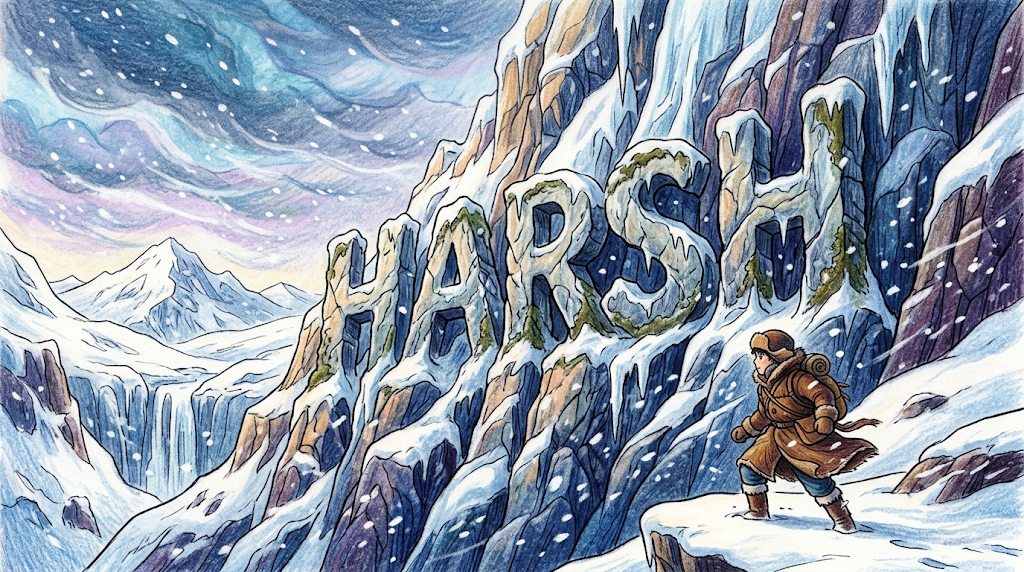
(형용사) ① 가혹한, 혹독한 (환경·조건·처벌)
harsh의 가장 기본적인 의미로, 신체적으로나 상황적으로 견디기 어려운 것을 나타냅니다.
- The harsh winter that year tested the community's resilience in ways that milder seasons never had — heating systems failed, roads became impassable, and the elderly and vulnerable who could not get the help they needed were in real danger for weeks before conditions improved. (그해 혹독한 겨울은 더 온화한 계절이 결코 하지 않은 방식으로 지역 사회의 회복탄력성을 시험했다 — 난방 시스템이 고장나고, 도로가 통행 불가능해졌으며, 필요한 도움을 받을 수 없는 노인과 취약층은 상황이 개선되기 전 몇 주 동안 진정한 위험에 처했다.)
- The harsh lighting in the interrogation room was not accidental — it was designed to create discomfort and disorientation in the people being questioned, making them more likely to say things they might not have said in a more comfortable setting. (심문실의 가혹한 조명은 우연이 아니었다 — 그것은 심문받는 사람들에게 불편함과 방향 감각 상실을 만들도록 설계됐으며 더 편안한 환경에서는 말하지 않았을 것을 말하게 할 가능성을 높였다.)
- The review board described the sentence as harsh given the circumstances of the offence and the offender's background — not suggesting that the crime was not serious, but arguing that the penalty imposed was disproportionate to what was actually done and to established precedents for similar cases. (검토 위원회는 범죄의 상황과 범죄자의 배경을 감안할 때 형량이 가혹하다고 묘사했다 — 범죄가 심각하지 않다는 것이 아니라 부과된 처벌이 실제로 행해진 것과 유사한 사건들에 대한 확립된 선례에 비해 불균형적이라고 주장하면서.)

(형용사) ② 냉혹한, 거친 (비판·말·진실)
어떤 말이나 비판이나 현실이 불편하거나 상처를 주는 방식으로 직접적인 것을 나타냅니다. 수능 독해 심리·사회·교육 지문에서 자주 등장합니다.
- There is a difference between honest feedback and harsh feedback — the first tells you clearly what is not working and why, while the second delivers the same information in a way that leaves the recipient feeling attacked rather than helped, which usually makes them less willing to act on what they have been told. (솔직한 피드백과 가혹한 피드백 사이에는 차이가 있다 — 첫 번째는 무엇이 작동하지 않고 왜 그런지 명확하게 말해주는 반면 두 번째는 같은 정보를 수신자가 도움받기보다 공격받는다고 느끼게 하는 방식으로 전달하는데 이것은 보통 그들이 들은 것에 따라 행동하려는 의지를 낮춘다.)
- The novel's harsh portrayal of small-town life upset some readers who felt it was unfair to people who had chosen a quieter existence, while others praised it precisely for refusing to romanticise what could be a narrow, judgmental, and isolating social environment. (소설의 소도시 생활에 대한 냉혹한 묘사는 조용한 삶을 선택한 사람들에게 불공평하다고 느낀 일부 독자들을 화나게 했고 다른 독자들은 좁고 편협하며 고립감을 줄 수 있는 사회적 환경을 낭만화하기를 거부했기 때문에 정확히 그것을 칭찬했다.)
- The director gave harsh notes at the end of rehearsal — not because the cast had performed badly by any ordinary standard, but because she knew what they were capable of and was not going to settle for anything less, even if the more comfortable option would have been to let a satisfactory performance pass as good enough. (감독은 리허설 끝에 혹독한 평가를 했다 — 배우들이 어떤 일반적인 기준에 의해서도 나쁘게 공연했기 때문이 아니라 그들이 무엇을 할 수 있는지 알고 있었고 더 편안한 선택이 만족스러운 공연을 충분히 좋다고 통과시키는 것이었어도 그 이하를 받아들이지 않을 것이었기 때문이다.)
(형용사) ③ 강렬한, 불쾌한 (빛·소리·화학물질)
빛이나 소리나 화학물질 등이 감각에 불쾌하거나 자극적으로 느껴지는 것을 나타냅니다.
- The harsh chemicals in many conventional cleaning products are effective at removing dirt and bacteria but can cause skin irritation and respiratory problems with repeated exposure — which has driven interest in cleaning products that achieve comparable results with ingredients that are gentler on both people and the environment. (많은 일반 세정 제품의 강한 화학물질은 먼지와 박테리아를 제거하는 데 효과적이지만 반복 노출로 피부 자극과 호흡기 문제를 일으킬 수 있다 — 이것이 사람과 환경 모두에 더 부드러운 성분으로 비슷한 결과를 달성하는 세정 제품에 대한 관심을 높인 원인이다.)
- The harsh fluorescent lighting that was standard in offices throughout the twentieth century has largely been replaced in newer workplaces by softer, more natural-spectrum lighting, partly because the research showing links between harsh artificial light and headaches, eye strain, and reduced wellbeing became too significant to ignore. (20세기 내내 사무실에서 표준이었던 강렬한 형광등은 부분적으로 가혹한 인공 조명과 두통, 눈의 피로, 그리고 감소된 건강 사이의 연관성을 보여주는 연구가 무시하기에는 너무 중요해졌기 때문에 더 새로운 작업장에서 대체로 더 부드럽고 더 자연 스펙트럼에 가까운 조명으로 대체됐다.)
- The harsh sound of alarms in emergency vehicles is a deliberate design choice — the frequency and pattern are selected specifically because they penetrate other ambient noise effectively, trigger an immediate attentional response, and are difficult to habituate to, all of which are necessary for a warning system to function as intended. (응급차량의 경보음의 강렬한 소리는 의도적인 설계 선택이다 — 주파수와 패턴은 다른 주변 소음을 효과적으로 뚫고, 즉각적인 주의 반응을 유발하며, 익숙해지기 어렵기 때문에 구체적으로 선택됐는데 이 모두가 경고 시스템이 의도한 대로 기능하는 데 필요하다.)
뉘앙스·의미 연결 흐름 표
핵심 이미지 연결 흐름 뉘앙스 요약
| 편안하거나 부드럽거나 친절한 것과 정반대로 날 것의 거칠고 불편하며 견디기 어려운 것 | 환경의 혹독함 → 비판의 가혹함 → 처벌의 엄격함 → 현실의 냉혹함 → 감각적 불쾌함 | 부드럽거나 완화되지 않은 날 것의 강렬함과 거칠음의 이미지 |
| 가혹함의 종류 | harsh words → harsh criticism → harsh punishment | 말의 거칠음→비판의 가혹함→처벌의 혹독함의 이미지 |
| 가혹함의 반응 | harsh truth → harsh reality → harsh conditions | 진실의 불편함→현실의 냉혹함→환경의 혹독함의 이미지 |
어원 흐름 표
단어 구성 요소 의미 연결 흐름 뉘앙스 요약
| 중세 영어 harsk (거친·신맛 나는·불쾌한) → harsh | 감각적으로 불쾌한 → 신체적으로 견디기 어려운 → 감정적으로 고통스러운 → 상황적으로 혹독한 | 부드럽고 완화된 것과 정반대로 날 것의 거칠고 불편한 핵심 이미지 |
| harsh (형용사→부사·harshly→명사·harshness) | 가혹한·거친·혹독한 → 가혹하게·거칠게 → 가혹함·거칠음 | 날 것의 강렬함과 거칠음의 이미지에서 다양한 맥락으로 완성 |
품사별 의미 표
품사 의미 예문
| 형용사 | 가혹한, 혹독한 (환경·처벌) | harsh winter (혹독한 겨울) |
| 형용사 | 냉혹한, 거친 (비판·진실) | harsh criticism (가혹한 비판) |
| 형용사 | 강렬한, 불쾌한 (빛·소리·화학물질) | harsh light (강렬한 빛) |
| 부사 (harshly) | 가혹하게, 거칠게 | judge harshly (가혹하게 판단하다) |
| 명사 (harshness) | 가혹함, 거칠음 | the harshness of the climate (기후의 가혹함) |
활용 예문 리스트
- The harsh economic policies introduced during the restructuring period created genuine hardship for many working families in the short term, but their proponents argued that the long-term benefit of restoring fiscal stability made them the only responsible option available. (가혹한 구조조정 기간 동안 도입된 경제 정책들은 단기적으로 많은 근로 가정에 진정한 어려움을 만들었지만 지지자들은 재정 안정 회복의 장기적인 혜택이 그것들을 이용 가능한 유일한 책임 있는 선택으로 만든다고 주장했다.)
- The committee's report contained harsh criticism of the way the investigation had been conducted, noting that key witnesses had not been interviewed, that important documents had not been secured, and that the overall timeline had been inconsistent with what a thorough inquiry should have achieved. (위원회 보고서는 조사가 수행된 방식에 대한 가혹한 비판을 담고 있으며 주요 증인들이 인터뷰되지 않았고, 중요한 서류가 확보되지 않았으며, 전반적인 일정이 철저한 조사가 달성했어야 하는 것과 일관되지 않았다고 언급했다.)
- The harsh reality of competing in a globalised economy is that even very good companies in industries facing structural disruption cannot guarantee their survival simply by doing what they have always done well — they must also anticipate and adapt to changes that may fundamentally alter who their customers are and what those customers actually need. (세계화된 경제에서 경쟁하는 냉혹한 현실은 구조적 혼란에 직면한 산업의 매우 좋은 회사들조차 항상 잘 해온 것을 함으로써 단순히 생존을 보장할 수 없다는 것이다 — 그들은 또한 고객이 누구이고 그 고객이 실제로 무엇을 필요로 하는지를 근본적으로 바꿀 수 있는 변화를 예측하고 적응해야 한다.)
- Animals that have evolved to survive in harsh environments often possess biochemical or physiological adaptations that seem extreme by the standards of more comfortable habitats — their proteins are stable at temperatures that would destroy other organisms' proteins, their cells are protected against damage that would kill most living things, and their metabolisms can slow to almost nothing during unfavourable periods and restart when conditions improve. (가혹한 환경에서 생존하도록 진화한 동물들은 종종 더 편안한 서식지의 기준으로는 극단적으로 보이는 생화학적이거나 생리적 적응을 보유한다 — 그들의 단백질은 다른 유기체의 단백질을 파괴할 온도에서 안정적이고, 그들의 세포는 대부분의 살아있는 것들을 죽일 손상으로부터 보호되며, 그들의 대사는 불리한 기간 동안 거의 아무것도 아닌 것으로 느려졌다가 조건이 개선될 때 재시작될 수 있다.)
- The harsh truth that parents sometimes need to hear is that protecting children from all failure and disappointment does not prepare them for adult life — it deprives them of the experiences through which resilience, problem-solving, and the capacity to tolerate frustration are developed, which are ultimately more important than any particular skill or piece of knowledge. (부모들이 때로 들어야 하는 냉혹한 진실은 아이들을 모든 실패와 실망으로부터 보호하는 것이 성인 생활을 위해 준비시키지 않는다는 것이다 — 그것은 회복탄력성, 문제 해결, 그리고 좌절을 견디는 능력이 개발되는 경험들을 빼앗는데 이것들이 궁극적으로 어떤 특정 기술이나 지식보다 더 중요하다.)
전체 뉘앙스 설명
harsh는 '편안하거나 부드럽거나 친절한 것과 정반대로 날 것의 거칠고 불편하며 견디기 어려운 것에서 출발하는 모든 환경의 혹독함·비판의 가혹함·처벌의 엄격함·현실의 냉혹함·말의 거칠음·감각적 불쾌함의 언어'입니다.
severe와의 차이: severe는 상황이나 조건이나 결과가 심각하거나 극단적인 것을 더 공식적이고 객관적으로 강조하고, harsh는 더 감각적으로 불쾌하거나 감정적으로 고통스럽거나 날 것으로 거칠게 느껴지는 것을 강조합니다. strict와의 차이: strict는 규칙이나 기준을 철저하게 따르거나 따르게 하는 것을 강조하고, harsh는 더 강하게 그 과정이나 결과가 불편하거나 고통스럽게 느껴지는 것을 강조합니다. brutal과의 차이: brutal은 잔혹하거나 무자비할 만큼 극단적으로 가혹한 것을 강조하고, harsh는 더 넓게 불편하거나 고통스럽거나 견디기 어려운 것을 강조합니다.
마지막 핵심 정리
harsh는 단순히 "가혹한"이 아닙니다 — 중세 영어 harsk(거친, 불쾌한)에서 출발해, 가혹한 비판(harsh criticism)·혹독한 조건(harsh conditions)·가혹한 처벌(harsh punishment)·냉혹한 현실(harsh reality)·거친 말(harsh words)·가혹한 대우(harsh treatment)·가혹하게 비판하다(harshly criticize)·가혹한 환경(harsh environment)·가혹한 조치(harsh measures)·냉혹한 진실(harsh truth)까지 확장되는 단어이며, harsh vs. severe vs. strict의 뉘앙스 구별·harsh criticism·harsh reality·harsh truth 패턴이 수능 핵심 출제 포인트입니다.
파생어 표 (발음기호 포함)
파생어 발음기호 품사 의미
| harshly | [ˈhɑːrʃli] | 부사 | 가혹하게, 거칠게, 혹독하게 |
| harshness | [ˈhɑːrʃnəs] | 명사 | 가혹함, 거칠음, 혹독함 |
| harsh-sounding | [ˈhɑːrʃˌsaʊndɪŋ] | 형용사 | 거칠게 들리는 |
| overly harsh | [ˈəʊvərli hɑːrʃ] | 형용사구 | 지나치게 가혹한 |
| unnecessarily harsh | [ʌnˈnesɪsərɪli hɑːrʃ] | 형용사구 | 불필요하게 가혹한 |
유의어 비교표

단어 공통점 뉘앙스 차이 예문
| harsh | 가혹함 관련 | 감각적·감정적·상황적으로 불편하거나 고통스럽고 날 것으로 거칠게 느껴지는 것 강조 | harsh criticism |
| severe | 가혹함 관련 | 상황이나 결과가 심각하거나 극단적인 것을 더 공식적으로 강조 | severe weather |
| strict | 가혹함 관련 | 규칙이나 기준을 철저하게 따르거나 따르게 하는 것 강조 | strict rules |
| brutal | 가혹함 관련 | 잔혹하거나 무자비할 만큼 극단적으로 가혹한 것 강조 | brutal treatment |
| relentless | 가혹함 관련 | 멈추거나 완화되지 않고 지속적으로 가혹한 것 강조 | relentless pressure |
유의어 예문 리스트
- (severe) The severe winter storm that hit the coast caused flooding in dozens of communities, knocked out power to thousands of homes, and forced the closure of transport links for several days — a reminder of how quickly infrastructure can be overwhelmed when weather conditions reach extreme levels. (해안을 강타한 심각한 겨울 폭풍은 수십 개의 지역 사회에 홍수를 일으키고, 수천 가구의 전력을 차단했으며, 며칠 동안 교통 연결을 폐쇄하도록 강요했다 — 기상 조건이 극단적인 수준에 도달할 때 인프라가 얼마나 빠르게 압도될 수 있는지를 상기시켜 준다.)
- (strict) The laboratory maintained strict protocols for handling biological samples — not because the procedures were particularly complex, but because consistent adherence to the same steps every time was the only reliable way to prevent contamination and ensure that experimental results were comparable across different operators. (실험실은 생물학적 표본 취급을 위한 엄격한 프로토콜을 유지했다 — 절차가 특히 복잡해서가 아니라 매번 같은 단계를 일관되게 준수하는 것이 오염을 방지하고 실험 결과가 다른 운영자들 사이에서 비교 가능하도록 보장하는 유일한 신뢰할 수 있는 방법이었기 때문이다.)
- (brutal) The brutal honesty of the feedback session left some participants visibly shaken — several had come expecting encouragement and received instead a detailed account of exactly what was not working and why, delivered without the softening that more politic communicators would have considered necessary. (잔혹하게 솔직한 피드백 세션은 일부 참가자들을 눈에 띄게 동요하게 만들었다 — 여러 명이 격려를 기대하며 왔다가 무엇이 작동하지 않고 왜 그런지 정확한 설명을 받았으며 더 신중한 의사소통자들이 필요하다고 여겼을 완화 없이 전달됐다.)
- (relentless) The relentless pace of change in the technology sector makes it difficult for even well-resourced organisations to keep up — by the time they have finished implementing a new system, the technology has often already advanced enough that the implementation they have just completed is beginning to feel outdated. (기술 부문의 끊임없는 변화 속도는 잘 갖춰진 조직들조차 따라잡기 어렵게 만든다 — 그들이 새 시스템 구현을 마쳤을 때쯤에는 기술이 종종 이미 충분히 발전하여 방금 완료한 구현이 구식으로 느껴지기 시작한다.)
결론 정리
harsh는 단순히 "가혹한"이 아니라, 편안하거나 부드럽거나 친절한 것과 정반대로 날 것의 거칠고 불편하며 견디기 어려운 것의 이미지에서 출발해 가혹한 비판·혹독한 조건·가혹한 처벌·냉혹한 현실·거친 말·가혹한 대우·가혹하게 비판하다·가혹한 환경·가혹한 조치·냉혹한 진실까지 확장되는 단어다 — harsh가 있는 곳엔 언제나 '부드럽거나 완화되지 않고 날 것 그대로의 거칠고 불편하며 때로는 고통스럽지만 그것이 현실이거나 사실인' 냉혹함과 거칠음의 이미지가 있다.
💡 harsh는 "편안하거나 부드럽거나 친절한 것과 정반대로 날 것의 거칠고 불편하며 견디기 어려운 것을 가리키는" 단어 — harsh criticism·harsh reality·harsh truth 가 수능 최빈출. severe(공식적 심각성)·strict(규칙의 엄격함)와의 구별이 핵심 출제 포인트.
🌟 초등학생 버전 harsh는 단순히 "가혹한"이 아니에요! harsh reality는 열심히 연습했는데 대회에서 탈락했을 때 "결과가 너무 슬프지만 이게 현실이야"처럼 원하는 것과는 달리 실제는 불편하거나 고통스럽지만 그것이 사실이어서 피할 수 없는 상황이고, harsh criticism은 그림을 그렸더니 선생님이 "이 부분은 완전히 잘못됐고 저 부분도 다시 해야 해"라고 날카롭게 말하는 것처럼 그냥 아프고 듣기 싫을 만큼 강하고 날카롭게 잘못된 점을 지적하는 것이에요! 🌍✨
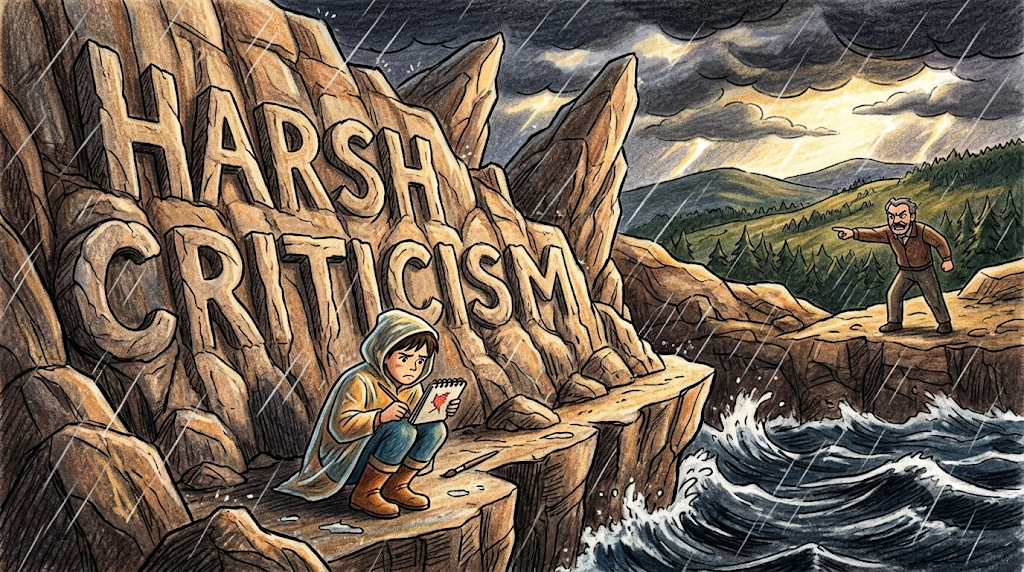
harsh criticism [hɑːrʃ ˈkrɪtɪsɪzəm]
품사/뉘앙스 설명
(명사구) 가혹한 비판, 혹독한 비평
날카롭고 강하며 듣는 사람에게 고통스럽게 느껴지는 비판을 강조합니다. 비판이 단순히 부정적인 것을 넘어 감정적 충격을 주는 수준임이 핵심 뉘앙스입니다. 수능 독해 교육·사회·심리 지문의 핵심 표현입니다.
- The most effective teachers know when to hold back harsh criticism and when to deliver it — understanding that some students are at a stage where encouragement is what will move them forward, while others are ready for and even need the kind of direct challenge that comfortable praise cannot provide. (가장 효과적인 선생님들은 가혹한 비판을 언제 자제하고 언제 전달할지 알고 있다 — 일부 학생들은 격려가 앞으로 나아가게 할 것인 단계에 있는 반면 다른 학생들은 편안한 칭찬이 제공할 수 없는 종류의 직접적인 도전에 준비되어 있고 심지어 필요하다는 것을 이해하면서.)
- When harsh criticism is delivered in a constructive spirit — making clear what needs to change, why it matters, and how improvement is possible — it can be one of the most valuable things one person can give another, because it provides information that polite silence or vague encouragement never can. (가혹한 비판이 건설적인 정신으로 전달될 때 — 무엇이 변해야 하는지, 왜 그것이 중요한지, 그리고 어떻게 개선이 가능한지를 명확히 하면서 — 그것은 한 사람이 다른 사람에게 줄 수 있는 가장 가치 있는 것 중 하나가 될 수 있는데 정중한 침묵이나 모호한 격려가 결코 줄 수 없는 정보를 제공하기 때문이다.)
- The public's harsh criticism of the project, expressed through online petitions, community meetings, and letters to local representatives, forced the council to commission an independent review — which ultimately concluded that many of the concerns were well-founded and recommended significant changes to the original plan. (온라인 청원, 지역 사회 회의, 그리고 지역 대표자들에게의 편지를 통해 표현된 프로젝트에 대한 대중의 가혹한 비판은 의회가 독립 검토를 의뢰하도록 강요했다 — 이것은 궁극적으로 많은 우려가 근거가 있다는 결론을 내리고 원래 계획에 대한 중요한 변경을 권고했다.)
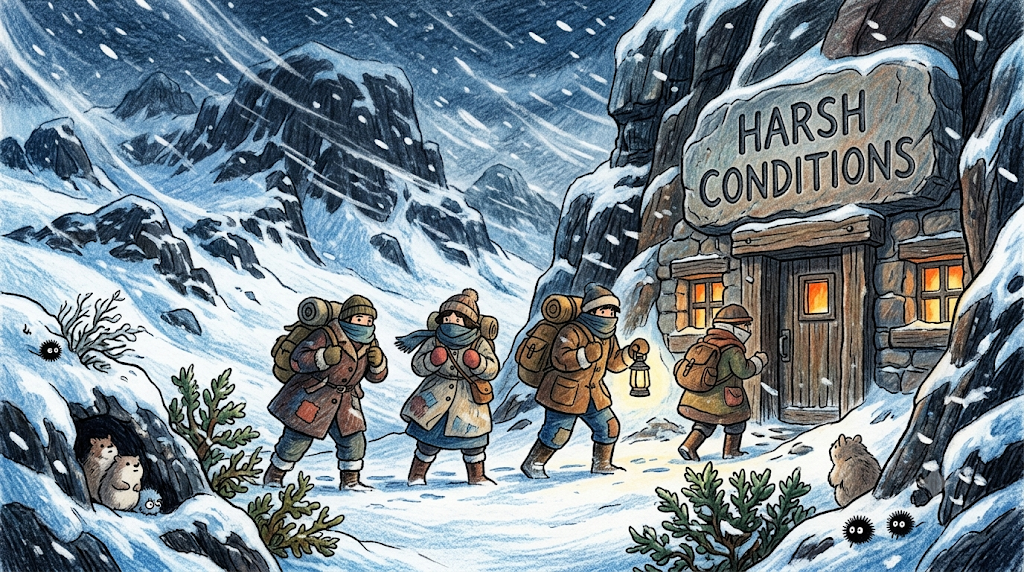
harsh conditions [hɑːrʃ kənˈdɪʃənz]
품사/뉘앙스 설명
(명사구) 혹독한 조건, 거친 환경 상태
생존하거나 활동하기에 매우 불편하거나 위험한 상황을 강조합니다. 인간이나 생물이 견뎌야 하는 극단적인 상황이 핵심 뉘앙스입니다. 수능 독해 환경·역사·사회 지문의 핵심 표현입니다.
- The workers who built the railway through the mountains in the nineteenth century laboured under harsh conditions that would not be legally permissible today — long hours, inadequate safety provisions, exposure to extreme temperatures, and wages that barely covered the cost of food and accommodation. (19세기에 산을 통과하는 철도를 건설한 노동자들은 오늘날 법적으로 허용되지 않을 혹독한 조건 속에서 일했다 — 긴 시간, 부적절한 안전 규정, 극한의 온도에 노출, 그리고 음식과 숙소 비용을 겨우 충당하는 임금이었다.)
- Some of the most interesting scientific discoveries about human adaptability have come from studying how the body responds to harsh conditions — what happens to sleep, cognition, and emotional regulation during sustained periods of extreme cold, isolation, or sleep deprivation, and what strategies allow people to maintain function under these pressures. (인간 적응력에 대한 가장 흥미로운 과학적 발견 중 일부는 신체가 혹독한 조건에 어떻게 반응하는지 연구하는 것에서 나왔다 — 지속적인 극한의 추위, 고립, 또는 수면 부족 기간 동안 수면, 인지, 그리고 감정 조절에 어떤 일이 일어나는지, 그리고 어떤 전략이 사람들이 이 압박 하에서 기능을 유지할 수 있게 하는지이다.)
- Crops grown under harsh conditions — irregular rainfall, poor soil, temperature extremes — can develop chemical adaptations that make them more nutritious or more medicinally interesting than the same species grown in controlled, ideal conditions, which has led to renewed interest in traditional farming practices in challenging environments. (혹독한 조건 — 불규칙한 강수량, 척박한 토양, 극단적 온도 — 에서 재배된 작물들은 통제된 이상적인 조건에서 재배된 같은 종보다 더 영양가 있거나 의학적으로 더 흥미롭게 만드는 화학적 적응을 개발할 수 있으며 이것이 도전적인 환경에서의 전통 농업 관행에 대한 새로운 관심으로 이어졌다.)
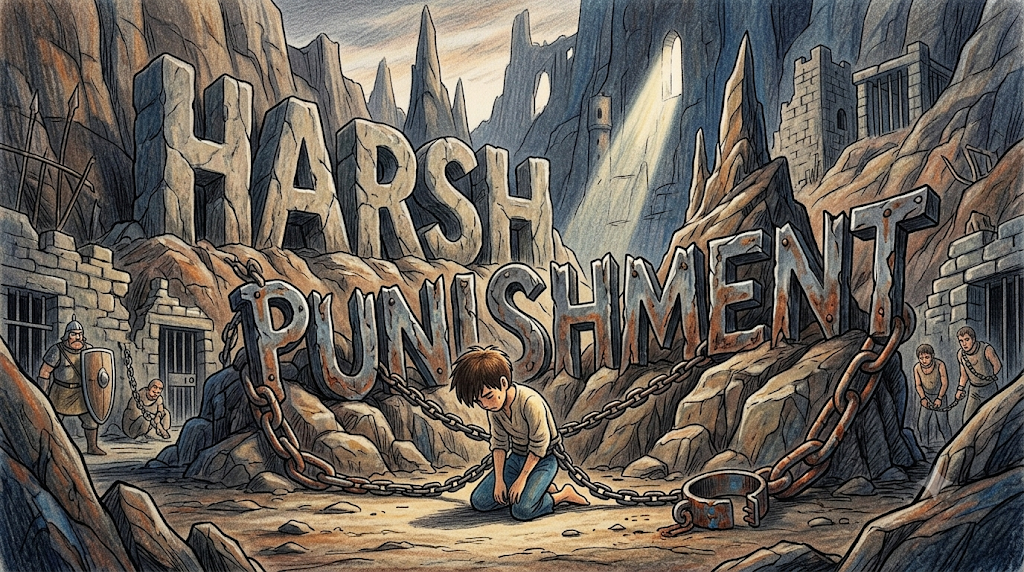
harsh punishment [hɑːrʃ ˈpʌnɪʃmənt]
품사/뉘앙스 설명
(명사구) 가혹한 처벌, 혹독한 형벌
저지른 잘못에 비해 지나치게 엄격하거나 고통스러운 처벌을 강조합니다. 처벌의 정당성 문제와 연결된다는 것이 핵심 뉘앙스입니다. 수능 독해 사회·역사·법률 지문의 핵심 표현입니다.
- The argument that harsh punishment acts as a deterrent has been debated by criminologists for generations, with the evidence suggesting that the certainty of getting caught matters far more than the severity of what happens afterwards — which implies that resources spent on improving detection rates would reduce crime more effectively than increasing sentence lengths. (가혹한 처벌이 억제제 역할을 한다는 주장은 수 세대에 걸쳐 범죄학자들에 의해 논의됐으며 증거는 잡힐 확실성이 이후에 일어나는 것의 엄중함보다 훨씬 더 중요하다는 것을 시사한다 — 이것은 탐지율 향상에 쓰인 자원이 형량 증가보다 범죄를 더 효과적으로 줄일 것임을 의미한다.)
- The harsh punishment of minor offences has a disproportionate impact on people who already face economic disadvantage — fines that are trivial for wealthy individuals can be devastating for those living close to the poverty line, creating a system in which the same legal outcome imposes very different real-world consequences depending on the financial resources of the person being punished. (경미한 범죄에 대한 가혹한 처벌은 이미 경제적 불이익에 직면한 사람들에게 불균형적인 영향을 미친다 — 부유한 개인들에게는 사소한 벌금이 빈곤선 가까이 살아가는 사람들에게는 파괴적일 수 있으며 법적 결과가 동일해도 처벌받는 사람의 재정적 자원에 따라 매우 다른 실제 결과를 부과하는 시스템을 만든다.)
- Advocates for criminal justice reform argue that harsh punishment without adequate rehabilitation support is ultimately self-defeating — that releasing people into conditions where they have no support, no accommodation, and no employment prospects makes reoffending more rather than less likely, which means the community ends up less safe than if more investment had been made in the person during their sentence. (형사 사법 개혁 지지자들은 적절한 재활 지원 없는 가혹한 처벌이 궁극적으로 자기 패배적이라고 주장한다 — 지원도, 거처도, 고용 전망도 없는 조건으로 사람들을 석방하는 것이 재범 가능성을 낮추기보다 높이는데 이것은 형량 중에 그 사람에게 더 많은 투자가 이루어졌다면보다 지역 사회가 결국 덜 안전해진다는 것을 의미한다고 주장한다.)

harsh reality [hɑːrʃ rɪˈæləti]
품사/뉘앙스 설명
(명사구) 냉혹한 현실, 가혹한 실상
우리가 원하는 것과는 달리 실제는 불편하거나 고통스럽다는 것을 강조합니다. 기대와 현실의 충돌이 핵심 뉘앙스입니다. 수능 독해 사회·심리·교육 지문의 핵심 표현입니다.
- The harsh reality confronting many first-generation university students is that the social capital — the networks, the expectations, the unwritten knowledge about how institutions work — that their more privileged peers take for granted is something they have to actively acquire rather than simply inheriting it from their family background. (많은 첫 세대 대학생들이 직면하는 냉혹한 현실은 — 네트워크, 기대, 기관이 어떻게 작동하는지에 대한 기록되지 않은 지식 — 더 특권을 가진 동료들이 당연하게 여기는 사회적 자본이 가족 배경에서 단순히 물려받는 것이 아닌 적극적으로 획득해야 하는 것이라는 것이다.)
- Facing the harsh reality of one's own limitations — recognising honestly what you are not good at and are unlikely to become good at — is psychologically difficult but often strategically important, because the time spent pursuing things you are fundamentally unsuited for could usually be better spent developing areas where your genuine strengths lie. (자신의 한계의 냉혹한 현실을 직면하는 것 — 잘하지 못하고 잘하게 될 가능성이 낮은 것을 솔직하게 인식하는 것 — 은 심리적으로 어렵지만 종종 전략적으로 중요한데 근본적으로 어울리지 않는 것들을 추구하는 데 보낸 시간은 보통 진정한 강점이 있는 영역을 개발하는 데 더 잘 사용될 수 있기 때문이다.)
- The harsh reality of democratic governance is that the decisions that would most benefit a society in the long term are often politically difficult to make in the short term — because voters respond to immediate consequences and politicians respond to voters, creating a structural bias toward short-term thinking that good institutional design tries, with varying success, to counteract. (민주적 거버넌스의 냉혹한 현실은 장기적으로 사회에 가장 유익할 결정들이 종종 단기적으로 정치적으로 하기 어렵다는 것이다 — 유권자들이 즉각적인 결과에 반응하고 정치인들이 유권자들에 반응하기 때문에 좋은 제도적 설계가 다양한 성공으로 반대하려는 단기적 사고를 향한 구조적 편향을 만들어낸다.)

harsh words [hɑːrʃ wɜːrdz]
품사/뉘앙스 설명
(명사구) 거친 말, 가혹한 언사
듣는 사람에게 상처를 주거나 상황을 악화시키는 날카롭고 거친 말을 강조합니다. 말이 관계나 상황에 미치는 즉각적이고 부정적인 영향이 핵심 뉘앙스입니다. 수능 독해 심리·사회·문학 지문에서 자주 등장합니다.
- The harsh words exchanged during the argument could not be unsaid, and despite later apologies on both sides, they marked a turning point in the relationship — introducing a level of guardedness that had not been there before and that made the ease of the earlier friendship difficult to recover fully. (말다툼 중에 주고받은 거친 말들은 취소될 수 없었으며 양측의 나중의 사과에도 불구하고 그것들은 관계의 전환점을 표시했다 — 이전에는 없었던 수준의 경계심을 도입하고 이전 우정의 편안함을 완전히 회복하기 어렵게 만들었다.)
- Children who routinely hear harsh words from the adults around them — not physical punishment, but consistent verbal expressions of disappointment, contempt, or dismissiveness — develop patterns of self-talk and emotional regulation that can persist into adult life and affect how they respond to failure, criticism, and stress for decades. (주변 어른들에게서 거친 말을 일상적으로 듣는 아이들 — 신체적 처벌이 아니라 실망, 경멸, 또는 무시의 일관된 언어적 표현 — 은 성인 생활까지 지속되어 수십 년 동안 실패, 비판, 그리고 스트레스에 어떻게 반응하는지에 영향을 미칠 수 있는 자기 대화와 감정 조절의 패턴을 개발한다.)
- The harsh words that leaders use in public discourse set a tone that filters down through organisations and communities — when people in positions of authority model contemptuous or dismissive language in their public communications, they implicitly signal to others that this is an acceptable way to treat those you disagree with, which can have significant effects on how conflict is handled at every level. (지도자들이 공개 담론에서 사용하는 거친 말들은 조직과 공동체 전반에 걸러지는 분위기를 설정한다 — 권위 있는 위치의 사람들이 공개 소통에서 경멸적이거나 무시하는 언어를 모범으로 보일 때 그들은 암묵적으로 다른 사람들에게 이것이 의견이 다른 사람들을 대우하는 수용 가능한 방법이라는 신호를 보내는데 이것은 모든 수준에서 갈등이 처리되는 방식에 중요한 영향을 미칠 수 있다.)
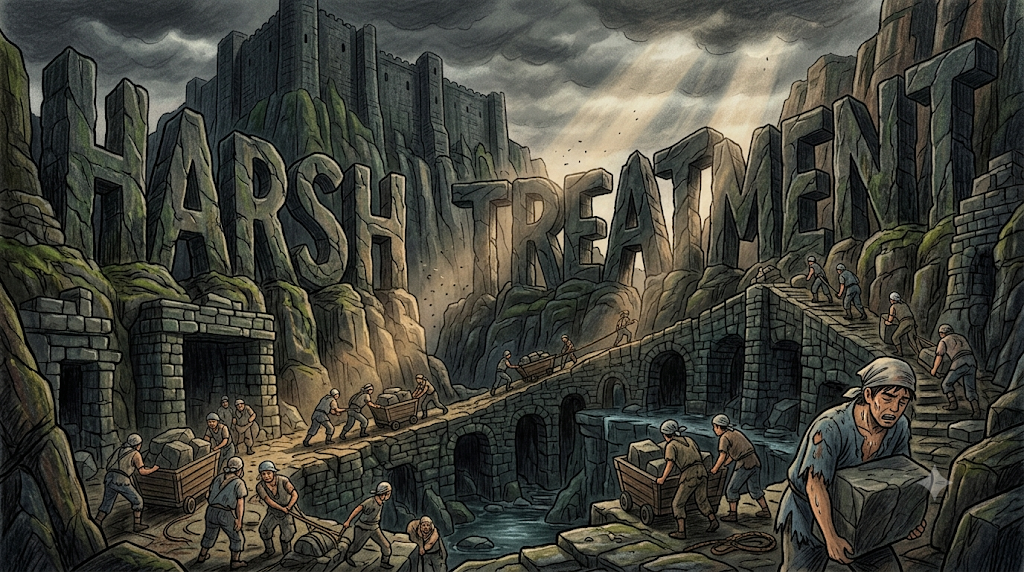
harsh treatment [hɑːrʃ ˈtriːtmənt]
품사/뉘앙스 설명
(명사구) 가혹한 대우, 혹독한 처우
어떤 사람이나 집단에게 가해지는 불공정하거나 지나치게 엄격하고 고통스러운 대우를 강조합니다. 권력 불균형과 연결된다는 것이 핵심 뉘앙스입니다. 수능 독해 역사·사회·심리 지문의 핵심 표현입니다.
- The harsh treatment that whistleblowers sometimes receive from organisations they have exposed — job loss, legal action, social ostracism — sends a powerful message to others who might be considering reporting wrongdoing, which is why effective whistleblower protection laws are considered essential to the functioning of accountable institutions. (폭로한 조직으로부터 내부 고발자들이 때로 받는 가혹한 대우 — 직업 상실, 법적 조치, 사회적 배척 — 는 비위를 신고하는 것을 고려하고 있을 다른 사람들에게 강력한 메시지를 보내는데 이것이 왜 효과적인 내부 고발자 보호법이 책임 있는 기관의 기능에 필수적인 것으로 여겨지는 이유이다.)
- Research on resilience consistently shows that people who experienced harsh treatment in childhood do not inevitably go on to replicate that treatment in their own relationships and parenting — but that avoiding this outcome requires conscious effort, often including support from therapy, strong social connections, and the development of alternative models for how relationships can work. (회복탄력성에 대한 연구는 어린 시절에 가혹한 대우를 경험한 사람들이 반드시 자신의 관계와 양육에서 그 대우를 복제하지는 않는다는 것을 일관되게 보여준다 — 하지만 이 결과를 피하는 것은 의식적인 노력이 필요하며 종종 치료의 지원, 강한 사회적 연결, 그리고 관계가 어떻게 작동할 수 있는지에 대한 대안적 모델의 개발을 포함한다.)
- The harsh treatment of certain migrant groups — regardless of whether it was sanctioned by law at the time — is now recognised in many countries as a dark chapter of their history that requires acknowledgement, and sometimes forms of redress, if trust between different communities is to be genuinely rebuilt rather than simply asserted. (특정 이민자 그룹에 대한 가혹한 대우는 — 당시 법에 의해 허용됐는지 여부에 관계없이 — 이제 많은 나라에서 다른 공동체들 사이의 신뢰가 단순히 주장되기보다 진정으로 재건되어야 한다면 인정이, 그리고 때로는 일종의 배상이 필요한 역사의 어두운 장으로 인식되고 있다.)

harshly criticize [ˈhɑːrʃli ˈkrɪtɪsaɪz]
품사/뉘앙스 설명
(동사구) 가혹하게 비판하다, 혹독하게 비난하다
날카롭고 강하며 감정적으로 부담이 되는 방식으로 비판하는 것을 강조합니다. 비판의 방식이 내용만큼 중요하다는 것이 핵심 뉘앙스입니다. 수능 독해 사회·교육·심리 지문에서 자주 등장합니다.
- Sports coaches who harshly criticize players in public — whether in post-match interviews or on the touchline — rarely achieve the motivational effect they are hoping for, and frequently damage the trust and confidence that players need to perform at their best, even when the criticism itself is technically accurate. (가혹하게 비판하는 스포츠 코치들 — 경기 후 인터뷰에서든 터치라인에서든 — 은 거의 바라는 동기 부여 효과를 달성하지 못하며 비판 자체가 기술적으로 정확하더라도 선수들이 최선을 다해 경기하는 데 필요한 신뢰와 자신감을 자주 손상시킨다.)
- When journalists harshly criticize organisations without acknowledging the constraints within which those organisations operate, they can produce a picture of simple failures of will or competence that obscures the structural factors which, if addressed, might actually lead to improvement. (기자들이 그 조직들이 운영하는 제약을 인정하지 않고 조직들을 가혹하게 비판할 때 그들은 단순한 의지나 역량의 실패라는 그림을 만들어낼 수 있는데 이것은 해결된다면 실제로 개선으로 이어질 수 있는 구조적 요인들을 모호하게 한다.)
- People who harshly criticize themselves for every mistake they make are not, as they sometimes assume, holding themselves to a higher standard — they are engaging in a cognitive pattern that research consistently shows reduces rather than improves performance, because self-criticism activates the same threat responses as external criticism and makes it harder to think clearly and adapt effectively. (모든 실수에 대해 스스로를 가혹하게 비판하는 사람들은 그들이 때로 가정하는 것처럼 더 높은 기준을 유지하는 것이 아니다 — 그들은 연구가 일관되게 성과를 향상시키기보다 감소시킨다고 보여주는 인지 패턴에 관여하고 있는데 자기 비판은 외부 비판과 같은 위협 반응을 활성화하고 명확하게 생각하고 효과적으로 적응하기 더 어렵게 만들기 때문이다.)
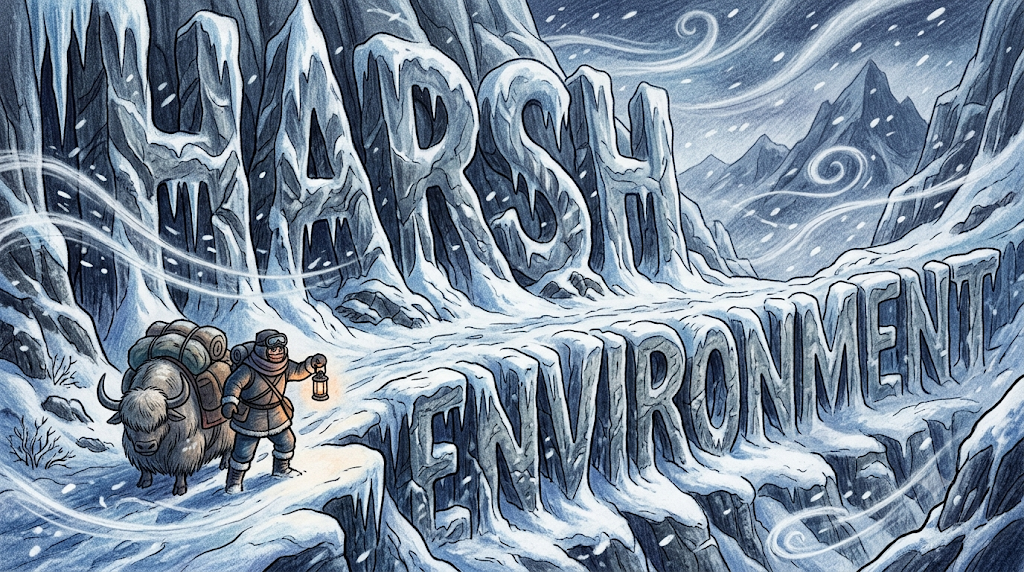
harsh environment [hɑːrʃ ɪnˈvaɪərənmənt]
품사/뉘앙스 설명
(명사구) 가혹한 환경, 혹독한 자연환경
생물이나 사람이 살아남기 어려울 만큼 극단적이거나 위험한 자연환경을 강조합니다. 생존이 도전이 되는 환경이 핵심 뉘앙스입니다. 수능 독해 과학·환경·역사 지문의 핵심 표현입니다.
- The communities that have thrived in harsh environments over thousands of years typically did so not by conquering their environment but by developing an intimate understanding of it — learning its seasonal rhythms, its hidden resources, and its dangers in ways that allowed careful, sustainable use rather than maximising short-term extraction. (가혹한 환경에서 수천 년에 걸쳐 번성한 지역 사회들은 전형적으로 환경을 정복함으로써가 아니라 그것에 대한 친밀한 이해를 개발함으로써 그렇게 했다 — 단기적 추출을 최대화하는 것이 아니라 신중하고 지속 가능한 사용을 허용하는 방식으로 계절적 리듬, 숨겨진 자원, 그리고 위험을 배웠다.)
- Technology designed for use in harsh environments — oil platforms, spacecraft, military equipment, deep-sea vessels — routinely produces engineering innovations that eventually find their way into consumer products and everyday applications, because the extreme requirements of these applications push designers to solve problems in ways that have broader applicability. (가혹한 환경에서 사용하기 위해 설계된 기술 — 석유 플랫폼, 우주선, 군사 장비, 심해 선박 — 은 일상적으로 결국 소비자 제품과 일상적 응용 프로그램에 반영되는 공학 혁신을 만들어내는데 이 응용 프로그램들의 극단적인 요건이 설계자들로 하여금 더 넓은 적용 가능성을 가진 방식으로 문제를 해결하도록 밀어붙이기 때문이다.)
- For many species, harsh environments function as evolutionary accelerators — the intensity of the selection pressure means that adaptive changes occur more rapidly than in stable, comfortable habitats, producing populations that are highly specialized in ways that can be difficult to observe in the less dramatic variety that characterises more benign ecosystems. (많은 종에게 가혹한 환경은 진화적 가속기로 기능한다 — 선택 압력의 강도는 적응적 변화가 안정적이고 편안한 서식지보다 더 빠르게 일어난다는 것을 의미하며 더 온화한 생태계를 특징짓는 덜 극적인 다양성에서는 관찰하기 어려울 수 있는 방식으로 고도로 전문화된 개체군을 만들어낸다.)
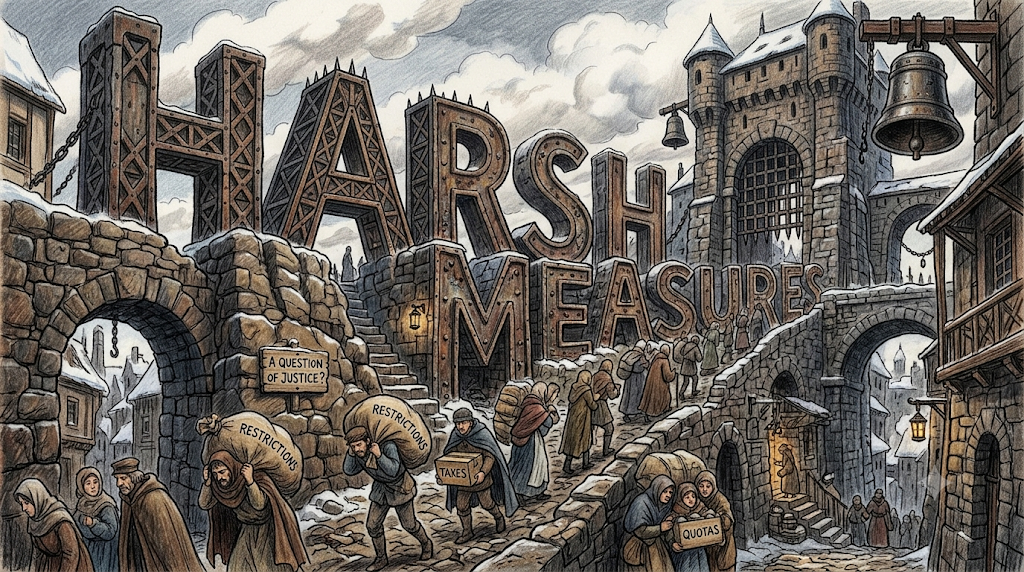
harsh measures [hɑːrʃ ˈmeʒərz]
품사/뉘앙스 설명
(명사구) 가혹한 조치, 강경한 방침
문제나 상황을 해결하기 위해 강하고 엄격하며 불편을 초래하는 방법을 강조합니다. 조치의 필요성과 가혹함의 정당성에 대한 의문이 핵심 뉘앙스입니다. 수능 독해 사회·역사·정치 지문에서 자주 등장합니다.
- When harsh measures are imposed from outside — whether by international bodies on sovereign states or by central management on local teams — they frequently generate resentment that undermines the cooperation needed to make those measures effective, which is why building local ownership of solutions is usually more sustainable than imposing solutions from above. (가혹한 조치들이 외부에서 — 주권 국가에 대한 국제 기구에 의해서든 지역 팀에 대한 중앙 경영진에 의해서든 — 부과될 때 그것들은 종종 그 조치들을 효과적으로 만드는 데 필요한 협력을 약화시키는 원망을 만들어내는데 이것이 왜 해결책의 지역적 주인의식을 구축하는 것이 위에서 해결책을 부과하는 것보다 보통 더 지속 가능한 이유이다.)
- The argument that harsh measures are justified by the seriousness of a crisis can sometimes be used to justify measures that would not be acceptable in normal times — and the history of emergency powers shows that temporary provisions often outlast the emergencies that created them, making it important to build in robust mechanisms for reviewing and withdrawing exceptional authority once the crisis has passed. (가혹한 조치들이 위기의 심각성에 의해 정당화된다는 주장은 때로 정상적인 시간에는 받아들여질 수 없는 조치들을 정당화하는 데 사용될 수 있다 — 그리고 비상 권한의 역사는 임시 조항이 그것들을 만든 비상 상황보다 오래 지속되는 경우가 많다는 것을 보여주며 위기가 지나간 후 예외적 권한을 검토하고 철회하기 위한 강력한 메커니즘을 구축하는 것을 중요하게 만든다.)
- Economists often point out that harsh measures designed to restore financial discipline — such as significant cuts to public spending or rapid interest rate rises — can cause the very economic contractions that they were intended to prevent, if implemented too quickly or without adequate social safety nets for those who bear the greatest cost of adjustment. (가혹한 조치들 — 공공 지출의 상당한 삭감이나 급격한 금리 인상과 같은 — 이 너무 빠르게 또는 조정의 가장 큰 비용을 부담하는 사람들을 위한 적절한 사회 안전망 없이 시행되면 방지하려 했던 바로 그 경제적 수축을 야기할 수 있다고 경제학자들은 종종 지적한다.)
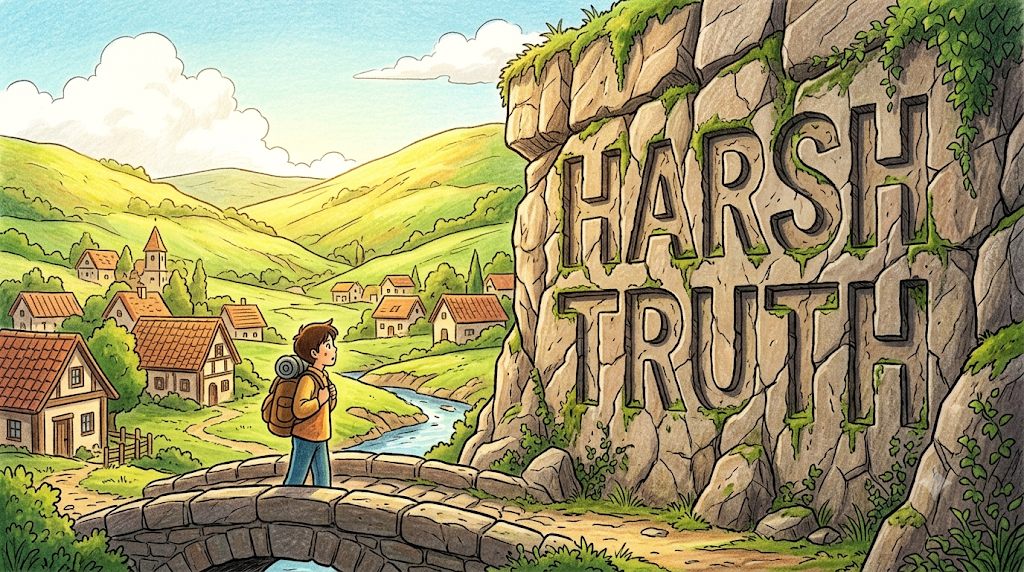
harsh truth [hɑːrʃ truːθ]
품사/뉘앙스 설명
(명사구) 냉혹한 진실, 쓴 진실
듣기 불편하거나 받아들이기 어렵지만 사실인 것을 강조합니다. 진실이 위안이 되지 않을 때도 진실임이 핵심 뉘앙스입니다. 수능 독해 심리·사회·교육 지문의 핵심 표현입니다.
- One of the harsh truths about long-term relationships is that they require sustained effort to maintain — not because love fades, but because the conditions that sustain closeness need to be actively recreated over time, since the spontaneous intimacy of early stages does not simply continue on its own once the novelty has passed. (장기적 관계에 대한 냉혹한 진실 중 하나는 그것들이 유지하기 위해 지속적인 노력이 필요하다는 것이다 — 사랑이 사라지기 때문이 아니라 친밀감을 유지하는 조건이 시간이 지나면서 적극적으로 재창조될 필요가 있기 때문인데 초기 단계의 자발적인 친밀감은 새로움이 지나면 그 자체로 단순히 계속되지 않기 때문이다.)
- The harsh truth about most skills is that they decline without regular practice — not dramatically and not immediately, but gradually enough that people who have not used a skill for years often discover, when they try to use it again, that what they remember doing easily now requires concentrated effort or that they can no longer do it at all. (대부분의 기술에 대한 냉혹한 진실은 규칙적인 연습 없이 쇠퇴한다는 것이다 — 극적으로 그리고 즉각적으로는 아니지만 점진적으로 충분히 수년 동안 기술을 사용하지 않은 사람들이 다시 사용하려 할 때 쉽게 했다고 기억하는 것이 이제 집중된 노력을 필요로 하거나 전혀 할 수 없다는 것을 종종 발견한다.)
- The harsh truth that organisations sometimes need to hear is that the most important bottleneck to their effectiveness is not the team's skill level, the available resources, or external competition, but the way decisions are made at the top — because even the most talented and well-resourced team will underperform if those making the key decisions are not open to information that challenges their existing views. (조직들이 때로 들어야 하는 냉혹한 진실은 효과성에 대한 가장 중요한 병목이 팀의 기술 수준, 이용 가능한 자원, 또는 외부 경쟁이 아니라 최상층에서 결정이 내려지는 방식이라는 것이다 — 핵심 결정을 내리는 사람들이 기존 견해에 도전하는 정보에 열려있지 않다면 가장 재능 있고 잘 갖춰진 팀도 기대 이하의 성과를 낼 것이기 때문이다.)
숙어 그룹 묶음 1 — 가혹한 비판과 말 harsh 핵심 패턴
표현 의미 핵심 뉘앙스 주요 맥락
| harsh criticism | 가혹한 비판 | 비판이 감정적 충격을 주는 수준인 것 | 교육·사회·심리 |
| harsh words | 거친 말 | 말이 관계나 상황에 즉각적으로 부정적인 영향을 주는 것 | 심리·사회·문학 |
| harshly criticize | 가혹하게 비판하다 | 비판의 방식이 내용만큼 중요한 것 | 사회·교육·심리 |
이 세 표현은 모두 harsh의 "날카롭고 불편하게 느껴지는 말이나 비판" 이미지를 공유하되, 각각 비판의 내용이 강하고 고통스러운 것(harsh criticism)·말 자체가 관계를 손상시키는 것(harsh words)·비판하는 방식이 가혹한 것(harshly criticize)의 관점에서 접근합니다.
- When people harshly criticize others using harsh words that go beyond harsh criticism of specific behaviour into attacks on character, they cross a line that usually makes productive conversation impossible — because people can learn from being told that what they did was wrong, but they are unlikely to respond constructively to being told that who they are is wrong. (사람들이 구체적인 행동에 대한 가혹한 비판을 넘어 성격 공격으로 가는 거친 말로 다른 사람들을 가혹하게 비판할 때 그들은 보통 생산적인 대화를 불가능하게 만드는 선을 넘는다 — 왜냐하면 사람들은 자신이 한 것이 잘못됐다는 말을 듣고 배울 수 있지만 자신이 누구인지가 잘못됐다는 말에 건설적으로 반응할 가능성은 낮기 때문이다.)
- The distinction between harsh criticism delivered through harsh words and harsh criticism delivered clearly but respectfully is not just about politeness — it is about effectiveness, because harshly criticizing someone in a way that triggers their defensive responses means that the content of the criticism, however accurate, is much less likely to be processed and acted upon. (거친 말을 통해 전달된 가혹한 비판과 명확하지만 존중하는 방식으로 전달된 가혹한 비판 사이의 구분은 단순히 예의에 관한 것이 아니다 — 그것은 효과에 관한 것인데 누군가를 방어적 반응을 유발하는 방식으로 가혹하게 비판하는 것은 비판의 내용이 아무리 정확하더라도 처리되고 행동으로 옮겨질 가능성이 훨씬 낮다는 것을 의미하기 때문이다.)
- Learning to receive harsh criticism without interpreting it as harsh words aimed at you personally — understanding that critical feedback about your work is not the same as an attack on your worth as a person — is one of the most valuable professional skills anyone can develop, and one that most people find genuinely difficult until they have had enough experience to separate the message from the discomfort of how it was delivered. (가혹한 비판을 개인적으로 당신을 겨냥한 거친 말로 해석하지 않고 받아들이는 것을 배우는 것 — 작업에 대한 비판적 피드백이 사람으로서 자신의 가치에 대한 공격과 같지 않다는 것을 이해하는 것 — 은 누구나 개발할 수 있는 가장 가치 있는 직업적 기술 중 하나이며 메시지를 전달 방식의 불편함으로부터 분리하기에 충분한 경험을 갖기까지 대부분의 사람들이 진정으로 어렵다고 생각하는 것이다.)
숙어 그룹 묶음 2 — 환경과 조건 harsh 심화 패턴
표현 의미 핵심 뉘앙스 주요 맥락
| harsh conditions | 혹독한 조건 | 인간이나 생물이 견뎌야 하는 극단적인 상황 | 환경·역사·사회 |
| harsh environment | 가혹한 환경 | 생존이 도전이 되는 환경 | 과학·환경·역사 |
| harsh measures | 가혹한 조치 | 조치의 필요성과 가혹함의 정당성에 대한 의문 | 사회·역사·정치 |
이 세 표현은 모두 harsh의 "견디기 어렵고 불편한 외부 상황" 이미지를 공유하되, 각각 생존이나 활동의 불리한 조건들(harsh conditions)·극단적이거나 위험한 자연적 환경(harsh environment)·강하고 불편을 초래하는 정책이나 방침(harsh measures)의 관점에서 접근합니다.
- Governments that impose harsh measures on populations living in already harsh conditions risk pushing people beyond their capacity to cope — and the history of policy failures in development contexts shows that harsh measures imposed without understanding the specific harsh conditions and harsh environment that people are navigating often make situations worse rather than better. (가혹한 조치들을 이미 혹독한 조건에서 살아가는 인구에게 부과하는 정부는 사람들을 대처 능력 이상으로 밀어붙일 위험이 있다 — 그리고 개발 맥락에서 정책 실패의 역사는 사람들이 헤쳐나가는 구체적인 혹독한 조건과 가혹한 환경을 이해하지 않고 부과된 가혹한 조치들이 종종 상황을 더 좋게 하기보다 더 나쁘게 만든다는 것을 보여준다.)
- Species adapted to one harsh environment often struggle when faced with the harsh conditions of a different one — which is one reason why conservation approaches that focus on protecting the specific harsh environment to which a species is adapted tend to be more effective than those that try to maintain populations in artificial conditions. (하나의 가혹한 환경에 적응한 종들은 다른 것의 혹독한 조건들에 직면할 때 종종 어려움을 겪는다 — 이것이 왜 종이 적응한 구체적인 가혹한 환경을 보호하는 데 집중하는 보존 접근 방식이 인공 조건에서 개체군을 유지하려는 것보다 더 효과적인 경향이 있는 이유 중 하나이다.)
- The harsh measures imposed during the crisis actually created harsh conditions in the surrounding environment that persisted long after the original problem had been resolved — a reminder that interventions designed to address immediate threats can have secondary effects that are sometimes as serious as the problem they were designed to solve, particularly when the social and economic environment is already fragile. (위기 동안 부과된 가혹한 조치들은 실제로 원래 문제가 해결된 후 오래 지속된 주변 환경에서 혹독한 조건들을 만들어냈다 — 이것은 즉각적인 위협을 해결하기 위해 설계된 개입이 때로 해결하도록 설계된 문제만큼 심각할 수 있는 이차적 영향을 가질 수 있다는 것을 상기시켜 주는데 특히 사회적·경제적 환경이 이미 취약할 때 그렇다.)
숙어 그룹 묶음 3 — 냉혹한 현실과 진실 harsh 심화 패턴
표현 의미 핵심 뉘앙스 주요 맥락
| harsh reality | 냉혹한 현실 | 기대와 현실의 충돌 | 사회·심리·교육 |
| harsh truth | 냉혹한 진실 | 진실이 위안이 되지 않을 때도 진실인 것 | 심리·사회·교육 |
| harsh treatment | 가혹한 대우 | 권력 불균형과 연결되는 것 | 역사·사회·심리 |
이 세 표현은 모두 harsh의 "불편하거나 고통스럽지만 부정하거나 피할 수 없는" 이미지를 공유하되, 각각 우리가 직면해야 하는 불편한 현실(harsh reality)·불편하지만 사실인 것(harsh truth)·타인에 의해 가해지는 불공정하고 고통스러운 경험(harsh treatment)의 관점에서 접근합니다.
- The harsh reality and the harsh truth are often the same thing — what makes them harsh is not that they are more real or more true than comfortable illusions, but that they require us to update our understanding in ways that cost us something, whether that is pride, hope, or the effort of having to change what we do. (냉혹한 현실과 냉혹한 진실은 종종 같은 것이다 — 그것들을 가혹하게 만드는 것은 편안한 환상보다 더 현실적이거나 더 사실이기 때문이 아니라 그것들이 우리에게 자존심, 희망, 또는 하는 것을 바꾸어야 하는 노력이든 무언가를 희생하는 방식으로 이해를 업데이트하도록 요구하기 때문이다.)
- One of the most important things educational institutions can do is prepare students for the harsh realities and harsh truths of adult life — not by being deliberately discouraging, but by creating conditions in which students encounter real difficulty, real failure, and real consequences, rather than a protected environment in which everything is adjusted to ensure that no one experiences genuine harsh treatment from circumstances. (교육 기관이 할 수 있는 가장 중요한 것 중 하나는 학생들이 성인 생활의 냉혹한 현실들과 냉혹한 진실들을 준비시키는 것이다 — 의도적으로 낙담시킴으로써가 아니라 아무도 상황으로부터 진정한 가혹한 대우를 경험하지 않도록 모든 것이 조정된 보호된 환경이 아닌 학생들이 진정한 어려움, 진정한 실패, 그리고 진정한 결과를 만나는 조건을 만들어냄으로써이다.)
- Those who have experienced genuinely harsh treatment often develop a clearer sense of what is the harsh reality of power relationships and what is the harsh truth about how institutions actually function — knowledge that is valuable precisely because it is not comfortable, and that those who have had more protected experiences sometimes lack in ways that affect the quality of their judgements and decisions. (진정으로 가혹한 대우를 경험한 사람들은 종종 권력 관계의 냉혹한 현실이 무엇이고 기관이 실제로 어떻게 기능하는지에 대한 냉혹한 진실이 무엇인지에 대해 더 명확한 감각을 개발한다 — 정확히 편안하지 않기 때문에 가치 있는 지식으로 더 보호된 경험을 가진 사람들이 때로 판단과 결정의 품질에 영향을 미치는 방식으로 부족한 것이다.)
숙어 그룹 묶음 4 — 처벌과 완성 harsh 완성 패턴
표현 의미 핵심 뉘앙스 주요 맥락
| harsh punishment | 가혹한 처벌 | 처벌의 정당성 문제와 연결되는 것 | 사회·역사·법률 |
| harsh reality | 냉혹한 현실 | 기대와 현실의 충돌 | 사회·심리·교육 |
| harsh conditions | 혹독한 조건 | 인간이나 생물이 견뎌야 하는 극단적인 상황 | 환경·역사·사회 |
이 세 표현은 함께 harsh가 나타내는 제도적·환경적·상황적 가혹함의 스펙트럼을 보여줍니다. harsh punishment는 제도가 사람에게 가하는 가혹함을, harsh reality는 상황이 우리에게 드러내는 가혹함을, harsh conditions는 환경이 생존에 부과하는 가혹함을 각각 강조합니다.
- The harsh reality is that harsh punishment imposed in harsh conditions is rarely an effective tool for achieving the rehabilitative goals that modern criminal justice systems claim to pursue — when everything about someone's experience is designed to be unpleasant rather than developmental, it should not be surprising that what emerges at the end often has more resentment and fewer social skills than what went in. (냉혹한 현실은 혹독한 조건에서 부과된 가혹한 처벌이 현대 형사 사법 시스템이 추구한다고 주장하는 재활 목표를 달성하기 위한 효과적인 도구가 거의 아니라는 것이다 — 누군가의 경험에 관한 모든 것이 발전적이기보다 불쾌하도록 설계될 때 결국 나오는 것이 들어간 것보다 더 많은 원망과 더 적은 사회적 기술을 갖는다는 것은 놀랍지 않다.)
- The harsh conditions in which many people serve harsh punishments are not a side effect that reformers have simply failed to notice — they are often a reflection of a societal willingness to ignore the harsh reality that prison conditions are part of what will determine whether those leaving prison can function as contributing members of society. (많은 사람들이 가혹한 처벌을 받는 혹독한 조건들은 개혁가들이 단순히 알아채지 못한 부수적 효과가 아니다 — 그것들은 종종 교도소 조건이 교도소를 떠나는 사람들이 사회에 기여하는 구성원으로 기능할 수 있는지를 결정할 것의 일부라는 냉혹한 현실을 무시하려는 사회적 의지의 반영이다.)
- Understanding the relationship between harsh conditions, harsh punishment, and harsh reality — that how we treat people in difficult circumstances both reflects and shapes what kind of society we are — may be one of the most practically important areas of social research, precisely because the answers are uncomfortable and because comfortable narratives about crime and punishment consistently fail to produce the outcomes we say we want. (혹독한 조건들, 가혹한 처벌, 그리고 냉혹한 현실 사이의 관계를 이해하는 것 — 어려운 상황에서 사람들을 대우하는 방식이 우리가 어떤 종류의 사회인지를 반영하고 형성한다는 것 — 은 정확히 답이 불편하고 범죄와 처벌에 대한 편안한 서사가 우리가 원한다고 말하는 결과를 지속적으로 만들어내지 못하기 때문에 사회 연구의 가장 실용적으로 중요한 영역 중 하나일 수 있다.)
전체 요약표
표현 의미 핵심 뉘앙스
| harsh | 가혹한, 거친, 혹독한, 냉혹한 | 부드럽거나 완화되지 않은 날 것의 강렬함과 거칠음의 이미지 |
| harsh criticism | 가혹한 비판 | 비판이 감정적 충격을 주는 수준인 것 |
| harsh conditions | 혹독한 조건 | 인간이나 생물이 견뎌야 하는 극단적인 상황 |
| harsh punishment | 가혹한 처벌 | 처벌의 정당성 문제와 연결되는 것 |
| harsh reality | 냉혹한 현실 | 기대와 현실의 충돌 |
| harsh words | 거친 말 | 말이 관계나 상황에 즉각적으로 부정적인 영향을 주는 것 |
| harsh treatment | 가혹한 대우 | 권력 불균형과 연결되는 것 |
| harshly criticize | 가혹하게 비판하다 | 비판의 방식이 내용만큼 중요한 것 |
| harsh environment | 가혹한 환경 | 생존이 도전이 되는 환경 |
| harsh measures | 가혹한 조치 | 조치의 필요성과 가혹함의 정당성에 대한 의문 |
| harsh truth | 냉혹한 진실 | 진실이 위안이 되지 않을 때도 진실인 것 |
유의어 비교표
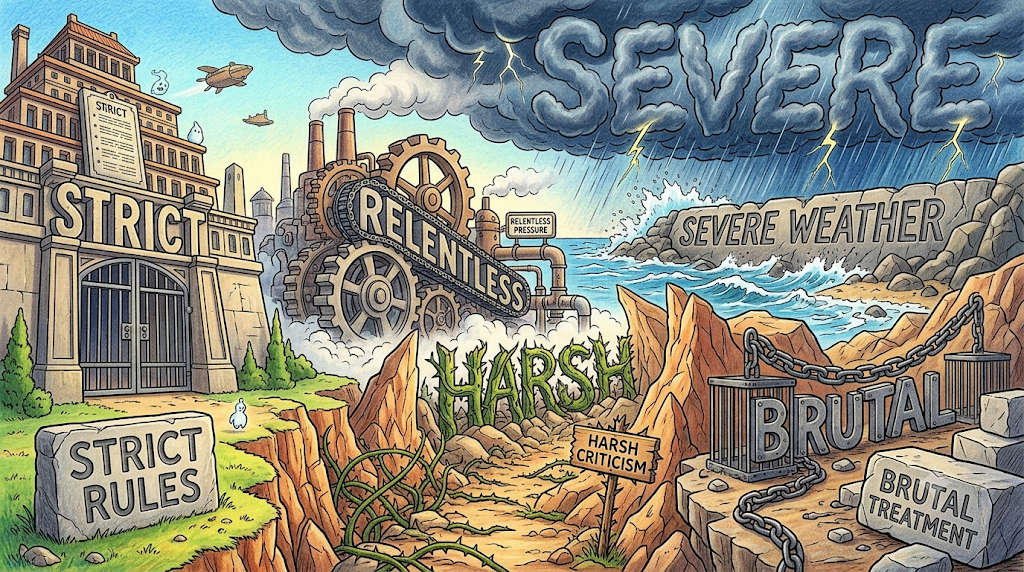
단어 공통점 뉘앙스 차이 예문
| harsh | 가혹함 관련 | 감각적·감정적·상황적으로 불편하고 날 것으로 거칠게 느껴지는 것 강조 | harsh criticism |
| severe | 가혹함 관련 | 상황이나 결과가 심각하거나 극단적인 것을 공식적으로 강조 | severe weather |
| strict | 가혹함 관련 | 규칙이나 기준을 철저하게 따르거나 따르게 하는 것 강조 | strict rules |
| brutal | 가혹함 관련 | 잔혹하거나 무자비할 만큼 극단적으로 가혹한 것 강조 | brutal treatment |
| relentless | 가혹함 관련 | 멈추거나 완화되지 않고 지속적으로 가혹한 것 강조 | relentless pressure |
결론 정리
harsh는 단순히 "가혹한"이 아니라, 편안하거나 부드럽거나 친절한 것과 정반대로 날 것의 거칠고 불편하며 견디기 어려운 것의 이미지에서 출발해 가혹한 비판·혹독한 조건·가혹한 처벌·냉혹한 현실·거친 말·가혹한 대우·가혹하게 비판하다·가혹한 환경·가혹한 조치·냉혹한 진실까지 확장되는 단어다 — harsh가 있는 곳엔 언제나 '부드럽거나 완화되지 않고 날 것 그대로의 거칠고 불편하며 때로는 고통스럽지만 그것이 현실이거나 사실인' 냉혹함과 거칠음의 이미지가 있다.
💡 harsh는 "편안하거나 부드럽거나 친절한 것과 정반대로 날 것의 거칠고 불편하며 견디기 어려운 것을 가리키는" 단어 — harsh criticism·harsh reality·harsh truth 가 수능 최빈출. severe(공식적 심각성)·strict(규칙의 엄격함)와의 구별이 핵심 출제 포인트.
🌟 초등학생 버전 harsh는 단순히 "가혹한"이 아니에요! harsh reality는 열심히 연습했는데 대회에서 탈락했을 때 "결과가 너무 슬프지만 이게 현실이야"처럼 원하는 것과는 달리 실제는 불편하거나 고통스럽지만 그것이 사실이어서 피할 수 없는 상황이고, harsh criticism은 그림을 그렸더니 선생님이 "이 부분은 완전히 잘못됐고 저 부분도 다시 해야 해"라고 날카롭게 말하는 것처럼 그냥 아프고 듣기 싫을 만큼 강하고 날카롭게 잘못된 점을 지적하는 것이에요! 🌍✨


