
- 분류 전체보기 (5709)

| 일 | 월 | 화 | 수 | 목 | 금 | 토 |
|---|---|---|---|---|---|---|
| 1 | 2 | 3 | 4 | 5 | ||
| 6 | 7 | 8 | 9 | 10 | 11 | 12 |
| 13 | 14 | 15 | 16 | 17 | 18 | 19 |
| 20 | 21 | 22 | 23 | 24 | 25 | 26 |
| 27 | 28 | 29 | 30 |
- Sorry
- I'm sorry
- Hey
- Right?
- pick up
- Show Up
- oh
- set up
- come up with
- well
- Sure
- OKay
- get through
- Yeah
- please?
- Actually
- work out
- too.
- By The Way
- Read between the lines
- Excuse me
- make it
- please.
- hold on
- Please
- Don't worry
- Yes
- I'm glad to hear that.
- entrance fee
- no
- Today
- Total
인과함께
Day442 , literacy, literacy rate, digital literacy, financial literacy, literacy skills, media literacy, literacy programme, functional literacy, promote literacy, literacy level, visual literacy 본문
Day442 , literacy, literacy rate, digital literacy, financial literacy, literacy skills, media literacy, literacy programme, functional literacy, promote literacy, literacy level, visual literacy
미인생 2026. 9. 23. 13:25
literacy [ˈlɪtərəsi]
(명사) 읽고 쓰는 능력, 문해력, ~에 대한 이해력
단순히 "읽고 쓰는 능력"으로만 외우면 수능에서 반드시 틀립니다. literacy는 "특정 영역에서 정보를 읽고 이해하고 활용하여 실생활에서 효과적으로 기능할 수 있는 능력, 단순히 글자를 아는 것을 넘어 그 정보를 비판적으로 해석하고 의미 있게 사용할 수 있는 역량" 이라는 핵심 이미지에서 출발해, 기본 읽기·쓰기 능력에서 디지털 리터러시·미디어 리터러시·금융 리터러시·시각적 리터러시까지 폭넓게 쓰이는 핵심 다의어입니다. 특히 literacy(문해력·이해력) vs. knowledge(지식) vs. competence(역량) 의 뉘앙스 차이, literacy rate(문해율), digital literacy(디지털 리터러시) 패턴은 수능 독해 교육·사회·과학·환경·심리 지문에서 핵심적으로 등장합니다.
'literacy'는 라틴어 literatus(글을 아는, 교육받은)에서 유래했습니다. litera(문자, 글자)에서 파생되어, 원래 "문자를 알고 글을 읽고 쓸 수 있는 상태" 를 뜻했습니다. literacy의 핵심 이미지는 "단순히 글자를 인식하는 것을 넘어, 특정 영역의 정보와 언어를 충분히 이해하고 비판적으로 해석하며 실생활에서 효과적으로 활용할 수 있는 능력" 으로, 이 이미지에서 기본 문해력·디지털 이해력·미디어 비판력·금융 이해력·시각적 해석력이 모두 확장되었습니다.
1. literacy rate [ˈlɪtərəsi reɪt]
(사회/역사/수능) "문해율, 글을 읽고 쓸 수 있는 사람의 비율"을 뜻합니다. 한 사회나 지역에서 기본적인 읽기·쓰기 능력을 갖춘 사람이 차지하는 비율을 강조합니다. 수능 독해 사회·역사·교육 지문의 핵심 표현입니다.
Countries with higher literacy rates tend to have stronger economies, better public health outcomes, and more stable democratic institutions — not because reading and writing cause these things directly, but because they enable people to access information, participate in civic life, and make more informed decisions about their own wellbeing. (문해율이 높은 나라들은 더 강한 경제, 더 나은 공중 보건 결과, 그리고 더 안정적인 민주주의 제도를 갖는 경향이 있다 — 읽기와 쓰기가 이것들을 직접적으로 일으키기 때문이 아니라 사람들이 정보에 접근하고, 시민 생활에 참여하며, 자신의 건강에 대해 더 정보에 기반한 결정을 내릴 수 있게 하기 때문이다.)
2. digital literacy [ˈdɪdʒɪtəl ˈlɪtərəsi]
(교육/과학/수능) "디지털 리터러시, 디지털 기기와 정보를 이해하고 활용하는 능력"을 뜻합니다. 단순히 기기를 사용하는 것을 넘어 디지털 환경에서 정보를 비판적으로 평가하고 안전하게 활용하는 역량을 강조합니다. 수능 독해 교육·사회·과학 지문의 핵심 표현입니다.
Digital literacy in the modern world means far more than knowing how to use a smartphone or browse the internet — it includes the ability to evaluate whether online sources are reliable, to understand how algorithms shape the information you see, and to protect your personal data from being misused. (현대 세계에서 디지털 리터러시는 스마트폰을 사용하거나 인터넷을 검색하는 방법을 아는 것보다 훨씬 더 많은 것을 의미한다 — 그것은 온라인 출처가 신뢰할 수 있는지 평가하고, 알고리즘이 보는 정보를 어떻게 형성하는지 이해하며, 개인 데이터가 잘못 사용되지 않도록 보호하는 능력을 포함한다.)
3. financial literacy [faɪˈnænʃəl ˈlɪtərəsi]
(사회/경제/수능) "금융 리터러시, 금융 정보를 이해하고 현명하게 관리하는 능력"을 뜻합니다. 예산 관리·저축·투자·부채에 대한 기본적인 이해와 실생활에서의 활용 능력을 강조합니다. 수능 독해 사회·경제·교육 지문의 핵심 표현입니다.
Poor financial literacy affects people at every income level — it is not just about having enough money but about understanding how to manage whatever money you have, which is why people with high incomes can still find themselves in serious financial difficulty if they lack the basic skills to budget and plan. (낮은 금융 리터러시는 모든 소득 수준의 사람들에게 영향을 미친다 — 그것은 단순히 충분한 돈을 갖는 것에 관한 것이 아니라 가진 돈을 어떻게 관리하는지 이해하는 것에 관한 것이며 이것이 왜 높은 소득을 가진 사람들도 예산을 세우고 계획하는 기본 기술이 없다면 심각한 재정적 어려움에 처할 수 있는 이유이다.)
4. literacy skills [ˈlɪtərəsi skɪlz]
(교육/심리/수능) "문해 기술, 읽기·쓰기 관련 역량"을 뜻합니다. 글을 이해하고 표현하는 데 필요한 구체적인 기술들을 강조합니다. 수능 독해 교육·심리·사회 지문의 핵심 표현입니다.
The literacy skills that children develop in their early years at school have effects that extend far beyond their ability to read and write — they influence how well children can learn in every other subject, how confidently they can express their ideas, and how effectively they can navigate the information-heavy world around them. (아이들이 초등학교 초기에 개발하는 문해 기술들은 읽기와 쓰기 능력을 훨씬 넘어서는 효과를 갖는다 — 그것들은 아이들이 다른 모든 과목에서 얼마나 잘 배울 수 있는지, 자신의 생각을 얼마나 자신 있게 표현할 수 있는지, 그리고 주변의 정보 가득한 세상을 얼마나 효과적으로 헤쳐나갈 수 있는지에 영향을 미친다.)
5. media literacy [ˈmiːdiə ˈlɪtərəsi]
(교육/사회/수능) "미디어 리터러시, 미디어 정보를 비판적으로 이해하고 평가하는 능력"을 뜻합니다. 신문·방송·소셜 미디어 등에서 접하는 정보를 비판적으로 분석하고 평가하는 역량을 강조합니다. 수능 독해 교육·사회·심리 지문의 핵심 표현입니다.
Media literacy is increasingly considered a democratic necessity rather than a specialist skill — in a world where misinformation spreads rapidly through social networks, the ability to distinguish between reliable and unreliable sources of news has become as important for citizens as the ability to read and write itself. (미디어 리터러시는 전문 기술이 아닌 민주주의적 필수 요건으로 점점 더 여겨지고 있다 — 소셜 네트워크를 통해 허위 정보가 빠르게 확산되는 세상에서 신뢰할 수 있는 뉴스 출처와 그렇지 않은 것을 구별하는 능력이 시민들에게 읽기와 쓰기 자체만큼 중요해졌다.)
6. literacy programme [ˈlɪtərəsi ˈprəʊɡræm]
(교육/사회/수능) "문해 프로그램, 읽기·쓰기 교육 과정"을 뜻합니다. 읽기와 쓰기 능력을 개발하거나 향상시키기 위해 설계된 교육 프로그램을 강조합니다. 수능 독해 교육·사회·역사 지문에서 자주 등장합니다.
The adult literacy programme ran three evenings a week in the community centre and attracted participants ranging from people in their twenties who had struggled silently with reading throughout their school years to people in their seventies who had simply never had the opportunity to learn. (성인 문해 프로그램은 지역 사회 센터에서 주 3회 저녁에 운영됐으며 학교 시절 내내 읽기를 조용히 어려워했던 20대 사람들부터 단순히 배울 기회가 없었던 70대 사람들까지 다양한 참가자들을 끌어들였다.)
7. functional literacy [ˈfʌŋkʃənəl ˈlɪtərəsi]
(사회/교육/수능) "기능적 문해력, 일상생활을 위한 실질적 읽기·쓰기 능력"을 뜻합니다. 단순히 글자를 읽는 것을 넘어 일상생활에서 실제로 정보를 활용할 수 있는 수준의 문해력을 강조합니다. 수능 독해 사회·교육·심리 지문에서 자주 등장합니다.
Functional literacy — the ability to read and understand things like medicine labels, bus timetables, and job application forms — is the level that education systems should be most focused on achieving, because it is the threshold below which people struggle to manage their daily lives independently. (기능적 문해력 — 의약품 라벨, 버스 시간표, 그리고 취업 지원서 같은 것들을 읽고 이해하는 능력 — 은 그 이하에서는 사람들이 독립적으로 일상생활을 관리하는 데 어려움을 겪는 임계값이기 때문에 교육 시스템이 달성하는 데 가장 집중해야 하는 수준이다.)
8. promote literacy [prəˈməʊt ˈlɪtərəsi]
(교육/사회/수능) "문해력을 증진하다, 읽고 쓰는 능력을 장려하다"를 뜻합니다. 문해력을 높이기 위해 적극적으로 노력하거나 지원하는 것을 강조합니다. 수능 독해 교육·사회·역사 지문에서 자주 등장합니다.
Libraries play an important role in efforts to promote literacy not just by providing books but by creating welcoming spaces where people of all ages and backgrounds feel comfortable spending time with reading — and by hosting events that connect reading with pleasure rather than only with school and obligation. (도서관은 책을 제공하는 것만이 아니라 모든 연령과 배경의 사람들이 읽기와 함께 시간을 보내는 것이 편안하다고 느끼는 환영하는 공간을 만들고 — 읽기를 학교와 의무만이 아닌 즐거움과 연결하는 행사를 주최함으로써 문해력을 증진하는 노력에서 중요한 역할을 한다.)
9. literacy level [ˈlɪtərəsi ˈlevəl]
(교육/사회/수능) "문해 수준, 읽기·쓰기 능력의 정도"를 뜻합니다. 개인이나 집단이 가진 문해력의 정도나 단계를 강조합니다. 수능 독해 교육·사회·심리 지문에서 자주 등장합니다.
Research has consistently shown that children's literacy levels at age seven are among the strongest predictors of their academic performance throughout school — which is why early intervention for children who are falling behind in reading is so much more effective than trying to address the same problems later when gaps have had years to widen. (연구는 7세 때 아이들의 문해 수준이 학교 전반에 걸친 학업 성취의 가장 강력한 예측 변수 중 하나라는 것을 지속적으로 보여줬다 — 이것이 왜 읽기에서 뒤처지는 아이들을 위한 조기 개입이 격차가 벌어지는 데 수년이 지난 후 같은 문제를 해결하려는 것보다 훨씬 더 효과적인 이유이다.)
10. visual literacy [ˈvɪʒuəl ˈlɪtərəsi]
(교육/과학/수능) "시각적 리터러시, 이미지와 시각적 정보를 이해하고 해석하는 능력"을 뜻합니다. 그래프·차트·이미지·영상 등 시각적 정보를 비판적으로 읽고 해석하는 역량을 강조합니다. 수능 독해 교육·과학·사회 지문에서 자주 등장합니다.
Visual literacy has become increasingly important as more information is communicated through charts, diagrams, infographics, and video rather than through written text alone — students who cannot read a graph as critically as they read a paragraph are at a significant disadvantage when evaluating scientific and statistical claims. (시각적 리터러시는 더 많은 정보가 문자 텍스트만이 아닌 차트, 다이어그램, 인포그래픽, 영상을 통해 전달되면서 점점 더 중요해졌다 — 단락을 읽는 것만큼 비판적으로 그래프를 읽을 수 없는 학생들은 과학적·통계적 주장을 평가할 때 상당한 불이익을 받는다.)
대한민국 입시 및 학술 주요 POINT
POINT 1. literacy vs. knowledge vs. competence — 수능 최빈출 뉘앙스 구별
세 단어 모두 "능력이나 이해"와 관련되지만 뉘앙스가 다릅니다. literacy → 특정 영역의 정보를 읽고 이해하고 비판적으로 해석하며 실생활에서 효과적으로 활용할 수 있는 능력 (실용적 이해·비판적 해석·활용 역량 강조) knowledge → 사실이나 개념이나 정보를 아는 것, 반드시 그것을 활용할 수 있어야 하는 것은 아님 (사실·개념·정보의 소유 강조) competence → 어떤 과제나 역할을 수행하는 데 필요한 기술이나 능력 (과제 수행 능력·기술적 역량·수행의 질 강조) 예) She has literacy in data science — she can read studies critically and apply them. (그녀는 데이터 과학 리터러시가 있다 — 연구를 비판적으로 읽고 적용할 수 있다.) — 비판적 읽기와 실제 활용 능력 He has broad knowledge of history but rarely applies it practically. (그는 역사에 대한 넓은 지식을 갖고 있지만 실제로는 거의 적용하지 않는다.) — 사실과 개념의 소유 The surgeon has exceptional competence in minimally invasive procedures. (외과 의사는 최소 침습 수술에 탁월한 역량을 갖고 있다.) — 과제를 수행하는 기술과 능력
POINT 2. literacy rate / digital literacy / media literacy — 수능 교육·사회 지문 핵심
세 표현 모두 literacy의 "정보를 이해하고 활용하는 능력" 이미지를 공유하지만 맥락이 다릅니다. literacy rate → 한 사회에서 기본 문해력을 갖춘 사람의 비율, 사회적 발전의 지표 (사회적 측정·비율·발전 지표 강조) digital literacy → 디지털 환경에서 정보를 비판적으로 평가하고 안전하게 활용하는 역량 (기술 활용·비판적 평가·온라인 안전 강조) media literacy → 미디어에서 접하는 정보를 비판적으로 분석하고 평가하는 역량 (비판적 분석·정보 평가·허위 정보 구별 강조) 이 세 표현이 등장하면 글쓴이가 개인이나 사회의 정보 이해 역량을 논하고 있다는 신호입니다.
POINT 3. literacy 어근 확장 — 수능 어휘 확장 필수
라틴어 litera(문자, 글자)에서 유래한 단어들이 수능에서 자주 출제됩니다. literacy [ˈlɪtərəsi] → 문해력, 이해력, 리터러시 literate [ˈlɪtərət] → 읽고 쓸 수 있는, ~에 능통한 illiteracy [ɪˈlɪtərəsi] → 문맹, 읽고 쓰지 못하는 상태 illiterate [ɪˈlɪtərət] → 문맹의, 읽고 쓸 수 없는 literature [ˈlɪtərətʃər] → 문학, 문헌 이 단어들은 모두 "문자를 알고 글을 읽고 쓸 수 있는 상태" 공통 이미지에서 시작합니다.
(명사) ① 문해력, 읽고 쓰는 능력 (기본 능력)
literacy의 가장 기본적인 의미로, 글을 읽고 쓸 수 있는 능력을 나타냅니다.
- The expansion of literacy in the nineteenth century transformed societies in ways that went far beyond just the ability to read signs and letters — it gave ordinary people access to newspapers, political pamphlets, and eventually novels, allowing them to form opinions about their world that their less educated predecessors could never have formed. (19세기 문해력의 확산은 단순히 간판과 편지를 읽는 능력을 훨씬 넘어서는 방식으로 사회를 변화시켰다 — 그것은 평범한 사람들에게 신문, 정치 팸플릿, 그리고 결국 소설에 대한 접근을 주었으며 덜 교육받은 이전 세대들이 결코 형성할 수 없었던 자신의 세계에 대한 의견을 형성할 수 있게 했다.)
- Measuring literacy is more complex than it first appears — a simple test of whether someone can read at all captures less useful information than an assessment of what someone can do with what they read, which varies enormously from recognising simple words to analysing complex arguments. (문해력을 측정하는 것은 처음 보이는 것보다 더 복잡하다 — 누군가가 읽을 수 있는지 단순한 검사는 간단한 단어를 인식하는 것부터 복잡한 논거를 분석하는 것까지 엄청나게 다양한 읽은 것으로 무엇을 할 수 있는지 평가보다 덜 유용한 정보를 포착한다.)
- The relationship between literacy and freedom has been understood by governments on both sides of the political spectrum — some have promoted literacy specifically to help citizens participate in democracy, while others have restricted access to education precisely because an educated population is harder to control. (문해력과 자유의 관계는 정치적 스펙트럼 양쪽의 정부에 의해 이해됐다 — 일부는 시민들이 민주주의에 참여하도록 돕기 위해 구체적으로 문해력을 증진한 반면 다른 일부는 교육받은 인구가 통제하기 더 어렵기 때문에 정확히 교육에 대한 접근을 제한했다.)
(명사) ② ~에 대한 이해력, ~리터러시 (확장 의미)
특정 분야나 영역에서의 이해력이나 능력을 나타냅니다. 수능 독해 교육·사회·과학 지문에서 가장 자주 등장하는 용법입니다.
- Scientific literacy does not mean knowing all the facts of every scientific discipline but understanding how science works as a process — how evidence is gathered and evaluated, how hypotheses are tested, and why the fact that scientists sometimes change their minds is a sign of health rather than weakness. (과학적 문해력은 모든 과학 분야의 모든 사실을 아는 것이 아니라 과학이 과정으로서 어떻게 작동하는지 이해하는 것을 의미한다 — 증거가 어떻게 수집되고 평가되는지, 가설이 어떻게 검증되는지, 그리고 과학자들이 때로 마음을 바꾼다는 사실이 왜 약점이 아닌 건강의 신호인지이다.)
- Emotional literacy — the ability to recognise, understand, and talk about emotions in yourself and others — is increasingly recognised as a foundation for mental health and positive relationships, and its absence in childhood has been linked to difficulties with empathy and self-regulation that persist into adult life. (감성적 문해력 — 자신과 다른 사람들에게서 감정을 인식하고, 이해하며, 이야기하는 능력 — 은 정신 건강과 긍정적인 관계의 기반으로 점점 더 인정받고 있으며 어린 시절의 그 부재는 성인 생활까지 지속되는 공감과 자기 조절의 어려움과 연결됐다.)
- The concept of literacy has expanded so far from its original meaning that it is now applied to almost any domain where the ability to understand and use specialised information effectively is valued — from health literacy to environmental literacy to data literacy — reflecting the idea that in each of these areas, informed participation is increasingly necessary for individuals and societies. (문해력 개념은 원래 의미에서 너무 멀리 확장되어 이제 건강 리터러시에서 환경 리터러시, 데이터 리터러시까지 — 전문적인 정보를 효과적으로 이해하고 사용하는 능력이 가치 있는 거의 모든 영역에 적용된다 — 이것은 각 영역에서 정보에 기반한 참여가 개인과 사회 모두에게 점점 더 필요해진다는 아이디어를 반영한다.)
(명사) ③ 문해 교육, 읽기·쓰기 교육 (교육적 맥락)
문해력을 가르치거나 개발하는 교육 활동이나 프로그램을 나타냅니다.
- Investing in early literacy has been shown to produce returns that extend decades into the future — children who develop strong reading skills in their early years go on to earn more, have better health outcomes, and engage more actively in civic life than those who struggle with reading throughout their school years. (초기 문해 교육에 대한 투자는 수십 년 미래로 확장되는 수익을 가져오는 것으로 나타났다 — 초기에 강한 읽기 기술을 개발하는 아이들은 학교 시절 내내 읽기를 어려워하는 아이들보다 더 많이 벌고, 더 나은 건강 결과를 가지며, 시민 생활에 더 적극적으로 참여한다.)
- Literacy teaching has changed significantly over the decades, with different theories about whether children learn better through phonics, through whole language approaches, or through some combination of the two — a debate that has remained live in education research and policy because the stakes are so high for the children concerned. (문해 교육은 아이들이 파닉스, 전체 언어 접근 방식, 또는 두 가지의 조합을 통해 더 잘 배우는지에 대한 다른 이론들로 수십 년에 걸쳐 크게 변했다 — 관련 아이들에게 너무 많은 것이 걸려있기 때문에 교육 연구와 정책에서 살아있는 채로 남아있는 논쟁이다.)
- The most effective literacy interventions tend to combine direct instruction with wide reading, because the skills children develop through explicit teaching are then embedded and extended through the experience of encountering many different texts across many different contexts over time. (가장 효과적인 문해 개입은 직접 교육을 광범위한 독서와 결합하는 경향이 있는데 명시적 교육을 통해 아이들이 개발하는 기술들이 시간이 지나면서 많은 다른 맥락에서 많은 다른 텍스트를 만나는 경험을 통해 내재화되고 확장되기 때문이다.)
뉘앙스·의미 연결 흐름 표
핵심 이미지 연결 흐름 뉘앙스 요약
| 단순히 글자를 인식하는 것을 넘어 특정 영역의 정보를 비판적으로 이해하고 실생활에서 효과적으로 활용할 수 있는 능력 | 기본 읽기·쓰기 → 비판적 이해 → 실생활 활용 → 특정 분야로 확장 | 정보를 읽고 해석하고 활용하는 역량의 이미지 |
| 리터러시의 범위 | basic literacy → functional literacy → digital literacy | 기본→기능적→디지털의 이미지 |
| 사회적 영향 | literacy rate → promote literacy → literacy programme | 측정→증진→교육 프로그램의 이미지 |
어원 흐름 표
단어 구성 요소 의미 연결 흐름 뉘앙스 요약
| 라틴어 litera (문자·글자) → literatus (글을 아는·교육받은) → literacy | 글자를 알다 → 교육받은 상태 → 글을 읽고 쓸 수 있는 능력 → 특정 영역의 이해 역량 | 글자를 넘어 정보를 읽고 해석하고 활용하는 핵심 이미지 |
| literacy (명사→형용사·literate→명사·illiteracy→형용사·illiterate) | 문해력·이해력 → 읽고 쓸 수 있는·능통한 → 문맹·무지 → 읽고 쓸 수 없는 | 정보 이해 역량의 유무에서 다양한 맥락으로 완성 |
품사별 의미 표
품사 의미 예문
| 명사 | 문해력, 읽고 쓰는 능력 | improve literacy (문해력을 향상시키다) |
| 명사 | ~에 대한 이해력, ~리터러시 | digital literacy (디지털 리터러시) |
| 명사 | 문해 교육 | early literacy (초기 문해 교육) |
| 형용사 (literate) | 읽고 쓸 수 있는, ~에 능통한 | a literate population (문해력 있는 인구) |
| 명사 (illiteracy) | 문맹, 읽고 쓰지 못하는 상태 | combat illiteracy (문맹을 퇴치하다) |
활용 예문 리스트
- The relationship between a child's home environment and their literacy development is one of the most consistent findings in educational research — children who are read to regularly, who see adults reading for pleasure, and who have access to books at home arrive at school with significantly higher literacy levels than those who do not have these advantages. (아이의 가정 환경과 문해력 발달 사이의 관계는 교육 연구에서 가장 일관된 발견 중 하나이다 — 정기적으로 책을 읽어주고, 어른들이 즐거움을 위해 읽는 것을 보며, 집에서 책에 접근할 수 있는 아이들은 이런 이점이 없는 아이들보다 훨씬 높은 문해 수준으로 학교에 도착한다.)
- Promoting literacy among adults who missed out on education in childhood requires a very different approach from teaching children — adults bring life experience that can be used as a foundation for learning, but they also bring fears of failure and embarrassment that sensitive teaching must address before real progress can begin. (어린 시절 교육을 놓친 어른들 사이에서 문해력을 증진하는 것은 아이들을 가르치는 것과 매우 다른 접근 방식을 필요로 한다 — 어른들은 학습의 기반으로 사용될 수 있는 삶의 경험을 가져오지만 진정한 발전이 시작되기 전에 세심한 교육이 해결해야 하는 실패와 당혹감에 대한 두려움도 가져온다.)
- Media literacy education that focuses only on identifying fake news misses the more important point — that even entirely factual reporting can mislead through what it chooses to emphasise, what it leaves out, and what framing it uses to present events that could be presented very differently while remaining technically accurate. (가짜 뉴스 식별에만 집중하는 미디어 리터러시 교육은 더 중요한 점을 놓친다 — 완전히 사실에 근거한 보도조차 강조하기로 선택한 것, 빠뜨리는 것, 그리고 기술적으로 정확하게 유지되면서 매우 다르게 제시될 수 있는 사건을 제시하는 데 사용하는 프레이밍을 통해 오해를 불러일으킬 수 있다는 것이다.)
- Countries with low literacy rates face a compounding challenge — because people who cannot read have limited access to information about health, rights, and opportunities, and their children are statistically more likely to have lower educational outcomes than the children of more literate parents, creating cycles that are difficult to break without significant intervention. (문해율이 낮은 나라들은 복합적인 도전에 직면한다 — 읽을 수 없는 사람들은 건강, 권리, 그리고 기회에 대한 정보에 제한적인 접근을 하고, 그들의 자녀들은 통계적으로 더 문해력 있는 부모의 자녀들보다 낮은 교육 결과를 가질 가능성이 높아 상당한 개입 없이는 깨기 어려운 순환을 만든다.)
- Visual literacy has always been important — people have needed to read maps, plans, and diagrams throughout history — but it has become more pressing as data visualisation has become the standard format for presenting scientific and economic information to both expert and general audiences. (시각적 리터러시는 항상 중요했다 — 사람들은 역사 전반에 걸쳐 지도, 계획, 그리고 다이어그램을 읽을 필요가 있었다 — 하지만 데이터 시각화가 전문가와 일반 청중 모두에게 과학적·경제적 정보를 제시하는 표준 형식이 되면서 더욱 절박해졌다.)
전체 뉘앙스 설명
literacy는 '단순히 글자를 인식하는 것을 넘어 특정 영역의 정보를 비판적으로 이해하고 실생활에서 효과적으로 활용할 수 있는 능력에서 출발하는 모든 기본 읽기·쓰기·비판적 이해·실생활 활용·특정 분야의 이해 역량의 언어'입니다.
knowledge와의 차이: knowledge는 사실이나 개념이나 정보를 아는 것을 강조하고, literacy는 더 구체적으로 특정 영역의 정보를 비판적으로 읽고 해석하여 실생활에서 활용할 수 있는 역량을 강조합니다. competence와의 차이: competence는 어떤 과제나 역할을 수행하는 데 필요한 기술이나 능력을 강조하고, literacy는 더 넓게 특정 영역의 정보를 이해하고 활용하는 전반적인 역량을 강조합니다. skill과의 차이: skill은 특정 과제를 수행하는 구체적인 기술을 강조하고, literacy는 더 넓게 특정 영역 전체의 정보를 이해하고 활용하는 포괄적인 역량을 강조합니다.
마지막 핵심 정리
literacy는 단순히 "읽고 쓰는 능력"이 아닙니다 — 라틴어 litera(문자)에서 출발해, 문해율(literacy rate)·디지털 리터러시(digital literacy)·금융 리터러시(financial literacy)·문해 기술(literacy skills)·미디어 리터러시(media literacy)·문해 프로그램(literacy programme)·기능적 문해력(functional literacy)·문해력을 증진하다(promote literacy)·문해 수준(literacy level)·시각적 리터러시(visual literacy)까지 확장되는 단어이며, literacy vs. knowledge vs. competence의 뉘앙스 구별·literacy rate·digital literacy·media literacy 패턴이 수능 핵심 출제 포인트입니다.
파생어 표 (발음기호 포함)
파생어 발음기호 품사 의미
| literate | [ˈlɪtərət] | 형용사 | 읽고 쓸 수 있는, ~에 능통한 |
| illiteracy | [ɪˈlɪtərəsi] | 명사 | 문맹, 읽고 쓰지 못하는 상태 |
| illiterate | [ɪˈlɪtərət] | 형용사 | 문맹의, 읽고 쓸 수 없는 |
| literature | [ˈlɪtərətʃər] | 명사 | 문학, 문헌 |
| literally | [ˈlɪtərəli] | 부사 | 문자 그대로, 말 그대로 |
유의어 비교표
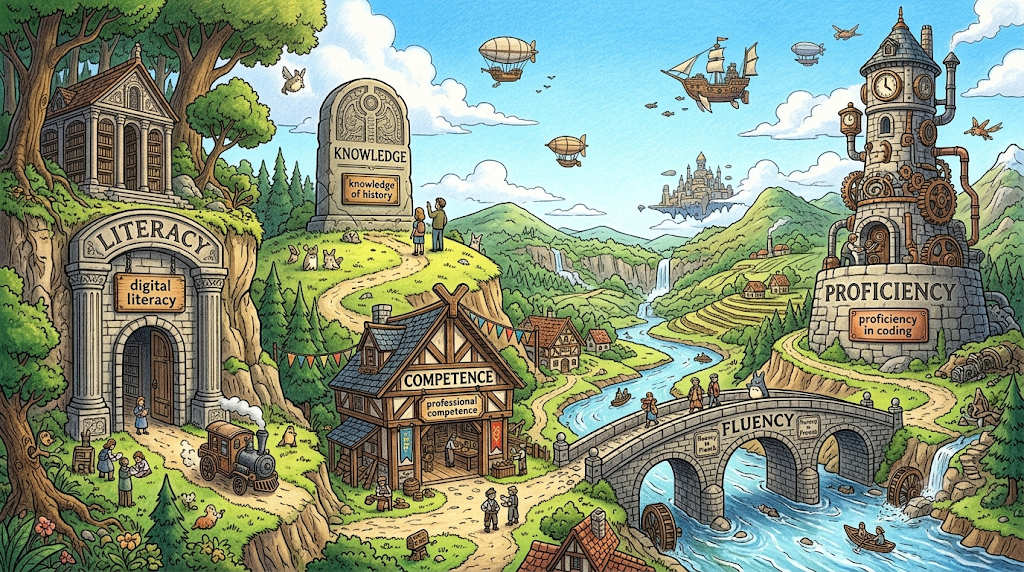
단어 공통점 뉘앙스 차이 예문
| literacy | 이해·능력 관련 | 특정 영역의 정보를 비판적으로 읽고 해석하여 실생활에서 활용하는 역량 강조 | digital literacy |
| knowledge | 이해·능력 관련 | 사실이나 개념이나 정보를 아는 것 강조 | knowledge of history |
| competence | 이해·능력 관련 | 어떤 과제나 역할을 수행하는 데 필요한 기술이나 능력 강조 | professional competence |
| fluency | 이해·능력 관련 | 언어나 기술을 자연스럽고 유창하게 사용하는 것 강조 | fluency in French |
| proficiency | 이해·능력 관련 | 높은 수준의 기술이나 전문성을 갖춘 것 강조 | proficiency in coding |
유의어 예문 리스트
- (knowledge) The workshop provided participants with the knowledge they needed to understand the new regulations, but whether they would be able to apply that knowledge correctly in the varied situations they would encounter in practice was a different question that only time and experience would answer. (워크숍은 참가자들에게 새 규정을 이해하는 데 필요한 지식을 제공했지만 실제로 만날 다양한 상황에서 그 지식을 올바르게 적용할 수 있는지는 시간과 경험만이 답할 수 있는 다른 질문이었다.)
- (competence) The board was satisfied with the technical competence of all three candidates — each could clearly do the job — but they were looking for something beyond competence: the ability to inspire and develop the people who would be working under the new director's leadership. (이사회는 세 후보 모두의 기술적 역량에 만족했다 — 각자 명확히 일을 할 수 있었다 — 하지만 그들은 역량을 넘어서는 무언가를 찾고 있었다: 새 감독의 리더십 아래 일할 사람들에게 영감을 주고 개발하는 능력이었다.)
- (fluency) Written fluency in a second language takes much longer to develop than spoken fluency because writing exposes every error in ways that speech does not — there is no tone of voice, no context, and no opportunity to repair misunderstandings as you go. (제2언어의 쓰기 유창성은 구어 유창성보다 개발하는 데 훨씬 더 오래 걸리는데 쓰기는 말하기와 달리 모든 오류를 드러내기 때문이다 — 목소리의 톤도, 맥락도, 그리고 진행하면서 오해를 수정할 기회도 없다.)
- (proficiency) Testing proficiency in a skill by observing performance in realistic conditions gives more useful information than testing it through written questions alone — because many people who could describe what to do correctly would struggle to actually do it under the pressures of a real situation. (현실적인 조건에서 성과를 관찰하여 기술의 능숙도를 검사하는 것은 쓰기 질문만으로 검사하는 것보다 더 유용한 정보를 준다 — 무엇을 해야 하는지 올바르게 설명할 수 있는 많은 사람들이 실제 상황의 압박 하에서 실제로 그것을 하는 데 어려움을 겪을 수 있기 때문이다.)
결론 정리
literacy는 단순히 "읽고 쓰는 능력"이 아니라, 단순히 글자를 인식하는 것을 넘어 특정 영역의 정보를 비판적으로 이해하고 실생활에서 효과적으로 활용할 수 있는 능력의 이미지에서 출발해 문해율·디지털 리터러시·금융 리터러시·문해 기술·미디어 리터러시·문해 프로그램·기능적 문해력·문해력을 증진하다·문해 수준·시각적 리터러시까지 확장되는 단어다 — literacy가 있는 곳엔 언제나 '단순히 글자나 기호를 아는 것을 넘어 그 정보를 비판적으로 읽고 해석하며 실생활에서 의미 있게 사용할 수 있는 역량' 의 이미지가 있다.
💡 literacy는 "단순히 글자를 인식하는 것을 넘어 특정 영역의 정보를 비판적으로 이해하고 실생활에서 효과적으로 활용할 수 있는 역량을 가리키는" 단어 — literacy rate·digital literacy·media literacy 가 수능 최빈출. knowledge(지식 소유)·competence(과제 수행 역량)와의 구별이 핵심 출제 포인트.
🌟 초등학생 버전 literacy는 단순히 "읽고 쓰는 능력"이 아니에요! digital literacy는 인터넷에서 뉴스를 봤을 때 "이게 진짜 사실일까, 아니면 가짜 정보일까?"를 스스로 판단할 수 있는 것처럼 디지털 세상에서 정보를 그냥 받아들이는 것이 아니라 비판적으로 읽고 평가해서 현명하게 활용하는 능력이고, media literacy는 뉴스를 볼 때 "이 기사는 어떤 입장에서 썼을까, 빠진 내용은 없을까?"라고 스스로 질문하는 것처럼 미디어에서 접하는 정보를 그냥 믿는 것이 아니라 비판적으로 분석하고 평가하는 능력이에요! 🌍✨
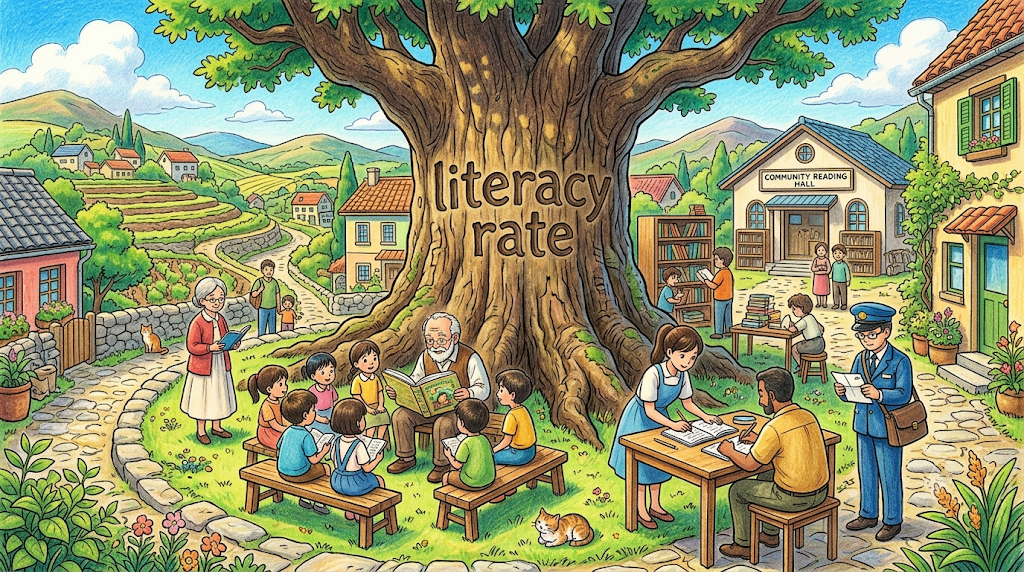
literacy rate [ˈlɪtərəsi reɪt]
품사/뉘앙스 설명
(명사구) 문해율, 글을 읽고 쓸 수 있는 사람의 비율
한 사회나 지역에서 기본적인 읽기·쓰기 능력을 갖춘 사람이 차지하는 비율을 강조합니다. 사회적 발전의 측정 지표라는 것이 핵심 뉘앙스입니다. 수능 독해 사회·역사·교육 지문의 핵심 표현입니다.
- The dramatic increase in global literacy rates over the past two centuries is one of the most significant improvements in human wellbeing that history records — and yet roughly 770 million adults worldwide still cannot read or write, a reminder that the work of expanding access to education remains far from complete. (지난 2세기에 걸친 전 세계 문해율의 극적인 증가는 역사가 기록하는 인간 복지의 가장 중요한 개선 중 하나이다 — 그러나 전 세계적으로 약 7억 7천만 명의 어른이 여전히 읽거나 쓸 수 없어 교육 접근 확대 작업이 아직 멀었다는 것을 상기시켜 준다.)
- Literacy rates among women have historically been lower than among men in many parts of the world, a gap that has narrowed significantly in recent decades but that still exists in some regions — a disparity that has profound consequences not just for the women concerned but for the health and education of their children. (여성의 문해율은 역사적으로 세계 많은 지역에서 남성보다 낮았으며 최근 수십 년간 상당히 좁혀졌지만 일부 지역에서는 여전히 존재하는 격차이다 — 관련 여성들만이 아니라 그들의 자녀들의 건강과 교육에 심오한 결과를 가져오는 불균형이다.)
- When measuring literacy rates, researchers must make careful decisions about where to draw the threshold — whether to count only those who can read at a basic level, or those who can read well enough to function effectively in a modern information-heavy economy — because the choice of threshold significantly affects the numbers produced and the policies those numbers justify. (문해율을 측정할 때 연구자들은 임계값을 어디에 그을지 신중한 결정을 내려야 한다 — 기본 수준에서 읽을 수 있는 사람들만 셀 것인지, 또는 현대 정보 집약적 경제에서 효과적으로 기능하기에 충분히 잘 읽을 수 있는 사람들을 셀 것인지 — 왜냐하면 임계값의 선택이 만들어지는 숫자와 그 숫자가 정당화하는 정책에 크게 영향을 미치기 때문이다.)
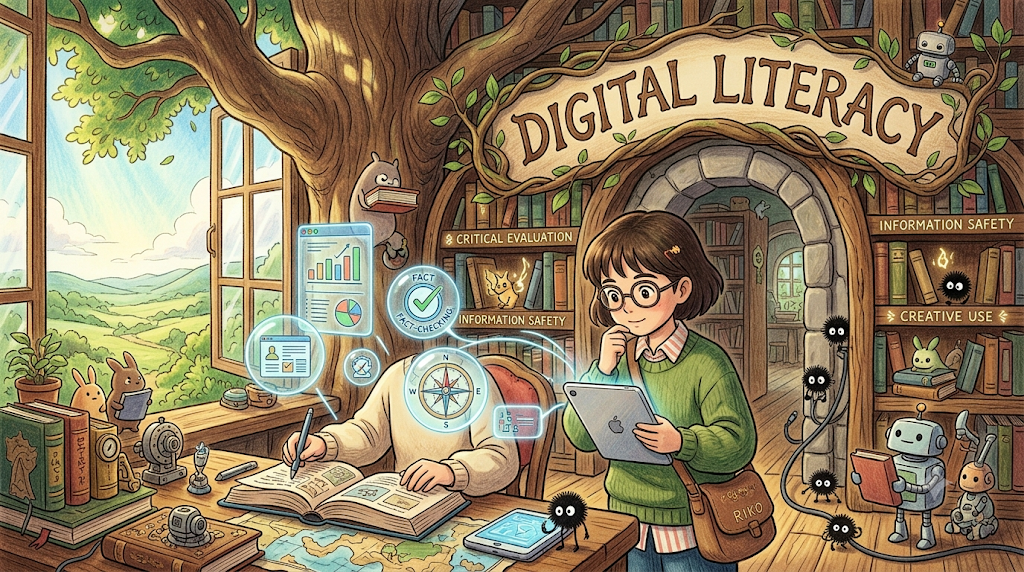
digital literacy [ˈdɪdʒɪtəl ˈlɪtərəsi]
품사/뉘앙스 설명
(명사구) 디지털 리터러시, 디지털 기기와 정보를 이해하고 활용하는 능력
단순히 기기를 사용하는 것을 넘어 디지털 환경에서 정보를 비판적으로 평가하고 안전하게 활용하는 역량을 강조합니다. 기술 활용과 비판적 평가가 핵심 뉘앙스입니다. 수능 독해 교육·사회·과학 지문의 핵심 표현입니다.
- The gap in digital literacy between different age groups is real but should not be overstated — older adults who lack familiarity with specific devices often have strong underlying skills in evaluating information critically and thinking carefully about trust, while many younger people who are technically fluent online lack the habit of questioning what they see. (디지털 리터러시의 다른 연령 그룹 사이의 격차는 실재하지만 과장되어서는 안 된다 — 특정 기기에 대한 친숙함이 부족한 나이 든 어른들은 종종 정보를 비판적으로 평가하고 신뢰에 대해 신중하게 생각하는 강력한 기반 기술을 가진 반면 온라인에서 기술적으로 유창한 많은 젊은 사람들은 보는 것에 의문을 제기하는 습관이 없다.)
- Digital literacy training in schools has sometimes focused too narrowly on how to use specific software applications, when the more valuable and more durable skills are the general ones — how to evaluate whether a source is trustworthy, how to search effectively for what you actually need, and how to protect your own privacy online. (학교에서의 디지털 리터러시 교육은 때로 특정 소프트웨어 응용 프로그램을 사용하는 방법에 너무 좁게 집중했는데 더 가치 있고 더 오래가는 기술은 일반적인 것들이다 — 출처가 신뢰할 수 있는지 평가하는 방법, 실제로 필요한 것을 효과적으로 검색하는 방법, 그리고 온라인에서 자신의 프라이버시를 보호하는 방법이다.)
- As workplaces become increasingly dependent on digital tools, the absence of basic digital literacy can be as limiting to employment opportunities as the absence of traditional reading and writing skills once was — which has led to calls for digital literacy to be treated not as an optional extra but as a core element of modern education from the earliest years. (직장이 디지털 도구에 점점 더 의존하게 되면서 기본 디지털 리터러시의 부재는 한때 전통적인 읽기와 쓰기 기술의 부재가 그랬던 것처럼 고용 기회를 제한할 수 있다 — 이것이 디지털 리터러시를 선택적인 추가 사항이 아닌 가장 어린 시절부터 현대 교육의 핵심 요소로 취급해야 한다는 요구로 이어졌다.)
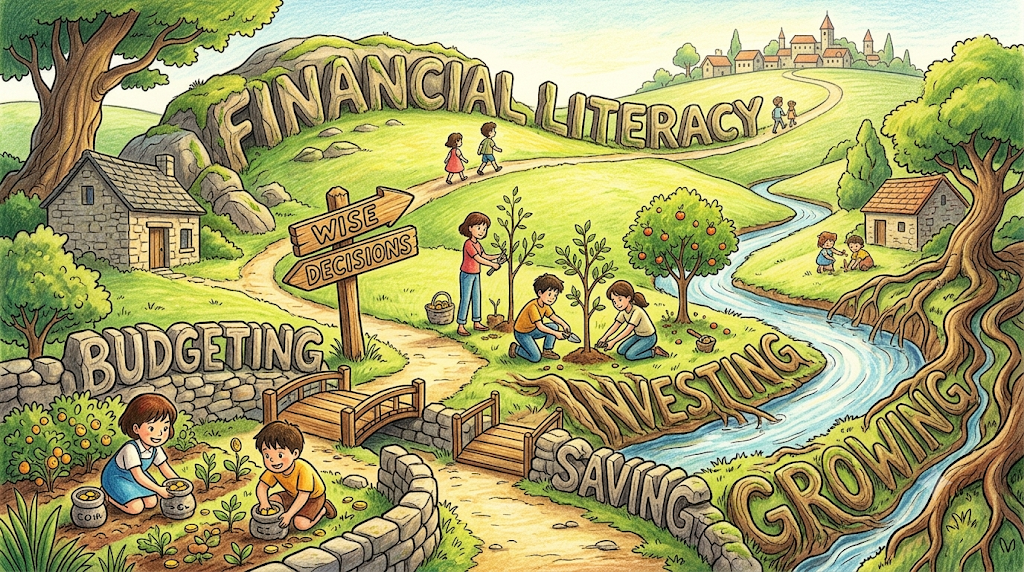
financial literacy [faɪˈnænʃəl ˈlɪtərəsi]
품사/뉘앙스 설명
(명사구) 금융 리터러시, 금융 정보를 이해하고 현명하게 관리하는 능력
예산 관리·저축·투자·부채에 대한 기본적인 이해와 실생활에서의 활용 능력을 강조합니다. 지식이 아닌 실생활 적용 능력이 핵심 뉘앙스입니다. 수능 독해 사회·경제·교육 지문의 핵심 표현입니다.
- Research on financial literacy consistently finds that the people who most need financial advice are often the least likely to seek it — either because they do not know what questions to ask, because they are embarrassed about their situation, or because they distrust financial advisers whose interests may not align with their own. (금융 리터러시에 대한 연구는 재정적 조언이 가장 필요한 사람들이 종종 그것을 구할 가능성이 가장 낮다는 것을 지속적으로 발견한다 — 어떤 질문을 해야 할지 모르거나, 상황에 대해 당혹스럽거나, 이익이 자신의 것과 일치하지 않을 수 있는 재정 자문가를 불신하기 때문이다.)
- Financial literacy education is most effective when it is connected to real decisions students are already facing — the abstract concept of compound interest becomes much more meaningful when illustrated through a loan a student is considering taking out rather than through an example that has no personal relevance. (금융 리터러시 교육은 학생들이 이미 직면하고 있는 실제 결정과 연결될 때 가장 효과적이다 — 복리의 추상적 개념은 개인적으로 관련이 없는 예시를 통해서보다 학생이 받는 것을 고려하고 있는 대출을 통해 설명될 때 훨씬 더 의미 있어진다.)
- One measure of the importance of financial literacy is that its absence has costs that go far beyond individual budgets — people with low financial literacy are more likely to take on high-cost debt, less likely to save for retirement, and more vulnerable to financial fraud, all of which place additional burdens on public services and social support systems. (금융 리터러시의 중요성의 한 척도는 그 부재가 개인 예산을 훨씬 넘어서는 비용을 갖는다는 것이다 — 낮은 금융 리터러시를 가진 사람들은 고비용 부채를 지는 가능성이 더 높고, 은퇴를 위해 저축할 가능성이 낮으며, 금융 사기에 더 취약한데 이 모든 것이 공공 서비스와 사회 지원 시스템에 추가적인 부담을 준다.)
literacy skills [ˈlɪtərəsi skɪlz]
품사/뉘앙스 설명
(명사구) 문해 기술, 읽기·쓰기 관련 역량
글을 이해하고 표현하는 데 필요한 구체적인 기술들을 강조합니다. 기술이 구체적이고 가르칠 수 있다는 것이 핵심 뉘앙스입니다. 수능 독해 교육·심리·사회 지문의 핵심 표현입니다.
- Strong literacy skills do not develop automatically from exposure to books — they require explicit teaching of the relationship between letters and sounds, the patterns of spelling, the conventions of grammar, and the strategies for understanding difficult texts, all of which need to be taught directly rather than left to emerge on their own. (강한 문해 기술들은 책에 대한 노출에서 자동으로 발전하지 않는다 — 그것들은 문자와 소리의 관계, 철자 패턴, 문법 관습, 그리고 어려운 텍스트를 이해하기 위한 전략에 대한 명시적인 교육을 필요로 하며 이 모든 것은 스스로 나타나도록 두기보다 직접 가르쳐야 한다.)
- The literacy skills needed for academic success are substantially different from those needed for everyday life — academic reading requires sustained attention to complex arguments, the ability to evaluate evidence, and the capacity to synthesise information from multiple sources in ways that ordinary functional reading does not require. (학업적 성공을 위해 필요한 문해 기술들은 일상생활에 필요한 것들과 상당히 다르다 — 학술적 읽기는 복잡한 논거에 대한 지속적인 주의, 증거를 평가하는 능력, 그리고 일반 기능적 읽기가 필요로 하지 않는 방식으로 여러 출처에서 정보를 종합하는 능력을 필요로 한다.)
- Teachers who have strong literacy skills themselves are not automatically better at teaching those skills to others — teaching reading and writing requires a specific kind of knowledge about how literacy is learned and the common difficulties that learners encounter, which is different from simply being a fluent reader and writer oneself. (강한 문해 기술을 스스로 가진 선생님들이 자동으로 그 기술을 다른 사람들에게 가르치는 데 더 뛰어난 것은 아니다 — 읽기와 쓰기를 가르치는 것은 문해력이 어떻게 배워지는지와 학습자들이 만나는 일반적인 어려움에 대한 특정 종류의 지식을 필요로 하는데 이것은 단순히 유창한 독자이자 작가인 것과 다르다.)
media literacy [ˈmiːdiə ˈlɪtərəsi]
품사/뉘앙스 설명
(명사구) 미디어 리터러시, 미디어 정보를 비판적으로 이해하고 평가하는 능력
신문·방송·소셜 미디어 등에서 접하는 정보를 비판적으로 분석하고 평가하는 역량을 강조합니다. 비판적 사고와 정보 평가가 핵심 뉘앙스입니다. 수능 독해 교육·사회·심리 지문의 핵심 표현입니다.
- Teaching media literacy effectively requires more than listing the signs that a story might be unreliable — it requires developing in students the habit of automatically asking certain questions whenever they encounter any piece of information: Who produced this? What is their interest? What evidence do they provide? What are they leaving out? (미디어 리터러시를 효과적으로 가르치는 것은 이야기가 신뢰할 수 없을 수 있다는 신호를 나열하는 것 이상을 필요로 한다 — 그것은 학생들이 어떤 정보를 접할 때마다 자동으로 특정 질문을 하는 습관을 개발하는 것을 필요로 한다: 누가 이것을 만들었는가? 그들의 관심은 무엇인가? 그들은 어떤 증거를 제공하는가? 그들은 무엇을 빠뜨리고 있는가?)
- The challenge that media literacy education faces is that the skills it teaches need to be applied selectively — applied too narrowly and students will miss real misinformation; applied too broadly and they will dismiss reliable information out of excessive scepticism — and calibrating that balance is genuinely difficult to teach. (미디어 리터러시 교육이 직면한 도전은 가르치는 기술들이 선택적으로 적용되어야 한다는 것이다 — 너무 좁게 적용되면 학생들이 실제 허위 정보를 놓칠 것이고; 너무 넓게 적용되면 과도한 회의론으로 신뢰할 수 있는 정보를 무시할 것이다 — 그리고 그 균형을 조정하는 것은 가르치기 진정으로 어렵다.)
- Media literacy is not only relevant to news — it applies equally to advertising, entertainment, social media posts, and any other form of content that seeks to influence how people think, feel, or behave — which is why comprehensive media literacy education addresses the full range of content that young people encounter rather than focusing only on formal news sources. (미디어 리터러시는 뉴스에만 관련이 있는 것이 아니다 — 그것은 사람들이 생각하고, 느끼거나, 행동하는 방식에 영향을 주려는 광고, 오락, 소셜 미디어 게시물, 그리고 다른 모든 형태의 콘텐츠에도 동등하게 적용된다 — 이것이 포괄적인 미디어 리터러시 교육이 공식적인 뉴스 출처에만 집중하기보다 젊은 사람들이 만나는 전체 범위의 콘텐츠를 다루는 이유이다.)
literacy programme [ˈlɪtərəsi ˈprəʊɡræm]
품사/뉘앙스 설명
(명사구) 문해 프로그램, 읽기·쓰기 교육 과정
읽기와 쓰기 능력을 개발하거나 향상시키기 위해 설계된 교육 프로그램을 강조합니다. 체계적이고 목표지향적인 교육 접근이 핵심 뉘앙스입니다. 수능 독해 교육·사회·역사 지문에서 자주 등장합니다.
- The most successful literacy programmes for young children share several features — they begin early, they involve trained teachers who understand how reading is learned, they give children plenty of opportunity to practise with texts they find genuinely engaging, and they monitor progress closely enough to catch difficulties before they become entrenched. (어린 아이들을 위한 가장 성공적인 문해 프로그램들은 여러 공통 특징을 갖는다 — 일찍 시작하고, 읽기가 어떻게 배워지는지 이해하는 훈련된 선생님들을 포함하며, 아이들에게 진정으로 흥미롭다고 느끼는 텍스트로 연습할 충분한 기회를 주고, 어려움이 고착되기 전에 잡을 만큼 충분히 면밀하게 진행 상황을 모니터링한다.)
- Evaluating the effectiveness of literacy programmes is complicated by the time lag between intervention and outcome — the full benefits of teaching a child to read well are often not visible for years, by which point other factors have had so much influence on outcomes that isolating the effect of any particular programme becomes very difficult. (문해 프로그램들의 효과성을 평가하는 것은 개입과 결과 사이의 시간 지연으로 복잡해진다 — 아이에게 잘 읽는 것을 가르치는 것의 완전한 혜택은 종종 수년간 보이지 않으며 그 시점까지 다른 요인들이 결과에 너무 많은 영향을 미쳐 특정 프로그램의 효과를 분리하는 것이 매우 어려워진다.)
- Literacy programmes in conflict zones and refugee settings face distinctive challenges — working with children who may have missed years of schooling, who may be learning in a language that is not their first, and who may be dealing with trauma that makes concentration and learning much harder than it would be under ordinary circumstances. (분쟁 지역과 난민 환경의 문해 프로그램들은 독특한 도전에 직면한다 — 수년간의 학교 교육을 놓쳤을 수 있고, 제1언어가 아닌 언어로 배우고 있을 수 있으며, 일반적인 상황에서보다 집중과 학습을 훨씬 더 어렵게 만드는 트라우마를 다루고 있을 수 있는 아이들과 함께 작업하는 것이다.)
functional literacy [ˈfʌŋkʃənəl ˈlɪtərəsi]
품사/뉘앙스 설명
(명사구) 기능적 문해력, 일상생활을 위한 실질적 읽기·쓰기 능력
단순히 글자를 읽는 것을 넘어 일상생활에서 실제로 정보를 활용할 수 있는 수준의 문해력을 강조합니다. 실생활에서의 실용적 활용이 핵심 뉘앙스입니다. 수능 독해 사회·교육·심리 지문에서 자주 등장합니다.
- The distinction between basic and functional literacy matters enormously in practice — a person who can read simple words but cannot understand a medical consent form, follow the instructions on a prescription, or complete a tax return lacks functional literacy even if they are not technically illiterate. (기본 문해력과 기능적 문해력 사이의 구분은 실제로 매우 중요하다 — 간단한 단어를 읽을 수 있지만 의료 동의서를 이해하거나, 처방전의 지시를 따르거나, 세금 신고서를 작성할 수 없는 사람은 기술적으로 문맹이 아니더라도 기능적 문해력이 없다.)
- Functional literacy requirements have risen steadily as society has become more complex — the reading demands of a modern workplace, healthcare system, and civic life are substantially higher than those of fifty years ago, meaning that levels of reading ability that once seemed adequate no longer are. (기능적 문해력 요건은 사회가 더 복잡해지면서 꾸준히 상승했다 — 현대 직장, 의료 시스템, 그리고 시민 생활의 읽기 요구는 50년 전보다 상당히 높아서 한때 적절해 보였던 읽기 능력 수준이 더 이상 그렇지 않다는 것을 의미한다.)
- Achieving functional literacy for all citizens is a more demanding target than the headline literacy rate suggests — because countries typically measure literacy at a low threshold that counts many people as literate who would struggle significantly with the reading demands of everyday modern life. (모든 시민을 위한 기능적 문해력 달성은 표면적인 문해율이 시사하는 것보다 더 어려운 목표이다 — 국가들은 전형적으로 일상적인 현대 생활의 읽기 요구에 상당히 어려움을 겪을 많은 사람들을 문해자로 세는 낮은 임계값으로 문해력을 측정하기 때문이다.)
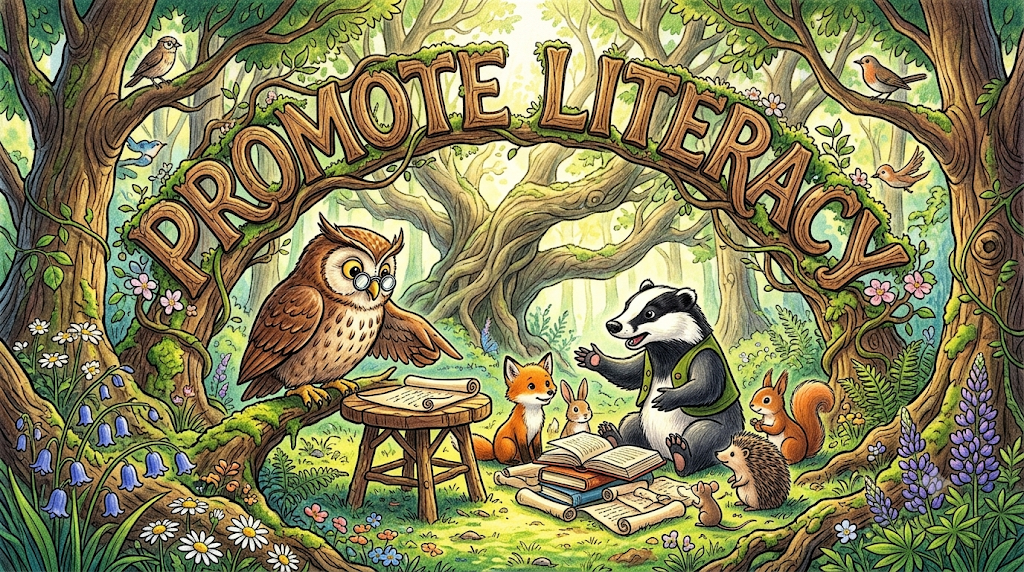
promote literacy [prəˈməʊt ˈlɪtərəsi]
품사/뉘앙스 설명
(동사구) 문해력을 증진하다, 읽고 쓰는 능력을 장려하다
문해력을 높이기 위해 적극적으로 노력하거나 지원하는 것을 강조합니다. 능동적이고 의도적인 장려 활동이 핵심 뉘앙스입니다. 수능 독해 교육·사회·역사 지문에서 자주 등장합니다.
- Efforts to promote literacy are most effective when they address the barriers that prevent people from learning rather than simply providing access to instruction — because for many adults who missed formal education, the obstacle is not access but fear of failure, social stigma, and the practical difficulties of fitting learning around work and family responsibilities. (문해력을 증진하는 노력은 단순히 교육에 대한 접근을 제공하기보다 사람들이 배우는 것을 막는 장벽을 다룰 때 가장 효과적이다 — 왜냐하면 공식 교육을 놓친 많은 어른들에게 장애물은 접근이 아니라 실패에 대한 두려움, 사회적 낙인, 그리고 업무와 가족 책임 주변에 학습을 맞추는 실용적 어려움이기 때문이다.)
- Governments that promote literacy through well-funded public education systems are essentially investing in future productive capacity — research consistently shows that increases in literacy generate economic returns that substantially exceed the cost of the education that produced them over the long term. (문해력을 증진하는 잘 자금 지원된 공공 교육 시스템을 통해 하는 정부들은 본질적으로 미래 생산 능력에 투자하고 있다 — 연구는 문해력의 증가가 장기적으로 그것을 만든 교육 비용을 상당히 초과하는 경제적 수익을 만들어낸다는 것을 지속적으로 보여준다.)
- The most enduring way to promote literacy across generations is to create communities where reading is valued and modelled rather than merely taught — where children see adults reading for pleasure, where books are visible and accessible in homes and public spaces, and where being a reader is part of a positive shared identity. (세대에 걸쳐 문해력을 증진하는 가장 지속적인 방법은 읽기가 단순히 가르쳐지기보다 가치 있게 여겨지고 모범이 되는 지역 사회를 만드는 것이다 — 아이들이 어른들이 즐거움을 위해 읽는 것을 보고, 책이 집과 공공 장소에서 눈에 보이고 접근할 수 있으며, 독자가 되는 것이 긍정적인 공유 정체성의 일부인 곳이다.)
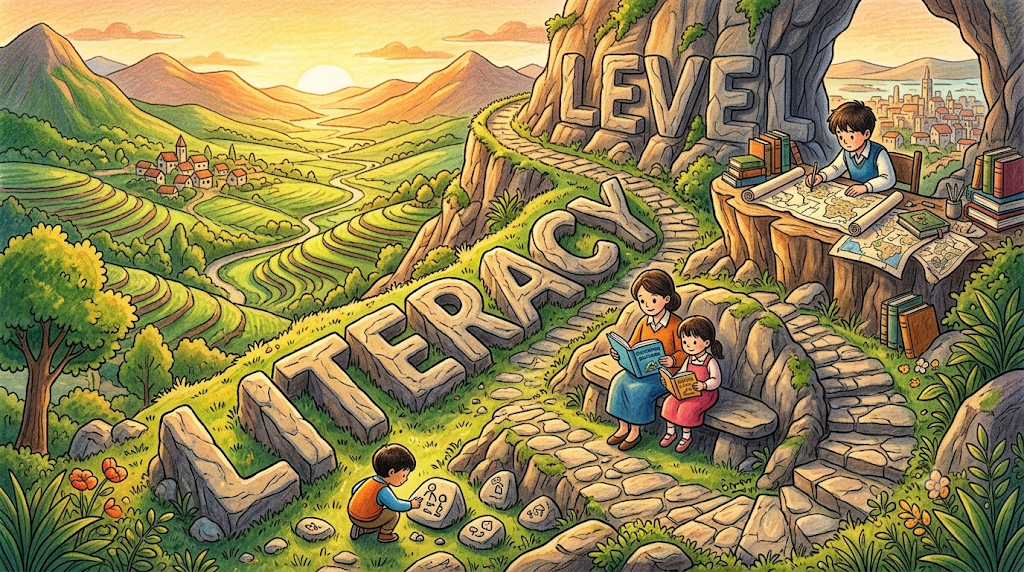
literacy level [ˈlɪtərəsi ˈlevəl]
품사/뉘앙스 설명
(명사구) 문해 수준, 읽기·쓰기 능력의 정도
개인이나 집단이 가진 문해력의 정도나 단계를 강조합니다. 문해력이 연속적인 스펙트럼이라는 것이 핵심 뉘앙스입니다. 수능 독해 교육·사회·심리 지문에서 자주 등장합니다.
- Literacy levels in a population are not static — they can decline when adults do not use reading and writing regularly, and they can be raised through targeted education at any age — which challenges the assumption that literacy is something acquired in childhood and then fixed for life. (인구의 문해 수준은 정적이지 않다 — 어른들이 읽기와 쓰기를 규칙적으로 사용하지 않으면 감소할 수 있고, 어떤 나이에서도 목표 교육을 통해 높아질 수 있다 — 이것은 문해력이 어린 시절에 습득되고 그 후 평생 고정되는 것이라는 가정에 도전한다.)
- The relationship between literacy levels and health outcomes is well-established — people with lower literacy are less likely to follow medical instructions correctly, less likely to understand preventive health information, and more likely to experience negative outcomes from the same health conditions than more literate people with identical access to healthcare. (문해 수준과 건강 결과 사이의 관계는 잘 확립되어 있다 — 낮은 문해력을 가진 사람들은 의료 지시를 올바르게 따를 가능성이 낮고, 예방 건강 정보를 이해할 가능성이 낮으며, 의료에 대한 동일한 접근을 가진 더 문해력 있는 사람들보다 같은 건강 상태에서 부정적인 결과를 경험할 가능성이 높다.)
- Raising literacy levels across a population requires attention not only to those who cannot read at all but to the large number of people who can read simple texts but struggle with the more complex reading required by modern life — a group that is often overlooked because they do not appear in statistics that measure only whether people can read at a basic level. (인구 전반의 문해 수준을 높이는 것은 전혀 읽을 수 없는 사람들뿐만 아니라 간단한 텍스트는 읽을 수 있지만 현대 생활에 필요한 더 복잡한 읽기를 어려워하는 많은 사람들에게도 주의를 기울이는 것을 필요로 한다 — 사람들이 기본 수준에서 읽을 수 있는지만을 측정하는 통계에서 나타나지 않기 때문에 종종 간과되는 그룹이다.)
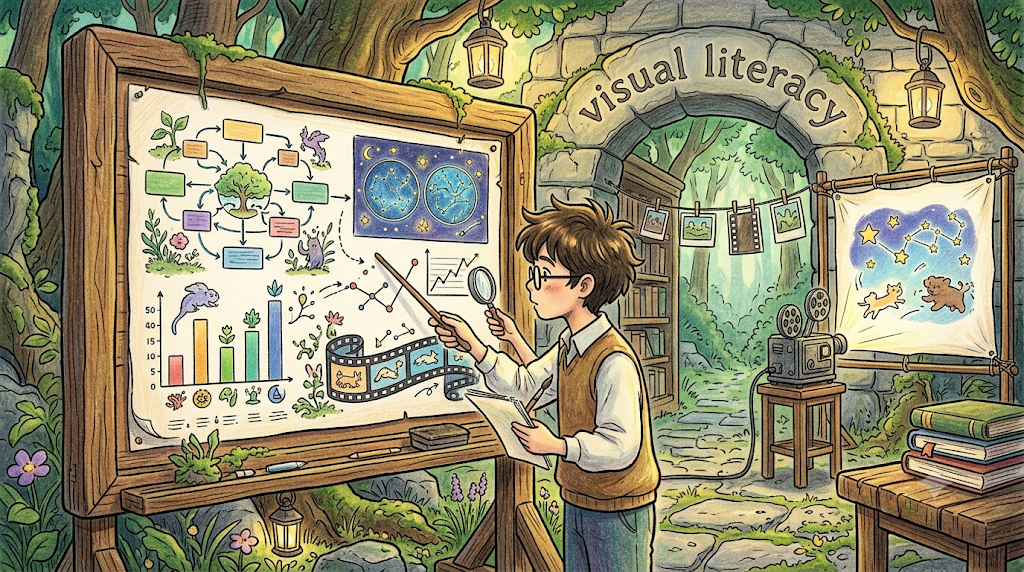
visual literacy [ˈvɪʒuəl ˈlɪtərəsi]
품사/뉘앙스 설명
(명사구) 시각적 리터러시, 이미지와 시각적 정보를 이해하고 해석하는 능력
그래프·차트·이미지·영상 등 시각적 정보를 비판적으로 읽고 해석하는 역량을 강조합니다. 시각적 정보의 비판적 해석이 핵심 뉘앙스입니다. 수능 독해 교육·과학·사회 지문에서 자주 등장합니다.
- Visual literacy includes understanding not just what an image shows but how the choices made in creating it — the angle, the lighting, the framing, what is included and what is left out — have shaped the impression it creates, a skill that applies equally to fine art, news photographs, advertising images, and data visualisations. (시각적 리터러시는 이미지가 보여주는 것만이 아니라 그것을 만드는 데 이루어진 선택들 — 각도, 조명, 프레이밍, 무엇이 포함되고 무엇이 빠졌는지 — 이 어떻게 만들어내는 인상을 형성했는지 이해하는 것을 포함하며 이 기술은 순수 예술, 뉴스 사진, 광고 이미지, 그리고 데이터 시각화에 동등하게 적용된다.)
- Students with strong visual literacy are better equipped to handle the way scientific information is now typically communicated — through graphs showing trends over time, maps displaying geographical patterns, and diagrams explaining processes — which means that deficits in visual literacy can directly hinder understanding of science even among students who are strong readers of text. (강한 시각적 리터러시를 가진 학생들은 과학적 정보가 이제 일반적으로 전달되는 방식 — 시간에 따른 추세를 보여주는 그래프, 지리적 패턴을 표시하는 지도, 과정을 설명하는 다이어그램 — 을 처리하기에 더 잘 갖춰져 있다 — 이것은 시각적 리터러시의 결핍이 텍스트를 잘 읽는 학생들 사이에서도 과학의 이해를 직접 방해할 수 있다는 것을 의미한다.)
- The history of visual literacy predates literacy in the traditional sense — humans were creating and interpreting cave paintings, carvings, and symbols long before the development of writing, suggesting that the ability to read images is in some sense more fundamental to human cognition than the ability to read text. (시각적 리터러시의 역사는 전통적 의미의 문해력보다 앞선다 — 인간은 쓰기의 발전보다 훨씬 전에 동굴 그림, 조각품, 그리고 기호를 만들고 해석하고 있었으며 이것은 이미지를 읽는 능력이 어떤 의미에서 텍스트를 읽는 능력보다 인간 인지에 더 근본적임을 시사한다.)
숙어 그룹 묶음 1 — 사회적 문해력 측정 literacy 핵심 패턴
표현 의미 핵심 뉘앙스 주요 맥락
| literacy rate | 문해율 | 사회적 발전의 측정 지표 | 사회·역사·교육 |
| literacy level | 문해 수준 | 문해력이 연속적인 스펙트럼인 것 | 교육·사회·심리 |
| functional literacy | 기능적 문해력 | 실생활에서의 실용적 활용 | 사회·교육·심리 |
이 세 표현은 모두 literacy의 "문해력을 측정하고 평가하는" 이미지를 공유하되, 각각 사회 전체의 문해자 비율(literacy rate)·개인이나 집단의 문해력 정도(literacy level)·일상생활에서 실제 활용 가능한 문해력의 수준(functional literacy)의 관점에서 접근합니다.
- A high literacy rate does not automatically mean high literacy levels across the population, because many countries measure literacy at a threshold low enough to include people whose functional literacy is insufficient for the demands of modern life — which is why understanding the true situation requires looking beyond headline statistics at the actual range of reading abilities within a society. (높은 문해율이 자동으로 인구 전반의 높은 문해 수준을 의미하지는 않는데 많은 국가들이 기능적 문해력이 현대 생활의 요구에 불충분한 사람들을 포함할 만큼 낮은 임계값으로 문해력을 측정하기 때문이다 — 이것이 왜 진정한 상황을 이해하는 것이 표면적인 통계를 넘어 사회 내 읽기 능력의 실제 범위를 살펴볼 것을 필요로 하는 이유이다.)
- The literacy rate tells you who can read; the literacy level tells you how well; and functional literacy tells you whether the ability to read translates into the capacity to navigate the actual demands of daily life — and all three measures are necessary for a complete picture of how well a society's educational system is serving its citizens. (문해율은 누가 읽을 수 있는지 말해주고; 문해 수준은 얼마나 잘 읽는지 말해주며; 기능적 문해력은 읽는 능력이 일상 생활의 실제 요구를 헤쳐나가는 능력으로 전환되는지 말해준다 — 그리고 세 가지 척도 모두 사회의 교육 시스템이 시민들에게 얼마나 잘 봉사하고 있는지의 완전한 그림을 위해 필요하다.)
- Improving literacy rates is a necessary but not sufficient condition for improving functional literacy levels — because raising the number of people who can read at all requires a different strategy from raising the average literacy level of those who can already read to the point where it becomes functional enough to genuinely enhance their life opportunities. (문해율을 개선하는 것은 기능적 문해 수준을 개선하기 위한 필요하지만 충분하지 않은 조건이다 — 전혀 읽을 수 있는 사람들의 수를 늘리는 것은 이미 읽을 수 있는 사람들의 평균 문해 수준을 진정으로 생활 기회를 향상시킬 만큼 충분히 기능적이 될 때까지 높이는 것과 다른 전략을 필요로 하기 때문이다.)
숙어 그룹 묶음 2 — 비판적 정보 이해 literacy 심화 패턴
표현 의미 핵심 뉘앙스 주요 맥락
| digital literacy | 디지털 리터러시 | 기술 활용과 비판적 평가 | 교육·사회·과학 |
| media literacy | 미디어 리터러시 | 비판적 사고와 정보 평가 | 교육·사회·심리 |
| visual literacy | 시각적 리터러시 | 시각적 정보의 비판적 해석 | 교육·과학·사회 |
이 세 표현은 모두 literacy의 "정보를 비판적으로 읽고 해석하는 역량" 이미지를 공유하되, 각각 디지털 환경에서의 비판적 정보 활용(digital literacy)·미디어 정보의 비판적 분석과 평가(media literacy)·이미지와 시각적 정보의 비판적 해석(visual literacy)의 관점에서 접근합니다.
- Digital literacy, media literacy, and visual literacy are increasingly understood as overlapping rather than separate skills — because most digital content is media content, and an increasing proportion of both is visual, meaning that the critical thinking skills involved in all three are more usefully taught together than as separate subjects. (디지털 리터러시, 미디어 리터러시, 그리고 시각적 리터러시는 별개가 아닌 겹치는 기술로 점점 더 이해된다 — 대부분의 디지털 콘텐츠가 미디어 콘텐츠이고 그 둘 모두의 점점 더 많은 부분이 시각적이기 때문에 세 가지 모두에 포함된 비판적 사고 기술이 별개의 과목으로보다 함께 가르치는 것이 더 유용하다는 것을 의미한다.)
- A student with strong visual literacy who lacks digital literacy may be able to identify a misleading graph but not be able to evaluate the credibility of the website displaying it; a student with strong digital literacy who lacks media literacy may know how to verify an article's source but not how to recognise persuasive framing that is technically accurate; and a student with strong media literacy who lacks visual literacy may read a news article critically but miss the way that the photograph chosen to accompany it is shaping their response. (디지털 리터러시가 부족한 강한 시각적 리터러시를 가진 학생은 오해를 불러일으키는 그래프를 식별할 수 있지만 그것을 표시하는 웹사이트의 신뢰성을 평가할 수 없을 수 있고; 미디어 리터러시가 부족한 강한 디지털 리터러시를 가진 학생은 기사의 출처를 확인하는 방법은 알지만 기술적으로 정확한 설득적 프레이밍을 인식하는 방법은 모를 수 있으며; 시각적 리터러시가 부족한 강한 미디어 리터러시를 가진 학생은 뉴스 기사를 비판적으로 읽을 수 있지만 그것과 함께 선택된 사진이 반응을 어떻게 형성하는지를 놓칠 수 있다.)
- The most important insight about digital literacy, media literacy, and visual literacy is that they all require the same underlying disposition — a comfortable relationship with uncertainty and the habit of asking questions before accepting what one sees — which suggests that the most valuable educational investment is in developing that disposition rather than in teaching specific techniques for each separate domain. (디지털 리터러시, 미디어 리터러시, 그리고 시각적 리터러시에 대한 가장 중요한 통찰은 그것들 모두가 같은 근본적인 성향을 필요로 한다는 것이다 — 불확실성과의 편안한 관계와 보는 것을 받아들이기 전에 질문을 하는 습관 — 이것은 가장 가치 있는 교육 투자가 각 별개의 영역에 대한 특정 기술을 가르치기보다 그 성향을 개발하는 데 있다는 것을 시사한다.)
숙어 그룹 묶음 3 — 문해력 증진 활동 literacy 심화 패턴
표현 의미 핵심 뉘앙스 주요 맥락
| promote literacy | 문해력을 증진하다 | 능동적이고 의도적인 장려 활동 | 교육·사회·역사 |
| literacy programme | 문해 프로그램 | 체계적이고 목표지향적인 교육 접근 | 교육·사회·역사 |
| literacy skills | 문해 기술 | 기술이 구체적이고 가르칠 수 있는 것 | 교육·심리·사회 |
이 세 표현은 모두 literacy의 "문해력을 개발하고 향상시키는 활동" 이미지를 공유하되, 각각 문해력 향상을 위한 적극적인 노력
(promote literacy)·체계적인 교육 프로그램(literacy programme)·가르치고 개발할 수 있는 구체적인 기술(literacy skills)의 관점에서 접근합니다.
- Effective efforts to promote literacy require not just good literacy programmes that teach literacy skills directly, but also changes in the wider environment — because children who leave excellent school programmes and return to homes where there are no books, where adults do not read, and where reading is not valued will not maintain or develop the skills they have been taught. (문해력을 증진하는 효과적인 노력은 문해 기술을 직접 가르치는 좋은 문해 프로그램들만이 아니라 더 넓은 환경의 변화도 필요로 한다 — 왜냐하면 훌륭한 학교 프로그램들을 마치고 책이 없고, 어른들이 읽지 않으며, 읽기가 가치 있게 여겨지지 않는 집으로 돌아가는 아이들은 배운 기술들을 유지하거나 개발하지 못할 것이기 때문이다.)
- The best literacy programmes work by teaching the skills needed for reading and writing while simultaneously creating conditions that make students want to use those skills — because motivation to read is not separate from the ability to read but intimately connected to it, since people tend to practise what they enjoy and avoid what feels difficult and unrewarding. (최고의 문해 프로그램들은 읽기와 쓰기에 필요한 기술들을 가르치면서 동시에 학생들이 그 기술들을 사용하고 싶게 만드는 조건을 만듦으로써 작동한다 — 왜냐하면 읽고자 하는 동기가 읽는 능력과 분리되어 있지 않고 친밀하게 연결되어 있기 때문이다 — 사람들은 즐기는 것을 연습하고 어렵고 보람 없게 느껴지는 것을 피하는 경향이 있기 때문이다.)
- The goal of efforts to promote literacy is ultimately not just to develop literacy skills through literacy programmes but to create literate people — individuals who choose to read, who value reading, and who use their reading ability actively throughout their lives rather than treating it as a skill they acquired in school and no longer need to maintain. (문해력을 증진하는 노력의 목표는 궁극적으로 문해 프로그램들을 통해 단지 문해 기술들을 개발하는 것이 아니라 문해력 있는 사람들을 만드는 것이다 — 읽기를 선택하고, 읽기를 가치 있게 여기며, 학교에서 습득한 더 이상 유지할 필요가 없는 기술로 취급하기보다 평생 능동적으로 읽기 능력을 사용하는 개인들이다.)
숙어 그룹 묶음 4 — 금융·실용 리터러시 literacy 완성 패턴
표현 의미 핵심 뉘앙스 주요 맥락
| financial literacy | 금융 리터러시 | 지식이 아닌 실생활 적용 능력 | 사회·경제·교육 |
| functional literacy | 기능적 문해력 | 실생활에서의 실용적 활용 | 사회·교육·심리 |
| literacy rate | 문해율 | 사회적 발전의 측정 지표 | 사회·역사·교육 |
이 세 표현은 함께 literacy가 나타내는 실용성·사회성·측정 가능성의 스펙트럼을 보여줍니다. financial literacy는 금융 정보를 실생활에서 활용하는 능력을, functional literacy는 일상생활 전반에서 문해력을 실용적으로 활용하는 것을, literacy rate는 사회 전체의 문해력을 측정한 지표를 각각 강조합니다.
- A country may have an impressive literacy rate but still have significant problems with functional literacy and financial literacy — because official statistics often measure only basic reading ability, leaving unmeasured the more sophisticated literacy skills that enable people to understand contracts, evaluate financial products, and make informed decisions about their health and finances. (나라는 인상적인 문해율을 가질 수 있지만 여전히 기능적 문해력과 금융 리터러시에 상당한 문제가 있을 수 있다 — 왜냐하면 공식 통계는 종종 기본 읽기 능력만을 측정하여 계약을 이해하고, 금융 상품을 평가하며, 건강과 재정에 대해 정보에 기반한 결정을 내릴 수 있게 하는 더 정교한 문해력 기술을 측정하지 않고 남겨두기 때문이다.)
- Financial literacy can be understood as a specific form of functional literacy — the ability to read and understand financial documents well enough to make effective decisions — and like functional literacy more broadly, it is shaped by the literacy rate of the society a person grows up in but is not determined by it, since people can develop or fail to develop these skills regardless of the general educational level of their environment. (금융 리터러시는 기능적 문해력의 특정 형태로 이해될 수 있다 — 효과적인 결정을 내리기에 충분히 금융 문서를 읽고 이해하는 능력 — 그리고 더 넓은 기능적 문해력처럼 그것은 사람이 자라는 사회의 문해율에 의해 형성되지만 그것에 의해 결정되지는 않는데 사람들은 환경의 일반적인 교육 수준에 관계없이 이 기술들을 개발하거나 개발하지 못할 수 있기 때문이다.)
- The challenge for societies with high literacy rates is no longer to achieve basic literacy but to ensure that functional literacy and specific literacies like financial literacy are developed broadly enough to allow all citizens to participate fully in modern economic and civic life — a more demanding target that requires educational investment to continue well beyond the point where the basic literacy rate reaches 100%. (높은 문해율을 가진 사회들의 도전은 더 이상 기본 문해력을 달성하는 것이 아니라 기능적 문해력과 금융 리터러시와 같은 특정 리터러시들이 모든 시민이 현대 경제와 시민 생활에 충분히 참여할 수 있도록 충분히 넓게 개발되는 것을 보장하는 것이다 — 기본 문해율이 100%에 달하는 시점을 훨씬 넘어 교육 투자가 계속되도록 요구하는 더 어려운 목표이다.)
전체 요약표
표현 의미 핵심 뉘앙스
| literacy | 문해력, ~리터러시, 이해력 | 정보를 읽고 해석하고 활용하는 역량의 이미지 |
| literacy rate | 문해율 | 사회적 발전의 측정 지표 |
| digital literacy | 디지털 리터러시 | 기술 활용과 비판적 평가 |
| financial literacy | 금융 리터러시 | 지식이 아닌 실생활 적용 능력 |
| literacy skills | 문해 기술 | 기술이 구체적이고 가르칠 수 있는 것 |
| media literacy | 미디어 리터러시 | 비판적 사고와 정보 평가 |
| literacy programme | 문해 프로그램 | 체계적이고 목표지향적인 교육 접근 |
| functional literacy | 기능적 문해력 | 실생활에서의 실용적 활용 |
| promote literacy | 문해력을 증진하다 | 능동적이고 의도적인 장려 활동 |
| literacy level | 문해 수준 | 문해력이 연속적인 스펙트럼인 것 |
| visual literacy | 시각적 리터러시 | 시각적 정보의 비판적 해석 |
유의어 비교표
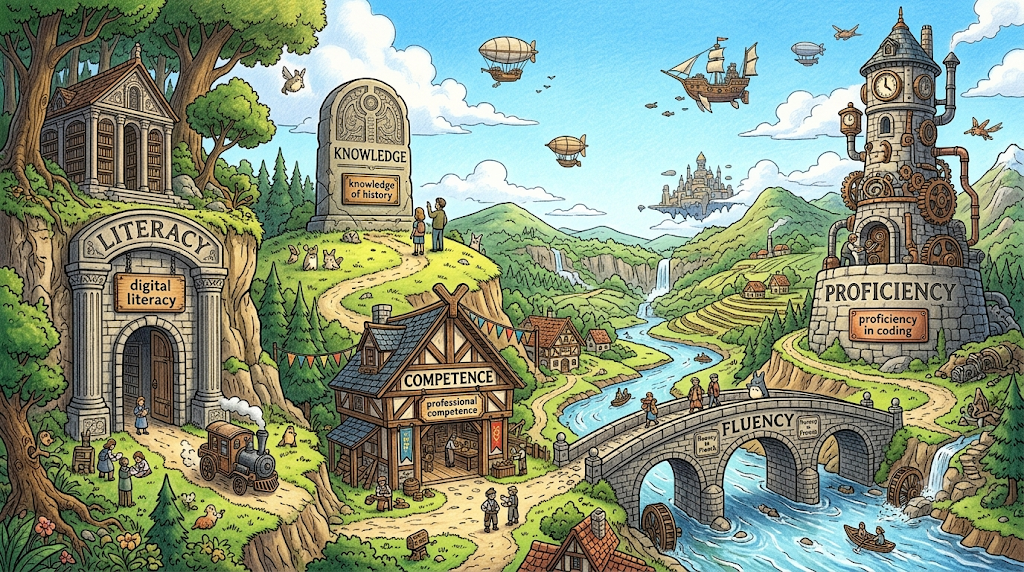
단어 공통점 뉘앙스 차이 예문
| literacy | 이해·능력 관련 | 특정 영역의 정보를 비판적으로 읽고 해석하여 실생활에서 활용하는 역량 강조 | digital literacy |
| knowledge | 이해·능력 관련 | 사실이나 개념이나 정보를 아는 것 강조 | knowledge of history |
| competence | 이해·능력 관련 | 어떤 과제나 역할을 수행하는 데 필요한 기술이나 능력 강조 | professional competence |
| fluency | 이해·능력 관련 | 언어나 기술을 자연스럽고 유창하게 사용하는 것 강조 | fluency in French |
| proficiency | 이해·능력 관련 | 높은 수준의 기술이나 전문성을 갖춘 것 강조 | proficiency in coding |
결론 정리
literacy는 단순히 "읽고 쓰는 능력"이 아니라, 단순히 글자를 인식하는 것을 넘어 특정 영역의 정보를 비판적으로 이해하고 실생활에서 효과적으로 활용할 수 있는 능력의 이미지에서 출발해 문해율·디지털 리터러시·금융 리터러시·문해 기술·미디어 리터러시·문해 프로그램·기능적 문해력·문해력을 증진하다·문해 수준·시각적 리터러시까지 확장되는 단어다 — literacy가 있는 곳엔 언제나 '단순히 글자나 기호를 아는 것을 넘어 그 정보를 비판적으로 읽고 해석하며 실생활에서 의미 있게 사용할 수 있는 역량'의 이미지가 있다.
💡 literacy는 "단순히 글자를 인식하는 것을 넘어 특정 영역의 정보를 비판적으로 이해하고 실생활에서 효과적으로 활용할 수 있는 역량을 가리키는" 단어 — literacy rate·digital literacy·media literacy 가 수능 최빈출. knowledge(지식 소유)·competence(과제 수행 역량)와의 구별이 핵심 출제 포인트.
🌟 초등학생 버전 literacy는 단순히 "읽고 쓰는 능력"이 아니에요! digital literacy는 인터넷에서 뉴스를 봤을 때 "이게 진짜 사실일까, 아니면 가짜 정보일까?"를 스스로 판단할 수 있는 것처럼 디지털 세상에서 정보를 그냥 받아들이는 것이 아니라 비판적으로 읽고 평가해서 현명하게 활용하는 능력이고, media literacy는 뉴스를 볼 때 "이 기사는 어떤 입장에서 썼을까, 빠진 내용은 없을까?"라고 스스로 질문하는 것처럼 미디어에서 접하는 정보를 그냥 믿는 것이 아니라 비판적으로 분석하고 평가하는 능력이에요! 🌍✨


