- 분류 전체보기 (5707)

| 일 | 월 | 화 | 수 | 목 | 금 | 토 |
|---|---|---|---|---|---|---|
| 1 | 2 | 3 | 4 | 5 | ||
| 6 | 7 | 8 | 9 | 10 | 11 | 12 |
| 13 | 14 | 15 | 16 | 17 | 18 | 19 |
| 20 | 21 | 22 | 23 | 24 | 25 | 26 |
| 27 | 28 | 29 | 30 |
- oh
- work out
- Show Up
- Please
- Read between the lines
- Right?
- well
- Don't worry
- Yeah
- Hey
- I'm glad to hear that.
- Sure
- make it
- no
- hold on
- get through
- I'm sorry
- please.
- Excuse me
- Actually
- Sorry
- too.
- come up with
- By The Way
- please?
- entrance fee
- Yes
- set up
- OKay
- pick up
- Today
- Total
인과함께
Day439 , tolerate, tolerate difference, tolerate pain, cannot tolerate, tolerate behavior, barely tolerate, tolerate uncertainty, learn to tolerate, tolerate others, mutual toleration, tolerate the situation 본문
Day439 , tolerate, tolerate difference, tolerate pain, cannot tolerate, tolerate behavior, barely tolerate, tolerate uncertainty, learn to tolerate, tolerate others, mutual toleration, tolerate the situation
미인생 2026. 9. 15. 13:12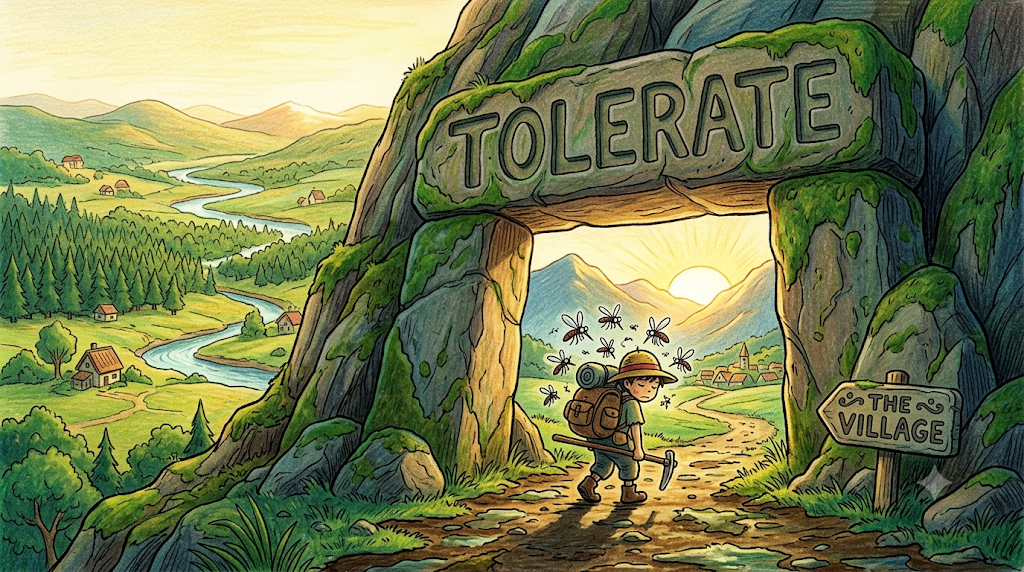
tolerate [ˈtɒləreɪt]
(동사) 참다, 견디다, 용인하다, 허용하다
단순히 "참다"로만 외우면 수능에서 반드시 틀립니다. tolerate는 "좋아하지 않거나 불편하거나 동의하지 않는 것을 불평하거나 막지 않고 그냥 두거나 견뎌내는 것" 이라는 핵심 이미지에서 출발해, 신체적 고통 참기에서 다른 사람의 의견 인정·불편한 상황 견디기·차이 인정하기까지 폭넓게 쓰이는 핵심 다의어입니다. 특히 tolerate(참다·용인하다) vs. accept(받아들이다) vs. endure(견디다) 의 뉘앙스 차이, cannot tolerate(참을 수 없다), learn to tolerate(참는 법을 배우다) 패턴은 수능 독해 심리·사회·교육·의학·철학 지문에서 핵심적으로 등장합니다.
'tolerate'는 라틴어 tolerare(참다, 견디다, 짐을 지다)에서 유래했습니다. tolus(들어올리다, 지탱하다)에서 파생되어, 원래 "무거운 짐을 지탱하듯이 힘든 것을 버텨내는 것" 을 뜻했습니다. tolerate의 핵심 이미지는 "좋거나 옳다고 생각하지 않더라도 반응하거나 막지 않고 그 상태를 유지하면서 버텨내거나 허용하는 것" 으로, 이 이미지에서 신체적 고통 참기·불편한 상황 견디기·다른 의견 인정·차이 허용이 모두 확장되었습니다.
1. tolerate difference [ˈtɒləreɪt ˈdɪfrəns]
(사회/교육/수능) "차이를 용인하다, 다름을 허용하다"를 뜻합니다. 자신과 다른 사람들의 생각이나 방식이나 삶의 태도를 막거나 비난하지 않고 그대로 두는 것을 강조합니다. 수능 독해 사회·교육·철학 지문의 핵심 표현입니다.
A healthy society needs people who can tolerate difference and understand that not everyone has to think or live in exactly the same way to deserve respect. (건강한 사회는 차이를 용인하고 모든 사람이 존중받기 위해 정확히 같은 방식으로 생각하거나 살 필요는 없다는 것을 이해할 수 있는 사람들을 필요로 한다.)
2. tolerate pain [ˈtɒləreɪt peɪn]
(의학/심리/수능) "고통을 참다, 통증을 견디다"를 뜻합니다. 신체적이거나 감정적인 고통을 불평 없이 또는 그냥 버텨내는 것을 강조합니다. 수능 독해 의학·심리·과학 지문의 핵심 표현입니다.
Different people have very different abilities to tolerate pain — what feels unbearable to one person may be only mildly uncomfortable for another, depending on their brain chemistry and past experiences. (다른 사람들은 고통을 참는 매우 다른 능력을 가지고 있다 — 한 사람에게 견딜 수 없다고 느껴지는 것이 뇌 화학과 과거 경험에 따라 다른 사람에게는 약간 불편한 것에 불과할 수 있다.)
3. cannot tolerate [ˈkænɒt ˈtɒləreɪt]
(심리/사회/수능) "참을 수 없다, 견딜 수 없다"를 뜻합니다. 어떤 것이 너무 불쾌하거나 불편하거나 옳지 않아서 도저히 그냥 둘 수 없다는 것을 강조합니다. 수능 독해 심리·사회·교육 지문의 핵심 표현입니다.
She cannot tolerate the sound of people eating loudly next to her, so she always tries to find a quiet seat away from the busiest areas of the school cafeteria. (그녀는 옆에서 사람들이 시끄럽게 먹는 소리를 참을 수 없어서 항상 학교 구내식당의 가장 바쁜 지역에서 멀리 떨어진 조용한 자리를 찾으려 한다.)
4. tolerate behavior [ˈtɒləreɪt bɪˈheɪvjər]
(교육/사회/수능) "행동을 용인하다, 행동을 허용하다"를 뜻합니다. 어떤 사람의 행동이 마음에 들지 않거나 잘못됐다고 생각하면서도 그것에 반응하거나 막지 않는 것을 강조합니다. 수능 독해 교육·사회·심리 지문의 핵심 표현입니다.
A good teacher does not tolerate behavior that makes other students feel unsafe or unable to learn, but she also knows how to address the problem calmly without making the student feel attacked. (좋은 선생님은 다른 학생들이 안전하지 않거나 배울 수 없다고 느끼게 만드는 행동을 용인하지 않지만 학생이 공격받는다고 느끼지 않도록 차분하게 문제를 해결하는 방법도 안다.)
5. barely tolerate [ˈbeərli ˈtɒləreɪt]
(심리/문학/수능) "겨우 참다, 간신히 견디다"를 뜻합니다. 어떤 것을 참는 것이 매우 힘들어서 거의 한계에 달해있다는 것을 강조합니다. 수능 독해 심리·문학·사회 지문에서 자주 등장합니다.
By the end of the long meeting, most of the students could barely tolerate sitting still any longer and kept shifting in their seats, checking the clock on the wall every few minutes. (긴 회의가 끝날 무렵 대부분의 학생들은 더 이상 가만히 앉아있기를 간신히 참으며 몇 분마다 벽의 시계를 확인하면서 계속 자리에서 몸을 움직였다.)
6. tolerate uncertainty [ˈtɒləreɪt ʌnˈsɜːtənti]
(심리/사회/수능) "불확실성을 견디다, 모름을 참다"를 뜻합니다. 결과나 미래가 확실하지 않은 상황을 불안해하지 않고 버텨내는 능력을 강조합니다. 수능 독해 심리·사회·교육 지문의 핵심 표현입니다.
People who can tolerate uncertainty tend to make better decisions because they do not rush into choosing the first available option just to get rid of the uncomfortable feeling of not knowing. (불확실성을 견딜 수 있는 사람들은 모르는 것의 불편한 느낌을 없애기 위해 첫 번째로 이용 가능한 선택지를 선택하는 데 서두르지 않기 때문에 더 나은 결정을 하는 경향이 있다.)
7. learn to tolerate [lɜːrn tuː ˈtɒləreɪt]
(교육/심리/수능) "참는 법을 배우다, 견디는 것을 익히다"를 뜻합니다. 처음에는 힘들었던 것을 점차 참을 수 있게 되어가는 과정을 강조합니다. 수능 독해 교육·심리·사회 지문의 핵심 표현입니다.
Young children need time and gentle guidance to learn to tolerate the frustration of not being able to do something immediately, as this patience is one of the most important skills for later success. (어린 아이들은 무언가를 즉시 할 수 없는 좌절을 참는 법을 배우는 데 시간과 부드러운 안내가 필요한데 이 인내는 나중의 성공을 위한 가장 중요한 기술 중 하나이기 때문이다.)
8. tolerate others [ˈtɒləreɪt ˈʌðərz]
(사회/교육/수능) "다른 사람들을 용인하다, 타인을 허용하다"를 뜻합니다. 자신과 다른 사람들의 생각이나 방식을 인정하고 그것을 방해하지 않는 것을 강조합니다. 수능 독해 사회·교육·철학 지문의 핵심 표현입니다.
Learning to tolerate others who think differently from us is one of the most important skills for living peacefully in a world where people come from very different backgrounds and hold very different beliefs. (우리와 다르게 생각하는 타인을 용인하는 것을 배우는 것은 매우 다른 배경을 가지고 매우 다른 믿음을 가진 사람들이 있는 세상에서 평화롭게 사는 데 가장 중요한 기술 중 하나이다.)
9. mutual toleration [ˈmjuːtʃuəl ˌtɒləˈreɪʃən]
(사회/역사/수능) "상호 용인, 서로 참음"을 뜻합니다. 두 개 이상의 집단이 서로의 차이를 동시에 허용하는 상태를 강조합니다. 수능 독해 사회·역사·철학 지문의 핵심 표현입니다.
A peaceful neighbourhood is built on mutual toleration, where people with different lifestyles and backgrounds agree to respect each other's right to live differently without trying to force their own way of life on others. (평화로운 동네는 상호 용인 위에 세워지는데 다른 생활 방식과 배경을 가진 사람들이 자신의 삶의 방식을 다른 사람들에게 강요하려 하지 않고 서로의 다르게 살 권리를 존중하기로 동의하는 것이다.)
10. tolerate the situation [ˈtɒləreɪt ðə ˌsɪtʃuˈeɪʃən]
(심리/사회/수능) "상황을 견디다, 상황을 참다"를 뜻합니다. 좋지 않거나 불편한 상황을 바꾸지 못하더라도 불평 없이 버텨내는 것을 강조합니다. 수능 독해 심리·사회·교육 지문에서 자주 등장합니다.
Even though the classroom was very hot and the air conditioning was broken, the students managed to tolerate the situation and focus on their exam by drinking plenty of water and taking short breaks between sections. (교실이 매우 덥고 에어컨이 고장났음에도 불구하고 학생들은 물을 많이 마시고 구간 사이에 짧은 휴식을 취함으로써 상황을 견디고 시험에 집중하는 데 성공했다.)
대한민국 입시 및 학술 주요 POINT
POINT 1. tolerate vs. accept vs. endure — 수능 최빈출 뉘앙스 구별
세 단어 모두 "견디다"와 관련되지만 뉘앙스가 다릅니다. tolerate → 좋아하지 않거나 동의하지 않는 것을 불평하거나 막지 않고 그냥 두거나 견뎌내는 것 (소극적 허용·불만은 있지만 행동하지 않음·참음 강조) accept → 어떤 것이 사실이거나 옳다는 것을 인정하거나 마음으로 받아들이는 것 (긍정적 인정·마음에서의 수용·동의 강조) endure → 매우 힘들고 고통스러운 것을 강하게 버텨내는 것 (극도의 고통·강한 의지·오랜 버팀 강조) 예) She tolerates her colleague's loud music by wearing headphones. (그녀는 헤드폰을 착용함으로써 동료의 시끄러운 음악을 참는다.) — 소극적으로 그냥 두는 것 He accepted the decision even though he disagreed with it. (그는 동의하지 않더라도 결정을 받아들였다.) — 마음으로 인정하는 것 The climbers endured three days of freezing cold without shelter. (등산가들은 피난처 없이 3일간의 혹독한 추위를 견뎌냈다.) — 극도의 고통을 강하게 버티는 것
POINT 2. cannot tolerate / barely tolerate / learn to tolerate — 수능 심리·교육 지문 핵심
세 표현 모두 tolerate의 "참거나 허용하는" 이미지를 공유하지만 맥락이 다릅니다. cannot tolerate → 어떤 것이 너무 불쾌하거나 옳지 않아서 도저히 그냥 둘 수 없는 것 (한계 초과·거부·허용 불가 강조) barely tolerate → 어떤 것을 참는 것이 매우 힘들어서 거의 한계에 달해있는 것 (한계에 가까움·겨우 버팀·극도의 불편함 강조) learn to tolerate → 처음에는 힘들었던 것을 점차 참을 수 있게 되어가는 과정 (성장·적응·인내의 습득 강조) 이 세 표현이 등장하면 글쓴이가 참는 능력의 한계나 성장을 논하고 있다는 신호입니다.
POINT 3. tolerate 어근 확장 — 수능 어휘 확장 필수
라틴어 tolerare(참다, 견디다)에서 유래한 단어들이 수능에서 자주 출제됩니다. tolerate [ˈtɒləreɪt] → 참다, 견디다, 용인하다 tolerant [ˈtɒlərənt] → 관용적인, 참을성 있는 tolerance [ˈtɒlərəns] → 관용, 인내, 허용 범위 toleration [ˌtɒləˈreɪʃən] → 용인, 허용 intolerant [ɪnˈtɒlərənt] → 참을 수 없는, 관용이 없는 이 단어들은 모두 "무거운 짐을 지탱하듯 힘든 것을 버텨내는" 공통 이미지에서 시작합니다.
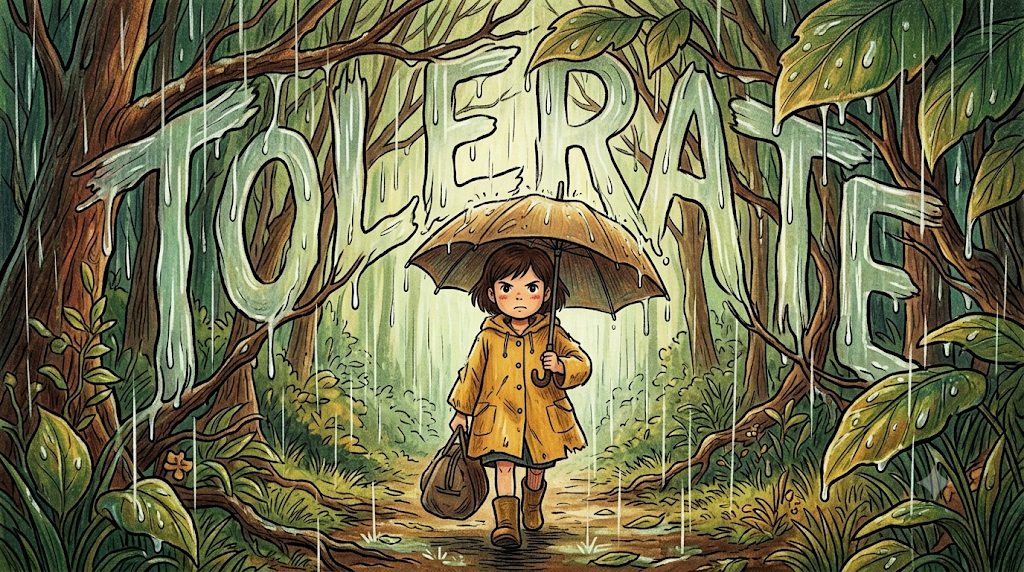
(동사) ① 참다, 견디다 (신체적·상황적)
tolerate의 가장 기본적인 의미로, 불편하거나 힘든 것을 그냥 버텨내는 것을 나타냅니다.
- Most people find it difficult to tolerate very spicy food when they first try it, but their taste buds often adjust over time and what once burned their mouth starts to taste delicious. (대부분의 사람들은 처음 먹어볼 때 매우 매운 음식을 참기 어렵다는 것을 알지만 미뢰가 시간이 지나면서 종종 적응하고 한때 입을 태웠던 것이 맛있게 느껴지기 시작한다.)
- The new medicine helped patients tolerate the side effects of their cancer treatment better, which meant they could continue the full course of therapy instead of having to stop partway through. (새 약은 환자들이 암 치료의 부작용을 더 잘 참도록 도왔는데 이것은 그들이 중간에 멈추는 대신 전체 치료 과정을 계속할 수 있다는 것을 의미했다.)
- Children who grow up in noisy households tend to be better at tolerating loud environments later in life, while those raised in quiet homes may find crowded public places much harder to deal with. (시끄러운 가정에서 자란 아이들은 나중에 삶에서 시끄러운 환경을 참는 것을 더 잘하는 경향이 있는 반면 조용한 집에서 자란 아이들은 붐비는 공공장소를 훨씬 더 다루기 어렵다고 생각할 수 있다.)
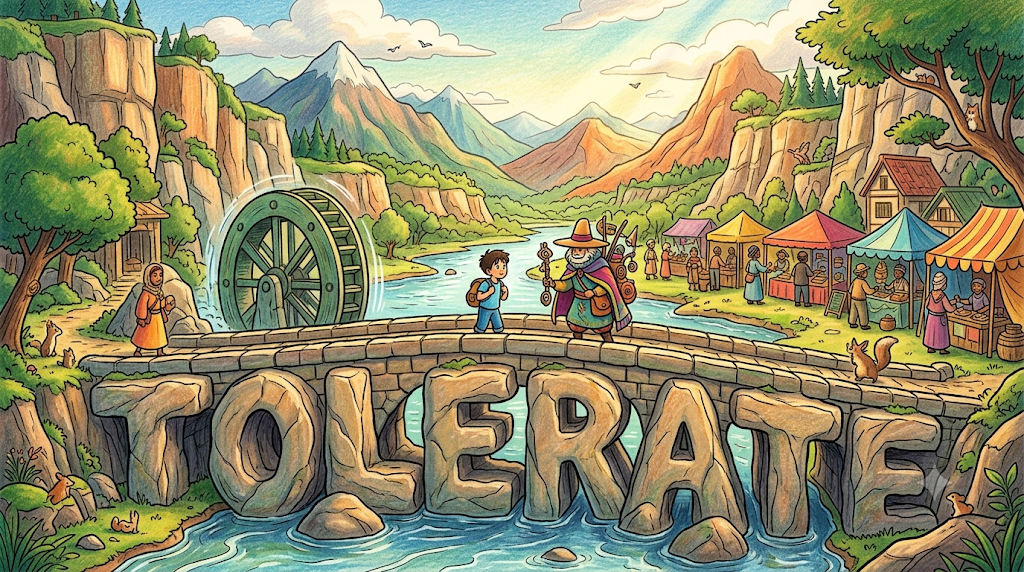
(동사) ② 용인하다, 허용하다 (행동·의견·차이)
어떤 것이 마음에 들지 않거나 동의하지 않더라도 그것을 막거나 비난하지 않는 것을 나타냅니다. 수능 독해 사회·교육·철학 지문에서 자주 등장합니다.
- A truly free society must tolerate opinions that the majority disagrees with, because allowing only popular ideas to be expressed is not real freedom — it is just the tyranny of the majority. (진정으로 자유로운 사회는 다수가 동의하지 않는 의견을 용인해야 하는데 인기 있는 생각만 표현되도록 허용하는 것은 진정한 자유가 아니라 다수의 횡포일 뿐이기 때문이다.)
- The school policy was clear — it would not tolerate any form of bullying, and anyone found to be harassing other students would face serious consequences regardless of their grades or popularity. (학교 방침은 명확했다 — 어떤 형태의 괴롭힘도 용인하지 않을 것이며 다른 학생들을 괴롭히는 것이 발견된 사람은 누구든 성적이나 인기에 관계없이 심각한 결과에 직면할 것이다.)
- It can be hard to tolerate a classmate who always wants to do things their own way, but learning to work with people who have different styles is one of the most valuable skills you will ever develop. (항상 자신의 방식으로 일을 하려는 반 친구를 용인하는 것이 어려울 수 있지만 다른 스타일을 가진 사람들과 함께 일하는 법을 배우는 것은 당신이 개발하게 될 가장 가치 있는 기술 중 하나이다.)

(동사) ③ 의학적으로 반응하지 않고 견디다 (약·음식·환경)
몸이 어떤 약이나 음식이나 환경에 부정적인 반응 없이 적응하는 것을 나타냅니다.
- Some patients tolerate certain antibiotics much better than others and experience far fewer side effects, which is why doctors always check a patient's medical history before deciding which medicine to prescribe. (어떤 환자들은 특정 항생제를 다른 것들보다 훨씬 잘 견디며 부작용을 훨씬 적게 경험하는데 이것이 의사들이 어떤 약을 처방할지 결정하기 전에 항상 환자의 병력을 확인하는 이유이다.)
- Cats generally tolerate cold weather less well than dogs, which is why most cats prefer to stay indoors near a warm spot rather than going outside on cold winter days. (고양이는 일반적으로 개보다 추운 날씨를 더 잘 견디지 못하는데 이것이 대부분의 고양이가 추운 겨울날 밖에 나가는 것보다 따뜻한 장소 근처에 실내에 머무는 것을 선호하는 이유이다.)
- Desert plants are specially adapted to tolerate long periods without water that would kill most other plants, storing moisture in their thick stems and leaves during rare rainfalls. (사막 식물들은 대부분의 다른 식물들을 죽일 물 없이 긴 기간을 견디도록 특별히 적응했으며 드문 강우 동안 두꺼운 줄기와 잎에 수분을 저장한다.)
뉘앙스·의미 연결 흐름 표
핵심 이미지 연결 흐름 뉘앙스 요약
| 좋거나 옳다고 생각하지 않더라도 반응하거나 막지 않고 버텨내거나 허용하는 것 | 신체적 고통 참기 → 불편한 상황 견디기 → 다른 의견 용인 → 차이 허용 | 무거운 짐을 지탱하듯 참으며 허용하는 이미지 |
| 참는 정도 | barely tolerate → tolerate → willingly tolerate | 겨우→보통→기꺼이의 이미지 |
| 참는 능력 | cannot tolerate → learn to tolerate → tolerate uncertainty | 불가능→배움→고급 참기의 이미지 |
어원 흐름 표
단어 구성 요소 의미 연결 흐름 뉘앙스 요약
| 라틴어 tolus (들어올리다·지탱하다) → tolerare (참다·견디다) | 무거운 짐을 지탱하다 → 힘든 것을 버티다 → 참다·용인하다 | 좋아하지 않아도 막거나 불평하지 않고 그냥 두며 버티는 핵심 이미지 |
| tolerate (동사→형용사·tolerant→명사·tolerance) | 참다·용인하다 → 관용적인 → 관용·허용 범위 | 버티며 허용하는 이미지에서 다양한 맥락으로 완성 |
품사별 의미 표
품사 의미 예문
| 동사 | 참다, 견디다 | tolerate the noise (소음을 참다) |
| 동사 | 용인하다, 허용하다 | tolerate differences (차이를 용인하다) |
| 동사 | 의학적으로 견디다 | tolerate the medicine (약을 잘 견디다) |
| 형용사 (tolerant) | 관용적인, 참을성 있는 | a tolerant person (관용적인 사람) |
| 명사 (tolerance) | 관용, 인내, 허용 범위 | religious tolerance (종교적 관용) |
활용 예문 리스트
- It is one thing to tolerate someone who is different from you, but it is something much greater to actually celebrate those differences and see them as something that makes the world more interesting. (당신과 다른 누군가를 용인하는 것은 한 가지이지만 실제로 그 차이를 축하하고 세상을 더 흥미롭게 만드는 것으로 보는 것은 훨씬 더 위대한 것이다.)
- The ability to tolerate frustration without giving up is one of the qualities that separates students who keep improving from those who stop trying as soon as things get difficult. (포기하지 않고 좌절을 견디는 능력은 일이 어려워지는 즉시 노력을 멈추는 학생들과 계속 향상되는 학생들을 구분하는 자질 중 하나이다.)
- In order to build a more peaceful world, humans need to develop a much greater capacity to tolerate ideas and ways of living that are different from their own, while still maintaining their own values. (더 평화로운 세상을 만들기 위해 인간은 자신의 가치를 유지하면서 자신의 것과 다른 아이디어와 삶의 방식을 용인하는 훨씬 더 큰 능력을 개발해야 한다.)
- The young patient bravely tolerated the discomfort of the long medical procedure without complaining, impressing the nurses who said they had rarely seen someone her age handle such a difficult experience with so much calm. (어린 환자는 불평 없이 긴 의료 시술의 불편함을 용감하게 견뎌냈으며 자신의 나이에 그런 어려운 경험을 그렇게 차분하게 처리하는 사람을 거의 본 적이 없다고 말한 간호사들에게 깊은 인상을 줬다.)
- The ancient city was famous for its ability to tolerate people of many different religions living side by side, and historians believe this openness was one of the key reasons it became such a wealthy and creative centre of trade and culture. (고대 도시는 많은 다른 종교를 가진 사람들이 나란히 살도록 허용하는 능력으로 유명했으며 역사학자들은 이 개방성이 무역과 문화의 그렇게 풍요롭고 창의적인 중심지가 된 주요 이유 중 하나라고 믿는다.)
전체 뉘앙스 설명
tolerate는 '좋거나 옳다고 생각하지 않더라도 반응하거나 막지 않고 버텨내거나 허용하는 것에서 출발하는 모든 신체적 고통 참기·불편한 상황 견디기·다른 의견 용인·차이 허용·의학적 반응 없는 적응의 언어'입니다.
accept와의 차이: accept는 어떤 것이 사실이거나 옳다는 것을 마음에서 인정하거나 받아들이는 것을 강조하고, tolerate는 더 소극적으로 좋아하지 않지만 그냥 두거나 버티는 것을 강조합니다. endure와의 차이: endure는 매우 힘들고 고통스러운 것을 강하게 버텨내는 것을 강조하고, tolerate는 더 넓게 신체적 고통부터 사회적 차이까지 다양한 것을 그냥 두거나 버티는 것을 강조합니다. permit과의 차이: permit은 공식적으로 허락하거나 허가하는 것을 강조하고, tolerate는 더 소극적으로 막지 않고 그냥 두는 것을 강조합니다.
마지막 핵심 정리
tolerate는 단순히 "참다"가 아닙니다 — 라틴어 tolerare(참다, 견디다)에서 출발해, 차이를 용인하다(tolerate difference)·고통을 참다(tolerate pain)·참을 수 없다(cannot tolerate)·행동을 용인하다(tolerate behavior)·겨우 참다(barely tolerate)·불확실성을 견디다(tolerate uncertainty)·참는 법을 배우다(learn to tolerate)·다른 사람들을 용인하다(tolerate others)·상호 용인(mutual toleration)·상황을 견디다(tolerate the situation)까지 확장되는 단어이며, tolerate vs. accept vs. endure의 뉘앙스 구별·cannot tolerate·learn to tolerate·mutual toleration 패턴이 수능 핵심 출제 포인트입니다.
파생어 표 (발음기호 포함)
파생어 발음기호 품사 의미
| tolerant | [ˈtɒlərənt] | 형용사 | 관용적인, 참을성 있는 |
| tolerance | [ˈtɒlərəns] | 명사 | 관용, 인내, 허용 범위 |
| toleration | [ˌtɒləˈreɪʃən] | 명사 | 용인, 허용 |
| intolerant | [ɪnˈtɒlərənt] | 형용사 | 관용이 없는, 참을 수 없는 |
| intolerance | [ɪnˈtɒlərəns] | 명사 | 편협함, 불관용 |
유의어 비교표

단어 공통점 뉘앙스 차이 예문
| tolerate | 견딤 관련 | 좋아하지 않지만 막거나 불평하지 않고 그냥 두거나 버티는 것 강조 | tolerate differences |
| accept | 견딤 관련 | 어떤 것이 사실이거나 옳다는 것을 마음에서 받아들이는 것 강조 | accept the result |
| endure | 견딤 관련 | 매우 힘들고 고통스러운 것을 강하게 버텨내는 것 강조 | endure hardship |
| put up with | 견딤 관련 | 불편한 것을 불만은 있지만 그냥 두는 것, 구어체 표현 강조 | put up with noise |
| bear | 견딤 관련 | 힘들거나 고통스러운 것을 참고 견뎌내는 것 강조 | bear the pain |
유의어 예문 리스트
- (accept) After losing the match, the team captain made a short speech telling his players to accept the result with dignity and use the experience as motivation to train harder for the next competition. (경기에서 진 후 팀 주장은 선수들에게 결과를 품위 있게 받아들이고 그 경험을 다음 대회를 위해 더 열심히 훈련하는 동기로 사용하라는 짧은 연설을 했다.)
- (endure) The fishermen endured three days of storms at sea before they finally managed to reach the safety of the harbour, surviving on very little food and almost no sleep during that terrifying time. (어부들은 마침내 항구의 안전에 도달하기 전에 3일간의 바다 폭풍을 견뎌냈으며 그 무서운 시간 동안 매우 적은 음식과 거의 수면 없이 생존했다.)
- (put up with) Jieun was tired of putting up with her neighbour's habit of playing loud music late at night, so she finally decided to knock on the door and politely explain how much it was affecting her sleep. (지은은 늦은 밤 시끄러운 음악을 틀어대는 이웃의 습관을 그냥 두는 것에 지쳐서 마침내 문을 두드려 그것이 그녀의 수면에 얼마나 영향을 미치는지 정중하게 설명하기로 결정했다.)
- (bear) She could bear the physical pain of the long operation, but what she found much harder to deal with was the boredom and frustration of the months of recovery that followed afterwards. (그녀는 긴 수술의 신체적 고통은 참을 수 있었지만 훨씬 더 다루기 어렵다고 생각한 것은 그 이후에 따라온 수개월의 회복 기간의 지루함과 좌절감이었다.)
결론 정리
tolerate는 단순히 "참다"가 아니라, 좋거나 옳다고 생각하지 않더라도 반응하거나 막지 않고 버텨내거나 허용하는 이미지에서 출발해 차이를 용인하다·고통을 참다·참을 수 없다·행동을 용인하다·겨우 참다·불확실성을 견디다·참는 법을 배우다·다른 사람들을 용인하다·상호 용인·상황을 견디다까지 확장되는 단어다 — tolerate가 있는 곳엔 언제나 '무거운 짐을 지탱하듯 좋아하지 않아도 막거나 불평하지 않고 그냥 두며 버티는' 소극적 허용과 인내의 이미지가 있다.
💡 tolerate는 "좋아하지 않거나 불편하거나 동의하지 않는 것을 불평하거나 막지 않고 그냥 두거나 견뎌내는 것을 가리키는" 단어 — cannot tolerate·learn to tolerate·mutual toleration 이 수능 최빈출. accept(받아들이다)·endure(견디다)와의 구별이 핵심 출제 포인트.
🌟 초등학생 버전 tolerate는 단순히 "참다"가 아니에요! cannot tolerate는 수업 시간에 옆 친구가 계속 연필로 책상을 두드릴 때 참다참다 더 이상 참을 수 없어서 "제발 그만해!"라고 말하게 되는 것처럼 어떤 것이 너무 불편하거나 잘못되어서 도저히 그냥 놔둘 수 없는 상태이고, learn to tolerate는 처음에는 매운 음식을 먹지 못했는데 조금씩 먹다 보니 나중에는 잘 먹게 되는 것처럼 처음에는 힘들었던 것을 점차 참고 견딜 수 있게 되어가는 과정이에요! 🌍✨
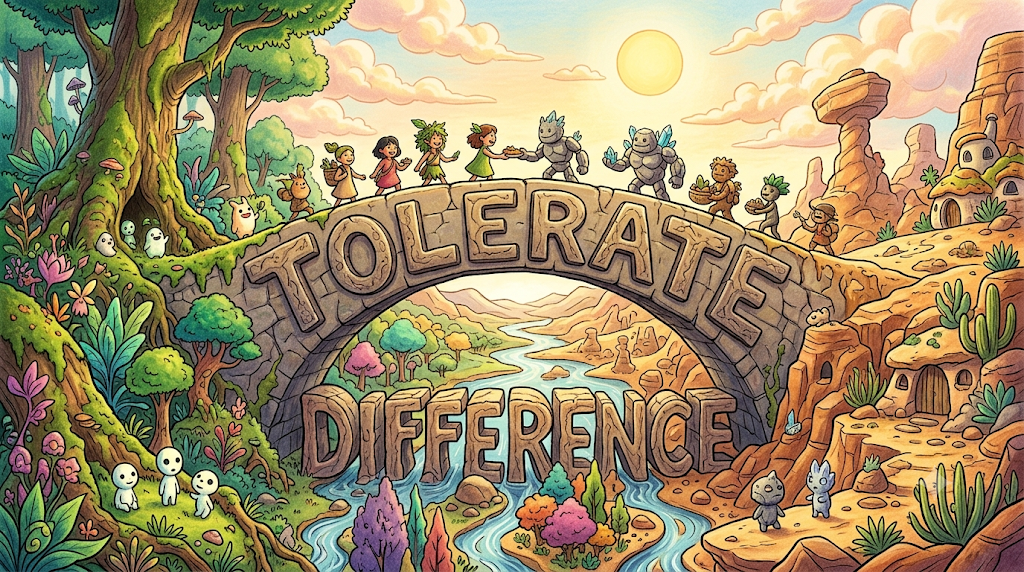
tolerate difference [ˈtɒləreɪt ˈdɪfrəns]
품사/뉘앙스 설명 (동사구) 차이를 용인하다, 다름을 허용하다
자신과 다른 사람들의 생각이나 방식이나 삶을 막거나 비난하지 않고 그대로 두는 것을 강조합니다. 차이를 없애려 하지 않고 그냥 두는 것이 핵심 뉘앙스입니다. 수능 독해 사회·교육·철학 지문의 핵심 표현입니다.
- Schools that teach children to tolerate difference from an early age tend to produce students who are better at working in teams with people from all kinds of backgrounds, which is exactly the skill that most employers look for in the modern workplace. (어린 나이부터 아이들에게 차이를 용인하도록 가르치는 학교들은 모든 종류의 배경을 가진 사람들과 팀에서 일하는 것을 더 잘하는 학생들을 만드는 경향이 있는데 이것이 바로 현대 직장에서 대부분의 고용주가 찾는 기술이다.)
- It is sometimes easier to tolerate differences in food, music, and clothing styles between cultures than to tolerate differences in beliefs and values, because the latter often feel more personal and more threatening to people's sense of identity. (음식, 음악, 의복 스타일에서의 문화 간 차이를 용인하는 것이 때로 믿음과 가치관에서의 차이를 용인하는 것보다 더 쉬운데 후자는 종종 더 개인적으로 느껴지고 사람들의 정체성 감각에 더 위협적으로 느껴지기 때문이다.)
- The ability to tolerate difference is not the same as agreeing with everything everyone does — it simply means giving people the freedom to make their own choices as long as those choices do not harm others. (차이를 용인하는 능력은 모든 사람이 하는 모든 것에 동의하는 것과 같지 않다 — 그것은 단순히 그 선택이 다른 사람들을 해치지 않는 한 사람들에게 자신의 선택을 할 자유를 주는 것을 의미한다.)
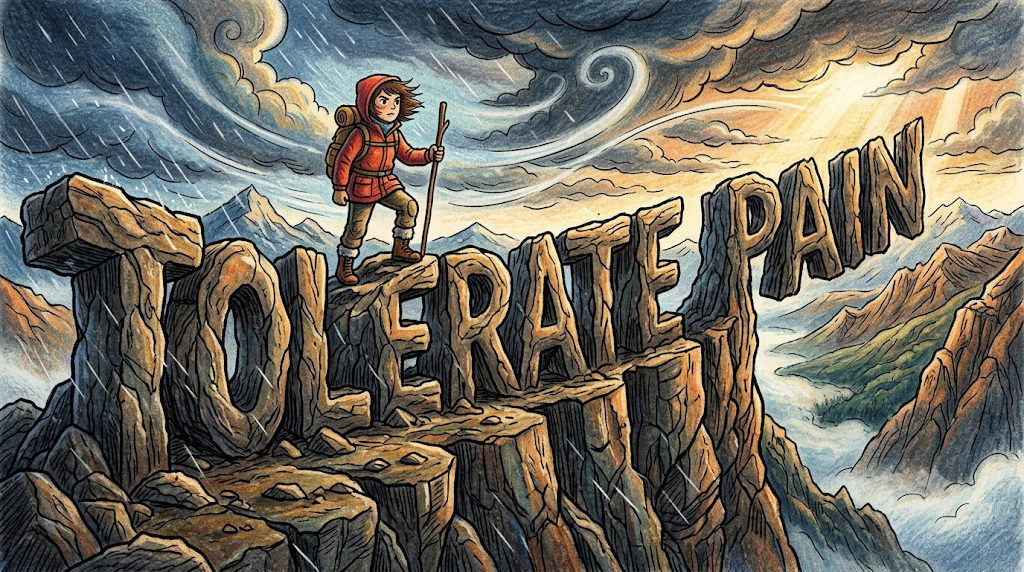
tolerate pain [ˈtɒləreɪt peɪn]
품사/뉘앙스 설명 (동사구) 고통을 참다, 통증을 견디다
신체적이거나 감정적인 고통을 불평 없이 또는 그냥 버텨내는 것을 강조합니다. 고통을 없애는 것이 아니라 그 상태에서 버티는 것이 핵심 뉘앙스입니다. 수능 독해 의학·심리·과학 지문의 핵심 표현입니다.
- Athletes who play contact sports must develop a high ability to tolerate pain, since minor injuries are common during training and competition, and stopping every time something hurts would make it impossible to perform at the highest level. (접촉 스포츠를 하는 선수들은 훈련과 경기 중에 가벼운 부상이 흔하기 때문에 고통을 참는 높은 능력을 개발해야 하며 무언가 아플 때마다 멈추는 것은 최고 수준에서 수행하는 것을 불가능하게 만들 것이다.)
- Research shows that our ability to tolerate pain is affected not just by our physical condition but also by our mental state — people who are anxious or depressed often find the same level of pain much harder to tolerate than people who are calm and in a positive mood. (연구에 따르면 고통을 참는 능력은 신체적 상태만이 아니라 정신 상태에도 영향을 받는다 — 불안하거나 우울한 사람들은 같은 수준의 고통을 차분하고 긍정적인 기분인 사람들보다 참기가 훨씬 더 어렵다고 생각하는 경우가 많다.)
- Doctors sometimes need patients to tolerate pain during a procedure without strong pain medication, because certain examinations require the patient to be alert and able to tell the doctor exactly where it hurts and how much. (의사들은 때때로 환자가 특정 검사에서 환자가 정확히 어디가 얼마나 아픈지 의사에게 말할 수 있을 만큼 깨어있어야 하기 때문에 강한 진통제 없이 시술 중에 고통을 참도록 해야 한다.)
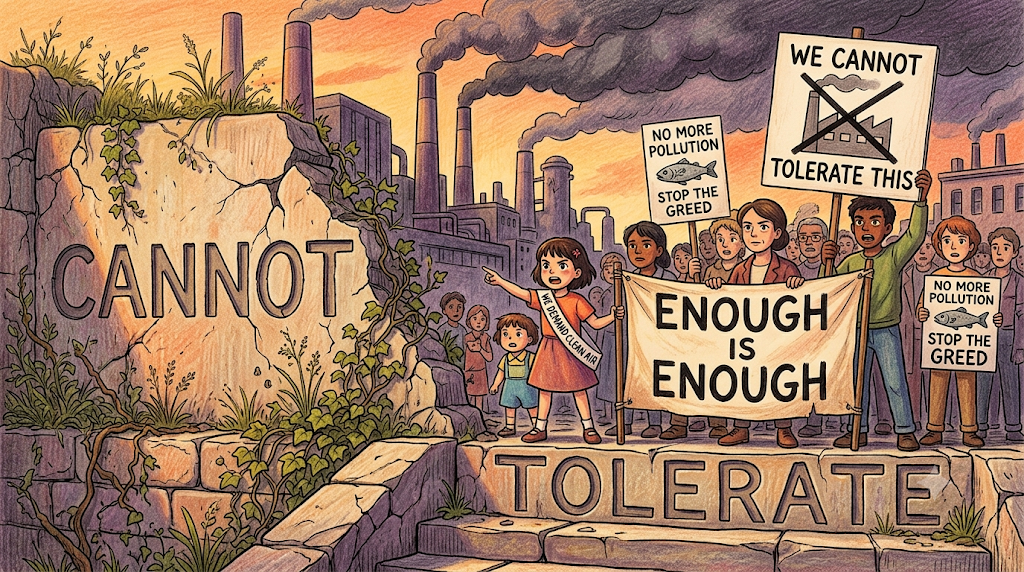
cannot tolerate [ˈkænɒt ˈtɒləreɪt]
품사/뉘앙스 설명 (동사구) 참을 수 없다, 견딜 수 없다
어떤 것이 너무 불쾌하거나 불편하거나 옳지 않아서 도저히 그냥 둘 수 없다는 것을 강조합니다. 한계에 도달했다는 것이 핵심 뉘앙스입니다. 수능 독해 심리·사회·교육 지문의 핵심 표현입니다.
- The new manager made it clear from his very first day that he could not tolerate dishonesty in any form, and that anyone who was found to have lied about their work or their mistakes would face immediate consequences. (새 관리자는 첫날부터 어떤 형태의 불성실도 참을 수 없다는 것을 명확히 했으며 업무나 실수에 대해 거짓말한 것이 발견된 사람은 누구든 즉각적인 결과에 직면할 것이라고 했다.)
- Some people cannot tolerate the texture of certain foods even if they enjoy the flavour — the feeling of something slimy or too soft in their mouth can trigger a strong physical reaction that makes it almost impossible to swallow. (일부 사람들은 맛을 즐기더라도 특정 음식의 질감을 참을 수 없는데 입안에서 끈적끈적하거나 너무 부드러운 것의 느낌이 삼키는 것을 거의 불가능하게 만드는 강한 신체적 반응을 일으킬 수 있다.)
- As the school play continued and more and more mistakes were made, the drama teacher's calm expression slowly disappeared — she had worked hard to stay patient, but by the third act she could barely tolerate watching any longer and had to step outside to take a deep breath. (학교 연극이 계속되고 점점 더 많은 실수가 일어나면서 연극 선생님의 차분한 표정이 서서히 사라졌다 — 그녀는 참을성 있게 지내려고 노력했지만 3막이 되자 더 이상 보기가 간신히 되어 깊은 숨을 쉬기 위해 밖으로 나가야 했다.)
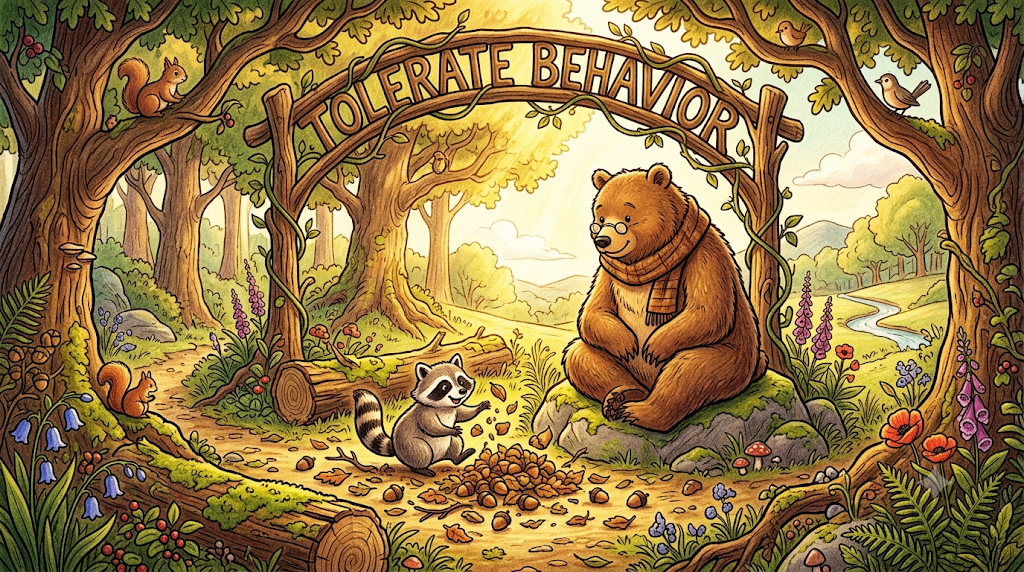
tolerate behavior [ˈtɒləreɪt bɪˈheɪvjər]
품사/뉘앙스 설명 (동사구) 행동을 용인하다, 행동을 허용하다
어떤 사람의 행동이 마음에 들지 않거나 잘못됐다고 생각하면서도 그것에 반응하거나 막지 않는 것을 강조합니다. 행동을 막는 것과 허용하는 것 사이의 결정이 핵심 뉘앙스입니다. 수능 독해 교육·사회·심리 지문의 핵심 표현입니다.
- Parents who tolerate behavior that is rude or unkind when children are young often find that it becomes much harder to correct those habits later when the children are teenagers and their patterns of behaviour are more firmly fixed. (아이들이 어릴 때 무례하거나 불친절한 행동을 용인하는 부모들은 종종 아이들이 십 대가 되고 행동 패턴이 더 확고히 고정됐을 때 나중에 그 습관을 교정하는 것이 훨씬 더 어렵다는 것을 알게 된다.)
- The football coach explained to the team that he would never tolerate behavior that showed disrespect toward the referee, even if the players disagreed with a decision, because how athletes treat officials reflects on the whole team and the sport itself. (축구 코치는 선수들이 결정에 동의하지 않더라도 심판에 대한 무례함을 보이는 행동을 결코 용인하지 않을 것이라고 팀에게 설명했는데 선수들이 심판을 대하는 방식이 전체 팀과 스포츠 자체를 반영하기 때문이다.)
- Society chooses which behaviors to tolerate and which to ban through the process of making laws, and those choices reveal what the society values most — a community that tolerates cheating but punishes generosity has very different values from one where honesty is protected and sharing is encouraged. (사회는 법을 만드는 과정을 통해 어떤 행동을 용인하고 어떤 것을 금지할지 선택하며 그 선택들은 사회가 가장 가치 있게 여기는 것을 드러낸다 — 속임수를 용인하지만 관대함을 처벌하는 공동체는 정직이 보호되고 나눔이 장려되는 공동체와 매우 다른 가치를 가진다.)
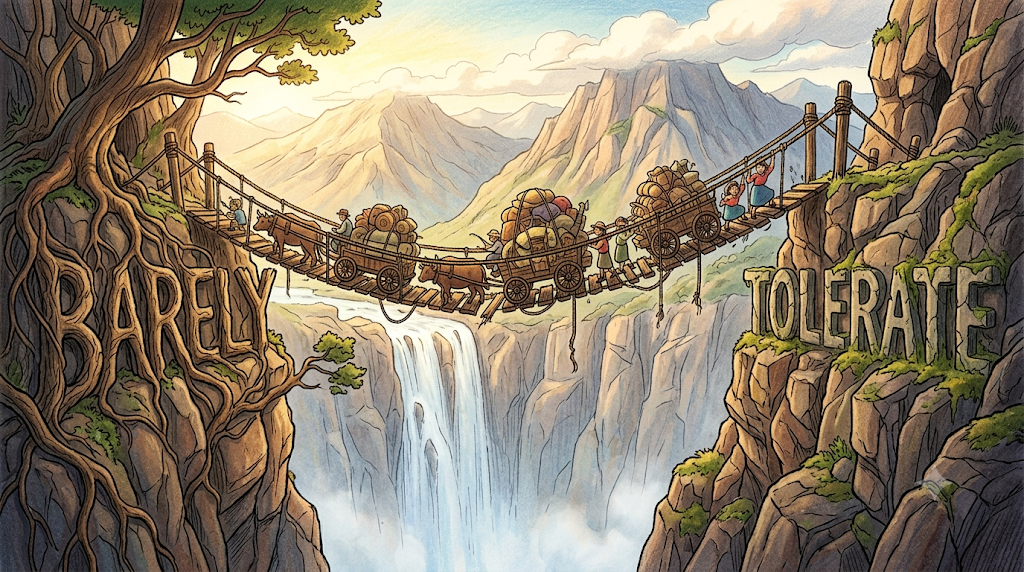
barely tolerate [ˈbeərli ˈtɒləreɪt]
품사/뉘앙스 설명 (동사구) 겨우 참다, 간신히 견디다
어떤 것을 참는 것이 매우 힘들어서 거의 한계에 달해있다는 것을 강조합니다. 참고 있지만 곧 한계에 도달할 것 같은 긴장감이 핵심 뉘앙스입니다. 수능 독해 심리·문학·사회 지문에서 자주 등장합니다.
- After waiting for two hours without any news about whether the train was going to be delayed again, the passengers in the station could barely tolerate the uncertainty any longer and began asking the staff for updates every few minutes. (기차가 다시 지연될 것인지에 대한 아무런 소식 없이 두 시간을 기다린 후 역의 승객들은 더 이상 불확실성을 간신히 견딜 수 있어서 몇 분마다 직원들에게 업데이트를 요청하기 시작했다.)
- The two teammates had very different personalities and working styles, and while they managed to complete the project successfully, both of them admitted afterwards that they had barely tolerated spending so much time together throughout the process. (두 팀원은 매우 다른 성격과 작업 스타일을 가졌으며 프로젝트를 성공적으로 완료하는 데 성공했지만 두 사람 모두 과정 내내 그렇게 많은 시간을 함께 보내는 것을 간신히 참았다고 나중에 인정했다.)
- People with severe sensory sensitivities can barely tolerate places like busy shopping centres at weekends, where the combination of bright lights, loud music, and crowds of moving people creates an overwhelming level of stimulation that most people find energising but they find exhausting. (심각한 감각 민감성을 가진 사람들은 밝은 불빛, 시끄러운 음악, 움직이는 사람들의 군중이 결합되어 대부분의 사람들이 활력 있게 느끼지만 그들이 지치게 느끼는 압도적인 수준의 자극을 만드는 주말 바쁜 쇼핑 센터 같은 장소를 간신히 참을 수 있다.)
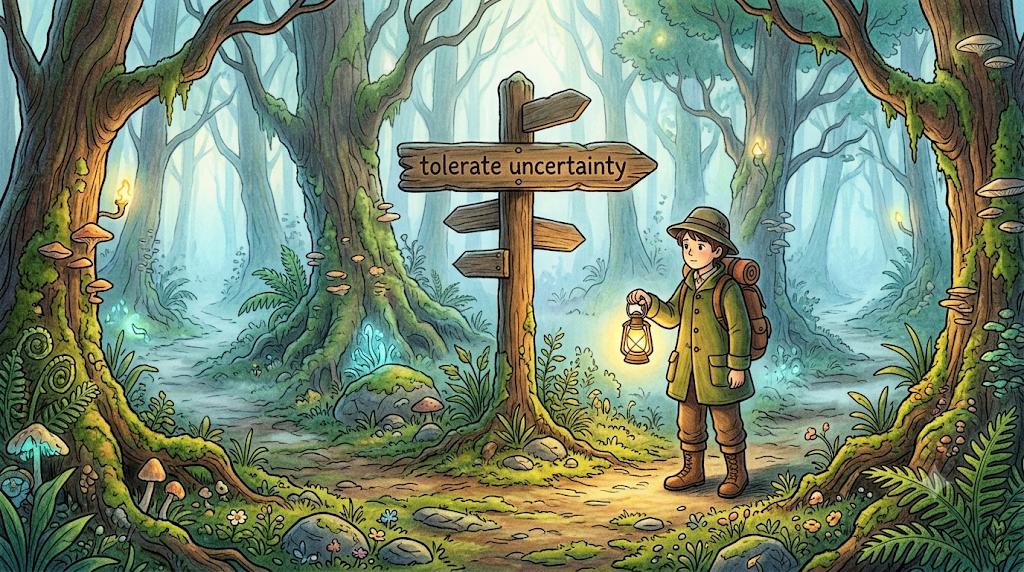
tolerate uncertainty [ˈtɒləreɪt ʌnˈsɜːtənti]
품사/뉘앙스 설명 (동사구) 불확실성을 견디다, 모름을 참다
결과나 미래가 확실하지 않은 상황을 불안해하지 않고 버텨내는 능력을 강조합니다. 불확실성이 불편하더라도 급하게 결정하지 않고 기다린다는 것이 핵심 뉘앙스입니다. 수능 독해 심리·사회·교육 지문의 핵심 표현입니다.
- Scientists must be able to tolerate uncertainty and sit with questions that have no clear answer yet, rather than rushing to conclusions that feel satisfying but might be wrong — this is one of the hardest but most important skills in scientific thinking. (과학자들은 만족스럽게 느껴지지만 틀릴 수 있는 결론으로 서두르기보다 아직 명확한 답이 없는 질문과 함께 앉아서 불확실성을 견딜 수 있어야 한다 — 이것은 과학적 사고에서 가장 어렵지만 가장 중요한 기술 중 하나이다.)
- Children learn to tolerate uncertainty at a very early age when they discover that they cannot always get what they want immediately — learning to wait for things is one of the first great lessons of childhood. (아이들은 항상 원하는 것을 즉시 얻을 수 없다는 것을 발견할 때 매우 어린 나이에 불확실성을 견디는 것을 배운다 — 무언가를 기다리는 것을 배우는 것은 유년기의 첫 번째 위대한 교훈 중 하나이다.)
- One of the biggest challenges of being a parent is learning to tolerate the uncertainty of not knowing whether the choices you are making for your child are the right ones — most parents feel this doubt deeply but learn to act despite it. (부모가 되는 가장 큰 도전 중 하나는 자녀를 위해 내리는 선택이 옳은지 모르는 불확실성을 견디는 것을 배우는 것이다 — 대부분의 부모들이 이 의심을 깊이 느끼지만 그럼에도 불구하고 행동하는 것을 배운다.)
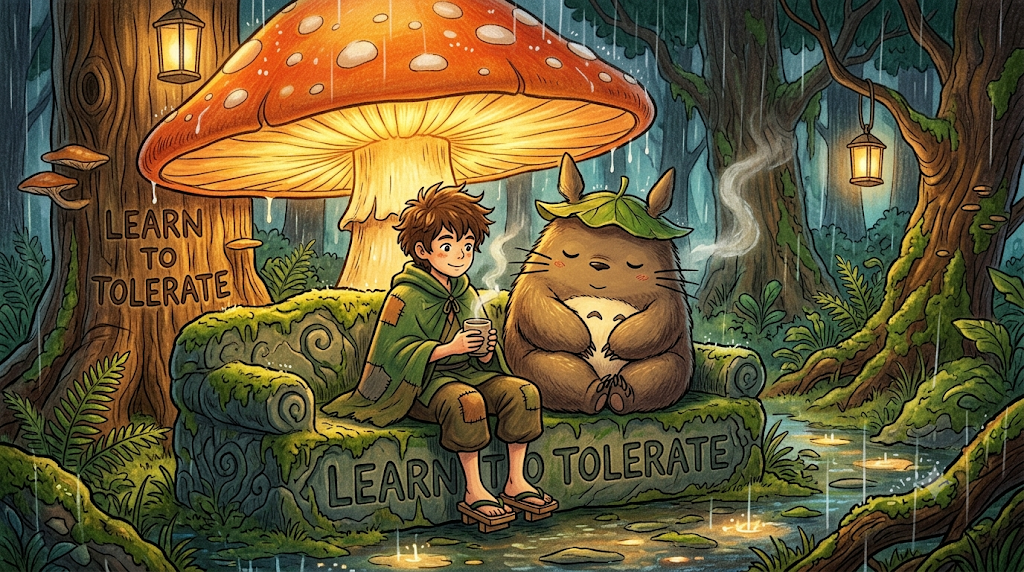
learn to tolerate [lɜːrn tuː ˈtɒləreɪt]
품사/뉘앙스 설명 (동사구) 참는 법을 배우다, 견디는 것을 익히다
처음에는 힘들었던 것을 점차 참을 수 있게 되어가는 과정을 강조합니다. 참는 능력이 타고나는 것이 아닌 배우는 것이라는 것이 핵심 뉘앙스입니다. 수능 독해 교육·심리·사회 지문의 핵심 표현입니다.
- Most musicians learn to tolerate the long hours of repetitive practice that are necessary to master their instrument, eventually finding that what once felt like a chore gradually becomes a source of deep satisfaction and even joy. (대부분의 음악가들은 악기를 마스터하는 데 필요한 긴 시간의 반복적인 연습을 참는 법을 배우며 결국 한때 귀찮은 일처럼 느껴지던 것이 점차 깊은 만족과 심지어 기쁨의 원천이 된다는 것을 발견한다.)
- People who move to a new country must learn to tolerate many small discomforts and confusions before they begin to feel at home — from struggling with a new language to finding the right food shops to understanding unwritten social rules that everyone else seems to know naturally. (새로운 나라로 이사하는 사람들은 편안함을 느끼기 시작하기 전에 많은 작은 불편함과 혼란을 참는 법을 배워야 한다 — 새로운 언어로 애쓰는 것에서부터 적합한 식료품점을 찾는 것과 다른 모든 사람들이 자연스럽게 아는 것처럼 보이는 불문율 이해까지.)
- Teachers often need to learn to tolerate the imperfection of students' early attempts, because correcting every mistake immediately can make students afraid to try new things, whereas a teacher who allows some mistakes while guiding gradually creates a much more confident and creative learner. (선생님들은 종종 학생들의 초기 시도의 불완전함을 참는 법을 배워야 하는데 모든 실수를 즉시 수정하는 것이 학생들이 새로운 것을 시도하는 것을 두려워하게 만들 수 있는 반면 점차적으로 안내하면서 일부 실수를 허용하는 선생님은 훨씬 더 자신감 있고 창의적인 학습자를 만들기 때문이다.)
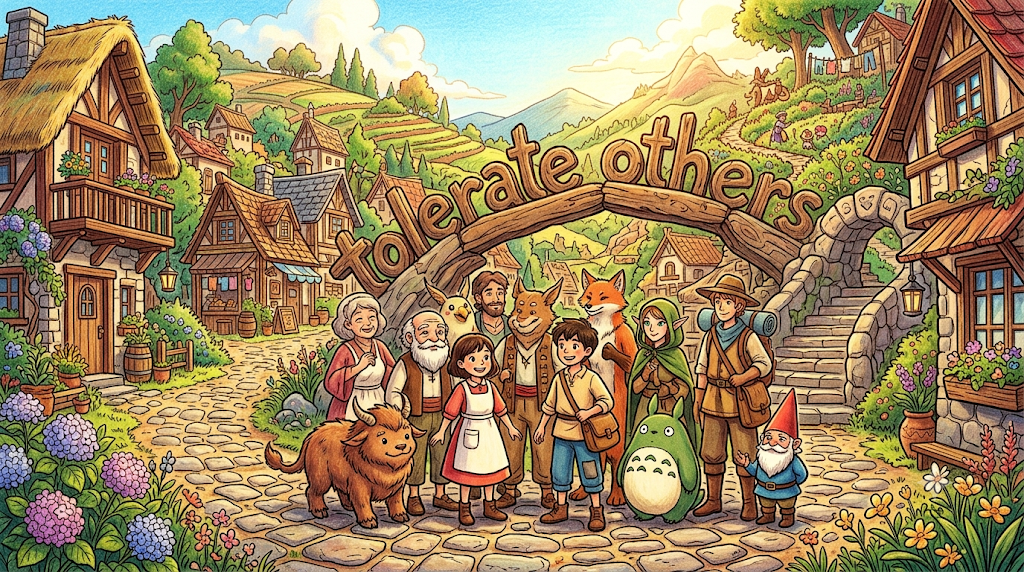
tolerate others [ˈtɒləreɪt ˈʌðərz]
품사/뉘앙스 설명 (동사구) 다른 사람들을 용인하다, 타인을 허용하다
자신과 다른 사람들의 생각이나 방식을 인정하고 그것을 방해하지 않는 것을 강조합니다. 다름을 이해하는 것보다 낮은 수준이지만 사회 평화의 기본이 된다는 것이 핵심 뉘앙스입니다. 수능 독해 사회·교육·철학 지문의 핵심 표현입니다.
- Being able to tolerate others who have different political opinions is becoming increasingly rare in a world where people tend to surround themselves with only those who think the same way, which makes productive conversation across differences much harder than it used to be. (다른 정치적 의견을 가진 타인을 용인할 수 있는 것은 사람들이 같은 방식으로 생각하는 사람들로만 자신을 둘러싸는 경향이 있는 세상에서 점점 더 드물어지고 있으며 이것은 차이를 넘은 생산적인 대화를 예전보다 훨씬 더 어렵게 만든다.)
- The grandfather tolerated others in his neighbourhood who had very different habits and values from his own, even though he did not always understand them — he simply believed that people had the right to live their own lives as long as they were not hurting anyone else. (할아버지는 자신의 것과 매우 다른 습관과 가치를 가진 동네의 타인을 항상 이해하지 못했음에도 용인했는데 — 그는 단순히 사람들이 다른 사람을 해치지 않는 한 자신의 삶을 살 권리가 있다고 믿었다.)
- Great thinkers throughout history have argued that the ability to tolerate others is not just a nice quality to have but is actually the foundation of any society that hopes to remain peaceful and productive over time. (역사 전반의 위대한 사상가들은 타인을 용인하는 능력이 단순히 가지면 좋은 자질이 아니라 실제로 시간이 지나도 평화롭고 생산적으로 남기를 원하는 모든 사회의 기반이라고 주장했다.)
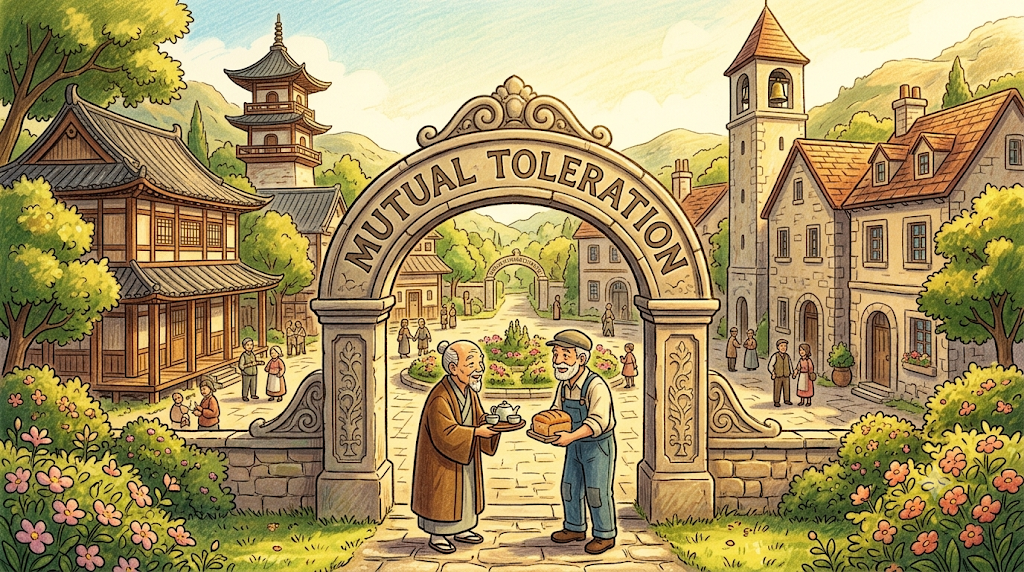
mutual toleration [ˈmjuːtʃuəl ˌtɒləˈreɪʃən]
품사/뉘앙스 설명 (명사구) 상호 용인, 서로 참음
두 개 이상의 집단이 서로의 차이를 동시에 허용하는 상태를 강조합니다. 용인이 한쪽만의 것이 아닌 서로 동등하게 이루어진다는 것이 핵심 뉘앙스입니다. 수능 독해 사회·역사·철학 지문의 핵심 표현입니다.
- Mutual toleration between people of different religions has not always been easy to achieve throughout history, but the societies that managed to develop it tended to be more creative, more prosperous, and more stable than those that insisted on religious uniformity. (다른 종교를 가진 사람들 사이의 상호 용인은 역사 전반에 걸쳐 달성하기 항상 쉽지 않았지만 그것을 개발하는 데 성공한 사회들은 종교적 통일을 고집한 사회들보다 더 창의적이고 더 번영하며 더 안정적인 경향이 있었다.)
- Mutual toleration in a family means that parents and teenagers each give each other the space to be different — parents do not insist that teenagers share all their opinions and values, and teenagers do not expect parents to completely change the way they think. (가족에서의 상호 용인은 부모와 십 대들이 각자에게 다를 공간을 주는 것을 의미한다 — 부모는 십 대들이 모든 의견과 가치를 공유하도록 고집하지 않고 십 대들은 부모가 생각하는 방식을 완전히 바꾸기를 기대하지 않는다.)
- Political scientists who study successful democracies have found that mutual toleration — the willingness of political opponents to accept each other's right to seek power through elections — is one of the key conditions that keeps democracies healthy and prevents them from collapsing into conflict. (성공적인 민주주의를 연구하는 정치 과학자들은 상호 용인 — 정치적 반대자들이 선거를 통해 권력을 추구하는 서로의 권리를 받아들이려는 의지 — 이 민주주의를 건강하게 유지하고 갈등으로 붕괴되는 것을 막는 핵심 조건 중 하나라는 것을 발견했다.)
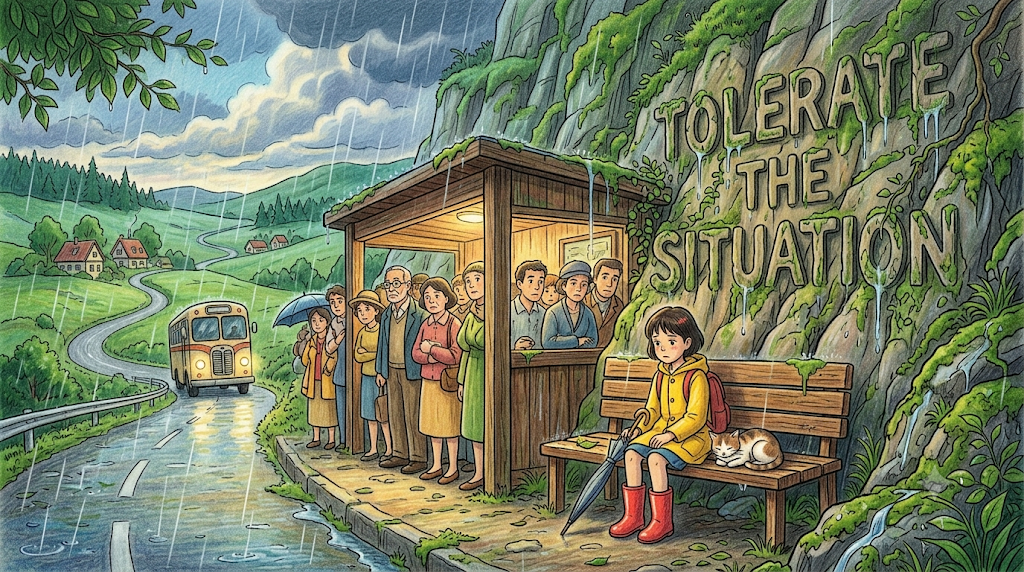
tolerate the situation [ˈtɒləreɪt ðə ˌsɪtʃuˈeɪʃən]
품사/뉘앙스 설명 (동사구) 상황을 견디다, 상황을 참다
좋지 않거나 불편한 상황을 바꾸지 못하더라도 불평 없이 버텨내는 것을 강조합니다. 상황을 바꾸지 못하고 참는 것이 핵심 뉘앙스입니다. 수능 독해 심리·사회·교육 지문에서 자주 등장합니다.
- The family tolerated the situation of living in a very small apartment while they saved money to buy a bigger home, reminding themselves regularly that this temporary difficulty was worth it for the much better future they were working toward. (가족은 더 큰 집을 사기 위해 돈을 모으는 동안 매우 작은 아파트에서 사는 상황을 견뎌냈으며 이 일시적인 어려움이 그들이 향해 나아가는 훨씬 더 나은 미래를 위해 그만한 가치가 있다는 것을 정기적으로 스스로에게 상기시켰다.)
- There is a big difference between choosing to tolerate a situation because you have decided it is bearable and simply tolerating a situation because you feel you have no choice — the first involves active decision-making while the second can slowly damage a person's confidence and sense of control. (상황을 견딜 만하다고 결정했기 때문에 상황을 견디기로 선택하는 것과 단순히 선택의 여지가 없다고 느끼기 때문에 상황을 참는 것 사이에는 큰 차이가 있다 — 첫 번째는 능동적인 의사결정을 포함하는 반면 두 번째는 서서히 사람의 자신감과 통제감을 손상시킬 수 있다.)
- When the team's best player was injured and could not play, the remaining members had to tolerate the situation and find new ways to work together, and many of them later said that this difficult period had actually made them stronger and more creative as a group. (팀의 최고 선수가 부상을 입고 경기를 할 수 없었을 때 나머지 구성원들은 상황을 견디고 함께 일하는 새로운 방법을 찾아야 했으며 그들 중 많은 사람들이 나중에 이 어려운 기간이 실제로 그들을 그룹으로서 더 강하고 더 창의적으로 만들었다고 말했다.)
숙어 그룹 묶음 1 — 사회적 용인 tolerate 핵심 패턴
표현 의미 핵심 뉘앙스 주요 맥락
| tolerate difference | 차이를 용인하다 | 차이를 없애려 하지 않고 그냥 두는 것 | 사회·교육·철학 |
| tolerate others | 타인을 용인하다 | 다름을 이해하지 않더라도 방해하지 않는 것 | 사회·교육·철학 |
| mutual toleration | 상호 용인 | 용인이 한쪽만이 아닌 서로 동등한 것 | 사회·역사·철학 |
이 세 표현은 모두 tolerate의 "자신과 다른 것을 막거나 비난하지 않고 허용하는" 이미지를 공유하되, 각각 다름 자체를 허용하는 것(tolerate difference)·다른 사람들을 허용하는 것(tolerate others)·서로가 동시에 허용하는 것(mutual toleration)의 관점에서 접근합니다.
- Mutual toleration cannot exist without the willingness to tolerate others and tolerate differences — if only one group is expected to change while the other group is free to stay the same, the relationship is not one of mutual toleration but of one-sided concession that will eventually breed resentment. (상호 용인은 타인을 용인하고 차이를 용인하려는 의지 없이는 존재할 수 없다 — 한 집단만 변화할 것으로 기대되고 다른 집단은 자유롭게 그대로 있다면 그 관계는 상호 용인이 아니라 결국 원망을 낳을 일방적인 양보이다.)
- Societies that tolerate difference well often develop a culture of mutual toleration where people gradually become more comfortable tolerating not just the specific differences they have grown up with but also new kinds of others who arrive with entirely unfamiliar ways of living. (차이를 잘 용인하는 사회들은 종종 사람들이 함께 자라온 특정 차이만이 아니라 완전히 낯선 삶의 방식을 가진 새로운 종류의 타인도 용인하는 것에 점차 더 편안해지는 상호 용인의 문화를 발전시킨다.)
- Teaching children to tolerate others who are different from them is the first step toward creating the conditions for mutual toleration, because children who are never taught to tolerate difference often grow into adults who struggle to live peacefully alongside anyone whose way of life challenges their assumptions about how the world should be. (자신과 다른 타인을 용인하도록 아이들을 가르치는 것은 상호 용인을 위한 조건을 만드는 첫 번째 단계인데 결코 차이를 용인하도록 가르침받지 않은 아이들은 종종 세상이 어떠해야 한다는 가정에 도전하는 삶의 방식을 가진 사람과 평화롭게 함께 사는 데 어려움을 겪는 어른으로 자라기 때문이다.)
숙어 그룹 묶음 2 — 한계와 성장 tolerate 심화 패턴
표현 의미 핵심 뉘앙스 주요 맥락
| cannot tolerate | 참을 수 없다 | 한계에 도달했다는 것 | 심리·사회·교육 |
| barely tolerate | 겨우 참다 | 한계에 가까운 긴장감 | 심리·문학·사회 |
| learn to tolerate | 참는 법을 배우다 | 참는 능력이 타고나는 것이 아닌 배우는 것 | 교육·심리·사회 |
이 세 표현은 모두 tolerate의 "참는 한계와 성장" 이미지를 공유하되, 각각 참는 것이 불가능한 상태(cannot tolerate)·참는 것이 거의 한계에 달한 상태(barely tolerate)·참는 능력의 점차적 성장(learn to tolerate)의 관점에서 접근합니다.
- Everyone has things they cannot tolerate at all and things they can barely tolerate, and the process of growing up involves gradually learning to tolerate more things — not by pretending they do not bother you, but by developing the inner strength and perspective to deal with them more calmly. (모든 사람은 전혀 참을 수 없는 것들과 간신히 참을 수 있는 것들을 가지고 있으며 성장하는 과정은 점차 더 많은 것들을 참는 법을 배우는 것을 포함한다 — 그것들이 당신을 귀찮게 하지 않는다고 가장함으로써가 아니라 그것들을 더 차분하게 다룰 내면의 힘과 관점을 개발함으로써.)
- A child who cannot tolerate losing at board games at age five, and who can barely tolerate it at age eight, may have learned to tolerate defeat gracefully by age twelve — and this gradual development is one of the most important signs that they are building emotional maturity. (다섯 살에 보드게임에서 지는 것을 참을 수 없고 여덟 살에 간신히 참을 수 있었던 아이가 열두 살쯤에는 품위 있게 패배를 참는 법을 배웠을 수 있다 — 그리고 이 점진적인 발전은 감정적 성숙을 쌓고 있다는 가장 중요한 신호 중 하나이다.)
- What a person cannot tolerate tells you as much about them as what they enjoy — and learning to tolerate the things you once could barely tolerate is not about becoming someone who accepts everything without question, but about becoming someone who chooses their battles wisely and saves their energy for the things that truly matter. (사람이 참을 수 없는 것은 그들이 즐기는 것만큼 그들에 대해 알려주며 — 한때 간신히 참을 수 있었던 것들을 참는 법을 배우는 것은 질문 없이 모든 것을 받아들이는 사람이 되는 것이 아니라 싸움을 현명하게 선택하고 진정으로 중요한 것들을 위해 에너지를 아끼는 사람이 되는 것에 관한 것이다.)
숙어 그룹 묶음 3 — 심리와 상황 tolerate 심화 패턴
표현 의미 핵심 뉘앙스 주요 맥락
| tolerate uncertainty | 불확실성을 견디다 | 불확실성이 불편하더라도 급하게 결정하지 않고 기다리는 것 | 심리·사회·교육 |
| tolerate the situation | 상황을 견디다 | 상황을 바꾸지 못하고 참는 것 | 심리·사회·교육 |
| tolerate behavior | 행동을 용인하다 | 행동을 막는 것과 허용하는 것 사이의 결정 | 교육·사회·심리 |
이 세 표현은 모두 tolerate의 "원하지 않더라도 그냥 두거나 버티는" 이미지를 공유하되, 각각 모르는 것에 대한 불안을 버티는 것(tolerate uncertainty)·바꾸지 못하는 상황을 버티는 것(tolerate the situation)·마음에 들지 않는 행동을 허용하는 것(tolerate behavior)의 관점에서 접근합니다.
- When we are asked to tolerate behavior we find unacceptable in a situation we cannot change, it becomes very important to know the difference between tolerating the situation temporarily while working on a solution and simply giving up and accepting that things will never improve. (바꿀 수 없는 상황에서 받아들이기 어렵다고 생각하는 행동을 용인하도록 요청받을 때 해결책을 위해 노력하는 동안 일시적으로 상황을 견디는 것과 단순히 포기하고 상황이 결코 나아지지 않을 것이라는 것을 받아들이는 것의 차이를 아는 것이 매우 중요해진다.)
- People who can tolerate uncertainty are usually also better at tolerating difficult situations because both require the same core skill — the ability to stay calm and present even when you do not know how things will turn out, rather than letting anxiety about the future make you miserable in the present. (불확실성을 견딜 수 있는 사람들은 보통 어려운 상황을 견디는 것도 더 잘하는데 둘 다 같은 핵심 기술이 필요하기 때문이다 — 미래에 대한 불안이 현재를 비참하게 만들도록 두는 것이 아니라 일이 어떻게 될지 모르더라도 차분하고 현재에 있을 수 있는 능력이다.)
- Tolerating behavior you disagree with and tolerating uncertainty about whether things will ever change are both made easier when you remember that tolerating a situation for now does not mean you are accepting it permanently — it simply means you are being strategic about the timing and the way you choose to respond. (동의하지 않는 행동을 용인하는 것과 상황이 언제 변할지에 대한 불확실성을 견디는 것은 모두 지금 상황을 견디는 것이 영구적으로 받아들이는 것을 의미하지 않는다는 것을 기억할 때 더 쉬워진다 — 그것은 단순히 당신이 반응하기로 선택하는 타이밍과 방식에 대해 전략적이라는 것을 의미한다.)
숙어 그룹 묶음 4 — 고통과 완성 tolerate 완성 패턴
표현 의미 핵심 뉘앙스 주요 맥락
| tolerate pain | 고통을 참다 | 고통을 없애는 것이 아닌 그 상태에서 버티는 것 | 의학·심리·과학 |
| learn to tolerate | 참는 법을 배우다 | 참는 능력이 타고나는 것이 아닌 배우는 것 | 교육·심리·사회 |
| tolerate uncertainty | 불확실성을 견디다 | 급하게 결정하지 않고 모름을 버티는 것 | 심리·사회·교육 |
이 세 표현은 함께 tolerate가 나타내는 신체·심리·사회적 참음의 스펙트럼을 보여줍니다. tolerate pain은 신체적 고통을 버티는 것을, learn to tolerate는 참는 능력의 성장을, tolerate uncertainty는 가장 어렵고 심리적인 참음을 각각 강조합니다.
- Learning to tolerate pain and learning to tolerate uncertainty are both forms of building resilience — the person who has learned to tolerate physical discomfort without panicking, and who can also tolerate not knowing what will happen next, tends to perform well in stressful situations where both challenges appear at the same time. (고통을 참는 법을 배우는 것과 불확실성을 견디는 법을 배우는 것은 모두 회복탄력성을 쌓는 형태이다 — 당황하지 않고 신체적 불편함을 참는 법을 배운 사람, 그리고 다음에 무슨 일이 일어날지 모르는 것도 견딜 수 있는 사람은 두 가지 도전이 동시에 나타나는 스트레스 상황에서 잘 수행하는 경향이 있다.)
- Athletes who are learning to tolerate pain during training are also, without always realising it, learning to tolerate uncertainty about whether their efforts will pay off — and those who can do both at the same time, continuing to push through discomfort even when results are slow, are usually the ones who eventually achieve what they set out to do. (훈련 중 고통을 참는 법을 배우는 선수들은 또한 항상 깨닫지는 못하면서 노력이 결실을 맺을지에 대한 불확실성을 견디는 법을 배우고 있다 — 그리고 동시에 둘 다 할 수 있는, 결과가 느릴 때도 계속 불편함을 통해 밀고 나가는 사람들은 보통 결국 목표한 것을 달성하는 사람들이다.)
- One of the greatest lessons of growing up is learning to tolerate what you cannot change — whether that is physical pain that must simply be tolerated until it passes, or the uncertainty of a future you cannot yet see, or the imperfections of others that you must tolerate in order to have the relationships and communities that make life worthwhile. (성장의 가장 큰 교훈 중 하나는 바꿀 수 없는 것을 참는 법을 배우는 것이다 — 그것이 지나갈 때까지 단순히 참아야 하는 신체적 고통이든, 아직 볼 수 없는 미래의 불확실성이든, 아니면 삶을 가치 있게 만드는 관계와 공동체를 갖기 위해 참아야 하는 다른 사람들의 불완전함이든.)
전체 요약표
표현 의미 핵심 뉘앙스
| tolerate | 참다, 견디다, 용인하다 | 좋아하지 않아도 막거나 불평하지 않고 그냥 두며 버티는 이미지 |
| tolerate difference | 차이를 용인하다 | 차이를 없애려 하지 않고 그냥 두는 것 |
| tolerate pain | 고통을 참다 | 고통을 없애는 것이 아닌 그 상태에서 버티는 것 |
| cannot tolerate | 참을 수 없다 | 한계에 도달했다는 것 |
| tolerate behavior | 행동을 용인하다 | 행동을 막는 것과 허용하는 것 사이의 결정 |
| barely tolerate | 겨우 참다 | 한계에 가까운 긴장감 |
| tolerate uncertainty | 불확실성을 견디다 | 급하게 결정하지 않고 모름을 버티는 것 |
| learn to tolerate | 참는 법을 배우다 | 참는 능력이 타고나는 것이 아닌 배우는 것 |
| tolerate others | 타인을 용인하다 | 다름을 이해하지 않더라도 방해하지 않는 것 |
| mutual toleration | 상호 용인 | 용인이 한쪽만이 아닌 서로 동등한 것 |
| tolerate the situation | 상황을 견디다 | 상황을 바꾸지 못하고 참는 것 |
유의어 비교표
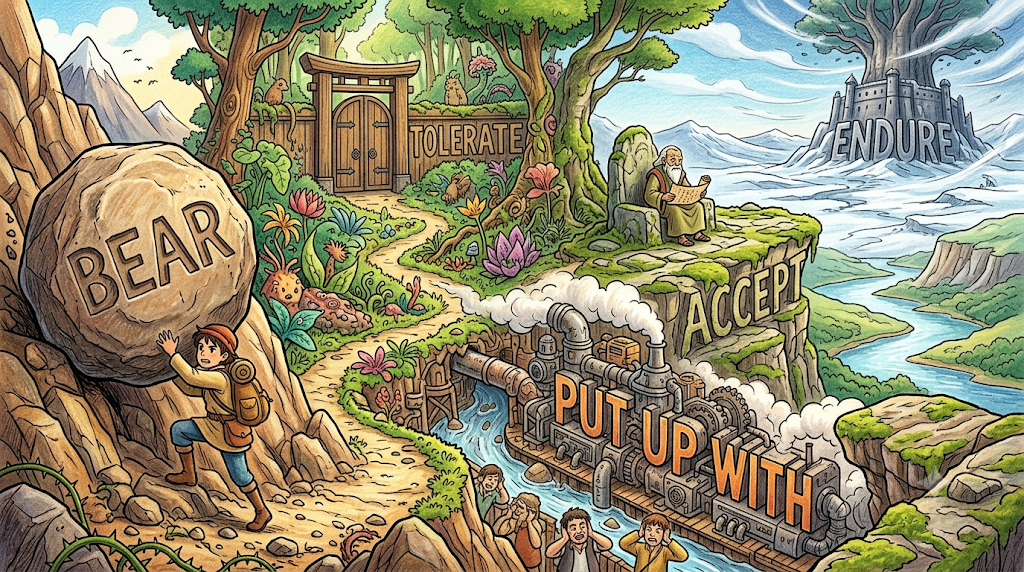
단어 공통점 뉘앙스 차이 예문
| tolerate | 견딤 관련 | 좋아하지 않지만 막거나 불평하지 않고 그냥 두거나 버티는 것 강조 | tolerate differences |
| accept | 견딤 관련 | 어떤 것이 사실이거나 옳다는 것을 마음에서 받아들이는 것 강조 | accept the result |
| endure | 견딤 관련 | 매우 힘들고 고통스러운 것을 강하게 버텨내는 것 강조 | endure hardship |
| put up with | 견딤 관련 | 불편한 것을 불만은 있지만 그냥 두는 것, 구어체 표현 강조 | put up with noise |
| bear | 견딤 관련 | 힘들거나 고통스러운 것을 참고 견뎌내는 것 강조 | bear the pain |
결론 정리
tolerate는 단순히 "참다"가 아니라, 좋거나 옳다고 생각하지 않더라도 반응하거나 막지 않고 버텨내거나 허용하는 이미지에서 출발해 차이를 용인하다·고통을 참다·참을 수 없다·행동을 용인하다·겨우 참다·불확실성을 견디다·참는 법을 배우다·다른 사람들을 용인하다·상호 용인·상황을 견디다까지 확장되는 단어다 — tolerate가 있는 곳엔 언제나 '무거운 짐을 지탱하듯 좋아하지 않아도 막거나 불평하지 않고 그냥 두며 버티는' 소극적 허용과 인내의 이미지가 있다.
💡 tolerate는 "좋아하지 않거나 불편하거나 동의하지 않는 것을 불평하거나 막지 않고 그냥 두거나 견뎌내는 것을 가리키는" 단어 — cannot tolerate·learn to tolerate·mutual toleration 이 수능 최빈출. accept(받아들이다)·endure(견디다)와의 구별이 핵심 출제 포인트.
🌟 초등학생 버전 tolerate는 단순히 "참다"가 아니에요! cannot tolerate는 수업 시간에 옆 친구가 계속 연필로 책상을 두드릴 때 참다참다 더 이상 참을 수 없어서 "제발 그만해!"라고 말하게 되는 것처럼 어떤 것이 너무 불편하거나 잘못되어서 도저히 그냥 놔둘 수 없는 상태이고, learn to tolerate는 처음에는 매운 음식을 먹지 못했는데 조금씩 먹다 보니 나중에는 잘 먹게 되는 것처럼 처음에는 힘들었던 것을 점차 참고 견딜 수 있게 되어가는 과정이에요! 🌍✨


