- 분류 전체보기 (5611)

| 일 | 월 | 화 | 수 | 목 | 금 | 토 |
|---|---|---|---|---|---|---|
| 1 | 2 | |||||
| 3 | 4 | 5 | 6 | 7 | 8 | 9 |
| 10 | 11 | 12 | 13 | 14 | 15 | 16 |
| 17 | 18 | 19 | 20 | 21 | 22 | 23 |
| 24 | 25 | 26 | 27 | 28 | 29 | 30 |
| 31 |
- get through
- Please
- Excuse me
- set up
- I'm glad to hear that.
- Read between the lines
- Yes
- no
- Actually
- Yeah
- OKay
- Don't worry
- please.
- make it
- hold on
- too.
- By The Way
- please?
- Show Up
- well
- I'm sorry
- Sure
- pick up
- Sorry
- oh
- come up with
- Hey
- work out
- Right?
- entrance fee
- Today
- Total
인과함께
Day414 , together, all together, get together, put together, hold together, pull together, come together, bring together, work together, stay together, piece together 본문
Day414 , together, all together, get together, put together, hold together, pull together, come together, bring together, work together, stay together, piece together
미인생 2026. 5. 19. 08:23
together [təˈɡeðər]
(부사/형용사) 함께, 같이, 한데 모여, 정신을 차린
The students clapped their hands all together when the performance finished.
(공연이 끝났을 때 학생들은 다 함께 손뼉을 쳤다.)
'together'를 단순히 "함께"로만 외우면 수능에서 반드시 틀립니다.
together는 "둘 이상의 것이 분리되지 않고 하나로 합쳐지거나, 사람들이 같은 목적을 위해 힘을 모으는 것" 이라는 핵심 이미지에서 출발해, 물리적 결합·공동 행동·정신적 집중·통합까지 폭넓게 쓰이는 핵심 다기능 단어입니다. 특히 together(둘 이상이 하나로 합쳐지는 것) vs. jointly(공식적으로 공동으로 하는 것) vs. collectively(집단으로서 모두 함께하는 것) 의 뉘앙스 차이, pull together(힘을 합치다), piece together(조각을 맞춰 재구성하다) 패턴은 수능 독해 사회·역사·심리·교육 지문에서 핵심적으로 등장합니다.
'together'는 고대 영어 tōgædere(함께, 모여서)에서 유래했으며, tō(~을 향해)와 gædere(함께, 모여서)가 결합된 것입니다. 어원의 핵심 이미지는 "흩어진 것들이 하나의 방향으로 모이는 것" 으로, 단순한 동행이 아닌 분리됐던 것들이 목적이나 힘을 향해 하나로 합쳐지는 통합과 연결의 이미지가 이 단어의 본질입니다.
1. all together [ɔːl təˈɡeðər]
(부사구/수능) "모두 함께, 일제히"를 뜻합니다. 모든 구성원이 동시에 같은 행동을 하거나 한 곳에 모이는 것을 강조합니다. 수능 독해 사회·문학·역사 지문에서 자주 등장합니다.
The class sang the song all together at the end of the ceremony and the sound filled the whole school hall. (학급은 행사 끝에 모두 함께 노래를 불렀으며 소리가 학교 홀 전체를 가득 채웠다.)
2. get together [ɡet təˈɡeðər]
(동사구/수능) "모이다, 만나다, 모임을 갖다"를 뜻합니다. 사람들이 사교적 목적으로 한 장소에 모이는 것을 강조합니다. 수능 독해 사회·문화·심리·문학 지문의 핵심 표현입니다.
The old classmates decided to get together once a year to catch up on each other's lives and remember the years they had spent at school. (옛 반 친구들은 서로의 생활을 나누고 학교에서 보낸 세월을 기억하기 위해 1년에 한 번 모이기로 결정했다.)
3. put together [pʊt təˈɡeðər]
(동사구/수능) "조립하다, 만들다, 합산하다"를 뜻합니다. 여러 부분이나 요소를 하나로 조합하여 완성된 것을 만드는 것을 강조합니다. 수능 독해 교육·사회·역사·과학 지문에서 자주 등장합니다.
She put together a detailed report on the environmental impact of plastic waste and presented it to the school council. (그녀는 플라스틱 쓰레기의 환경 영향에 관한 자세한 보고서를 작성하여 학교 위원회에 발표했다.)
4. hold together [hoʊld təˈɡeðər]
(동사구/수능) "하나로 유지하다, 결속을 지키다, 무너지지 않다"를 뜻합니다. 분리되거나 무너지지 않도록 하나의 상태를 유지하는 것을 강조합니다. 수능 독해 사회·역사·심리·문학 지문의 핵심 표현입니다.
It was her quiet strength and steady presence that held the family together during the most difficult years they had ever faced. (가족이 지금까지 직면한 가장 어려운 시절 동안 가족을 하나로 지킨 것은 그녀의 조용한 강함과 안정적인 존재였다.)
5. pull together [pʊl təˈɡeðər]
(동사구/수능) "힘을 합치다, 단결하다, 정신을 차리다"를 뜻합니다. 어려운 상황에서 사람들이 힘을 모으거나 개인이 스스로 정신을 집중하는 것을 강조합니다. 수능 독해 사회·역사·심리·교육 지문의 핵심 표현입니다.
After the flood destroyed much of the town, the residents pulled together and started rebuilding within days. (홍수가 마을의 많은 것을 파괴한 후 주민들은 힘을 합쳐 며칠 안에 재건을 시작했다.)
6. come together [kʌm təˈɡeðər]
(동사구/수능) "한데 모이다, 결합하다, 잘 맞아 떨어지다"를 뜻합니다. 서로 다른 요소나 사람들이 자연스럽게 하나로 모이거나 잘 결합되는 것을 강조합니다. 수능 독해 사회·역사·과학·문화 지문에서 자주 등장합니다.
Everything seemed to come together perfectly on the day of the performance and the audience left the theatre full of emotion. (공연 당일 모든 것이 완벽하게 맞아 떨어지는 것 같았으며 관객들은 감동으로 가득 찬 채 극장을 떠났다.)
7. bring together [brɪŋ təˈɡeðər]
(동사구/수능) "한데 모으다, 연결하다, 통합하다"를 뜻합니다. 흩어진 사람이나 것들을 능동적으로 모아 하나로 연결하는 것을 강조합니다. 수능 독해 사회·역사·교육·문화 지문의 핵심 표현입니다.
The annual festival was designed to bring together people from different backgrounds and give them a chance to share their food, music, and stories. (연례 축제는 다른 배경을 가진 사람들을 한데 모아 음식, 음악, 이야기를 나눌 기회를 주기 위해 설계됐다.)
8. work together [wɜːrk təˈɡeðər]
(동사구/수능) "함께 일하다, 협력하다"를 뜻합니다. 사람들이 같은 목표를 위해 협력하며 공동으로 노력하는 것을 강조합니다. 수능 독해 사회·교육·과학·역사 지문에서 자주 등장합니다.
The two scientists decided to work together on the project after realising that their different skills would make the research much stronger. (두 과학자는 서로 다른 기술이 연구를 훨씬 강하게 만들 것임을 깨달은 후 프로젝트에 함께 일하기로 결심했다.)
9. stay together [steɪ təˈɡeðər]
(동사구/수능) "함께 있다, 헤어지지 않다, 결속을 유지하다"를 뜻합니다. 어려운 상황에서도 분리되지 않고 하나로 남아 있는 것을 강조합니다. 수능 독해 사회·심리·역사·문학 지문에서 자주 등장합니다.
The guide told the hikers to stay together no matter what happened because getting separated in the dense forest could be very dangerous. (안내원은 등산객들에게 무슨 일이 있어도 함께 있으라고 했는데 빽빽한 숲에서 흩어지는 것이 매우 위험할 수 있기 때문이었다.)
10. piece together [piːs təˈɡeðər]
(동사구/수능) "조각을 맞추다, 재구성하다, 진상을 밝히다"를 뜻합니다. 흩어진 조각들을 모아 전체 그림이나 사실을 복원하는 것을 강조합니다. 수능 독해 역사·과학·심리·문학 지문의 핵심 표현입니다.
The detective spent weeks trying to piece together what had happened that night from the small clues left at the scene. (형사는 현장에 남겨진 작은 단서들로 그날 밤 무슨 일이 있었는지 재구성하려고 몇 주를 보냈다.)

POINT 1. together vs. jointly vs. collectively — 수능 최빈출 뉘앙스 구별
세 표현 모두 "함께"와 관련되지만 뉘앙스가 다릅니다.
together → 둘 이상이 물리적·감정적으로 하나로 합쳐지는 것 (통합·결합·연결 강조), jointly → 공식적으로 두 이상이 공동으로 책임을 나누는 것 (공식적 공동 책임·법적 연대 강조), collectively → 집단의 구성원 전체가 집합체로서 함께하는 것 (전체로서의 집단 행동 강조). 수능에서 together는 반드시 분리됐던 것들이 하나로 합쳐진다는 통합의 문맥이 함께 등장합니다.
예)
They worked together to finish the project on time. (그들은 프로젝트를 제때 끝내기 위해 함께 일했다.) — 통합·결합·연결 강조 The two companies are jointly responsible for the clean-up. (두 회사는 청소에 대해 공동으로 책임이 있다.) — 공식적 공동 책임·법적 연대 강조 The workers collectively decided to go on strike. (노동자들은 집단적으로 파업하기로 결정했다.) — 전체로서의 집단 행동 강조
POINT 2. pull together / piece together — 수능 사회·역사 지문 핵심
pull together와 piece together는 수능 독해 사회·역사·심리 지문에서 가장 자주 출제되는 together 관련 표현입니다.
pull together → 어려운 상황에서 사람들이 힘을 합치거나 개인이 정신을 집중하는 것, piece together → 흩어진 조각들을 모아 전체 진실이나 그림을 복원하는 것. 두 표현이 함께 등장하면 글쓴이가 위기 극복이나 진실 탐구의 과정을 논하고 있다는 신호입니다.
POINT 3. tōgædere 어원 — 수능 어휘 확장 필수
together의 어원 tōgædere(함께·모여서)와 관련된 단어들이 수능에서 자주 출제됩니다.
altogether [ˌɔːltəˈɡeðər] → 완전히, 전부 합쳐서 (all + together), togetherness [təˈɡeðərnəs] → 유대감, 단결심 (together한 상태), gather [ˈɡæðər] → 모으다, 모이다 (같은 어원 gædere에서), congregation [ˌkɒŋɡrɪˈɡeɪʃən] → 회중, 모임 (함께 모인 것). 이 단어들은 모두 "흩어진 것이 하나로 모이는 것"이라는 공통 이미지를 가지고 있습니다.
(부사) ① 함께, 같이 (물리적·공간적)
together의 가장 기본적인 부사 의미로, 둘 이상의 사람이나 물건이 같은 공간에 있거나 같은 행동을 하는 것을 나타냅니다. 반드시 분리가 아닌 결합의 상태라는 문맥이 함께 옵니다.
- The two sisters always walked to school together and used the time to talk about whatever was on their minds that morning. (두 자매는 항상 함께 학교를 걸어갔으며 그 시간을 그날 아침 마음에 있는 것에 대해 이야기하는 데 사용했다.)
- The ingredients need to be mixed together very slowly so that the batter stays smooth and does not develop any lumps that would ruin the texture of the cake. (반죽이 부드럽게 유지되고 케이크의 질감을 망칠 덩어리가 생기지 않도록 재료들을 매우 천천히 함께 섞어야 한다.)
- They spent the whole rainy afternoon together in the old library, taking turns reading out loud from books they found on the shelves while rain hit the windows outside. (그들은 비 오는 오후 내내 오래된 도서관에서 함께 보냈으며 밖에서 비가 창문을 두드리는 동안 선반에서 찾은 책을 번갈아 가며 소리 내어 읽었다.)
(부사) ② 힘을 합쳐, 협력하여 (공동 목적)
같은 목적을 위해 사람들이 힘과 자원을 합치는 것을 나타냅니다. 수능 독해 사회·역사·교육·과학 지문에서 자주 등장합니다.
- When communities face major challenges, those that solve them together tend to come out stronger and more united than they were before the problem began. (공동체들이 큰 도전에 직면할 때 함께 해결하는 공동체들은 문제가 시작되기 전보다 더 강하고 더 단결된 상태로 나오는 경향이 있다.)
- The students designed the mural together, with each person contributing an idea that reflected something important about their shared experience at the school. (학생들은 각자 학교에서의 공유된 경험에 대해 중요한 무언가를 반영하는 아이디어를 기여하며 함께 벽화를 설계했다.)
- History shows that great changes happen when people decide to act together rather than waiting for a single leader to solve problems that belong to everyone. (역사는 모든 사람에게 속한 문제를 해결할 단 한 명의 지도자를 기다리는 것보다 사람들이 함께 행동하기로 결심할 때 큰 변화가 일어난다는 것을 보여준다.)
(형용사/부사) ③ 정신을 차린, 침착한 (자기 통제)
개인이 감정이나 생각을 잘 정리하여 침착하고 집중된 상태를 나타냅니다. 수능 독해 심리·문학·사회 지문에서 자주 등장합니다.
- She seemed very together during the interview, answering every difficult question with clarity and confidence even though she later admitted she had been very nervous inside. (그녀는 인터뷰 동안 매우 침착해 보였으며 나중에 속으로 매우 긴장했다고 인정했음에도 모든 어려운 질문에 명확하고 자신 있게 대답했다.)
- He needed a few minutes to get together before going into the meeting and used that time to breathe deeply, review his notes, and remind himself what the most important points were. (그는 회의에 들어가기 전에 정신을 차리는 데 몇 분이 필요했으며 그 시간을 깊게 호흡하고 노트를 검토하고 가장 중요한 요점이 무엇인지 스스로에게 상기시키는 데 사용했다.)
- People who appear together in public often manage a great deal of difficulty in private, which is why it is never wise to judge how someone is truly doing from only what you can see on the surface. (공공장소에서 침착해 보이는 사람들은 종종 사적으로 많은 어려움을 다루는데 이것이 표면에서 볼 수 있는 것만으로 누군가가 진정으로 어떻게 지내는지를 판단하는 것이 결코 현명하지 않은 이유이다.)

뉘앙스·의미 연결 흐름 표
핵심 이미지 연결 흐름 뉘앙스 요약
| 결합·통합 | 모두 함께 → 한데 모으다 → 잘 맞아 떨어지다 | all together·bring together·come together |
| 협력·단결 | 힘을 합치다 → 함께 일하다 → 함께 있다 | pull together·work together·stay together |
| 재구성·완성 | 조각을 맞추다 → 조립하다 → 하나로 유지하다 | piece together·put together·hold together |
어원 흐름 표
단어 구성 요소 의미 연결 흐름 뉘앙스 요약
| 고대 영어 tō(~을 향해) + gædere(함께·모여서) | 향해 모이다 → 하나가 되다 → 협력하다 | 흩어진 것들이 하나의 방향으로 모이는 것 |
| together (부사/형용사) | 물리적 결합 → 공동 행동 → 정신적 집중 | 물리적 결합에서 협력·통합·침착함으로 확장 |
품사별 의미 표
품사 의미 예문
| 부사 | 함께, 같이 | They walked together. (그들은 함께 걸었다.) |
| 부사 | 힘을 합쳐 | Work together now. (지금 함께 일해라.) |
| 형용사 | 침착한, 정신을 차린 | She is very together. (그녀는 매우 침착하다.) |
활용 예문 리스트
- The community pulled together so effectively after the factory closed that within two years they had opened three new small businesses that created more jobs than the factory ever had. (공장이 문을 닫은 후 지역 사회가 매우 효과적으로 힘을 합쳐 2년 안에 공장이 만들었던 것보다 더 많은 일자리를 창출하는 세 개의 새로운 소규모 사업체를 열었다.)
- Historians spent decades trying to piece together the full story of the lost expedition from the damaged journals, photographs, and equipment found scattered across the frozen landscape. (역사가들은 얼어붙은 풍경에 흩어져 발견된 손상된 일지, 사진, 장비에서 잃어버린 탐험대의 전체 이야기를 재구성하려고 수십 년을 보냈다.)
- The project was able to bring together experts from twelve different countries who would never normally have met, and the solutions they developed together turned out to be far more creative than anything a single team could have produced alone. (프로젝트는 보통은 결코 만나지 않았을 12개 다른 나라의 전문가들을 한데 모을 수 있었으며 그들이 함께 개발한 해결책들은 단일 팀이 혼자 만들어낼 수 있었던 어떤 것보다 훨씬 더 창의적인 것으로 밝혀졌다.)
- When the old wooden chair started to wobble, she used strong glue and two metal brackets to hold it together for another decade instead of throwing it away. (오래된 나무 의자가 흔들리기 시작했을 때 그녀는 그것을 버리는 대신 강한 접착제와 두 개의 금속 브래킷을 사용하여 10년 더 버티게 했다.)
- The charity event was put together by a group of parents in just three weeks, raising enough money to buy new books for every classroom in the school. (자선 행사는 학교의 모든 교실에 새 책을 살 수 있을 만큼 충분한 돈을 모아 단 3주 만에 부모 그룹에 의해 조직됐다.)
전체 뉘앙스 설명
together는 '흩어진 것들이 하나의 방향으로 모여 통합되는 것의 언어'입니다.
jointly와의 차이: jointly는 공식적이고 법적으로 공동 책임을 나누는 것을 강조하고, together는 더 자연스럽고 감정적인 결합과 통합을 강조합니다.
collectively와의 차이: collectively는 집단의 구성원 전체가 집합체로서 행동하는 것을 강조하고, together는 개개인이 서로 연결되어 하나가 되는 것을 강조합니다.
simultaneously와의 차이: simultaneously는 같은 시간에 일어나는 것을 강조하고, together는 같은 목적이나 방향을 향해 하나로 합쳐지는 것을 강조합니다.
마지막 핵심 정리
together는 단순히 "함께"가 아닙니다 — 고대 영어 tōgædere(함께·모여서)에서 출발해, 모두 함께(all together)·모이다(get together)·조립하다(put together)·하나로 유지하다(hold together)·힘을 합치다(pull together)·잘 맞아 떨어지다(come together)·한데 모으다(bring together)·협력하다(work together)·함께 있다(stay together)·재구성하다(piece together)까지 확장되는 단어이며, together vs. jointly vs. collectively 뉘앙스 구별·pull together / piece together 사회·역사 지문 패턴·tōgædere 어원 패밀리가 수능 핵심 출제 포인트입니다.
파생어 표
파생어 발음기호 품사 의미
| togetherness | [təˈɡeðərnəs] | 명사 | 유대감, 단결심 |
| altogether | [ˌɔːltəˈɡeðər] | 부사 | 완전히, 전부 합쳐서 |
| gather | [ˈɡæðər] | 동사 | 모으다, 모이다 |
| gathering | [ˈɡæðərɪŋ] | 명사 | 모임, 집합 |
| congregation | [ˌkɒŋɡrɪˈɡeɪʃən] | 명사 | 회중, 모임 |
| aggregate | [ˈæɡrɪɡət] | 명사/동사 | 합계, 집합체, 모으다 |
유의어 비교표
단어 공통점 뉘앙스 차이 예문
| together | 함께 | 통합·결합·연결 강조 | They ran together. |
| jointly | 함께 | 공식적 공동 책임·법적 연대 강조 | Jointly owned property. |
| collectively | 함께 | 전체로서의 집단 행동 강조 | They collectively agreed. |
| simultaneously | 동시에 | 같은 시간에 일어나는 것 강조 | Both spoke simultaneously. |
| in unison | 함께 | 완벽하게 일치하는 동시 행동 강조 | They sang in unison. |
유의어 예문 리스트
- (jointly) The two universities jointly developed the new medical treatment, sharing both the costs and the credit equally between their research teams. (두 대학교는 연구팀 사이에 비용과 공로를 동등하게 나누며 새로운 의학 치료법을 공동으로 개발했다.)
- (collectively) The scientists collectively signed a letter calling for stronger action on climate change and sent it to every major government in the world. (과학자들은 기후 변화에 대한 더 강력한 행동을 촉구하는 편지에 집단적으로 서명하고 세계의 모든 주요 정부에 보냈다.)
- (simultaneously) The announcement was made simultaneously in three different cities so that everyone received the news at exactly the same moment and no group heard it before another. (발표는 모든 사람이 정확히 같은 순간에 소식을 받고 어떤 그룹도 다른 그룹보다 먼저 듣지 않도록 세 개의 다른 도시에서 동시에 이루어졌다.)
- (in unison) When the teacher asked the class who wanted to go on the trip, almost every hand shot up in unison and the room erupted in excited noise. (선생님이 학급에 여행을 가고 싶은 사람이 누구인지 물었을 때 거의 모든 손이 일제히 올라가며 방이 흥분한 소음으로 가득 찼다.)
결론 정리
together는 단순히 "함께"가 아니라, 흩어진 것들이 하나의 방향으로 모여 통합되는 이미지에서 출발해 물리적 결합·공동 행동·정신적 집중·통합·재구성까지 확장되는 단어다 — together가 있는 곳엔 언제나 '단순한 동행이 아닌, 분리됐던 것들이 목적이나 힘을 향해 하나로 합쳐지는' 통합과 연결의 선언이 있다.
💡 together는 "흩어진 것들이 하나의 방향으로 모여 통합되는 것"의 언어 — pull together·piece together·bring together·hold together·come together가 수능 최빈출.
🌟 초등학생 버전 together는 퍼즐 조각들이 하나씩 합쳐져서 완성된 그림을 만드는 것처럼 흩어진 것들이 모여 하나가 되는 것을 표현하는 단어예요! pull together는 "어려울 때 다 같이 힘을 합치는 것"이고 piece together는 "흩어진 조각들을 맞춰서 전체 그림을 완성하는 것"이에요! 🧩✨
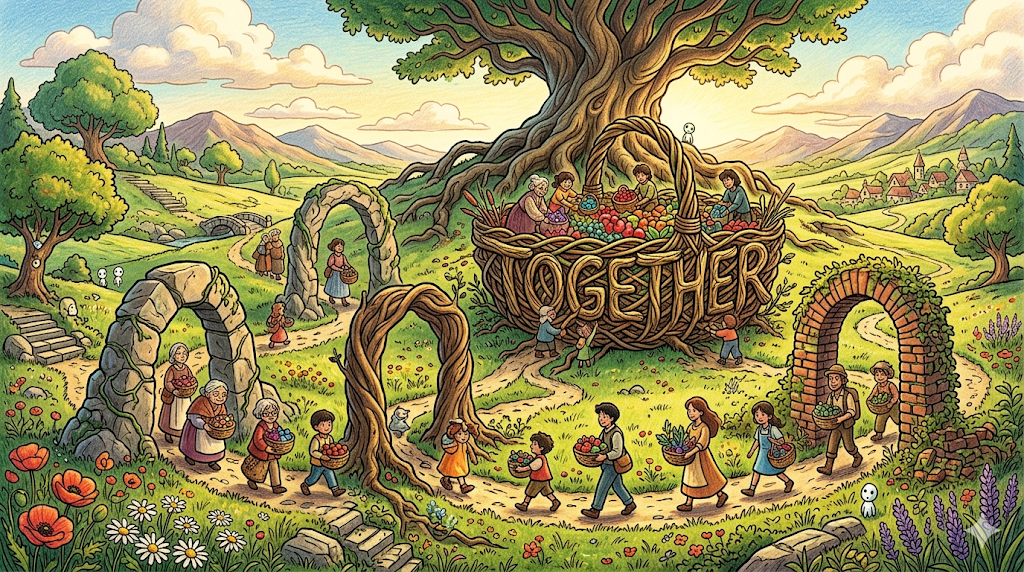
all together [ɔːl təˈɡeðər]
(부사구) 모두 함께, 일제히
모든 구성원이 동시에 같은 행동을 하거나 한 곳에 모이는 것을 강조합니다. 개별적으로 흩어져 있던 모든 것이 하나의 시간과 공간으로 집결하는 것이라는 뉘앙스가 강합니다. 수능 독해 사회·문학·역사 지문에서 자주 등장합니다.
- The conductor raised his baton and the entire orchestra began all together, producing a sound so full and powerful that it seemed to vibrate through the walls of the concert hall. (지휘자가 지휘봉을 들었고 전체 오케스트라가 일제히 시작했으며 콘서트 홀의 벽을 통해 진동하는 것처럼 보이는 너무 풍부하고 강력한 소리를 냈다.)
- It was the first time in ten years that the whole extended family had been all together in the same place, and the grandmother could not stop looking around the table at all the faces she loved. (온 대가족이 10년 만에 처음으로 같은 장소에 모두 함께 있었으며 할머니는 자신이 사랑하는 모든 얼굴을 테이블 주변에서 바라보기를 멈출 수 없었다.)
- There is something uniquely powerful about a crowd that moves all together toward a shared goal — it creates a sense of momentum that makes even very difficult things feel possible in a way that individual action never quite can. (모두 함께 공유된 목표를 향해 움직이는 군중에는 독특하게 강력한 무언가가 있다 — 그것은 개인 행동이 결코 완전히 할 수 없는 방식으로 심지어 매우 어려운 것들도 가능하게 느끼게 하는 추진력의 감각을 만들어낸다.)

get together [ɡet təˈɡeðər]
(동사구) 모이다, 만나다, 모임을 갖다
사람들이 사교적 목적으로 한 장소에 모이는 것을 강조합니다. 공식적인 행사가 아닌 친근하고 자연스러운 만남의 뉘앙스가 강합니다. 수능 독해 사회·문화·심리·문학 지문에서 핵심 표현으로 자주 등장합니다.
- She suggested that everyone get together for a meal at the end of the project as a way of celebrating what they had achieved and thanking each other for all the hard work. (그녀는 모든 사람이 프로젝트 끝에 식사를 위해 모여서 이룬 것을 축하하고 모든 노고에 서로 감사하는 방법으로 삼자고 제안했다.)
- The neighbourhood had not got together as a whole community since the old community centre was demolished, and many residents felt something had been lost when that regular meeting place disappeared. (동네는 오래된 주민 센터가 철거된 이후로 전체 공동체로서 모인 적이 없었으며 많은 주민들이 그 정기적인 만남의 장소가 사라졌을 때 무언가를 잃었다고 느꼈다.)
- Studies on loneliness suggest that the simple act of getting together with others — even briefly and for no particular purpose — has a measurable positive effect on both mental and physical health that people consistently underestimate. (외로움에 관한 연구는 다른 사람들과 모이는 단순한 행위 — 심지어 잠깐이고 특별한 목적 없이 — 가 사람들이 지속적으로 과소평가하는 정신적, 신체적 건강 모두에 측정 가능한 긍정적 효과가 있다는 것을 시사한다.)

put together [pʊt təˈɡeðər]
(동사구) 조립하다, 만들다, 합산하다
여러 부분이나 요소를 하나로 조합하여 완성된 것을 만드는 것을 강조합니다. 단순히 물건을 조립하는 것부터 계획이나 아이디어를 구성하는 것까지 폭넓게 쓰이는 것이라는 뉘앙스가 강합니다. 수능 독해 교육·사회·역사·과학 지문에서 자주 등장합니다.
- It took the engineer three hours to put together the complex machine from the parts that had arrived in separate boxes, following instructions that were not entirely clear. (엔지니어는 완전히 명확하지 않은 지시사항을 따라 별도의 상자에 도착한 부품들로 복잡한 기계를 조립하는 데 세 시간이 걸렸다.)
- The team had only four days to put together a proposal that would normally take two weeks, but the pressure seemed to bring out their best ideas and the result impressed everyone who saw it. (팀은 보통 2주가 걸리는 제안서를 작성하는 데 4일밖에 없었지만 압박이 최선의 아이디어를 끌어내는 것 같았으며 결과는 그것을 본 모든 사람에게 깊은 인상을 줬다.)
- When we say that someone is "more than the sum of their parts," we mean that what has been put together creates something whose quality is greater than you would predict by simply adding up the individual components. (누군가가 "부분의 합 이상"이라고 말할 때 우리는 합쳐진 것이 단순히 개별 구성 요소들을 더해서 예측할 수 있는 것보다 더 큰 품질을 가진 무언가를 만든다는 것을 의미한다.)

hold together [hoʊld təˈɡeðər]
(동사구) 하나로 유지하다, 결속을 지키다, 무너지지 않다
분리되거나 무너지지 않도록 하나의 상태를 유지하는 것을 강조합니다. 물리적 결합뿐만 아니라 사회적·감정적 결속을 유지하는 것도 포함하는 것이라는 뉘앙스가 강합니다. 수능 독해 사회·역사·심리·문학 지문에서 핵심 표현으로 자주 등장합니다.
- The old bridge was beginning to show its age, and the engineers were not sure how much longer the metal framework would hold together without significant repairs being made. (오래된 다리는 세월의 흔적을 보이기 시작했으며 엔지니어들은 상당한 수리가 이루어지지 않고 금속 구조물이 얼마나 더 오래 버틸 수 있을지 확신하지 못했다.)
- What held the small company together during the years of financial difficulty was not money or strategy but the loyalty and trust the founder had built with every person who worked there over the years. (재정적 어려움의 세월 동안 작은 회사를 하나로 지킨 것은 돈이나 전략이 아니라 창립자가 수년에 걸쳐 그곳에서 일한 모든 사람과 쌓은 충성심과 신뢰였다.)
- Sociologists study what holds societies together when they come under pressure — whether it is shared values, institutions, economic bonds, or something harder to define like a collective sense of purpose and identity. (사회학자들은 사회들이 압박을 받을 때 무엇이 사회를 하나로 지키는지 연구한다 — 공유된 가치, 제도, 경제적 유대인지 또는 집단적 목적의식과 정체성처럼 정의하기 더 어려운 무언가인지.)
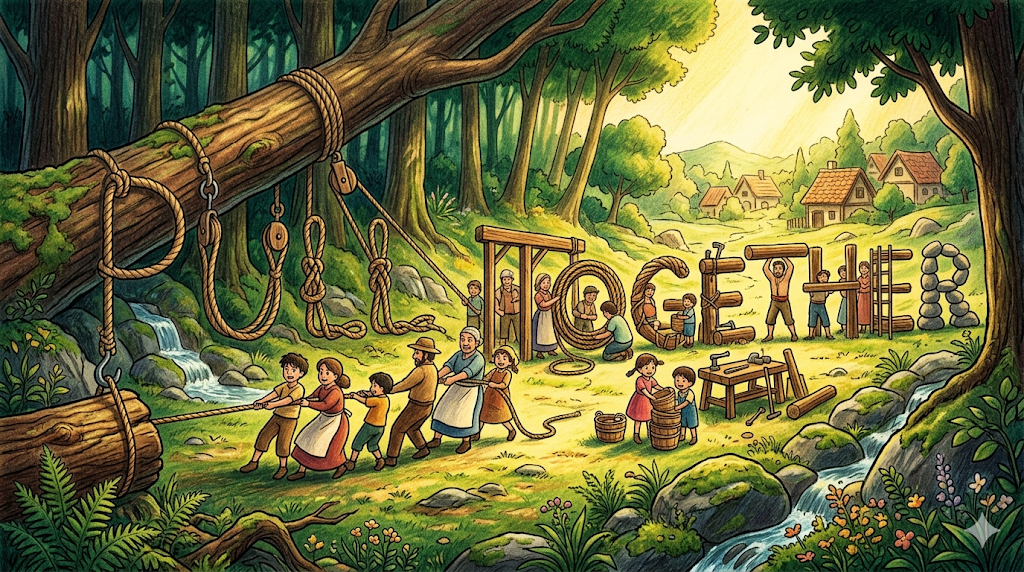
pull together [pʊl təˈɡeðər]
(동사구) 힘을 합치다, 단결하다, 정신을 차리다
어려운 상황에서 사람들이 힘을 모으거나 개인이 스스로 정신을 집중하는 것을 강조합니다. 위기가 오히려 분산됐던 힘을 하나로 당기는 계기가 되는 것이라는 뉘앙스가 강합니다. 수능 독해 사회·역사·심리·교육 지문에서 핵심 표현으로 자주 등장합니다.
- The school had been through a very difficult year and the new head teacher asked everyone to pull together for the final term and show what the school was truly capable of when it worked as one. (학교는 매우 어려운 한 해를 보냈으며 새 교장은 모든 사람에게 마지막 학기 동안 힘을 합쳐 학교가 하나로 일할 때 진정으로 무엇을 할 수 있는지 보여달라고 요청했다.)
- She told herself to pull together before the presentation, taking three slow breaths and reminding herself of all the preparation she had done and how well she knew the material. (그녀는 발표 전에 정신을 차리도록 스스로에게 말했으며 세 번 천천히 숨을 쉬고 자신이 한 모든 준비와 얼마나 잘 자료를 알고 있는지 스스로에게 상기시켰다.)
- There is a long tradition in many cultures of communities pulling together in response to shared hardship, and research consistently shows that this collective response to crisis often produces not just practical solutions but deeper social bonds. (많은 문화에서 공동체들이 공유된 어려움에 대응하여 힘을 합치는 오랜 전통이 있으며 연구는 지속적으로 위기에 대한 이 집단적 반응이 종종 실용적 해결책뿐만 아니라 더 깊은 사회적 유대를 만들어낸다는 것을 보여준다.)
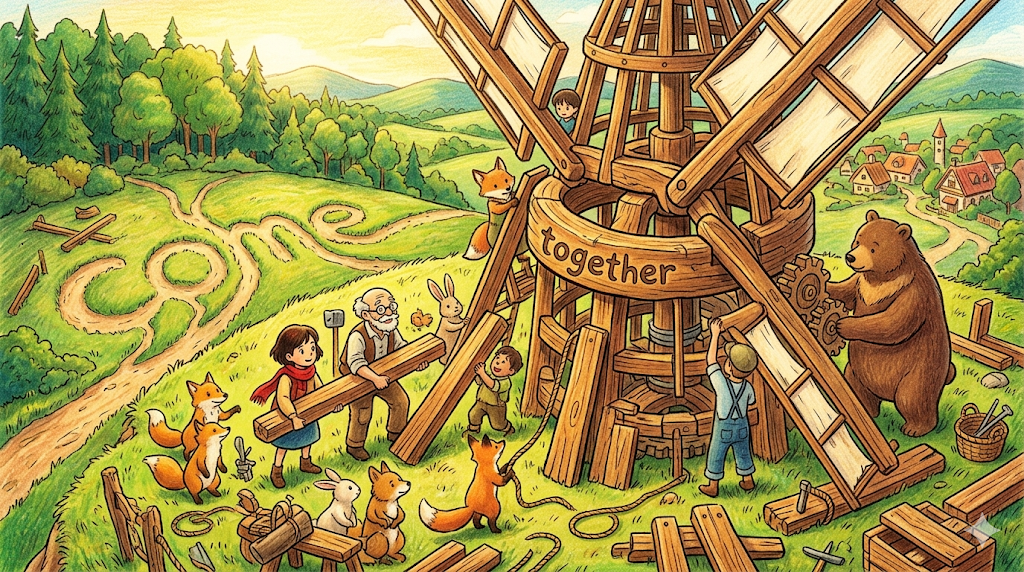
come together [kʌm təˈɡeðər]
(동사구) 한데 모이다, 결합하다, 잘 맞아 떨어지다
서로 다른 요소나 사람들이 자연스럽게 하나로 모이거나 잘 결합되는 것을 강조합니다. bring together가 능동적으로 모으는 것이라면 come together는 자연스럽게 결합이 이루어지는 것이라는 뉘앙스가 강합니다. 수능 독해 사회·역사·과학·문화 지문에서 자주 등장합니다.
- After months of hard work and last-minute changes, the project finally came together in the week before the deadline and the team was proud of what they had made. (수개월의 힘든 작업과 막판 변경 후 프로젝트는 마감 전 주에 마침내 잘 맞아 떨어졌으며 팀은 만든 것에 자부심을 느꼈다.)
- The international climate conference saw scientists, politicians, and community leaders come together for the first time to address an issue that no one group could solve alone. (국제 기후 회의는 과학자, 정치인, 지역 사회 지도자들이 어느 한 그룹이 혼자서는 해결할 수 없는 문제를 해결하기 위해 처음으로 한데 모이는 것을 봤다.)
- Great art often happens when the right conditions come together at the right moment — the right artist with the right subject, the right level of skill matched by the right level of ambition, in an environment that allows real creative risk. (훌륭한 예술은 종종 올바른 조건들이 올바른 순간에 맞아 떨어질 때 일어난다 — 올바른 주제를 가진 올바른 예술가, 올바른 수준의 야망에 맞는 올바른 수준의 기술, 진정한 창의적 위험을 허용하는 환경에서.)

bring together [brɪŋ təˈɡeðər]
(동사구) 한데 모으다, 연결하다, 통합하다
흩어진 사람이나 것들을 능동적으로 모아 하나로 연결하는 것을 강조합니다. 자연적으로 만날 수 없었을 것들을 의도적인 행동으로 연결하는 것이라는 뉘앙스가 강합니다. 수능 독해 사회·역사·교육·문화 지문에서 핵심 표현으로 자주 등장합니다.
- The new community space was designed to bring together people who might otherwise never meet — the elderly and the young, long-time locals and new arrivals, artists and engineers — by giving them a reason to share the same room. (새 지역 공간은 그렇지 않으면 결코 만나지 않을 사람들 — 노인과 젊은이, 오래된 주민과 새로 온 사람들, 예술가와 엔지니어 — 을 같은 방을 공유할 이유를 줌으로써 한데 모으도록 설계됐다.)
- The anthology brought together forty years of her writing in one volume and finally gave readers a complete picture of how her thinking had developed from her earliest essays to her most recent work. (선집은 40년간의 그녀의 글을 한 권에 한데 모아 마침내 독자들에게 가장 이른 에세이에서 가장 최근 작업까지 그녀의 생각이 어떻게 발전했는지에 대한 완전한 그림을 줬다.)
- One of the most valuable things a good teacher does is bring together ideas from different subjects and show students how they connect, helping them see the world not as a collection of separate facts but as a web of related patterns and principles. (좋은 선생님이 하는 가장 가치 있는 것 중 하나는 다른 과목들의 아이디어들을 한데 모아 학생들에게 그것들이 어떻게 연결되는지 보여주는 것이며 그들이 세상을 분리된 사실의 집합이 아니라 관련된 패턴과 원칙의 그물망으로 보도록 돕는 것이다.)
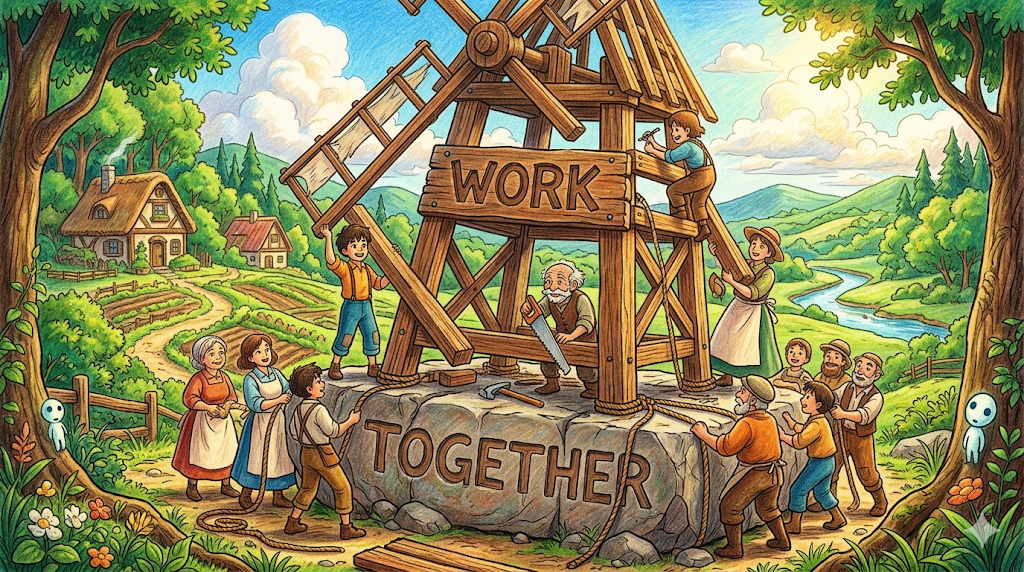
work together [wɜːrk təˈɡeðər]
(동사구) 함께 일하다, 협력하다
사람들이 같은 목표를 위해 협력하며 공동으로 노력하는 것을 강조합니다. 각자의 역할이 있으면서도 같은 방향을 향해 나아가는 조직적 협력이라는 뉘앙스가 강합니다. 수능 독해 사회·교육·과학·역사 지문에서 자주 등장합니다.
- The research showed that teams which worked together in person regularly, even when remote work was possible, consistently outperformed those that communicated only through screens and messages. (연구는 원격 근무가 가능할 때도 정기적으로 직접 함께 일한 팀이 화면과 메시지를 통해서만 소통한 팀보다 지속적으로 더 나은 성과를 냈다는 것을 보여줬다.)
- Different parts of the immune system work together in a carefully coordinated way to identify threats, alert the body, and produce the response needed to protect health. (면역 체계의 다른 부분들은 위협을 식별하고 몸에 경보를 보내고 건강을 보호하는 데 필요한 반응을 만들기 위해 신중하게 조정된 방식으로 함께 작동한다.)
- Children who learn to work together at an early age tend to develop stronger communication skills, more flexibility in their thinking, and a better ability to manage disagreement — all qualities that research shows are highly valued by employers. (어린 나이에 함께 일하는 법을 배우는 아이들은 더 강한 소통 기술, 사고의 더 큰 유연성, 의견 불일치를 관리하는 더 나은 능력 — 연구가 고용주들에게 매우 가치 있다고 보여주는 모든 자질 — 을 발전시키는 경향이 있다.)

stay together [steɪ təˈɡeðər]
(동사구) 함께 있다, 헤어지지 않다, 결속을 유지하다
어려운 상황에서도 분리되지 않고 하나로 남아 있는 것을 강조합니다. 단순히 물리적으로 같은 장소에 있는 것뿐 아니라 감정적·사회적 결속을 유지하는 것도 포함하는 것이라는 뉘앙스가 강합니다. 수능 독해 사회·심리·역사·문학 지문에서 자주 등장합니다.
- The group of tourists was warned to stay together at all times in the crowded market because pickpockets often targeted people who wandered away from their group and found themselves alone. (관광객 그룹은 소매치기들이 종종 그룹에서 멀어져 혼자가 된 사람들을 표적으로 삼기 때문에 붐비는 시장에서 항상 함께 있으라는 경고를 받았다.)
- What makes some friendships stay together over decades while others fade within a year is not usually the absence of conflict but the willingness to work through it and come out the other side. (일부 우정은 수십 년 동안 함께 하는 반면 다른 것들은 1년 안에 사라지는 것을 만드는 것은 보통 갈등의 부재가 아니라 그것을 통해 작업하고 반대편으로 나오려는 의지이다.)
- Nations that stay together through crises often do so not because they lack disagreements but because they have developed strong enough shared institutions and habits of dialogue that allow disagreements to be resolved without breaking the bonds that hold the society together. (위기를 통해 함께하는 나라들은 종종 의견 불일치가 없어서가 아니라 의견 불일치가 사회를 하나로 지키는 유대를 끊지 않고 해결될 수 있도록 하는 충분히 강한 공유된 제도와 대화 습관을 개발했기 때문에 그렇게 한다.)

piece together [piːs təˈɡeðər]
(동사구) 조각을 맞추다, 재구성하다, 진상을 밝히다
흩어진 조각들을 모아 전체 그림이나 사실을 복원하는 것을 강조합니다. 퍼즐처럼 하나하나의 작은 조각들을 통해 전체를 이해하게 되는 인내와 분석의 과정이라는 뉘앙스가 강합니다. 수능 독해 역사·과학·심리·문학 지문에서 핵심 표현으로 자주 등장합니다.
- She spent the morning slowly piecing together what had happened the previous evening from the photographs, text messages, and notes she had made before going to bed. (그녀는 자기 전에 찍은 사진, 문자 메시지, 메모들로 전날 저녁에 무슨 일이 있었는지 천천히 재구성하며 오전을 보냈다.)
- Archaeologists work much like detectives, carefully piecing together the story of a civilisation from the objects, structures, and traces that its people left behind without meaning to. (고고학자들은 형사들과 매우 비슷하게 일하며 그 사람들이 의도 없이 남긴 물건, 구조물, 흔적들로 문명의 이야기를 조심스럽게 재구성한다.)
- Understanding how complex events happen — a financial crisis, a social movement, a scientific breakthrough — requires piecing together contributions from many different fields and viewpoints, which is why the best histories are usually written by people who read very widely. (복잡한 사건들이 어떻게 일어나는지 — 금융 위기, 사회 운동, 과학적 돌파구 — 이해하려면 많은 다른 분야와 관점의 기여들을 조각을 맞춰야 하는데 이것이 최고의 역사서들이 보통 매우 폭넓게 읽는 사람들에 의해 쓰이는 이유이다.)
숙어 그룹 묶음 1 — 결합·통합 together 핵심 패턴
표현 의미 핵심 뉘앙스 주요 맥락
| all together | 모두 함께 | 모든 구성원이 동시에 한 곳에 집결하는 것 | 사회·문학·역사 |
| bring together | 한데 모으다 | 흩어진 것들을 능동적으로 연결하는 것 | 사회·역사·교육·문화 |
| come together | 잘 맞아 떨어지다 | 자연스럽게 요소들이 하나로 결합되는 것 | 사회·역사·과학·문화 |
이 세 표현은 모두 together의 "흩어진 것들이 하나로 모이는" 이미지를 공유하되, 각각 모든 구성원이 동시에 집결하는 것(all together)·의도적으로 흩어진 것들을 모아 연결하는 것(bring together)·자연스럽게 요소들이 하나로 맞아 떨어지는 것(come together)의 관점에서 접근합니다.
- The festival brought together artists from across the country, and when they performed all together on the final night, something magical seemed to come together — a sound and an energy that none of them could have created alone. (축제는 전국의 예술가들을 한데 모았으며 마지막 밤에 그들이 모두 함께 공연했을 때 마법 같은 무언가가 맞아 떨어지는 것 같았다 — 그들 중 누구도 혼자서는 만들어낼 수 없었던 소리와 에너지가.)
- The conference was designed to bring together researchers who had never met. When they were all together in the room on the first morning, it quickly became clear that their different approaches were about to come together in ways that nobody had predicted. (컨퍼런스는 만난 적 없는 연구자들을 한데 모으도록 설계됐다. 첫날 아침 그들이 방에 모두 함께 있었을 때 그들의 다른 접근 방식들이 아무도 예측하지 못한 방식으로 맞아 떨어지려 한다는 것이 빠르게 명확해졌다.)
- Great social movements begin when conditions come together, leaders bring together those who share a vision, and all together those people find the courage and numbers to ask for what had previously seemed impossible to achieve. (위대한 사회 운동은 조건들이 맞아 떨어지고 지도자들이 비전을 공유하는 사람들을 한데 모으며 모두 함께 그 사람들이 이전에는 달성이 불가능해 보였던 것을 요구할 용기와 수를 찾을 때 시작된다.)
숙어 그룹 묶음 2 — 협력·단결 together 패턴
표현 의미 핵심 뉘앙스 주요 맥락
| pull together | 힘을 합치다 | 위기에서 힘을 하나로 당기는 단결 | 사회·역사·심리·교육 |
| work together | 함께 일하다 | 같은 목표를 향한 조직적 협력 | 사회·교육·과학·역사 |
| stay together | 함께 있다 | 어려움에도 결속을 유지하는 것 | 사회·심리·역사·문학 |
이 세 표현은 모두 together의 "공동 목적을 위해 힘을 합치는" 이미지를 공유하되, 각각 위기 상황에서 분산됐던 힘을 하나로 모으는 것(pull together)·같은 목표를 위해 각자의 역할을 유지하며 협력하는 것(work together)·어려움에도 하나로 남아 결속을 유지하는 것(stay together)의 관점에서 접근합니다.
- The team had to pull together in a way they had never had to before, and working together through the crisis taught them things about collaboration that no training session could have — and the result was that they came out able to stay together as a unit through anything. (팀은 전에 결코 해야 했던 것보다 더 많이 힘을 합쳐야 했으며 위기를 통해 함께 일하는 것이 어떤 훈련 세션도 가르쳐줄 수 없었던 협력에 대한 것들을 가르쳐줬다 — 그리고 결과는 그들이 어떤 일도 통해 하나의 단위로 함께할 수 있게 됐다는 것이었다.)
- Nations that work together on shared problems are significantly more likely to stay together as allies when other challenges arise, because the habit of collaboration builds the trust and mutual understanding that pulls them together rather than apart when things get difficult. (함께 일하는 나라들은 다른 도전들이 생겼을 때 동맹국으로서 함께할 가능성이 훨씬 더 높은데 협력의 습관이 일이 어려워질 때 그들을 분리하는 것이 아니라 힘을 합치는 신뢰와 상호 이해를 쌓기 때문이다.)
- Families that stay together through hard times tend to be those where members know how to pull together when it matters most and have learned — through years of everyday life — how to work together without losing their individual voices and needs. (어려운 시기를 통해 함께하는 가족들은 구성원들이 가장 중요할 때 힘을 합치는 방법을 알고 — 수년간의 일상생활을 통해 — 개인의 목소리와 필요를 잃지 않고 함께 일하는 방법을 배운 가족들인 경향이 있다.)
숙어 그룹 묶음 3 — 재구성·완성 together 심화 패턴
표현 의미 핵심 뉘앙스 주요 맥락
| piece together | 재구성하다 | 흩어진 조각으로 전체 진실을 복원하는 것 | 역사·과학·심리·문학 |
| put together | 조립하다, 만들다 | 여러 요소를 하나로 조합하여 완성하는 것 | 교육·사회·역사·과학 |
| hold together | 하나로 유지하다 | 분리되지 않도록 결속을 지키는 것 | 사회·역사·심리·문학 |
이 세 표현은 모두 together의 "조각들이 하나의 완성된 것이 되는" 이미지를 공유하되, 각각 흩어진 조각들로 전체를 복원하는 과정(piece together)·여러 요소를 조합하여 완성된 것을 만드는 것(put together)·완성된 것이 분리되지 않도록 유지하는 것(hold together)의 관점에서 접근합니다.
- The biographer spent five years piecing together the life of the artist, then putting together a book that held together the private person and the public work in a way no previous account had managed. (전기 작가는 예술가의 삶을 재구성하는 데 5년을 보낸 후 이전의 어떤 기록도 해내지 못했던 방식으로 사적인 인물과 공적인 작업을 하나로 유지하는 책을 엮었다.)
- The detective's task was to piece together the timeline of events, put together a case that would stand up in court, and find the thread that held together all the seemingly unrelated details into a single coherent story. (형사의 임무는 사건의 타임라인을 재구성하고 법정에서 통할 사건을 구성하며 모든 겉보기에 무관한 세부 사항들을 단일한 일관된 이야기로 하나로 유지하는 실을 찾는 것이었다.)
- Understanding a complex historical period requires piecing together evidence from many sources, putting together an interpretation that accounts for as much of it as possible, and finding the central argument that holds together what might otherwise seem like a collection of disconnected events. (복잡한 역사적 시기를 이해하려면 많은 출처에서 증거를 재구성하고 가능한 한 많은 것을 설명하는 해석을 구성하며 그렇지 않으면 연결되지 않은 사건들의 모음처럼 보일 것을 하나로 유지하는 중심 주장을 찾아야 한다.)
숙어 그룹 묶음 4 — 모임·연결 together 심화 패턴
표현 의미 핵심 뉘앙스 주요 맥락
| get together | 모이다 | 친근하고 자연스러운 사교적 만남 | 사회·문화·심리·문학 |
| bring together | 한데 모으다 | 흩어진 것들을 의도적으로 연결하는 것 | 사회·역사·교육·문화 |
| come together | 잘 맞아 떨어지다 | 자연스럽게 요소들이 하나로 결합되는 것 | 사회·역사·과학·문화 |
이 세 표현은 함께 together가 담고 있는 "모임과 연결의 다양한 방식"의 흐름을 보여줍니다. get together → 사람들이 자발적으로 만나는 친근한 모임, bring together → 의도적으로 흩어진 것들을 연결하는 것, come together → 자연스럽게 요소들이 하나로 맞아 떨어지는 것으로 연결됩니다.
- The project started when a few friends got together for coffee, someone had the idea to bring together a wider group of people with the same concern, and over months the movement seemed to come together into something none of them had planned but all of them had hoped for. (프로젝트는 몇 명의 친구들이 커피를 위해 모였을 때 시작됐으며 누군가가 같은 우려를 가진 더 넓은 그룹을 한데 모으는 아이디어를 냈으며 수개월에 걸쳐 운동이 그들 중 누구도 계획하지 않았지만 모두 희망했던 무언가로 맞아 떨어지는 것 같았다.)
- Every year the alumni get together to celebrate the school's founding. This year, for the first time, the event was designed to bring together students from all five decades of the school's history — and when they were all together in the room, something extraordinary seemed to come together that could not quite be put into words. (매년 동문들은 학교 창립을 축하하기 위해 모인다. 올해 처음으로 행사가 학교 역사의 모든 5개 십 년의 학생들을 한데 모으도록 설계됐다 — 그리고 그들이 방에 모두 함께 있었을 때 말로는 표현할 수 없는 특별한 무언가가 맞아 떨어지는 것 같았다.)
- Communities heal best when neighbours get together regularly, when leaders make deliberate efforts to bring together those who might otherwise remain strangers, and when enough shared experiences accumulate that a genuine sense of belonging comes together naturally over time. (공동체들은 이웃들이 정기적으로 모이고 지도자들이 그렇지 않으면 낯선 사람으로 남을 사람들을 한데 모으는 의도적인 노력을 기울이며 충분한 공유된 경험들이 쌓여서 진정한 소속감이 시간이 지남에 따라 자연스럽게 맞아 떨어질 때 가장 잘 치유된다.)
전체 요약표
표현 의미 핵심 뉘앙스
| together | 함께, 침착한 | 흩어진 것들이 하나의 방향으로 모여 통합되는 것 |
| all together | 모두 함께 | 모든 구성원이 동시에 한 곳에 집결하는 것 |
| get together | 모이다 | 친근하고 자연스러운 사교적 만남 |
| put together | 조립하다, 만들다 | 여러 요소를 조합하여 완성된 것을 만드는 것 |
| hold together | 하나로 유지하다 | 분리되지 않도록 결속을 지키는 것 |
| pull together | 힘을 합치다 | 위기에서 힘을 하나로 당기는 단결 |
| come together | 잘 맞아 떨어지다 | 자연스럽게 요소들이 하나로 결합되는 것 |
| bring together | 한데 모으다 | 흩어진 것들을 의도적으로 연결하는 것 |
| work together | 함께 일하다 | 같은 목표를 향한 조직적 협력 |
| stay together | 함께 있다 | 어려움에도 결속을 유지하는 것 |
| piece together | 재구성하다 | 흩어진 조각으로 전체 진실을 복원하는 것 |
유의어 비교표
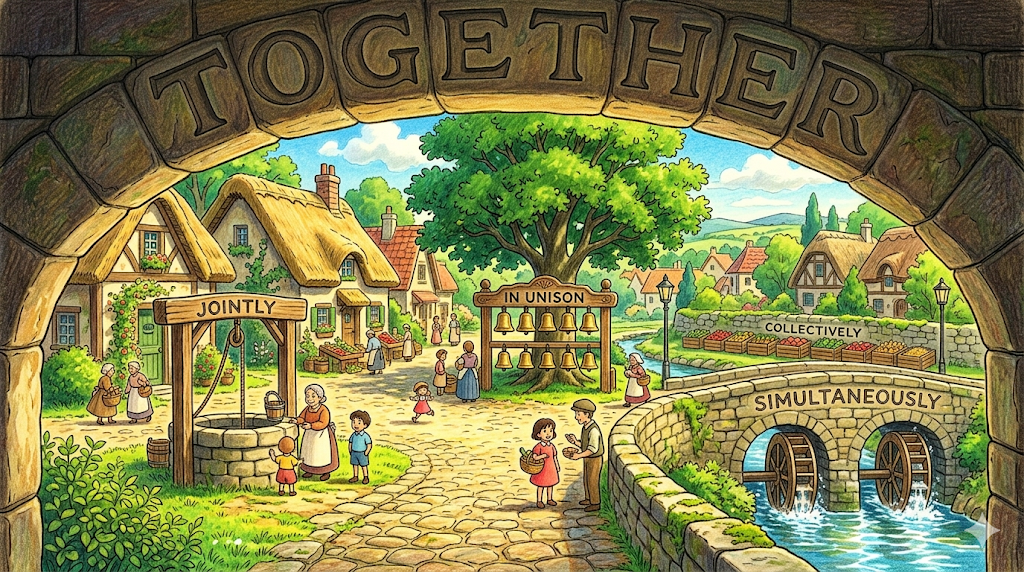
단어 공통점 뉘앙스 차이 예문
| together | 함께 | 통합·결합·연결 강조 | They ran together. |
| jointly | 함께 | 공식적 공동 책임·법적 연대 강조 | Jointly owned property. |
| collectively | 함께 | 전체로서의 집단 행동 강조 | They collectively agreed. |
| simultaneously | 동시에 | 같은 시간에 일어나는 것 강조 | Both spoke simultaneously. |
| in unison | 함께 | 완벽하게 일치하는 동시 행동 강조 | They sang in unison. |
결론 정리
together는 단순히 "함께"가 아니라, 흩어진 것들이 하나의 방향으로 모여 통합되는 이미지에서 출발해 물리적 결합·공동 행동·정신적 집중·통합·재구성까지 확장되는 단어다 — together가 있는 곳엔 언제나 '단순한 동행이 아닌, 분리됐던 것들이 목적이나 힘을 향해 하나로 합쳐지는' 통합과 연결의 선언이 있다.
💡 together는 "흩어진 것들이 하나의 방향으로 모여 통합되는 것"의 언어 — pull together·piece together·bring together·hold together·come together가 수능 최빈출.
🌟 초등학생 버전 together는 퍼즐 조각들이 하나씩 합쳐져서 완성된 그림을 만드는 것처럼 흩어진 것들이 모여 하나가 되는 것을 표현하는 단어예요! pull together는 "어려울 때 다 같이 힘을 합치는 것"이고 piece together는 "흩어진 조각들을 맞춰서 전체 그림을 완성하는 것"이에요! 🧩✨


