- 분류 전체보기 (5463)

| 일 | 월 | 화 | 수 | 목 | 금 | 토 |
|---|---|---|---|---|---|---|
| 1 | 2 | |||||
| 3 | 4 | 5 | 6 | 7 | 8 | 9 |
| 10 | 11 | 12 | 13 | 14 | 15 | 16 |
| 17 | 18 | 19 | 20 | 21 | 22 | 23 |
| 24 | 25 | 26 | 27 | 28 | 29 | 30 |
| 31 |
- Don't worry
- make it
- Read between the lines
- Yes
- oh
- no
- too.
- Excuse me
- please.
- I'm sorry
- hold on
- call off
- Yeah
- Hey
- Sorry
- By The Way
- well
- Right?
- entrance fee
- Actually
- please?
- I'm glad to hear that.
- pick up
- OKay
- come up with
- Please
- work out
- I'm not sure
- Sure
- once in a while
- Today
- Total
인과함께
Day380 , resemble, bear a resemblance to, strong resemblance, close resemblance, family resemblance, bear little resemblance to, resemble each other, resemblance in, striking resemblance, resemblance between, resemblance to 본문
Day380 , resemble, bear a resemblance to, strong resemblance, close resemblance, family resemblance, bear little resemblance to, resemble each other, resemblance in, striking resemblance, resemblance between, resemblance to
미인생 2026. 5. 6. 13:30
resemble [rɪˈzembəl]
(동사) 닮다, 비슷하다
(그 어린 소년은 그의 할아버지와 놀라울 정도로 닮았습니다.)
'resemble'을 단순히 "닮다"로만 외우면 수능에서 반드시 틀립니다.
resemble은 "두 개의 것이 같은 특성이나 모습을 가져서 서로 비슷하게 보이는 것" 이라는 핵심 이미지에서 출발해, 외모의 유사성·성격의 유사성·상황의 유사성·역사적 비교까지 폭넓게 쓰이는 핵심 다의어입니다. 특히 resemble(전반적으로 비슷하다) vs. look like(겉모습이 비슷하다) vs. be similar to(특정 부분이 비슷하다) 의 뉘앙스 차이, bear a resemblance to(~와 닮은 점이 있다), striking resemblance(놀라울 만큼 비슷한 점) 패턴은 수능 독해 심리·사회·역사·과학 지문에서 핵심적으로 등장합니다.
'resemble'은 고대 프랑스어 resembler(비슷하게 보이다)에서 유래했으며, **re-(다시) + sembler(보이다, 닮다)**에 뿌리를 두고 있습니다. 또한 라틴어 simulare(비슷하게 만들다)와 similis(비슷한)에도 연결됩니다. 어원의 핵심 이미지는 "다시 보았을 때 같은 것처럼 보이는 것" 으로, 단순한 비교가 아닌 두 개의 것이 같은 특성을 가진 것처럼 느껴질 만큼 비슷하게 보이는 유사성의 이미지가 이 단어의 본질입니다.
1. bear a resemblance to [beər ə rɪˈzembləns tuː]
(동사구/수능) "~와 닮은 점이 있다"를 뜻합니다. 완전히 똑같지는 않지만 어느 정도 비슷한 점을 가지고 있음을 강조합니다. 수능 독해 심리·사회·역사·문학 지문의 핵심 표현입니다.
The new building bears a strong resemblance to the old one that stood here fifty years ago. (새 건물은 50년 전에 여기에 있었던 오래된 건물과 강한 닮은 점이 있다.)
2. strong resemblance [strɒŋ rɪˈzembləns]
(명사구/수능) "강한 유사점, 매우 많이 닮은 점"을 뜻합니다. 두 사람이나 사물이 매우 많은 부분에서 비슷함을 강조합니다. 수능 독해 심리·과학·사회·문학 지문에서 자주 등장합니다.
There is a strong resemblance between the two sisters and most people mistake them for twins when they first meet them. (두 자매 사이에는 강한 유사점이 있어서 처음 만나는 대부분의 사람들이 그들을 쌍둥이로 착각한다.)
3. close resemblance [kloʊs rɪˈzembləns]
(명사구/수능) "가까운 유사점, 매우 닮음"을 뜻합니다. 두 사물이나 사람이 세세한 부분까지 비슷함을 강조합니다. 수능 독해 과학·심리·역사·사회 지문에서 자주 등장합니다.
The copy of the painting had such a close resemblance to the original that even art experts had to look very carefully to tell them apart. (그 그림의 복사본은 원본과 매우 가까운 유사점이 있어서 미술 전문가들도 구별하기 위해 매우 주의 깊게 봐야 했다.)
4. family resemblance [ˈfæməli rɪˈzembləns]
(명사구/수능) "가족 유사성"을 뜻합니다. 같은 가족 구성원들 사이에서 공유되는 외모나 성격의 특징을 강조합니다. 수능 독해 심리·사회·과학·철학 지문의 핵심 표현입니다.
The family resemblance between the grandfather and his grandchildren was so clear that anyone could see they were related just by looking at their eyes and smile. (할아버지와 손자녀들 사이의 가족 유사성은 너무 명확해서 눈과 미소만 봐도 누구든 그들이 관련됐다는 것을 알 수 있었다.)
5. bear little resemblance to [beər ˈlɪtəl rɪˈzembləns tuː]
(동사구/수능) "~와 거의 닮지 않다"를 뜻합니다. 두 사물이나 사람이 표면적으로는 연결되어 있지만 실제로는 매우 다름을 강조합니다. 수능 독해 사회·역사·심리·교육 지문에서 자주 등장합니다.
The finished product bore little resemblance to the original plan because so many changes were made along the way. (그 완성된 제품은 과정에서 너무 많은 변화가 있었기 때문에 원래 계획과 거의 닮지 않았다.)
6. resemble each other [rɪˈzembəl iːtʃ ˈʌðər]
(동사구/수능) "서로 닮다"를 뜻합니다. 두 사람이나 사물이 서로 비슷한 특성을 가지고 있음을 강조합니다. 수능 독해 심리·사회·과학·문학 지문에서 자주 등장합니다.
The two problems resembled each other so closely that the teacher used the same method to solve both of them. (두 문제는 너무 비슷해서 선생님이 같은 방법으로 두 문제를 모두 풀었다.)
7. resemblance in [rɪˈzembləns ɪn]
(명사구/수능) "~에서의 유사성"을 뜻합니다. 어떤 특정 측면이나 부분에서 비슷함을 강조합니다. 수능 독해 사회·과학·역사·심리 지문에서 자주 등장합니다.
The scientists found a clear resemblance in the way the two animals moved even though they lived on different sides of the world. (과학자들은 두 동물이 세계의 다른 쪽에서 살았음에도 불구하고 움직이는 방식에서 명확한 유사성을 발견했다.)
8. striking resemblance [ˈstraɪkɪŋ rɪˈzembləns]
(명사구/수능) "놀라울 만큼 비슷한 점"을 뜻합니다. 두 사람이나 사물이 의외일 만큼 매우 비슷하여 사람들이 놀랄 정도임을 강조합니다. 수능 독해 심리·사회·역사·문학 지문의 핵심 표현입니다.
The young actor had a striking resemblance to the old film star and was chosen for the role partly because of how similar they looked. (젊은 배우는 오래된 영화 스타와 놀라울 만큼 비슷한 점이 있어서 얼마나 비슷하게 생겼는지 때문에 부분적으로 그 역할에 선정됐다.)
9. resemblance between [rɪˈzembləns bɪˈtwiːn]
(명사구/수능) "~사이의 유사성"을 뜻합니다. 두 사람이나 사물을 비교하여 공통점이 있음을 강조합니다. 수능 독해 사회·과학·역사·철학 지문에서 자주 등장합니다.
The resemblance between the two languages surprised the students because they came from completely different parts of the world. (두 언어 사이의 유사성은 완전히 다른 세계에서 왔기 때문에 학생들을 놀라게 했다.)
10. resemblance to [rɪˈzembləns tuː]
(명사구/수능) "~와의 유사성, ~를 닮음"을 뜻합니다. 어떤 것이 다른 것과 얼마나 비슷한지를 나타낼 때 사용합니다. 수능 독해 심리·사회·역사·문학 지문에서 자주 등장합니다.
Her resemblance to her mother was so strong that people often called her by her mother's name by mistake. (그녀의 어머니에 대한 유사성은 너무 강해서 사람들이 종종 실수로 그녀를 어머니의 이름으로 불렀다.)

POINT 1. resemble vs. look like vs. be similar to — 수능 최빈출 뉘앙스 구별
세 표현 모두 "비슷하다"와 관련되지만 뉘앙스가 다릅니다.
resemble → 전반적으로 여러 특성에서 비슷하다 (전반적 유사성·깊은 비교 강조), look like → 겉모습이나 외모가 비슷하다 (시각적·외모적 유사성 강조), be similar to → 특정 부분이나 측면에서 비슷하다 (특정 측면의 유사성 강조). 수능에서 resemble은 반드시 여러 측면에서 전반적으로 비슷하다는 문맥이 함께 등장합니다.
예)
She resembles her grandmother in many ways. (그녀는 여러 면에서 할머니를 닮았다.) — 전반적 유사성·깊은 비교 강조 He looks like a famous actor with those glasses on. (그는 안경을 쓰면 유명 배우처럼 보인다.) — 시각적·외모적 유사성 강조 This problem is similar to the one we solved last week. (이 문제는 지난주에 푼 것과 비슷하다.) — 특정 측면의 유사성 강조
POINT 2. striking resemblance / bear a resemblance to — 수능 심리·역사 지문 핵심
striking resemblance와 bear a resemblance to는 수능 독해 심리·사회·역사 지문에서 가장 자주 출제되는 resemble 관련 표현입니다.
striking resemblance → 예상치 못할 만큼 놀라울 정도로 비슷한 유사점, bear a resemblance to → 어느 정도의 유사점을 가지고 있다 (정도 표현 가능). 두 표현이 함께 등장하면 글쓴이가 비교나 유사성의 의미를 논하고 있다는 신호입니다.
POINT 3. similis 어근 — 수능 어휘 확장 필수
resemble의 어원 similis(비슷한)와 관련된 단어들이 수능에서 자주 출제됩니다.
similar [ˈsɪmɪlər] → 비슷한 (similis에서), similarity [ˌsɪmɪˈlærɪti] → 유사성 (비슷한 상태), simulate [ˈsɪmjʊleɪt] → 모방하다, 흉내 내다 (비슷하게 만들다), simultaneous [ˌsɪməlˈteɪniəs] → 동시의 (같은 시간에 비슷하게). 이 단어들은 모두 "비슷한 것"이라는 공통 이미지를 가지고 있습니다.
(동사) ① 닮다, 비슷하다 (외모)
resemble의 가장 기본적인 의미로, 외모나 모습이 비슷한 것을 나타냅니다. 반드시 두 대상이 비교되는 문맥이 함께 옵니다.
- The puppy resembled its mother so much that the owner could hardly tell them apart in old photos. (강아지는 어미와 너무 닮아서 주인이 오래된 사진에서 그들을 거의 구분할 수 없었다.)
- She resembles her father more than her mother, with the same dark eyes and wide smile that he has always had. (그녀는 어머니보다 아버지를 더 많이 닮았으며 그가 항상 가진 것과 같은 어두운 눈과 넓은 미소를 가지고 있다.)
- The rock formation in the park resembled a human face so closely that tourists always stopped to take photos of it from the right angle. (공원의 바위 형태가 인간의 얼굴과 너무 비슷해서 관광객들이 항상 올바른 각도에서 사진을 찍으려고 멈췄다.)
(동사) ② 닮다, 비슷하다 (성격·상황)
외모뿐만 아니라 성격·상황·방식 등이 비슷한 것을 나타냅니다. 수능 독해 심리·사회·역사 지문에서 자주 등장합니다.
- His way of dealing with problems resembles his grandfather's — quiet, slow, and always careful not to make things worse. (그의 문제 처리 방식은 할아버지의 것을 닮았다 — 조용하고 느리며 항상 상황을 더 나쁘게 만들지 않도록 주의한다.)
- The economic situation today resembles what happened in the country eighty years ago, which is why many experts are warning people to be careful. (오늘날 경제 상황은 80년 전 그 나라에서 일어난 것을 닮았으며 이것이 많은 전문가들이 사람들에게 주의하라고 경고하는 이유이다.)
- The new law resembles the one that was passed fifty years ago and later removed because it did not work well in practice. (새 법은 50년 전에 통과됐다가 실제로 잘 작동하지 않아 나중에 폐지된 것을 닮았다.)
(명사) ③ 유사성, 닮음 (resemblance)
두 대상 사이의 비슷한 점을 나타냅니다. 수능 독해 심리·사회·과학·역사 지문에서 자주 등장합니다.
- The resemblance between the two buildings was no accident because the same architect designed them both using the same basic style. (두 건물 사이의 유사성은 우연이 아니었는데 같은 건축가가 같은 기본 스타일을 사용하여 두 건물 모두 설계했기 때문이다.)
- Nobody mentioned the resemblance between the new manager and the old one because they both had the same habit of holding long meetings that always ended with no clear decision. (아무도 새 관리자와 이전 관리자 사이의 유사성을 언급하지 않았는데 그들 둘 다 항상 명확한 결정 없이 끝나는 긴 회의를 여는 같은 습관을 가지고 있었기 때문이다.)
- The resemblance in their drawing styles was so strong that art students often thought the two paintings were made by the same person. (그들의 그림 스타일에서의 유사성이 너무 강해서 미술 학생들은 종종 두 그림이 같은 사람에 의해 만들어졌다고 생각했다.)

뉘앙스·의미 연결 흐름 표
핵심 이미지 연결 흐름 뉘앙스 요약
| 유사성의 정도 | 닮은 점이 있다 → 강한 유사점 → 놀라울 만큼 비슷한 점 | bear a resemblance to·strong resemblance·striking resemblance |
| 유사성의 범위 | 가까운 유사점 → 가족 유사성 → ~에서의 유사성 | close resemblance·family resemblance·resemblance in |
| 유사성의 관계 | 거의 닮지 않다 → 서로 닮다 → ~사이의 유사성 | bear little resemblance to·resemble each other·resemblance between |
어원 흐름 표
단어 구성 요소 의미 연결 흐름 뉘앙스 요약
| 고대 프랑스어 resembler(비슷하게 보이다) | 비슷하게 보이다 → 같은 특성을 가지다 → 비슷하다 | 다시 보았을 때 같은 것처럼 보이는 유사성 |
| 라틴어 similis(비슷한) | 비슷한 → 닮은 → 유사한 | 같은 특성을 가진 것처럼 느껴지는 유사함 |
품사별 의미 표
품사 의미 예문
| 동사 | 닮다, 비슷하다 | She resembles her mum. (그녀는 엄마를 닮았다.) |
| 명사 (resemblance) | 유사성, 닮음 | There is a resemblance. (유사성이 있다.) |
| 형용사 (resembling) | 닮은, 비슷한 | A shape resembling a star. (별과 닮은 모양.) |
활용 예문 리스트
- The striking resemblance between the two athletes made the crowd do a double-take every time they stood next to each other on the court. (두 선수 사이의 놀라울 만큼 비슷한 점이 그들이 코트에서 나란히 설 때마다 군중이 다시 한번 바라보게 만들었다.)
- The finished bridge bore little resemblance to the original design because the engineers had to make so many changes to deal with the difficult land conditions. (완성된 다리는 엔지니어들이 어려운 지형 조건을 다루기 위해 너무 많은 변화를 해야 했기 때문에 원래 설계와 거의 닮지 않았다.)
- The resemblance between the two poems was so clear that the teacher asked the class to discuss whether one writer might have read the other's work before writing. (두 시 사이의 유사성이 너무 명확해서 선생님은 학생들에게 한 작가가 쓰기 전에 다른 작가의 작품을 읽었을 수 있는지 토론하도록 했다.)
- The family resemblance in their house was easy to see because all five children had the same red hair and green eyes as their father. (집안의 가족 유사성을 쉽게 볼 수 있었는데 다섯 아이 모두 아버지와 같은 빨간 머리와 녹색 눈을 가지고 있었기 때문이다.)
- The two countries' school systems resembled each other in many ways even though they had developed completely separately and had never shared educational policies. (두 나라의 학교 시스템은 완전히 별개로 발전했고 교육 정책을 공유한 적이 없었음에도 불구하고 많은 면에서 서로 닮았다.)
전체 뉘앙스 설명
resemble은 '다시 보았을 때 같은 것처럼 보일 만큼 두 대상이 같은 특성을 공유하는 것의 언어'입니다.
look like와의 차이: look like는 주로 시각적·외모적으로 비슷하게 보이는 것을 강조하고, resemble은 외모뿐만 아니라 성격·방식·상황 등 여러 측면에서 전반적으로 비슷함을 강조합니다.
be similar to와의 차이: be similar to는 특정 부분이나 측면에서 비슷함을 강조하고, resemble은 더 전반적이고 포괄적인 유사성을 강조합니다.
imitate와의 차이: imitate는 의도적으로 다른 것을 흉내 내는 것을 강조하고, resemble은 의도 없이 자연스럽게 비슷한 것을 강조합니다.
마지막 핵심 정리
resemble은 단순히 "닮다"가 아닙니다 — 고대 프랑스어 resembler(비슷하게 보이다)에서 출발해, 닮은 점이 있다(bear a resemblance to)·강한 유사점(strong resemblance)·가까운 유사점(close resemblance)·가족 유사성(family resemblance)·거의 닮지 않다(bear little resemblance to)·서로 닮다(resemble each other)·~에서의 유사성(resemblance in)·놀라울 만큼 비슷한 점(striking resemblance)·~사이의 유사성(resemblance between)·~와의 유사성(resemblance to)까지 확장되는 단어이며, resemble vs. look like vs. be similar to 뉘앙스 구별·striking resemblance / bear a resemblance to 심리·역사 지문 패턴·similis 어근 패밀리가 수능 핵심 출제 포인트입니다.
파생어 표
파생어 발음기호 품사 의미
| resemblance | [rɪˈzembləns] | 명사 | 유사성, 닮음 |
| resembling | [rɪˈzembəlɪŋ] | 형용사/현재분사 | 닮은, 비슷한 |
| similar | [ˈsɪmɪlər] | 형용사 | 비슷한 (같은 어근) |
| similarity | [ˌsɪmɪˈlærɪti] | 명사 | 유사성 |
| simulate | [ˈsɪmjʊleɪt] | 동사 | 모방하다, 흉내 내다 |
| simultaneous | [ˌsɪməlˈteɪniəs] | 형용사 | 동시의 |
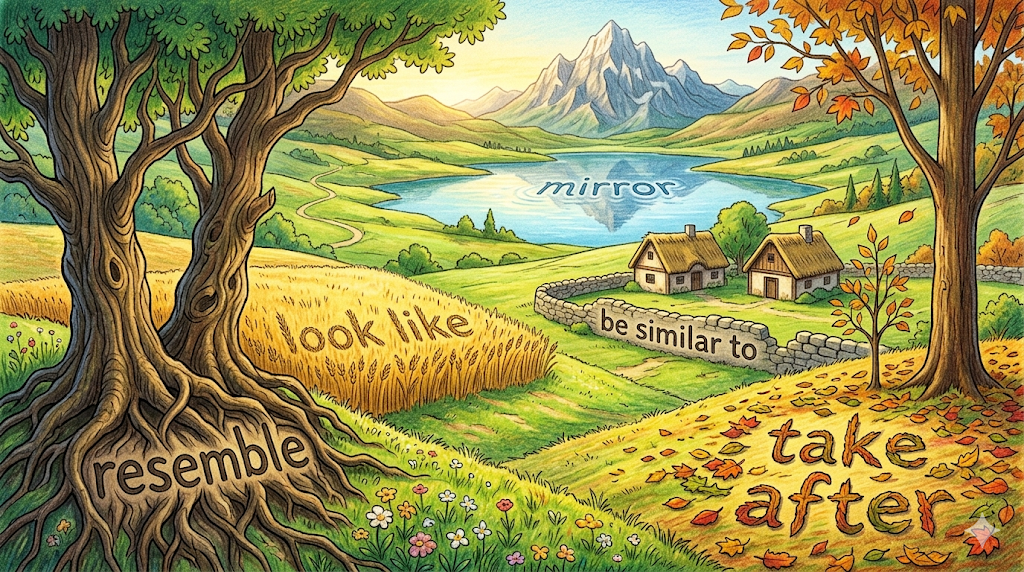
유의어 비교표
단어 공통점 뉘앙스 차이 예문
| resemble | 비슷하다 | 전반적 유사성·깊은 비교 강조 | She resembles her mum. |
| look like | 비슷해 보이다 | 시각적·외모적 유사성 강조 | He looks like a teacher. |
| be similar to | 비슷하다 | 특정 측면의 유사성 강조 | This is similar to that. |
| take after | 닮다 (가족) | 가족 중 누군가를 닮는 것 강조 | She takes after her dad. |
| mirror | 반영하다·닮다 | 거울처럼 정확히 반영하는 것 강조 | His words mirror hers. |
유의어 예문 리스트
- (look like) The cake she baked looked like a perfect circle from above but tasted even better than it looked when you finally cut into it. (그녀가 구운 케이크는 위에서 보면 완벽한 원처럼 보였지만 마침내 잘랐을 때 보이는 것보다 훨씬 더 맛있었다.)
- (be similar to) The way people behave in big groups is often similar to the way animals act in herds, with most individuals following what the group does. (큰 그룹에서 사람들이 행동하는 방식은 종종 동물이 무리에서 행동하는 방식과 비슷하며 대부분의 개인들이 그룹이 하는 것을 따른다.)
- (take after) He clearly takes after his mother when it comes to how patient he is, because she is also known for never losing her temper no matter what happens. (그는 얼마나 인내심이 있는지에 있어서 분명히 어머니를 닮았는데 그녀도 무슨 일이 있어도 절대 화를 내지 않는 것으로 알려져 있기 때문이다.)
- (mirror) The student's essay mirrored her teacher's writing style so closely that the teacher smiled when she read it and felt proud of the influence she had had. (학생의 에세이가 선생님의 글쓰기 스타일을 너무 가깝게 반영하여 선생님이 읽었을 때 미소 짓고 자신이 미친 영향에 자부심을 느꼈다.)
결론 정리
resemble은 단순히 "닮다"가 아니라, 다시 보았을 때 같은 것처럼 보일 만큼 두 대상이 같은 특성을 공유하는 이미지에서 출발해 외모·성격·상황·역사적 비교까지 확장되는 단어다 — resemble이 있는 곳엔 언제나 '단순한 겉모습의 유사성이 아닌, 여러 측면에서 전반적으로 같은 특성을 공유하여 비슷하게 느껴지는' 깊은 유사성의 선언이 있다.
💡 resemble은 "여러 측면에서 전반적으로 같은 특성을 공유하는 것"의 언어 — striking resemblance·bear a resemblance to·family resemblance·close resemblance·resemblance between이 수능 최빈출.
🌟 초등학생 버전 resemble은 두 사람이 너무 닮아서 "어? 쌍둥이야?"라고 할 정도로 비슷할 때 쓰는 단어예요! striking resemblance는 "와, 두 사람이 진짜 많이 닮았다!"는 것이고 family resemblance는 "가족끼리 공유하는 눈·코·입 같은 닮은 특징"이에요! 👫✨

bear a resemblance to [beər ə rɪˈzembləns tuː]
(동사구) ~와 닮은 점이 있다
완전히 똑같지는 않지만 어느 정도 비슷한 점을 가지고 있음을 강조합니다. strong·close·striking 등의 형용사와 함께 닮은 정도를 표현하는 데 유용하다는 뉘앙스가 강합니다. 수능 독해 심리·사회·역사·문학 지문에서 핵심 표현으로 자주 등장합니다.
- The old photo of her grandfather bore a strong resemblance to her brother, and the whole family was surprised when they finally saw them side by side. (할아버지의 오래된 사진이 그녀의 남동생과 강한 닮은 점이 있었으며 마침내 나란히 보았을 때 온 가족이 놀랐다.)
- The new film bears a close resemblance to a book written twenty years ago, which some people think is more than just a coincidence. (새 영화는 20년 전에 쓰여진 책과 가까운 닮은 점이 있으며 일부 사람들은 그것이 단순한 우연 이상이라고 생각한다.)
- His teaching style bears a resemblance to that of his own favourite teacher from when he was young, which shows how deeply teachers can influence the people they teach. (그의 가르치는 스타일은 그가 어렸을 때 자신이 가장 좋아했던 선생님의 것과 닮은 점이 있으며 이것은 선생님들이 가르치는 사람들에게 얼마나 깊이 영향을 줄 수 있는지 보여준다.)

strong resemblance [strɒŋ rɪˈzembləns]
(명사구) 강한 유사점, 매우 많이 닮은 점
두 사람이나 사물이 매우 많은 부분에서 비슷함을 강조합니다. 비슷한 점이 매우 많아서 쉽게 알아볼 수 있는 수준이라는 뉘앙스가 강합니다. 수능 독해 심리·과학·사회·문학 지문에서 자주 등장합니다.
- There was a strong resemblance between the handwriting on the two letters, which made the detective think they had been written by the same person. (두 편지의 필체 사이에 강한 유사점이 있었으며 이것이 형사로 하여금 그것들이 같은 사람에 의해 쓰였다고 생각하게 만들었다.)
- The strong resemblance between the boy and his uncle showed that the family's genes were very powerful because even people from different generations looked almost the same. (소년과 삼촌 사이의 강한 유사점은 다른 세대에서 온 사람들도 거의 똑같아 보였기 때문에 그 가족의 유전자가 매우 강력하다는 것을 보여줬다.)
- Scientists noticed a strong resemblance between the bones of the dinosaur and those of modern birds, which gave them important clues about how birds might have evolved over millions of years. (과학자들은 공룡의 뼈와 현대 새의 뼈 사이의 강한 유사점을 알아챘으며 이것이 새가 수백만 년에 걸쳐 어떻게 진화했을 수 있는지에 대한 중요한 단서를 줬다.)

close resemblance [kloʊs rɪˈzembləns]
(명사구) 가까운 유사점, 매우 닮음
두 사물이나 사람이 세세한 부분까지 비슷함을 강조합니다. 단순히 비슷한 것이 아닌 구별이 어려울 정도로 아주 가깝게 닮아 있다는 뉘앙스가 강합니다. 수능 독해 과학·심리·역사·사회 지문에서 자주 등장합니다.
- The two dresses had such a close resemblance that the shopkeeper herself had to check the labels to make sure she was selling the right one to the right customer. (두 드레스는 매우 가까운 유사점이 있어서 가게 주인 자신도 올바른 고객에게 올바른 것을 파는지 확인하기 위해 라벨을 확인해야 했다.)
- Historians noted the close resemblance between the two events and warned that if people did not learn from the past the same kinds of mistakes could happen again. (역사가들은 두 사건 사이의 가까운 유사점에 주목하며 사람들이 과거에서 배우지 않으면 같은 종류의 실수가 다시 일어날 수 있다고 경고했다.)
- The close resemblance between the two species of plant confused the farmers for years because the helpful one and the harmful one grew side by side and were almost impossible to tell apart. (두 식물 종 사이의 가까운 유사점이 수년간 농부들을 혼란스럽게 했는데 도움이 되는 것과 해로운 것이 나란히 자라서 거의 구별이 불가능했기 때문이다.)

family resemblance [ˈfæməli rɪˈzembləns]
(명사구) 가족 유사성
같은 가족 구성원들 사이에서 공유되는 외모나 성격의 특징을 강조합니다. 혈연 관계를 보여주는 자연스러운 특성의 공유라는 뉘앙스가 강합니다. 수능 독해 심리·사회·과학·철학 지문에서 핵심 표현으로 자주 등장합니다.
- The family resemblance was strongest in the way they all laughed — the same wide smile and the same way of throwing their heads back — which made it easy to know who belonged to which family at the party. (가족 유사성이 그들 모두가 웃는 방식에서 가장 강했다 — 같은 넓은 미소와 같은 방식으로 머리를 뒤로 젖히는 것 — 이것이 파티에서 누가 어느 가족에 속하는지 알기 쉽게 만들었다.)
- Researchers studying family resemblance found that people who grow up together often develop similar habits and ways of speaking even if they are not related by blood. (가족 유사성을 연구하는 연구자들은 함께 자란 사람들이 혈연 관계가 아니더라도 종종 비슷한 습관과 말하는 방식을 발전시킨다는 것을 발견했다.)
- The philosopher used the idea of family resemblance to explain why some words are hard to define — just like members of a family share features without all sharing one exact feature, some words are connected by overlapping meanings rather than one fixed meaning. (철학자는 가족 유사성의 개념을 사용하여 왜 일부 단어는 정의하기 어려운지 설명했다 — 가족 구성원들이 모두 하나의 정확한 특징을 공유하지 않고도 특징을 공유하는 것처럼 일부 단어는 하나의 고정된 의미가 아닌 겹치는 의미로 연결된다.)
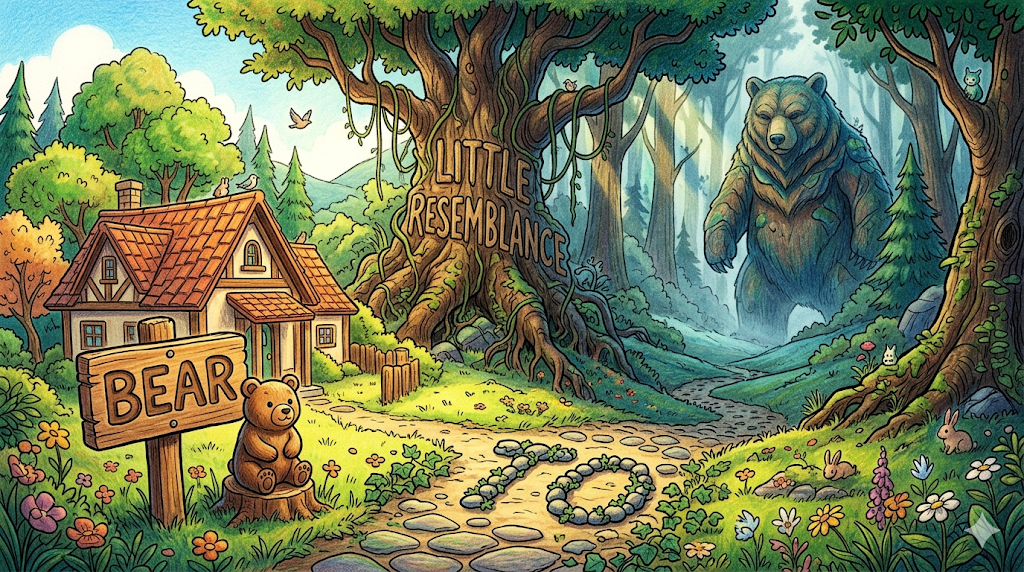
bear little resemblance to [beər ˈlɪtəl rɪˈzembləns tuː]
(동사구) ~와 거의 닮지 않다
두 사물이나 사람이 표면적으로는 연결되어 있지만 실제로는 매우 다름을 강조합니다. 기대했던 것과 실제가 매우 다를 때 사용하는 대조의 뉘앙스가 강합니다. 수능 독해 사회·역사·심리·교육 지문에서 자주 등장합니다.
- The holiday brochure showed a beautiful beach, but the actual place bore little resemblance to the photos because the weather was cold and the water was dirty. (여행 브로셔는 아름다운 해변을 보여줬지만 날씨가 춥고 물이 더러웠기 때문에 실제 장소는 사진과 거의 닮지 않았다.)
- The essay she handed in bore little resemblance to the plan she had shown the teacher the week before, which made the teacher wonder what had changed in such a short time. (그녀가 제출한 에세이는 일주일 전에 선생님에게 보여준 계획과 거의 닮지 않아서 선생님이 그렇게 짧은 시간에 무엇이 변했는지 궁금하게 만들었다.)
- The experience of learning to drive in a car park bears little resemblance to actually driving on a busy road where anything can happen at any second. (주차장에서 운전을 배우는 경험은 매 초마다 어떤 일이든 일어날 수 있는 바쁜 도로에서 실제로 운전하는 것과 거의 닮지 않는다.)
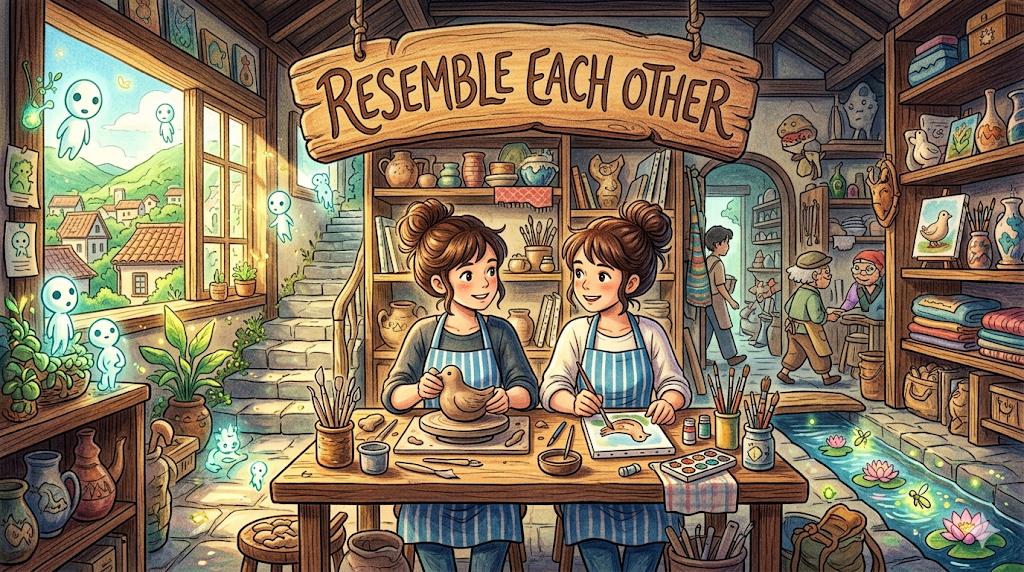
resemble each other [rɪˈzembəl iːtʃ ˈʌðər]
(동사구) 서로 닮다
두 사람이나 사물이 서로 비슷한 특성을 가지고 있음을 강조합니다. 한 방향이 아닌 양쪽에서 모두 비슷한 점을 찾을 수 있다는 상호적 유사성의 뉘앙스가 강합니다. 수능 독해 심리·사회·과학·문학 지문에서 자주 등장합니다.
- The two towns resemble each other so much that travellers sometimes drive into the wrong one and do not notice for several minutes. (두 마을은 너무 서로 닮아서 여행자들이 때로 잘못된 마을로 운전해 들어가도 몇 분 동안 알아채지 못한다.)
- The twins did not just look alike — they resembled each other in their habits, their interests, and even the way they walked down the street. (쌍둥이는 단순히 똑같이 생겼을 뿐만 아니라 습관, 관심사, 심지어 길을 걷는 방식에서도 서로 닮았다.)
- The two old friends had lived apart for forty years but when they met again people said they still resembled each other in the way they talked and the stories they found funny. (두 오랜 친구는 40년 동안 떨어져 살았지만 다시 만났을 때 사람들은 그들이 여전히 말하는 방식과 재미있다고 생각하는 이야기에서 서로 닮았다고 말했다.)
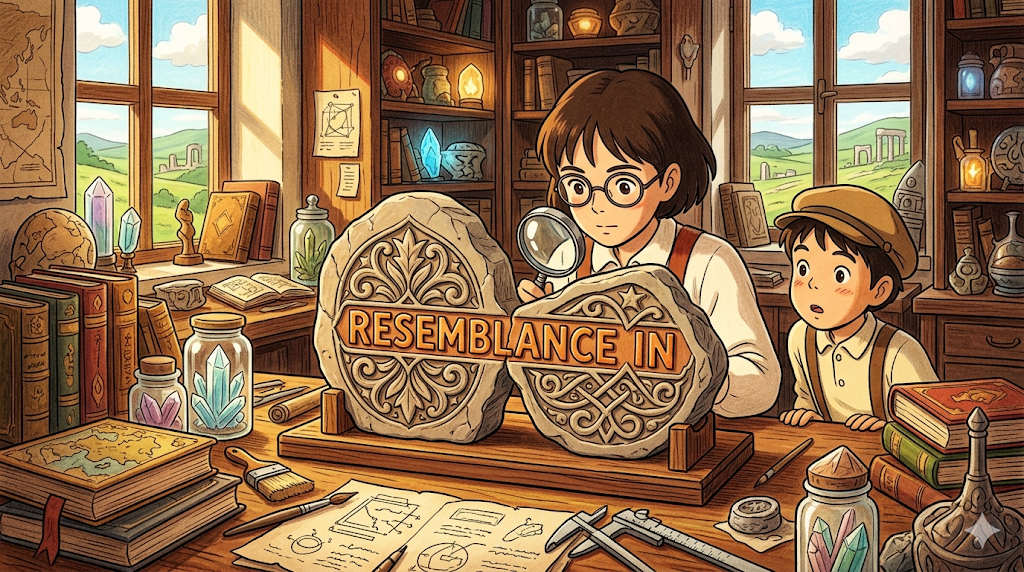
resemblance in [rɪˈzembləns ɪn]
(명사구) ~에서의 유사성
어떤 특정 측면이나 부분에서 비슷함을 강조합니다. 전체가 아닌 특정 부분에 집중하여 비교하는 정밀한 분석이라는 뉘앙스가 강합니다. 수능 독해 사회·과학·역사·심리 지문에서 자주 등장합니다.
- The teacher pointed out a clear resemblance in the structure of the two stories even though they were written in different countries and at different times. (선생님은 두 이야기가 다른 나라에서 다른 시간에 쓰였음에도 불구하고 두 이야기의 구조에서 명확한 유사성을 지적했다.)
- Researchers found a resemblance in the singing patterns of two different bird species that had never been in contact with each other, which raised many new questions about how birds learn to sing. (연구자들은 서로 접촉한 적이 없는 두 가지 다른 새 종의 노래 패턴에서 유사성을 발견했으며 이것이 새가 노래를 배우는 방법에 대한 많은 새로운 질문을 제기했다.)
- The art critic wrote about the resemblance in colour choice between the two painters, arguing that it showed they had been influenced by the same early teacher even if they later developed very different styles. (미술 평론가는 두 화가 사이의 색상 선택에서의 유사성에 대해 썼으며 나중에 매우 다른 스타일을 개발했더라도 같은 초기 선생님에게 영향을 받았다는 것을 보여준다고 주장했다.)

striking resemblance [ˈstraɪkɪŋ rɪˈzembləns]
(명사구) 놀라울 만큼 비슷한 점
두 사람이나 사물이 의외일 만큼 매우 비슷하여 사람들이 놀랄 정도임을 강조합니다. 유사성이 너무 강해서 보는 사람에게 깊은 인상을 남길 정도라는 뉘앙스가 강합니다. 수능 독해 심리·사회·역사·문학 지문에서 핵심 표현으로 자주 등장합니다.
- The striking resemblance between the street artist's paintings and the works of a famous artist who had lived a hundred years before made people wonder if the young artist had ever seen the old ones. (거리 예술가의 그림과 100년 전에 살았던 유명 화가의 작품 사이의 놀라울 만큼 비슷한 점이 사람들로 하여금 젊은 예술가가 오래된 작품들을 본 적이 있는지 궁금하게 만들었다.)
- Scientists were excited by the striking resemblance between the plant found in the jungle and one that had been thought to be gone from the world for over two hundred years. (과학자들은 정글에서 발견된 식물과 200년 이상 세상에서 사라진 것으로 생각됐던 식물 사이의 놀라울 만큼 비슷한 점에 흥분했다.)
- The interviewer could not help mentioning the striking resemblance between the student's answer and what the teacher had written in the textbook, which made the class laugh but also made an important point about original thinking. (면접관은 학생의 대답과 선생님이 교과서에 쓴 것 사이의 놀라울 만큼 비슷한 점을 언급하지 않을 수 없었으며 이것이 학급을 웃게 만들었지만 독창적인 생각에 대한 중요한 점도 만들었다.)

resemblance between [rɪˈzembləns bɪˈtwiːn]
(명사구) ~사이의 유사성
두 사람이나 사물을 비교하여 공통점이 있음을 강조합니다. 두 대상 사이에서 공유되는 특성에 초점을 맞추는 비교 표현이라는 뉘앙스가 강합니다. 수능 독해 사회·과학·역사·철학 지문에서 자주 등장합니다.
- The resemblance between the child's drawing and the actual animal was so good that the teacher put it on the classroom wall for everyone to look at. (아이의 그림과 실제 동물 사이의 유사성이 너무 좋아서 선생님이 모두가 볼 수 있도록 교실 벽에 붙였다.)
- When looking at the resemblance between the two inventions, experts said it was likely that the two inventors had been working on the same problem at the same time without knowing about each other. (두 발명품 사이의 유사성을 살펴보면서 전문가들은 두 발명가가 서로 알지 못하고 동시에 같은 문제를 연구하고 있었을 가능성이 높다고 말했다.)
- Teachers often use the resemblance between historical events and current situations to help students understand that history can teach us useful lessons for today if we pay close enough attention. (선생님들은 역사적 사건과 현재 상황 사이의 유사성을 종종 사용하여 학생들이 충분히 주의를 기울이면 역사가 오늘날을 위한 유용한 교훈을 가르칠 수 있다는 것을 이해하도록 돕는다.)

resemblance to [rɪˈzembləns tuː]
(명사구) ~와의 유사성, ~를 닮음
어떤 것이 다른 것과 얼마나 비슷한지를 나타낼 때 사용합니다. 한 방향으로 비교할 때 사용하며 닮음의 정도를 강·약으로 표현할 수 있다는 뉘앙스가 강합니다. 수능 독해 심리·사회·역사·문학 지문에서 자주 등장합니다.
- The young singer's resemblance to her mother was clear in her voice, which had the same warm tone and the same way of holding long notes at the end of each song. (젊은 가수의 어머니에 대한 유사성은 목소리에서 명확했으며 각 노래 끝에 긴 음표를 유지하는 같은 따뜻한 음색과 같은 방식을 가지고 있었다.)
- The new design had some resemblance to the old one but was different enough that the company could say it was truly something new. (새 디자인은 오래된 것과 약간의 유사성이 있었지만 회사가 그것이 진정으로 새로운 것이라고 말할 수 있을 만큼 충분히 달랐다.)
- The play had a clear resemblance to the author's own life, which made audience members who knew the story behind it feel that they were watching something very personal and real. (그 연극은 작가 자신의 삶과 명확한 유사성이 있었으며 그 뒤에 있는 이야기를 아는 관객들이 매우 개인적이고 실제적인 무언가를 보고 있다고 느끼게 만들었다.)
숙어 그룹 묶음 1 — 유사성의 정도 resemble 핵심 패턴
표현 의미 핵심 뉘앙스 주요 맥락
| bear a resemblance to | ~와 닮은 점이 있다 | 정도 표현이 가능한 유연한 닮음 | 심리·사회·역사·문학 |
| strong resemblance | 강한 유사점 | 많은 부분에서 매우 비슷한 닮음 | 심리·과학·사회·문학 |
| striking resemblance | 놀라울 만큼 비슷한 점 | 예상치 못할 만큼 놀라운 수준의 닮음 | 심리·사회·역사·문학 |
이 세 표현은 모두 resemble의 "두 대상이 비슷하다"의 이미지를 공유하되, 각각 어느 정도의 닮음이 있음을 유연하게 표현하는 것(bear a resemblance to)·많은 부분에서 명확하게 비슷한 닮음(strong resemblance)·예상치 못할 만큼 놀라운 수준의 닮음(striking resemblance)의 관점에서 접근합니다.
- Everyone agreed that the boy bore a resemblance to his uncle but nobody expected the striking resemblance that appeared when the old photos came out and showed a strong resemblance in not just their faces but their posture and the way they held their hands when they stood still. (모든 사람이 소년이 삼촌과 닮은 점이 있다는 데 동의했지만 오래된 사진이 나왔을 때 얼굴만이 아닌 자세와 가만히 서 있을 때 손을 잡는 방식에서도 강한 유사점을 보이는 놀라울 만큼 비슷한 점이 나타났을 때는 아무도 예상하지 못했다.)
- The first draft of the novel only bore a faint resemblance to the finished book, but by the third draft there was a strong resemblance, and by the final version the striking resemblance showed how the author had found her voice and stuck with it. (소설의 첫 번째 초안은 완성된 책과 희미한 닮은 점만 있었지만 세 번째 초안에서는 강한 유사점이 있었고 최종 버전에서는 놀라울 만큼 비슷한 점이 작가가 자신의 목소리를 찾아 그것을 고수했음을 보여줬다.)
- Scientists said the new fish species bore a resemblance to known species but had a strong resemblance to none of them, making the striking resemblance to an ancient species in old records the most interesting and puzzling finding of the year. (과학자들은 새 어종이 알려진 종과 닮은 점이 있지만 그 중 어느 것과도 강한 유사점이 없다고 말했으며 오래된 기록의 고대 종과의 놀라울 만큼 비슷한 점을 올해 가장 흥미롭고 당혹스러운 발견으로 만들었다.)
숙어 그룹 묶음 2 — 유사성의 범위 resemble 패턴
표현 의미 핵심 뉘앙스 주요 맥락
| close resemblance | 가까운 유사점 | 세세한 부분까지 비슷한 깊은 닮음 | 과학·심리·역사·사회 |
| family resemblance | 가족 유사성 | 혈연 관계에서 공유되는 자연스러운 특성 | 심리·사회·과학·철학 |
| resemblance in | ~에서의 유사성 | 특정 측면이나 부분에서의 집중적 비교 | 사회·과학·역사·심리 |
이 세 표현은 모두 resemble의 "비슷한 특성을 공유하는 것"의 이미지를 공유하되, 각각 세세한 부분까지 구별이 어려운 수준의 닮음(close resemblance)·가족 내에서 자연스럽게 공유되는 특성(family resemblance)·전체가 아닌 특정 부분에서의 유사성(resemblance in)의 관점에서 접근합니다.
- The scientist said there was a close resemblance in the way the two creatures moved, a family resemblance in their bone structure, and a surprising resemblance in the sounds they made, which suggested they shared a common ancestor from millions of years ago. (과학자는 두 생물이 움직이는 방식에서 가까운 유사점이 있고 뼈 구조에서 가족 유사성이 있으며 내는 소리에서 놀라운 유사성이 있다고 말했으며 이것이 그들이 수백만 년 전의 공통 조상을 공유한다는 것을 시사했다.)
- The close resemblance in writing style was explained by the family resemblance in the way both authors had been taught, with a clear resemblance in how they both used short sentences and direct words to make complex ideas feel simple. (글쓰기 스타일에서의 가까운 유사점은 두 작가가 배워온 방식에서의 가족 유사성으로 설명됐으며 복잡한 아이디어를 단순하게 느끼게 만들기 위해 짧은 문장과 직접적인 단어를 사용하는 방법에서 명확한 유사성이 있었다.)
- There was a close resemblance between the two designs, a family resemblance in their use of the same basic shapes, and a strong resemblance in the colours they chose, which made the judge ask both artists to explain where their ideas had come from. (두 디자인 사이에 가까운 유사점이 있었고 같은 기본 모양 사용에서 가족 유사성이 있었으며 선택한 색상에서 강한 유사성이 있어서 심사위원이 두 예술가 모두에게 아이디어가 어디서 왔는지 설명하도록 요청했다.)
숙어 그룹 묶음 3 — 유사성의 관계 resemble 심화 패턴
표현 의미 핵심 뉘앙스 주요 맥락
| bear little resemblance to | ~와 거의 닮지 않다 | 기대했던 것과 실제가 매우 다른 대조 | 사회·역사·심리·교육 |
| resemble each other | 서로 닮다 | 양쪽에서 모두 비슷한 상호적 유사성 | 심리·사회·과학·문학 |
| resemblance between | ~사이의 유사성 | 두 대상에서 공유되는 특성의 비교 | 사회·과학·역사·철학 |
이 세 표현은 모두 resemble의 "두 대상을 비교하는" 이미지를 공유하되, 각각 연결되어 있지만 실제로 매우 다름을 보이는 대조(bear little resemblance to)·양쪽 모두에서 비슷한 점을 찾을 수 있는 상호 유사성(resemble each other)·두 대상 사이의 공유된 특성을 비교하는 것(resemblance between)의 관점에서 접근합니다.
- Although the two students had grown up in the same house, their finished projects bore little resemblance to each other despite the clear resemblance between the tools they used, and each one reflected how differently they thought even when they resembled each other so much in daily life. (두 학생이 같은 집에서 자랐음에도 불구하고 사용한 도구들 사이의 명확한 유사성에도 불구하고 그들의 완성된 프로젝트는 서로 거의 닮지 않았으며 일상 생활에서 서로 그렇게 많이 닮았음에도 각각이 얼마나 다르게 생각하는지 반영했다.)
- Travellers who expected the new city to resemble the old one they had left were shocked to find the two now bore little resemblance to each other, even though the resemblance between the maps from fifty years ago would have made them look almost the same. (새 도시가 자신들이 떠난 오래된 도시를 닮을 것이라고 기대한 여행자들은 두 곳이 이제 서로 거의 닮지 않는다는 것을 알고 충격을 받았으며 50년 전 지도 사이의 유사성은 그것들을 거의 같아 보이게 만들었을 것이었다.)
- The expert explained that the two pieces bore little resemblance to each other on the surface but that there was actually a deep resemblance between the problems each one was trying to solve, and that anyone who could see that connection would find that the two works resembled each other in ways that went far beyond what anyone could see just by looking. (전문가는 두 작품이 표면적으로는 서로 거의 닮지 않지만 실제로 각각이 해결하려는 문제 사이에 깊은 유사성이 있으며 그 연결을 볼 수 있는 사람은 두 작품이 단순히 보는 것만으로는 볼 수 있는 것을 훨씬 넘는 방식으로 서로 닮는다는 것을 알게 될 것이라고 설명했다.)
숙어 그룹 묶음 4 — 비교·분석 resemble 심화 패턴
표현 의미 핵심 뉘앙스 주요 맥락
| resemblance to | ~와의 유사성 | 한 방향의 비교로 닮음의 정도 표현 | 심리·사회·역사·문학 |
| resemblance between | ~사이의 유사성 | 두 대상에서 공유되는 특성의 비교 | 사회·과학·역사·철학 |
| striking resemblance | 놀라울 만큼 비슷한 점 | 예상치 못할 만큼 놀라운 수준의 닮음 | 심리·사회·역사·문학 |
이 세 표현은 함께 resemble이 담고 있는 비교와 분석의 흐름을 보여줍니다. resemblance to → 한 대상이 다른 대상을 얼마나 닮았는지 표현, resemblance between → 두 대상이 공유하는 특성을 분석, striking resemblance → 그 유사성이 놀랄 만큼 강할 때 강조하는 것으로 연결됩니다.
- When the critic studied the resemblance to earlier works and the resemblance between the two artists' methods, she found a striking resemblance that she said could only be explained if one of them had spent time studying the other's work very closely. (평론가가 이전 작품과의 유사성과 두 예술가의 방법 사이의 유사성을 연구했을 때 그녀는 그 중 한 명이 다른 사람의 작품을 매우 가깝게 연구하며 시간을 보냈다면 설명될 수 있다고 말한 놀라울 만큼 비슷한 점을 발견했다.)
- The teacher asked students to think about the resemblance to events from the past and the resemblance between situations from different eras, explaining that finding a striking resemblance could help them understand not just history but also what might happen next. (선생님은 학생들에게 과거 사건과의 유사성과 다른 시대의 상황 사이의 유사성에 대해 생각하도록 요청했으며 놀라울 만큼 비슷한 점을 찾는 것이 역사뿐만 아니라 다음에 무슨 일이 일어날 수 있는지를 이해하는 데 도움이 될 수 있다고 설명했다.)
- The documentary explored the resemblance to ancient practices in modern behaviour, looked at the resemblance between cultures from opposite sides of the globe, and ended by showing the striking resemblance in the stories people tell about who they are, which suggested that all humans share a deeper common ground than most of us realise. (다큐멘터리는 현대 행동에서 고대 관습과의 유사성을 탐구하고 지구 반대편 문화 사이의 유사성을 살펴보며 사람들이 자신이 누구인지에 대해 말하는 이야기에서 놀라울 만큼 비슷한 점을 보여주는 것으로 끝났으며 이는 모든 인간이 대부분의 우리가 깨닫는 것보다 더 깊은 공통 기반을 공유한다는 것을 시사했다.)
전체 요약표
표현 의미 핵심 뉘앙스
| resemble | 닮다, 비슷하다 | 여러 측면에서 전반적으로 같은 특성을 공유하는 것 |
| bear a resemblance to | ~와 닮은 점이 있다 | 정도 표현이 가능한 유연한 닮음 |
| strong resemblance | 강한 유사점 | 많은 부분에서 매우 비슷한 닮음 |
| close resemblance | 가까운 유사점 | 세세한 부분까지 비슷한 깊은 닮음 |
| family resemblance | 가족 유사성 | 혈연 관계에서 공유되는 자연스러운 특성 |
| bear little resemblance to | ~와 거의 닮지 않다 | 기대했던 것과 실제가 매우 다른 대조 |
| resemble each other | 서로 닮다 | 양쪽에서 모두 비슷한 상호적 유사성 |
| resemblance in | ~에서의 유사성 | 특정 측면이나 부분에서의 집중적 비교 |
| striking resemblance | 놀라울 만큼 비슷한 점 | 예상치 못할 만큼 놀라운 수준의 닮음 |
| resemblance between | ~사이의 유사성 | 두 대상에서 공유되는 특성의 비교 |
| resemblance to | ~와의 유사성 | 한 방향의 비교로 닮음의 정도 표현 |
유의어 비교표
단어 공통점 뉘앙스 차이 예문
| resemble | 비슷하다 | 전반적 유사성·깊은 비교 강조 | She resembles her mum. |
| look like | 비슷해 보이다 | 시각적·외모적 유사성 강조 | He looks like a teacher. |
| be similar to | 비슷하다 | 특정 측면의 유사성 강조 | This is similar to that. |
| take after | 닮다 (가족) | 가족 중 누군가를 닮는 것 강조 | She takes after her dad. |
| mirror | 반영하다·닮다 | 거울처럼 정확히 반영하는 것 강조 | His words mirror hers. |
결론 정리
resemble은 단순히 "닮다"가 아니라, 다시 보았을 때 같은 것처럼 보일 만큼 두 대상이 같은 특성을 공유하는 이미지에서 출발해 외모·성격·상황·역사적 비교까지 확장되는 단어다 — resemble이 있는 곳엔 언제나 '단순한 겉모습의 유사성이 아닌, 여러 측면에서 전반적으로 같은 특성을 공유하여 비슷하게 느껴지는' 깊은 유사성의 선언이 있다.
💡 resemble은 "여러 측면에서 전반적으로 같은 특성을 공유하는 것"의 언어 — striking resemblance·bear a resemblance to·family resemblance·close resemblance·resemblance between이 수능 최빈출.
🌟 초등학생 버전 resemble은 두 사람이 너무 닮아서 "어? 쌍둥이야?"라고 할 정도로 비슷할 때 쓰는 단어예요! striking resemblance는 "와, 두 사람이 진짜 많이 닮았다!"는 것이고 family resemblance는 "가족끼리 공유하는 눈·코·입 같은 닮은 특징"이에요! 👫✨


