- 분류 전체보기 (5476)

| 일 | 월 | 화 | 수 | 목 | 금 | 토 |
|---|---|---|---|---|---|---|
| 1 | 2 | |||||
| 3 | 4 | 5 | 6 | 7 | 8 | 9 |
| 10 | 11 | 12 | 13 | 14 | 15 | 16 |
| 17 | 18 | 19 | 20 | 21 | 22 | 23 |
| 24 | 25 | 26 | 27 | 28 | 29 | 30 |
| 31 |
- come up with
- Read between the lines
- work out
- I'm sorry
- I'm glad to hear that.
- Sure
- Hey
- Please
- Yes
- pick up
- Sorry
- make it
- oh
- Excuse me
- well
- no
- please?
- call off
- Don't worry
- please.
- OKay
- Actually
- Yeah
- once in a while
- By The Way
- I'm not sure
- hold on
- Right?
- too.
- entrance fee
- Today
- Total
인과함께
Day368 , pound, pound on, pound away, pound cake, pound sign, pound sterling, by the pound, pound the pavement, get a pound of flesh, pound for pound, take a pounding 본문
Day368 , pound, pound on, pound away, pound cake, pound sign, pound sterling, by the pound, pound the pavement, get a pound of flesh, pound for pound, take a pounding
미인생 2026. 5. 2. 07:31
pound [paʊnd]
(명사/동사) 파운드(무게·화폐), 두드리다, 쾅쾅 치다, 세게 달리다
(음악 소리가 너무 커서 이웃이 벽을 쾅쾅 두드리기 시작했습니다.) [1]
'pound'를 단순히 "파운드" 또는 "두드리다"로만 외우면 수능에서 반드시 틀립니다.
pound는 "강하고 반복적인 힘으로 무언가를 내리치거나, 무거운 것의 단위로 무게를 재거나, 영국 화폐의 기본 단위를 나타내는 것" 이라는 핵심 이미지에서 출발해, 반복적인 강타·심장 박동·무게 단위·통화·발소리까지 폭넓게 쓰이는 핵심 다의어입니다. 특히 pound(반복적으로 강하게 치는 것) vs. hit(한 번 치는 것) vs. beat(리듬 있게 반복해서 치는 것) 의 뉘앙스 차이, pound sterling(파운드화), pound for pound(무게 대비 최고) 패턴은 수능 독해 역사·경제·사회·심리·문학 지문에서 핵심적으로 등장합니다.
'pound'는 고대 영어 pund(무게 단위)에서 유래했으며, 라틴어 pondo(무게로, 무게 단위)와 pondus(무게, 중량)에 뿌리를 두고 있습니다. 동사 pound(두드리다)는 고대 영어 punian(빻다, 으깨다)에서 유래했습니다. 어원의 핵심 이미지는 "무게를 가진 것이 반복적으로 강하게 내려눌러 분쇄하거나 형태를 바꾸는 것" 으로, 단순한 접촉이 아닌 무게와 힘이 반복적으로 집중되어 대상에 강렬한 영향을 미치는 강도 높은 충격의 이미지가 이 단어의 본질입니다.
1. pound on [paʊnd ɒn]
(동사구/수능) "~을 세게 두드리다, 계속해서 강하게 치다"를 뜻합니다. 문이나 표면 등을 반복적으로 강하게 치는 것을 강조합니다. 수능 독해 심리·문학·사회 지문의 핵심 표현입니다.
She began to pound on the locked door with both fists, calling out for someone to let her in, but the hallway beyond remained completely silent and no one came. (그녀는 두 주먹으로 잠긴 문을 세게 두드리기 시작하며 누군가 들여보내달라고 소리쳤지만 너머의 복도는 완전히 조용한 채로 아무도 오지 않았다.)
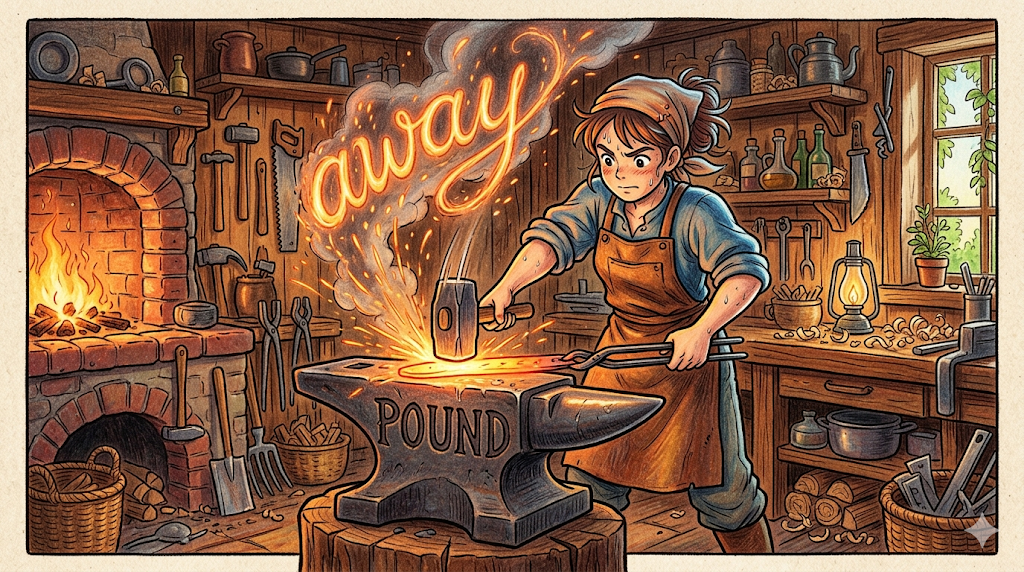
2. pound away [paʊnd əˈweɪ]
(동사구/수능) "쉬지 않고 계속 두드리다, 끈질기게 작업하다"를 뜻합니다. 지치지 않고 반복적으로 무언가를 계속하는 것을 강조합니다. 수능 독해 심리·사회·교육·문학 지문에서 자주 등장합니다.
He sat at the old typewriter and pounded away at the keys for hours each evening after work, convinced that the novel he was writing would one day be worth all the effort he was putting into it. (그는 퇴근 후 매일 저녁 몇 시간씩 오래된 타자기 앞에 앉아 키를 계속 두드렸으며 자신이 쓰고 있는 소설이 언젠가 들이는 모든 노력만큼의 가치가 있을 것이라고 확신했다.)
3. pound cake [paʊnd keɪk]
(명사구/수능) "파운드케이크"를 뜻합니다. 버터·설탕·달걀·밀가루를 각각 1파운드씩 사용하여 만든 케이크로, pound(무게 단위)에서 유래했음을 강조합니다. 수능 독해 문화·역사·음식 지문에서 자주 등장합니다.
The recipe for pound cake dates back to early eighteenth-century Europe, when its name came directly from the original formula calling for a pound each of butter, sugar, eggs, and flour. (파운드케이크 레시피는 18세기 초 유럽으로 거슬러 올라가며 그 이름은 버터, 설탕, 달걀, 밀가루 각각 1파운드를 요구하는 원래 공식에서 직접 유래했다.)
4. pound sign [paʊnd saɪn]
(명사구/수능) "파운드 기호(£ 또는 #)"를 뜻합니다. 영국 화폐를 나타내는 £ 기호이거나 전화기·소셜 미디어에서의 # 기호를 강조합니다. 수능 독해 사회·기술·문화·역사 지문에서 자주 등장합니다.
The pound sign originally derived from the letter L, which stood for libra, the Latin word for scales and also a unit of weight, explaining why the same symbol came to represent both currency and measurement in different historical contexts. (파운드 기호는 원래 저울을 뜻하는 라틴어 libra에서 온 글자 L에서 유래했으며 무게의 단위이기도 하여 같은 기호가 다른 역사적 맥락에서 화폐와 측정 모두를 나타내게 된 이유를 설명한다.)
5. pound sterling [paʊnd ˈstɜːrlɪŋ]
(명사구/수능) "파운드 스털링, 영국 화폐"를 뜻합니다. 세계에서 가장 오래된 통화 중 하나인 영국의 공식 화폐를 강조합니다. 수능 독해 역사·경제·사회·문화 지문의 핵심 표현입니다.
The value of pound sterling has fluctuated significantly in international currency markets since the United Kingdom's decision to leave the European Union, creating uncertainty for businesses that traded across borders. (파운드 스털링의 가치는 영국이 유럽연합을 탈퇴하기로 한 결정 이후 국제 외환 시장에서 크게 변동하여 국경을 넘어 거래하는 기업들에게 불확실성을 만들었다.)
6. by the pound [baɪ ðə paʊnd]
(전치사구/수능) "파운드 단위로, 무게로 팔거나 사다"를 뜻합니다. 개수가 아닌 무게를 기준으로 사고파는 것을 강조합니다. 수능 독해 경제·사회·문화·역사 지문에서 자주 등장합니다.
In the old market, most fresh produce was sold by the pound rather than by the piece, with vendors using heavy iron scales to weigh out exact amounts for each customer in turn. (오래된 시장에서 대부분의 신선 농산물은 개수가 아닌 파운드 단위로 팔렸으며 판매상들은 각 고객에게 차례로 정확한 양을 달아주기 위해 무거운 철제 저울을 사용했다.)
7. pound the pavement [paʊnd ðə ˈpeɪvmənt]
(동사구/수능) "거리를 열심히 돌아다니다, 발품을 팔다"를 뜻합니다. 일자리나 기회를 찾기 위해 지치지 않고 거리를 걸어다니는 것을 강조합니다. 수능 독해 사회·심리·경제·교육 지문에서 자주 등장합니다.
After graduating from university with few prospects in sight, she spent three months pounding the pavement, visiting every company she could find and leaving her résumé with anyone willing to accept it. (대학을 졸업하고 전망이 거의 보이지 않자 그녀는 3개월 동안 발품을 팔며 찾을 수 있는 모든 회사를 방문하고 받아주려는 누구에게나 이력서를 남겼다.)
8. get a pound of flesh [ɡet ə paʊnd əv fleʃ]
(동사구/수능) "가혹한 요구를 관철하다, 냉혹하게 대가를 요구하다"를 뜻합니다. 셰익스피어의 베니스의 상인에서 유래한 표현으로, 법적·계약적 권리를 빌미로 비인간적으로 가혹한 요구를 하는 것을 강조합니다. 수능 독해 문학·사회·법·경제 지문의 핵심 표현입니다.
The landlord was determined to get his pound of flesh from the departing tenants, demanding full compensation for every tiny mark on the wall and every minor scratch on the floor regardless of how long they had been there. (집주인은 떠나는 세입자들에게서 가혹한 대가를 받아내기로 결심하여 그들이 얼마나 오래 살았는지에 관계없이 벽의 모든 작은 흔적과 바닥의 모든 사소한 긁힘에 대해 전액 보상을 요구했다.)
9. pound for pound [paʊnd fɔːr paʊnd]
(부사구/수능) "무게 대비, 가치 대비, 같은 조건에서 비교하면"을 뜻합니다. 크기나 무게 대비 효율이나 성능을 비교할 때 사용하는 표현을 강조합니다. 수능 독해 사회·과학·경제·스포츠 지문에서 자주 등장합니다.
Pound for pound, the hummingbird is considered one of the most energy-demanding creatures on Earth, with a heart rate and metabolic rate that would be impossible to sustain in any larger animal. (같은 무게 대비, 벌새는 더 큰 동물에서는 지속하기 불가능할 심박수와 대사율을 가진 지구상에서 가장 에너지 소모가 많은 생물 중 하나로 여겨진다.)
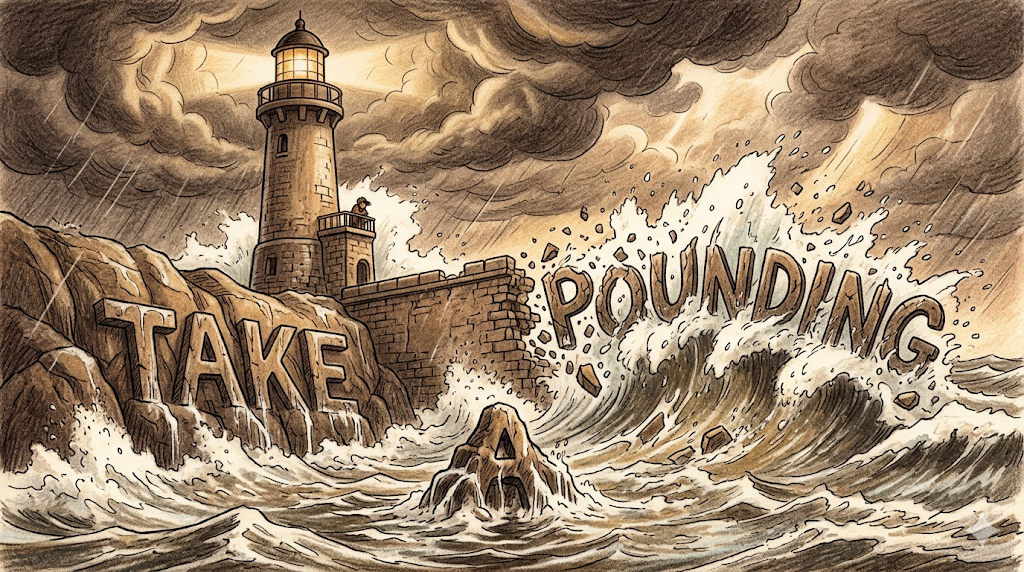
10. take a pounding [teɪk ə ˈpaʊndɪŋ]
(동사구/수능) "심한 타격을 받다, 혹독한 시련을 겪다"를 뜻합니다. 물리적으로나 비유적으로 심각한 피해나 타격을 연속적으로 받는 것을 강조합니다. 수능 독해 사회·경제·심리·스포츠·문학 지문의 핵심 표현입니다.
The coastal town took a pounding from the storm that struck overnight, with dozens of buildings damaged, streets flooded, and the harbour wall showing cracks that engineers said would be expensive and time-consuming to repair. (해안 마을은 밤새 강타한 폭풍으로 심한 타격을 받아 수십 채의 건물이 손상되고 거리가 침수됐으며 항구 벽이 엔지니어들이 수리하는 데 비용이 많이 들고 시간이 걸릴 것이라고 말한 균열을 보였다.)

POINT 1. pound vs. hit vs. beat — 수능 최빈출 뉘앙스 구별
세 표현 모두 "치다"와 관련되지만 뉘앙스가 다릅니다.
pound → 무게와 힘을 실어 반복적으로 강하게 내리치는 것 (강도 높은 반복적 충격·강타 강조), hit → 한 번 강하게 접촉하는 것 (단발성 강한 충돌·접촉 강조), beat → 리듬 있게 반복해서 치는 것 (리드미컬한 반복·심장 박동 강조). 수능에서 pound는 반드시 무게를 실은 힘이 반복적으로 집중되는 강도 높은 충격이라는 문맥이 함께 등장합니다.
예) The waves pounded the rocks for hours without stopping. (파도가 몇 시간 동안 멈추지 않고 바위를 강타했다.) — 강도 높은 반복적 충격·강타 강조 She hit the ball with her racket and it flew over the net. (그녀는 라켓으로 공을 쳤고 공은 네트를 넘어 날아갔다.) — 단발성 강한 충돌·접촉 강조 His heart was beating rapidly as he waited for the results. (결과를 기다리는 동안 그의 심장이 빠르게 뛰고 있었다.) — 리드미컬한 반복·심장 박동 강조
POINT 2. pound sterling / take a pounding — 수능 경제·사회 지문 핵심
pound sterling과 take a pounding은 수능 독해 경제·사회·역사 지문에서 가장 자주 출제되는 pound 관련 표현입니다.
pound sterling → 세계에서 가장 오래된 통화 중 하나로 영국 경제와 역사의 상징, take a pounding → 물리적이거나 비유적으로 연속적인 심각한 타격을 받는 것. 두 표현이 함께 등장하면 글쓴이가 경제적 충격이나 사회적 타격의 심각성을 논하고 있다는 신호입니다.
POINT 3. pondo/pondus 어근 — 수능 어휘 확장 필수
pound의 어원 pondo/pondus(무게)와 관련된 단어들이 수능에서 자주 출제됩니다.
ponder [ˈpɒndər] → 깊이 생각하다 (무게를 달다 → 심사숙고하다), ponderous [ˈpɒndərəs] → 육중한, 지루할 만큼 무거운 (매우 무거운), ponderous → 매우 무겁고 느린, impound [ɪmˈpaʊnd] → 압수하다, 가두다 (법적으로 무게로 묶다). 이 단어들은 모두 "무게"라는 공통 이미지를 가지고 있습니다.
(동사) ① 두드리다, 쾅쾅 치다 (물리적)
pound의 가장 기본적인 동사 의미로, 강하고 반복적인 힘으로 무언가를 치거나 내리치는 것을 나타냅니다. 반드시 한 번이 아닌 반복적이고 강한 충격이라는 문맥이 함께 옵니다.
- The rain pounded against the window all night, making a sound so loud and constant that she gave up trying to sleep and lay in the dark listening to it instead. (비가 밤새 창문을 두드려 너무 크고 지속적인 소리를 내어 그녀는 잠자려는 것을 포기하고 어둠 속에 누워 대신 그것을 들었다.)
- The blacksmith pounded the hot metal with a heavy hammer, shaping it slowly and deliberately with each blow until it gradually began to take on the form he had planned in his mind before he started. (대장장이는 무거운 망치로 뜨거운 금속을 두드려 시작하기 전에 마음속에 계획했던 형태를 점차 갖추기 시작할 때까지 각 타격으로 천천히 의도적으로 형태를 잡아갔다.)
- She could feel her own heart pounding in her chest as she waited for the announcement, each beat louder than the last until the noise seemed almost impossible to ignore. (그녀는 발표를 기다리며 가슴속에서 심장이 두근거리는 것을 느낄 수 있었으며 소리를 무시하기가 거의 불가능해 보일 때까지 각 박동이 이전보다 더 크게 느껴졌다.)
(명사) ② 파운드 (무게·화폐 단위)
영국의 무게 단위(약 453g) 또는 영국의 공식 통화를 나타냅니다. 수능 독해 역사·경제·문화 지문에서 자주 등장하는 기본 의미입니다.
- The recipe called for half a pound of unsalted butter, but since she only had metric scales in her kitchen she had to convert the measurement before she could work out how much to use. (레시피는 무염 버터 반 파운드를 요구했지만 주방에 미터법 저울밖에 없었기 때문에 얼마나 사용해야 하는지 알아내기 전에 단위를 변환해야 했다.)
- The exchange rate between the pound and the dollar has shifted dramatically over the past decade, affecting everything from the cost of holidays abroad to the price of imported goods in supermarkets. (파운드와 달러의 환율은 지난 10년간 극적으로 변동하여 해외 휴가 비용에서 슈퍼마켓의 수입품 가격까지 모든 것에 영향을 미쳤다.)
- When the new tax was introduced, many residents were shocked to discover that the additional annual cost to a typical household would amount to several hundred pounds — a sum that, while modest by some measures, represented a significant proportion of the disposable income available to families on lower wages. (새 세금이 도입됐을 때 많은 주민들은 일반 가구에 대한 추가 연간 비용이 수백 파운드에 달한다는 것을 알고 충격을 받았다 — 일부 기준에서는 적은 금액이지만 저임금 가족들에게 이용 가능한 가처분 소득의 상당 부분을 나타냈다.)
(동사) ③ 쿵쿵 달리다, 세게 걷다 (움직임)
발을 세게 내딛으며 달리거나 걷는 것을 나타냅니다. 수능 독해 심리·문학·스포츠 지문에서 자주 등장합니다.
- The runners pounded along the track in the early morning mist, their footsteps echoing in the empty stadium as they completed lap after lap in preparation for the competition that was just days away. (선수들은 이른 아침 안개 속에서 트랙을 따라 쾅쾅 뛰었으며 며칠 후로 다가온 대회를 준비하며 빈 경기장에서 한 바퀴씩 완주할 때 발소리가 울렸다.)
- She pounded up the stairs two at a time, not willing to wait for the lift, driven by a sense of urgency that made everything else in the building seem to move in slow motion compared to her. (그녀는 엘리베이터를 기다리려 하지 않고 한 번에 두 계단씩 쾅쾅 올라갔으며 건물의 다른 모든 것이 자신과 비교하여 슬로모션으로 움직이는 것처럼 보이게 만드는 긴박감에 이끌렸다.)
- The soldiers pounded through the mud in the driving rain, each step requiring a deliberate effort to lift a boot that the ground seemed determined to hold onto, making progress feel impossibly slow against the conditions they were facing. (병사들은 폭우 속에서 진흙을 뚫고 쾅쾅 행군했으며 각 걸음이 땅이 붙잡으려는 것처럼 보이는 군화를 들어올리기 위한 의도적인 노력을 필요로 하여 맞닥뜨린 조건에 맞서 전진이 불가능할 만큼 느리게 느껴졌다.)

뉘앙스·의미 연결 흐름 표
핵심 이미지 연결 흐름 뉘앙스 요약
| 반복적 강타 | 세게 두드리다 → 계속 두드리다 → 심한 타격 받다 | pound on·pound away·take a pounding |
| 화폐·단위 | 파운드 스털링 → 파운드 기호 → 파운드 단위로 | pound sterling·pound sign·by the pound |
| 비유적 표현 | 발품을 팔다 → 가혹한 대가 요구 → 무게 대비 비교 | pound the pavement·get a pound of flesh·pound for pound |
어원 흐름 표
단어 구성 요소 의미 연결 흐름 뉘앙스 요약
| 라틴어 pondo/pondus(무게) | 무게 → 무게 단위 → 화폐 단위 | 무거운 것이 기준이 되는 단위의 이미지 |
| 고대 영어 punian(빻다·으깨다) | 빻다 → 강하게 치다 → 반복적 충격 | 무게를 실어 반복적으로 내리치는 강도 높은 충격 |
품사별 의미 표
품사 의미 예문
| 동사 | 두드리다, 쾅쾅 치다 | She pounded the door. (그녀는 문을 두드렸다.) |
| 동사 | 쿵쿵 달리다, 세게 걷다 | He pounded the track. (그는 트랙을 쿵쿵 달렸다.) |
| 명사 | 무게 단위 (약 453g) | Buy a pound of coffee. (커피 1파운드를 사세요.) |
| 명사 | 영국 화폐 단위 | It costs five pounds. (5파운드입니다.) |
활용 예문 리스트
- The workers pounded away at the old concrete foundations for days before they were finally able to clear the site and begin laying the groundwork for the new building that would replace the one that had been demolished. (작업자들은 현장을 정리하고 철거된 건물을 대체할 새 건물의 기초 작업을 시작할 수 있기까지 며칠 동안 오래된 콘크리트 기초를 계속 두드렸다.)
- The value of pound sterling fell sharply against major currencies in the weeks following the announcement, reflecting investor uncertainty about the economic implications of the policy change that the government had introduced without prior consultation. (파운드 스털링의 가치는 발표 이후 몇 주 동안 주요 통화에 대해 급격히 하락하여 정부가 사전 협의 없이 도입한 정책 변화의 경제적 함의에 대한 투자자들의 불확실성을 반영했다.)
- The defence lawyer accused the prosecution of trying to get a pound of flesh from her client by seeking the maximum possible sentence for an offence that, she argued, had involved no victim, no prior record, and circumstances that any reasonable person would recognise as mitigating. (방어 변호사는 검찰이 피해자도 없고 전과도 없으며 어떤 합리적인 사람도 정상 참작으로 인식할 상황이었다고 그녀가 주장하는 범죄에 대해 가능한 최대 형량을 추구함으로써 의뢰인에게서 가혹한 대가를 받아내려 한다고 비난했다.)
- After weeks of disappointing responses to online applications, he decided to go back to basics and pound the pavement in person, visiting employers directly and making the kind of face-to-face impression that an email could never quite achieve. (온라인 지원에 대한 몇 주간의 실망스러운 반응 끝에 그는 기본으로 돌아가 직접 발품을 팔기로 결정하여 고용주들을 직접 방문하고 이메일로는 결코 달성할 수 없는 종류의 대면 인상을 만들었다.)
- The small country's economy took a pounding during the global financial crisis, contracting sharply as export demand collapsed, credit dried up, and unemployment rose to levels that the government's social support systems had not been designed to handle. (작은 나라의 경제는 수출 수요 급감, 신용 고갈, 실업률이 정부의 사회 지원 시스템이 처리하도록 설계되지 않은 수준으로 상승하면서 세계 금융 위기 동안 심한 타격을 받아 급격히 위축됐다.)
전체 뉘앙스 설명
pound는 '무게를 실어 반복적으로 강하게 내리치는 강도 높은 충격과, 무게라는 기준에서 나온 단위의 언어'입니다.
hit과의 차이: hit은 한 번 강하게 접촉하는 단발성 충격을 강조하고, pound는 반복적이고 지속적인 강한 충격을 강조합니다.
beat과의 차이: beat는 리듬 있게 반복해서 치는 것을 강조하고, pound는 리듬보다 강도와 무게에 초점을 둔 강렬한 반복 충격을 강조합니다.
knock과의 차이: knock는 가볍게 두드리는 것을 강조하고, pound는 훨씬 더 강하고 무겁게 두드리는 것을 강조합니다.
마지막 핵심 정리
pound는 단순히 "파운드" 또는 "두드리다"가 아닙니다 — 라틴어 pondo(무게)와 고대 영어 punian(빻다)에서 출발해, ~을 세게 두드리다(pound on)·쉬지 않고 두드리다(pound away)·파운드케이크(pound cake)·파운드 기호(pound sign)·파운드 스털링(pound sterling)·파운드 단위로(by the pound)·발품을 팔다(pound the pavement)·가혹한 대가 요구(get a pound of flesh)·무게 대비(pound for pound)·심한 타격 받다(take a pounding)까지 확장되는 단어이며, pound vs. hit vs. beat 뉘앙스 구별·pound sterling / take a pounding 경제·사회 지문 패턴·pondo 어근 패밀리가 수능 핵심 출제 포인트입니다.
파생어 표
파생어 발음기호 품사 의미
| pounding | [ˈpaʊndɪŋ] | 명사/형용사 | 두드리기, 강타, 심한 타격 |
| pounder | [ˈpaʊndər] | 명사 | ~파운드짜리, 두드리는 도구 |
| impound | [ɪmˈpaʊnd] | 동사 | 압수하다, 가두다 |
| ponder | [ˈpɒndər] | 동사 | 깊이 생각하다 (같은 어근) |
| ponderous | [ˈpɒndərəs] | 형용사 | 육중한, 지루하게 무거운 |
| pound-for-pound | [paʊnd fər paʊnd] | 형용사 | 무게 대비 최고의 |
유의어 비교표
단어 공통점 뉘앙스 차이 예문
| pound | 두드리다 | 무게를 실어 반복적으로 강하게 치는 것 강조 | She pounded on the door. |
| hit | 치다 | 한 번 강하게 접촉하는 단발성 충돌 강조 | He hit the ball hard. |
| beat | 두드리다 | 리듬 있게 반복해서 치는 것 강조 | Her heart beat quickly. |
| knock | 두드리다 | 가볍게 또는 정중하게 두드리는 것 강조 | He knocked on the door. |
| hammer | 망치질하다 | 망치처럼 세고 반복적으로 치는 것 강조 | He hammered the nail. |
유의어 예문 리스트
- (hit) The golfer hit the ball perfectly, sending it in a long, clean arc that ended exactly where he had been aiming when he lined up his shot before swinging. (골퍼는 공을 완벽하게 쳤으며 스윙하기 전에 샷을 준비할 때 목표로 했던 곳에 정확히 끝나는 길고 깨끗한 호를 그리며 보냈다.)
- (beat) Her heart beat so hard during the presentation that she was certain the people sitting closest to her must be able to hear it above the sound of her own voice. (발표 중에 심장이 너무 세게 뛰어서 가장 가까이 앉은 사람들이 자신의 목소리 위에서 그것을 분명히 들을 수 있을 것이라고 확신했다.)
- (knock) He knocked three times and waited, not wanting to seem impatient, and was relieved when he heard footsteps approaching from inside the apartment a few seconds later. (그는 세 번 노크하고 기다렸는데 조급해 보이고 싶지 않았으며 몇 초 후 아파트 안에서 발소리가 다가오는 소리를 들었을 때 안도했다.)
- (hammer) The construction crew hammered at the wall from dawn until dusk for three days, leaving the residents of the building with constant noise that made concentrating on any other task nearly impossible. (공사 팀은 3일 동안 새벽부터 해질 때까지 벽을 망치질하여 건물 주민들에게 다른 어떤 작업에도 집중하기 거의 불가능하게 만드는 지속적인 소음을 안겼다.)
결론 정리
pound는 단순히 "파운드" 또는 "두드리다"가 아니라, 무게를 실어 반복적으로 강하게 내리치는 이미지에서 출발해 물리적 강타·심장 박동·무게 단위·통화 단위·발소리·끈질긴 노력까지 확장되는 단어다 — pound가 있는 곳엔 언제나 '단순한 접촉이 아닌, 무게와 힘이 반복적으로 집중되어 대상에 강렬하고 지속적인 영향을 미치는' 강도 높은 충격과 무게의 선언이 있다.
💡 pound는 "무게를 실어 반복적으로 강하게 내리치는 것"과 "무게 기반 단위"의 언어 — pound sterling·take a pounding·pound for pound·get a pound of flesh·pound the pavement가 수능 최빈출.
🌟 초등학생 버전 pound는 두 가지 이미지예요! 첫째로 두드리다 — 문을 "쾅쾅쾅!" 강하게 계속 두드리는 것처럼 힘을 실어 반복적으로 치는 것이에요! 둘째로 무게 단위 — 영국에서 물건을 살 때 "1파운드짜리 버터"처럼 무게를 재는 단위예요! pound sterling은 "영국 돈의 이름"이고 take a pounding은 "계속 맞아서 많이 힘들어지는 것"이에요! 💪✨

pound on [paʊnd ɒn]
(동사구) ~을 세게 두드리다, 계속해서 강하게 치다
문이나 표면 등을 반복적으로 강하게 치는 것을 강조합니다. 단순히 두드리는 것이 아닌 긴박함·절박함·분노 등 강한 감정이 담긴 강렬한 타격이라는 뉘앙스가 강합니다. 수능 독해 심리·문학·사회 지문에서 핵심 표현으로 자주 등장합니다.
- The rescue workers could hear the survivors pounding on the wall from the other side of the debris and used the sound to guide their digging as they worked through the night to reach them. (구조 대원들은 생존자들이 잔해 반대편에서 벽을 두드리는 소리를 들을 수 있었으며 밤새 그들에게 도달하기 위해 작업하면서 그 소리를 발굴 방향을 안내하는 데 사용했다.)
- The demonstrators stood outside the building and pounded on the metal shutters for nearly an hour before the officials inside finally agreed to open the doors and meet with their representatives. (시위대는 건물 밖에 서서 내부의 공무원들이 마침내 문을 열고 대표들과 만나기로 동의하기까지 거의 한 시간 동안 금속 셔터를 강하게 두드렸다.)
- In moments of intense frustration, the urge to pound on something solid — a table, a wall, a steering wheel — is an almost universal human response, and psychologists have noted that while it rarely solves anything, the physical release it provides can briefly reduce the intensity of the emotional state that produced it. (극심한 좌절의 순간, 테이블, 벽, 핸들 같은 단단한 무언가를 강하게 두드리고 싶은 충동은 거의 보편적인 인간 반응이며 심리학자들은 그것이 어떤 것도 거의 해결하지 못하지만 그것이 제공하는 신체적 발산이 그것을 만들어낸 감정 상태의 강도를 잠시 줄일 수 있다고 언급했다.)
pound away [paʊnd əˈweɪ]
(동사구) 쉬지 않고 계속 두드리다, 끈질기게 작업하다
지치지 않고 반복적으로 무언가를 계속하는 것을 강조합니다. 빠른 결과보다 지속적인 노력과 끈기를 통해 나아가는 끈질김이라는 뉘앙스가 강합니다. 수능 독해 심리·사회·교육·문학 지문에서 자주 등장합니다.
- The young scientist pounded away at the same research problem for over three years, producing results that seemed insignificant when viewed one by one but that, taken together, eventually added up to a discovery that nobody else had made. (젊은 과학자는 3년 이상 같은 연구 문제를 계속 파고들었으며 하나씩 볼 때는 사소해 보이는 결과를 만들었지만 함께 모였을 때 결국 다른 아무도 이루지 못한 발견으로 쌓였다.)
- She pounded away at her studies during the final weeks before the examination, sleeping less than she should have and skipping social occasions she would normally have enjoyed, driven by a determination that had replaced her earlier anxiety with a focused sense of purpose. (그녀는 시험 전 마지막 몇 주 동안 공부에 계속 매달렸으며 평소보다 잠을 덜 자고 보통 즐겼을 사교 모임을 건너뛰며 이전의 불안을 집중된 목적의식으로 대체한 결의에 이끌렸다.)
- The carpenter pounded away at the joints of the old cabinet, loosening each one carefully and systematically rather than forcing them apart, working with the patience that comes from understanding that materials have their own pace and respond better to respect than to force. (목수는 오래된 캐비닛의 이음새를 계속 두드려 재료들은 자신만의 속도가 있고 힘보다 존중에 더 잘 반응한다는 이해에서 오는 인내심으로 강제로 분리하지 않고 각각을 조심스럽고 체계적으로 풀었다.)

pound cake [paʊnd keɪk]
(명사구) 파운드케이크
버터·설탕·달걀·밀가루를 각각 1파운드씩 사용하여 만든 케이크를 강조합니다. 정확한 무게 비율에서 이름이 나온 케이크로 역사·문화·음식의 교차점이라는 뉘앙스가 강합니다. 수능 독해 문화·역사·음식 지문에서 자주 등장합니다.
- The pound cake that the bakery had been making to the same original recipe for three generations had become something of a local institution, attracting customers from across the region who insisted that its texture and flavour could not be replicated by any modern substitute for the real butter and fresh eggs the original formula required. (제과점이 3세대에 걸쳐 같은 원래 레시피로 만들어온 파운드케이크는 지역 명물이 됐으며 원래 공식이 요구하는 진짜 버터와 신선한 달걀의 어떤 현대적 대체품으로도 그 질감과 맛을 복제할 수 없다고 주장하는 지역 전반의 고객들을 끌어들였다.)
- The evolution of the pound cake from its original eighteenth-century formula is a small but telling example of how recipes change over time — as economies shifted and ingredients became cheaper and more plentiful, bakers gradually reduced the proportions of expensive ingredients and added rising agents to produce a lighter result from less. (파운드케이크가 원래 18세기 공식에서 진화한 것은 레시피가 시간이 지남에 따라 어떻게 변하는지의 작지만 의미 있는 예이다 — 경제가 변하고 재료가 더 저렴하고 풍부해지면서 제빵사들은 점차 비싼 재료의 비율을 줄이고 팽창제를 추가하여 적은 양에서 더 가벼운 결과를 만들었다.)
- In American literature, the pound cake appears as a recurring symbol of domestic stability, tradition, and the kind of home that characters either long to return to or struggle to leave behind — a food so simple in its origins and so reliable in its execution that it carries an almost comforting weight of familiarity. (미국 문학에서 파운드케이크는 가정적 안정, 전통, 그리고 캐릭터들이 돌아가기를 갈망하거나 뒤에 남기고 떠나기 힘들어하는 종류의 가정의 반복되는 상징으로 나타난다 — 기원이 너무 단순하고 실행이 너무 믿음직스러워 거의 위로가 되는 친숙함의 무게를 담은 음식이다.)

pound sign [paʊnd saɪn]
(명사구) 파운드 기호 (£ 또는 #)
영국 화폐를 나타내는 £ 기호이거나 전화기·소셜 미디어에서의 # 기호를 강조합니다. 같은 이름이지만 완전히 다른 두 기호를 가리킨다는 흥미로운 언어적 이중성의 뉘앙스가 강합니다. 수능 독해 사회·기술·문화·역사 지문에서 자주 등장합니다.
- The confusion between the pound sign as a currency symbol and the same term used for the hash symbol # has become an increasingly significant source of miscommunication as the hash symbol has risen to global prominence as a tool for organising social media content. (화폐 기호로서의 파운드 기호와 해시 기호 #에 사용되는 같은 용어 사이의 혼동은 해시 기호가 소셜 미디어 콘텐츠를 정리하는 도구로 세계적인 명성을 얻으면서 점점 더 중요한 오해의 원인이 됐다.)
- The historical journey of the pound sign from a symbol scratched in accounting ledgers to one of the most recognised currency symbols in the world reflects the extraordinary global reach of British economic power during the era when the pound was the dominant international reserve currency. (파운드 기호가 회계 장부에 긁혀 쓰인 기호에서 세계에서 가장 인정받는 화폐 기호 중 하나로의 역사적 여정은 파운드가 지배적인 국제 기축통화였던 시대에 영국 경제력의 놀라운 글로벌 영향력을 반영한다.)
- When the telegraph system was first developed in the nineteenth century, operators needed efficient shorthand symbols, and the pound sign was among those that found their way into early communication technology — a journey that continued through the telephone keypad and eventually into the digital age as the hashtag that now appears in billions of social media posts every day. (전신 시스템이 19세기에 처음 개발됐을 때 운영자들은 효율적인 약식 기호가 필요했으며 파운드 기호는 초기 통신 기술로 들어간 것들 중 하나였다 — 전화기 키패드를 거쳐 결국 오늘날 매일 수십억 개의 소셜 미디어 게시물에 등장하는 해시태그로 디지털 시대까지 계속된 여정이다.)

pound sterling [paʊnd ˈstɜːrlɪŋ]
(명사구) 파운드 스털링, 영국 화폐
세계에서 가장 오래된 통화 중 하나인 영국의 공식 화폐를 강조합니다. 수백 년의 역사를 가진 영국 경제력과 세계 무역의 상징이라는 뉘앙스가 강합니다. 수능 독해 역사·경제·사회·문화 지문에서 핵심 표현으로 자주 등장합니다.
- The history of pound sterling is inseparable from the history of British imperial expansion, since it was as a currency accepted across a vast global empire that the pound achieved the kind of international dominance that shaped trade, finance, and economic policy across much of the world for more than a century. (파운드 스털링의 역사는 영국 제국 팽창의 역사와 분리할 수 없는데 파운드가 광대한 글로벌 제국 전체에 걸쳐 받아들여지는 통화로서 한 세기 이상 세계 대부분의 무역, 금융, 경제 정책을 형성한 종류의 국제적 지배력을 달성했기 때문이다.)
- The symbolic importance of pound sterling to national identity became particularly visible in the debates that preceded the United Kingdom's decision not to adopt the Euro, with many citizens expressing the view that changing the currency would mean changing something fundamental about who they were. (파운드 스털링이 국가 정체성에 갖는 상징적 중요성은 영국이 유로를 채택하지 않기로 한 결정에 앞선 토론에서 특히 두드러졌으며 많은 시민들이 통화를 바꾸는 것이 자신들이 누구인지에 대한 근본적인 무언가를 바꾸는 것을 의미한다는 견해를 표명했다.)
- Economists studying currency history have noted that the resilience of pound sterling as a major global currency despite the dramatic relative decline of British economic power over the past century is partly explained by institutional inertia, partly by London's continued importance as a financial centre, and partly by the sheer weight of existing contracts, assets, and relationships denominated in the currency. (통화 역사를 연구하는 경제학자들은 지난 세기에 걸친 영국 경제력의 극적인 상대적 쇠퇴에도 불구하고 주요 글로벌 통화로서 파운드 스털링의 회복력이 부분적으로 제도적 관성으로, 부분적으로 금융 중심지로서 런던의 계속되는 중요성으로, 그리고 부분적으로 해당 통화로 표시된 기존 계약, 자산, 관계의 순수한 무게로 설명된다고 언급했다.)

by the pound [baɪ ðə paʊnd]
(전치사구) 파운드 단위로, 무게로 팔거나 사다
개수가 아닌 무게를 기준으로 사고파는 것을 강조합니다. 정확한 무게 측정을 통해 공정하게 거래한다는 투명성과 정밀성의 뉘앙스가 강합니다. 수능 독해 경제·사회·문화·역사 지문에서 자주 등장합니다.
- The shift from selling cheese by the pound to selling it in pre-packaged units of fixed weight may seem like a small logistical change, but it fundamentally altered the relationship between the seller and the buyer, removing the moment of weighing that had traditionally been a public performance of honesty and accuracy. (치즈를 파운드 단위로 파는 것에서 고정된 중량의 미리 포장된 단위로 파는 것으로의 전환은 작은 물류 변화처럼 보일 수 있지만 판매자와 구매자 사이의 관계를 근본적으로 바꿔 전통적으로 정직함과 정확성의 공개적 수행이었던 무게를 다는 순간을 없앴다.)
- In the wool trade of medieval England, every transaction was conducted by the pound, with heavily regulated weights and measures designed to prevent fraud and ensure that buyers in distant markets could trust the quality and quantity of the product they were purchasing without being present to inspect it themselves. (중세 영국의 양모 무역에서 모든 거래는 파운드 단위로 이루어졌으며 멀리 있는 시장의 구매자들이 직접 검사하지 않고도 구매하는 제품의 품질과 수량을 신뢰할 수 있도록 사기를 방지하기 위해 엄격하게 규제된 무게와 측정이 설계됐다.)
- The economic argument for selling grain by the pound rather than by the bushel was that it prevented the manipulation of container size that unscrupulous traders had exploited for generations, substituting a direct measurement of mass for an indirect measurement of volume that depended too heavily on the precise shape and fill of the measuring vessel. (곡물을 부셸이 아닌 파운드 단위로 파는 경제적 주장은 비양심적인 상인들이 세대에 걸쳐 악용해온 용기 크기의 조작을 방지하여 측정 용기의 정확한 모양과 채움에 너무 크게 의존하는 부피의 간접 측정 대신 질량의 직접 측정을 대체한다는 것이었다.)

pound the pavement [paʊnd ðə ˈpeɪvmənt]
(동사구) 거리를 열심히 돌아다니다, 발품을 팔다
일자리나 기회를 찾기 위해 지치지 않고 거리를 걸어다니는 것을 강조합니다. 디지털 방법이 아닌 발을 써서 직접 나서는 능동적이고 끈질긴 노력이라는 뉘앙스가 강합니다. 수능 독해 사회·심리·경제·교육 지문에서 자주 등장합니다.
- The advice to young actors entering the profession to pound the pavement and take any work they could find, however small the role, was not just about building a CV — it was about the kind of resilience, adaptability, and self-knowledge that could only be developed through accumulation of real experience. (전문직에 입문하는 젊은 배우들에게 발품을 팔고 역할이 얼마나 작든 찾을 수 있는 일을 받으라는 조언은 단순히 이력서를 만드는 것만이 아니었다 — 그것은 실제 경험의 축적을 통해서만 개발될 수 있는 회복력, 적응력, 자기 인식에 관한 것이었다.)
- Research into job search methods has found that pounding the pavement — making direct, unsolicited visits to potential employers — is statistically less likely to succeed than applying through formal channels in most industries, but that for certain sectors and certain roles it remains one of the most effective ways of making a memorable impression before the formal hiring process even begins. (취업 방법 연구는 발품을 파는 것 — 잠재적 고용주에게 직접 비요청 방문을 하는 것 — 이 대부분의 산업에서 공식 채널을 통해 지원하는 것보다 통계적으로 성공 가능성이 낮다는 것을 발견했지만 특정 부문과 특정 역할에서 공식 채용 과정이 시작되기 전에 기억에 남는 인상을 만드는 가장 효과적인 방법 중 하나로 남아 있다.)
- The detective novel's protagonist spent three days pounding the pavement in the neighbourhood where the victim had last been seen, asking every shopkeeper, doorman, and street vendor the same questions in the hope that someone, somewhere, had noticed something that would not have seemed important at the time but that would prove crucial to understanding what had actually happened. (탐정 소설의 주인공은 희생자가 마지막으로 목격됐던 동네에서 3일 동안 발품을 팔며 모든 상점주, 도어맨, 노점상에게 같은 질문을 했으며 어딘가의 누군가가 당시 중요하지 않아 보였지만 실제로 일어난 일을 이해하는 데 결정적으로 밝혀질 무언가를 알아챘기를 바랐다.)

get a pound of flesh [ɡet ə paʊnd əv fleʃ]
(동사구) 가혹한 요구를 관철하다, 냉혹하게 대가를 요구하다
셰익스피어의 베니스의 상인에서 유래한 표현으로 법적·계약적 권리를 빌미로 비인간적으로 가혹한 요구를 하는 것을 강조합니다. 법적으로는 옳지만 도덕적으로는 잔인한 요구라는 뉘앙스가 강합니다. 수능 독해 문학·사회·법·경제 지문에서 핵심 표현으로 자주 등장합니다.
- Critics of the bank's debt collection practices argued that the institution was determined to get its pound of flesh from borrowers who were already struggling, insisting on full repayment of fees and penalties even when the principal debt itself had been largely cleared. (은행의 채무 추심 관행 비평가들은 기관이 이미 어려움을 겪고 있는 차용인들에게서 가혹한 대가를 받아내기로 결심했으며 원금 자체는 대부분 정리됐을 때조차 수수료와 벌금의 전액 상환을 고집한다고 주장했다.)
- The phrase "getting a pound of flesh" has moved so far from its Shakespearean origins that many people use it without any awareness of the story of Shylock and the bond, though the essential meaning — demanding cruel and excessive satisfaction of a debt or grievance — remains unchanged across more than four centuries of usage. (**"가혹한 대가를 요구하다"**라는 표현은 셰익스피어적 기원에서 너무 멀리 이동하여 많은 사람들이 샤일록과 계약의 이야기에 대한 어떤 인식도 없이 그것을 사용하지만 핵심 의미 — 빚이나 불만에 대해 잔인하고 과도한 만족을 요구하는 것 — 는 400년 이상의 사용에 걸쳐 변하지 않았다.)
- The international trade dispute had been framed by some commentators as a straightforward case of one nation trying to get a pound of flesh from another under the cover of legitimate trade law, though others argued that framing it in those terms was itself a rhetorical strategy designed to generate sympathy rather than an accurate description of the legal issues involved. (국제 무역 분쟁은 일부 평론가들에 의해 한 나라가 합법적인 무역법의 이름 하에 다른 나라에게서 가혹한 대가를 받아내려는 간단한 사례로 틀 지워졌지만 다른 사람들은 그 용어로 그것을 틀 짓는 것 자체가 관련된 법적 문제의 정확한 설명이 아닌 동정심을 유발하기 위해 설계된 수사적 전략이라고 주장했다.)

pound for pound [paʊnd fɔːr paʊnd]
(부사구) 무게 대비, 가치 대비, 같은 조건에서 비교하면
크기나 무게 대비 효율이나 성능을 비교할 때 사용하는 표현을 강조합니다. 절대적 크기나 양이 아닌 상대적 가치나 효율성으로 공정하게 비교한다는 뉘앙스가 강합니다. 수능 독해 사회·과학·경제·스포츠 지문에서 자주 등장합니다.
- Pound for pound, dark chocolate contains significantly more antioxidants than many of the so-called superfoods that are marketed at premium prices, which has led nutritionists to question whether the category of superfoods is a meaningful scientific distinction or simply a marketing invention designed to justify charging more. (같은 무게 대비, 다크 초콜릿은 프리미엄 가격으로 판매되는 이른바 슈퍼푸드 중 많은 것보다 상당히 더 많은 항산화제를 함유하고 있으며 이것이 영양학자들이 슈퍼푸드 카테고리가 의미 있는 과학적 구분인지 아니면 단순히 더 많이 청구하는 것을 정당화하기 위해 설계된 마케팅 발명인지 의문을 갖게 했다.)
- The study asked participants to evaluate charitable organisations pound for pound — that is, to assess which cause produced the greatest measurable benefit per unit of money donated — and the results challenged many of the intuitions that donors had previously relied on when deciding where to give. (연구는 참가자들에게 같은 가치 대비 자선 단체를 평가하도록 요청했다 — 즉, 기부된 돈의 단위당 가장 측정 가능한 혜택을 생산하는 대의가 어느 것인지 평가하는 것 — 그리고 결과는 기부자들이 어디에 줄지 결정할 때 이전에 의존했던 많은 직관에 도전했다.)
- When investors evaluated the two companies pound for pound — setting aside the absolute size difference between them and focusing purely on efficiency metrics, return on capital, and growth rate relative to market position — it became clear that the smaller company was outperforming the larger one in almost every measure that actually predicted long-term value creation. (투자자들이 두 회사를 같은 조건으로 평가할 때 — 그들 사이의 절대적 규모 차이를 제쳐두고 효율성 지표, 자본 수익률, 시장 위치 대비 성장률에 순전히 집중하면서 — 작은 회사가 실제로 장기적 가치 창출을 예측하는 거의 모든 지표에서 더 큰 회사보다 더 나은 성과를 내고 있다는 것이 명확해졌다.)
take a pounding [teɪk ə ˈpaʊndɪŋ]
(동사구) 심한 타격을 받다, 혹독한 시련을 겪다
물리적으로나 비유적으로 심각한 피해나 타격을 연속적으로 받는 것을 강조합니다. 단 한 번의 충격이 아닌 반복적이고 지속적인 심각한 손상이라는 뉘앙스가 강합니다. 수능 독해 사회·경제·심리·스포츠·문학 지문에서 핵심 표현으로 자주 등장합니다.
- The governing party's reputation took a pounding in the opinion polls following a week of negative headlines that included a series of ministers making contradictory statements, a damaging leak from inside the cabinet, and accusations of mismanagement that the opposition was quick to amplify. (집권당의 명성은 여러 장관의 모순된 발언, 내각 내부의 피해를 주는 유출, 야당이 빠르게 증폭시킨 잘못된 경영 혐의를 포함하는 부정적인 헤드라인의 한 주 이후 여론 조사에서 심한 타격을 받았다.)
- Small independent bookshops have taken a pounding from online retailers over the past two decades, but those that have survived have typically done so by finding ways to offer something that no algorithm or delivery service can provide — the expertise, community, and serendipity of discovery that comes from a physical space curated by people who genuinely love books. (소규모 독립 서점들은 지난 20년 동안 온라인 소매업체들로부터 심한 타격을 받았지만 살아남은 것들은 일반적으로 어떤 알고리즘이나 배달 서비스도 제공할 수 없는 무언가를 제공하는 방법을 찾아서 그렇게 했다 — 진정으로 책을 사랑하는 사람들이 큐레이션한 물리적 공간에서 오는 전문성, 공동체, 그리고 발견의 우연성이다.)
- Athletes who take a pounding throughout a long competitive season face a choice between resting enough to recover fully and maintaining the training intensity needed to stay competitive, a dilemma that coaches and sports scientists have studied intensively without arriving at any universal solution that works equally well for all individuals in all sports. (긴 경쟁 시즌 동안 심한 타격을 받는 운동선수들은 완전히 회복할 만큼 충분히 쉬는 것과 경쟁력을 유지하는 데 필요한 훈련 강도를 유지하는 것 사이의 선택에 직면하며 코치와 스포츠 과학자들이 모든 스포츠의 모든 개인에게 동등하게 효과가 있는 보편적인 해결책에 도달하지 않고 집중적으로 연구한 딜레마이다.)
숙어 그룹 묶음 1 — 반복적 강타 pound 핵심 패턴
표현 의미 핵심 뉘앙스 주요 맥락
| pound on | ~을 세게 두드리다 | 긴박함·분노의 강렬한 타격 | 심리·문학·사회 |
| pound away | 쉬지 않고 계속 두드리다 | 빠른 결과보다 지속적 노력의 끈기 | 심리·사회·교육·문학 |
| take a pounding | 심한 타격을 받다 | 반복적이고 지속적인 심각한 손상 | 사회·경제·심리·스포츠 |
이 세 표현은 모두 pound의 "반복적이고 강한 충격"의 이미지를 공유하되, 각각 긴박함이나 분노로 강렬하게 두드리는 행위(pound on)·지치지 않고 끈질기게 계속하는 노력(pound away)·반복적인 강한 충격을 연속으로 받는 것(take a pounding)의 관점에서 접근합니다.
- The boxer who had been pounding away at his training for months finally got his shot at the title but took a pounding in the first few rounds before finding his rhythm, at which point he began pounding on his opponent with the kind of sustained combination work that his preparation had been designed to make second nature. (수개월 동안 훈련에 매달려온 복서는 마침내 타이틀 도전 기회를 얻었지만 리듬을 찾기 전 처음 몇 라운드에서 심한 타격을 받아 그 시점에 준비가 제2의 본성이 되도록 설계된 종류의 지속적인 연속 조합으로 상대를 강타하기 시작했다.)
- The political campaign had been pounding away at the same message for weeks, confident that repetition would eventually break through public indifference, but it was their opponents who took a pounding in the polls after a series of errors, and the campaign's own headquarters found itself pounded on by media requests for comment that were impossible to satisfy quickly enough. (정치 캠페인은 반복이 결국 대중의 무관심을 돌파할 것이라고 확신하며 몇 주 동안 같은 메시지를 계속 밀어붙였지만 여론 조사에서 심한 타격을 받은 것은 일련의 실수 이후 상대방이었으며 캠페인 본부 자체가 충분히 빠르게 만족시키기 불가능한 언론의 논평 요청에 두들겨 맞게 됐다.)
- She had been pounding away at the same piano piece for three weeks, taking a pounding from her self-critical inner voice every time she made a mistake, until her teacher observed that the only way to stop pounding on yourself for every imperfection is to recognise that imperfection is not the problem — impatience with imperfection is. (그녀는 3주 동안 같은 피아노 곡을 계속 연습하면서 실수할 때마다 자기 비판적인 내면의 목소리에 심한 타격을 받고 있었는데 선생님이 모든 불완전함에 대해 자신을 두들기는 것을 멈추는 유일한 방법은 불완전함이 문제가 아니라는 것을 인식하는 것이라고 관찰할 때까지 그랬다 — 불완전함에 대한 조급함이 문제이다.)
숙어 그룹 묶음 2 — 화폐·단위 pound 패턴
표현 의미 핵심 뉘앙스 주요 맥락
| pound sterling | 파운드 스털링 | 수백 년 역사를 가진 영국 경제력의 상징 | 역사·경제·사회·문화 |
| pound sign | 파운드 기호 | 화폐 기호와 해시 기호의 흥미로운 이중성 | 사회·기술·문화·역사 |
| by the pound | 파운드 단위로 | 무게 기준의 정확하고 공정한 거래 | 경제·사회·문화·역사 |
이 세 표현은 모두 pound의 "무게를 기반으로 한 측정과 가치의 단위"의 이미지를 공유하되, 각각 영국의 공식 통화이자 국가 정체성의 상징(pound sterling)·화폐와 디지털 기호 모두를 가리키는 이중적 기호(pound sign)·무게를 기준으로 공정하게 거래하는 방식(by the pound)의 관점에서 접근합니다.
- The market stall that sold its cheeses by the pound and accepted only pound sterling in cash displayed prices both in numbers and with the pound sign, a combination that struck foreign visitors as a small but telling window into how deeply the traditional weights and measures of English commerce were embedded in the everyday life of the market town they were exploring. (파운드 단위로 치즈를 팔고 현금 파운드 스털링만 받는 시장 가판대는 숫자와 파운드 기호 모두로 가격을 표시했는데 이 조합이 외국 방문객들에게 영국 상업의 전통적 무게와 측정이 그들이 탐험하는 시장 마을의 일상 생활에 얼마나 깊이 내재됐는지에 대한 작지만 의미 있는 창으로 느껴졌다.)
- The economics teacher used the pound sign, the concept of selling by the pound, and the history of pound sterling as three entry points into the same underlying story about how human societies have developed systems of standardised measurement and exchange — arguing that the symbol, the unit, and the currency all reflected the same fundamental human need to make value comparable and transferable across time, place, and relationship. (경제 선생님은 파운드 기호, 파운드 단위로 파는 개념, 파운드 스털링의 역사를 인간 사회가 표준화된 측정과 교환 시스템을 어떻게 발전시켜 왔는지에 관한 같은 기본 이야기의 세 가지 진입점으로 사용했다 — 기호, 단위, 화폐가 모두 시간, 장소, 관계를 초월하여 가치를 비교 가능하고 이전 가능하게 만들려는 같은 근본적인 인간의 필요를 반영한다고 주장했다.)
- The novelist set a key scene in an old-fashioned market where everything was sold by the pound, prices were marked with the pound sign scratched in chalk on hand-written boards, and the only currency accepted was pound sterling in battered coins — using the deliberate archaism of the scene to create a sense of a world where value was still physical, tangible, and rooted in the simple weight of things rather than the abstractions of digital finance. (소설가는 모든 것이 파운드 단위로 팔리고 가격이 손으로 쓴 게시판에 분필로 긁은 파운드 기호로 표시되며 받아들여지는 유일한 통화가 낡아빠진 동전의 파운드 스털링인 구식 시장에 핵심 장면을 설정했다 — 장면의 의도적인 고풍스러움을 사용하여 가치가 여전히 물리적이고 만질 수 있으며 디지털 금융의 추상이 아닌 사물의 단순한 무게에 뿌리를 둔 세계의 감각을 만들었다.)
숙어 그룹 묶음 3 — 비유적 표현 pound 심화 패턴
표현 의미 핵심 뉘앙스 주요 맥락
| pound the pavement | 발품을 팔다 | 발을 써서 직접 나서는 능동적·끈질긴 노력 | 사회·심리·경제·교육 |
| get a pound of flesh | 가혹한 대가를 요구하다 | 법적으로 옳지만 도덕적으로 잔인한 가혹한 요구 | 문학·사회·법·경제 |
| pound for pound | 무게 대비, 가치 대비 | 절대량이 아닌 상대적 효율성으로 공정하게 비교 | 사회·과학·경제·스포츠 |
이 세 표현은 모두 pound의 "무게와 힘을 기반으로 한 가치와 노력의 이미지"를 공유하되, 각각 발의 무게를 실어 거리를 걸으며 기회를 찾는 능동적 노력(pound the pavement)·법적 무게를 빌미로 가혹한 요구를 관철하는 것(get a pound of flesh)·무게 대비 공정한 비교로 상대적 가치를 평가하는 것(pound for pound)의 관점에서 접근합니다.
- The investigative journalist had spent months pounding the pavement to build a story that would expose the landlord's attempt to get a pound of flesh from his tenants, and when the piece was finally published it showed pound for pound why small-scale housing abuse caused as much damage to communities as any single large corporate scandal. (탐사 기자는 집주인이 세입자들에게서 가혹한 대가를 받아내려는 시도를 폭로할 기사를 작성하기 위해 수개월간 발품을 팔았으며 기사가 마침내 게재됐을 때 같은 가치 대비 소규모 주택 남용이 어떤 단일 대형 기업 스캔들만큼이나 지역 사회에 많은 피해를 입히는지 보여줬다.)
- The career coach argued that graduates who were willing to pound the pavement and accept that employers might try to get a pound of flesh from them in the form of unpaid internships and excessive demands on their time were not necessarily more successful in the long run than those who recognised their own value and insisted on it — because pound for pound, the experience gained in a position where your contribution is respected tends to be more valuable than the same time spent being exploited. (커리어 코치는 발품을 팔고 고용주들이 무급 인턴십과 시간에 대한 과도한 요구의 형태로 가혹한 대가를 받아내려 할 수 있다는 것을 받아들이려는 졸업생들이 자신의 가치를 인식하고 그것을 고집하는 사람들보다 장기적으로 반드시 더 성공적인 것은 아니라고 주장했다 — 같은 가치 대비, 기여가 존중받는 위치에서 얻는 경험이 착취당하며 보내는 같은 시간보다 더 가치 있는 경향이 있기 때문이다.)
- The film's hero spent the first act pounding the pavement for a chance to perform, the second act watching unscrupulous producers try to get a pound of flesh from artists they saw as disposable, and the third act discovering that when you compare performers pound for pound across the industry, the ones who had maintained their integrity despite pressure almost always produced more enduring work than those who had traded it away for short-term success. (영화의 주인공은 첫 번째 막에 공연 기회를 위해 발품을 팔며 보냈고 두 번째 막에 비양심적인 프로듀서들이 소모품으로 보는 예술가들에게서 가혹한 대가를 받아내려는 것을 지켜봤으며 세 번째 막에 업계 전체에서 같은 조건으로 연기자들을 비교하면 압박에도 불구하고 성실함을 유지한 사람들이 거의 항상 단기적 성공을 위해 그것을 팔아버린 사람들보다 더 오래 지속되는 작품을 만들었다는 것을 발견했다.)
숙어 그룹 묶음 4 — 문화·역사 pound 심화 패턴
표현 의미 핵심 뉘앙스 주요 맥락
| pound cake | 파운드케이크 | 무게 단위에서 이름이 나온 역사적 음식 | 문화·역사·음식 |
| pound sterling | 파운드 스털링 | 수백 년 역사를 가진 영국 경제력의 상징 | 역사·경제·사회·문화 |
| get a pound of flesh | 가혹한 대가를 요구하다 | 문학에서 나온 가혹한 요구의 문화적 표현 | 문학·사회·법·경제 |
이 세 표현은 함께 pound가 담고 있는 역사·문화·문학적 흐름을 보여줍니다. pound cake → 정확한 무게 측정의 역사에서 나온 음식, pound sterling → 무게에서 출발한 화폐의 역사, get a pound of flesh → 무게(살 1파운드)를 가혹한 요구의 상징으로 사용한 문학으로 연결됩니다.
- The three most culturally resonant uses of the word pound in English — the comforting domestic symbol of the pound cake, the economic authority of pound sterling, and the dark warning of getting a pound of flesh — together capture something essential about the contradictions of how weight and value operate in human life: as sources of nourishment, as measures of power, and as instruments of cruelty. (영어에서 pound라는 단어의 가장 문화적으로 반향이 있는 세 가지 사용 — 파운드케이크의 위안을 주는 가정적 상징, 파운드 스털링의 경제적 권위, 가혹한 대가를 요구하는 것의 어두운 경고 — 은 함께 무게와 가치가 인간의 삶에서 작동하는 방식의 모순에 대해 본질적인 무언가를 포착한다: 영양의 원천으로, 권력의 척도로, 그리고 잔인함의 도구로.)
- The historian of food observed that the pound cake had been made possible by the same standardisation of weights and measures that eventually produced pound sterling as a reliable unit of exchange — and that both depended on a cultural commitment to the idea that precision, consistency, and fairness in measurement were not just practical necessities but moral values, a commitment whose violation was precisely what Shakespeare dramatised in the demand to get a pound of flesh. (음식 역사가는 파운드케이크가 결국 파운드 스털링을 신뢰할 수 있는 교환 단위로 생산한 것과 같은 무게와 측정의 표준화에 의해 가능해졌다고 관찰했다 — 그리고 둘 다 측정에서 정밀성, 일관성, 공정성이 단순한 실용적 필요만이 아니라 도덕적 가치라는 생각에 대한 문화적 헌신에 의존했으며 그 위반이 바로 셰익스피어가 가혹한 대가를 요구하는 것에서 극화한 것이었다.)
- A scholar studying the cultural weight of the word pound noted that its three most evocative associations — the homely certainty of a pound cake recipe, the political significance of pound sterling in debates about national sovereignty, and the moral charge carried by references to getting a pound of flesh — all revealed a society that had long been preoccupied with questions of equivalence, fairness, and the proper relationship between what things weigh and what they are worth. (pound라는 단어의 문화적 무게를 연구하는 학자는 가장 연상적인 세 가지 연관 — 파운드케이크 레시피의 소박한 확실성, 국가 주권에 대한 논쟁에서 파운드 스털링의 정치적 중요성, 가혹한 대가를 요구하는 것에 대한 언급이 담고 있는 도덕적 무게 — 모두 사물의 무게와 가치 사이의 적절한 관계인 동등성, 공정성에 관한 질문에 오랫동안 집착해온 사회를 드러냈다고 언급했다.)
전체 요약표
표현 의미 핵심 뉘앙스
| pound | 파운드, 두드리다, 쿵쿵 달리다 | 무게를 실어 반복적으로 강하게 내리치는 충격과 무게 단위 |
| pound on | ~을 세게 두드리다 | 긴박함·분노의 강렬한 반복 타격 |
| pound away | 쉬지 않고 계속 두드리다 | 빠른 결과보다 지속적 노력의 끈기 |
| pound cake | 파운드케이크 | 무게 단위에서 이름이 나온 역사적 음식 |
| pound sign | 파운드 기호 | £와 # 모두를 가리키는 이중적 기호 |
| pound sterling | 파운드 스털링 | 수백 년 역사를 가진 영국 경제력의 상징 |
| by the pound | 파운드 단위로 | 무게 기준의 정확하고 공정한 거래 |
| pound the pavement | 발품을 팔다 | 발을 써서 직접 나서는 능동적·끈질긴 노력 |
| get a pound of flesh | 가혹한 대가를 요구하다 | 법적으로 옳지만 도덕적으로 잔인한 요구 |
| pound for pound | 무게 대비, 가치 대비 | 상대적 효율성으로 공정하게 비교 |
| take a pounding | 심한 타격을 받다 | 반복적이고 지속적인 심각한 손상 |
유의어 비교표

단어 공통점 뉘앙스 차이 예문
| pound | 두드리다 | 무게를 실어 반복적으로 강하게 치는 것 강조 | She pounded on the door. |
| hit | 치다 | 한 번 강하게 접촉하는 단발성 충돌 강조 | He hit the ball hard. |
| beat | 두드리다 | 리듬 있게 반복해서 치는 것 강조 | Her heart beat quickly. |
| knock | 두드리다 | 가볍게 또는 정중하게 두드리는 것 강조 | He knocked on the door. |
| hammer | 망치질하다 | 망치처럼 세고 반복적으로 치는 것 강조 | He hammered the nail. |
결론 정리
pound는 단순히 "파운드" 또는 "두드리다"가 아니라, 무게를 실어 반복적으로 강하게 내리치는 이미지에서 출발해 물리적 강타·심장 박동·무게 단위·통화 단위·발소리·끈질긴 노력까지 확장되는 단어다 — pound가 있는 곳엔 언제나 '단순한 접촉이 아닌, 무게와 힘이 반복적으로 집중되어 대상에 강렬하고 지속적인 영향을 미치는' 강도 높은 충격과 무게의 선언이 있다.
💡 pound는 "무게를 실어 반복적으로 강하게 내리치는 것"과 "무게 기반 단위"의 언어 — pound sterling·take a pounding·pound for pound·get a pound of flesh·pound the pavement가 수능 최빈출.
🌟 초등학생 버전 pound는 두 가지 이미지예요! 첫째로 두드리다 — 문을 "쾅쾅쾅!" 강하게 계속 두드리는 것처럼 힘을 실어 반복적으로 치는 것이에요! 둘째로 무게 단위 — 영국에서 물건을 살 때 "1파운드짜리 버터"처럼 무게를 재는 단위예요! pound sterling은 "영국 돈의 이름"이고 take a pounding은 "계속 맞아서 많이 힘들어지는 것"이에요! 💪✨


