
- 분류 전체보기 (5463)

| 일 | 월 | 화 | 수 | 목 | 금 | 토 |
|---|---|---|---|---|---|---|
| 1 | 2 | |||||
| 3 | 4 | 5 | 6 | 7 | 8 | 9 |
| 10 | 11 | 12 | 13 | 14 | 15 | 16 |
| 17 | 18 | 19 | 20 | 21 | 22 | 23 |
| 24 | 25 | 26 | 27 | 28 | 29 | 30 |
| 31 |
- no
- Don't worry
- I'm sorry
- Read between the lines
- well
- come up with
- please?
- Yeah
- make it
- Sure
- call off
- Yes
- oh
- pick up
- Please
- too.
- once in a while
- Actually
- I'm glad to hear that.
- Right?
- entrance fee
- I'm not sure
- hold on
- Excuse me
- work out
- OKay
- please.
- Sorry
- Hey
- By The Way
- Today
- Total
인과함께
Day356 , parallel, parallel lines, run parallel, parallel to, draw a parallel, in parallel, parallel processing, parallel universe, parallel structure, out of parallel, parallel development 본문
Day356 , parallel, parallel lines, run parallel, parallel to, draw a parallel, in parallel, parallel processing, parallel universe, parallel structure, out of parallel, parallel development
미인생 2026. 4. 27. 09:56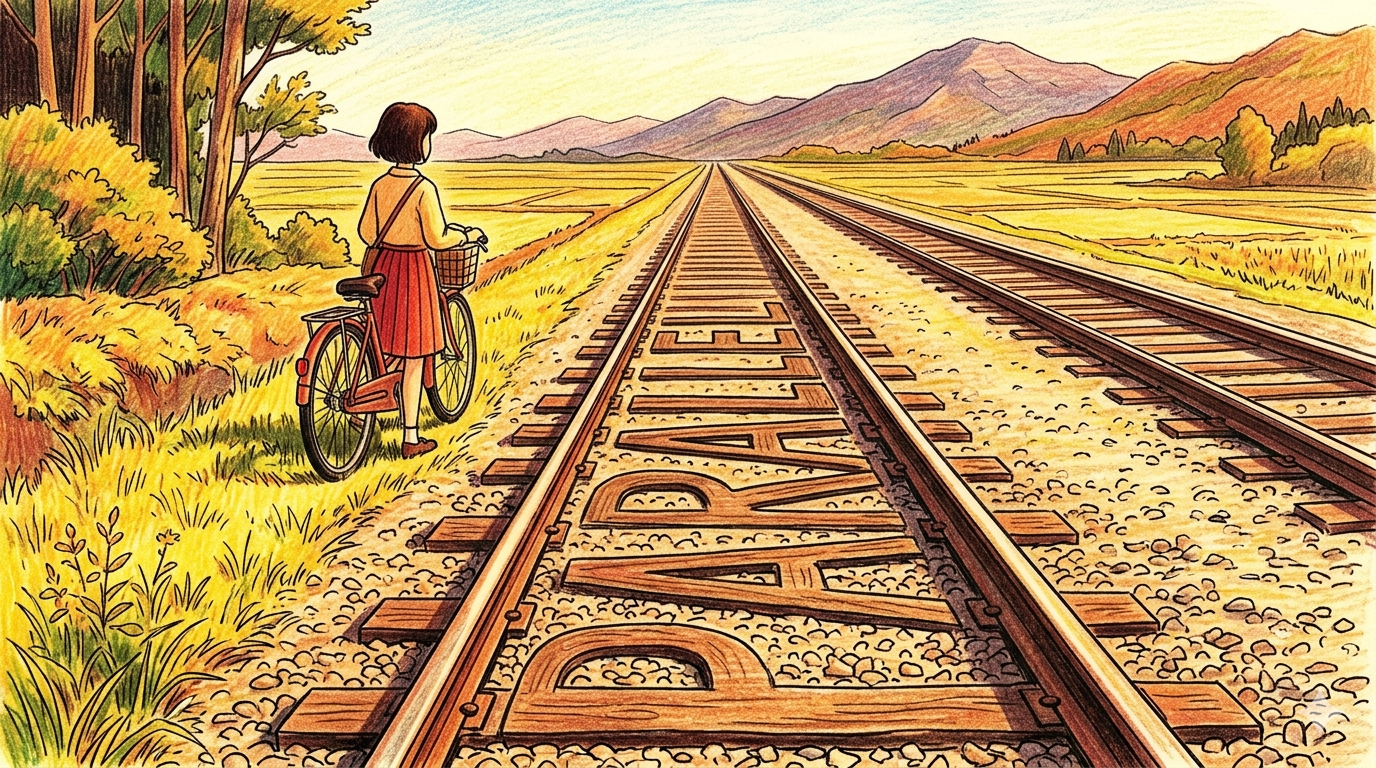
parallel [ˈpærəlel]
(형용사/명사/동사/부사) 평행한, 유사한 / 평행선, 유사점 / 평행을 이루다, 비교하다 / 평행하게
'parallel'을 단순히 "평행한"으로만 외우면 수능에서 반드시 틀립니다. parallel은 "두 개 이상의 것이 같은 거리를 유지하며 나란히 이어지거나, 서로 비슷한 방식으로 진행되는 것" 이라는 핵심 이미지에서 출발해, 수학적 평행·유사한 상황 비교·동시 진행·문법 구조까지 폭넓게 쓰이는 핵심 다의어입니다. 특히 parallel(나란히 같은 방향으로 이어지는) vs. similar(비슷한) vs. equivalent(동등한) 의 뉘앙스 차이, draw a parallel(유사점을 찾다), in parallel(동시에, 병행하여) 패턴은 수능 독해 과학·사회·논설·언어 지문에서 핵심적으로 등장합니다.
'parallel'은 그리스어 parallelos(나란히)에서 유래했으며, para-(옆에, 곁에) + allelos(서로)의 결합으로 이루어져 있습니다. 어원의 핵심 이미지는 "두 개가 서로 옆에서 같은 방향으로 나란히 이어지는 것" 으로, 단순한 위치의 표현이 아닌 끝까지 같은 거리를 유지하며 만나지 않고 함께 나아가는 지속적 동행의 이미지가 이 단어의 본질입니다.
1. parallel lines [ˈpærəlel laɪnz]
(명사구/수능) "평행선"을 뜻합니다. 아무리 길게 이어도 서로 만나지 않는 같은 방향의 두 직선을 가리킵니다. 수능 독해 수학·과학·사회·논설 지문의 핵심 표현입니다.
The teacher drew two parallel lines on the board to show that they would never meet no matter how far they were extended. (선생님은 아무리 멀리 연장해도 절대 만나지 않는다는 것을 보여주기 위해 칠판에 두 평행선을 그렸다.)
2. run parallel [rʌn ˈpærəlel]
(동사구/수능) "평행하게 이어지다, 나란히 달리다"를 뜻합니다. 두 개의 것이 같은 방향으로 나란히 이어지는 것을 강조합니다. 수능 독해 지리·사회·과학·서사 지문의 핵심 표현입니다.
The river runs parallel to the main road for about twenty kilometres before turning sharply to the east. (강은 동쪽으로 급격히 방향을 틀기 전에 약 20킬로미터 동안 주요 도로와 평행하게 이어진다.)
3. parallel to [ˈpærəlel tuː]
(전치사구/수능) "~에 평행한, ~와 나란한"을 뜻합니다. 어떤 것이 다른 것과 같은 방향으로 같은 거리를 유지하고 있음을 강조합니다. 수능 독해 수학·지리·사회 지문에서 자주 등장합니다.
The new cycle path was built parallel to the busy main road so that cyclists could travel safely. (새 자전거 도로는 자전거 이용자들이 안전하게 이동할 수 있도록 바쁜 주요 도로와 평행하게 건설됐다.)
4. draw a parallel [drɔː ə ˈpærəlel]
(동사구/수능) "유사점을 찾다, 비교하다"를 뜻합니다. 두 가지 서로 다른 상황이나 사건 사이에서 비슷한 점을 발견하고 연결하는 것을 강조합니다. 수능 독해 논설·역사·사회·심리 지문의 핵심 표현입니다.
The historian drew a parallel between the economic crisis of the 1930s and the financial problems that many countries faced a century later. (역사가는 1930년대의 경제 위기와 한 세기 후에 많은 나라들이 직면한 재정 문제 사이에 유사점을 찾았다.)
5. in parallel [ɪn ˈpærəlel]
(부사구/수능) "동시에, 병행하여"를 뜻합니다. 두 가지 이상의 일이 같은 시간에 함께 진행되는 것을 강조합니다. 수능 독해 과학·기술·경제·사회 지문의 핵심 표현입니다.
The two research teams worked in parallel, each investigating a different aspect of the same problem without sharing their findings until the end. (두 연구팀은 병행하여 작업하며, 각자 끝까지 결과를 공유하지 않고 같은 문제의 다른 측면을 조사했다.)
6. parallel processing [ˈpærəlel ˈprɒsesɪŋ]
(명사구/수능) "병렬 처리"를 뜻합니다. 컴퓨터가 여러 작업을 동시에 처리하는 방식이나, 사람이 여러 일을 동시에 진행하는 것을 가리킵니다. 수능 독해 기술·과학·심리 지문에서 자주 등장합니다.
Modern computers use parallel processing to handle many tasks at the same time, which makes them far faster than older machines. (현대 컴퓨터는 병렬 처리를 사용하여 동시에 많은 작업을 처리하는데, 이것이 구형 기계보다 훨씬 빠르게 만들어준다.)
7. parallel universe [ˈpærəlel ˈjuːnɪvɜːrs]
(명사구/수능) "평행 우주"를 뜻합니다. 우리가 사는 세계와 동시에 존재하지만 다른 방식으로 전개되는 또 다른 우주를 가리킵니다. 수능 독해 과학·철학·서사 지문에서 자주 등장합니다.
Some scientists believe that a parallel universe might exist where the same events happened but led to completely different outcomes. (일부 과학자들은 같은 사건이 일어났지만 완전히 다른 결과로 이어진 평행 우주가 존재할 수도 있다고 믿는다.)
8. parallel structure [ˈpærəlel ˈstrʌktʃər]
(명사구/수능) "병렬 구조"를 뜻합니다. 글이나 문장에서 비슷한 형식의 요소들을 같은 문법적 형태로 나란히 나열하는 것을 가리킵니다. 수능 독해 언어·교육·논설 지문에서 핵심 표현입니다.
Good writers use parallel structure to make their sentences flow smoothly, such as writing "she likes reading, writing, and drawing" rather than mixing different forms. (좋은 작가들은 문장이 부드럽게 흐르도록 병렬 구조를 사용하는데, 예를 들어 서로 다른 형태를 섞는 대신 "그녀는 읽기, 쓰기, 그리기를 좋아한다"라고 쓴다.)
9. out of parallel [aʊt əv ˈpærəlel]
(전치사구/수능) "평행이 맞지 않는, 나란하지 않은"을 뜻합니다. 두 개의 것이 같은 방향이나 같은 거리를 유지하지 못하고 어긋난 상태를 나타냅니다. 수능 독해 과학·기술·사회 지문에서 자주 등장합니다.
The two shelves were slightly out of parallel, which made the whole bookcase look uneven and untidy. (두 선반이 약간 평행이 맞지 않아서 책장 전체가 고르지 않고 지저분해 보였다.)
10. parallel development [ˈpærəlel dɪˈveləpmənt]
(명사구/수능) "병행 발전, 동시 발전"을 뜻합니다. 서로 다른 곳이나 분야에서 비슷한 방식으로 동시에 이루어지는 발전이나 변화를 가리킵니다. 수능 독해 역사·과학·사회·문화 지문의 핵심 표현입니다.
The parallel development of writing systems in ancient Egypt and Mesopotamia suggests that complex societies tend to create similar tools when they face similar challenges. (고대 이집트와 메소포타미아에서의 병행 발전은 복잡한 사회가 비슷한 도전에 직면했을 때 비슷한 도구를 만드는 경향이 있음을 시사한다.)

POINT 1. parallel vs. similar vs. equivalent — 수능 최빈출 뉘앙스 구별
세 단어 모두 "비슷함"과 관련되지만 뉘앙스가 다릅니다.
parallel → 두 개가 같은 방향으로 나란히 이어지며 서로 대응하는 것 (구조적 대응 강조), similar → 전반적으로 닮은 점이 있는 것 (일반적 유사성 강조), equivalent → 가치나 기능이 동등한 것 (동등한 대체 가능성 강조). 수능 독해에서 문맥에 따라 세 단어의 뉘앙스를 정확히 구별하는 것이 핵심입니다.
예)
The two stories have parallel structures — each chapter mirrors the one before it. (두 이야기는 평행한 구조를 가지고 있다 — 각 챕터가 이전 챕터를 반영한다.) — 구조적 대응
The two paintings look similar but were made by different artists. (두 그림은 비슷해 보이지만 다른 예술가들에 의해 만들어졌다.) — 일반적 유사성
One hour of study is not equivalent to one hour of sleep. (공부 한 시간이 수면 한 시간과 동등하지 않다.) — 동등한 대체
POINT 2. draw a parallel / in parallel / parallel structure — 수능 논설·언어 지문 핵심
이 세 표현은 수능 독해에서 가장 자주 출제되는 parallel 관련 표현입니다.
draw a parallel → 서로 다른 두 상황의 유사점을 발견하여 비교하는 것, in parallel → 두 가지 이상이 동시에 함께 진행되는 것, parallel structure → 문장에서 같은 형태의 요소를 나란히 배치하는 문법적 기법. 세 표현이 등장하면 글쓴이가 비교·동시성·문법 구조를 논하고 있다는 신호입니다.
POINT 3. para + allelos 어근 — 수능 어휘 확장 필수
parallel의 어근 para-(옆에)를 공유하는 단어들이 수능에서 자주 출제됩니다.
paragraph [ˈpærəɡræf] → 단락 (옆에 쓰다), parasite [ˈpærəsaɪt] → 기생충 (옆에서 먹다), paradox [ˈpærədɒks] → 역설 (생각 옆에서 어긋나는), parameter [pəˈræmɪtər] → 매개변수 (옆에서 측정하는). 이 단어들은 모두 "옆에, 곁에, 나란히"라는 공통 이미지를 가지고 있습니다.
(형용사) ① 평행한 (공간·물리적 위치)
parallel의 가장 기본적인 의미로, 두 개의 선이나 면이 같은 방향으로 나란히 이어지며 서로 만나지 않는 것을 나타냅니다.
- The two roads are parallel and run side by side all the way to the edge of the city without ever crossing. (두 도로는 평행하여 도시 끝까지 교차하지 않고 나란히 이어진다.)
- The railway tracks must stay parallel to each other or the trains would not be able to run safely along them. (철도 레일은 평행을 유지해야 하며, 그렇지 않으면 열차가 안전하게 운행할 수 없다.)
- She noticed that the stripes on the fabric were not quite parallel — one edge was slightly wider than the other. (그녀는 천의 줄무늬가 완전히 평행하지 않다는 것을 알아챘다 — 한쪽 가장자리가 다른 쪽보다 약간 넓었다.)
(형용사) ② 유사한, 비슷한 (상황·경험)
두 가지 상황이나 사건이 서로 비슷한 방식으로 진행되는 것을 나타냅니다. 수능 독해 역사·사회·논설 지문에서 자주 등장하는 확장 의미입니다.
- The two children had parallel childhoods — both grew up in small towns, lost a parent early, and found comfort in reading books. (두 아이는 유사한 어린 시절을 보냈다 — 둘 다 작은 마을에서 자랐고, 일찍 부모를 잃었으며, 책 읽기에서 위안을 찾았다.)
- The scientist noticed that the results from the two different experiments were almost parallel, suggesting that the same process might be happening in both cases. (과학자는 두 가지 다른 실험의 결과가 거의 유사하다는 것을 알아채고, 두 경우 모두에서 같은 과정이 일어나고 있을 수 있음을 시사했다.)
- There are parallel situations in many different countries where rapid growth has led to the same set of social problems. (급격한 성장이 동일한 사회 문제로 이어진 많은 다른 나라들에서 유사한 상황들이 있다.)
(명사) ③ 유사점, 비교 대상
두 가지 사이에서 비슷한 점을 강조하는 명사로 쓰입니다.
- There is a clear parallel between how children learn language and how adults pick up new skills through repeated practice. (아이들이 언어를 배우는 방식과 어른들이 반복적인 연습을 통해 새로운 기술을 익히는 방식 사이에는 명확한 유사점이 있다.)
- The teacher pointed out the parallel between the two historical events and asked students to think about what that similarity might mean. (선생님은 두 역사적 사건 사이의 유사점을 지적하고 학생들에게 그 유사성이 무엇을 의미할 수 있는지 생각해보도록 요청했다.)
- The writer found a remarkable parallel in the way two completely different cultures had developed the same kind of story to explain the same natural event. (작가는 두 완전히 다른 문화가 같은 자연 현상을 설명하기 위해 같은 종류의 이야기를 발전시킨 방식에서 놀라운 유사점을 발견했다.)

뉘앙스·의미 연결 흐름 표
핵심 이미지 연결 흐름 뉘앙스 요약
| 물리적 평행 | 평행선 → ~에 평행한 → 평행하게 이어지다 | parallel lines·parallel to·run parallel |
| 비교와 유사성 | 유사점을 찾다 → 병행 발전 → 평행 우주 | draw a parallel·parallel development·parallel universe |
| 동시성과 구조 | 동시에 → 병렬 처리 → 병렬 구조 | in parallel·parallel processing·parallel structure |
어원 흐름 표
단어 구성 요소 의미 연결 흐름 뉘앙스 요약
| 그리스어 para-(옆에) + allelos(서로) → parallelos(나란히) | 나란히 있다 → 평행하다 → 유사하다 | 같은 방향으로 나란히 이어지며 만나지 않는 이미지 |
| parallel (형용사/명사/동사/부사) | 평행한 → 유사한 → 동시의 → 유사점 | 공간·비교·시간·구조 네 방향으로 확장된 다의어 완성 |
품사별 의미 표
품사 의미 예문
| 형용사 | 평행한 (공간적) | parallel lines (평행한 선들) |
| 형용사 | 유사한, 비슷한 | a parallel situation (유사한 상황) |
| 명사 | 유사점, 비교 대상 | find a parallel (유사점을 찾다) |
| 명사 | 위도선 | the 38th parallel (38도 위도선) |
| 동사 | 평행을 이루다, 비슷하다 | His story parallels mine. (그의 이야기는 내 것과 유사하다.) |
| 부사 | 평행하게 | run parallel (평행하게 달리다) |
활용 예문 리스트
- She drew a parallel between the two events and explained how understanding one could help us predict what might happen in the other. (그녀는 두 사건 사이에 유사점을 찾아 하나를 이해하면 다른 것에서 무슨 일이 일어날지 예측하는 데 도움이 될 수 있다고 설명했다.)
- The two projects were running in parallel, which saved time because the results from one could immediately be used to improve the other. (두 프로젝트가 병행하여 진행됐는데, 한쪽의 결과를 즉시 다른 것을 개선하는 데 사용할 수 있어서 시간이 절약됐다.)
- The new road was built parallel to the old one, with parallel lines clearly marked on the surface so drivers would stay in their lanes at all times. (새 도로는 기존 도로와 평행하게 건설됐으며, 운전자들이 항상 차선을 유지할 수 있도록 표면에 평행선이 명확히 표시됐다.)
- The essay used parallel structure throughout, which made it easier to read because every argument followed the same logical pattern from beginning to end. (에세이는 전반에 걸쳐 병렬 구조를 사용했는데, 모든 주장이 처음부터 끝까지 같은 논리적 패턴을 따르기 때문에 읽기가 더 쉬워졌다.)
- Scientists studying parallel development in different civilisations found that the parallel universe theory offered an interesting way of thinking about why such similar discoveries happened independently at the same time. (다른 문명의 병행 발전을 연구하는 과학자들은 평행 우주 이론이 왜 그런 유사한 발견이 동시에 독립적으로 일어났는지에 대한 흥미로운 사고 방식을 제공한다는 것을 발견했다.)
전체 뉘앙스 설명
parallel은 '두 개 이상의 것이 같은 거리를 유지하며 나란히 이어지거나 서로 비슷한 방식으로 진행되는 것을 표현하는 언어'입니다.
similar와의 차이: similar는 외모나 특성이 전반적으로 닮은 것을 강조하고, parallel은 두 가지가 구조적으로 서로 대응하며 나란히 전개되는 것을 강조합니다.
equivalent와의 차이: equivalent는 가치나 기능이 동등하여 서로 대체 가능한 것을 강조하고, parallel은 같은 방향으로 진행되되 만나지 않는 독립적 대응을 강조합니다.
corresponding과의 차이: corresponding은 서로 맞아떨어지거나 대응하는 것을 강조하고, parallel은 나란히 이어지는 지속적이고 구조적인 유사성을 강조합니다.
마지막 핵심 정리
parallel은 단순히 "평행한"이 아닙니다 — 그리스어 parallelos(나란히)에서 출발해, 물리적 평행(parallel lines·parallel to·run parallel)·유사점 비교(draw a parallel·parallel development)·동시 진행(in parallel·parallel processing)·구조적 배치(parallel structure)·상상적 개념(parallel universe)·어긋남(out of parallel)까지 확장되는 단어이며, parallel vs. similar vs. equivalent 뉘앙스 구별·draw a parallel / in parallel / parallel structure 논설·언어 지문 패턴·para- 어근 패밀리가 수능 핵심 출제 포인트입니다.
파생어 표
파생어 발음기호 품사 의미
| parallels | [ˈpærəlelz] | 명사 (복수) | 유사점들, 평행선들 |
| paralleling | [ˈpærəlelɪŋ] | 동사 (현재분사) | 평행을 이루는, 비슷한 |
| unparalleled | [ʌnˈpærəleld] | 형용사 | 비할 데 없는, 전례 없는 |
| parallelism | [ˈpærəlelɪzəm] | 명사 | 평행성, 유사성, 병렬법 |
| parallelogram | [ˌpærəˈleləɡræm] | 명사 | 평행사변형 |
| para- | [ˈpærə] | 접두사 | 옆에, 곁에, 나란히 |
유의어 비교표
단어 공통점 뉘앙스 차이 예문
| parallel | 유사성 관련 | 구조적으로 나란히 대응하며 진행 | a parallel situation |
| similar | 유사성 관련 | 전반적으로 닮은 점이 있음 | a similar problem |
| equivalent | 유사성 관련 | 가치·기능이 동등하여 대체 가능 | an equivalent amount |
| corresponding | 유사성 관련 | 서로 맞아떨어지거나 대응하는 것 | a corresponding change |
| analogous | 유사성 관련 | 기능이나 구조가 비슷한 것 (격식체) | an analogous case |
유의어 예문 리스트
- (similar) The two students had similar problems with their essays — both wrote too much in the introduction and not enough in the conclusion. (두 학생은 에세이에서 비슷한 문제를 가지고 있었다 — 둘 다 서론에 너무 많이 쓰고 결론에는 충분히 쓰지 않았다.)
- (equivalent) Ten minutes of walking at a fast pace is roughly equivalent to five minutes of slow jogging in terms of health benefits. (빠른 속도로 10분 걷는 것은 건강상 이점 측면에서 천천히 5분 조깅하는 것과 대략 동등하다.)
- (corresponding) Every action has a corresponding reaction, which is one of the most fundamental principles in physics. (모든 행동에는 대응하는 반응이 있는데, 이것이 물리학에서 가장 기본적인 원리 중 하나이다.)
- (analogous) The way a computer stores information is analogous to the way a library organises books — both use a system to make finding things easier. (컴퓨터가 정보를 저장하는 방식은 도서관이 책을 정리하는 방식과 유사한데 — 둘 다 물건 찾기를 쉽게 만드는 시스템을 사용한다.)
결론 정리
parallel은 단순히 "평행한"이 아니라, 두 개가 서로 옆에서 같은 방향으로 나란히 이어지는 이미지에서 출발해 물리적 평행·유사점 비교·동시 진행·구조적 배치·상상적 개념·어긋남까지 확장되는 단어다 — parallel이 있는 곳엔 언제나 '단순한 비슷함이 아닌, 끝까지 같은 거리를 유지하며 만나지 않고 함께 나아가는 구조적이고 지속적인 동행'의 선언이 있다.
💡 parallel은 "두 개 이상이 같은 방향으로 나란히 이어지거나 서로 비슷한 방식으로 진행되는 것"의 언어 — parallel lines·draw a parallel·in parallel·parallel structure·run parallel이 수능 최빈출.
🌟 초등학생 버전 parallel은 철도 레일처럼 두 선이 나란히 달리다가 절대 만나지 않는 것처럼, 두 가지가 같은 방향으로 나란히 이어지거나 비슷한 방식으로 함께 나아가는 것을 표현하는 단어예요! parallel lines는 "평행선"이고, in parallel은 "동시에 함께 진행되는 것"이에요! 🛤️✨

parallel lines [ˈpærəlel laɪnz]
(명사구) 평행선
아무리 길게 연장해도 절대 서로 만나지 않는, 항상 같은 거리를 유지하는 두 개 이상의 직선을 가리킵니다. 수학적 개념이지만 비유적으로 서로 접점 없이 나란히 존재하는 것을 나타내기도 합니다. 수능 독해 수학·과학·사회·논설 지문에서 핵심 표현으로 자주 등장합니다.
- The students were asked to draw two parallel lines exactly five centimetres apart without using a ruler, which turned out to be much harder than it sounded. (학생들은 자 없이 정확히 5센티미터 간격의 두 평행선을 그리도록 요청받았는데, 이것이 들리는 것보다 훨씬 더 어렵다는 것을 알게 됐다.)
- The two streets ran like parallel lines through the old part of the city, never crossing and never quite reaching each other despite being so close. (두 거리는 도시의 오래된 부분을 통해 평행선처럼 이어졌고, 그렇게 가깝지만 절대 교차하지 않고 서로에게 도달하지 않았다.)
- The writer described the two characters' lives as parallel lines — so similar in many ways, yet destined to move forward without ever truly meeting. (작가는 두 등장인물의 삶을 평행선으로 묘사했다 — 여러 면에서 너무 비슷하지만, 진정으로 만나지 않고 앞으로 나아가도록 운명 지어진.)

run parallel [rʌn ˈpærəlel]
(동사구) 평행하게 이어지다, 나란히 달리다
두 개의 것이 같은 방향으로 같은 거리를 유지하며 나란히 이어지는 것을 강조합니다. 물리적인 것뿐 아니라 상황이나 이야기가 유사한 방식으로 동시에 전개되는 것을 비유적으로 나타내기도 합니다. 수능 독해 지리·사회·과학·서사 지문에서 핵심 표현으로 자주 등장합니다.
- The hiking trail runs parallel to the old stone wall for about three kilometres before heading up into the hills. (등산로는 언덕으로 향하기 전에 약 3킬로미터 동안 오래된 돌담과 평행하게 이어진다.)
- The economic growth of the two countries seemed to run parallel for almost a decade before one suddenly accelerated and left the other behind. (두 나라의 경제 성장은 한쪽이 갑자기 가속하여 다른 쪽을 뒤에 남겨두기 전에 거의 10년 동안 평행하게 이어지는 것처럼 보였다.)
- The journalist noted that the decline in trust in the media seemed to run parallel to the rise of social networks, though she was careful not to say one had caused the other. (기자는 미디어에 대한 신뢰 하락이 소셜 네트워크의 부상과 평행하게 이어지는 것처럼 보인다고 언급했지만, 하나가 다른 것을 야기했다고는 조심스럽게 말하지 않았다.)

parallel to [ˈpærəlel tuː]
(전치사구) ~에 평행한, ~와 나란한
어떤 것이 다른 특정한 것과 같은 방향으로 나란히 같은 거리를 유지하고 있음을 나타냅니다. 공간적 위치뿐 아니라 비유적으로 어떤 상황이 다른 것과 유사하게 진행됨을 나타내기도 합니다. 수능 독해 수학·지리·사회·논설 지문에서 자주 등장합니다.
- The new walking path was built exactly parallel to the old road, separated by a row of tall trees that gave walkers shade and quiet. (새 산책로는 키 큰 나무 한 줄로 구분되어 보행자에게 그늘과 고요함을 주며 기존 도로와 정확히 평행하게 건설됐다.)
- Her career path ran almost parallel to her sister's — both studied the same subject, worked in similar companies, and reached senior positions at about the same age. (그녀의 경력 경로는 언니의 경력 경로와 거의 평행하게 달렸다 — 둘 다 같은 과목을 공부하고, 비슷한 회사에서 일했으며, 거의 같은 나이에 고위직에 올랐다.)
- The philosopher argued that our sense of what is beautiful runs parallel to our sense of what is good — not the same thing, but never far apart. (철학자는 우리의 아름다움에 대한 감각이 좋음에 대한 감각과 평행하게 이어진다고 주장했다 — 같은 것이 아니지만 결코 멀리 떨어져 있지 않다고.)
숙어 그룹 묶음 1 — 물리적 평행 parallel 핵심 패턴
표현 의미 핵심 뉘앙스 주요 맥락
| parallel lines | 평행선 | 만나지 않고 같은 거리를 유지하는 두 직선 | 수학·과학·사회·논설 |
| run parallel | 평행하게 이어지다 | 나란히 같은 방향으로 함께 이어지는 것 | 지리·사회·과학·서사 |
| parallel to | ~에 평행한 | 특정 대상과 나란히 같은 거리를 유지하는 것 | 수학·지리·사회·논설 |
이 세 표현은 모두 parallel의 "나란히 같은 방향으로 이어지는" 이미지를 공유하되, 각각 만나지 않는 두 직선이라는 수학적 개념(parallel lines)·두 개가 함께 나란히 이어지는 동적 움직임(run parallel)·특정 대상과의 위치 관계(parallel to)의 관점에서 접근합니다.
- The canal was built to run parallel to the river, and engineers drew careful parallel lines on their maps to show exactly how the two waterways would sit side by side for the full length of the route. (운하는 강과 평행하게 이어지도록 건설됐고, 기술자들은 두 수로가 경로 전체 길이에 걸쳐 어떻게 나란히 위치할지를 보여주기 위해 지도에 조심스럽게 평행선을 그렸다.)
- Looking at the map, she could see that both paths were parallel to each other and seemed to run parallel for most of the journey, like two parallel lines that nature had drawn across the landscape for its own reasons. (지도를 보면서 그녀는 두 경로 모두 서로 평행하여 여정의 대부분 동안 평행하게 이어지는 것처럼 보였으며, 자연이 어떤 이유로 풍경을 가로질러 그린 두 평행선과 같았다.)
- The architect explained that the two wings of the building were designed to run parallel to each other like parallel lines, and that keeping them exactly parallel to the street would ensure that the light fell evenly into every room at the same time of day. (건축가는 건물의 두 날개가 평행선처럼 서로 평행하게 이어지도록 설계됐으며, 거리와 정확히 평행을 유지하는 것이 하루 중 같은 시간에 모든 방에 빛이 고르게 떨어지도록 보장할 것이라고 설명했다.)

draw a parallel [drɔː ə ˈpærəlel]
(동사구) 유사점을 찾다, 비교하다
서로 다르거나 별개로 보이는 두 가지 상황·사건·개념 사이에서 비슷한 점을 발견하고 그 연결고리를 명확하게 보여주는 것을 강조합니다. 분석적이고 비판적 사고의 뉘앙스가 핵심입니다. 수능 독해 논설·역사·사회·심리 지문에서 핵심 표현으로 자주 등장합니다.
- The professor drew a parallel between the way children learn to walk and the way adults learn to use new technology — both require many small failures before success. (교수는 아이들이 걷는 법을 배우는 방식과 어른들이 새 기술을 사용하는 법을 배우는 방식 사이에 유사점을 찾았다 — 둘 다 성공 전에 많은 작은 실패가 필요하다.)
- It is easy to draw a parallel between the two situations, but we should be careful not to assume that because they look similar on the surface they must have the same cause. (두 상황 사이에 유사점을 찾기는 쉽지만, 표면적으로 비슷해 보인다고 해서 같은 원인을 가진 것으로 가정하지 않도록 주의해야 한다.)
- She drew a striking parallel between the political situation in two countries a century apart, arguing that history was not repeating itself exactly but was certainly rhyming. (그녀는 한 세기 간격의 두 나라의 정치 상황 사이에 놀라운 유사점을 찾아, 역사가 정확히 반복되는 것이 아니라 분명히 리듬을 타고 있다고 주장했다.)
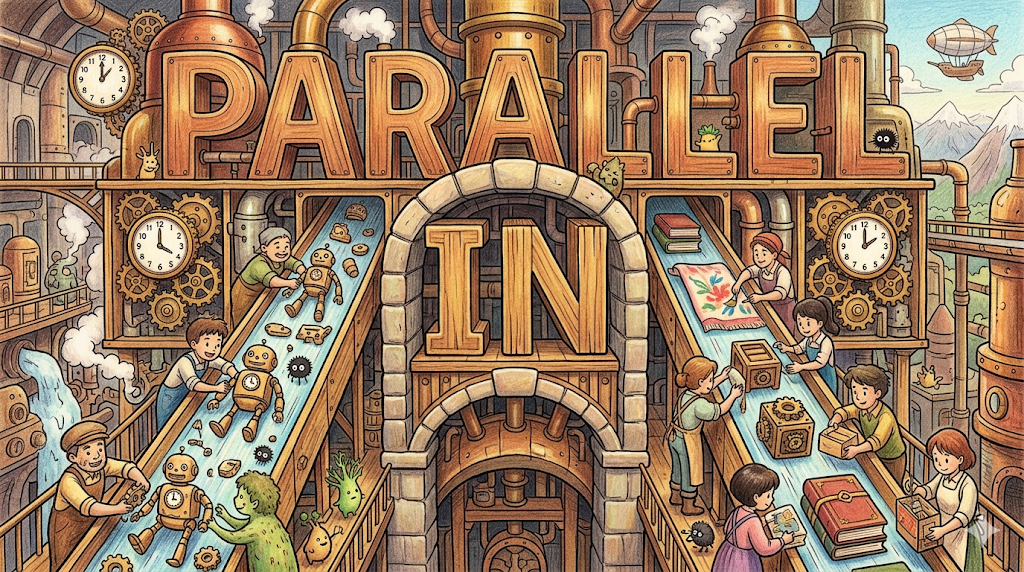
in parallel [ɪn ˈpærəlel]
(부사구) 동시에, 병행하여
두 가지 이상의 일이 순서대로가 아닌 같은 시간에 함께 진행되는 것을 강조합니다. 효율성이나 동시성의 뉘앙스가 핵심입니다. 수능 독해 과학·기술·경제·사회 지문에서 핵심 표현으로 자주 등장합니다.
- The two departments worked in parallel to prepare for the launch, which meant the product was ready in half the time it would have taken if they had worked one after the other. (두 부서는 출시를 준비하기 위해 병행하여 작업했는데, 이는 순서대로 작업했을 경우 걸렸을 시간의 절반에 제품이 준비됐음을 의미했다.)
- Students were asked to read two novels in parallel so that they could compare themes and writing styles as they went through both books at the same pace. (학생들은 두 소설을 같은 속도로 읽으면서 주제와 문체를 비교할 수 있도록 병행하여 읽도록 요청받았다.)
- The body carries out hundreds of different processes in parallel at every moment, from digesting food to regulating temperature to filtering the blood. (신체는 음식 소화에서 온도 조절, 혈액 여과까지 매 순간 수백 가지 다른 과정을 병행하여 수행한다.)

parallel processing [ˈpærəlel ˈprɒsesɪŋ]
(명사구) 병렬 처리
여러 작업을 순서대로가 아닌 동시에 처리하는 방식을 가리킵니다. 컴퓨터 과학의 핵심 개념이지만, 인간의 두뇌나 조직의 업무 방식을 설명할 때도 쓰입니다. 수능 독해 기술·과학·심리·사회 지문에서 자주 등장합니다.
- The new computer chip was designed to handle tasks through parallel processing, which meant it could complete in one second what older chips needed several minutes to finish. (새 컴퓨터 칩은 병렬 처리를 통해 작업을 처리하도록 설계됐는데, 이는 구형 칩이 몇 분이 필요했던 것을 1초 안에 완료할 수 있다는 것을 의미했다.)
- The human brain uses a form of parallel processing that allows people to listen, walk, and hold a conversation all at the same time without any of these tasks suffering. (인간의 뇌는 사람들이 이러한 작업 중 어느 것도 손상 없이 동시에 듣고, 걷고, 대화를 나눌 수 있게 하는 일종의 병렬 처리를 사용한다.)
- Researchers studying parallel processing found that when teams shared information openly while working simultaneously on different parts of a problem, their combined results were far better than those of teams working one step at a time. (병렬 처리를 연구하는 연구자들은 팀이 문제의 다른 부분에 동시에 작업하면서 정보를 공개적으로 공유했을 때 그들의 결합된 결과가 한 번에 한 단계씩 작업하는 팀보다 훨씬 뛰어났다는 것을 발견했다.)
숙어 그룹 묶음 2 — 비교·동시성 parallel 패턴
표현 의미 핵심 뉘앙스 주요 맥락
| draw a parallel | 유사점을 찾다 | 다른 두 것 사이의 비슷한 점을 발견하여 연결 | 논설·역사·사회·심리 |
| in parallel | 동시에, 병행하여 | 두 가지 이상이 같은 시간에 함께 진행됨 | 과학·기술·경제·사회 |
| parallel processing | 병렬 처리 | 여러 작업을 동시에 처리하는 방식 | 기술·과학·심리·사회 |
이 세 표현은 모두 parallel의 "나란히 함께 진행되는" 이미지를 공유하되, 각각 두 가지 사이의 유사점을 발견하여 지적하는 것(draw a parallel)·두 가지 이상이 동시에 함께 진행되는 것(in parallel)·여러 작업을 동시에 처리하는 기술적 방식(parallel processing)의 관점에서 접근합니다.
- The scientist explained that the brain's ability to draw a parallel between new and familiar situations is itself a form of parallel processing that happens in parallel with conscious thought — so fast that we are often not even aware that the comparison has been made. (과학자는 뇌의 새로운 상황과 친숙한 상황 사이에 유사점을 찾는 능력은 그 자체로 의식적 사고와 병행하여 일어나는 병렬 처리의 한 형태라고 설명했다 — 너무 빨라서 우리는 종종 비교가 이루어졌다는 것조차 인식하지 못한다.)
- While the two teams worked in parallel using parallel processing techniques to analyse the data, the lead researcher used the waiting time to draw a parallel between the current project and one completed years earlier that had produced similar patterns. (두 팀이 데이터를 분석하기 위해 병렬 처리 기술을 사용하여 병행하여 작업하는 동안, 수석 연구자는 대기 시간을 사용하여 현재 프로젝트와 수년 전에 완료된 유사한 패턴을 생성한 프로젝트 사이에 유사점을 찾았다.)
- She taught her students that just as computers use parallel processing to become more efficient, people can work more effectively when tasks are handled in parallel — and that the real skill lies in knowing when to draw a parallel between different situations to apply old solutions to new problems. (그녀는 학생들에게 컴퓨터가 더 효율적이 되기 위해 병렬 처리를 사용하는 것처럼, 사람들도 작업이 병행하여 처리될 때 더 효과적으로 일할 수 있다고 가르쳤다 — 그리고 진정한 기술은 오래된 해결책을 새로운 문제에 적용하기 위해 언제 다른 상황들 사이에 유사점을 찾아야 하는지 아는 데 있다고 말했다.)

parallel universe [ˈpærəlel ˈjuːnɪvɜːrs]
(명사구) 평행 우주
우리가 사는 우주와 동시에 존재하지만 다른 방식으로 전개되는 또 다른 우주를 가리킵니다. 물리학의 이론적 개념이기도 하고 문학·철학에서 "만약 다른 선택을 했다면"을 탐구하는 비유적 개념으로도 쓰입니다. 수능 독해 과학·철학·서사·사회 지문에서 자주 등장합니다.
- The idea of a parallel universe where every decision creates a different version of reality has inspired countless works of science fiction and philosophy. (모든 결정이 다른 버전의 현실을 만드는 평행 우주에 대한 아이디어는 수없이 많은 공상 과학 소설과 철학 작품에 영감을 줬다.)
- Sometimes she felt like she was living in a parallel universe from the rest of her family — they seemed to experience the same events completely differently from how she saw them. (때때로 그녀는 가족의 나머지와 평행 우주에 살고 있는 것 같다고 느꼈다 — 그들은 같은 사건을 그녀가 보는 것과 완전히 다르게 경험하는 것처럼 보였다.)
- The physicist explained that the concept of a parallel universe was not simply a story-telling device but a serious mathematical possibility that some theories of quantum mechanics actually predicted. (물리학자는 평행 우주의 개념이 단순한 이야기 장치가 아니라 양자역학의 일부 이론이 실제로 예측하는 진지한 수학적 가능성이라고 설명했다.)

parallel structure [ˈpærəlel ˈstrʌktʃər]
(명사구) 병렬 구조
문장이나 글에서 비슷한 기능을 하는 요소들을 같은 문법적 형태로 나란히 배치하는 것을 가리킵니다. 글을 읽기 쉽고 리듬감 있게 만드는 핵심 문법 기법이라는 뉘앙스가 핵심입니다. 수능 독해 언어·교육·논설 지문에서 핵심 표현으로 자주 등장합니다.
- The speech used parallel structure throughout to create a sense of rhythm and power, which made the key phrases stick in the audience's memory long after it was over. (연설은 리듬감과 힘의 느낌을 만들기 위해 전반에 걸쳐 병렬 구조를 사용했는데, 이것이 연설이 끝난 후에도 오랫동안 핵심 문구가 청중의 기억에 남게 했다.)
- Using parallel structure correctly means making sure that items in a list or comparison all follow the same grammatical pattern — for example, using all nouns or all verbs, not mixing them. (병렬 구조를 올바르게 사용한다는 것은 목록이나 비교의 항목들이 모두 같은 문법적 패턴을 따르도록 하는 것을 의미한다 — 예를 들어, 명사와 동사를 섞지 않고 모두 명사를 사용하거나 모두 동사를 사용하는 것.)
- The essay received a high mark partly because the parallel structure used in each body paragraph gave the argument a clear and consistent logic that was easy to follow from one point to the next. (에세이는 각 본론 단락에 사용된 병렬 구조가 주장에 한 요점에서 다음 요점으로 따라가기 쉬운 명확하고 일관된 논리를 부여했기 때문에 부분적으로 높은 점수를 받았다.)

out of parallel [aʊt əv ˈpærəlel]
(전치사구) 평행이 맞지 않는, 나란하지 않은
두 개의 것이 같은 방향이나 같은 거리를 유지하지 못하고 어긋난 상태를 나타냅니다. 비유적으로 두 가지가 더 이상 같은 방식으로 진행되지 않거나 어긋남을 나타내기도 합니다. 수능 독해 과학·기술·사회·서사 지문에서 자주 등장합니다.
- The machine stopped working because one of the rollers had gone slightly out of parallel with the rest, causing the material to feed through unevenly. (롤러 중 하나가 나머지와 약간 평행이 맞지 않아 재료가 고르지 않게 공급되면서 기계가 작동을 멈췄다.)
- After years of working well together, the two partners' ideas had slowly drifted out of parallel until they found themselves disagreeing on almost every major decision. (수년간 잘 함께 일한 후 두 파트너의 아이디어는 거의 모든 주요 결정에서 의견이 맞지 않는 것을 발견할 때까지 서서히 평행에서 벗어났다.)
- The investigation found that the two systems had been running out of parallel for months without anyone noticing, which explained why the reports from each side never quite matched up. (조사 결과 두 시스템이 아무도 눈치채지 못한 채 몇 달 동안 평행에서 벗어나 실행됐다는 것이 밝혀졌는데, 이것이 양쪽의 보고서가 정확히 일치하지 않은 이유를 설명했다.)
숙어 그룹 묶음 3 — 개념·구조·어긋남 parallel 심화 패턴
표현 의미 핵심 뉘앙스 주요 맥락
| parallel universe | 평행 우주 | 동시에 존재하는 다른 버전의 현실 | 과학·철학·서사·사회 |
| parallel structure | 병렬 구조 | 같은 형태의 요소를 나란히 배치하는 문법 기법 | 언어·교육·논설 |
| out of parallel | 평행이 맞지 않는 | 나란함이 어긋나거나 방향이 달라진 상태 | 과학·기술·사회·서사 |
이 세 표현은 모두 parallel의 "나란히 이어지거나 이어져야 하는" 이미지를 공유하되, 각각 나란히 동시에 존재하는 또 다른 현실(parallel universe)·문장 안에서 요소를 나란히 배치하는 방식(parallel structure)·나란함이 어긋나 맞지 않는 상태(out of parallel)의 관점에서 접근합니다.
- She joked that the two versions of the essay — the one with poor parallel structure and the one with excellent parallel structure — felt like they came from a parallel universe, and that the gap between them was so wide it was hard to believe the same person had written both. (그녀는 빈약한 병렬 구조의 에세이와 훌륭한 병렬 구조의 에세이가 평행 우주에서 온 것처럼 느껴진다고 농담했고, 두 에세이 사이의 차이가 너무 커서 같은 사람이 둘 다 썼다는 것을 믿기 어렵다고 말했다.)
- When the project went out of parallel, the two teams stopped sharing updates and their work began to drift apart — almost as if they were living in a parallel universe where the same problem had a completely different solution — and the only way to fix it was to rebuild the parallel structure of their original plan. (프로젝트가 평행에서 벗어났을 때 두 팀은 업데이트를 공유하는 것을 멈췄고 그들의 작업이 분리되기 시작했다 — 마치 같은 문제가 완전히 다른 해결책을 가진 평행 우주에 살고 있는 것처럼 — 그리고 그것을 수정하는 유일한 방법은 원래 계획의 병렬 구조를 다시 구축하는 것이었다.)
- The linguist argued that when a sentence goes out of parallel, readers experience something similar to walking in a parallel universe where the rules keep changing — the parallel structure that was promised at the start does not deliver, and the reader is left disoriented and unable to fully follow the meaning. (언어학자는 문장이 평행에서 벗어났을 때 독자들은 규칙이 계속 바뀌는 평행 우주에서 걷는 것과 비슷한 것을 경험한다고 주장했다 — 시작 부분에서 약속된 병렬 구조가 전달되지 않아, 독자는 방향을 잃고 의미를 완전히 따라가지 못하게 된다.)

parallel development [ˈpærəlel dɪˈveləpmənt]
(명사구) 병행 발전, 동시 발전
서로 다른 장소·문화·분야에서 독립적으로 비슷한 방식의 발전이나 변화가 동시에 이루어지는 것을 가리킵니다. 인류의 공통 패턴이나 보편성을 논할 때 핵심적으로 쓰이는 뉘앙스가 핵심입니다. 수능 독해 역사·과학·사회·문화·진화 지문에서 핵심 표현으로 자주 등장합니다.
- The parallel development of agriculture in different parts of the world at around the same time suggests that humans independently discovered farming when environmental conditions made it necessary. (거의 같은 시기에 세계 다른 지역에서의 농업의 병행 발전은 환경 조건이 필요하게 됐을 때 인간이 독립적으로 농업을 발견했음을 시사한다.)
- The parallel development of similar musical instruments across completely isolated cultures has fascinated researchers for decades, suggesting that certain sounds and shapes may feel natural to human hands and ears everywhere. (완전히 고립된 문화 전반에 걸쳐 유사한 악기의 병행 발전은 수십 년 동안 연구자들을 매료시켰는데, 특정 소리와 형태가 어디서나 인간의 손과 귀에 자연스럽게 느껴질 수 있음을 시사한다.)
- Scientists studying parallel development in technology argue that when a society reaches a certain level of complexity, some inventions become almost inevitable — not because people copied each other, but because the same problems demand the same kinds of solutions. (기술의 병행 발전을 연구하는 과학자들은 사회가 특정 복잡성 수준에 도달하면 일부 발명이 거의 불가피해진다고 주장한다 — 사람들이 서로를 모방해서가 아니라 같은 문제가 같은 종류의 해결책을 요구하기 때문에.)
숙어 그룹 묶음 4 — 발전·패턴 parallel 패턴
표현 의미 핵심 뉘앙스 주요 맥락
| parallel development | 병행 발전 | 다른 곳에서 독립적으로 비슷하게 이루어지는 발전 | 역사·과학·사회·문화·진화 |
| draw a parallel | 유사점을 찾다 | 다른 두 것 사이의 비슷한 점을 발견하여 연결 | 논설·역사·사회·심리 |
| run parallel | 평행하게 이어지다 | 나란히 같은 방향으로 함께 이어지는 것 | 지리·사회·과학·서사 |
이 세 표현은 함께 parallel이 담고 있는 가장 중요한 시간·공간·논리적 나란함의 의미를 보여줍니다. run parallel → 현재 나란히 이어지고 있는 것, draw a parallel → 두 가지 사이의 유사점을 발견하여 연결하는 것, parallel development → 독립적으로 비슷하게 이루어진 발전 과정으로 연결됩니다.
- The researcher drew a parallel between the parallel development of writing in ancient civilisations and the way social media platforms today seem to run parallel to each other in their features — as if certain communication needs always produce the same solutions no matter the era. (연구자는 고대 문명에서 글쓰기의 병행 발전과 오늘날 소셜 미디어 플랫폼이 기능 면에서 서로 평행하게 이어지는 것처럼 보이는 방식 사이에 유사점을 찾았다 — 마치 특정 소통 필요가 시대에 관계없이 항상 같은 해결책을 만들어내는 것처럼.)
- She explained that the history of science is full of examples of parallel development, and that to truly understand them we must draw a parallel not just between the discoveries themselves but between the social conditions that ran parallel to them and made such discoveries possible at that particular moment. (그녀는 과학의 역사가 병행 발전의 사례들로 가득 차 있으며, 그것들을 진정으로 이해하려면 발견 자체뿐 아니라 그것들과 평행하게 이어지며 그 특정 순간에 그런 발견들을 가능하게 만든 사회적 조건들 사이에도 유사점을 찾아야 한다고 설명했다.)
- The museum exhibit showed how parallel development in art across three continents could be explained by drawing a parallel between the human brain's universal need for pattern and beauty, noting that the styles which had emerged ran parallel to each other not because of contact but because of shared humanity. (박물관 전시회는 세 대륙에 걸친 예술의 병행 발전이 패턴과 아름다움에 대한 인간 두뇌의 보편적 필요 사이에 유사점을 찾음으로써 설명될 수 있다고 보여줬으며, 등장한 스타일들이 접촉이 아니라 공유된 인간성 때문에 서로 평행하게 이어졌다고 기록했다.)
전체 요약표
표현 의미 핵심 뉘앙스
| parallel | 평행한, 유사한, 유사점 | 나란히 같은 방향으로 이어지며 만나지 않는 것 |
| parallel lines | 평행선 | 만나지 않고 같은 거리를 유지하는 두 직선 |
| run parallel | 평행하게 이어지다 | 나란히 같은 방향으로 함께 이어지는 것 |
| parallel to | ~에 평행한 | 특정 대상과 나란히 같은 거리를 유지하는 것 |
| draw a parallel | 유사점을 찾다 | 다른 두 것 사이의 비슷한 점을 발견하여 연결 |
| in parallel | 동시에, 병행하여 | 두 가지 이상이 같은 시간에 함께 진행됨 |
| parallel processing | 병렬 처리 | 여러 작업을 동시에 처리하는 방식 |
| parallel universe | 평행 우주 | 동시에 존재하는 다른 버전의 현실 |
| parallel structure | 병렬 구조 | 같은 형태의 요소를 나란히 배치하는 문법 기법 |
| out of parallel | 평행이 맞지 않는 | 나란함이 어긋나거나 방향이 달라진 상태 |
| parallel development | 병행 발전 | 다른 곳에서 독립적으로 비슷하게 이루어지는 발전 |
유의어 비교표

단어 공통점 뉘앙스 차이 예문
| parallel | 유사성 관련 | 구조적으로 나란히 대응하며 진행 | a parallel situation |
| similar | 유사성 관련 | 전반적으로 닮은 점이 있음 | a similar problem |
| equivalent | 유사성 관련 | 가치·기능이 동등하여 대체 가능 | an equivalent amount |
| corresponding | 유사성 관련 | 서로 맞아떨어지거나 대응하는 것 | a corresponding change |
| analogous | 유사성 관련 | 기능이나 구조가 비슷한 것 (격식체) | an analogous case |
결론 정리
parallel은 단순히 "평행한"이 아니라, 두 개가 서로 옆에서 같은 방향으로 나란히 이어지는 이미지에서 출발해 물리적 평행·유사점 비교·동시 진행·구조적 배치·상상적 개념·어긋남·병행 발전까지 확장되는 단어다 — parallel이 있는 곳엔 언제나 '단순한 비슷함이 아닌, 끝까지 같은 거리를 유지하며 만나지 않고 함께 나아가는 구조적이고 지속적인 동행'의 선언이 있다.
💡 parallel은 "두 개 이상이 같은 방향으로 나란히 이어지거나 서로 비슷한 방식으로 진행되는 것"의 언어 — parallel lines·draw a parallel·in parallel·parallel structure·run parallel이 수능 최빈출.
🌟 초등학생 버전 parallel은 철도 레일처럼 두 선이 나란히 달리다가 절대 만나지 않는 것처럼, 두 가지가 같은 방향으로 나란히 이어지거나 비슷한 방식으로 함께 나아가는 것을 표현하는 단어예요! parallel lines는 "평행선"이고, in parallel은 "동시에 함께 진행되는 것"이에요! 🛤️✨


