- 분류 전체보기 (5491)

| 일 | 월 | 화 | 수 | 목 | 금 | 토 |
|---|---|---|---|---|---|---|
| 1 | 2 | |||||
| 3 | 4 | 5 | 6 | 7 | 8 | 9 |
| 10 | 11 | 12 | 13 | 14 | 15 | 16 |
| 17 | 18 | 19 | 20 | 21 | 22 | 23 |
| 24 | 25 | 26 | 27 | 28 | 29 | 30 |
| 31 |
- no
- make it
- hold on
- entrance fee
- Hey
- work out
- too.
- Please
- I'm not sure
- call off
- once in a while
- well
- Sure
- pick up
- please?
- oh
- OKay
- Right?
- I'm glad to hear that.
- Yes
- Sorry
- come up with
- Excuse me
- I'm sorry
- Don't worry
- By The Way
- Read between the lines
- Actually
- please.
- Yeah
- Today
- Total
인과함께
Day323 , kitchen, kitchen sink, everything but the kitchen sink, kitchen table, kitchen garden, hot as a kitchen, if you can't stand the heat get out of the kitchen, kitchen cabinet, kitchen chemistry, kitchen staple 본문
Day323 , kitchen, kitchen sink, everything but the kitchen sink, kitchen table, kitchen garden, hot as a kitchen, if you can't stand the heat get out of the kitchen, kitchen cabinet, kitchen chemistry, kitchen staple
미인생 2026. 4. 16. 04:07
kitchen [ˈkɪtʃɪn] 음식을 만드는 공간이자 불과 열기처럼 일상의 현실과 강한 압박감을 담은 단어
(명사/형용사) 부엌, 주방 / 부엌의, 주방용
"My mom and dad talk about important family things at the kitchen table. (우리 엄마와 아빠는 식탁에서 중요한 가족 일들에 대해 이야기하십니다.)"
단순히 "부엌"으로만 외우면 수능에서 반드시 틀립니다. kitchen은 "음식을 만드는 공간" 이라는 핵심 이미지에서 출발해, 실제 요리 공간·가정의 중심·비유적으로 어렵고 뜨거운 상황·정치적 내부 조언자까지 폭넓게 쓰이는 핵심 다의어입니다. 특히 if you can't stand the heat get out of the kitchen(압박을 견디지 못하면 떠나라), everything but the kitchen sink(필요 이상으로 너무 많은 것), kitchen cabinet(비공식 내부 자문단) 패턴은 수능 독해 사회·심리·정치 지문에서 핵심적으로 등장합니다.
'kitchen'은 라틴어 coquina(요리하는 곳)에서 유래했으며, 고대 영어 cycene(부엌)을 거쳐 현재의 형태가 됐습니다. 어원의 핵심 이미지는 "불과 열로 음식을 만드는 공간" 으로, 단순한 요리 공간을 넘어 가정의 중심·압박·비공식 권력·일상의 지혜까지 확장되는 표현의 근원이 된 단어입니다.
🍳 kitchen의 핵심 뉘앙스
"음식을 만드는 물리적 공간에서 출발해, 압박·비밀·실용·지혜까지 품은 단어."
1️⃣ 주방 그 자체 — 공간과 도구
- kitchen → 요리가 이루어지는 집안의 핵심 공간. 따뜻함과 일상의 이미지를 동시에 품음
- kitchen sink → 주방 개수대. 관용표현에서는 '없는 것 빼고 다'의 상징으로 쓰임. "a kitchen sink drama" (일상의 온갖 문제를 다루는 사실주의 극)
- kitchen table → 주방 식탁. 가족이 모이는 소박하고 실질적인 공간. "kitchen table politics" 거창하지 않은 생활 밀착형 정치 이슈를 뜻함
2️⃣ 음식과 실용 — 주방의 본래 기능
- kitchen garden → 집 근처에서 직접 채소와 허브를 키우는 텃밭. 실용적이고 자급자족의 뉘앙스
- kitchen staple → 주방에 항상 구비해 두는 기본 재료. "Salt and olive oil are kitchen staples." 없으면 안 되는 것들
- kitchen chemistry → 주방에서 일어나는 요리의 화학적 원리. 또는 좋은 재료들의 조합이 만들어내는 시너지
3️⃣ 압박과 도전 — 주방의 열기를 이겨내다
- hot as a kitchen → 주방처럼 덥고 힘든 상황을 표현할 때. 물리적 더위와 극한 상황 모두에 씀
- if you can't stand the heat, get out of the kitchen → 압박을 견디지 못하면 그 자리를 떠나라는 격언. "정치는 원래 거친 것—못 버티겠으면 나가라"는 뉘앙스. 해리 트루먼 대통령의 말로 유명해짐
4️⃣ 권력과 비밀 — kitchen이 숨기는 것
- kitchen cabinet → 공식 내각이 아닌, 지도자가 비공식적으로 조언을 구하는 측근 그룹. "The president's kitchen cabinet includes a few old friends." 실세들의 비공식 모임
- everything but the kitchen sink → '주방 개수대 빼고 다 가져왔다'는 뜻. 지나치게 많은 것을 챙겼거나 포함시켰을 때 쓰는 과장 표현
💡 아들에게 이렇게 설명해보세요
"kitchen은 주방이야. 그런데 kitchen이 들어간 표현들이 재밌어. 'kitchen staple'은 주방에 항상 있어야 하는 기본 재료—소금이나 식용유 같은 거야. 'everything but the kitchen sink'는 개수대 빼고 다 가져왔다는 과장된 표현이고. 가장 유명한 건 'if you can't stand the heat, get out of the kitchen'이야. 주방은 뜨겁잖아? 그 열기를 못 버티면 나가라는 거야. 정치나 비즈니스처럼 치열한 세계에서 '압박을 못 견디면 애초에 뛰어들지 마라'는 뜻으로 써. 'kitchen cabinet'은 비공식 측근 그룹인데, 왜 kitchen이냐면—공식 회의실이 아니라 주방에서 편하게 밥 먹으며 나누는 대화처럼 비공식적이라는 이미지야."
kitchen은 "따뜻하고 실용적인 일상의 공간"에서 출발해, 압박·생존·비공식 권력·과장까지 넘나드는 풍부한 관용 표현의 보물창고다.
1. kitchen sink [ˈkɪtʃɪn sɪŋk]
(일상/문학/수능) "부엌 싱크대"를 뜻하며, 비유적으로 "모든 것, 가능한 모든 것"을 강조할 때 사용합니다. 주로 everything but the kitchen sink 형태로 쓰입니다.
She packed everything for the camping trip — sleeping bags, extra clothes, three books, and snacks — basically everything but the kitchen sink. (그녀는 캠핑 여행을 위해 침낭, 여벌 옷, 책 세 권, 간식 등 모든 것을 챙겼다 — 사실상 없는 게 없을 정도로.)
2. everything but the kitchen sink [ˈevriθɪŋ bʌt ðə ˈkɪtʃɪn sɪŋk]
(일상/사회/수능) "필요 이상으로 너무 많은 것, 없는 것 빼고 다"를 뜻합니다. 너무 많은 것을 가져가거나 포함시키는 것을 강조합니다.
He brought everything but the kitchen sink to the one-day school trip and could barely lift his bag. (그는 당일 수학여행에 없는 것 빼고 다 가져와서 가방을 거의 들 수 없었다.)
3. kitchen table [ˈkɪtʃɪn ˈteɪbl]
(일상/사회/수능) "부엌 식탁"을 뜻하며, 비유적으로 "가정의 중심, 일상적이고 현실적인 문제"를 강조합니다. 특히 kitchen table issues는 일반 가정이 관심을 가지는 현실적인 문제를 나타냅니다.
The politician said she understood kitchen table issues like the cost of food and school supplies because she had faced them herself. (그 정치인은 음식 값과 학용품 비용 같은 일상적인 문제를 직접 겪었기 때문에 이해한다고 말했다.)
4. kitchen garden [ˈkɪtʃɪn ˈɡɑːrdən]
(일상/사회/수능) "채소밭, 텃밭"을 뜻합니다. 부엌에서 쓸 채소나 허브를 직접 기르는 작은 정원을 강조합니다.
The school started a small kitchen garden where students could grow tomatoes, herbs, and lettuce to use in their cooking lessons. (학교는 학생들이 요리 수업에 사용할 토마토, 허브, 상추를 기를 수 있는 작은 텃밭을 시작했다.)
5. hot as a kitchen [hɒt æz ə ˈkɪtʃɪn]
(일상/구어/수능) "부엌처럼 뜨겁다, 매우 덥다"를 뜻합니다. 요리로 인해 뜨거워진 부엌처럼 어떤 장소나 상황이 매우 뜨겁거나 열기가 넘치는 것을 강조합니다.
The classroom with no air conditioning was hot as a kitchen on the last day of summer term. (에어컨 없는 교실은 여름 학기 마지막 날 부엌처럼 뜨거웠다.)
6. if you can't stand the heat get out of the kitchen [ɪf juː kɑːnt stænd ðə hiːt ɡet aʊt əv ðə ˈkɪtʃɪn]
(일상/사회/수능) "압박을 견디지 못하면 떠나라, 힘들면 하지 마라"를 뜻합니다. 어떤 일이 너무 어렵거나 힘들면 그 자리를 떠나는 것이 낫다는 것을 강조합니다.
The coach told the players that competition is tough and if you can't stand the heat, get out of the kitchen. (코치는 선수들에게 경쟁은 치열하며 압박을 견디지 못하면 떠나는 것이 낫다고 말했다.)
7. kitchen cabinet [ˈkɪtʃɪn ˈkæbɪnɪt]
(사회/정치/수능) "비공식 내부 자문단, 측근"을 뜻합니다. 공식 자문단이 아니라 지도자가 개인적으로 신뢰하는 비공식 조언자들을 강조합니다.
The class president always consulted her small kitchen cabinet of trusted friends before making any big decisions for the school. (학급 회장은 학교에 대한 큰 결정을 내리기 전에 항상 신뢰하는 친구들로 이루어진 측근들과 상의했다.)
8. kitchen chemistry [ˈkɪtʃɪn ˈkemɪstri]
(일상/학술/수능) "부엌 화학, 요리에 숨어있는 과학"을 뜻합니다. 요리 과정에서 일어나는 화학적 변화를 강조하며, 비유적으로 일상 속의 과학을 나타냅니다.
The science teacher used kitchen chemistry to explain how baking soda and vinegar react when they mix together. (과학 선생님은 베이킹소다와 식초가 섞일 때 어떻게 반응하는지 설명하기 위해 부엌 화학을 사용했다.)
9. kitchen staple [ˈkɪtʃɪn ˈsteɪpl]
(일상/사회/수능) "주방 필수품, 기본 식재료"를 뜻합니다. 거의 모든 요리에 사용되는 기본적이고 꼭 필요한 재료나 도구를 강조합니다.
Rice is a kitchen staple in most Asian households and is used in some form at almost every meal. (쌀은 대부분의 아시아 가정에서 주방 필수품이며 거의 모든 식사에서 어떤 형태로든 사용된다.)
10. kitchen (비유적) [ˈkɪtʃɪn]
(일상/사회/수능) 비유적으로 "열기가 넘치는 곳, 압박이 심한 상황"을 뜻합니다. 요리 중 뜨거운 열기와 바쁨처럼 스트레스가 많고 긴박한 상황을 강조합니다.
Running a school event feels like working in a busy kitchen — everyone has a job to do and there is no time to slow down. (학교 행사를 운영하는 것은 바쁜 주방에서 일하는 것처럼 느껴진다 — 모든 사람이 해야 할 일이 있고 속도를 늦출 시간이 없다.)

POINT 1. kitchen — 수능 최빈출 관용구·어휘 패턴
kitchen은 수능 독해 사회·심리·정치 지문에서 관용구 형태로 자주 출제됩니다. everything but the kitchen sink → 너무 많은 것을 가져가거나 포함시킬 때 예) She packed everything but the kitchen sink for the short trip. (짧은 여행에 없는 것 빼고 다 챙겼다.) if you can't stand the heat get out of the kitchen → 압박을 견디지 못하면 떠나라 예) If you can't stand the heat, get out of the kitchen. (힘들면 하지 마라.) kitchen cabinet → 비공식 내부 자문단이나 측근을 나타낼 때 예) She relied on her kitchen cabinet for advice. (그녀는 측근들에게 조언을 구했다.)
POINT 2. kitchen table / kitchen garden / kitchen staple — 수능 사회·일상 지문 핵심
이 세 표현은 수능 독해 사회·일상 지문에서 자주 출제되는 kitchen 관련 표현입니다. kitchen table → 가정의 중심이자 현실적인 일상 문제를 나타낼 때 kitchen garden → 직접 음식을 기르는 작은 텃밭을 나타낼 때 kitchen staple → 거의 모든 요리에 필요한 기본 재료나 필수품을 나타낼 때 세 표현 모두 kitchen의 "음식을 만드는 일상의 공간" 이미지에서 비롯된 표현입니다.
POINT 3. kitchen의 비유적 용법 — 수능 독해 문맥 파악 핵심
kitchen은 수능 독해에서 문맥에 따라 의미가 완전히 달라지는 핵심 표현입니다. 일상 문제 → kitchen table issues (현실적인 일상 문제) 압박 상황 → if you can't stand the heat, get out of the kitchen (힘들면 떠나라) 측근 집단 → kitchen cabinet (비공식 자문단) 과도한 짐 → everything but the kitchen sink (없는 것 빼고 다) 일상의 과학 → kitchen chemistry (부엌 화학)
(명사) ① 부엌, 주방 (실제 공간)
kitchen의 가장 기본적인 의미로, 음식을 만드는 실제 공간을 나타냅니다.
- The smell of fresh bread coming from the kitchen filled the whole house and made everyone feel hungry. (부엌에서 나오는 신선한 빵 냄새가 온 집안을 가득 채워 모든 사람을 배고프게 만들었다.)
- She spent the whole Saturday morning in the kitchen making a birthday cake for her best friend. (그녀는 토요일 아침 내내 가장 친한 친구를 위한 생일 케이크를 만들며 부엌에서 보냈다.)
- The school kitchen serves hot meals to over three hundred students every lunchtime without fail. (학교 주방은 매일 점심 시간에 빠짐없이 300명 이상의 학생들에게 따뜻한 식사를 제공한다.)
(명사) ② 열기가 넘치는 곳, 압박이 심한 상황 (비유적)
kitchen은 요리 중 뜨거운 열기와 바쁨처럼 스트레스가 많고 긴박한 상황을 비유적으로 나타냅니다.
- Leading a group project feels like standing in a hot kitchen — there is always something that needs to be done right away and no room for mistakes. (그룹 프로젝트를 이끄는 것은 뜨거운 주방에 서 있는 것처럼 느껴진다 — 항상 즉시 해야 할 것이 있고 실수할 여지가 없다.)
- The school debate competition was a real kitchen — the pressure was high and only those who stayed calm could perform well. (학교 토론 대회는 진짜 주방 같았다 — 압박이 높았고 침착하게 있는 사람들만 잘 수행할 수 있었다.)
- Working in a busy hospital is described as being in a non-stop kitchen where there is no time to rest and every second matters. (바쁜 병원에서 일하는 것은 쉴 시간이 없고 매초가 중요한 쉬지 않는 주방에 있는 것으로 묘사된다.)
(형용사) ③ 부엌의, 주방용 (수식어)
kitchen은 형용사처럼 명사를 수식하여 부엌과 관련된 것을 나타냅니다.
- She bought a new set of kitchen tools including a sharp knife, a wooden spoon, and a large mixing bowl. (그녀는 날카로운 칼, 나무 숟가락, 큰 믹싱 볼을 포함한 새 주방 도구 세트를 샀다.)
- The kitchen window was always kept open during cooking so that the smell of food did not stay in the house too long. (부엌 창문은 음식 냄새가 집 안에 너무 오래 머물지 않도록 요리 중에 항상 열려 있었다.)
- He saved up all his birthday money to buy a good kitchen scale so that he could measure ingredients more carefully when baking. (그는 베이킹할 때 재료를 더 정확하게 측정할 수 있도록 좋은 주방 저울을 사기 위해 생일 돈을 모두 모았다.)
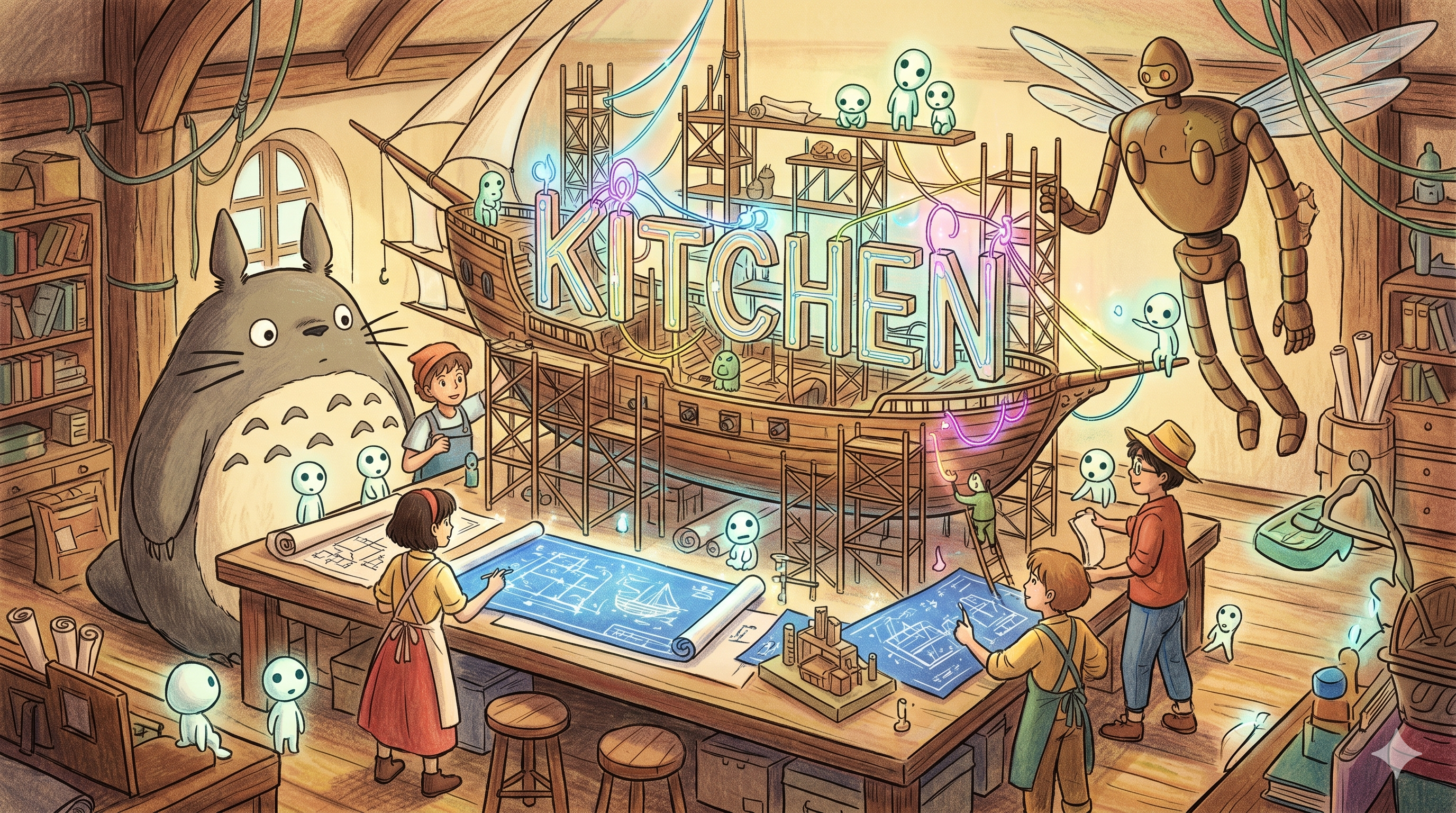
뉘앙스·의미 연결 흐름 표
핵심 이미지 연결 흐름 뉘앙스 요약
| 음식을 만드는 공간 | 실제 부엌 → 가정의 중심 → 일상 문제 | kitchen table, kitchen garden, kitchen staple |
| 뜨거운 열기·압박 | 부엌의 열기 → 스트레스·압박 상황의 비유 | if you can't stand the heat, hot as a kitchen |
| 비공식적·내부적 | 부엌의 비공식성 → 비공식 권력·과도한 짐 | kitchen cabinet, everything but the kitchen sink |
어원 흐름 표
단어 구성 요소 의미 연결 흐름 뉘앙스 요약
| 라틴어 coquina(요리하는 곳) → 고대영어 cycene | 불로 음식을 만드는 공간 → kitchen | 열과 음식으로 연결된 핵심 이미지 |
| kitchen (명사/형용사) | 요리 공간 → 가정의 중심 → 압박·비공식 권력의 비유 | 부엌에서 일상·사회·정치까지 확장 |
품사별 의미 표
품사 의미 예문
| 명사 | 부엌, 주방 | She cooked in the kitchen. |
| 명사 | 압박이 심한 상황 | The exam room felt like a hot kitchen. |
| 형용사 | 부엌의, 주방용 | She bought new kitchen tools. |
| 명사구 | 비공식 자문단 | He has a small kitchen cabinet. |
| 명사구 | 텃밭, 채소밭 | They planted herbs in the kitchen garden. |
| 관용구 | 압박을 견디지 못하면 떠나라 | If you can't stand the heat, get out of the kitchen. |
활용 예문 리스트
- He packed everything but the kitchen sink for the overnight school trip and his bag was so heavy that two friends had to help him carry it to the bus. (그는 학교 1박 여행을 위해 없는 것 빼고 다 챙겼고 가방이 너무 무거워서 두 친구가 버스까지 운반하는 것을 도와야 했다.)
- The school council discussed kitchen table issues like the quality of school lunches and the cost of after-school activities. (학생 자치회는 학교 급식의 질과 방과 후 활동 비용 같은 일상적인 문제들을 논의했다.)
- The teacher reminded everyone that leading the school play is stressful, and if you can't stand the heat, get out of the kitchen. (선생님은 학교 연극을 이끄는 것은 스트레스가 많으며, 힘들면 떠나는 것이 낫다고 모두에게 상기시켰다.)
- Eggs are a kitchen staple that can be used for breakfast, lunch, or dinner in so many different ways. (달걀은 아침, 점심, 저녁 식사에 다양한 방법으로 사용할 수 있는 주방 필수품이다.)
- The science lesson on kitchen chemistry showed students how everyday cooking involves real chemical reactions that happen right in front of them. (부엌 화학에 관한 과학 수업은 학생들에게 일상적인 요리가 그들 바로 앞에서 일어나는 실제 화학 반응을 포함한다는 것을 보여줬다.)
전체 뉘앙스 설명
kitchen은 '음식을 만드는 공간에서 출발해 가정의 중심·압박 상황·비공식 권력·일상의 과학까지 확장되는 생동감 넘치는 언어'입니다.
cooking과의 차이: cooking은 요리하는 행위나 과정을 강조하고, kitchen은 그 행위가 일어나는 공간을 강조합니다. 비유적으로 kitchen은 더 구체적이고 생동감 있는 이미지를 나타냅니다. dining room과의 차이: dining room은 음식을 먹는 공간을 강조하고, kitchen은 음식을 만드는 공간을 강조합니다. 비유적으로 kitchen은 더 현실적이고 비공식적인 이미지를 강조합니다. pantry와의 차이: pantry는 음식이나 주방용품을 보관하는 공간을 강조하고, kitchen은 실제로 요리가 이루어지는 활동적인 공간을 강조합니다.
마지막 핵심 정리
kitchen은 단순히 "부엌"이 아닙니다 — 라틴어 coquina(요리하는 곳)에서 출발해, 실제 요리 공간(cook in the kitchen)에서 가정의 일상 문제(kitchen table issues)·과도한 짐(everything but the kitchen sink)·비공식 자문단(kitchen cabinet)·압박 상황(if you can't stand the heat, get out of the kitchen)·일상의 과학(kitchen chemistry)까지 확장되는 단어이며, everything but the kitchen sink·if you can't stand the heat get out of the kitchen·kitchen cabinet의 관용구 의미 파악이 수능 핵심 출제 포인트입니다.
파생어 표
파생어 발음기호 품사 의미
| kitchenette | [ˌkɪtʃɪˈnet] | 명사 | 소형 부엌, 간이 주방 |
| kitchenware | [ˈkɪtʃɪnweər] | 명사 | 주방용품 |
| kitchen-sink | [ˈkɪtʃɪn sɪŋk] | 형용사 | 현실적인, 일상적인 (문학) |
| cookhouse | [ˈkʊkhaʊs] | 명사 | 취사장, 간이 주방 |
| scullery | [ˈskʌləri] | 명사 | 설거지실, 뒷부엌 (격식체) |
| galley | [ˈɡæli] | 명사 | 선박·항공기의 주방 |
유의어 비교표
단어 공통점 뉘앙스 차이 예문
| kitchen | 음식 만드는 공간 | 가정·학교·식당의 일반 부엌, 비유 풍부 | She cooked in the kitchen. |
| kitchenette | 소형 부엌 | 작고 간단한 부엌 시설 | The flat had a small kitchenette. |
| galley | 선박·항공기 주방 | 좁고 작은 선박이나 항공기의 주방 | The chef worked in the ship's galley. |
| pantry | 식품 저장실 | 음식·주방용품을 보관하는 공간 | She kept the flour in the pantry. |
| scullery | 뒷부엌 | 설거지나 세척을 위한 작은 부엌 공간 | Dishes were washed in the scullery. |
유의어 예문 리스트
- (kitchenette) The small flat had only a tiny kitchenette with a microwave and a single gas ring, so she could not cook anything more complicated than soup or pasta. (작은 아파트에는 전자레인지와 가스버너 하나가 달린 작은 간이 주방밖에 없어서, 그녀는 수프나 파스타보다 복잡한 것은 아무것도 요리할 수 없었다.)
- (galley) The cook on the small boat had to prepare meals for twelve people every day in a galley so small that two people could barely stand in it at the same time. (작은 배의 요리사는 두 사람이 동시에 겨우 설 수 있을 만큼 작은 선박 주방에서 매일 12명을 위한 식사를 준비해야 했다.)
- (pantry) She opened the pantry door and found three cans of soup, half a bag of rice, and a box of crackers — not much, but enough to make a simple dinner for the family that evening. (그녀는 식품 저장실 문을 열어 수프 캔 세 개, 쌀 반 봉지, 크래커 한 상자를 발견했다 — 많지 않았지만, 그날 저녁 가족을 위한 간단한 저녁 식사를 만들기에 충분했다.)
- (scullery) In the old story, the young helper spent every morning in the scullery washing pots and pans before the rest of the kitchen staff arrived to start preparing the day's meals. (오래된 이야기에서, 젊은 도우미는 나머지 주방 직원들이 그날의 식사를 준비하기 시작하기 위해 도착하기 전에 매일 아침 뒷부엌에서 냄비와 팬을 닦으며 보냈다.)
결론 정리
kitchen은 단순히 "부엌"이 아니라, 라틴어 coquina(요리하는 곳)에서 출발해 음식을 만드는 공간에서 가정의 일상 문제·과도한 짐·비공식 자문단·압박 상황·일상의 과학까지 확장되는 단어다 — kitchen이 있는 곳엔 언제나 '단순한 요리 공간이 아닌, 인간의 일상·압박·지혜·권력이 생생하게 살아숨쉬는' 생동감의 선언이 있다.
💡 kitchen은 "음식을 만드는 뜨거운 공간에서 출발한" 생동감 넘치는 언어 — everything but the kitchen sink · if you can't stand the heat get out of the kitchen · kitchen cabinet이 수능 최빈출.
🌟 초등학생 버전 — kitchen은 엄마가 맛있는 요리를 만드는 부엌이지만, "시험이 너무 힘들면 포기하는 것이 낫다"(if you can't stand the heat, get out of the kitchen), "가방에 없는 것 빼고 다 넣었다"(everything but the kitchen sink)처럼 우리 일상 표현에도 살아있는 단어예요! 🍳✨
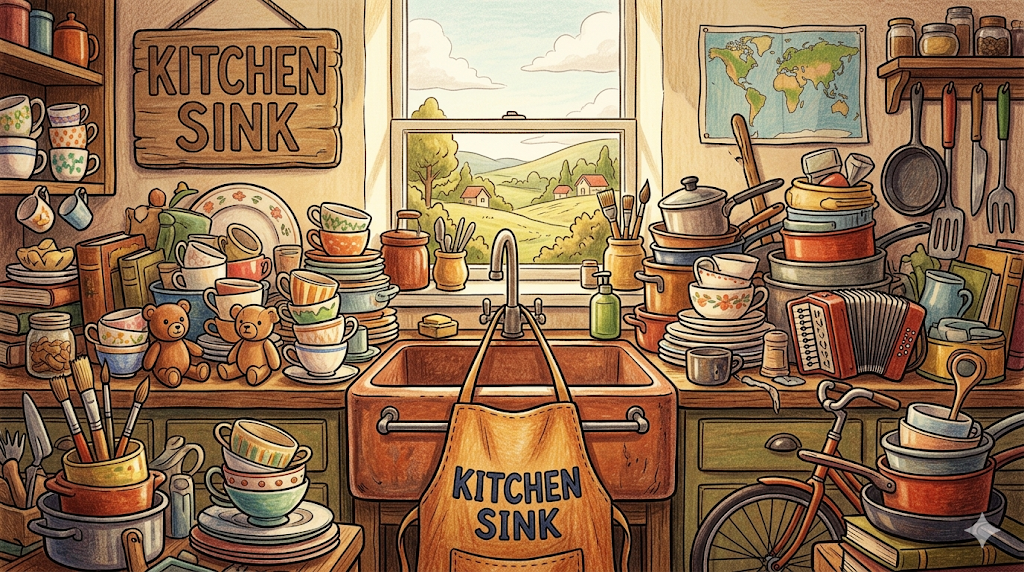
kitchen sink [ˈkɪtʃɪn sɪŋk]
(명사구) 부엌 싱크대 / 비유: 모든 것
부엌 싱크대를 뜻하며, 주로 everything but the kitchen sink 형태로 "없는 것 빼고 다"를 강조합니다. 수능 독해 일상·문학 지문에서 자주 등장합니다.
- She scrubbed the kitchen sink clean every evening after washing the dishes so that it was always ready for the next morning. (그녀는 항상 다음 날 아침을 위해 준비되도록 매일 저녁 설거지를 한 후 부엌 싱크대를 깨끗하게 닦았다.)
- The kitchen sink was piled high with dishes after the big family dinner, and everyone had to take turns washing up before bed. (부엌 싱크대는 큰 가족 저녁 식사 후 그릇이 높이 쌓여 있었고, 모두가 잠자리에 들기 전에 번갈아 가며 설거지를 해야 했다.)
- He tried to fix the leaking kitchen sink himself by watching videos online, but ended up making it worse and had to call a plumber in the end. (그는 온라인 동영상을 보며 새는 부엌 싱크대를 직접 고치려 했지만, 결국 더 나쁘게 만들어 결국 배관공을 불러야 했다.)
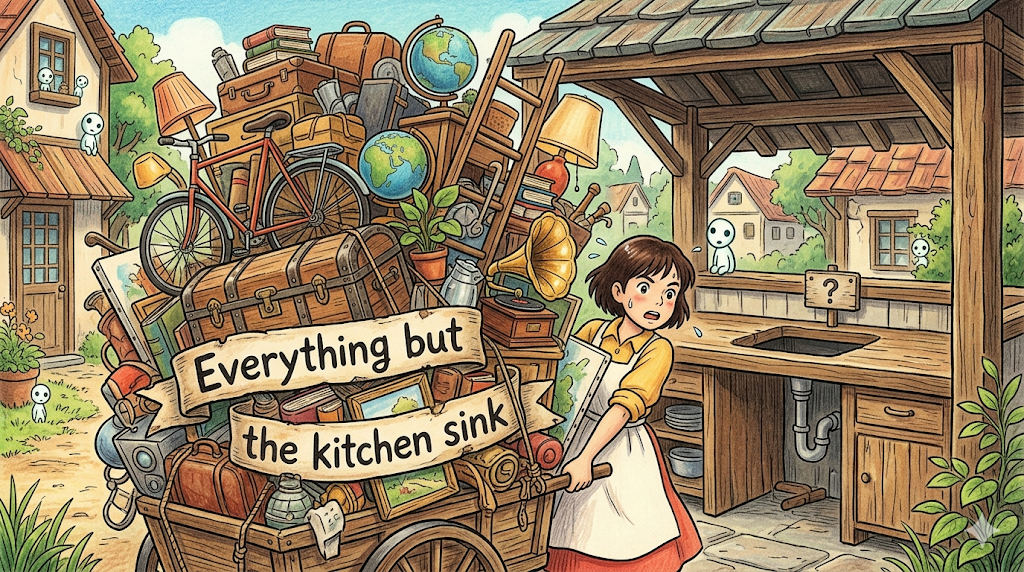
everything but the kitchen sink [ˈevriθɪŋ bʌt ðə ˈkɪtʃɪn sɪŋk]
(관용구) 없는 것 빼고 다, 필요 이상으로 너무 많은 것
너무 많은 것을 가져가거나 포함시키는 것을 강조합니다. 수능 독해 일상·사회 지문에서 자주 등장합니다.
- She always travels with everything but the kitchen sink and needs two bags even for a one-night stay. (그녀는 항상 없는 것 빼고 다 가지고 여행해서 하룻밤 숙박에도 가방 두 개가 필요하다.)
- The school bag was packed with everything but the kitchen sink — textbooks, snacks, a change of clothes, a first aid kit, and even a small torch. (학교 가방에는 없는 것 빼고 다 들어있었다 — 교과서, 간식, 갈아입을 옷, 구급 상자, 심지어 작은 손전등까지.)
- The essay had everything but the kitchen sink thrown into it — too many ideas, too many examples, and not enough clear focus on the main point. (에세이에는 없는 것 빼고 다 들어있었다 — 너무 많은 아이디어, 너무 많은 예시, 그리고 주요 요점에 대한 충분한 명확한 초점이 없었다.)
숙어 그룹 묶음 1 — 일상·공간 kitchen 핵심 패턴
표현 의미 핵심 뉘앙스 주요 맥락
| kitchen sink | 부엌 싱크대 / 모든 것 | 과도하게 많은 것을 포함시키는 것 | 일상·문학·수능 |
| everything but the kitchen sink | 없는 것 빼고 다 | 필요 이상으로 너무 많은 것을 가져가거나 포함 | 일상·사회·수능 |
| kitchen table | 부엌 식탁 / 일상 문제 | 가정의 중심이자 현실적인 일상 문제 | 사회·일상·수능 |
이 세 표현은 모두 kitchen의 "가정의 일상 공간" 이미지를 공유하되, 각각 과도하게 많은 것을 포함시키는 것(kitchen sink / everything but the kitchen sink)·가정의 현실적인 일상 문제(kitchen table)의 관점에서 접근합니다.
- The group's presentation had everything but the kitchen sink in it — too many slides, too much text, and topics that had nothing to do with the kitchen table issues the teacher had asked them to focus on, which was as useless as a broken kitchen sink with no water. (그룹의 발표에는 없는 것 빼고 다 들어있었다 — 너무 많은 슬라이드, 너무 많은 텍스트, 그리고 선생님이 집중하라고 요청한 일상적인 문제와 전혀 관련 없는 주제들이었으며, 이는 물이 없는 고장난 부엌 싱크대만큼 쓸모없었다.)
- She argued that real politicians should focus on kitchen table issues instead of packing their speeches with everything but the kitchen sink, because the people they serve care about simple, everyday things — not complicated ideas that are as hard to understand as a blocked kitchen sink that nobody has time to fix. (그녀는 진정한 정치인들은 연설에 없는 것 빼고 다 집어넣는 대신 일상적인 문제에 집중해야 한다고 주장했는데, 왜냐하면 그들이 섬기는 사람들은 단순하고 일상적인 것들을 신경 쓰지, 아무도 고칠 시간이 없는 막힌 부엌 싱크대처럼 이해하기 어려운 복잡한 아이디어를 신경 쓰지 않기 때문이다.)
- The best student projects are not the ones with everything but the kitchen sink thrown in — they are the ones that focus clearly on the kitchen table issues that really matter to people, like a well-designed kitchen sink that is simple, clean, and does exactly what it is supposed to do. (최고의 학생 프로젝트는 없는 것 빼고 다 집어넣은 것이 아니라 — 사람들에게 정말 중요한 일상적인 문제에 명확하게 집중하는 것이며, 단순하고, 깔끔하고, 해야 할 일을 정확히 하는 잘 설계된 부엌 싱크대와 같다.)

kitchen table [ˈkɪtʃɪn ˈteɪbl]
(명사구) 부엌 식탁, 가정의 중심 / 현실적인 일상 문제
가정의 중심이자 일상적이고 현실적인 문제를 강조합니다. 수능 독해 사회·정치 지문에서 자주 등장합니다.
- Many important family decisions are made around the kitchen table, where everyone can speak freely without any pressure. (많은 중요한 가족 결정이 모든 사람이 압박 없이 자유롭게 말할 수 있는 부엌 식탁 주변에서 이루어진다.)
- The debate team was asked to focus on kitchen table topics that real families worry about every day, such as the cost of food and school fees. (토론 팀은 음식 비용과 학비 같이 실제 가정이 매일 걱정하는 일상적인 주제에 집중하라는 요청을 받았다.)
- She sat at the kitchen table with her mother and talked honestly about how she was feeling about the upcoming exams. (그녀는 어머니와 부엌 식탁에 앉아 다가오는 시험에 대해 어떻게 느끼는지 솔직하게 이야기했다.)

kitchen garden [ˈkɪtʃɪn ˈɡɑːrdən]
(명사구) 채소밭, 텃밭
부엌에서 쓸 채소나 허브를 직접 기르는 작은 정원을 강조합니다. 수능 독해 사회·환경 지문에서 자주 등장합니다.
- The family grew all their own salad leaves and herbs in a small kitchen garden at the back of the house. (가족은 집 뒤편의 작은 텃밭에서 샐러드 잎과 허브를 직접 모두 길렀다.)
- The school created a kitchen garden project to teach students where their food comes from and how much work goes into growing it. (학교는 학생들에게 음식이 어디서 오는지와 그것을 기르는 데 얼마나 많은 노력이 들어가는지 가르치기 위해 텃밭 프로젝트를 만들었다.)
- She spent every Sunday morning tending to her kitchen garden, pulling out weeds, watering the plants, and picking anything that was ready to eat. (그녀는 매주 일요일 아침 잡초를 뽑고, 식물에 물을 주고, 먹을 준비가 된 것은 무엇이든 따면서 텃밭을 가꾸는 데 보냈다.)
숙어 그룹 묶음 2 — 열기·압박 kitchen 패턴
표현 의미 핵심 뉘앙스 주요 맥락
| hot as a kitchen | 부엌처럼 뜨겁다 | 매우 덥거나 열기가 넘치는 상태 | 일상·구어·수능 |
| if you can't stand the heat get out of the kitchen | 압박을 견디지 못하면 떠나라 | 힘든 상황을 견디지 못하면 그 자리를 떠나는 것이 낫다 | 사회·심리·수능 |
| kitchen chemistry | 부엌 화학, 요리의 과학 | 요리 과정에서 일어나는 화학적 변화 | 학술·일상·수능 |
이 세 표현은 모두 kitchen의 "뜨거운 열기와 과학" 이미지를 공유하되, 각각 실제 뜨거운 상태(hot as a kitchen)·압박을 견디는 것(if you can't stand the heat)·요리의 과학적 원리(kitchen chemistry)의 관점에서 접근합니다.
- The exam hall was hot as a kitchen on that summer afternoon, and the teacher reminded everyone that if you can't stand the heat, get out of the kitchen — meaning that if they were not prepared, they should have studied harder — while the science teacher had tried to make revision fun by teaching them kitchen chemistry the week before to show how scientific thinking applies to everyday life. (그날 여름 오후 시험장은 부엌처럼 뜨거웠고, 선생님은 모두에게 압박을 견디지 못하면 떠나는 것이 낫다고 상기시켰다 — 준비가 안 됐다면 더 열심히 공부했어야 한다는 의미로 — 한편 과학 선생님은 과학적 사고가 일상생활에 어떻게 적용되는지 보여주기 위해 전주에 부엌 화학을 가르쳐 복습을 재미있게 하려 했었다.)
- The kitchen in the restaurant where she did work experience was hot as a kitchen should be — full of steam and noise — and the head chef told every new worker that if you can't stand the heat, get out of the kitchen, which helped her understand why kitchen chemistry and staying calm under pressure are both skills that great chefs must master. (그녀가 직업 체험을 한 식당 주방은 당연히 부엌처럼 뜨거웠다 — 증기와 소음으로 가득 찼다 — 그리고 주방장은 모든 새 직원에게 압박을 견디지 못하면 떠나는 것이 낫다고 말했으며, 이는 그녀가 왜 부엌 화학과 압박 속에서 침착하게 있는 것이 모두 훌륭한 요리사가 마스터해야 하는 기술인지 이해하는 데 도움이 됐다.)
- The classroom felt hot as a kitchen during the last period before the summer break, and the teacher joked that if you can't stand the heat, get out of the kitchen — though in this case she meant the heat of learning — before wrapping up with a fun kitchen chemistry demonstration that showed how simple ingredients from home can create surprising chemical reactions. (여름 방학 전 마지막 수업 시간에 교실이 부엌처럼 뜨거웠고, 선생님은 압박을 견디지 못하면 떠나는 것이 낫다고 농담했다 — 비록 이 경우에는 배움의 열기를 의미했지만 — 집에서 가져온 간단한 재료가 놀라운 화학 반응을 일으킬 수 있다는 것을 보여주는 재미있는 부엌 화학 시연으로 마무리하기 전에.)
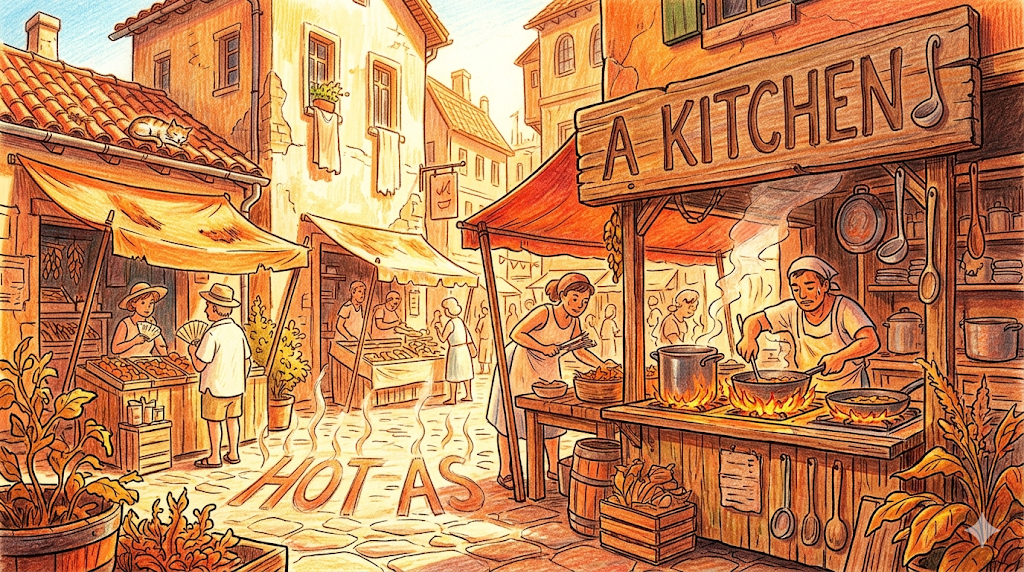
hot as a kitchen [hɒt æz ə ˈkɪtʃɪn]
(비유 표현) 부엌처럼 뜨겁다, 매우 덥다
요리로 인해 뜨거워진 부엌처럼 어떤 장소나 상황이 매우 뜨겁거나 열기가 넘치는 것을 강조합니다. 수능 독해 일상·구어 지문에서 자주 등장합니다.
- The top floor of the school building was hot as a kitchen during the summer months because the sun hit the roof all day long with nowhere for the heat to escape. (학교 건물 꼭대기 층은 여름 달 동안 햇볕이 하루 종일 지붕에 내리쬐어 열이 빠져나갈 곳이 없어서 부엌처럼 뜨거웠다.)
- The small tent was hot as a kitchen by eight in the morning, so they unzipped all the windows and moved their sleeping bags to the shade outside. (작은 텐트는 오전 8시에 부엌처럼 뜨거워져서, 그들은 모든 창문을 열고 침낭을 밖의 그늘로 옮겼다.)
- The crowded gym hall was hot as a kitchen during the indoor sports competition, and students had to drink water every few minutes to stay comfortable. (실내 체육 대회 동안 붐비는 체육관은 부엌처럼 뜨거웠고, 학생들은 편안하게 있기 위해 몇 분마다 물을 마셔야 했다.)

if you can't stand the heat get out of the kitchen [ɪf juː kɑːnt stænd ðə hiːt ɡet aʊt əv ðə ˈkɪtʃɪn]
(관용구) 압박을 견디지 못하면 떠나라, 힘들면 하지 마라
어떤 일이 너무 어렵거나 힘들면 그 자리를 떠나는 것이 낫다는 것을 강조합니다. 수능 독해 사회·심리 지문에서 핵심적으로 등장합니다.
- The team leader reminded everyone that leading a group is never easy, and if you can't stand the heat, get out of the kitchen — meaning that only those who are truly committed should take on the role. (팀 리더는 그룹을 이끄는 것은 절대 쉽지 않으며, 압박을 견디지 못하면 떠나는 것이 낫다고 모두에게 상기시켰다 — 진정으로 헌신적인 사람들만 그 역할을 맡아야 한다는 의미로.)
- She remembered the old saying — if you can't stand the heat, get out of the kitchen — and decided to stay calm and keep going instead of giving up when things got hard. (그녀는 압박을 견디지 못하면 떠나는 것이 낫다는 오래된 말을 기억하며, 힘들어졌을 때 포기하는 대신 침착하게 계속 나아가기로 결심했다.)
- The science of cooking shows us that heat changes everything — and the saying if you can't stand the heat, get out of the kitchen reminds us that real growth often comes from staying in difficult situations long enough to see the change happen. (요리의 과학은 열이 모든 것을 바꾼다는 것을 보여주며, 압박을 견디지 못하면 떠나는 것이 낫다는 말은 진정한 성장이 종종 변화가 일어나는 것을 볼 만큼 오래 어려운 상황에 머무르는 것에서 온다는 것을 상기시켜 준다.)
숙어 그룹 묶음 3 — 지식·필수품 kitchen 심화 패턴
표현 의미 핵심 뉘앙스 주요 맥락
| kitchen cabinet | 비공식 내부 자문단 | 공식이 아닌 비공식적으로 신뢰하는 측근 집단 | 사회·정치·수능 |
| kitchen chemistry | 부엌 화학, 요리의 과학 | 요리 과정에서 일어나는 화학적 변화 | 학술·일상·수능 |
| kitchen staple | 주방 필수품, 기본 식재료 | 거의 모든 요리에 필요한 기본적이고 꼭 필요한 것 | 일상·사회·수능 |
이 세 표현은 모두 kitchen이 지식·필수품·비공식 권력과 연결되는 방식을 보여줍니다. kitchen cabinet은 비공식적으로 신뢰하는 측근 집단을, kitchen chemistry는 일상 속에 숨어있는 과학적 원리를, kitchen staple은 거의 모든 것에 필요한 기본적인 필수품을 각각 나타냅니다.
- The school president's kitchen cabinet of three trusted friends helped her prepare for the big debate, and they made sure all the kitchen staples of a good argument — clear points, strong evidence, and calm delivery — were in place, guided by the same logic as kitchen chemistry, where the right ingredients in the right order always produce the best result. (학교 회장의 세 명의 신뢰하는 친구들로 이루어진 측근은 그녀가 큰 토론을 준비하도록 도왔으며, 좋은 논증의 필수 요소들 — 명확한 논점, 강력한 증거, 침착한 전달 — 이 갖춰지도록 했는데, 이는 올바른 재료를 올바른 순서로 넣으면 항상 최고의 결과를 만드는 부엌 화학과 같은 논리에 의해 이끌렸다.)
- Just as a good cook relies on kitchen staples and understands kitchen chemistry to create something wonderful, a good leader relies on their kitchen cabinet to understand the situation clearly and make the best decisions for the group even when things get complicated. (좋은 요리사가 훌륭한 것을 만들기 위해 주방 필수품에 의존하고 부엌 화학을 이해하는 것처럼, 좋은 리더는 상황을 명확하게 이해하고 일이 복잡해질 때도 그룹을 위한 최선의 결정을 내리기 위해 측근에 의존한다.)
- The teacher used the concept of kitchen chemistry to explain how, just as kitchen staples like salt and heat can change the texture of food completely, small but important inputs from a trusted kitchen cabinet can change the direction of a big decision in ways that nobody outside the inner circle would ever notice. (선생님은 소금과 열 같은 주방 필수품이 음식의 질감을 완전히 바꿀 수 있는 것처럼, 신뢰하는 측근의 작지만 중요한 입력이 내부 집단 외부의 누구도 알아채지 못할 방식으로 큰 결정의 방향을 바꿀 수 있다는 것을 설명하기 위해 부엌 화학의 개념을 사용했다.)

kitchen cabinet [ˈkɪtʃɪn ˈkæbɪnɪt]
(명사구) 비공식 내부 자문단, 측근
공식 자문단이 아니라 지도자가 개인적으로 신뢰하는 비공식 조언자들을 강조합니다. 수능 독해 사회·정치 지문에서 핵심적으로 등장합니다.
- The school principal had a small kitchen cabinet of experienced teachers she always consulted before making any big changes to the school rules. (교장 선생님은 학교 규칙에 큰 변화를 가하기 전에 항상 상의하는 경험 많은 선생님들로 이루어진 작은 내부 자문단이 있었다.)
- Every successful team leader has a kind of kitchen cabinet — a small group of people they trust completely to give honest advice when it is needed most. (모든 성공적인 팀 리더는 일종의 측근을 가지고 있다 — 가장 필요할 때 솔직한 조언을 해줄 것으로 완전히 신뢰하는 소수의 사람들.)
- The history book described how many world leaders throughout history have relied on an unofficial kitchen cabinet rather than only listening to the advice of their formal advisers. (역사책은 역사를 통틀어 많은 세계 지도자들이 공식 자문관들의 조언만 듣는 것보다 비공식적인 내부 자문단에 의존했다고 묘사했다.)

kitchen chemistry [ˈkɪtʃɪn ˈkemɪstri]
(명사구) 부엌 화학, 요리에 숨어있는 과학
요리 과정에서 일어나는 화학적 변화를 강조하며, 비유적으로 일상 속의 과학을 나타냅니다. 수능 독해 학술·과학 지문에서 자주 등장합니다.
- The science teacher explained kitchen chemistry by showing how heating an egg changes its texture permanently and why that change cannot be undone. (과학 선생님은 달걀을 가열하면 질감이 영구적으로 변하고 그 변화를 되돌릴 수 없는 이유를 보여줌으로써 부엌 화학을 설명했다.)
- Learning about kitchen chemistry helped her understand why bread rises when baked and why it stays flat if the yeast is not fresh enough. (부엌 화학을 배우는 것은 그녀가 빵이 구워질 때 왜 부풀어 오르는지와 효모가 충분히 신선하지 않으면 왜 납작하게 남아있는지 이해하는 데 도움이 됐다.)
- The school project on kitchen chemistry asked students to record what happens when they mix lemon juice and baking soda and explain the science behind the reaction in simple, clear language. (부엌 화학에 관한 학교 프로젝트는 학생들에게 레몬 주스와 베이킹소다를 섞었을 때 무슨 일이 일어나는지 기록하고 간단하고 명확한 언어로 반응 뒤의 과학을 설명하도록 요청했다.)

kitchen staple [ˈkɪtʃɪn ˈsteɪpl]
(명사구) 주방 필수품, 기본 식재료
거의 모든 요리에 사용되는 기본적이고 꼭 필요한 재료나 도구를 강조합니다. 수능 독해 일상·사회 지문에서 자주 등장합니다.
- Olive oil is a kitchen staple in many countries around the world and is used for frying, dressing, and baking in equal measure. (올리브 오일은 전 세계 많은 나라에서 주방 필수품으로 튀김, 드레싱, 베이킹에 똑같이 사용된다.)
- A sharp knife is the most important kitchen staple of all — without one, even the simplest cooking task becomes slow and difficult. (날카로운 칼은 모든 주방 필수품 중 가장 중요하다 — 그것 없이는 가장 간단한 요리 작업도 느리고 어려워진다.)
- The cooking teacher told the class that garlic is a true kitchen staple because it adds flavour to almost every type of dish, from soups to pasta to stir-fries. (요리 선생님은 학급에게 마늘은 수프부터 파스타, 볶음 요리까지 거의 모든 종류의 요리에 맛을 더하기 때문에 진정한 주방 필수품이라고 말했다.)
숙어 그룹 묶음 4 — 종합 kitchen 패턴
표현 의미 핵심 뉘앙스 주요 맥락
| everything but the kitchen sink | 없는 것 빼고 다 | 필요 이상으로 너무 많은 것을 포함 | 일상·사회·수능 |
| if you can't stand the heat get out of the kitchen | 압박을 견디지 못하면 떠나라 | 힘든 상황을 견디지 못하면 그 자리를 떠나는 것이 낫다 | 사회·심리·수능 |
| kitchen cabinet | 비공식 내부 자문단 | 공식이 아닌 비공식적으로 신뢰하는 측근 집단 | 사회·정치·수능 |
이 세 표현은 수능 독해에서 가장 자주 출제되는 kitchen의 핵심 패턴입니다. everything but the kitchen sink는 과도하게 많은 것을 포함시키는 것을, if you can't stand the heat get out of the kitchen은 압박을 견디지 못하면 떠나는 것이 낫다는 것을, kitchen cabinet은 비공식적으로 신뢰하는 측근 집단을 각각 나타냅니다.
- The school president had packed everything but the kitchen sink into her campaign speech, and her kitchen cabinet of close friends told her honestly that if she couldn't stand the heat, she should get out of the kitchen — meaning she needed to cut it down to the key points and only say what she truly believed in, not everything she thought people wanted to hear. (학교 회장은 선거 연설에 없는 것 빼고 다 집어넣었고, 가까운 친구들로 이루어진 측근은 그녀에게 솔직하게 압박을 견디지 못하면 떠나는 것이 낫다고 말했다 — 즉 사람들이 듣고 싶어 하는 모든 것이 아니라 핵심 요점으로 줄이고 진정으로 믿는 것만 말해야 한다는 의미로.)
- The advice from her kitchen cabinet was simple and clear — don't pack everything but the kitchen sink into your answer when a short, honest response will do, and remember that if you can't stand the heat, get out of the kitchen, because trying to be all things to all people will only make you look less confident and less trustworthy. (측근의 조언은 간단하고 명확했다 — 짧고 솔직한 답변이 충분할 때 없는 것 빼고 다 답변에 집어넣지 말고, 압박을 견디지 못하면 떠나는 것이 낫다는 것을 기억하라, 왜냐하면 모든 사람에게 모든 것이 되려고 하면 오히려 덜 자신감 있고 덜 신뢰할 수 있어 보이기 때문이다.)
- A good leader does not fill their plans with everything but the kitchen sink, relies on a strong kitchen cabinet to help them see things clearly, and never forgets that if you can't stand the heat, you should get out of the kitchen — because the best decisions come not from people who are overwhelmed, but from those who are calm, focused, and honest about what they can and cannot do. (좋은 리더는 계획에 없는 것 빼고 다 채우지 않고, 사물을 명확하게 보는 데 도움이 되는 강력한 측근에 의존하며, 압박을 견디지 못하면 떠나는 것이 낫다는 것을 절대 잊지 않는다 — 왜냐하면 최선의 결정은 압도당한 사람들에게서 오는 것이 아니라 침착하고, 집중되어 있으며, 할 수 있는 것과 할 수 없는 것에 솔직한 사람들에게서 오기 때문이다.)
전체 요약표
표현 의미 핵심 뉘앙스
| kitchen | 부엌, 주방 / 압박 상황 | 음식을 만드는 공간에서 일상·압박·비공식 권력으로 확장 |
| kitchen sink | 부엌 싱크대 / 모든 것 | 과도하게 많은 것을 포함시키는 것 |
| everything but the kitchen sink | 없는 것 빼고 다 | 필요 이상으로 너무 많은 것을 가져가거나 포함 |
| kitchen table | 부엌 식탁 / 일상 문제 | 가정의 중심이자 현실적인 일상 문제 |
| kitchen garden | 채소밭, 텃밭 | 부엌에서 쓸 채소·허브를 직접 기르는 작은 정원 |
| hot as a kitchen | 부엌처럼 뜨겁다 | 매우 덥거나 열기가 넘치는 상태 |
| if you can't stand the heat get out of the kitchen | 압박을 견디지 못하면 떠나라 | 힘든 상황을 견디지 못하면 그 자리를 떠나는 것이 낫다 |
| kitchen cabinet | 비공식 내부 자문단 | 공식이 아닌 비공식적으로 신뢰하는 측근 집단 |
| kitchen chemistry | 부엌 화학, 요리의 과학 | 요리 과정에서 일어나는 화학적 변화 |
| kitchen staple | 주방 필수품, 기본 식재료 | 거의 모든 요리에 필요한 기본적이고 꼭 필요한 것 |
유의어 비교표

단어 공통점 뉘앙스 차이 예문
| kitchen | 음식 만드는 공간 | 가정·학교·식당의 일반 부엌, 비유 풍부 | She cooked in the kitchen. |
| kitchenette | 소형 부엌 | 작고 간단한 부엌 시설 | The flat had a small kitchenette. |
| galley | 선박·항공기 주방 | 좁고 작은 선박이나 항공기의 주방 | The chef worked in the ship's galley. |
| pantry | 식품 저장실 | 음식·주방용품을 보관하는 공간 | She kept the flour in the pantry. |
| scullery | 뒷부엌 | 설거지나 세척을 위한 작은 부엌 공간 | Dishes were washed in the scullery. |
유의어 예문 리스트
- (kitchenette) The school trip accommodation had only a small kitchenette with a kettle and a toaster, so the students had to buy most of their meals from the café next door. (수학여행 숙소에는 주전자와 토스터가 있는 작은 간이 주방밖에 없어서, 학생들은 옆 카페에서 대부분의 식사를 사야 했다.)
- (galley) The students on the sailing trip took turns helping in the boat's tiny galley, where there was just enough room to heat soup and make sandwiches for the whole crew. (항해 여행의 학생들은 배의 작은 선박 주방에서 번갈아 가며 도왔는데, 그곳에는 전 선원을 위한 수프를 데우고 샌드위치를 만들 공간만 있었다.)
- (pantry) She opened the pantry and found just enough flour, sugar, and butter to make a simple batch of cookies for the class without needing to go to the shop. (그녀는 식품 저장실을 열어 가게에 가지 않고도 학급을 위한 간단한 쿠키 한 묶음을 만들기에 충분한 밀가루, 설탕, 버터를 찾았다.)
- (scullery) In the old school building, there was a small scullery at the back of the kitchen where all the heavy pots and pans were washed separately from the everyday dishes. (오래된 학교 건물에는 주방 뒤편에 일상적인 그릇과 별도로 무거운 냄비와 팬이 모두 세척되는 작은 뒷부엌이 있었다.)
결론 정리
kitchen은 단순히 "부엌"이 아니라, 라틴어 coquina(요리하는 곳)에서 출발해 음식을 만드는 공간에서 가정의 일상 문제·과도한 짐·비공식 자문단·압박 상황·일상의 과학까지 확장되는 단어다 — kitchen이 있는 곳엔 언제나 '단순한 요리 공간이 아닌, 인간의 일상·압박·지혜·권력이 생생하게 살아숨쉬는' 생동감의 선언이 있다.
💡 kitchen은 "음식을 만드는 뜨거운 공간에서 출발한" 생동감 넘치는 언어 — everything but the kitchen sink · if you can't stand the heat get out of the kitchen · kitchen cabinet이 수능 최빈출.
🌟 초등학생 버전 — kitchen은 엄마가 맛있는 요리를 만드는 부엌이지만, "시험이 너무 힘들면 포기하는 것이 낫다"(if you can't stand the heat, get out of the kitchen), "가방에 없는 것 빼고 다 넣었다"(everything but the kitchen sink)처럼 우리 일상 표현에도 살아있는 단어예요! 🍳✨


