- 분류 전체보기 (5111)

| 일 | 월 | 화 | 수 | 목 | 금 | 토 |
|---|---|---|---|---|---|---|
| 1 | 2 | 3 | 4 | |||
| 5 | 6 | 7 | 8 | 9 | 10 | 11 |
| 12 | 13 | 14 | 15 | 16 | 17 | 18 |
| 19 | 20 | 21 | 22 | 23 | 24 | 25 |
| 26 | 27 | 28 | 29 | 30 |
- Yeah
- Sorry
- Please
- oh
- Sure
- I'm not sure
- Actually
- work out
- By The Way
- Don't worry
- Right?
- Show Up
- pick up
- hold on
- please?
- I'm glad to hear that.
- too.
- well
- please.
- make it
- Hey
- hold back
- Yes
- set up
- I'm sorry
- Excuse me
- OKay
- come up with
- no
- entrance fee
- Today
- Total
인과함께
Day318 , interrupt, interrupt with, without interruption, constant interruption, interrupt someone mid-sentence, rude interruption, interrupt the flow, interrupt briefly, be interrupted by, never interrupt 본문
Day318 , interrupt, interrupt with, without interruption, constant interruption, interrupt someone mid-sentence, rude interruption, interrupt the flow, interrupt briefly, be interrupted by, never interrupt
미인생 2026. 4. 14. 04:34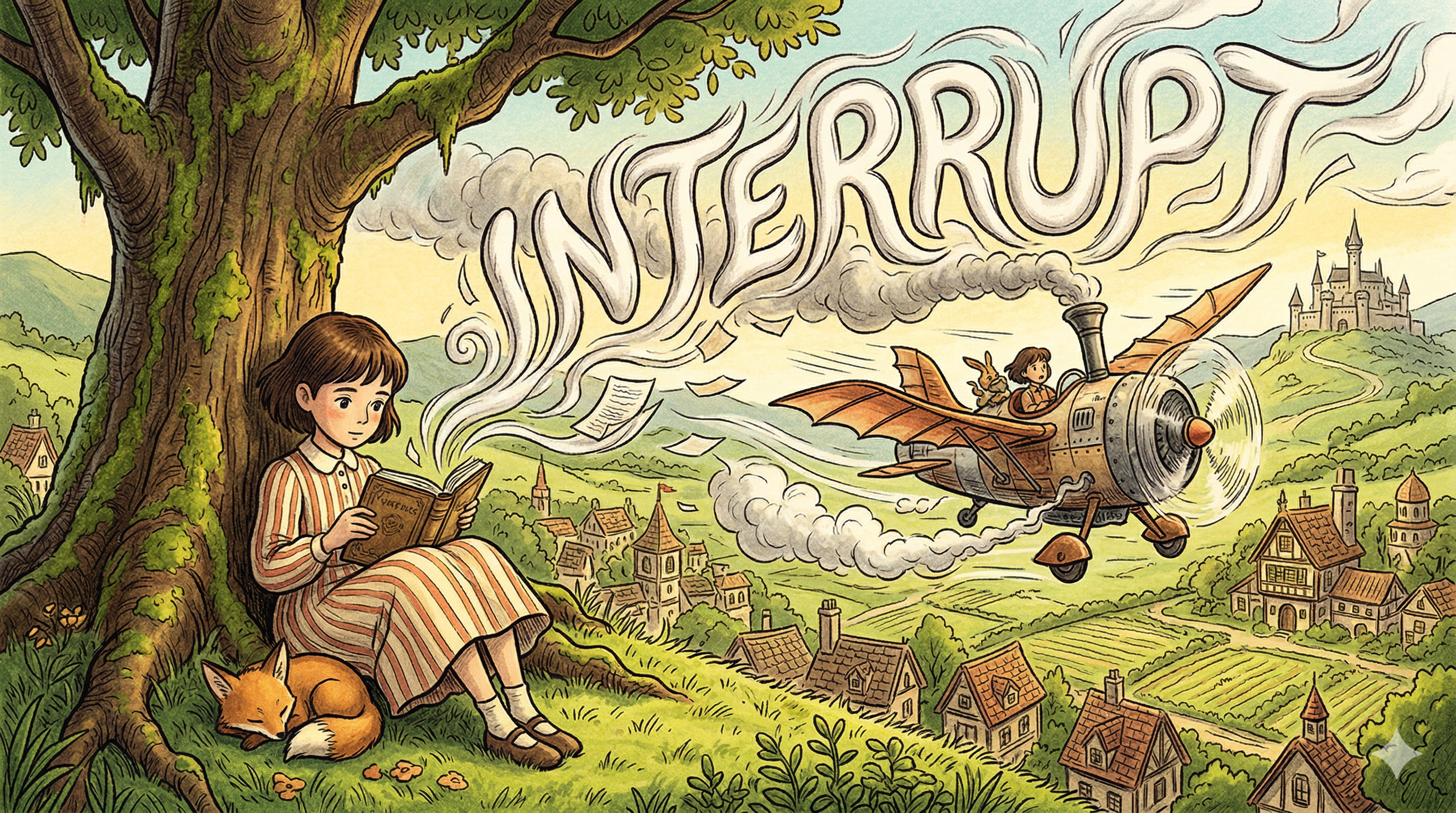
interrupt [ˌɪntəˈrʌpt]
(동사/명사) 방해하다, 중단시키다, 끼어들다 / 방해, 중단
단순히 "방해하다"로만 외우면 수능에서 반드시 틀립니다. interrupt는 "진행 중인 흐름 속으로 갑자기 끼어들어 그것을 끊어내는 것" 이라는 핵심 이미지에서 출발해, 대화에 끼어드는 것에서 전기·신호·흐름의 물리적 차단·집중의 방해·과정의 중단까지 폭넓게 쓰이는 핵심 다의어입니다. 특히 without interruption(방해 없이), interrupt the flow(흐름을 방해하다), be interrupted by(~에 의해 중단되다) 패턴은 수능 독해 심리·사회·과학 지문에서 핵심적으로 등장합니다.
'interrupt'는 라틴어 interrumpere(부수다, 끊다)에서 유래했으며, inter(사이에) + rumpere(부수다, 끊다)의 결합입니다. 어원의 핵심 이미지는 "진행 중인 것의 사이로 끼어들어 그것을 강제로 끊어내는 것" 으로, 단순한 방해가 아닌 연속적으로 이어지던 흐름을 갑작스럽게 절단하는 능동적인 개입이 이 단어의 본질입니다.
✋ interrupt의 핵심 뉘앙스
"흐름을 끊는다는 뜻에서 시작해, 말 끊기·무례함·집중 방해·예의 바른 개입까지 담은 단어."
1️⃣ 말과 대화를 끊다
- interrupt someone mid-sentence → 상대가 말하는 도중에 끼어들다, 문장이 끝나기도 전에 자르다
- interrupt with → ~로 끼어들다, 특정 말이나 행동으로 흐름을 자르다 ("She interrupted with a question." 그녀가 질문으로 끼어들었어)
- rude interruption → 무례한 끼어들기, 상대를 존중하지 않는 방식의 개입
- never interrupt → 절대 끼어들지 않다, 상대가 끝까지 말하도록 기다리는 예의
2️⃣ 흐름과 집중을 방해하다
- interrupt the flow → 흐름을 끊다, 자연스럽게 이어지던 분위기나 리듬을 깨다 ("Don't interrupt the flow of the conversation." 대화의 흐름을 깨지 마)
- constant interruption → 끊임없는 방해, 집중을 계속 흩트려 놓는 상황
- be interrupted by → ~에 의해 방해받다 ("I was interrupted by a phone call." 전화에 방해를 받았어)
3️⃣ 잠깐 끼어드는 것
- interrupt briefly → 잠깐만 끼어들다, 짧게 개입하고 다시 원래로 돌아오다
- without interruption → 방해 없이, 끊임없이 이어지는 상태 ("She worked for three hours without interruption." 세 시간 동안 방해 없이 일했어)
💡 아들에게 이렇게 설명해보세요
"interrupt는 '끊다, 방해하다'인데, 대화할 때 특히 중요한 단어야. interrupt someone mid-sentence는 상대방이 말하는 도중 문장 가운데를 잘라버리는 건데 — 그게 가장 무례한 거야. interrupt the flow는 잘 흘러가던 분위기나 이야기의 흐름을 뚝 끊는 거고. without interruption은 아무도 방해하지 않는 상태야 — 집에서 혼자 조용히 공부할 때 딱 이 상태가 필요하지. 끼어들어도 되는지 먼저 물어볼 때는 'May I interrupt briefly?'라고 하면 예의 바른 거야."
✨ 최종 한 줄 요약
interrupt는 흐름을 끊는다는 뜻 안에서, 말을 자르는 무례함·집중을 깨는 방해·예의 바른 짧은 개입·방해 없는 온전한 상태까지 소통 예절의 핵심을 담은 단어.
1. interrupt with [ˌɪntəˈrʌpt wɪð]
(일상/심리/수능) "~으로 끼어들다, ~으로 방해하다"를 뜻합니다. 진행 중인 대화나 활동에 특정 말이나 행동을 가지고 갑자기 끼어드는 것을 강조합니다.
He interrupted the meeting with a question that nobody had expected, and the whole room went quiet. (그는 아무도 예상하지 못한 질문으로 회의에 끼어들어 방 전체가 조용해졌다.)
2. without interruption [wɪˈðaʊt ˌɪntəˈrʌpʃən]
(일상/심리/수능) "방해 없이, 중단 없이"를 뜻합니다. 어떤 활동이나 과정이 외부의 방해나 중단 없이 계속해서 이어지는 상태를 강조합니다.
She studied for three hours without interruption and felt much better prepared for the test. (그녀는 세 시간 동안 방해 없이 공부해서 시험 준비가 훨씬 잘 됐다고 느꼈다.)
3. constant interruption [ˈkɒnstənt ˌɪntəˈrʌpʃən]
(일상/심리/수능) "끊임없는 방해, 계속되는 중단"을 뜻합니다. 어떤 활동이나 집중을 반복적으로 끊어내는 지속적인 방해를 나타냅니다.
The constant interruptions during class made it very difficult for anyone to follow what the teacher was saying. (수업 중 끊임없는 방해가 선생님이 말하는 것을 따라가기 매우 어렵게 만들었다.)
4. interrupt someone mid-sentence [ˌɪntəˈrʌpt ˈsʌmwʌn mɪd ˈsentəns]
(일상/심리/수능) "~가 말하는 도중에 끼어들다"를 뜻합니다. 상대방이 하던 말을 끝맺기도 전에 갑자기 끼어드는 것을 나타내며, 무례함·긴박함·흥분의 뉘앙스를 담습니다.
She interrupted him mid-sentence because she suddenly remembered something very important she had to tell him. (그녀는 그에게 꼭 해야 할 매우 중요한 것이 갑자기 생각나서 그가 말하는 도중에 끼어들었다.)
5. rude interruption [ruːd ˌɪntəˈrʌpʃən]
(일상/사회/수능) "무례한 방해, 버릇없는 끼어들기"를 뜻합니다. 상대방의 말이나 행동을 존중하지 않고 갑자기 끼어드는 것을 나타내며, 사회적 예절의 위반을 강조합니다.
The teacher was disappointed by the rude interruption during the guest speaker's talk and asked the class to be more respectful. (선생님은 초청 강연자의 강연 중 무례한 끼어들기에 실망하며 학급에게 더 예의 바르게 행동하라고 했다.)
6. interrupt the flow [ˌɪntəˈrʌpt ðə fləʊ]
(일상/학술/수능) "흐름을 끊다, 흐름을 방해하다"를 뜻합니다. 자연스럽게 이어지던 대화·작업·생각의 흐름을 갑작스러운 개입으로 끊어내는 것을 강조합니다.
Too many questions during a story can interrupt the flow and make it hard for listeners to stay focused. (이야기 중에 너무 많은 질문이 흐름을 끊어서 청중이 집중하기 어렵게 만들 수 있다.)
7. interrupt briefly [ˌɪntəˈrʌpt ˈbriːfli]
(일상/사회/수능) "잠깐 끼어들다, 잠시 방해하다"를 뜻합니다. 짧고 간단하게 대화나 활동에 끼어드는 것을 나타내며, 긴 방해와 달리 공손하거나 필요에 의한 짧은 개입을 강조합니다.
"Sorry to interrupt briefly," he said, "but the bus is leaving in five minutes and we need to go now." ("잠깐 끼어들어 미안하지만," 그가 말했다, "버스가 5분 후에 출발해서 우리 지금 가야 해.")
8. be interrupted by [biː ˌɪntəˈrʌptɪd baɪ]
(일상/사회/수능) "~에 의해 중단되다, ~에 의해 방해받다"를 뜻합니다. 어떤 활동이나 과정이 외부의 어떤 것에 의해 갑자기 끊어지는 것을 수동적으로 나타냅니다.
Their quiet afternoon in the park was interrupted by a sudden loud noise that made everyone stop and look around. (공원에서의 그들의 조용한 오후는 갑작스러운 큰 소음에 의해 방해받아 모든 사람이 멈추고 주위를 둘러보게 했다.)
9. never interrupt [ˈnevər ˌɪntəˈrʌpt]
(일상/사회/수능) "절대 끼어들지 않다, 결코 방해하지 않다"를 뜻합니다. 어떤 상황에서도 다른 사람의 말이나 활동을 끊지 않겠다는 강한 의지나 사회적 규범을 나타냅니다.
Her grandmother always told her to never interrupt when someone older was speaking, no matter how much she wanted to say something. (할머니는 항상 그녀에게 아무리 하고 싶은 말이 있어도 어른이 말할 때는 절대 끼어들지 말라고 했다.)
10. interrupt the silence [ˌɪntəˈrʌpt ðə ˈsaɪləns]
(문학/심리/수능) "침묵을 깨다, 고요를 방해하다"를 뜻합니다. 조용하고 고요한 상태를 갑작스러운 말이나 소리로 끊어내는 것을 나타내며, 문학·심리 지문에서 감정적 전환점을 나타낼 때 자주 씁니다.
A single bird call interrupted the silence of the early morning forest and made her realize how peaceful the world could be. (새 한 마리의 울음소리가 이른 아침 숲의 침묵을 깨어 그녀가 세상이 얼마나 평화로울 수 있는지 깨닫게 해주었다.)

POINT 1. interrupt + 전치사/부사 패턴 — 수능 최빈출 구조
interrupt는 수능 문법·독해에서 함께 쓰이는 전치사나 부사에 따라 뉘앙스가 달라지는 패턴으로 자주 출제됩니다. interrupt + with → 특정 말·행동으로 끼어드는 것 예) He interrupted the talk with a loud laugh. (그는 큰 웃음으로 대화에 끼어들었다.) be interrupted + by → 외부 요인에 의해 수동적으로 중단되는 것 예) The lesson was interrupted by a fire alarm. (수업이 화재 경보에 의해 중단됐다.) interrupt + briefly → 짧고 간단하게 끼어드는 것 예) May I interrupt briefly? (잠깐 끼어들어도 될까요?) 특히 be interrupted by 패턴은 수능 독해 사회·과학 지문에서 핵심 수동태 표현으로 자주 출제됩니다.
POINT 2. without interruption vs. constant interruption — 수능 심리·사회 지문 핵심
without interruption과 constant interruption은 수능 독해에서 집중·학습·생산성을 다루는 심리·사회 지문에서 핵심적으로 등장합니다. without interruption → 방해 없이 이어지는 긍정적인 집중 상태 예) Deep work requires long periods without interruption. (깊은 작업은 방해 없이 긴 시간을 필요로 한다.) constant interruption → 반복적인 방해가 가져오는 부정적 결과 예) Constant interruptions reduce productivity significantly. (끊임없는 방해는 생산성을 크게 떨어뜨린다.) 수능에서는 특히 이 두 표현이 대비되어 집중과 방해의 효과를 설명하는 지문에서 핵심 어휘로 출제됩니다.
POINT 3. interrupt의 다의어 — 수능 독해 문맥 파악 핵심
interrupt는 수능 독해에서 문맥에 따라 의미가 완전히 달라지는 핵심 다의어입니다. 대화에 끼어들다 → She interrupted him while he was talking. (그가 말하는 동안 그녀가 끼어들었다.) 흐름·과정을 중단시키다 → The rain interrupted the outdoor event. (비가 야외 행사를 중단시켰다.) 전기·신호를 차단하다 → The storm interrupted the power supply. (폭풍이 전력 공급을 차단했다.) 흐름을 끊다 → Too many ads interrupt the flow of the programme. (너무 많은 광고가 프로그램의 흐름을 끊는다.) 특히 두 번째와 세 번째 의미는 수능 과학·사회 지문에서 자주 출제되는 고급 의미입니다.
(동사) ① 끼어들다 (대화·말)
interrupt의 가장 기본적인 의미로, 누군가가 말하고 있는 도중에 갑자기 끼어들어 그것을 끊어내는 것을 나타냅니다.
- She interrupted her friend in the middle of a long story to ask a quick question about what had happened first. (그녀는 처음에 무슨 일이 있었는지에 대해 빠른 질문을 하기 위해 긴 이야기 중에 친구의 말에 끼어들었다.)
- It is considered rude in many cultures to interrupt someone who is speaking, especially if they are older than you. (많은 문화에서 말하고 있는 사람에게, 특히 자신보다 나이가 많은 사람에게 끼어드는 것은 무례한 것으로 여겨진다.)
- The little boy interrupted his parents' conversation every few minutes, asking when dinner would be ready. (어린 소년은 저녁이 언제 준비될지 물으며 몇 분마다 부모님의 대화에 끼어들었다.)
(동사) ② 중단시키다 (활동·과정·흐름)
진행 중인 활동·행사·과정을 갑작스럽게 끊어내는 것을 나타냅니다. 수능 독해 사회·과학 지문에서 중요한 의미입니다.
- The fire drill interrupted the afternoon class, but the students were happy to have a break from studying. (소방 훈련이 오후 수업을 중단시켰지만, 학생들은 공부에서 잠시 쉬게 되어 기뻐했다.)
- Heavy rain interrupted the school sports day halfway through, and all the remaining events had to be moved inside. (폭우가 학교 운동회를 중간에 중단시켜서 남은 모든 행사를 실내로 옮겨야 했다.)
- The phone call interrupted her concentration just as she was about to solve the most difficult part of the problem. (전화가 그녀가 문제의 가장 어려운 부분을 막 풀려고 할 때 그녀의 집중을 방해했다.)
(동사) ③ 차단하다 (신호·전기·공급)
전기·신호·공급 등 물리적으로 이어지던 연결을 갑자기 끊어내는 것을 나타냅니다. 수능 독해 과학·기술 지문에서 자주 등장하는 고급 의미입니다.
- The strong wind knocked down a tree and interrupted the power supply to several streets in the neighbourhood. (강한 바람이 나무를 쓰러뜨려 이웃의 여러 거리에 전력 공급을 차단했다.)
- The thick walls of the old building interrupted the signal, making it very hard to get a good connection inside. (오래된 건물의 두꺼운 벽이 신호를 차단해서 안에서 좋은 연결을 얻기 매우 어렵게 만들었다.)
- The engineer explained how the small device worked by interrupting the electrical circuit at exactly the right moment. (엔지니어는 작은 장치가 정확히 맞는 순간에 전기 회로를 차단함으로써 어떻게 작동하는지 설명했다.)

뉘앙스·의미 연결 흐름 표
핵심 이미지 연결 흐름 뉘앙스 요약
| 진행 중인 흐름의 사이로 끼어들어 끊어냄 | 대화 끼어들기 → 활동 중단 → 물리적 차단 | 강제로 연속성을 끊어내는 갑작스러운 개입 |
| 외부 요인에 의해 수동적으로 끊어짐 | 예상치 못한 중단 → 흐름 손상 → 집중 저하 | be interrupted by, constant interruption |
| 끊어짐의 결과와 정도 | 짧은 개입 → 긴 방해 → 완전한 차단 | interrupt briefly, without interruption, never interrupt |
어원 흐름 표
단어 구성 요소 의미 연결 흐름 뉘앙스 요약
| 라틴어 inter(사이에) + rumpere(부수다) (어근) | 사이로 끼어들어 부수다 → 라틴어 interrumpere | 진행 중인 흐름의 사이를 강제로 끊어내는 이미지 |
| interrupt (동사) | 끼어들다 → 중단시키다 → 차단하다 → 흐름을 끊다 | 연속적으로 이어지던 것을 갑작스럽게 절단하는 완성 |
품사별 의미 표
품사 의미 예문
| 동사 | 끼어들다, 방해하다 | Please do not interrupt me. (제발 끼어들지 마세요.) |
| 동사 | 중단시키다 | Rain interrupted the game. (비가 경기를 중단시켰다.) |
| 동사 | 차단하다 | The storm interrupted the signal. (폭풍이 신호를 차단했다.) |
| 동사 | 흐름을 끊다 | Ads interrupt the flow of shows. (광고가 프로그램의 흐름을 끊는다.) |
| 명사(파생) | 방해, 중단 (interruption) | There was a short interruption. (짧은 중단이 있었다.) |
활용 예문 리스트
- He interrupted the teacher with a question that turned out to be very helpful for the whole class to hear. (그는 반 전체가 듣기에 매우 도움이 되는 것으로 밝혀진 질문으로 선생님의 말에 끼어들었다.)
- She finally found a quiet corner where she could work for two hours without interruption and get everything done. (그녀는 마침내 두 시간 동안 방해 없이 일하고 모든 것을 끝낼 수 있는 조용한 구석을 찾았다.)
- The constant interruptions from his phone made it almost impossible to finish reading even one chapter of the book. (전화기의 끊임없는 방해가 책 한 장도 끝까지 읽는 것을 거의 불가능하게 만들었다.)
- Their long conversation was interrupted by the sound of the school bell ringing loudly down the hallway. (그들의 긴 대화는 복도에서 크게 울리는 학교 종소리에 의해 중단됐다.)
- A single phone call interrupted the silence of the house and reminded her that the rest of the world was still going on outside. (전화 한 통이 집의 침묵을 깨어 나머지 세상이 바깥에서 여전히 계속되고 있다는 것을 그녀에게 상기시켜 주었다.)
전체 뉘앙스 설명
interrupt는 '진행 중인 흐름의 사이로 갑자기 끼어들어 그것을 강제로 끊어내는 모든 중단의 언어'입니다.
disturb와의 차이: disturb는 어떤 상태나 분위기를 전반적으로 방해하거나 불안하게 만드는 것을 강조하고, interrupt는 진행 중이던 구체적인 흐름이나 연속성을 특정 시점에 끊어내는 것을 강조합니다. stop과의 차이: stop은 어떤 것이 단순히 멈추는 것을 강조하고, interrupt는 외부의 갑작스러운 개입에 의해 진행 중인 것이 강제로 끊어지는 것을 강조합니다. break와의 차이: break는 어떤 것이 물리적으로 끊어지거나 잠시 쉬는 것을 강조하고, interrupt는 연속적으로 이어지던 흐름이 외부의 개입으로 갑작스럽게 절단되는 것을 강조합니다.
마지막 핵심 정리
interrupt는 단순히 "방해하다"가 아닙니다 — 라틴어 inter(사이에) + rumpere(부수다)에서 출발해, 대화에 갑자기 끼어드는 것(interrupt with)에서 활동과 행사의 중단(be interrupted by)·물리적 신호와 전기의 차단·끊임없는 방해의 부정적 결과(constant interruption)·방해 없는 집중의 중요성(without interruption)까지 확장되는 단어이며, interrupt + 전치사 패턴 구별·be interrupted by의 수동태 구조·without interruption vs. constant interruption의 대비 파악이 수능 핵심 출제 포인트입니다.
파생어 표 (발음기호 포함)
파생어 발음기호 품사 의미
| interruption | [ˌɪntəˈrʌpʃən] | 명사 | 방해, 중단, 끼어들기 |
| interrupter | [ˌɪntəˈrʌptər] | 명사 | 방해하는 사람, 차단기 |
| interrupted | [ˌɪntəˈrʌptɪd] | 형용사 | 중단된, 방해받은 |
| uninterrupted | [ˌʌnɪntəˈrʌptɪd] | 형용사 | 방해받지 않은, 끊임없는 |
| uninterruptedly | [ˌʌnɪntəˈrʌptɪdli] | 부사 | 방해받지 않고, 끊임없이 |
| interruptive | [ˌɪntəˈrʌptɪv] | 형용사 | 방해하는, 중단시키는 |
유의어 비교표 + 유의어 예문 리스트
단어 공통점 뉘앙스 차이 예문
| interrupt | 방해하다, 중단시키다 | 진행 중인 흐름의 사이로 끼어들어 강제로 끊어냄 | She interrupted him while he spoke. |
| disturb | 방해하다 | 전반적인 상태나 분위기를 불안하게 만드는 것 | Please do not disturb me now. |
| stop | 멈추다, 멈추게 하다 | 단순히 어떤 것이 끝나거나 멈추는 것 | He stopped talking suddenly. |
| break | 끊다, 깨다 | 물리적으로 끊어지거나 잠시 쉬는 것 | They took a break from the work. |
| disrupt | 흩트리다, 방해하다 | 어떤 체계나 과정 전체를 크게 흔들어 놓는 것 | The noise disrupted the whole class. |
- (disturb) She put a sign on her door asking people not to disturb her while she was finishing her homework before dinner. (그녀는 저녁 식사 전에 숙제를 끝내는 동안 방해하지 말라고 사람들에게 요청하는 표지를 문에 붙였다.)
- (stop) He stopped in the middle of his sentence when he noticed that nobody in the room was paying attention any more. (그는 방 안의 아무도 더 이상 주의를 기울이지 않는다는 것을 알아차렸을 때 문장 중간에 멈췄다.)
- (break) The two friends decided to break from studying for fifteen minutes and go outside to get some fresh air. (두 친구는 15분 동안 공부를 쉬고 신선한 공기를 마시러 밖에 나가기로 했다.)
- (disrupt) The loud argument in the hallway disrupted the entire lesson and made it hard for students to concentrate on anything. (복도에서의 큰 다툼이 전체 수업을 흩트려 학생들이 어떤 것에도 집중하기 어렵게 만들었다.)
결론 정리
interrupt는 단순히 "방해하다"가 아니라, 진행 중인 흐름의 사이로 갑자기 끼어들어 그것을 강제로 끊어내듯 대화의 끼어들기에서 활동의 중단·물리적 차단·집중의 방해까지 확장되는 단어다 — interrupt가 있는 곳엔 언제나 '단순한 멈춤이 아닌, 연속적으로 이어지던 흐름을 갑작스럽게 절단하는' 중단의 선언이 있다.
💡 interrupt는 "진행 중인 흐름의 사이로 끼어들어 강제로 끊어내는" 중단의 언어 — without interruption·be interrupted by·interrupt the flow가 수능 최빈출.
🌟 초등학생 버전 interrupt는 친구가 이야기하는 중간에 갑자기 끼어드는 것처럼, 쭉 이어지던 무언가를 갑자기 끊어버리는 것이에요! 말하는 친구의 이야기를 끝까지 들어주는 것이 왜 중요한지 — 그것이 바로 interrupt하지 않는 것이랍니다! 💪✨

interrupt with [ˌɪntəˈrʌpt wɪð]
(동사구) ~으로 끼어들다, ~으로 방해하다
진행 중인 대화나 활동에 특정 말이나 행동을 가지고 갑자기 끼어드는 것을 강조합니다. 수능 독해 심리·사회·문학 지문에서 핵심 표현으로 자주 등장합니다.
- She interrupted the presentation with a very good point that made everyone in the room stop and think carefully. (그녀는 방 안의 모든 사람이 멈추고 신중하게 생각하게 만드는 매우 좋은 지적으로 발표에 끼어들었다.)
- He interrupted the lesson with a funny comment that made the whole class laugh before the teacher could stop them. (그는 선생님이 막기 전에 반 전체를 웃게 만드는 재미있는 말로 수업에 끼어들었다.)
- The little girl interrupted the grown-ups' conversation with a question so honest and simple that everyone fell silent for a moment. (어린 소녀는 모든 사람이 잠시 침묵하게 만드는 너무 솔직하고 단순한 질문으로 어른들의 대화에 끼어들었다.)

without interruption [wɪˈðaʊt ˌɪntəˈrʌpʃən]
(전치사구) 방해 없이, 중단 없이
어떤 활동이나 과정이 외부의 방해나 중단 없이 계속해서 이어지는 상태를 강조합니다. 수능 독해 심리·과학·사회 지문에서 핵심 표현으로 자주 등장합니다.
- The baby slept for six hours without interruption, and her parents felt very grateful for the long rest. (아기는 여섯 시간 동안 방해 없이 잤고, 부모님은 긴 휴식에 매우 감사했다.)
- She needed at least one hour without interruption every evening to think clearly and prepare for the next day. (그녀는 명확하게 생각하고 다음 날을 준비하기 위해 매일 저녁 방해 없이 최소 한 시간이 필요했다.)
- The concert went on for two full hours without interruption, and when it finally ended the audience was completely amazed. (콘서트는 두 시간 내내 중단 없이 계속됐고, 마침내 끝났을 때 청중은 완전히 놀랐다.)

constant interruption [ˈkɒnstənt ˌɪntəˈrʌpʃən]
(명사구) 끊임없는 방해, 계속되는 중단
어떤 활동이나 집중을 반복적으로 끊어내는 지속적인 방해를 나타냅니다. 수능 독해 심리·사회·과학 지문에서 핵심 표현으로 자주 등장합니다.
- The constant interruptions from her younger brother made it impossible for her to finish reading her book in one sitting. (남동생의 끊임없는 방해 때문에 그녀는 한자리에서 책을 다 읽는 것이 불가능했다.)
- Research shows that constant interruption at work makes people feel tired and stressed much faster than a heavy workload alone would. (연구는 직장에서의 끊임없는 방해가 많은 업무량 단독보다 훨씬 더 빨리 사람들을 피곤하고 스트레스받게 만든다는 것을 보여준다.)
- The teacher spoke to the class about how constant interruption during group work makes it hard for anyone to share their ideas fully. (선생님은 그룹 활동 중 끊임없는 방해가 어떻게 누구도 자신의 생각을 충분히 나누기 어렵게 만드는지에 대해 학급에게 말했다.)
숙어 그룹 묶음 1 — 기본 방해 interrupt 핵심 패턴
표현 의미 핵심 뉘앙스 주요 맥락
| interrupt with | ~으로 끼어들다 | 특정 말·행동으로 갑자기 개입하는 것 | 심리·사회·문학 |
| without interruption | 방해 없이 | 외부 개입 없이 연속적으로 이어지는 상태 | 심리·과학·사회 |
| constant interruption | 끊임없는 방해 | 반복적으로 흐름을 끊어내는 지속적 개입 | 심리·사회·과학 |
이 세 표현은 모두 interrupt의 "진행 중인 흐름을 끊어내는" 이미지를 공유하되, 각각 특정 말이나 행동으로 갑자기 개입하는 것(interrupt with)·방해 없이 흐름이 이어지는 긍정적 상태(without interruption)·반복적으로 흐름을 끊어내는 부정적 상태(constant interruption)의 관점에서 접근합니다.
- She had planned to work without interruption all morning, but her little sister kept interrupting her with questions about every small thing — and by lunchtime, the constant interruption had made what should have taken two hours take nearly five. (그녀는 오전 내내 방해 없이 일할 계획이었지만, 여동생이 계속해서 모든 작은 것에 대한 질문으로 그녀에게 끼어들었다 — 그리고 점심 때까지 끊임없는 방해가 두 시간이 걸려야 할 것을 거의 다섯 시간 걸리게 만들었다.)
- The best kind of reading is done without interruption — but if someone does interrupt you with something important, it is better to stop and listen than to let constant interruption build up into something that ruins your focus for the whole day. (가장 좋은 독서는 방해 없이 이루어진다 — 하지만 누군가 중요한 것으로 당신에게 끼어든다면, 멈추고 듣는 것이 끊임없는 방해가 하루 종일 집중력을 망치는 무언가로 쌓이게 두는 것보다 낫다.)
- He explained to the younger students that working without interruption builds stronger thinking skills over time, that it is rude to interrupt others with unimportant things, and that constant interruption is one of the biggest reasons people feel they never have enough time to finish anything well. (그는 어린 학생들에게 방해 없이 작업하는 것이 시간이 지나면서 더 강한 사고력을 길러주고, 중요하지 않은 것으로 다른 사람에게 끼어드는 것은 무례하며, 끊임없는 방해가 사람들이 무언가를 제대로 끝낼 시간이 충분하지 않다고 느끼는 가장 큰 이유 중 하나라고 설명했다.)
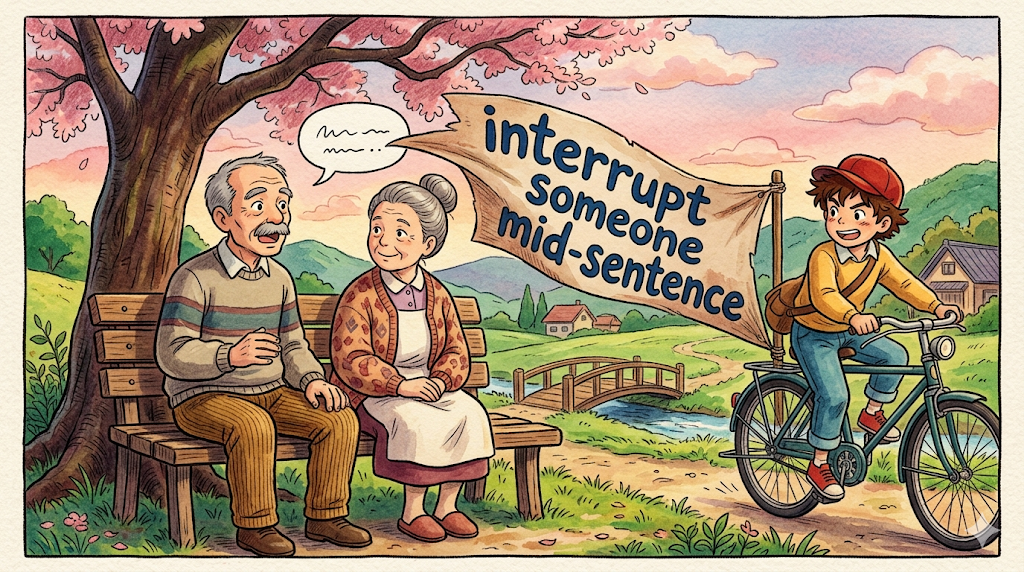
interrupt someone mid-sentence [ˌɪntəˈrʌpt ˈsʌmwʌn mɪd ˈsentəns]
(동사구) ~가 말하는 도중에 끼어들다
상대방이 하던 말을 끝맺기도 전에 갑자기 끼어드는 것을 나타내며, 무례함·긴박함·흥분의 뉘앙스를 담습니다. 수능 독해 심리·사회·문학 지문에서 자주 등장합니다.
- She interrupted him mid-sentence when she suddenly saw the bus coming and shouted for everyone to run. (그녀는 갑자기 버스가 오는 것을 보고 모두에게 달리라고 소리쳤을 때 그가 말하는 도중에 끼어들었다.)
- It is very frustrating when someone interrupts you mid-sentence because it makes you feel like what you were saying did not matter. (누군가 당신이 말하는 도중에 끼어들면 당신이 말하고 있던 것이 중요하지 않은 것 같은 느낌을 주기 때문에 매우 짜증스럽다.)
- He interrupted the speaker mid-sentence not to be rude, but because he had just heard an important update that changed everything they were discussing. (그는 무례하게 굴려는 것이 아니라 그들이 토론하고 있던 모든 것을 바꾸는 중요한 업데이트를 방금 들었기 때문에 발표자가 말하는 도중에 끼어들었다.)
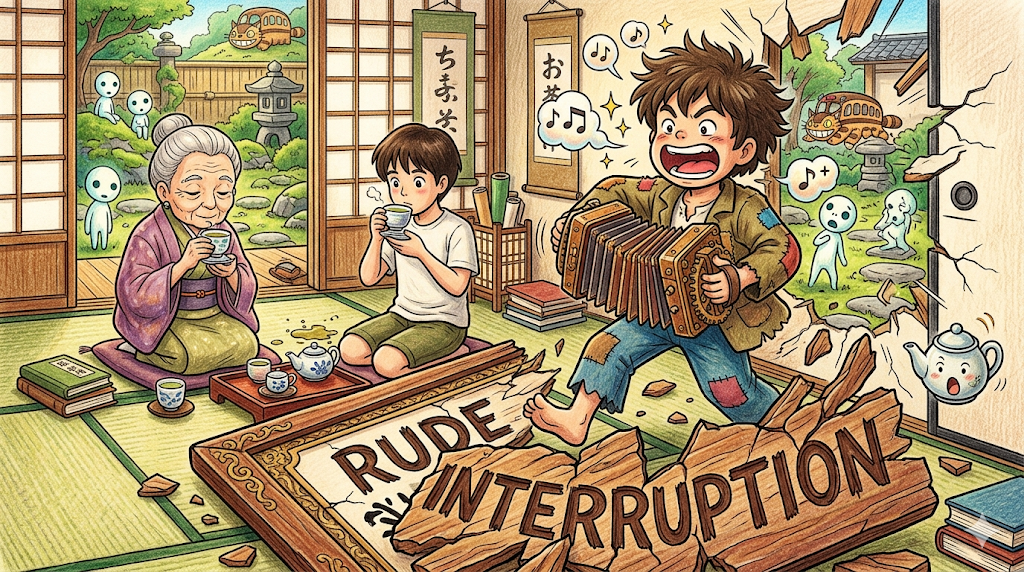
rude interruption [ruːd ˌɪntəˈrʌpʃən]
(명사구) 무례한 방해, 버릇없는 끼어들기
상대방의 말이나 행동을 존중하지 않고 갑자기 끼어드는 것을 나타내며, 사회적 예절의 위반을 강조합니다. 수능 독해 사회·심리·문학 지문에서 자주 등장합니다.
- The guest speaker stayed calm despite the rude interruption from the back of the room and continued with his talk. (초청 강연자는 방 뒤쪽에서의 무례한 방해에도 불구하고 침착하게 있으며 강연을 계속했다.)
- A rude interruption does not just break the speaker's train of thought — it also makes everyone else in the room feel uncomfortable. (무례한 방해는 단순히 말하는 사람의 생각의 흐름을 끊는 것이 아니라 방 안의 다른 모든 사람도 불편하게 만든다.)
- She apologised for the rude interruption and explained that she had not meant to speak over him — she had simply misunderstood when he had finished talking. (그녀는 무례한 방해에 사과하고 그의 말을 끊으려고 한 것이 아니었다고 설명했다 — 그녀는 단순히 그가 말을 마쳤을 때를 오해했을 뿐이었다.)
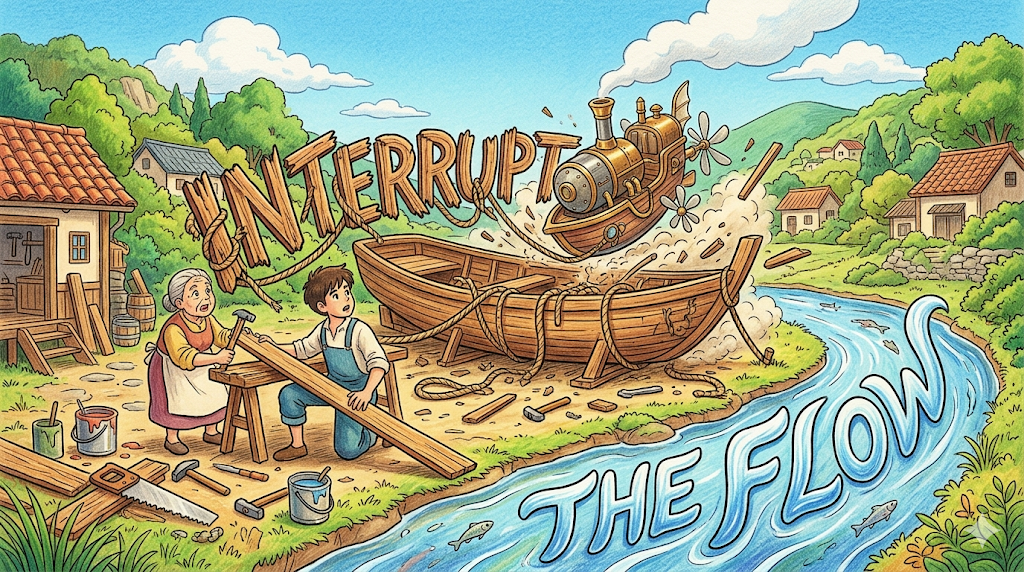
interrupt the flow [ˌɪntəˈrʌpt ðə fləʊ]
(동사구) 흐름을 끊다, 흐름을 방해하다
자연스럽게 이어지던 대화·작업·생각의 흐름을 갑작스러운 개입으로 끊어내는 것을 강조합니다. 수능 독해 심리·학술·사회 지문에서 핵심 표현으로 자주 등장합니다.
- Checking your phone every few minutes can really interrupt the flow of your thinking and make deep study almost impossible. (몇 분마다 전화기를 확인하는 것이 사고의 흐름을 끊어서 깊은 공부를 거의 불가능하게 만들 수 있다.)
- The teacher asked the students not to ask questions during the story because it would interrupt the flow and make it harder for everyone to follow. (선생님은 학생들에게 이야기 중에는 질문하지 말라고 했는데, 그것이 흐름을 끊어서 모든 사람이 따라가기 더 어렵게 만들기 때문이었다.)
- A good writer always thinks about what might interrupt the flow for the reader, and tries to remove anything that could pull them out of the story. (좋은 작가는 항상 독자를 위해 무엇이 흐름을 끊을 수 있는지 생각하고, 그들을 이야기 밖으로 끌어낼 수 있는 모든 것을 제거하려고 노력한다.)
숙어 그룹 묶음 2 — 예절·흐름 interrupt 패턴
표현 의미 핵심 뉘앙스 주요 맥락
| interrupt someone mid-sentence | 말하는 도중에 끼어들다 | 말을 끝맺기 전에 갑자기 개입하는 것 | 심리·사회·문학 |
| rude interruption | 무례한 방해 | 존중 없이 갑자기 끼어드는 사회적 위반 | 사회·심리·문학 |
| interrupt the flow | 흐름을 끊다 | 자연스럽게 이어지던 흐름을 갑자기 절단 | 심리·학술·사회 |
이 세 표현은 모두 interrupt의 "연속성을 갑작스럽게 끊어내는" 이미지를 공유하되, 각각 말을 끝맺기도 전에 끼어드는 즉각적인 행동(interrupt someone mid-sentence)·존중 없는 끼어들기의 사회적 의미(rude interruption)·자연스럽게 이어지던 흐름 전체를 끊어내는 것(interrupt the flow)의 관점에서 접근합니다.
- When he interrupted her mid-sentence for the third time, it felt less like conversation and more like a rude interruption that was slowly but surely beginning to interrupt the flow of everything she had carefully prepared to say. (그가 세 번째로 그녀가 말하는 도중에 끼어들었을 때, 그것은 대화라기보다는 그녀가 신중하게 준비한 모든 것의 흐름을 끊기 시작하는 느리지만 확실한 무례한 방해처럼 느껴졌다.)
- A rude interruption does not always look like shouting — sometimes interrupting someone mid-sentence with a quiet comment is enough to completely interrupt the flow of a story they have been building for several minutes. (무례한 방해가 항상 소리치는 것처럼 보이지는 않는다 — 때로는 조용한 말로 누군가가 말하는 도중에 끼어드는 것만으로도 그들이 몇 분 동안 만들어온 이야기의 흐름을 완전히 끊기에 충분하다.)
- She taught her students that interrupting someone mid-sentence is almost always a rude interruption, even when it does not feel that way — because the moment you cut into someone else's words, you interrupt the flow of their thoughts, and those thoughts may never come back in quite the same way again. (그녀는 학생들에게 누군가가 말하는 도중에 끼어드는 것은 그렇게 느껴지지 않더라도 거의 항상 무례한 방해라고 가르쳤다 — 왜냐하면 다른 사람의 말에 끼어드는 순간 그들의 생각의 흐름을 끊고, 그 생각들은 다시는 완전히 같은 방식으로 돌아오지 않을 수도 있기 때문이다.)

interrupt briefly [ˌɪntəˈrʌpt ˈbriːfli]
(동사구) 잠깐 끼어들다, 잠시 방해하다
짧고 간단하게 대화나 활동에 끼어드는 것을 나타내며, 긴 방해와 달리 공손하거나 필요에 의한 짧은 개입을 강조합니다. 수능 독해 일상·사회 지문에서 자주 등장합니다.
- "May I interrupt briefly?" she asked, raising her hand politely before sharing the important news with the whole group. ("잠깐 끼어들어도 될까요?"라고 그녀는 전체 그룹에게 중요한 소식을 전하기 전에 정중하게 손을 들어 물었다.)
- The doctor interrupted briefly to ask one quick question before the patient could finish explaining all of his symptoms. (의사는 환자가 모든 증상을 다 설명하기 전에 빠른 질문 하나를 하기 위해 잠깐 끼어들었다.)
- He interrupted briefly to remind everyone that the library was closing in ten minutes, then stepped back quietly so the meeting could continue. (그는 도서관이 10분 후에 닫는다는 것을 모두에게 상기시키기 위해 잠깐 끼어들고 나서 회의가 계속될 수 있도록 조용히 뒤로 물러났다.)

be interrupted by [biː ˌɪntəˈrʌptɪd baɪ]
(동사구) ~에 의해 중단되다, ~에 의해 방해받다
어떤 활동이나 과정이 외부의 어떤 것에 의해 갑자기 끊어지는 것을 수동적으로 나타냅니다. 수능 독해 사회·과학·심리 지문에서 핵심 수동태 표현으로 자주 등장합니다.
- The outdoor lesson was interrupted by a sudden heavy rain shower that sent all the students running back inside. (야외 수업은 모든 학생들을 안으로 달려 들어가게 만든 갑작스러운 폭우에 의해 중단됐다.)
- Her sleep was interrupted by a loud noise from the street below, and she could not fall back to sleep for a long time after that. (그녀의 잠은 아래 거리에서 들려오는 큰 소음에 의해 방해받아 그 후 오랫동안 다시 잠들 수 없었다.)
- The important phone call was interrupted by a bad signal three times, which made the conversation very difficult to follow from start to finish. (중요한 전화 통화가 세 번이나 나쁜 신호에 의해 중단되어 처음부터 끝까지 대화를 따라가기 매우 어렵게 만들었다.)

never interrupt [ˈnevər ˌɪntəˈrʌpt]
(동사구) 절대 끼어들지 않다, 결코 방해하지 않다
어떤 상황에서도 다른 사람의 말이나 활동을 끊지 않겠다는 강한 의지나 사회적 규범을 나타냅니다. 수능 독해 심리·사회·문학 지문에서 자주 등장합니다.
- She made a personal rule to never interrupt when someone was sharing something personal, no matter how long it took. (그녀는 아무리 오래 걸려도 누군가 개인적인 것을 나눌 때는 절대 끼어들지 않겠다는 개인적인 규칙을 세웠다.)
- He had learned from a young age to never interrupt during a meal, and it was a habit he carried with him into every part of his adult life. (그는 어릴 때부터 식사 중에는 절대 끼어들지 않도록 배웠고, 그것은 그가 성인 생활의 모든 부분에 가지고 다니는 습관이 되었다.)
- The best listeners are those who can never interrupt, even when they strongly disagree, because they understand that waiting their turn is a sign of real respect. (최고의 청중은 강하게 반대할 때조차도 절대 끼어들지 않을 수 있는 사람들인데, 자신의 차례를 기다리는 것이 진정한 존중의 표시임을 이해하기 때문이다.)
숙어 그룹 묶음 3 — 정도·수동 interrupt 심화 패턴
표현 의미 핵심 뉘앙스 주요 맥락
| interrupt briefly | 잠깐 끼어들다 | 공손하고 필요에 의한 짧은 개입 | 일상·사회 |
| be interrupted by | ~에 의해 중단되다 | 외부 요인에 의한 수동적 중단 | 사회·과학·심리 |
| never interrupt | 절대 끼어들지 않다 | 어떤 상황에서도 흐름을 끊지 않는 강한 의지 | 심리·사회·문학 |
이 세 표현은 함께 interrupt가 개입의 정도와 방향, 그리고 의지의 차원에서 어떻게 작동하는지를 보여줍니다. interrupt briefly는 짧고 목적이 있는 공손한 개입을, be interrupted by는 자신의 의지와 관계없이 외부 요인에 의해 중단되는 수동적 상태를, never interrupt는 어떤 상황에서도 다른 사람의 흐름을 끊지 않겠다는 강한 의지를 각각 나타냅니다.
- She had always tried to never interrupt, but when the meeting was interrupted by an urgent message that everyone needed to hear, she knew it was the right moment to interrupt briefly and share what she had just received. (그녀는 항상 절대 끼어들지 않으려고 노력했지만, 회의가 모든 사람이 들어야 할 긴급 메시지에 의해 중단됐을 때, 그녀는 잠깐 끼어들어 방금 받은 것을 나누는 것이 옳은 순간임을 알았다.)
- It is a sign of good character to never interrupt someone who is speaking with great care — but when a conversation is interrupted by something truly urgent, knowing how to interrupt briefly and with respect is just as important a skill as knowing when to stay silent. (매우 주의 깊게 말하는 사람에게 절대 끼어들지 않는 것은 좋은 품성의 표시다 — 하지만 대화가 정말 긴급한 것에 의해 중단될 때, 어떻게 잠깐 끼어들고 존중하는지 아는 것은 언제 침묵을 지켜야 할지 아는 것만큼 중요한 기술이다.)
- The class rule was simple: never interrupt anyone who is speaking, accept that good moments will sometimes be interrupted by things beyond our control, and when you must say something, learn to interrupt briefly and then give the floor back immediately so that the conversation can find its way back to where it was. (학급 규칙은 간단했다: 말하는 누구에게도 절대 끼어들지 말고, 좋은 순간이 때로는 우리가 통제할 수 없는 것에 의해 중단될 것임을 받아들이며, 무언가 말해야 할 때는 잠깐 끼어드는 법을 배우고 즉시 발언권을 돌려줘서 대화가 있던 곳으로 돌아갈 수 있도록 해라.)

interrupt the silence [ˌɪntəˈrʌpt ðə ˈsaɪləns]
(동사구) 침묵을 깨다, 고요를 방해하다
조용하고 고요한 상태를 갑작스러운 말이나 소리로 끊어내는 것을 나타내며, 문학·심리 지문에서 감정적 전환점이나 중요한 순간을 나타낼 때 자주 씁니다. 수능 독해 문학·심리·사회 지문에서 핵심 표현으로 자주 등장합니다.
- He finally interrupted the silence by saying her name softly, and the sound of it in that quiet room felt like the most important thing either of them had ever heard. (그는 마침내 그녀의 이름을 부드럽게 말함으로써 침묵을 깨어, 그 조용한 방에서 그 소리는 그들 중 누구라도 들어본 것 중 가장 중요한 것처럼 느껴졌다.)
- A single knock at the door interrupted the silence of the house and made everyone in the room look up at exactly the same moment. (문 두드리는 소리 하나가 집의 침묵을 깨어 방 안의 모든 사람이 정확히 같은 순간에 고개를 들게 만들었다.)
- She did not want to interrupt the silence because it was one of those rare and peaceful moments when everyone seemed to be perfectly happy just to be together without any need for words. (그녀는 침묵을 깨고 싶지 않았는데, 그것이 모든 사람이 어떤 말도 없이 그냥 함께 있는 것만으로 완벽하게 행복한 것처럼 보이는 드물고 평화로운 순간 중 하나였기 때문이다.)
숙어 그룹 묶음 4 — 감정·순간 interrupt 확장 패턴
표현 의미 핵심 뉘앙스 주요 맥락
| interrupt the silence | 침묵을 깨다 | 고요한 상태를 갑자기 끊어내는 감정적 전환 | 문학·심리·사회 |
| interrupt the flow | 흐름을 끊다 | 자연스럽게 이어지던 흐름을 갑자기 절단 | 심리·학술·사회 |
| be interrupted by | ~에 의해 중단되다 | 외부 요인에 의한 수동적 중단 | 사회·과학·심리 |
이 세 표현은 함께 interrupt가 감정·분위기·흐름과 만나는 방식을 보여줍니다. interrupt the silence는 고요한 감정적 순간이 갑자기 끊어지는 것을, interrupt the flow는 자연스럽게 이어지던 흐름 전체가 절단되는 것을, be interrupted by는 자신의 의지와 관계없이 외부 요인에 의해 그 흐름이 끊어지는 수동적 상태를 각각 나타냅니다.
- The beautiful moment was interrupted by the sound of a phone, which interrupted the silence that had been holding the whole room together — and in doing so, also interrupted the flow of something fragile and important that had been slowly building between them. (아름다운 순간이 전화 소리에 의해 중단됐고, 그것이 방 전체를 하나로 묶고 있던 침묵을 깨어 — 그렇게 하면서 그들 사이에서 천천히 쌓이고 있던 연약하고 중요한 것의 흐름도 끊었다.)
- When a story is interrupted by something unexpected, the reader loses their place — just as a quiet conversation interrupted by a loud noise can never be quite the same again, because the feeling that had been building inside the silence before it was interrupted cannot simply be picked up from where it was left. (이야기가 예상치 못한 것에 의해 중단될 때 독자는 자신의 자리를 잃는다 — 큰 소리에 의해 방해받은 조용한 대화가 다시는 똑같을 수 없는 것처럼, 왜냐하면 방해받기 전의 침묵 속에서 쌓이고 있던 감정을 단순히 그 자리에서 다시 이어갈 수 없기 때문이다.)
- A great teacher knows that interrupting the silence at the right moment can open up a conversation, just as interrupting the flow at the wrong moment can close one down — and that when a good discussion is interrupted by something outside their control, the most important thing is to find a way to bring everyone gently back to where they were. (훌륭한 선생님은 올바른 순간에 침묵을 깨는 것이 대화를 열 수 있다는 것을 알며, 잘못된 순간에 흐름을 끊는 것이 대화를 닫을 수 있는 것처럼 — 그리고 좋은 토론이 자신의 통제 밖의 것에 의해 중단될 때 가장 중요한 것은 모든 사람을 부드럽게 있던 곳으로 데려오는 방법을 찾는 것이다.)
전체 요약표
표현 의미 핵심 뉘앙스
| interrupt | 끼어들다, 중단시키다, 차단하다 | 진행 중인 흐름을 갑작스럽게 절단하는 것 |
| interrupt with | ~으로 끼어들다 | 특정 말·행동으로 갑자기 개입하는 것 |
| without interruption | 방해 없이 | 외부 개입 없이 연속적으로 이어지는 상태 |
| constant interruption | 끊임없는 방해 | 반복적으로 흐름을 끊어내는 부정적 상태 |
| interrupt someone mid-sentence | 말하는 도중에 끼어들다 | 말을 끝맺기 전에 갑자기 개입하는 것 |
| rude interruption | 무례한 방해 | 존중 없이 갑자기 끼어드는 사회적 위반 |
| interrupt the flow | 흐름을 끊다 | 자연스럽게 이어지던 흐름을 갑자기 절단 |
| interrupt briefly | 잠깐 끼어들다 | 공손하고 필요에 의한 짧은 개입 |
| be interrupted by | ~에 의해 중단되다 | 외부 요인에 의한 수동적 중단 |
| never interrupt | 절대 끼어들지 않다 | 어떤 상황에서도 흐름을 끊지 않는 강한 의지 |
| interrupt the silence | 침묵을 깨다 | 고요한 상태를 갑자기 끊어내는 감정적 전환 |
유의어 비교표
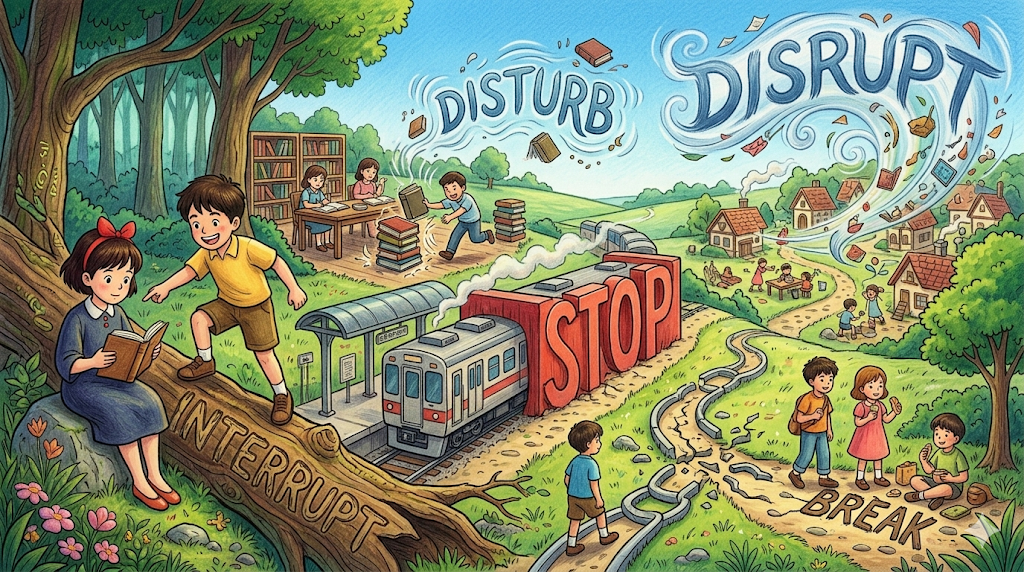
단어 공통점 뉘앙스 차이 예문
| interrupt | 방해하다, 중단시키다 | 진행 중인 흐름의 사이로 끼어들어 강제로 끊어냄 | She interrupted him while he spoke. |
| disturb | 방해하다 | 전반적인 상태나 분위기를 불안하게 만드는 것 | Please do not disturb me now. |
| stop | 멈추다, 멈추게 하다 | 단순히 어떤 것이 끝나거나 멈추는 것 | He stopped talking suddenly. |
| break | 끊다, 깨다 | 물리적으로 끊어지거나 잠시 쉬는 것 | They took a break from the work. |
| disrupt | 흩트리다, 방해하다 | 어떤 체계나 과정 전체를 크게 흔들어 놓는 것 | The noise disrupted the whole class. |
결론 정리
interrupt는 단순히 "방해하다"가 아니라, 진행 중인 흐름의 사이로 갑자기 끼어들어 그것을 강제로 끊어내듯 대화의 끼어들기에서 활동의 중단·물리적 차단·집중의 방해까지 확장되는 단어다 — interrupt가 있는 곳엔 언제나 '단순한 멈춤이 아닌, 연속적으로 이어지던 흐름을 갑작스럽게 절단하는' 중단의 선언이 있다.
💡 interrupt는 "진행 중인 흐름의 사이로 끼어들어 강제로 끊어내는" 중단의 언어 — without interruption·be interrupted by·interrupt the flow가 수능 최빈출.
🌟 초등학생 버전 interrupt는 친구가 이야기하는 중간에 갑자기 끼어드는 것처럼, 쭉 이어지던 무언가를 갑자기 끊어버리는 것이에요! 말하는 친구의 이야기를 끝까지 들어주는 것이 왜 중요한지 — 그것이 바로 interrupt하지 않는 것이랍니다! 💪✨


