
- 분류 전체보기 (5718)

| 일 | 월 | 화 | 수 | 목 | 금 | 토 |
|---|---|---|---|---|---|---|
| 1 | 2 | 3 | ||||
| 4 | 5 | 6 | 7 | 8 | 9 | 10 |
| 11 | 12 | 13 | 14 | 15 | 16 | 17 |
| 18 | 19 | 20 | 21 | 22 | 23 | 24 |
| 25 | 26 | 27 | 28 | 29 | 30 | 31 |
- pick up
- work out
- Please
- please.
- Hey
- OKay
- By The Way
- entrance fee
- I'm glad to hear that.
- well
- Sorry
- Don't worry
- set up
- hold on
- Sure
- make it
- Excuse me
- oh
- come up with
- Actually
- Right?
- please?
- Yes
- get through
- I'm sorry
- too.
- Show Up
- Yeah
- Read between the lines
- no
- Today
- Total
인과함께
Day444 , epidemic, epidemic disease, epidemic outbreak, epidemic spread, control an epidemic, epidemic proportion, epidemic of, declare an epidemic, epidemic curve, contain an epidemic, epidemic prevention 본문
Day444 , epidemic, epidemic disease, epidemic outbreak, epidemic spread, control an epidemic, epidemic proportion, epidemic of, declare an epidemic, epidemic curve, contain an epidemic, epidemic prevention
미인생 2026. 10. 8. 09:20
epidemic [ˌepɪˈdemɪk]
(명사/형용사) 유행병, 전염병의 대유행 / 유행성의, 급속히 퍼지는
The government tried to stop the epidemic disease from spreading across the city.
(정부는 전염병이 도시 전체로 퍼지는 것을 막으려고 노력했다.)
단순히 "유행병"으로만 외우면 수능에서 반드시 틀립니다. epidemic은 "어떤 질병이나 현상이 특정 지역이나 집단에서 예상이나 정상 수준을 훨씬 넘어서 빠르게 퍼지는 것 — 통제되지 않은 속도로 확산되어 많은 사람들에게 영향을 미치는 상태, 단순히 여러 명이 걸리는 것을 넘어 사회적 시스템과 대응 능력에 부담을 줄 만큼 급속히 퍼지는 것" 이라는 핵심 이미지에서 출발해, 감염병의 대유행에서 비유적인 사회 문제의 급속한 확산까지 폭넓게 쓰이는 핵심 다의어입니다. 특히 epidemic(지역적 대유행) vs. pandemic(전 세계적 대유행) vs. endemic(특정 지역 고유의 상시 질병) 의 뉘앙스 차이, epidemic proportion(유행병 수준), contain an epidemic(유행병을 억제하다) 패턴은 수능 독해 과학·사회·교육·역사·심리 지문에서 핵심적으로 등장합니다.
'epidemic'은 고대 그리스어 epidēmios(사람들 사이에 퍼진)에서 유래했습니다. epi(위에·사이에)와 dēmos(사람들·국민)가 결합하여, 원래 "사람들 사이에 퍼지는 것" 을 뜻했습니다. epidemic의 핵심 이미지는 "어떤 질병이나 현상이 정상적인 예상 수준을 훨씬 초과하여 특정 지역이나 집단에서 급속히 퍼지는 것 — 마치 불길이 건조한 숲에서 통제 불가능하게 번져나가듯이, 한 명에서 여럿으로 기하급수적으로 확산되어 사회 전체가 대응해야 하는 상황" 으로, 이 이미지에서 감염병 대유행·사회적 문제의 급속한 확산·비유적 표현이 모두 확장되었습니다.
1. epidemic disease [ˌepɪˈdemɪk dɪˈziːz]
(과학/역사/수능) "유행병, 전염성 유행 질환"을 뜻합니다. 특정 시기와 지역에서 예상보다 훨씬 높은 비율로 발생하는 질병을 강조합니다. 수능 독해 과학·역사·사회 지문의 핵심 표현입니다.
Throughout history, epidemic diseases have shaped the outcomes of wars and the fates of civilisations more profoundly than military strategy alone — the Black Death, smallpox, and cholera altered population sizes, social structures, and power relationships in ways that no army could have achieved in the same timeframe. (역사 전반에 걸쳐 유행병들은 군사 전략만으로는 이루지 못할 방식으로 전쟁의 결과와 문명의 운명을 형성했다 — 흑사병, 천연두, 그리고 콜레라는 어떤 군대도 같은 기간에 달성할 수 없었을 방식으로 인구 규모, 사회 구조, 그리고 권력 관계를 변화시켰다.)
2. epidemic outbreak [ˌepɪˈdemɪk ˈaʊtbreɪk]
(과학/사회/수능) "유행병 발생, 감염병 창궐"을 뜻합니다. 어떤 질병이 갑자기 많은 사람들에게 빠르게 퍼지기 시작하는 시점이나 사건을 강조합니다. 수능 독해 과학·사회·역사 지문에서 자주 등장합니다.
The investigation into the epidemic outbreak traced the initial spread to a single food-handling facility where hygiene standards had fallen below acceptable levels — demonstrating how a localised lapse in food safety can, within days, result in hundreds of cases across a wide geographic area. (유행병 발생을 조사한 결과 초기 확산이 위생 기준이 허용 수준 이하로 떨어진 단일 식품 취급 시설로 거슬러 올라갔다 — 식품 안전의 국지적 실패가 며칠 내에 넓은 지리적 지역에 걸쳐 수백 건의 사례를 초래할 수 있는 방법을 보여줬다.)
3. epidemic spread [ˌepɪˈdemɪk spred]
(과학/사회/수능) "유행병의 확산, 전염병의 전파"를 뜻합니다. 질병이나 현상이 빠르게 여러 사람이나 지역으로 퍼지는 과정을 강조합니다. 수능 독해 과학·사회·교육 지문에서 자주 등장합니다.
Understanding the patterns of epidemic spread — which populations are most vulnerable, which transmission routes are most common, and how quickly the disease moves through different types of social networks — is essential for designing interventions that can slow the spread before it becomes too large to manage. (유행병의 확산 패턴을 이해하는 것 — 어떤 인구가 가장 취약한지, 어떤 전파 경로가 가장 일반적인지, 그리고 질병이 다른 유형의 사회적 네트워크를 통해 얼마나 빠르게 이동하는지 — 은 확산이 관리하기 너무 크기 전에 늦출 수 있는 개입을 설계하는 데 필수적이다.)
4. control an epidemic [kənˈtrəʊl ən ˌepɪˈdemɪk]
(과학/사회/수능) "유행병을 통제하다, 전염병을 관리하다"를 뜻합니다. 급속히 퍼지는 질병을 더 이상 확산되지 않도록 막거나 줄이는 노력을 강조합니다. 수능 독해 과학·사회·역사 지문의 핵심 표현입니다.
Controlling an epidemic requires a combination of measures that work at different levels simultaneously — treating those who are already ill, preventing further transmission in the community, protecting those who have not yet been exposed, and maintaining the capacity of health services so that they can continue to function as case numbers rise. (유행병을 통제하는 것은 동시에 다른 수준에서 작동하는 조치들의 조합을 필요로 한다 — 이미 병든 사람들을 치료하고, 지역 사회에서 추가적인 전파를 막으며, 아직 노출되지 않은 사람들을 보호하고, 사례 수가 증가함에 따라 계속 기능할 수 있도록 의료 서비스의 능력을 유지하는 것이다.)
5. epidemic proportion [ˌepɪˈdemɪk prəˈpɔːʃən]
(과학/사회/수능) "유행병 수준, 전염병 규모"를 뜻합니다. 어떤 현상이나 문제가 유행병처럼 대규모로 퍼져 사회 전체에 영향을 미치는 수준에 이른 것을 강조합니다. 수능 독해 과학·사회·심리·교육 지문의 핵심 표현입니다.
The rise in lifestyle-related conditions such as type 2 diabetes and obesity has reached epidemic proportions in many countries — not because these are infectious diseases but because the environmental conditions that promote them have spread so widely that they affect a large percentage of the population in a way that strains healthcare systems and reduces overall productivity. (2형 당뇨병과 비만 같은 생활 방식 관련 상태의 증가가 많은 나라에서 유행병 수준에 이르렀다 — 이것들이 전염병이어서가 아니라 그것들을 촉진하는 환경 조건이 너무 광범위하게 퍼져서 의료 시스템에 부담을 주고 전반적인 생산성을 낮추는 방식으로 상당한 비율의 인구에게 영향을 미치기 때문이다.)
6. epidemic of [ˌepɪˈdemɪk əv]
(사회/교육/수능) "~의 급속한 증가, ~의 대유행"을 뜻합니다. 전염병뿐 아니라 어떤 현상이나 행동이나 문제가 빠르게 대규모로 퍼지는 것을 비유적으로 강조합니다. 수능 독해 사회·교육·심리 지문의 핵심 표현입니다.
What some researchers describe as an epidemic of loneliness — particularly among younger adults who are highly connected online but report feeling deeply isolated in their lives — raises important questions about whether digital communication can substitute for the face-to-face interaction that humans appear to need for genuine psychological wellbeing. (일부 연구자들이 고독의 대유행으로 묘사하는 것 — 특히 온라인으로 높게 연결돼 있지만 삶에서 깊이 고립감을 느낀다고 보고하는 젊은 성인들 사이에서 — 은 디지털 의사소통이 인간이 진정한 심리적 웰빙을 위해 필요한 것으로 보이는 대면 상호작용을 대체할 수 있는지에 대한 중요한 질문을 제기한다.)
7. declare an epidemic [dɪˈkleər ən ˌepɪˈdemɪk]
(과학/사회/수능) "유행병을 선포하다, 전염병 상황을 공식 선언하다"를 뜻합니다. 보건 당국이나 정부가 질병 확산이 심각하다는 것을 공식적으로 알리는 것을 강조합니다. 수능 독해 과학·사회·역사 지문에서 자주 등장합니다.
Health authorities declare an epidemic not simply when a disease is present but when its prevalence exceeds a threshold that triggers specific legal powers, resource allocations, and international reporting obligations — the declaration itself changes what responses are legally available and what obligations fall on governments and healthcare providers. (보건 당국은 질병이 존재할 때만이 아니라 그 유행률이 특정 법적 권한, 자원 배분, 그리고 국제 보고 의무를 발동하는 임계값을 초과할 때 유행병을 선포한다 — 선포 자체가 법적으로 가능한 대응과 정부 및 의료 제공자에게 부과되는 의무를 변화시킨다.)
8. epidemic curve [ˌepɪˈdemɪk kɜːrv]
(과학/수능) "유행 곡선, 전염병 확산 곡선"을 뜻합니다. 시간에 따른 새로운 감염 사례 수의 변화를 나타내는 그래프를 강조합니다. 수능 독해 과학·수학 지문에서 자주 등장합니다.
The shape of the epidemic curve tells epidemiologists a great deal about the nature of an outbreak — a steep, narrow curve suggests a common source exposure that affected many people at once, while a broader, more gradual curve suggests person-to-person transmission that is spreading through the community over an extended period. (유행 곡선의 모양은 역학자들에게 발병의 성질에 대해 많은 것을 말해준다 — 가파르고 좁은 곡선은 한 번에 많은 사람들에게 영향을 미친 공통 노출원을 시사하는 반면 더 넓고 더 점진적인 곡선은 장기간에 걸쳐 지역 사회를 통해 퍼지고 있는 사람 간 전파를 시사한다.)
9. contain an epidemic [kənˈteɪn ən ˌepɪˈdemɪk]
(과학/사회/수능) "유행병을 억제하다, 전염병 확산을 차단하다"를 뜻합니다. 이미 시작된 질병의 확산을 더 넓은 지역으로 퍼지지 않도록 막는 것을 강조합니다. 수능 독해 과학·사회·역사 지문의 핵심 표현입니다.
Attempts to contain an epidemic in the early stages — when transmission chains are still relatively short and case numbers are still manageable — are far more likely to succeed than interventions that begin only after the disease has already established itself widely in the community and the outbreak has become self-sustaining. (전파 사슬이 여전히 비교적 짧고 사례 수가 여전히 관리 가능한 초기 단계에 유행병을 억제하려는 시도는 질병이 이미 지역 사회에 광범위하게 자리를 잡고 발병이 자생적이 된 후에야 시작하는 개입보다 성공할 가능성이 훨씬 더 높다.)
10. epidemic prevention [ˌepɪˈdemɪk prɪˈvenʃən]
(과학/사회/수능) "유행병 예방, 전염병 방지"를 뜻합니다. 질병이 유행 수준으로 퍼지기 전에 미리 막거나 줄이는 체계적인 노력을 강조합니다. 수능 독해 과학·사회·교육 지문의 핵심 표현입니다.
Effective epidemic prevention is almost invisible when it works — the diseases that do not happen and the outbreaks that are stopped before they begin leave no visible evidence of the effort that prevented them, which is one reason why investments in public health infrastructure are so often politically difficult to sustain. (효과적인 유행병 예방은 작동할 때 거의 보이지 않는다 — 발생하지 않는 질병들과 시작하기 전에 중단되는 발병들은 그것들을 막은 노력의 가시적인 증거를 남기지 않는데 이것이 공중 보건 인프라에 대한 투자가 정치적으로 유지하기 그토록 어려운 이유 중 하나이다.)
대한민국 입시 및 학술 주요 POINT
POINT 1. epidemic vs. pandemic vs. endemic — 수능 최빈출 뉘앙스 구별
세 단어 모두 "질병의 퍼짐"과 관련되지만 뉘앙스가 다릅니다. epidemic → 특정 지역이나 집단에서 예상이나 정상 수준을 훨씬 넘어서 빠르게 퍼지는 질병 (특정 지역·정상 수준 초과·빠른 확산 강조) pandemic → 여러 나라나 대륙에 걸쳐 전 세계적으로 퍼지는 질병, epidemic보다 훨씬 더 넓은 지리적 범위 (전 세계적 규모·국제적 확산·전 지구적 영향 강조) endemic → 특정 지역이나 집단에서 지속적이고 안정적으로 존재하는 질병, 갑자기 퍼지는 것이 아니라 상시적으로 존재 (특정 지역 고유·지속적 존재·예측 가능한 수준 강조) 예) The cholera epidemic struck the city rapidly. (콜레라 유행병이 도시를 빠르게 강타했다.) — 특정 지역의 급격한 확산 COVID-19 became a pandemic that affected every continent. (코로나19는 모든 대륙에 영향을 미친 팬데믹이 됐다.) — 전 세계적 확산 Malaria is endemic in parts of sub-Saharan Africa. (말라리아는 사하라 사막 이남 아프리카의 일부 지역에 고유의 질병이다.) — 지속적이고 예측 가능한 지역 특유의 질병
POINT 2. epidemic proportion / contain an epidemic / declare an epidemic — 수능 과학·사회 지문 핵심
세 표현 모두 epidemic의 "통제 불가능하게 퍼지는" 이미지를 공유하지만 맥락이 다릅니다. epidemic proportion → 어떤 현상이나 문제가 유행병처럼 대규모로 퍼져 사회 전체에 영향을 미치는 수준에 이른 것 (비유적 사용·규모의 심각성·사회적 영향 강조) contain an epidemic → 이미 시작된 질병의 확산을 더 넓은 지역으로 퍼지지 않도록 막는 것 (확산 차단·초기 대응·지역적 제한 강조) declare an epidemic → 보건 당국이나 정부가 공식적으로 유행병 상황을 선언하는 것 (공식 선언·법적 권한·자원 동원 강조) 이 세 표현이 등장하면 글쓴이가 질병이나 사회 문제의 규모·대응·공식화를 논하고 있다는 신호입니다.
POINT 3. epidemic 어근 확장 — 수능 어휘 확장 필수
그리스어 epi(위에·사이에)와 demos(사람들)에서 유래한 단어들이 수능에서 자주 출제됩니다. epidemic [ˌepɪˈdemɪk] → 유행병, 전염병의 대유행 / 유행성의 epidemiology [ˌepɪˌdiːmiˈɒlədʒi] → 역학, 전염병학 epidemiologist [ˌepɪˌdiːmiˈɒlədʒɪst] → 역학자, 전염병학자 epidemiological [ˌepɪˌdiːmiəˈlɒdʒɪkəl] → 역학적, 전염병학적 pan- + epidemic → pandemic (전 세계적 유행병) 이 단어들은 모두 "사람들 사이에 퍼지는 질병이나 현상" 공통 이미지에서 시작합니다.

(명사) ① 유행병, 전염병의 대유행 (의학적·역학적)
epidemic의 가장 기본적인 의미로, 특정 지역이나 집단에서 예상 수준을 초과하여 빠르게 퍼지는 질병을 나타냅니다.
- The 1918 influenza epidemic — often called the Spanish flu though it did not originate in Spain — infected an estimated one-third of the world's population and killed between fifty and one hundred million people, making it one of the deadliest natural disasters in recorded human history and fundamentally changing how governments and medical professionals thought about infectious disease. (1918년 인플루엔자 유행병 — 스페인에서 시작하지 않았음에도 종종 스페인 독감이라 불리는 — 은 세계 인구의 약 3분의 1을 감염시키고 5천만에서 1억 명을 사망하게 하여 기록된 인류 역사에서 가장 치명적인 자연재해 중 하나가 되었으며 정부와 의료 전문가들이 감염병에 대해 생각하는 방식을 근본적으로 바꿨다.)
- What distinguishes an epidemic from an ordinary seasonal rise in illness is not just the number of cases but the rate at which they are increasing — an epidemic is characterised by acceleration, where each new case generates more than one additional case, leading to exponential growth that can quickly overwhelm healthcare systems designed for more predictable levels of demand. (유행병을 일반적인 계절적 질병 증가와 구별하는 것은 단순히 사례 수만이 아니라 증가 속도이다 — 유행병은 각 새로운 사례가 하나 이상의 추가 사례를 만들어내는 가속도로 특징지어지며 더 예측 가능한 수준의 수요를 위해 설계된 의료 시스템을 빠르게 압도할 수 있는 기하급수적 성장으로 이어진다.)
- The management of an epidemic involves not just medical interventions but a complex set of social, economic, and political decisions — about who gets treated first when resources are scarce, how to balance the restriction of movement against economic costs, and how to communicate risk honestly to a public that has varying levels of scientific literacy and varying reasons to trust or distrust official advice. (유행병 관리는 단순히 의학적 개입만이 아니라 복잡한 사회적, 경제적, 그리고 정치적 결정들을 포함한다 — 자원이 부족할 때 누가 먼저 치료받는지, 이동 제한과 경제적 비용 사이의 균형을 어떻게 맞출지, 그리고 다양한 수준의 과학적 이해력과 공식 조언을 신뢰하거나 불신하는 다양한 이유를 가진 대중에게 위험을 어떻게 솔직하게 전달할지에 대한 것이다.)

(형용사/명사) ② 대유행, 급격한 확산 (사회적·비유적)
특정 사회 문제나 현상이 유행병처럼 빠르게 퍼지는 것을 나타냅니다. 수능 독해 사회·교육·심리 지문에서 자주 등장합니다.
- Misinformation can spread with epidemic speed through social networks — the dynamics of digital sharing mean that a false claim can reach millions of people before any correction appears, and that the emotional charge of misinformation often gives it a competitive advantage over more accurate but less emotionally engaging content. (허위 정보는 소셜 네트워크를 통해 유행병 속도로 퍼질 수 있다 — 디지털 공유의 역학은 거짓 주장이 어떤 수정이 나타나기 전에 수백만 명에게 도달할 수 있으며 허위 정보의 감정적 충전이 종종 더 정확하지만 덜 감정적으로 참여시키는 콘텐츠보다 경쟁적 이점을 준다는 것을 의미한다.)
- The epidemic of burnout among healthcare workers has become one of the most serious long-term consequences of sustained pressure on health systems — not only because it causes individual suffering but because it accelerates the departure of experienced staff from the profession, creating a negative cycle that reduces the capacity of systems to respond to future demands. (의료 종사자들 사이의 번아웃의 대유행은 의료 시스템에 대한 지속적인 압박의 가장 심각한 장기적 결과 중 하나가 됐다 — 개인적 고통을 야기할 뿐만 아니라 경험 있는 직원들의 직업 이탈을 가속화하여 시스템이 미래 수요에 대응하는 능력을 감소시키는 부정적 순환을 만들기 때문이다.)
- What researchers sometimes call an epidemic of diagnosis — the dramatic increase in the number of people diagnosed with certain conditions over recent decades — raises questions about whether the conditions themselves are genuinely more common, whether diagnostic criteria have widened, or whether increased awareness has led to identification of cases that previously went unrecognised. (연구자들이 때로 진단의 대유행으로 부르는 것 — 최근 수십 년에 걸쳐 특정 상태로 진단된 사람들의 수의 극적인 증가 — 은 상태 자체가 진정으로 더 일반적인지, 진단 기준이 넓어졌는지, 또는 증가한 인식이 이전에 인식되지 않았던 사례의 확인으로 이어졌는지에 대한 질문을 제기한다.)

(형용사) ③ 유행성의, 급속히 퍼지는
어떤 것이 전염병처럼 빠르게 많은 사람들에게 퍼지거나 영향을 미치는 것을 나타냅니다.
- The epidemic nature of some social behaviours — like the adoption of fashion trends, the spread of slang, or the rapid uptake of new technologies — demonstrates that human beings are profoundly social learners who are influenced by what those around them are doing, even when they believe they are making independent choices. (일부 사회적 행동의 유행성 특성 — 패션 트렌드의 수용, 속어의 확산, 또는 새로운 기술의 빠른 채택처럼 — 은 인간이 자신이 독립적인 선택을 하고 있다고 믿을 때도 주변 사람들이 하는 것에 영향을 받는 깊이 사회적인 학습자라는 것을 보여준다.)
- The epidemic spread of antibiotic resistance is one of the most serious public health challenges of the current era — driven by overuse of antibiotics in both human medicine and animal agriculture, it threatens to render ineffective the drugs on which modern medicine depends for treating infections that were once routinely fatal. (항생제 내성의 급속한 확산은 현재 시대의 가장 심각한 공중 보건 도전 중 하나이다 — 인간 의학과 동물 농업 모두에서 항생제의 과다 사용에 의해 이끌리며 현대 의학이 한때 일상적으로 치명적이었던 감염을 치료하기 위해 의존하는 약물을 비효과적으로 만들 위협이 있다.)
- The rise of social media has given epidemic qualities to cultural phenomena that previously would have spread much more slowly — a song, a phrase, a challenge, or a dance move can now go from obscurity to global ubiquity within days, reaching people who would never have encountered it through traditional media channels. (소셜 미디어의 부상은 이전에 훨씬 더 느리게 퍼졌을 문화적 현상에 유행성 특성을 부여했다 — 노래, 문구, 도전, 또는 춤 동작이 이제 며칠 내에 무명에서 전 세계적 편재성으로 갈 수 있으며 전통적인 미디어 채널을 통해서는 결코 만나지 않았을 사람들에게 도달한다.)
뉘앙스·의미 연결 흐름 표
핵심 이미지 연결 흐름 뉘앙스 요약
| 어떤 질병이나 현상이 정상적인 예상 수준을 훨씬 초과하여 특정 지역이나 집단에서 급속히 퍼지는 것 | 감염병 대유행 → 사회적 문제의 급속한 확산 → 비유적 표현 | 불길이 건조한 숲에서 통제 불가능하게 번져나가듯 기하급수적으로 확산되는 이미지 |
| 유행의 범위 | endemic → epidemic → pandemic | 지역 상시 질병→특정 지역 대유행→전 세계적 대유행의 이미지 |
| 유행에 대한 대응 | epidemic prevention → contain an epidemic → control an epidemic | 예방→억제→통제의 이미지 |
어원 흐름 표
단어 구성 요소 의미 연결 흐름 뉘앙스 요약
| 그리스어 epi (위에·사이에) + demos (사람들·국민) → epidēmios | 사람들 사이에 퍼지는 것 → 집단에서 퍼지는 질병 → 정상 수준을 초과한 급격한 확산 | 사람들 사이에 빠르게 번져나가는 이미지에서 다양한 맥락으로 완성 |
| epidemic (명사/형용사→명사·epidemiology→명사·epidemiologist) | 유행병·유행성의 → 역학·전염병학 → 역학자·전염병학자 | 집단에서의 질병 확산을 연구하는 이미지로 확장 |
품사별 의미 표
품사 의미 예문
| 명사 | 유행병, 전염병의 대유행 | a cholera epidemic (콜레라 유행병) |
| 명사 | 급속한 확산, 대유행 | an epidemic of loneliness (고독의 대유행) |
| 형용사 | 유행성의, 전염병성의 | epidemic disease (유행성 질병) |
| 형용사 | 급속히 퍼지는 | epidemic proportions (유행병 수준) |
| 명사 (epidemiology) | 역학, 전염병학 | a study of epidemiology (역학 연구) |
활용 예문 리스트
- The government's decision to declare an epidemic came several days later than many public health experts had recommended — a delay that, according to subsequent analyses, may have allowed transmission chains to establish themselves more widely before interventions were put in place, making the eventual task of containing the outbreak significantly harder. (정부가 유행병을 선포하기로 한 결정은 많은 공중 보건 전문가들이 권고했던 것보다 며칠 늦게 나왔다 — 이후 분석에 따르면 개입이 시행되기 전에 전파 사슬이 더 광범위하게 자리 잡도록 허용했을 수 있는 지연으로 발병을 억제하는 궁극적인 과제를 상당히 더 어렵게 만들었다.)
- The epidemic spread of misinformation during health crises creates a secondary challenge for authorities — because when people receive conflicting information about a disease, its transmission, and the recommended responses, they may make choices that inadvertently increase their own risk or the risk they pose to others. (보건 위기 동안 허위 정보의 유행병 같은 확산은 당국에게 이차적인 도전을 만든다 — 사람들이 질병, 그 전파, 그리고 권고 대응에 대한 상충하는 정보를 받을 때 의도치 않게 자신의 위험이나 다른 사람들에게 가하는 위험을 증가시키는 선택을 할 수 있기 때문이다.)
- The epidemic curve for the outbreak showed the distinctive pattern of a prolonged common-source exposure followed by secondary person-to-person transmission — an initial peak as those directly exposed fell ill, then a sustained plateau as the disease continued to spread among their contacts, before finally declining as the community developed partial immunity and public health measures took effect. (발병의 유행 곡선은 장기간의 공통 노출원 이후 이차적 사람 간 전파라는 독특한 패턴을 보여줬다 — 직접 노출된 사람들이 병들면서 초기 정점이 생기고, 그 후 질병이 접촉자들 사이에서 계속 퍼지면서 지속적인 고원기가 이어졌으며, 지역 사회가 부분적 면역을 개발하고 공중 보건 조치가 효과를 발휘하면서 마침내 감소했다.)
- Achieving lasting epidemic prevention requires sustained investment in the infrastructure of public health — surveillance systems that can detect unusual patterns of illness early, laboratory capacity to identify pathogens quickly, a trained public health workforce, and the public trust that allows authorities to communicate effectively during crises. (지속적인 유행병 예방을 달성하는 것은 공중 보건 인프라에 대한 지속적인 투자를 필요로 한다 — 비정상적인 질병 패턴을 초기에 탐지할 수 있는 감시 시스템, 병원체를 빠르게 식별하는 실험실 능력, 훈련된 공중 보건 인력, 그리고 당국이 위기 동안 효과적으로 소통할 수 있게 하는 대중의 신뢰이다.)
- The phenomenon that some commentators describe as an epidemic of anxiety among young people — with surveys consistently showing higher rates of reported anxiety and emotional distress than in previous generations — is interpreted very differently by different researchers: some see it as evidence of genuine increased distress, others as evidence of increased willingness to report distress, and others as evidence of changing norms around what counts as anxiety. (일부 평론가들이 젊은 사람들 사이의 불안의 대유행으로 묘사하는 현상 — 조사들이 이전 세대보다 더 높은 보고된 불안과 감정적 고통 비율을 일관되게 보여주는 — 은 다른 연구자들에 의해 매우 다르게 해석된다: 일부는 그것을 진정으로 증가한 고통의 증거로 보고, 다른 이들은 고통을 보고하려는 의지 증가의 증거로, 또 다른 이들은 불안으로 여겨지는 것에 대한 변화하는 규범의 증거로 본다.)
전체 뉘앙스 설명
epidemic은 '어떤 질병이나 현상이 정상적인 예상 수준을 훨씬 초과하여 특정 지역이나 집단에서 급속히 퍼지는 것에서 출발하는 모든 감염병 대유행·사회적 문제의 급속 확산·공식적 선언·억제 노력·예방 체계의 언어'입니다.
pandemic과의 차이: pandemic은 여러 나라나 대륙에 걸쳐 전 세계적으로 퍼지는 질병을 강조하고, epidemic은 더 구체적으로 특정 지역이나 집단에서 예상 수준을 크게 초과하여 퍼지는 것을 강조합니다. endemic과의 차이: endemic은 특정 지역에서 예측 가능하고 안정적인 수준으로 지속적으로 존재하는 질병을 강조하고, epidemic은 더 강하게 갑작스러운 급격한 확산과 정상 수준을 훨씬 초과하는 것을 강조합니다. outbreak과의 차이: outbreak은 어떤 질병이 특정 시점에 갑자기 발생하거나 증가하는 사건을 강조하고, epidemic은 더 넓게 그러한 발생이 지역 사회 전반에 걸쳐 지속적으로 퍼지는 상태를 강조합니다.
마지막 핵심 정리
epidemic은 단순히 "유행병"이 아닙니다 — 그리스어 epidēmios(사람들 사이에 퍼진)에서 출발해, 유행병(epidemic disease)·유행병 발생(epidemic outbreak)·유행병의 확산(epidemic spread)·유행병을 통제하다(control an epidemic)·유행병 수준(epidemic proportion)·~의 급속한 증가(epidemic of)·유행병을 선포하다(declare an epidemic)·유행 곡선(epidemic curve)·유행병을 억제하다(contain an epidemic)·유행병 예방(epidemic prevention)까지 확장되는 단어이며, epidemic vs. pandemic vs. endemic의 뉘앙스 구별·epidemic proportion·contain an epidemic·declare an epidemic 패턴이 수능 핵심 출제 포인트입니다.
파생어 표 (발음기호 포함)
파생어 발음기호 품사 의미
| epidemiology | [ˌepɪˌdiːmiˈɒlədʒi] | 명사 | 역학, 전염병학 |
| epidemiologist | [ˌepɪˌdiːmiˈɒlədʒɪst] | 명사 | 역학자, 전염병학자 |
| epidemiological | [ˌepɪˌdiːmiəˈlɒdʒɪkəl] | 형용사 | 역학적, 전염병학적 |
| pandemic | [pænˈdemɪk] | 명사/형용사 | 팬데믹, 전 세계적 유행병 |
| endemic | [enˈdemɪk] | 형용사/명사 | 풍토병의, 특정 지역 고유의 / 풍토병 |
유의어 비교표
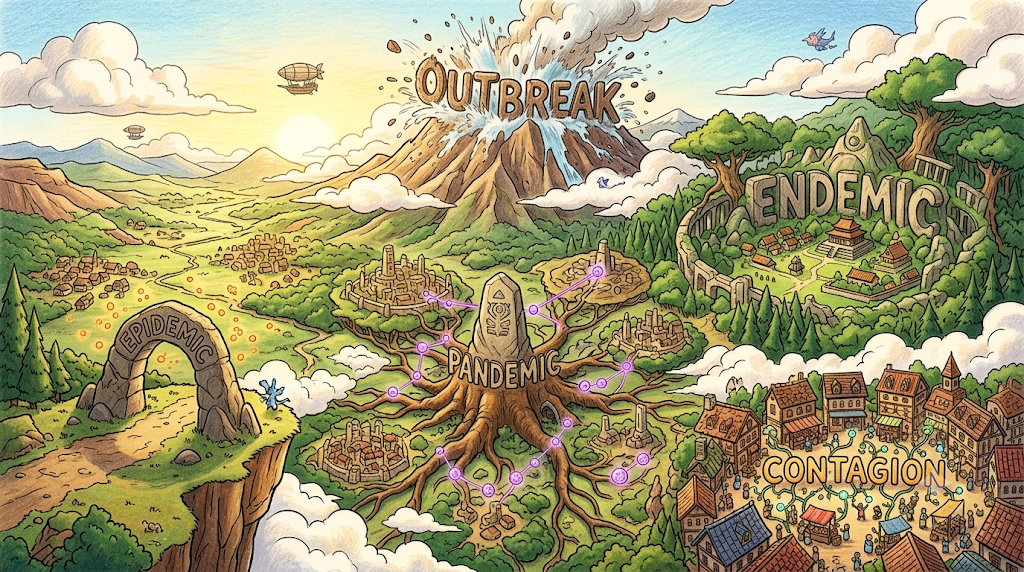
단어 공통점 뉘앙스 차이 예문
| epidemic | 질병 확산 관련 | 특정 지역·집단에서 예상 수준을 크게 초과하여 급속히 퍼지는 것 강조 | a cholera epidemic |
| pandemic | 질병 확산 관련 | 여러 나라나 대륙에 걸쳐 전 세계적으로 퍼지는 것 강조 | a global pandemic |
| endemic | 질병 확산 관련 | 특정 지역이나 집단에서 지속적이고 안정적으로 존재하는 것 강조 | endemic to the region |
| outbreak | 질병 확산 관련 | 질병이 갑자기 특정 시점에 발생하거나 급증하는 사건 강조 | an outbreak of food poisoning |
| contagion | 질병 확산 관련 | 접촉이나 가까운 상호작용을 통해 질병이 전파되는 것 강조 | the spread of contagion |
유의어 예문 리스트
- (pandemic) The declaration of a pandemic by the World Health Organisation in March 2020 signalled that the spread of the coronavirus had gone beyond what any individual country could address alone and required coordinated international action — a threshold that changes not only the public health response but the legal and diplomatic obligations of member states. (2020년 3월 세계보건기구의 팬데믹 선언은 코로나바이러스의 확산이 어떤 개별 국가도 단독으로 해결할 수 있는 것을 넘어섰으며 조정된 국제적 행동이 필요하다는 것을 신호했다 — 공중 보건 대응만이 아니라 회원국의 법적이고 외교적 의무를 변화시키는 임계값이었다.)
- (endemic) Diseases that are endemic to a region can be even more damaging than occasional epidemic visitors precisely because they never go away — communities living with endemic malaria, for example, bear not just the direct health costs but the indirect economic costs of chronic illness, reduced workforce productivity, and the diversion of healthcare resources that might otherwise go to other needs. (지역에 고유한 질병들은 결코 사라지지 않기 때문에 가끔의 유행병 방문자보다 훨씬 더 해로울 수 있다 — 예를 들어 풍토병인 말라리아와 함께 사는 지역 사회는 직접적인 건강 비용만이 아니라 만성 질환, 감소된 인력 생산성, 그리고 다른 필요에 갈 수 있는 의료 자원의 전용이라는 간접 경제 비용도 부담한다.)
- (outbreak) The initial outbreak at the school canteen was quickly identified through contact tracing, which revealed that all the initial cases had eaten the same meal on the same day — but by the time this was established, some of those affected had already passed the infection to family members, creating secondary cases that complicated efforts to limit the spread. (학교 식당에서의 초기 발생은 접촉자 추적을 통해 빠르게 확인됐는데 모든 초기 사례가 같은 날 같은 식사를 했다는 것이 밝혀졌다 — 하지만 이것이 확립될 때쯤에는 영향받은 일부 사람들이 이미 가족 구성원에게 감염을 전파하여 확산 제한 노력을 복잡하게 하는 이차 사례를 만들었다.)
- (contagion) The mechanism of contagion for the disease was initially unclear — there were cases among people with no obvious contact with each other that suggested possible airborne transmission, but also clusters in households that were consistent with close-contact spread — and the uncertainty about transmission routes made it more difficult to design targeted prevention measures. (질병의 전파 메커니즘은 처음에 불분명했다 — 공기 중 전파 가능성을 시사하는 서로 명확한 접촉이 없는 사람들 사이의 사례들이 있었지만 밀접 접촉 전파와 일치하는 가정 내 클러스터도 있었다 — 그리고 전파 경로에 대한 불확실성이 표적화된 예방 조치를 설계하기 더 어렵게 만들었다.)
결론 정리
epidemic은 단순히 "유행병"이 아니라, 어떤 질병이나 현상이 정상적인 예상 수준을 훨씬 초과하여 특정 지역이나 집단에서 급속히 퍼지는 것의 이미지에서 출발해 유행병·유행병 발생·유행병의 확산·유행병을 통제하다·유행병 수준·~의 급속한 증가·유행병을 선포하다·유행 곡선·유행병을 억제하다·유행병 예방까지 확장되는 단어다 — epidemic이 있는 곳엔 언제나 '불길이 건조한 숲에서 통제 불가능하게 번져나가듯 한 명에서 여럿으로 기하급수적으로 확산되어 사회 전체가 대응해야 하는' 대유행의 이미지가 있다.
💡 epidemic은 "어떤 질병이나 현상이 정상적인 예상 수준을 훨씬 초과하여 특정 지역이나 집단에서 급속히 퍼지는 것을 가리키는" 단어 — epidemic proportion·contain an epidemic·epidemic of 가 수능 최빈출. pandemic(전 세계적 대유행)·endemic(지역 특유의 상시 질병)과의 구별이 핵심 출제 포인트.
🌟 초등학생 버전 epidemic는 단순히 "유행병"이 아니에요! epidemic proportion은 우리 학교에서 감기가 도는 것은 괜찮은데 어느 날부터 갑자기 반 전체의 반 이상이 감기에 걸리고 다른 반들도 마찬가지가 돼서 학교 전체가 난리가 났을 때처럼 원래는 평범한 수준이었던 것이 갑자기 무서운 속도로 퍼져 사회 전체가 대응해야 할 정도의 규모가 된 상황이고, contain an epidemic은 산불이 났을 때 소방관들이 불이 더 넓은 숲으로 퍼져나가지 못하도록 주변에 방화선을 치는 것처럼 이미 퍼지고 있는 전염병이 더 많은 사람들에게 퍼지지 못하도록 막아서 특정 지역 안에 가두어 차단하는 것이에요! 🌍✨
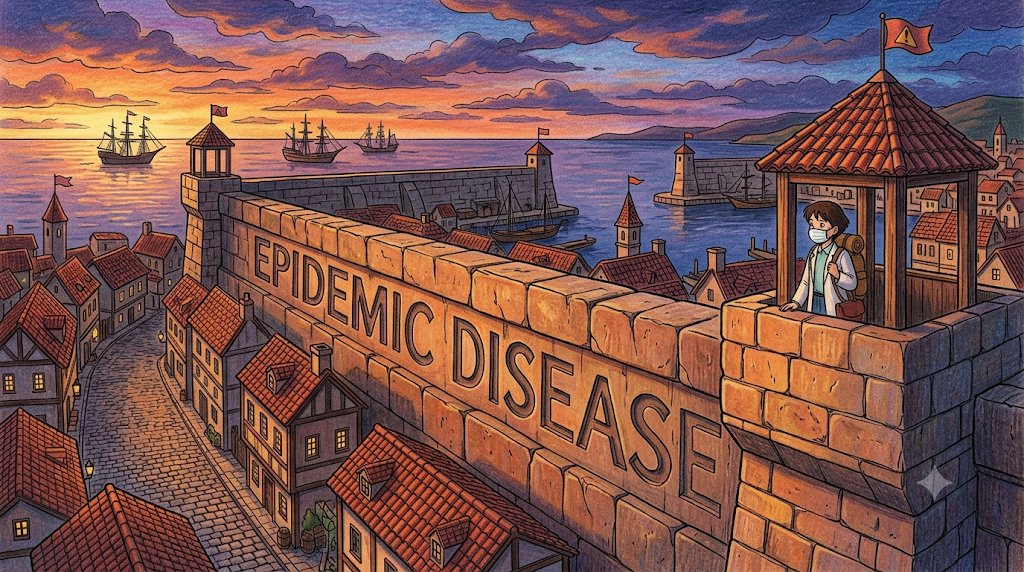
epidemic disease [ˌepɪˈdemɪk dɪˈziːz]
품사/뉘앙스 설명
(명사구) 유행병, 전염성 유행 질환
특정 시기와 지역에서 예상보다 훨씬 높은 비율로 발생하는 질병을 강조합니다. 질병의 사회적·역사적 영향이 핵심 뉘앙스입니다. 수능 독해 과학·역사·사회 지문의 핵심 표현입니다.
- The study of epidemic diseases in historical context reveals that the ability of a society to respond effectively depends heavily on the existing social infrastructure — communities with functioning sewage systems, reliable food supplies, and organised healthcare were consistently better positioned to limit the spread and the death toll, regardless of whether they understood the underlying biology. (역사적 맥락에서 유행병들을 연구하면 사회가 효과적으로 대응하는 능력이 기존 사회 인프라에 크게 달려있다는 것이 드러난다 — 기능하는 하수 시스템, 신뢰할 수 있는 식품 공급, 그리고 조직화된 의료를 갖춘 지역 사회는 근본적인 생물학을 이해했는지와 관계없이 확산과 사망자 수를 제한하기에 일관되게 더 유리한 위치에 있었다.)
- The recurrence of the same epidemic diseases across different civilisations and different centuries suggests that biological vulnerability to certain pathogens is a fundamental feature of human existence rather than a contingent historical accident — but what changes between episodes is how quickly societies can mount effective responses, which is primarily a function of their accumulated knowledge and institutional capacity. (다른 문명들과 다른 세기들에 걸쳐 같은 유행병들이 반복되는 것은 특정 병원체에 대한 생물학적 취약성이 우연한 역사적 사고가 아니라 인간 존재의 근본적인 특성임을 시사한다 — 하지만 에피소드 사이에 바뀌는 것은 사회가 효과적인 대응을 얼마나 빠르게 할 수 있는지이며 이것은 주로 축적된 지식과 제도적 능력의 함수이다.)
- The emergence of new epidemic diseases — or the re-emergence of old ones in new forms resistant to existing treatments — is a predictable consequence of the way humans interact with natural environments, with domesticated animals, and with each other across global networks of travel and trade, making ongoing surveillance and preparedness not optional but essential. (새로운 유행병들의 출현 — 또는 기존 치료법에 내성이 있는 새로운 형태로 오래된 것들의 재출현 — 은 인간이 자연 환경, 가축, 그리고 여행과 무역의 전 세계 네트워크를 통한 서로 간의 상호작용 방식의 예측 가능한 결과이며 지속적인 감시와 준비를 선택이 아닌 필수적인 것으로 만든다.)
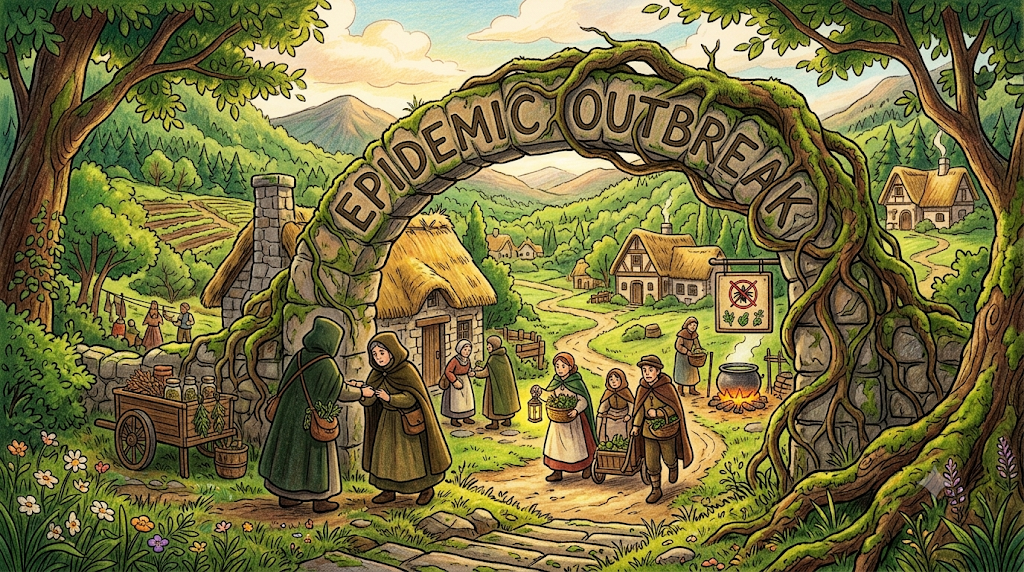
epidemic outbreak [ˌepɪˈdemɪk ˈaʊtbreɪk]
품사/뉘앙스 설명
(명사구) 유행병 발생, 감염병 창궐
어떤 질병이 갑자기 많은 사람들에게 빠르게 퍼지기 시작하는 시점이나 사건을 강조합니다. 발생의 갑작스러움과 초기 대응의 중요성이 핵심 뉘앙스입니다. 수능 독해 과학·사회·역사 지문에서 자주 등장합니다.
- The early days of an epidemic outbreak are often characterised by uncertainty about key parameters — the pathogen may not yet have been identified, the transmission route may be unclear, and the severity of illness in different populations may not yet be known — making the decisions that have to be made at this stage among the most difficult in public health. (유행병 발생의 초기 며칠은 종종 핵심 매개변수에 대한 불확실성으로 특징지어진다 — 병원체가 아직 확인되지 않았을 수 있고, 전파 경로가 불분명할 수 있으며, 다른 인구에서의 질병 중증도가 아직 알려지지 않았을 수 있다 — 이 단계에서 내려야 하는 결정들을 공중 보건에서 가장 어려운 것들 중 하나로 만든다.)
- The epidemic outbreak at the nursing home was identified only because an alert staff member noticed an unusually high number of residents developing respiratory symptoms within a short period — a reminder that the first line of surveillance is often healthcare workers who notice patterns that statistics alone might not yet make visible. (요양원에서의 유행병 발생은 경계심 있는 직원이 짧은 기간 내에 비정상적으로 많은 수의 거주자들이 호흡기 증상을 보이는 것을 알아챘기 때문에 확인됐다 — 감시의 첫 번째 선이 종종 통계만으로는 아직 보이지 않을 패턴을 알아채는 의료 종사자들이라는 것을 상기시켜 준다.)
- The speed at which public health authorities respond to an epidemic outbreak in its earliest stages can be the difference between an event that is contained within a community and one that grows into a wider regional or national crisis — but faster response requires not just will and resources but pre-existing systems for detection, communication, and intervention that cannot be created in the moment. (공중 보건 당국이 초기 단계의 유행병 발생에 대응하는 속도가 지역 사회 내에서 억제되는 사건과 더 넓은 지역적이나 국가적 위기로 성장하는 사건의 차이가 될 수 있다 — 하지만 더 빠른 대응은 의지와 자원만이 아니라 그 순간에 만들어질 수 없는 탐지, 소통, 그리고 개입을 위한 기존 시스템을 필요로 한다.)
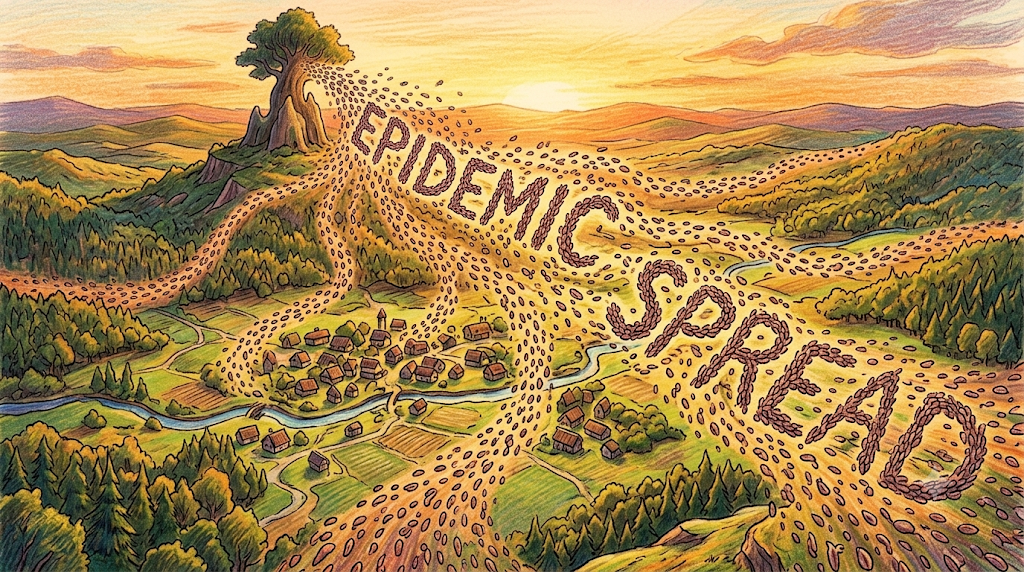
epidemic spread [ˌepɪˈdemɪk spred]
품사/뉘앙스 설명
(명사구) 유행병의 확산, 전염병의 전파
질병이나 현상이 빠르게 여러 사람이나 지역으로 퍼지는 과정을 강조합니다. 확산의 속도와 패턴이 핵심 뉘앙스입니다. 수능 독해 과학·사회·교육 지문에서 자주 등장합니다.
- Mathematical models of epidemic spread allow public health authorities to simulate the likely trajectory of an outbreak under different intervention scenarios — how many cases can be expected if no action is taken, how much a vaccine campaign of a given coverage level would reduce this, and how the timing of interventions affects their effectiveness. (유행병 확산의 수학적 모델은 공중 보건 당국이 다른 개입 시나리오에서 발병의 예상 궤도를 시뮬레이션할 수 있게 한다 — 아무 행동도 취하지 않으면 얼마나 많은 사례가 예상될 수 있는지, 주어진 적용 범위 수준의 백신 캠페인이 이것을 얼마나 줄일지, 그리고 개입의 시기가 효과성에 어떻게 영향을 미치는지이다.)
- The epidemic spread of a pathogen through a population is not uniform — it tends to follow the structure of social networks, moving fastest through highly connected individuals and groups and more slowly through those with fewer social contacts, which is one reason why network-based approaches to understanding transmission have become an important tool in epidemiology. (인구를 통한 병원체의 유행성 확산은 균일하지 않다 — 그것은 사회적 네트워크의 구조를 따르는 경향이 있으며 고도로 연결된 개인과 그룹을 통해 가장 빠르게 이동하고 사회적 접촉이 적은 사람들을 통해 더 천천히 이동하는데 이것이 전파를 이해하기 위한 네트워크 기반 접근 방식이 역학의 중요한 도구가 된 이유 중 하나이다.)
- The epidemic spread of a disease concept — the way that diagnostic categories spread through clinical practice and popular culture — is an underappreciated aspect of how epidemic patterns are shaped, since the willingness to seek diagnosis and the ability to recognise symptoms are themselves influenced by the social and cultural environment in which a person lives. (질병 개념의 유행성 확산 — 진단 범주가 임상 실습과 대중 문화를 통해 퍼지는 방식 — 은 진단을 구하려는 의지와 증상을 인식하는 능력이 그 자체로 사람이 사는 사회적이고 문화적 환경에 영향을 받기 때문에 유행 패턴이 어떻게 형성되는지의 과소평가된 측면이다.)

control an epidemic [kənˈtrəʊl ən ˌepɪˈdemɪk]
품사/뉘앙스 설명
(동사구) 유행병을 통제하다, 전염병을 관리하다
급속히 퍼지는 질병을 더 이상 확산되지 않도록 막거나 줄이는 노력을 강조합니다. 다층적인 동시 대응이 핵심 뉘앙스입니다. 수능 독해 과학·사회·역사 지문의 핵심 표현입니다.
- The history of attempts to control epidemics before the germ theory of disease was established is a history of partial successes achieved through measures that were effective for reasons that their practitioners did not fully understand — quarantine worked long before anyone knew about viruses, and sanitation improvements reduced mortality before anyone had identified the specific pathogens responsible. (세균 이론이 확립되기 전에 유행병을 통제하려는 시도의 역사는 실천가들이 완전히 이해하지 못한 이유로 효과적이었던 조치를 통해 달성된 부분적 성공의 역사이다 — 격리는 누군가가 바이러스에 대해 알기 훨씬 전에 효과가 있었으며 위생 개선은 누군가가 책임 있는 특정 병원체를 확인하기 전에 사망률을 줄였다.)
- Controlling an epidemic of a disease with a long incubation period is particularly challenging because the infected people who will go on to spread the disease are not yet symptomatic — they may be moving freely through the community, transmitting the pathogen to others, at the very time when isolation and treatment would be most effective at breaking transmission chains. (잠복기가 긴 질병의 유행병을 통제하는 것은 질병을 계속 전파할 감염된 사람들이 아직 증상이 없기 때문에 특히 어렵다 — 격리와 치료가 전파 사슬을 끊는 데 가장 효과적일 바로 그 시간에 그들은 지역 사회를 자유롭게 이동하며 다른 사람들에게 병원체를 전파하고 있을 수 있다.)
- Attempts to control an epidemic through behaviour change — encouraging hand washing, mask wearing, or social distancing — face the fundamental challenge that the effectiveness of these measures depends on widespread voluntary adoption, and that adoption depends on public trust in the institutions providing guidance, which cannot be assumed and must be earned through consistent, transparent communication. 유행병을 행동 변화를 통해 통제하려는 시도 — 손 씻기, 마스크 착용, 또는 사회적 거리두기를 장려하는 — 는 이러한 조치들의 효과성이 광범위한 자발적 채택에 달려있고 채택이 안내를 제공하는 기관에 대한 대중의 신뢰에 달려있다는 근본적인 도전에 직면한다.)
epidemic proportion [ˌepɪˈdemɪk prəˈpɔːʃən]
품사/뉘앙스 설명
(명사구) 유행병 수준, 전염병 규모
어떤 현상이나 문제가 유행병처럼 대규모로 퍼져 사회 전체에 영향을 미치는 수준에 이른 것을 강조합니다. 비유적 사용과 사회적 영향의 규모가 핵심 뉘앙스입니다. 수능 독해 과학·사회·심리·교육 지문의 핵심 표현입니다.
- Drug addiction has reached epidemic proportions in some communities, with consequences that extend far beyond the individuals directly affected — to families and children left to cope with a parent's addiction, to communities experiencing increases in drug-related crime, and to healthcare and social services systems that are struggling to respond to needs that exceed their capacity. (약물 중독은 일부 지역 사회에서 유행병 수준에 이르렀으며 직접 영향받은 개인을 훨씬 넘어서는 결과를 갖는다 — 부모의 중독을 다루어야 하는 가족과 아이들에게, 마약 관련 범죄 증가를 경험하는 지역 사회에, 그리고 자신의 능력을 초과하는 수요에 대응하는 데 어려움을 겪는 의료 및 사회 서비스 시스템에이다.)
- The problem of food waste has grown to epidemic proportions globally — with estimates suggesting that approximately one-third of all food produced for human consumption is lost or wasted somewhere along the supply chain — yet it remains one of the least publicised aspects of the challenge of feeding a growing world population sustainably. (음식 낭비 문제가 전 세계적으로 유행병 수준으로 성장했다 — 인간 소비를 위해 생산된 모든 음식의 약 3분의 1이 공급 사슬의 어딘가에서 손실되거나 낭비된다는 추정이 있는데 — 그러나 성장하는 세계 인구를 지속 가능하게 먹이는 도전의 가장 적게 알려진 측면 중 하나로 남아있다.)
- Sleep deprivation has reached epidemic proportions in industrialised countries, with surveys consistently showing that large proportions of adults regularly sleep fewer hours than sleep science indicates is optimal for health — a situation driven by work demands, commute times, digital entertainment, and cultural attitudes that treat sleep as a luxury rather than a biological necessity. (수면 부족이 선진국에서 유행병 수준에 이르렀으며 조사들이 일관되게 상당한 비율의 성인들이 수면 과학이 건강에 최적이라고 나타내는 것보다 더 적은 시간을 정기적으로 잔다는 것을 보여준다 — 업무 수요, 출퇴근 시간, 디지털 오락, 그리고 수면을 생물학적 필수품이 아닌 사치품으로 취급하는 문화적 태도에 의해 이끌리는 상황이다.)

epidemic of [ˌepɪˈdemɪk əv]
품사/뉘앙스 설명
(명사구) ~의 급속한 증가, ~의 대유행
전염병뿐 아니라 어떤 현상이나 행동이나 문제가 빠르게 대규모로 퍼지는 것을 비유적으로 강조합니다. 비유적 확장이 핵심 뉘앙스입니다. 수능 독해 사회·교육·심리 지문의 핵심 표현입니다.
- The epidemic of misinformation about health topics is a genuine public health problem — people who make medical decisions based on false information may delay seeking evidence-based treatment, choose ineffective or harmful alternatives, and spread their mistaken beliefs to others, with consequences that can be measured in preventable illness and death. (건강 주제에 대한 허위 정보의 대유행은 진정한 공중 보건 문제이다 — 잘못된 정보를 기반으로 의료 결정을 내리는 사람들은 증거 기반 치료를 구하는 것을 지연하고, 비효과적이거나 해로운 대안을 선택하며, 잘못된 믿음을 다른 사람들에게 전파하여 예방 가능한 질병과 사망으로 측정될 수 있는 결과를 낳을 수 있다.)
- What sociologists describe as an epidemic of distrust — the declining confidence in institutions, expertise, and other people that has been documented across many developed countries — has significant consequences not only for political systems but for public health, since effective responses to disease outbreaks depend heavily on the public's willingness to follow guidance from trusted authorities. (사회학자들이 불신의 대유행으로 묘사하는 것 — 많은 선진국들에 걸쳐 문서화된 기관, 전문성, 그리고 다른 사람들에 대한 신뢰의 감소 — 은 정치 시스템만이 아니라 공중 보건에도 중요한 결과를 갖는데 질병 발병에 대한 효과적인 대응이 신뢰할 수 있는 당국의 지침을 따르려는 대중의 의지에 크게 달려있기 때문이다.)
- The epidemic of short-termism in business decision-making — the tendency to prioritise quarterly financial results over long-term investment in people, research, and infrastructure — may produce impressive short-term numbers while systematically undermining the foundations of future competitiveness and innovation that would produce better long-term outcomes. (비즈니스 의사결정에서 단기주의의 대유행 — 사람, 연구, 인프라에 대한 장기 투자보다 분기별 재무 결과를 우선시하는 경향 — 은 더 나은 장기적 결과를 만들어낼 미래 경쟁력과 혁신의 기반을 체계적으로 약화시키면서 인상적인 단기 수치를 만들어낼 수 있다.)
declare an epidemic [dɪˈkleər ən ˌepɪˈdemɪk]
품사/뉘앙스 설명
(동사구) 유행병을 선포하다, 전염병 상황을 공식 선언하다
보건 당국이나 정부가 질병 확산이 심각하다는 것을 공식적으로 알리는 것을 강조합니다. 공식 선언이 가져오는 법적·실질적 변화가 핵심 뉘앙스입니다. 수능 독해 과학·사회·역사 지문에서 자주 등장합니다.
- The decision about when to declare an epidemic involves a genuine trade-off between acting early enough to mobilise an effective response and not declaring too early and creating panic before the scale of the problem is clear — and the political consequences of getting this timing wrong in either direction can be severe, though they are asymmetric: under-reaction typically causes more actual harm than over-reaction. (유행병을 선포할 시기에 대한 결정은 효과적인 대응을 동원하기에 충분히 일찍 행동하는 것과 문제의 규모가 명확하기 전에 너무 일찍 선포하여 공황을 만들지 않는 것 사이의 진정한 절충을 포함한다 — 그리고 어느 방향으로든 이 시기를 잘못 판단하는 것의 정치적 결과는 심각할 수 있지만 비대칭적이다: 과소 반응은 전형적으로 과잉 반응보다 더 많은 실제 피해를 야기한다.)
- The authority to declare an epidemic at the national level typically rests with health ministries, but the criteria that trigger such a declaration vary considerably between countries — some have formal thresholds based on surveillance data, while others rely on expert judgment, and the differences in these frameworks can affect how quickly resources are mobilised and how the public perceives the seriousness of the threat. (유행병을 선포하는 국가 수준의 권한은 전형적으로 보건부에 있지만 그러한 선포를 촉발하는 기준은 국가 사이에 상당히 다르다 — 일부는 감시 데이터에 기반한 공식 임계값을 갖는 반면 다른 일부는 전문가 판단에 의존하며 이러한 틀의 차이가 자원이 얼마나 빨리 동원되는지와 대중이 위협의 심각성을 어떻게 인식하는지에 영향을 미칠 수 있다.)
- When international organisations declare an epidemic or its more severe cousin, a pandemic, they are doing more than making a statement about disease prevalence — they are activating international agreements about information sharing, resource deployment, and travel advisories, and sending a signal to governments and healthcare systems around the world that they should begin implementing emergency protocols that had previously only been rehearsed. (국제 기구가 유행병 또는 더 심각한 사촌인 팬데믹을 선포할 때 그들은 질병 유행률에 대한 진술 이상을 하고 있다 — 그들은 정보 공유, 자원 배치, 그리고 여행 권고에 관한 국제 협약을 활성화하고 있으며 전 세계 정부와 의료 시스템에 이전에 리허설만 됐던 비상 프로토콜 시행을 시작해야 한다는 신호를 보내고 있다.)
epidemic curve [ˌepɪˈdemɪk kɜːrv]
품사/뉘앙스 설명
(명사구) 유행 곡선, 전염병 확산 곡선
시간에 따른 새로운 감염 사례 수의 변화를 나타내는 그래프를 강조합니다. 곡선의 모양이 발병의 성질과 대응의 효과를 나타낸다는 것이 핵심 뉘앙스입니다. 수능 독해 과학·수학 지문에서 자주 등장합니다.
- "Flattening the epidemic curve" became a widely used phrase during the COVID-19 pandemic — referring to the goal of slowing transmission enough that the number of new cases at any one time remained within the capacity of healthcare systems to manage, even if the total number of cases over the whole outbreak might not be reduced by the same measures. ("유행 곡선 평탄화하기"는 코로나19 팬데믹 동안 널리 사용되는 표현이 됐다 — 같은 조치들이 전체 발병에 걸쳐 총 사례 수를 동일하게 줄이지 않더라도 어느 한 시점의 새로운 사례 수가 의료 시스템이 관리할 능력 내에 남아있을 만큼 충분히 전파를 늦추는 목표를 가리켜서이다.)
- The epidemic curve is one of the most powerful tools in the epidemiologist's toolkit precisely because it can be constructed from data that is routinely collected — the dates on which cases were diagnosed or hospitalised — and because the patterns it reveals can quickly generate hypotheses about the nature of the outbreak that guide more targeted investigation. (유행 곡선은 역학자의 도구 모음에서 가장 강력한 도구 중 하나인데 정확히 그것이 일상적으로 수집된 데이터 — 사례가 진단되거나 입원된 날짜 — 에서 구성될 수 있고 그것이 드러내는 패턴이 더 표적화된 조사를 안내하는 발병의 성질에 대한 가설을 빠르게 만들어낼 수 있기 때문이다.)
- Changes in the shape of an epidemic curve over the course of an outbreak can indicate whether interventions are working — if the curve was rising and begins to fall after an intervention is introduced, that is suggestive evidence that the intervention may have been effective, though establishing causation rather than correlation requires careful analysis to rule out alternative explanations. (발병 과정에서 유행 곡선 모양의 변화는 개입이 효과가 있는지를 나타낼 수 있다 — 곡선이 상승하다가 개입이 도입된 후 떨어지기 시작하면 그것은 개입이 효과적이었을 수 있다는 시사적 증거이지만 상관관계가 아닌 인과관계를 확립하는 것은 대안적 설명을 배제하기 위한 신중한 분석이 필요하다.)

contain an epidemic [kənˈteɪn ən ˌepɪˈdemɪk]
품사/뉘앙스 설명
(동사구) 유행병을 억제하다, 전염병 확산을 차단하다
이미 시작된 질병의 확산을 더 넓은 지역으로 퍼지지 않도록 막는 것을 강조합니다. 초기 대응과 지역적 제한이 핵심 뉘앙스입니다. 수능 독해 과학·사회·역사 지문에서 자주 등장합니다.
- The strategies used to contain an epidemic depend critically on the biology of the pathogen — how it is transmitted, how quickly it spreads, what proportion of those infected show obvious symptoms, and whether infected people can transmit before they become symptomatic — because each of these factors determines which containment strategies are even theoretically feasible. (유행병을 억제하기 위해 사용되는 전략은 병원체의 생물학에 크게 달려있다 — 어떻게 전파되는지, 얼마나 빠르게 퍼지는지, 감염된 사람들 중 몇 퍼센트가 명확한 증상을 보이는지, 그리고 감염된 사람들이 증상이 생기기 전에 전파할 수 있는지 — 왜냐하면 이러한 각 요인이 어떤 억제 전략이 이론적으로 실행 가능한지를 결정하기 때문이다.)
- The experience of containing epidemics in resource-limited settings has produced important insights that are increasingly relevant even in wealthy countries — that community trust and community engagement matter as much as medical resources, that cultural factors shape which interventions will be accepted, and that sustainable containment requires addressing the social conditions that drive transmission. (자원이 제한된 환경에서 유행병을 억제하는 경험은 부유한 나라에서도 점점 더 관련성이 높아지는 중요한 통찰을 만들어냈다 — 지역 사회 신뢰와 지역 사회 참여가 의료 자원만큼 중요하고, 문화적 요인이 어떤 개입이 수용될지를 형성하며, 지속 가능한 억제가 전파를 이끄는 사회적 조건을 해결하는 것을 필요로 한다는 것이다.)
- Containing an epidemic at its geographical source — preventing it from spreading beyond the initial area of outbreak — is theoretically the most efficient strategy but is practically the most demanding, requiring rapid and accurate detection of cases, comprehensive contact tracing, effective quarantine and isolation, and a level of international cooperation in reporting that political considerations sometimes obstruct. (유행병을 지리적 발원지에서 억제하는 것 — 그것이 초기 발병 지역을 넘어 퍼지는 것을 막는 것 — 은 이론적으로 가장 효율적인 전략이지만 실제로는 가장 까다로운 것으로 사례의 빠르고 정확한 탐지, 포괄적인 접촉자 추적, 효과적인 격리와 고립, 그리고 정치적 고려가 때로 방해하는 보고에서의 국제 협력 수준을 필요로 한다.)
epidemic prevention [ˌepɪˈdemɪk prɪˈvenʃən]
품사/뉘앙스 설명
(명사구) 유행병 예방, 전염병 방지
질병이 유행 수준으로 퍼지기 전에 미리 막거나 줄이는 체계적인 노력을 강조합니다. 사전 준비와 시스템 구축이 핵심 뉘앙스입니다. 수능 독해 과학·사회·교육 지문의 핵심 표현입니다.
- Epidemic prevention at the individual level includes vaccination, hand hygiene, and avoiding close contact with infected people, but these individual measures depend on system-level enablers — vaccines that have been developed, tested, and made accessible, clean water supplies that make hand washing feasible, and healthcare systems that identify and manage infectious cases promptly. (개인 수준에서의 유행병 예방은 예방 접종, 손 위생, 그리고 감염된 사람들과의 밀접 접촉 피하기를 포함하지만 이러한 개인적 조치들은 시스템 수준의 가능자에 달려있다 — 개발되고, 검증되고, 접근 가능하게 만들어진 백신, 손 씻기를 실행 가능하게 하는 깨끗한 수 공급, 그리고 감염 사례를 신속하게 확인하고 관리하는 의료 시스템이다.)
- The economic case for investing in epidemic prevention is strong — the costs of preparedness are typically far lower than the costs of response, and the indirect costs of an uncontrolled epidemic in terms of lost economic output, disrupted supply chains, and reduced workforce productivity can be many times larger than the direct costs of healthcare. (유행병 예방에 투자하기 위한 경제적 논거는 강하다 — 준비 비용은 전형적으로 대응 비용보다 훨씬 낮으며 손실된 경제 생산량, 혼란된 공급 사슬, 그리고 감소된 인력 생산성 측면에서 통제되지 않은 유행병의 간접 비용은 의료의 직접 비용보다 훨씬 더 클 수 있다.)
- Successful epidemic prevention requires addressing not just the immediate biological mechanisms of disease transmission but the social and economic conditions that determine who is most exposed to disease and least able to protect themselves — because epidemics do not affect all populations equally, and prevention strategies that do not reach the most vulnerable are unlikely to be effective even for the populations they do reach. (성공적인 유행병 예방은 질병 전파의 즉각적인 생물학적 메커니즘만이 아니라 누가 질병에 가장 많이 노출되고 자신을 가장 덜 보호할 수 있는지를 결정하는 사회적이고 경제적 조건을 해결하는 것을 필요로 한다 — 유행병들이 모든 인구에 균등하게 영향을 미치지 않으며 가장 취약한 사람들에게 도달하지 않는 예방 전략은 도달하는 인구에게도 효과적이지 않을 가능성이 있기 때문이다.)
숙어 그룹 묶음 1 — 유행병의 발생과 확산 epidemic 핵심 패턴
표현 의미 핵심 뉘앙스 주요 맥락
| epidemic outbreak | 유행병 발생 | 발생의 갑작스러움과 초기 대응의 중요성 | 과학·사회·역사 |
| epidemic spread | 유행병의 확산 | 확산의 속도와 패턴 | 과학·사회·교육 |
| epidemic curve | 유행 곡선 | 곡선의 모양이 발병의 성질을 나타냄 | 과학·수학 |
이 세 표현은 모두 epidemic의 "급속히 퍼지는 과정" 이미지를 공유하되, 각각 질병이 갑자기 많은 사람들에게 퍼지기 시작하는 사건(epidemic outbreak)·질병이 빠르게 여러 사람이나 지역으로 퍼지는 과정(epidemic spread)·시간에 따른 사례 수의 변화를 시각화한 그래프(epidemic curve)의 관점에서 접근합니다.
- The epidemic curve of an epidemic outbreak allows epidemiologists to distinguish between a concentrated epidemic spread from a single source and a more diffuse spread through person-to-person transmission — information that is essential for designing the right containment strategy, since the two scenarios require very different responses. (유행병 발생의 유행 곡선은 역학자들이 단일 원천으로부터의 집중된 유행성 확산과 사람 간 전파를 통한 더 분산된 확산을 구별할 수 있게 한다 — 두 시나리오가 매우 다른 대응을 필요로 하기 때문에 올바른 억제 전략을 설계하는 데 필수적인 정보이다.)
- Tracking an epidemic outbreak through its epidemic curve allows health authorities to assess whether the spread is being successfully slowed — a curve that was rising but has begun to plateau suggests that containment measures may be working, while a continued steep rise indicates that further interventions are needed. (유행병 발생을 그것의 유행 곡선을 통해 추적하면 보건 당국이 확산이 성공적으로 느려지고 있는지 평가할 수 있게 된다 — 상승하다가 고원을 이루기 시작한 곡선은 억제 조치가 효과가 있을 수 있다는 것을 시사하는 반면 계속되는 가파른 상승은 추가 개입이 필요하다는 것을 나타낸다.)
- Understanding the relationship between the epidemic outbreak, the pattern of epidemic spread, and the resulting shape of the epidemic curve is central to the science of epidemiology — because each piece of information about how a disease moves through a population makes it possible to design more precisely targeted interventions that can interrupt the spread more efficiently. (유행병 발생, 유행성 확산의 패턴, 그리고 결과적인 유행 곡선의 모양 사이의 관계를 이해하는 것은 역학 과학의 핵심이다 — 질병이 인구를 통해 어떻게 이동하는지에 대한 각각의 정보 조각이 확산을 더 효율적으로 중단할 수 있는 더 정밀하게 표적화된 개입을 설계할 수 있게 하기 때문이다.)
숙어 그룹 묶음 2 — 유행병에 대한 대응 epidemic 심화 패턴
표현 의미 핵심 뉘앙스 주요 맥락
| contain an epidemic | 유행병을 억제하다 | 초기 대응과 지역적 제한 | 과학·사회·역사 |
| control an epidemic | 유행병을 통제하다 | 다층적인 동시 대응 | 과학·사회·역사 |
| epidemic prevention | 유행병 예방 | 사전 준비와 시스템 구축 | 과학·사회·교육 |
이 세 표현은 모두 epidemic의 "급속한 확산에 대한 대응" 이미지를 공유하되, 각각 이미 시작된 확산을 더 넓은 지역으로 퍼지지 않도록 막는 것(contain an epidemic)·다양한 수단으로 전체적으로 질병을 관리하고 줄이는 것(control an epidemic)·질병이 유행 수준으로 퍼지기 전에 미리 막는 것(epidemic prevention)의 관점에서 접근합니다.
- Epidemic prevention, when effective, makes it unnecessary to either contain or control an epidemic — but prevention requires investment before the threat is visible, which is always harder to justify than treatment after the threat has materialised. (유행병 예방이 효과적일 때 유행병을 억제하거나 통제할 필요가 없게 만든다 — 하지만 예방은 위협이 보이기 전에 투자를 필요로 하는데 이것은 항상 위협이 현실화된 후 치료보다 정당화하기 더 어렵다.)
- The transition from successfully containing an epidemic to actively controlling it reflects a shift in strategy — containment focuses on preventing the disease from spreading to new populations, while control focuses on reducing its impact in populations already affected, and prevention ideally operates before either phase becomes necessary. (유행병을 성공적으로 억제하는 것에서 적극적으로 통제하는 것으로의 전환은 전략의 변화를 반영한다 — 억제는 질병이 새로운 인구로 퍼지는 것을 막는 데 집중하는 반면 통제는 이미 영향받은 인구에서 그 영향을 줄이는 데 집중하며 예방은 이상적으로 어느 단계도 필요하지 않기 전에 작동한다.)
- The most resilient public health systems are those that excel at all three: epidemic prevention that reduces the probability of outbreaks occurring, containment strategies that limit their spread when they do occur, and control measures that reduce harm once containment is no longer feasible — because no single strategy works in all circumstances, and the best response depends on the characteristics of the specific threat. (가장 회복탄력적인 공중 보건 시스템은 세 가지 모두에서 탁월한 것들이다: 발병 발생 가능성을 줄이는 유행병 예방, 발생할 때 확산을 제한하는 억제 전략, 그리고 억제가 더 이상 실행 가능하지 않을 때 피해를 줄이는 통제 조치 — 어떤 단일 전략도 모든 상황에서 작동하지 않으며 최선의 대응은 특정 위협의 특성에 달려있기 때문이다.)
숙어 그룹 묶음 3 — 유행병의 공식화와 규모 epidemic 심화 패턴
표현 의미 핵심 뉘앙스 주요 맥락
| declare an epidemic | 유행병을 선포하다 | 공식 선언이 가져오는 법적·실질적 변화 | 과학·사회·역사 |
| epidemic proportion | 유행병 수준 | 비유적 사용과 사회적 영향의 규모 | 과학·사회·심리·교육 |
| epidemic of | ~의 급속한 증가 | 비유적 확장 | 사회·교육·심리 |
이 세 표현은 모두 epidemic의 "규모나 공식성" 이미지를 공유하되, 각각 공식적인 선언이 법적 권한과 자원 동원을 촉발하는 것(declare an epidemic)·어떤 현상이 유행병처럼 대규모로 퍼진 것(epidemic proportion)·전염병뿐 아니라 다양한 사회 문제가 급속히 퍼지는 것(epidemic of)의 관점에서 접근합니다.
- When health authorities declare that a problem has reached epidemic proportions, they are doing something similar to using the language of epidemic of in journalism — they are using the powerful association of the word epidemic to convey urgency and scale, signalling that ordinary measures are insufficient and that the situation requires a coordinated, large-scale response. (보건 당국이 문제가 유행병 수준에 이르렀다고 선포할 때 그들은 저널리즘에서 ~의 대유행 언어를 사용하는 것과 유사한 것을 하고 있다 — 그들은 유행병 단어의 강력한 연상을 사용하여 긴박감과 규모를 전달하고 있으며 일반적인 조치가 불충분하고 상황이 조정되고 대규모 대응을 필요로 한다는 신호를 보내고 있다.)
- The epidemic of obesity that has led health authorities in some countries to declare it a public health crisis of epidemic proportions illustrates the tension in using medical language for conditions that are influenced by social, economic, and environmental factors — because calling it an epidemic implies that it can be addressed in the same way as an infectious disease, when the levers for change are very different. (일부 나라의 보건 당국이 유행병 수준의 공중 보건 위기로 선포하도록 이끈 비만의 대유행은 사회적, 경제적, 환경적 요인에 영향을 받는 상태에 의학적 언어를 사용하는 것의 긴장을 보여준다 — 그것을 유행병으로 부르는 것은 변화를 위한 레버가 매우 다를 때 전염병과 같은 방식으로 해결될 수 있다는 것을 암시하기 때문이다.)
- The language of epidemic — whether it is an epidemic of violence, an epidemic of inequality, or a problem of epidemic proportions — is most persuasive when declared by authorities with genuine expertise, but it can be undermined when used so frequently that it loses its power to convey genuine urgency, making the careful and selective use of this framing important for its effectiveness. (유행병의 언어 — 폭력의 대유행이든, 불평등의 유행이든, 아니면 유행병 수준의 문제이든 — 는 진정한 전문성을 가진 당국에 의해 선포될 때 가장 설득력 있지만 진정한 긴박감을 전달하는 힘을 잃을 만큼 너무 자주 사용될 때 약화될 수 있어 이 프레이밍의 신중하고 선택적인 사용이 효과성을 위해 중요하다.)
숙어 그룹 묶음 4 — 유행병의 성질과 완성 epidemic 완성 패턴
표현 의미 핵심 뉘앙스 주요 맥락
| epidemic disease | 유행병 | 질병의 사회적·역사적 영향 | 과학·역사·사회 |
| epidemic spread | 유행병의 확산 | 확산의 속도와 패턴 | 과학·사회·교육 |
| epidemic prevention | 유행병 예방 | 사전 준비와 시스템 구축 | 과학·사회·교육 |
이 세 표현은 함께 epidemic이 나타내는 발생·과정·예방의 스펙트럼을 보여줍니다. epidemic disease는 유행병의 본질적 성격을, epidemic spread는 그것이 퍼지는 과정을, epidemic prevention은 그것을 미리 막으려는 노력을 각각 강조합니다.
- Understanding how epidemic diseases spread — what determines epidemic spread and what can slow or stop it — is the foundation of epidemic prevention, because without knowledge of the mechanism you cannot design effective interventions, and without understanding the spread you cannot know where and when interventions are most needed. (유행병들이 어떻게 퍼지는지 이해하는 것 — 무엇이 유행성 확산을 결정하고 무엇이 그것을 늦추거나 멈출 수 있는지 — 는 유행병 예방의 기반인데 메커니즘에 대한 지식 없이는 효과적인 개입을 설계할 수 없으며 확산을 이해하지 못하면 개입이 어디서 언제 가장 필요한지 알 수 없기 때문이다.)
- The history of how humans have responded to epidemic diseases and managed epidemic spread has been shaped by what was known about epidemic prevention at the time — which means that the history of medicine and public health is, in large part, the history of humanity's growing understanding of why some people get sick and others do not, and of what can be done to shift those odds. (인간이 유행병들에 어떻게 대응하고 유행성 확산을 관리해왔는지의 역사는 당시 유행병 예방에 대해 알려진 것에 의해 형성됐다 — 이것은 의학과 공중 보건의 역사가 왜 일부 사람들이 병들고 다른 사람들은 그렇지 않은지와 그 확률을 바꾸기 위해 무엇을 할 수 있는지에 대한 인류의 성장하는 이해의 역사라는 것을 의미한다.)
- Investing in the understanding of epidemic disease and epidemic spread before crises occur is the most cost-effective form of epidemic prevention — the knowledge gained from studying previous outbreaks, from maintaining research capacity in relevant scientific fields, and from training a workforce in the principles of epidemiology can be deployed rapidly when a new threat emerges, whereas trying to build that knowledge base from scratch in the midst of a crisis is both slower and more expensive. (유행병과 유행성 확산에 대한 이해에 위기가 발생하기 전에 투자하는 것은 가장 비용 효과적인 형태의 유행병 예방이다 — 이전 발병 연구, 관련 과학 분야에서의 연구 능력 유지, 그리고 역학 원칙의 인력 훈련에서 얻은 지식은 새로운 위협이 나타날 때 빠르게 배치될 수 있는 반면 위기 한가운데에서 그 지식 기반을 처음부터 구축하려는 것은 더 느리고 더 비용이 많이 든다.)
전체 요약표
표현 의미 핵심 뉘앙스
| epidemic | 유행병, 전염병의 대유행 / 유행성의, 급속히 퍼지는 | 불길이 통제 불가능하게 번져나가듯 기하급수적으로 확산되는 이미지 |
| epidemic disease | 유행병 | 질병의 사회적·역사적 영향 |
| epidemic outbreak | 유행병 발생 | 발생의 갑작스러움과 초기 대응의 중요성 |
| epidemic spread | 유행병의 확산 | 확산의 속도와 패턴 |
| control an epidemic | 유행병을 통제하다 | 다층적인 동시 대응 |
| epidemic proportion | 유행병 수준 | 비유적 사용과 사회적 영향의 규모 |
| epidemic of | ~의 급속한 증가 | 비유적 확장 |
| declare an epidemic | 유행병을 선포하다 | 공식 선언이 가져오는 법적·실질적 변화 |
| epidemic curve | 유행 곡선 | 곡선의 모양이 발병의 성질을 나타냄 |
| contain an epidemic | 유행병을 억제하다 | 초기 대응과 지역적 제한 |
| epidemic prevention | 유행병 예방 | 사전 준비와 시스템 구축 |
유의어 비교표
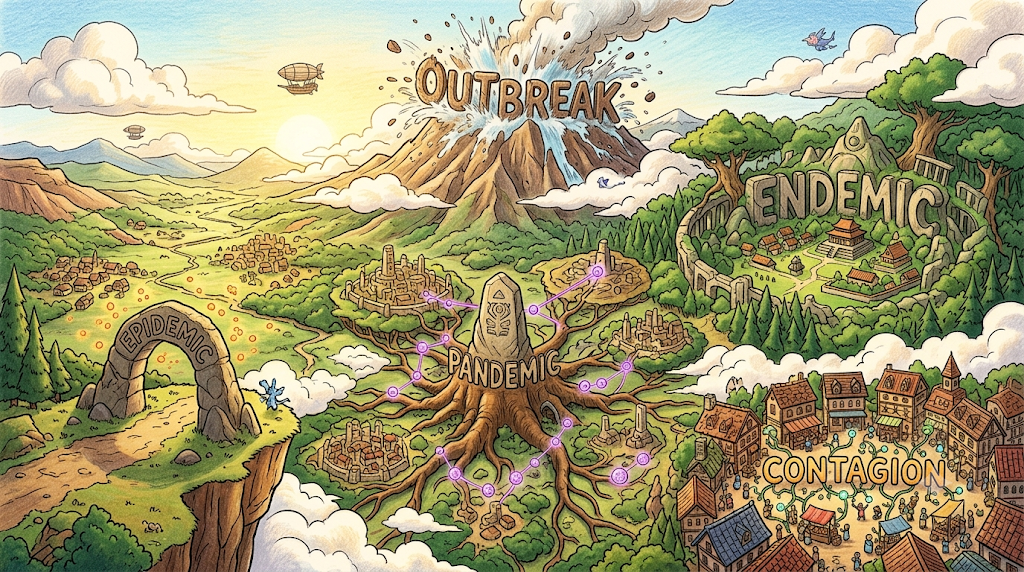
단어 공통점 뉘앙스 차이 예문
| epidemic | 질병 확산 관련 | 특정 지역·집단에서 예상 수준을 크게 초과하여 급속히 퍼지는 것 강조 | a cholera epidemic |
| pandemic | 질병 확산 관련 | 여러 나라나 대륙에 걸쳐 전 세계적으로 퍼지는 것 강조 | a global pandemic |
| endemic | 질병 확산 관련 | 특정 지역이나 집단에서 지속적이고 안정적으로 존재하는 것 강조 | endemic to the region |
| outbreak | 질병 확산 관련 | 질병이 갑자기 특정 시점에 발생하거나 급증하는 사건 강조 | an outbreak of food poisoning |
| contagion | 질병 확산 관련 | 접촉을 통해 질병이 전파되는 것 강조 | the spread of contagion |
결론 정리
epidemic은 단순히 "유행병"이 아니라, 어떤 질병이나 현상이 정상적인 예상 수준을 훨씬 초과하여 특정 지역이나 집단에서 급속히 퍼지는 것의 이미지에서 출발해 유행병·유행병 발생·유행병의 확산·유행병을 통제하다·유행병 수준·~의 급속한 증가·유행병을 선포하다·유행 곡선·유행병을 억제하다·유행병 예방까지 확장되는 단어다 — epidemic이 있는 곳엔 언제나 '불길이 건조한 숲에서 통제 불가능하게 번져나가듯 한 명에서 여럿으로 기하급수적으로 확산되어 사회 전체가 대응해야 하는' 대유행의 이미지가 있다.
💡 epidemic은 "어떤 질병이나 현상이 정상적인 예상 수준을 훨씬 초과하여 특정 지역이나 집단에서 급속히 퍼지는 것을 가리키는" 단어 — epidemic proportion·contain an epidemic·epidemic of 가 수능 최빈출. pandemic(전 세계적 대유행)·endemic(지역 특유의 상시 질병)과의 구별이 핵심 출제 포인트.
🌟 초등학생 버전 epidemic는 단순히 "유행병"이 아니에요! epidemic proportion은 우리 학교에서 감기가 도는 것은 괜찮은데 어느 날부터 갑자기 반 전체의 반 이상이 감기에 걸리고 다른 반들도 마찬가지가 돼서 학교 전체가 난리가 났을 때처럼 원래는 평범한 수준이었던 것이 갑자기 무서운 속도로 퍼져 사회 전체가 대응해야 할 정도의 규모가 된 상황이고, contain an epidemic은 산불이 났을 때 소방관들이 불이 더 넓은 숲으로 퍼져나가지 못하도록 주변에 방화선을 치는 것처럼 이미 퍼지고 있는 전염병이 더 많은 사람들에게 퍼지지 못하도록 막아서 특정 지역 안에 가두어 차단하는 것이에요! 🌍✨


