- 분류 전체보기 (5593)

| 일 | 월 | 화 | 수 | 목 | 금 | 토 |
|---|---|---|---|---|---|---|
| 1 | 2 | |||||
| 3 | 4 | 5 | 6 | 7 | 8 | 9 |
| 10 | 11 | 12 | 13 | 14 | 15 | 16 |
| 17 | 18 | 19 | 20 | 21 | 22 | 23 |
| 24 | 25 | 26 | 27 | 28 | 29 | 30 |
| 31 |
- Yes
- Yeah
- Right?
- please.
- Read between the lines
- oh
- Show Up
- By The Way
- Sure
- Please
- come up with
- entrance fee
- Actually
- hold on
- Sorry
- well
- get through
- too.
- no
- I'm sorry
- OKay
- I'm glad to hear that.
- Hey
- make it
- work out
- please?
- Excuse me
- set up
- Don't worry
- pick up
- Today
- Total
인과함께
Day412 , thread, thread through, hang by a thread, lose the thread, pick up the thread, common thread, thread of hope, unthread, thread needle, red thread 본문
Day412 , thread, thread through, hang by a thread, lose the thread, pick up the thread, common thread, thread of hope, unthread, thread needle, red thread
미인생 2026. 5. 18. 06:08
thread [θred]
(명사/동사) 실, 줄기, 흐름 / 꿰다, 통과하다
The experienced tour guide managed to thread through the crowded market without losing anyone.
(경험 많은 가이드는 아무도 잃어버리지 않고 붐비는 시장 통을 요리조리 잘 빠져나갔다.)
단순히 "실"로만 외우면 수능에서 반드시 틀립니다. thread는 "가늘고 긴 것이 이어지거나 연결되는" 이라는 핵심 이미지에서 출발해, 실제 바느질 실·이야기의 흐름·공통적 연결고리·위험한 상태·인터넷 대화 쓰레드까지 폭넓게 쓰이는 핵심 다의어입니다. 특히 hang by a thread(위태롭게 매달려 있다), common thread(공통적인 연결고리), lose the thread(이야기의 흐름을 잃다) 패턴은 수능 독해 심리·사회·논리 지문에서 핵심적으로 등장합니다.
'thread'는 고대 영어 þrǣd(실, 꼰 것)에서 유래했으며, 인도유럽어 *tere-(비틀다, 돌리다)와 연결됩니다. 어원의 핵심 이미지는 "여러 가닥을 꼬아서 만든 가늘고 긴 것" 으로, 단순한 바느질 실을 넘어 이야기의 연결·공통적 요소·위태로운 상태·논리적 흐름·운명적 연결까지 확장되는 표현의 근원이 된 단어입니다.
1. thread through [θred θruː]
(일상/사회/수능) "통과해 꿰다, 사이사이로 빠져나가다"를 뜻합니다. 좁은 공간이나 여러 장애물 사이를 조심스럽게 통과하거나 실을 어떤 것 사이로 꿰는 것을 강조합니다.
She threaded through the crowded market, carefully holding her bag close so nothing would get knocked over. (그녀는 아무것도 쓰러뜨리지 않도록 가방을 꼭 안고 붐비는 시장 속을 조심스럽게 빠져나갔다.)
2. hang by a thread [hæŋ baɪ ə θred]
(심리/사회/수능) "실 하나에 매달려 있다, 아슬아슬하게 위태롭다"를 뜻합니다. 어떤 상황이 매우 불안정하거나 위험한 상태에 있다는 것을 강조하며, 수능에서 자주 출제되는 표현입니다.
His chances of winning the competition were hanging by a thread after he made three big mistakes in the first round. (첫 번째 라운드에서 세 가지 큰 실수를 한 후 그의 대회 우승 가능성은 아슬아슬하게 위태로웠다.)
3. lose the thread [luːz ðə θred]
(일상/학술/수능) "이야기의 흐름을 잃다, 맥을 놓치다"를 뜻합니다. 이야기나 설명, 논리적 흐름을 따라가다가 어느 순간 이해를 잃어버리는 것을 강조합니다.
She lost the thread of the lecture when her phone buzzed and she looked away for just a moment. (그녀는 폰이 진동해 잠깐 눈을 돌렸을 때 강의의 흐름을 잃었다.)
4. pick up the thread [pɪk ʌp ðə θred]
(일상/학술/수능) "이야기나 작업의 흐름을 다시 잇다, 다시 시작하다"를 뜻합니다. 중단됐던 이야기나 활동을 다시 이어나가는 것을 강조합니다.
After the long holiday, it took her a few days to pick up the thread of the research project and remember where she had left off. (긴 휴일 후 연구 프로젝트의 흐름을 다시 잇고 어디서 멈췄는지 기억하는 데 며칠이 걸렸다.)
5. common thread [ˈkɒmən θred]
(학술/사회/수능) "공통적인 연결고리, 공통 요소"를 뜻합니다. 여러 다른 것들 사이에서 공통적으로 발견되는 연결 요소를 강조하며, 수능 학술 지문에서 자주 등장합니다.
The common thread running through all of her stories was the idea that small acts of kindness could change a person's whole day. (그녀의 모든 이야기를 관통하는 공통적인 연결고리는 작은 친절 행동이 사람의 하루 전체를 바꿀 수 있다는 생각이었다.)
6. thread of hope [θred əv həʊp]
(심리/문학/수능) "희망의 실낱, 한 줄기 희망"을 뜻합니다. 매우 어렵거나 절망적인 상황에서 아직 남아있는 작은 희망을 강조합니다.
Even in the darkest moment of the illness, she held onto a thread of hope that things would eventually get better. (병의 가장 어두운 순간에도 그녀는 결국 상황이 나아질 것이라는 한 줄기 희망을 붙잡았다.)
7. unthread [ʌnˈθred]
(일상/기술/수능) "실을 빼다, 분리하다"를 뜻합니다. 바늘에서 실을 뺀다거나 이어진 것들을 분리하는 것을 강조합니다.
He carefully unthreaded the needle and put the sewing kit away after finishing the repair on his jacket. (그는 재킷 수선을 마친 후 조심스럽게 바늘에서 실을 빼고 바느질 도구를 치웠다.)
8. thread a needle [θred ə ˈniːdəl]
(일상/심리/수능) "바늘에 실을 꿰다"를 뜻합니다. 바늘귀에 실을 통과시키는 것을 강조하며, 비유적으로 매우 어렵거나 정밀한 일을 해내는 것을 나타냅니다.
Her grandmother could still thread a needle without glasses even at the age of eighty, which amazed everyone in the family. (그녀의 할머니는 80세에도 안경 없이 바늘에 실을 꿸 수 있었는데, 이것이 가족 모두를 놀라게 했다.)
9. red thread [red θred]
(문학/문화/수능) "붉은 실, 운명의 실"을 뜻합니다. 아시아 문화에서 운명으로 연결된 사람들을 이어주는 보이지 않는 실을 강조하며, 비유적으로 어떤 것을 관통하는 핵심 요소를 나타냅니다.
The red thread of friendship between the two characters ran through every chapter of the book, even when they were separated. (두 등장인물 사이의 우정이라는 붉은 실은 그들이 분리됐을 때도 책의 모든 챕터를 관통했다.)
10. thread (명사: 실, 흐름, 쓰레드) [θred]
(일상/학술/수능) 명사로 쓰여 "바느질 실, 이야기의 흐름, 온라인 대화 쓰레드"를 뜻합니다. 가늘고 긴 연결 요소나 이어지는 흐름을 강조합니다.
She pulled a loose thread on her jumper and watched with horror as the whole sleeve began to unravel. (그녀는 점퍼의 느슨한 실 하나를 잡아당겼고 소매 전체가 풀리기 시작하는 것을 경악하며 지켜봤다.)

POINT 1. thread — 수능 최빈출 비유·어휘 패턴
thread는 수능 독해 심리·사회·논리 지문에서 비유적 표현으로 자주 출제됩니다.
hang by a thread → 매우 위태롭거나 불안정한 상황을 나타낼 때 예) Her career hangs by a thread. 그녀의 커리어가 아슬아슬하다. common thread → 여러 것들의 공통 요소를 나타낼 때 예) The common thread is honesty. 공통점은 정직함이다. lose the thread → 논리나 이야기의 흐름을 잃을 때 예) I lost the thread. 나는 흐름을 잃었다.
POINT 2. thread / string / wire — 수능 어휘 핵심 비교
이 세 단어는 수능에서 자주 혼동되는 어휘입니다.
thread → 바느질 실, 논리·이야기의 흐름 (가장 가늘고 비유적) 예) A thread of thought. 생각의 실낱. string → 끈, 줄 (thread보다 굵음) 예) A piece of string. 끈 한 조각. wire → 철사, 전선 (단단하고 금속) 예) A wire fence. 철사 울타리.
POINT 3. thread의 다양한 용법 — 수능 독해 문맥 파악 핵심
thread는 수능 독해에서 문맥에 따라 의미가 완전히 달라지는 핵심 단어입니다.
바느질 실 → A thread and needle. 실과 바늘. 이야기 흐름 → Lose the thread. 흐름을 잃다. 공통 요소 → A common thread. 공통점. 위태로움 → Hang by a thread. 아슬아슬하다. 통과하기 → Thread through the crowd. 군중을 통과하다.
(명사) ① 실 (물리적)
thread의 가장 기본적인 의미로, 바느질이나 천을 만드는 데 쓰이는 가늘고 긴 실을 나타냅니다.
- She found a long thread hanging from the bottom of her school skirt and quickly tucked it inside before anyone in the class noticed. (그녀는 교복 치마 밑에서 긴 실 하나가 늘어진 것을 발견하고 학급의 아무도 알아채기 전에 재빨리 안으로 집어넣었다.)
- The old blanket was held together more by habit than by thread, since most of the stitches had come loose over the many years her grandmother had kept it. (오래된 담요는 할머니가 수년간 보관하는 동안 대부분의 바느질이 느슨해졌기 때문에 실보다 습관에 의해 유지됐다.)
- The essay used the image of thread running through fabric to describe how a single idea can hold together an entire piece of writing — just as one strand of colour can define the pattern of a whole cloth. (에세이는 천을 관통하는 실의 이미지를 사용해 하나의 아이디어가 어떻게 전체 글을 하나로 유지할 수 있는지 묘사했다 — 한 가닥의 색이 전체 천의 패턴을 정의할 수 있는 것처럼이다.)
(명사) ② 흐름, 연결고리 (비유적)
thread는 비유적으로 이야기나 논리, 여러 것들을 연결하는 공통 요소를 나타냅니다.
- She could feel the thread of the conversation slipping away as more and more people started talking at the same time and nobody was really listening to anyone else. (점점 더 많은 사람들이 동시에 이야기하기 시작하고 아무도 실제로 다른 사람의 말을 듣지 않으면서 대화의 흐름이 사라지는 것을 느낄 수 있었다.)
- The thread connecting all these historical events was not geography or politics but the simple human desire to feel safe and belong somewhere. (이 모든 역사적 사건들을 연결하는 실낱은 지리나 정치가 아니라 안전함을 느끼고 어딘가에 속하고 싶은 단순한 인간의 욕구였다.)
- The essay argued that the thread of an argument must be kept visible throughout — because when readers cannot follow it from start to finish, even the most brilliant individual points fail to convince. (에세이는 논증의 흐름이 처음부터 끝까지 보이게 유지돼야 한다고 주장했다 — 독자들이 처음부터 끝까지 따라갈 수 없을 때 아무리 뛰어난 개별 요점도 설득에 실패하기 때문이다.)
(동사) ③ 꿰다, 통과하다 (움직임)
thread는 동사로 쓰여 좁은 공간을 통과하거나 실을 어떤 것에 꿰는 것을 나타냅니다.
- He threaded the belt carefully through each loop on his trousers before checking in the mirror that it was sitting straight. (그는 거울에서 벨트가 똑바로 있는지 확인하기 전에 바지의 각 고리 사이에 조심스럽게 벨트를 꿰었다.)
- She managed to thread the rope through the narrow gap in the fence without disturbing the sleeping cat on the other side. (그녀는 반대편의 자는 고양이를 방해하지 않고 울타리의 좁은 틈 사이로 밧줄을 통과시키는 데 성공했다.)
- The essay noted that to thread something through a narrow space requires patience, precision, and the willingness to slow down — qualities that are useful not just in sewing but in most complex situations in life. (에세이는 좁은 공간 사이로 무언가를 꿰는 것이 인내, 정밀함, 그리고 속도를 늦추려는 의지를 필요로 한다고 지적했다 — 이것들은 바느질뿐만 아니라 삶의 대부분의 복잡한 상황에서 유용한 자질이라고 했다.)

뉘앙스·의미 연결 흐름 표
핵심 이미지 연결 흐름 뉘앙스 요약
| 연결과 이어짐 | 공통 연결고리 → 붉은 운명의 실 → 희망의 실낱 | common thread, red thread, thread of hope |
| 흐름의 유지와 단절 | 흐름을 잃다 → 흐름을 다시 잇다 → 실을 빼다 | lose the thread, pick up the thread, unthread |
| 통과와 좁은 움직임 | 통과하다 → 바늘에 실 꿰기 → 아슬아슬함 | thread through, thread a needle, hang by a thread |
어원 흐름 표
단어 구성 요소 의미 연결 흐름 뉘앙스 요약
| 인도유럽어 *tere-(비틀다·돌리다) → 고대 영어 þrǣd | 여러 가닥을 꼬아서 만든 가늘고 긴 것 → thread | 연결과 흐름의 핵심 이미지 |
| thread (명사/동사) | 물리적 실 → 흐름·연결 → 통과 → 운명·희망 | 실에서 흐름·연결·위태로움·운명까지 확장 |
품사별 의미 표
품사 의미 예문
| 명사 | 실 (물리적) | A thread and needle. |
| 명사 | 흐름, 연결고리 | The thread of the story. |
| 동사 | 꿰다, 통과하다 | She threaded through. |
| 명사구 | 공통 요소 | A common thread. |
| 관용구 | 아슬아슬함 | Hang by a thread. |
| 관용구 | 흐름을 잃다 | Lose the thread. |
활용 예문 리스트
- After the accident, his recovery hung by a thread for several weeks, but with careful treatment and the support of his family he slowly began to improve. (사고 후 그의 회복은 몇 주 동안 아슬아슬하게 위태로웠지만, 세심한 치료와 가족의 지원으로 천천히 호전되기 시작했다.)
- The common thread in all her favourite books was that the main character always discovered something important about themselves by the end of the story. (그녀가 좋아하는 모든 책의 공통적인 연결고리는 주인공이 이야기 끝에 항상 자신에 대한 중요한 것을 발견한다는 것이었다.)
- She lost the thread of what the teacher was saying when the door opened loudly and everyone in the room turned to look. (문이 크게 열리고 방 안의 모든 사람이 돌아봤을 때 그녀는 선생님이 말하는 것의 흐름을 잃었다.)
- It took her a few minutes to pick up the thread of the conversation after she came back from the phone call, but once she did she had several good points to add. (전화 통화에서 돌아온 후 대화의 흐름을 다시 잇는 데 몇 분이 걸렸지만, 일단 그렇게 하자 추가할 좋은 요점이 여러 개 있었다.)
- Even when the situation seemed hopeless, she held onto a thread of hope that one phone call, one letter, or one chance meeting might change everything. (상황이 절망적으로 보일 때도 그녀는 한 번의 전화 통화, 한 통의 편지, 또는 한 번의 우연한 만남이 모든 것을 바꿀 수 있다는 한 줄기 희망을 붙잡았다.)
전체 뉘앙스 설명
thread는 '여러 가닥을 꼬아서 만든 가늘고 긴 것에서 출발해 물리적 실·이야기의 흐름·공통 연결고리·위태로운 상태·운명적 연결·희망까지 확장되는 생동감 넘치는 언어'입니다.
string과의 차이: string은 thread보다 굵은 끈을 강조하고, thread는 더 가늘고 섬세한 실이나 비유적 연결을 강조합니다. line과의 차이: line은 선이나 줄을 강조하고, thread는 여러 가닥이 꼬여 만들어진 것이나 이야기의 흐름을 강조합니다. connection과의 차이: connection은 연결 자체를 강조하고, thread는 연결이 매우 가늘고 섬세하다는 것을 강조합니다.
마지막 핵심 정리
thread는 단순히 "실"이 아닙니다 — 고대 영어 þrǣd(실)에서 출발해, 물리적 실(thread)에서 통과하기(thread through)·아슬아슬한 위태로움(hang by a thread)·흐름 잃기(lose the thread)·흐름 다시 잇기(pick up the thread)·공통 연결고리(common thread)·희망의 실낱(thread of hope)·실 빼기(unthread)·바늘에 실 꿰기(thread a needle)·운명의 붉은 실(red thread)까지 확장되는 단어이며, hang by a thread·common thread·lose the thread의 비유적 의미 파악이 수능 핵심 출제 포인트입니다.
파생어 표
파생어 발음기호 품사 의미
| threaded | [ˈθredɪd] | 형용사 | 실이 꿰어진, 나사산이 있는 |
| threading | [ˈθredɪŋ] | 명사 | 실 꿰기, 통과 |
| threadbare | [ˈθredbeər] | 형용사 | 실이 닳아 해진, 낡은 |
| unthread | [ʌnˈθred] | 동사 | 실을 빼다, 분리하다 |
| multithreading | [ˌmʌltiˈθredɪŋ] | 명사 | 멀티스레딩 (컴퓨터) |
유의어 비교표
단어 공통점 뉘앙스 차이 예문
| thread | 실, 연결 | 가늘고 섬세함·흐름·위태로움, 비유 풍부 | A thread of hope. |
| string | 끈, 줄 | thread보다 굵은 끈 | A piece of string. |
| strand | 가닥 | 실의 한 가닥 또는 이야기의 한 측면 | A strand of hair. |
| line | 선, 줄 | 단순한 선이나 줄 강조 | A line of text. |
| fibre | 섬유, 실 | 재료로서의 섬유 강조 | Natural fibre. |
유의어 예문 리스트
- (string) She tied the parcel with a piece of string and wrote her friend's address clearly on the top before taking it to the post office. (그녀는 소포를 끈 한 조각으로 묶고 친구의 주소를 위에 명확하게 쓴 후 우체국에 가져갔다.)
- (strand) She found a strand of meaning in the confusing poem that she had not noticed on the first reading, and it changed how she understood the whole piece. (그녀는 처음 읽을 때 알아채지 못했던 혼란스러운 시에서 의미의 한 가닥을 발견했으며, 그것이 전체 작품을 이해하는 방식을 바꿨다.)
- (line) The shortest line between two points is not always the best path to take, especially when the direct route takes you through difficult or dangerous territory. (두 점 사이의 가장 짧은 선이 항상 최선의 길은 아닌데, 특히 직접적인 경로가 어렵거나 위험한 지역을 통과할 때 그렇다.)
- (fibre) Her jumper was made from natural fibre which meant it was warm in winter and cool in summer but also required more careful washing than synthetic materials. (그녀의 점퍼는 천연 섬유로 만들어져서 겨울에 따뜻하고 여름에 시원했지만 합성 소재보다 더 세심한 세탁이 필요했다.)
결론 정리
thread는 단순히 "실"이 아니라, 고대 영어 þrǣd(실)에서 출발해 여러 가닥을 꼬아서 만든 가늘고 긴 것에서 물리적 실·이야기의 흐름·공통 연결고리·위태로운 상태·운명적 연결·희망까지 확장되는 단어다 — thread가 있는 곳엔 언제나 '단순한 실이 아닌, 인간이 이야기를 연결하고·희망을 붙잡으며·공통점을 발견하고·위태로운 순간을 인식하는 방식이 생생하게 살아숨쉬는' 생동감의 선언이 있다.
💡 thread는 "여러 가닥을 꼬아서 만든 가늘고 긴 것에서 출발한" 생동감 넘치는 언어 — hang by a thread · common thread · lose the thread가 수능 최빈출.
🌟 초등학생 버전 — thread는 실이지만, "아슬아슬하다"(hang by a thread), "공통점"(common thread), "흐름을 잃다"(lose the thread)처럼 우리 생활과 이야기 곳곳에 살아있는 단어예요! 🧵✨

thread through [θred θruː]
(동사구) 통과해 꿰다, 사이사이로 빠져나가다
좁은 공간이나 여러 장애물 사이를 조심스럽게 통과하거나 실을 어떤 것 사이로 꿰는 것을 강조합니다. 수능 독해 일상·심리·사회 지문에서 자주 등장합니다.
- The cyclist threaded through the traffic at the busy junction, weaving carefully between buses and lorries without slowing down once. (자전거 타는 사람은 한 번도 속도를 줄이지 않고 버스와 트럭 사이를 조심스럽게 누비며 바쁜 교차로의 교통을 빠져나갔다.)
- She threaded the ribbon through the holes in the card and tied it in a neat bow at the front to finish the birthday gift. (그녀는 리본을 카드의 구멍들 사이로 꿰고 앞에서 깔끔한 리본 매듭으로 묶어 생일 선물을 완성했다.)
- The essay used the image of threading through a maze to describe how skilled thinkers navigate complex problems — not by forcing a direct path but by finding the gaps in the resistance and moving through them one careful step at a time. (에세이는 미로를 통과해 빠져나가는 이미지를 사용해 숙련된 사상가들이 복잡한 문제를 어떻게 탐색하는지 묘사했다 — 직접적인 경로를 강요하는 것이 아니라 저항의 틈을 찾아 한 번에 하나의 조심스러운 발걸음으로 그것을 통과하는 것이라고 했다.)

hang by a thread [hæŋ baɪ ə θred]
(관용구) 실 하나에 매달려 있다, 아슬아슬하게 위태롭다
어떤 상황이 매우 불안정하거나 위험한 상태에 있다는 것을 강조하며, 수능에서 자주 출제되는 표현입니다. 수능 독해 심리·사회·논리 지문에서 핵심적으로 등장합니다.
- The whole peace deal hung by a thread after the unexpected announcement, and everyone involved spent the next week waiting to see whether it would hold or fall apart completely. (예상치 못한 발표 이후 전체 평화 협정이 아슬아슬하게 위태로웠으며, 관련된 모든 사람이 다음 주 내내 그것이 유지될지 완전히 무너질지 기다렸다.)
- Her trust in the friendship was hanging by a thread after the misunderstanding, and she needed time alone to work out how she felt before she could speak to her friend calmly. (오해 후 우정에 대한 그녀의 신뢰가 아슬아슬하게 위태로워서, 친구에게 차분하게 말하기 전에 자신의 감정을 정리하기 위한 혼자만의 시간이 필요했다.)
- The essay argued that when motivation hangs by a thread, it is rarely the result of laziness — more often it is a sign that something important is misaligned, whether that is the goal itself, the method being used, or the conditions surrounding the work. (동기 부여가 아슬아슬하게 위태로울 때 그것은 게으름의 결과가 아니라 — 더 자주 목표 자체, 사용 중인 방법, 또는 작업을 둘러싼 조건이든 중요한 것이 맞지 않는다는 표시라고 에세이는 주장했다.)
숙어 그룹 묶음 1 — 연결·위태로움 thread 핵심 패턴
표현 의미 핵심 뉘앙스 주요 맥락
| thread through | 통과해 꿰다 | 좁은 공간이나 장애물 사이를 조심스럽게 통과 | 일상·심리·수능 |
| hang by a thread | 아슬아슬하게 위태롭다 | 매우 불안정하거나 위험한 상태 | 심리·사회·수능 |
| common thread | 공통적인 연결고리 | 여러 것들 사이의 공통 요소 | 학술·사회·수능 |
이 세 표현은 모두 thread의 "실이 이어지거나 연결되는" 이미지를 공유하되, 각각 실이 좁은 공간을 통과하는 움직임(thread through)·실 하나에 매달린 위태로운 상태(hang by a thread)·여러 것을 관통하는 하나의 공통 실(common thread)의 관점에서 접근합니다.
- She managed to thread through every obstacle in the project while its success hung by a thread, and later identified the common thread that had connected all the problems — poor communication between the teams. (그녀는 프로젝트의 성공이 아슬아슬하게 위태로운 동안 모든 장애물을 통과하는 데 성공했으며, 나중에 모든 문제를 연결한 공통적인 연결고리 — 팀 간의 열악한 소통 — 를 발견했다.)
- The essay connected the three by arguing that threading through difficulty, understanding when something hangs by a thread, and finding the common thread in a problem are three sequential skills that together describe how experts approach challenges that would defeat most beginners. (에세이는 어려움을 통과하는 것, 무언가가 아슬아슬하게 위태로울 때를 이해하는 것, 그리고 문제에서 공통적인 연결고리를 찾는 것이 함께 대부분의 초보자들을 패배시킬 도전에 전문가들이 어떻게 접근하는지를 묘사하는 세 가지 순차적 기술이라고 주장하며 세 가지를 연결했다.)
- She concluded that learning to thread through a complex landscape, to recognise when a situation hangs by a thread, and to identify the common thread in seemingly disconnected events are three forms of the same underlying intelligence — the kind that comes not from reading but from paying close attention over a long period of time. (복잡한 환경을 통과하는 것, 상황이 아슬아슬하게 위태로울 때를 인식하는 것, 그리고 겉으로 보기에 연결되지 않은 사건들에서 공통적인 연결고리를 식별하는 것이 읽기가 아니라 오랫동안 세심하게 주의를 기울이는 것에서 오는 종류의 같은 기저 지능의 세 가지 형태라고 그녀는 결론지었다.)

lose the thread [luːz ðə θred]
(동사구) 이야기의 흐름을 잃다, 맥을 놓치다
이야기나 설명, 논리적 흐름을 따라가다가 어느 순간 이해를 잃어버리는 것을 강조합니다. 수능 독해 학술·심리·일상 지문에서 자주 등장합니다.
- She lost the thread halfway through the explanation and had to ask the speaker to go back to the point where she had stopped following, which he was happy to do. (그녀는 설명 중간에 흐름을 잃어 따라가지 못하게 된 지점으로 돌아가 달라고 발표자에게 요청해야 했으며, 그는 기꺼이 그렇게 했다.)
- He lost the thread of his own speech when someone in the audience raised their hand unexpectedly, and he had to take a slow breath and look at his notes before he could continue. (청중 중 한 명이 예상치 못하게 손을 들었을 때 그는 자신의 연설의 흐름을 잃었으며, 계속하기 전에 천천히 숨을 쉬고 메모를 봐야 했다.)
- The essay argued that losing the thread of an argument is not always the reader's fault — sometimes the writer has not been clear enough, and the best response is to go back and find where the clarity broke down rather than simply trying harder to understand. (에세이는 논증의 흐름을 잃는 것이 항상 독자의 잘못이 아니라고 주장했다 — 때로는 작가가 충분히 명확하지 않았으며, 가장 좋은 반응은 단순히 더 열심히 이해하려는 것이 아니라 명확성이 무너진 곳으로 돌아가 찾는 것이라고 했다.)
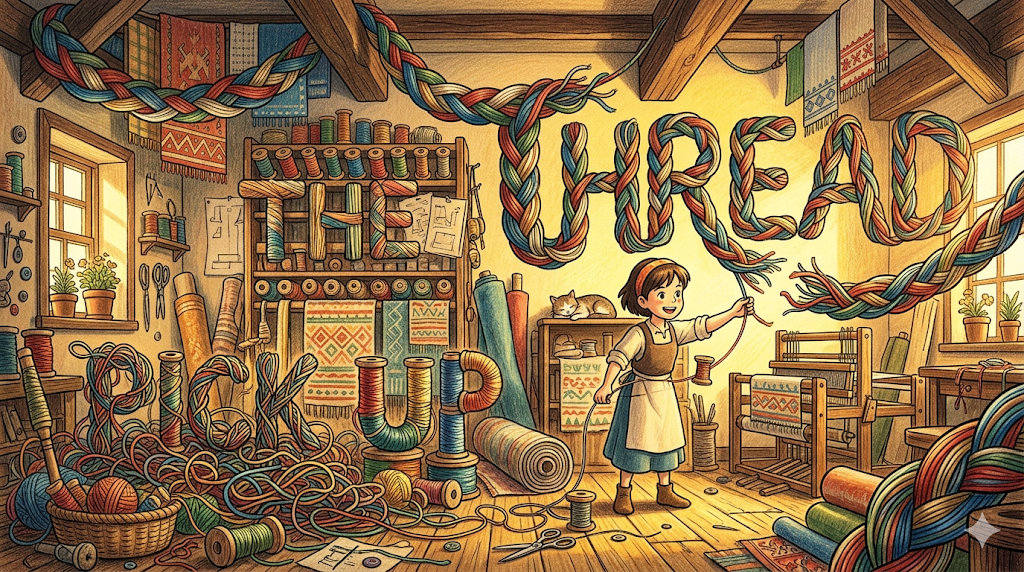
pick up the thread [pɪk ʌp ðə θred]
(동사구) 이야기나 작업의 흐름을 다시 잇다, 다시 시작하다
중단됐던 이야기나 활동을 다시 이어나가는 것을 강조합니다. 수능 독해 학술·일상·심리 지문에서 자주 등장합니다.
- After being away from the hobby for three years, it took her longer than expected to pick up the thread of her knitting, but the skill came back surprisingly quickly once she started. (3년 동안 취미를 떠나 있다가 뜨개질의 흐름을 다시 잇는 데 예상보다 더 오래 걸렸지만, 시작하자마자 기술이 놀랍도록 빠르게 돌아왔다.)
- The interviewer paused to take a note and then picked up the thread of the conversation exactly where they had left it, which the candidate found impressive. (인터뷰어는 메모를 위해 잠시 멈췄다가 떠났던 정확한 지점에서 대화의 흐름을 다시 이었으며, 지원자는 이것이 인상적이라고 생각했다.)
- The essay noted that the ability to pick up the thread after an interruption — whether in a conversation, a project, or a period of learning — is a form of mental resilience that is particularly valuable in environments where disruption is common. (대화, 프로젝트, 또는 학습 기간이든 방해 후 흐름을 다시 잇는 능력이 방해가 흔한 환경에서 특히 가치 있는 정신적 탄력성의 한 형태라고 에세이는 지적했다.)
숙어 그룹 묶음 2 — 흐름 유지·단절 thread 패턴
표현 의미 핵심 뉘앙스 주요 맥락
| lose the thread | 흐름을 잃다 | 이야기나 논리의 흐름을 놓치는 것 | 학술·심리·수능 |
| pick up the thread | 흐름을 다시 잇다 | 중단됐던 흐름이나 활동을 다시 시작하는 것 | 일상·학술·수능 |
| thread of hope | 한 줄기 희망 | 절망적 상황에서 남아있는 작은 희망 | 심리·문학·수능 |
이 세 표현은 모두 thread의 "실이 이어지거나 끊어지는" 이미지를 공유하되, 각각 실이 끊어져 흐름을 잃는 것(lose the thread)·끊어진 실을 다시 이어 흐름을 복구하는 것(pick up the thread)·실처럼 가늘지만 여전히 이어져 있는 희망(thread of hope)의 관점에서 접근합니다.
- She lost the thread of her confidence during the difficult months but never let go of the thread of hope that things could change, and eventually managed to pick up the thread of her old self and begin again. (그녀는 어려운 달들 동안 자신감의 흐름을 잃었지만 상황이 바뀔 수 있다는 한 줄기 희망을 절대 놓지 않았으며, 결국 예전 자신의 흐름을 다시 이어 다시 시작할 수 있었다.)
- The essay argued that losing the thread, holding onto a thread of hope, and eventually picking up the thread again describe the basic arc of recovery in almost every difficult human situation — and that recognising which stage you are in is one of the most important first steps toward moving forward. (흐름을 잃는 것, 한 줄기 희망을 붙잡는 것, 그리고 결국 흐름을 다시 잇는 것이 거의 모든 어려운 인간 상황에서 회복의 기본 호를 묘사한다고 에세이는 주장했다 — 그리고 자신이 어떤 단계에 있는지 인식하는 것이 앞으로 나아가기 위한 가장 중요한 첫 번째 단계 중 하나라고 했다.)
- She concluded that the ability to lose the thread without panic, to hold a thread of hope without forcing it, and to pick up the thread at exactly the right moment rather than too soon or too late is one of the most sophisticated forms of emotional intelligence that anyone can develop. (흐름을 잃는 것을 공황 없이, 한 줄기 희망을 강요하지 않고 붙잡으며, 너무 이르거나 늦지 않게 정확한 순간에 흐름을 다시 잇는 능력이 누구나 개발할 수 있는 가장 정교한 형태의 감정 지능 중 하나라고 그녀는 결론지었다.)

common thread [ˈkɒmən θred]
(명사구) 공통적인 연결고리, 공통 요소
여러 다른 것들 사이에서 공통적으로 발견되는 연결 요소를 강조하며, 수능 학술 지문에서 자주 등장합니다.
- The researcher found a common thread running through the life stories of all the people she interviewed — every single one of them had overcome a major failure before they achieved what they were most proud of. (연구자는 그녀가 인터뷰한 모든 사람의 삶의 이야기를 관통하는 공통적인 연결고리를 발견했다 — 그들 모두가 가장 자랑스러운 것을 달성하기 전에 큰 실패를 극복했다는 것이었다.)
- It was difficult to find a common thread in the collection of short stories because each one took place in a different country and featured characters with very different lives. (각 단편 소설이 다른 나라를 배경으로 하고 매우 다른 삶을 가진 등장인물들을 다루었기 때문에 단편 소설 모음에서 공통적인 연결고리를 찾는 것이 어려웠다.)
- The essay argued that finding the common thread in a complex situation is not just an intellectual exercise — it is a practical tool that allows you to see which interventions are likely to have the widest effect, because they address the root rather than each separate symptom. (복잡한 상황에서 공통적인 연결고리를 찾는 것이 단순한 지적 연습이 아니라 — 각각의 개별 증상이 아닌 근본을 다루기 때문에 어떤 개입이 가장 넓은 효과를 가질 가능성이 있는지 볼 수 있게 하는 실용적인 도구라고 에세이는 주장했다.)

thread of hope [θred əv həʊp]
(명사구) 희망의 실낱, 한 줄기 희망
매우 어렵거나 절망적인 상황에서 아직 남아있는 작은 희망을 강조합니다. 수능 독해 심리·문학·사회 지문에서 자주 등장합니다.
- The rescuers worked through the night, holding onto the thread of hope that the missing climber might still be alive somewhere on the mountain. (구조대원들은 실종된 등반가가 산 어딘가에서 아직 살아있을 수 있다는 한 줄기 희망을 붙잡고 밤새 작업했다.)
- She had clung to a thread of hope for so long that when the good news finally came she did not believe it at first and had to read the message three times before it felt real. (그녀는 너무 오랫동안 한 줄기 희망에 매달려 있어서 마침내 좋은 소식이 왔을 때 처음에는 믿지 않았으며 진짜처럼 느껴지기 전에 메시지를 세 번 읽어야 했다.)
- The essay reflected on the thread of hope as one of the most human of all experiences — noting that even in situations where rational analysis suggests all is lost, the presence of hope, however thin, consistently produces different and often better outcomes than its complete absence. (에세이는 희망의 실낱을 모든 경험 중 가장 인간적인 것 중 하나로 성찰했다 — 합리적인 분석이 모든 것이 잃어졌다고 시사하는 상황에서도 아무리 가늘더라도 희망의 존재가 일관되게 그것의 완전한 부재보다 다르고 종종 더 나은 결과를 만들어낸다고 지적했다.)
숙어 그룹 묶음 3 — 바느질·문화 thread 심화 패턴
표현 의미 핵심 뉘앙스 주요 맥락
| unthread | 실을 빼다, 분리하다 | 이어진 것을 분리하는 것 | 일상·기술·수능 |
| thread a needle | 바늘에 실을 꿰다 | 정밀하고 어려운 일을 해내는 것 | 일상·심리·수능 |
| red thread | 운명의 붉은 실 | 운명으로 연결된 보이지 않는 연결 | 문학·문화·수능 |
이 세 표현은 모두 thread의 "실의 물리적 특성과 문화적 의미" 이미지를 공유하되, 각각 이어진 실을 분리하는 행위(unthread)·아주 좁은 구멍에 실을 통과시키는 정밀함(thread a needle)·보이지 않지만 운명으로 이어진 실(red thread)의 관점에서 접근합니다.
- Threading a needle requires the same kind of patient precision as unthreading the complicated feelings that come from believing in a red thread of fate — you have to slow down, focus on exactly the right point, and trust that the small effort will lead to something that holds. (바늘에 실을 꿰는 것은 운명의 붉은 실을 믿는 것에서 오는 복잡한 감정을 풀어내는 것과 같은 종류의 인내하는 정밀함을 필요로 한다 — 속도를 늦추고, 정확히 올바른 지점에 집중하며, 작은 노력이 유지되는 무언가로 이어질 것이라고 신뢰해야 한다.)
- The essay drew a parallel between threading a needle, unthreading tangled problems, and believing in a red thread of purpose — arguing that all three require the ability to see what others cannot see yet, to work with precision rather than force, and to trust the process even when the final picture is not yet visible. (에세이는 바늘에 실을 꿰는 것, 엉킨 문제를 풀어내는 것, 그리고 목적의 붉은 실을 믿는 것 사이에 유사성을 끌어냈다 — 세 가지 모두 다른 사람들이 아직 볼 수 없는 것을 보는 능력, 힘이 아닌 정밀함으로 작업하는 것, 그리고 최종 그림이 아직 보이지 않아도 과정을 신뢰하는 것을 필요로 한다고 주장했다.)
- She concluded that threading a needle, unthreading what does not need to remain connected, and believing in the red thread that connects us to what matters most are three practices that describe a life lived with attention — and that the common thread between all three is the willingness to work slowly and carefully on things that deserve it. (바늘에 실을 꿰는 것, 연결된 상태로 남을 필요가 없는 것을 분리하는 것, 그리고 우리를 가장 중요한 것에 연결하는 붉은 실을 믿는 것이 주의 깊게 사는 삶을 묘사하는 세 가지 실천이라고 그녀는 결론지었다 — 그리고 세 가지 사이의 공통점은 그것을 받을 자격이 있는 것에 천천히 그리고 조심스럽게 작업하려는 의지라고 했다.)
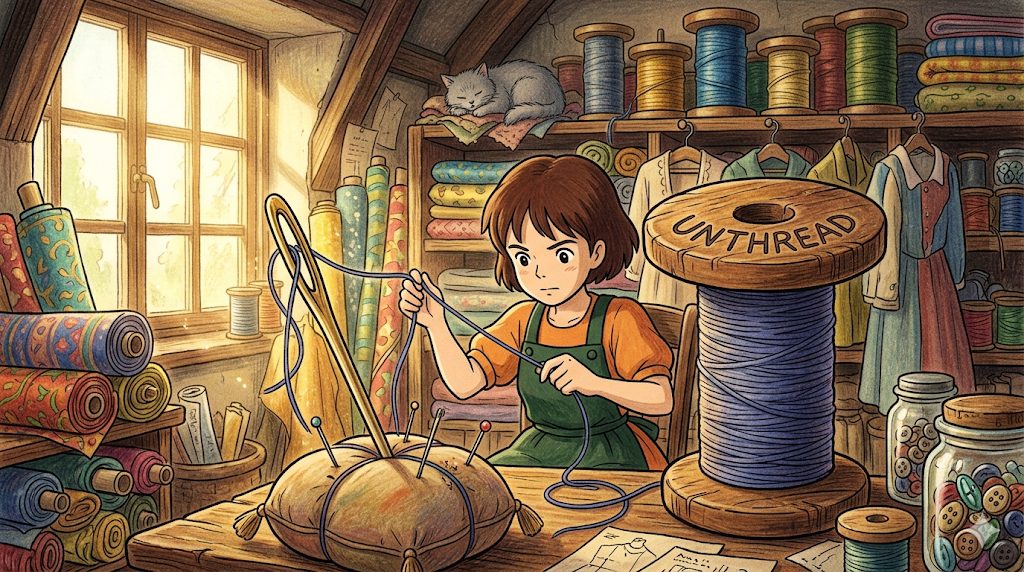
unthread [ʌnˈθred]
(동사) 실을 빼다, 분리하다
바늘에서 실을 뺀다거나 이어진 것들을 분리하는 것을 강조합니다. 수능 독해 일상·기술 지문에서 자주 등장합니다.
- She unthreaded the beads from the broken necklace one by one and placed them carefully in a small dish so none of them would roll off the table and be lost. (그녀는 끊어진 목걸이에서 구슬을 하나씩 실에서 빼내어 아무것도 테이블에서 굴러떨어져 없어지지 않도록 작은 접시에 조심스럽게 놓았다.)
- He unthreaded the complicated argument carefully, pulling apart each assumption until he could see where the original mistake had been made. (그는 원래의 실수가 어디에 있었는지 볼 수 있을 때까지 각 가정을 풀어내며 복잡한 논증을 신중하게 분해했다.)
- The essay used the concept of unthreading to describe the process of critical thinking — arguing that good analysis is not about finding the flaws in an argument but about carefully separating what holds together from what does not, in the same way you might unthread a tangled sewing project. (에세이는 분리하는 개념을 사용해 비판적 사고의 과정을 묘사했다 — 좋은 분석이 논증에서 결함을 찾는 것이 아니라 엉킨 바느질 프로젝트를 분리하는 방식과 같이 유지되는 것과 그렇지 않은 것을 신중하게 분리하는 것에 관한 것이라고 주장했다.)

thread a needle [θred ə ˈniːdəl]
(동사구) 바늘에 실을 꿰다
바늘귀에 실을 통과시키는 것을 강조하며, 비유적으로 매우 어렵거나 정밀한 일을 해내는 것을 나타냅니다. 수능 독해 일상·심리 지문에서 자주 등장합니다.
- Watching her grandfather thread a needle with steady hands at the age of eighty-two made her realise that patience and practice truly did matter more than age or ability. (82세에 안정된 손으로 바늘에 실을 꿰는 할아버지를 보는 것이 그녀에게 인내와 연습이 진정으로 나이나 능력보다 더 중요하다는 것을 깨닫게 했다.)
- She described the negotiation as threading a needle — every word had to be chosen precisely, because too much pressure in either direction would cause the whole thing to fail. (그녀는 협상을 바늘에 실을 꿰는 것으로 묘사했다 — 어느 방향으로든 너무 많은 압력이 전체를 실패하게 만들 것이기 때문에 모든 말을 정확하게 선택해야 했다.)
- The essay argued that the ability to thread a needle — metaphorically speaking — is one of the rarest and most valuable skills in any professional field, because it requires holding two opposite pressures steady at the same time rather than letting either one win completely. (비유적으로 말하면 바늘에 실을 꿰는 능력이 어느 전문 분야에서든 가장 드물고 가장 가치 있는 기술 중 하나라고 에세이는 주장했다 — 그것이 어느 하나가 완전히 이기도록 두기보다 두 가지 반대 압력을 동시에 안정적으로 유지하는 것을 필요로 하기 때문이다.)

red thread [red θred]
(명사구) 붉은 실, 운명의 실
아시아 문화에서 운명으로 연결된 사람들을 이어주는 보이지 않는 실을 강조하며, 비유적으로 어떤 것을 관통하는 핵심 요소를 나타냅니다. 수능 독해 문학·문화·심리 지문에서 자주 등장합니다.
- She believed in the red thread that connected people to those they were meant to meet, which made her feel calm about the long journey ahead because she trusted it would lead her to the right places. (그녀는 사람들을 만나기로 된 사람들과 연결하는 붉은 실을 믿었는데, 이것이 올바른 장소로 이끌어줄 것이라고 신뢰했기 때문에 앞에 있는 긴 여정에 대해 차분하게 느끼게 했다.)
- The red thread running through the whole documentary was not the events themselves but the question of how ordinary people make extraordinary decisions under impossible pressure. (전체 다큐멘터리를 관통하는 붉은 실은 사건들 자체가 아니라 평범한 사람들이 불가능한 압박 하에서 비범한 결정을 내리는 방법에 대한 질문이었다.)
- The essay reflected on the red thread as both a cultural myth and a useful metaphor — arguing that the idea of an invisible connection that cannot be broken, however stretched, describes something real about the kinds of bonds that define a person's life even when they cannot be explained. (에세이는 붉은 실을 문화적 신화이자 유용한 은유로 성찰했다 — 아무리 늘어나도 끊어질 수 없는 보이지 않는 연결의 아이디어가 설명할 수 없어도 사람의 삶을 정의하는 종류의 유대에 대한 실제적인 것을 묘사한다고 주장했다.)
숙어 그룹 묶음 4 — 종합 thread 패턴
표현 의미 핵심 뉘앙스 주요 맥락
| hang by a thread | 아슬아슬하게 위태롭다 | 매우 불안정하거나 위험한 상태 | 심리·사회·수능 |
| common thread | 공통적인 연결고리 | 여러 것들 사이의 공통 요소 | 학술·사회·수능 |
| lose the thread | 흐름을 잃다 | 이야기나 논리의 흐름을 놓치는 것 | 학술·심리·수능 |
이 세 표현은 수능 독해에서 가장 자주 출제되는 thread의 핵심 패턴입니다. hang by a thread는 실이 거의 끊어질 것 같은 위태로움을, common thread는 여러 것을 관통하는 하나의 실을, lose the thread는 실의 끊어짐으로 흐름을 잃는 것을 각각 나타냅니다.
- When the common thread of the argument became too weak to follow, the audience lost the thread entirely — and the whole presentation, which had already been hanging by a thread since the technical problems at the start, finally collapsed. (논증의 공통적인 연결고리가 너무 약해서 따라가기 어려워졌을 때 청중은 완전히 흐름을 잃었다 — 그리고 시작 때의 기술적 문제로 이미 아슬아슬하게 위태로웠던 전체 발표가 결국 무너졌다.)
- The essay argued that hanging by a thread, having a common thread, and losing the thread are three different ways that the metaphor of thread reveals the same truth — that connection is fragile, that what holds things together is often thinner than we realise, and that we need to look after it rather than assuming it will maintain itself. (아슬아슬하게 위태로운 것, 공통적인 연결고리를 갖는 것, 그리고 흐름을 잃는 것이 실의 은유가 같은 진실을 드러내는 세 가지 다른 방식이라고 에세이는 주장했다 — 연결이 취약하고, 물건들을 하나로 유지하는 것이 종종 우리가 깨닫는 것보다 더 얇으며, 그것이 스스로를 유지할 것이라고 가정하기보다 보살펴야 한다는 것이다.)
- She concluded that the three expressions — hanging by a thread, finding a common thread, and losing the thread — together describe the full emotional and intellectual range of what it means to try to understand anything difficult and important: the fragility of the attempt, the satisfaction of the discovery, and the humbling experience of getting lost along the way. (아슬아슬하게 위태로운, 공통적인 연결고리를 찾는, 그리고 흐름을 잃는 세 가지 표현이 함께 어렵고 중요한 것을 이해하려고 시도하는 것이 무엇을 의미하는지의 완전한 감정적이고 지적인 범위를 묘사한다고 그녀는 결론지었다: 시도의 취약함, 발견의 만족, 그리고 도중에 길을 잃는 겸손한 경험이다.)
전체 요약표
표현 의미 핵심 뉘앙스
| thread | 실, 흐름 / 꿰다 | 연결과 흐름의 핵심 이미지 |
| thread through | 통과해 꿰다 | 좁은 공간이나 장애물 사이를 조심스럽게 통과 |
| hang by a thread | 아슬아슬하게 위태롭다 | 매우 불안정하거나 위험한 상태 |
| lose the thread | 흐름을 잃다 | 이야기나 논리의 흐름을 놓치는 것 |
| pick up the thread | 흐름을 다시 잇다 | 중단됐던 흐름이나 활동을 다시 시작하는 것 |
| common thread | 공통적인 연결고리 | 여러 것들 사이의 공통 요소 |
| thread of hope | 한 줄기 희망 | 절망적 상황에서 남아있는 작은 희망 |
| unthread | 실을 빼다, 분리하다 | 이어진 것을 분리하는 것 |
| thread a needle | 바늘에 실을 꿰다 | 정밀하고 어려운 일을 해내는 것 |
| red thread | 운명의 붉은 실 | 운명으로 연결된 보이지 않는 연결 |
유의어 비교표
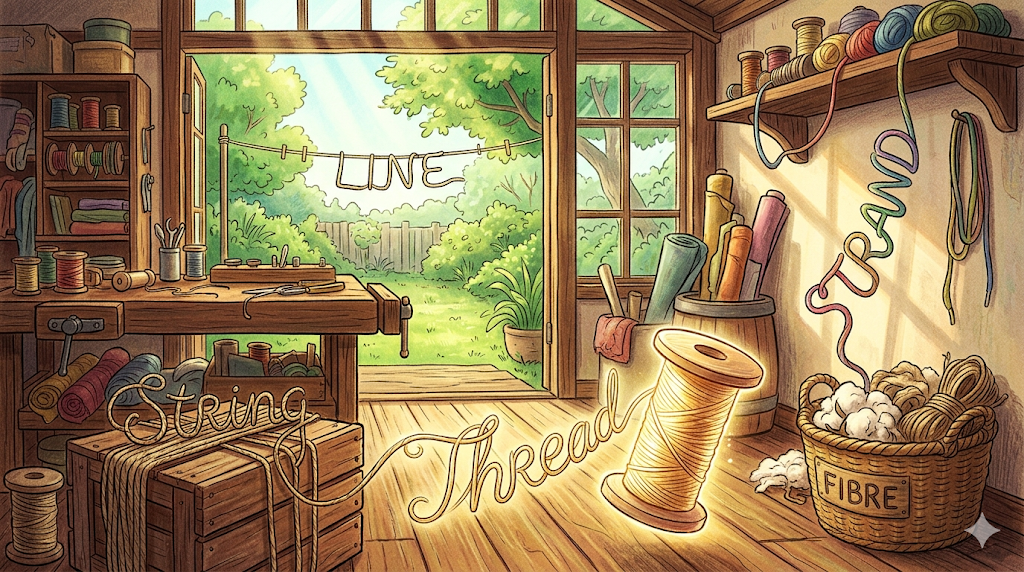
단어 공통점 뉘앙스 차이 예문
| thread | 실, 연결 | 가늘고 섬세함·흐름·위태로움, 비유 풍부 | A thread of hope. |
| string | 끈, 줄 | thread보다 굵은 끈 | A piece of string. |
| strand | 가닥 | 실의 한 가닥 또는 이야기의 한 측면 | A strand of hair. |
| line | 선, 줄 | 단순한 선이나 줄 강조 | A line of text. |
| fibre | 섬유, 실 | 재료로서의 섬유 강조 | Natural fibre. |
유의어 예문 리스트
- (string) He had tied the packages together with a piece of string that was barely strong enough to hold them, and she could see from across the room that it was likely to snap before they reached the car. (그는 거의 충분하지 않은 끈 조각으로 소포들을 묶었으며, 그녀는 방 건너편에서도 그것이 차에 도착하기 전에 끊어질 것 같다는 것을 볼 수 있었다.)
- (strand) She followed each strand of the investigation separately before bringing them together at the end, which gave the documentary a satisfying sense of pieces finally clicking into place. (그녀는 마지막에 한데 모아지기 전에 조사의 각 가닥을 별도로 따라갔으며, 이것이 다큐멘터리에 마침내 조각들이 제자리를 찾는 만족스러운 느낌을 줬다.)
- (line) There is a line in the poem that she had memorised years ago and still found herself saying silently during difficult moments, because it described exactly how she felt without needing any additional words. (그녀가 수년 전에 외웠으며 어려운 순간에 여전히 조용히 말하는 한 줄이 시에 있었는데, 그것이 추가적인 말 없이 정확히 그녀가 어떻게 느끼는지를 묘사했기 때문이었다.)
- (fibre) The jacket was made from recycled fibre, which surprised most people who assumed that sustainable materials would look or feel different from conventional ones. (재킷은 재활용 섬유로 만들어졌는데, 지속 가능한 소재가 일반 소재와 다르게 보이거나 느껴질 것이라고 가정했던 대부분의 사람들을 놀라게 했다.)
결론 정리
thread는 단순히 "실"이 아니라, 고대 영어 þrǣd(실)에서 출발해 여러 가닥을 꼬아서 만든 가늘고 긴 것에서 물리적 실·이야기의 흐름·공통 연결고리·위태로운 상태·운명적 연결·희망까지 확장되는 단어다 — thread가 있는 곳엔 언제나 '단순한 실이 아닌, 인간이 이야기를 연결하고·희망을 붙잡으며·공통점을 발견하고·위태로운 순간을 인식하는 방식이 생생하게 살아숨쉬는' 생동감의 선언이 있다.
💡 thread는 "여러 가닥을 꼬아서 만든 가늘고 긴 것에서 출발한" 생동감 넘치는 언어 — hang by a thread · common thread · lose the thread가 수능 최빈출.
🌟 초등학생 버전 — thread는 실이지만, "아슬아슬하다"(hang by a thread), "공통점"(common thread), "흐름을 잃다"(lose the thread)처럼 우리 생활과 이야기 곳곳에 살아있는 단어예요! 🧵✨


