- 분류 전체보기 (5596)

| 일 | 월 | 화 | 수 | 목 | 금 | 토 |
|---|---|---|---|---|---|---|
| 1 | 2 | |||||
| 3 | 4 | 5 | 6 | 7 | 8 | 9 |
| 10 | 11 | 12 | 13 | 14 | 15 | 16 |
| 17 | 18 | 19 | 20 | 21 | 22 | 23 |
| 24 | 25 | 26 | 27 | 28 | 29 | 30 |
| 31 |
- no
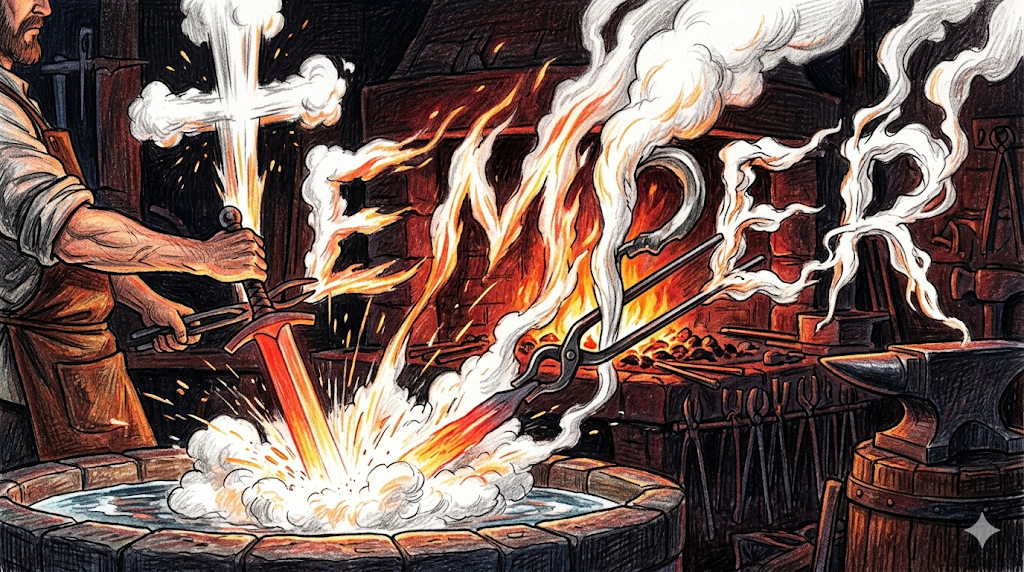
- entrance fee
- please?
- By The Way
- OKay
- too.
- I'm glad to hear that.
- Please
- Read between the lines
- Sure
- Yeah
- set up
- make it
- Right?
- Show Up
- Excuse me
- well
- please.
- hold on
- get through
- Hey
- come up with
- Sorry
- Actually
- I'm sorry
- work out
- oh
- Don't worry
- Yes
- pick up
- Today
- Total
인과함께
Day408 , temper, lose one's temper, keep one's temper, bad temper, temper tantrum, even temper, short temper, temper with, out of temper, good temper 본문
Day408 , temper, lose one's temper, keep one's temper, bad temper, temper tantrum, even temper, short temper, temper with, out of temper, good temper
미인생 2026. 5. 17. 01:52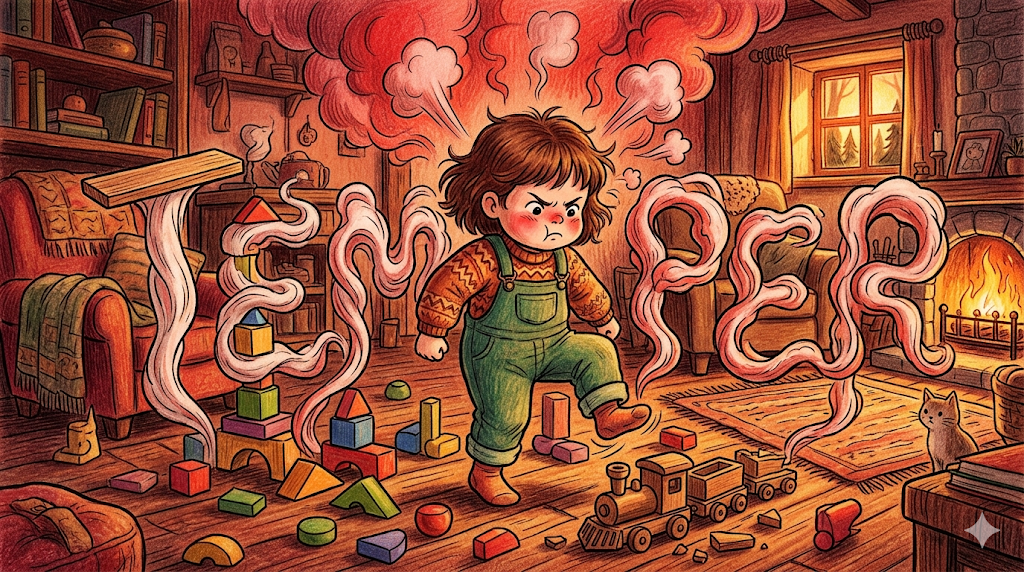
temper [ˈtempər]
(명사/동사) 화, 기질, 성미 / 조절하다, 누그러뜨리다
Although she tried to stay calm, she finally lost her temper when he lied again.
(비록 그녀는 침착함을 유지하려고 노력했지만, 그가 또 거짓말을 했을 때 결국 화를 내고 말았다.)
단순히 "화"로만 외우면 수능에서 반드시 틀립니다. temper는 "감정이나 기질의 균형 상태" 라는 핵심 이미지에서 출발해, 실제 분노·성격의 특성·감정 조절·재료를 다루는 방법까지 폭넓게 쓰이는 핵심 다의어입니다. 특히 lose one's temper(화를 내다), keep one's temper(화를 참다), temper with(~으로 누그러뜨리다) 패턴은 수능 독해 심리·사회·논리 지문에서 핵심적으로 등장합니다.
'temper'는 라틴어 temperare(조절하다, 혼합하다)에서 유래했으며, tempus(시간, 때)와 연결됩니다. 어원의 핵심 이미지는 "균형을 맞추거나 올바른 비율로 혼합하는 것" 으로, 단순한 분노를 넘어 감정의 균형·성격의 특성·적절한 조절·강함과 부드러움의 혼합까지 확장되는 표현의 근원이 된 단어입니다.
1. lose one's temper [luːz wʌnz ˈtempər]
(일상/심리/수능) "화를 내다, 폭발하다"를 뜻합니다. 감정을 더 이상 조절하지 못하고 화를 크게 내는 것을 강조합니다.
She lost her temper when she found out that someone had eaten the lunch she had carefully prepared the night before. (누군가 그녀가 전날 밤 정성껏 준비한 점심을 먹었다는 것을 알았을 때 그녀는 화를 냈다.)
2. keep one's temper [kiːp wʌnz ˈtempər]
(일상/심리/수능) "화를 참다, 감정을 조절하다"를 뜻합니다. 화가 나는 상황에서도 감정을 통제하고 침착하게 있는 것을 강조합니다.
He managed to keep his temper even when the other driver was being extremely rude and saying unfair things. (다른 운전자가 매우 무례하고 불공평한 말을 할 때도 그는 화를 참는 데 성공했다.)
3. bad temper [bæd ˈtempər]
(일상/심리/수능) "나쁜 성미, 급한 성격"을 뜻합니다. 쉽게 화를 내거나 짜증을 부리는 성격이나 상태를 강조합니다.
He was in a bad temper all morning because he had slept badly and nothing seemed to be going right. (그는 잠을 잘 못 자고 아무것도 잘 되지 않는 것 같아서 오전 내내 나쁜 기분이었다.)
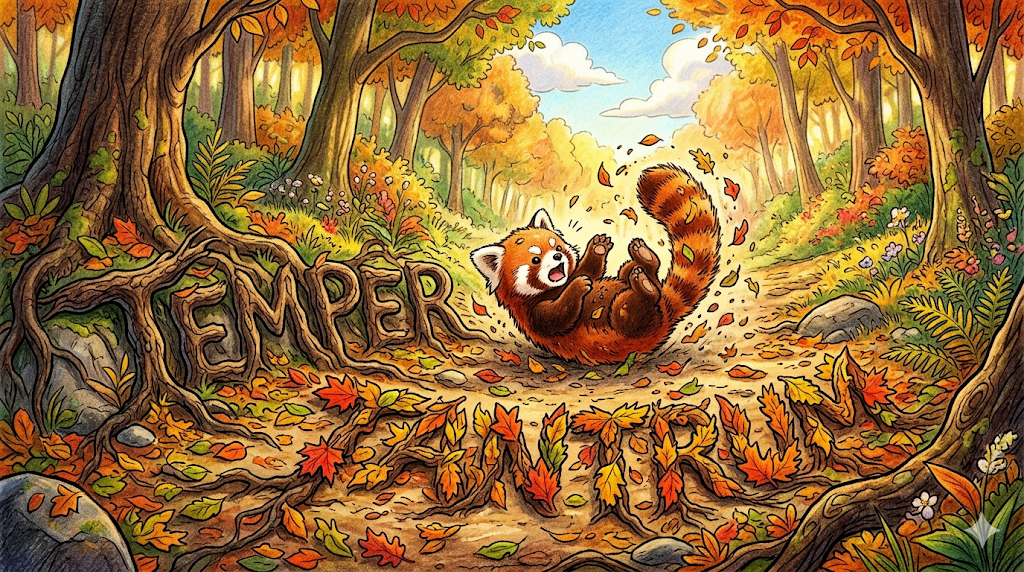
4. temper tantrum [ˈtempər ˈtæntrəm]
(일상/심리/수능) "떼쓰기, 격렬한 감정 폭발"을 뜻합니다. 주로 어린 아이가 원하는 것을 얻지 못할 때 심하게 우는 것을 강조하지만, 어른에게도 사용됩니다.
The little boy had a temper tantrum in the middle of the supermarket when his mum said she would not buy him the toy he wanted. (엄마가 원하는 장난감을 사주지 않겠다고 하자 어린 남자아이는 슈퍼마켓 한가운데서 떼를 썼다.)
5. even temper [ˈiːvən ˈtempər]
(심리/사회/수능) "평온한 성미, 안정적인 기질"을 뜻합니다. 어떤 상황에서도 감정의 변화가 크지 않고 항상 안정적인 성격을 강조합니다.
She had an even temper that made her perfect for working with difficult customers because she never raised her voice or got upset. (그녀는 평온한 성미를 갖고 있어서 절대로 목소리를 높이거나 화를 내지 않았기 때문에 어려운 고객을 상대하는 데 적합했다.)
6. short temper [ʃɔːrt ˈtempər]
(일상/심리/수능) "급한 성미, 참을성이 없는 기질"을 뜻합니다. 아주 작은 것에도 쉽게 화를 내는 성격을 강조합니다.
He had a short temper when he was tired, so everyone in the office knew not to bring him difficult problems right after lunch. (그는 피곤할 때 급한 성미가 있어서 사무실의 모든 사람이 점심 식사 직후에 어려운 문제를 가져오지 않아야 한다는 것을 알았다.)
7. temper with [ˈtempər wɪð]
(학술/사회/수능) "~으로 누그러뜨리다, ~으로 조절하다"를 뜻합니다. 어떤 강한 것을 다른 것으로 균형을 맞추거나 부드럽게 만드는 것을 강조하며, 수능에서 자주 출제되는 표현입니다.
She tempered her criticism with praise by first pointing out what had gone well before explaining what needed to be improved. (그녀는 개선이 필요한 것을 설명하기 전에 먼저 잘 된 것을 지적함으로써 칭찬으로 비판을 누그러뜨렸다.)
8. out of temper [aʊt əv ˈtempər]
(일상/심리/수능) "기분이 나쁜, 화가 난"을 뜻합니다. 현재 기분이 좋지 않거나 화가 나 있는 상태를 강조합니다.
She could tell he was out of temper from the moment he walked in because he did not say hello and went straight to his desk without looking up. (그녀는 그가 안녕이라고 말하지 않고 올려다보지 않은 채 바로 책상으로 갔기 때문에 그가 들어온 순간부터 기분이 나쁘다는 것을 알 수 있었다.)
9. good temper [ɡʊd ˈtempər]
(일상/심리/수능) "좋은 성미, 유쾌한 기질"을 뜻합니다. 항상 긍정적이고 기분이 좋은 성격이나 상태를 강조합니다.
Despite the long and tiring journey, she arrived in good temper and greeted everyone with a warm smile. (길고 피곤한 여정에도 불구하고 그녀는 좋은 기분으로 도착해 따뜻한 미소로 모든 사람에게 인사했다.)
10. temper (동사: 단련하다, 조절하다) [ˈtempər]
(학술/사회/수능) 동사로 쓰여 "금속을 단련하다, 감정을 조절하다, 혹독한 경험으로 강해지다"를 뜻합니다. 어떤 것을 더 강하거나 균형 잡히게 만드는 것을 강조합니다.
Years of working in difficult conditions had tempered her into one of the most patient and effective managers in the company. (어려운 조건에서 수년간 일하는 것이 그녀를 회사에서 가장 참을성 있고 효과적인 매니저 중 하나로 단련했다.)
POINT 1. temper — 수능 최빈출 비유·어휘 패턴
temper는 수능 독해 심리·사회·논리 지문에서 비유적 표현으로 자주 출제됩니다.
lose one's temper → 더 이상 감정을 조절하지 못하고 화낼 때 예) She lost her temper. 그녀는 화를 냈다. temper with → 강한 것을 부드럽게 균형 맞출 때 예) Temper criticism with kindness. 친절로 비판을 누그러뜨려라. even temper → 안정적이고 균형 잡힌 성격을 나타낼 때 예) She has an even temper. 그녀는 평온한 성미가 있다.
POINT 2. temper / anger / rage — 수능 어휘 핵심 비교
이 세 단어는 수능에서 자주 혼동되는 어휘입니다.
temper → 성미, 기질, 또는 일시적인 화의 상태 예) He has a bad temper. 그는 나쁜 성미가 있다. anger → 불공평한 것에 대한 화, 분노 (감정 자체) 예) She felt deep anger. 그녀는 깊은 분노를 느꼈다. rage → 매우 강렬하고 폭발적인 분노 예) He was filled with rage. 그는 격노로 가득 찼다.
POINT 3. temper의 다양한 용법 — 수능 독해 문맥 파악 핵심
temper는 수능 독해에서 문맥에 따라 의미가 완전히 달라지는 핵심 단어입니다.
화가 난 상태 → She lost her temper. 그녀는 화를 냈다. 성격 → He has a short temper. 그는 급한 성미다. 누그러뜨리다 → Temper it with care. 배려로 누그러뜨려라. 기분 → Out of temper. 기분이 나쁜. 단련하다 → Tempered by experience. 경험으로 단련된.
(명사) ① 화, 분노 (일시적인 감정)
temper의 가장 기본적인 의미 중 하나로, 순간적으로 느끼는 강한 화의 감정을 나타냅니다.
- She said things in a temper that she later deeply regretted, and spent the whole next day trying to find the right words to apologise properly. (그녀는 화가 난 상태에서 나중에 깊이 후회하는 말들을 했으며, 다음 날 하루 종일 제대로 사과할 올바른 말을 찾으려 했다.)
- He walked out of the room in a temper, slamming the door hard enough to make the pictures on the wall shake. (그는 벽에 걸린 그림이 흔들릴 만큼 문을 세게 쾅 닫으며 화가 난 채로 방에서 나갔다.)
- The essay argued that acting in a temper is almost always something people later regret — because strong emotions narrow our thinking, and the decisions made in that state rarely reflect what we would choose with a calm and clear head. (에세이는 화가 난 상태에서 행동하는 것은 거의 항상 사람들이 나중에 후회하는 것이라고 주장했다 — 강한 감정은 사고를 좁히며, 그 상태에서 내린 결정은 차분하고 맑은 정신으로 선택하는 것을 거의 반영하지 못하기 때문이다.)
(명사) ② 성미, 기질 (성격의 특성)
temper는 한 사람의 일반적인 감정 경향이나 성격을 나타냅니다.
- Her calm temper made her very popular with the younger students at school, who trusted her because she never shouted or made them feel stupid for making mistakes. (그녀의 차분한 성미는 그녀를 학교의 어린 학생들에게 매우 인기 있게 만들었는데, 그들은 그녀가 절대로 소리를 지르거나 실수로 그들을 바보처럼 느끼게 만들지 않았기 때문에 그녀를 믿었다.)
- His cheerful temper meant that even the most stressful days at work ended with him making everyone around him laugh before they left the office. (그의 쾌활한 성미는 직장에서 가장 스트레스 받는 날도 모든 사람이 사무실을 떠나기 전에 그가 모두를 웃게 만드는 것으로 끝나게 했다.)
- The essay explored how temper — as a general character trait — is shaped by both genetics and upbringing, and argued that while we cannot choose our starting point, we can through effort and self-awareness change how we respond to difficult situations over time. (에세이는 일반적인 성격 특성으로서의 성미가 유전과 양육 모두에 의해 형성된다고 탐구했으며, 출발점을 선택할 수는 없지만 노력과 자기 인식을 통해 시간이 지남에 따라 어려운 상황에 반응하는 방식을 바꿀 수 있다고 주장했다.)
(동사) ③ 조절하다, 단련하다 (균형을 만드는 것)
temper는 동사로 쓰여 무언가를 더 균형 잡히거나 강하게 만드는 것을 나타냅니다.
- She tempered her excitement with caution, reminding herself that the offer seemed good but that she needed to read the contract carefully before agreeing to anything. (그녀는 흥분을 신중함으로 누그러뜨리며, 제안이 좋아 보이지만 어떤 것에 동의하기 전에 계약서를 주의 깊게 읽어야 한다는 것을 스스로에게 상기시켰다.)
- The difficult years of his early career had tempered him in ways that comfort never could — he knew how to stay calm in a crisis because he had lived through so many. (커리어 초기의 어려운 시간들이 편안함으로는 결코 할 수 없는 방식으로 그를 단련했다 — 그는 너무 많은 위기를 겪어왔기 때문에 위기 상황에서 침착하게 있는 방법을 알았다.)
- The essay argued that ambition must always be tempered by ethical consideration — otherwise it becomes the kind of drive that achieves results at the cost of other people's dignity and trust. (에세이는 야망이 항상 윤리적 고려로 조절돼야 한다고 주장했다 — 그렇지 않으면 다른 사람들의 존엄성과 신뢰를 대가로 결과를 달성하는 종류의 원동력이 된다고 했다.)

뉘앙스·의미 연결 흐름 표
핵심 이미지 연결 흐름 뉘앙스 요약
| 감정의 균형 | 화 잃기 → 화 참기 → 기분이 나쁜 | lose one's temper, keep one's temper, out of temper |
| 성격과 기질 | 나쁜 성미 → 급한 성미 → 평온한 성미 → 좋은 성미 | bad temper, short temper, even temper, good temper |
| 조절과 균형 | 떼쓰기 → ~으로 누그러뜨리다 → 단련하다 | temper tantrum, temper with, temper(동사) |
어원 흐름 표
단어 구성 요소 의미 연결 흐름 뉘앙스 요약
| 라틴어 temperare(조절하다·혼합하다) → 고대 영어 temprian | 균형을 맞추거나 올바른 비율로 혼합하는 것 → temper | 감정의 균형과 조절의 핵심 이미지 |
| temper (명사/동사) | 화·분노 → 성격·기질 → 조절·단련 | 감정에서 성격·조절·단련까지 확장 |
품사별 의미 표
품사 의미 예문
| 명사 | 화, 분노 | She is in a temper. |
| 명사 | 성미, 기질 | He has a bad temper. |
| 동사 | 누그러뜨리다 | Temper with kindness. |
| 동사 | 단련하다 | Tempered by hardship. |
| 관용구 | 화를 내다 | Lose one's temper. |
| 관용구 | 화를 참다 | Keep one's temper. |
활용 예문 리스트
- She lost her temper in the middle of the meeting when the same mistake was pointed out for the third time, but immediately apologised and took a moment to breathe before continuing. (같은 실수가 세 번째로 지적됐을 때 그녀는 회의 중에 화를 냈지만, 즉시 사과하고 계속하기 전에 잠시 숨을 고르는 시간을 가졌다.)
- He had spent years learning to keep his temper in arguments, knowing that staying calm always gave him a better chance of being heard than raising his voice ever did. (그는 목소리를 높이는 것보다 침착하게 있는 것이 항상 더 잘 들릴 가능성을 준다는 것을 알면서 수년 동안 논쟁에서 화를 참는 것을 배우는 데 시간을 보냈다.)
- She tempered her honest feedback with genuine encouragement, which meant people actually listened to what she said rather than becoming defensive. (그녀는 솔직한 피드백을 진정한 격려로 누그러뜨렸으며, 이것은 사람들이 방어적이 되기보다 실제로 그녀가 말하는 것을 경청하게 했다.)
- Having a short temper had caused him trouble in his early career, but he had worked hard to change this and now nobody who met him would believe how different he had once been. (급한 성미가 초기 커리어에 문제를 일으켰지만, 그는 이것을 바꾸기 위해 열심히 노력했으며 이제 그를 만나는 아무도 그가 한때 얼마나 달랐는지 믿지 않을 것이었다.)
- The toddler had a temper tantrum at the airport that lasted for twenty minutes, leaving his parents red-faced and apologetic to everyone around them. (유아가 공항에서 20분 동안 지속된 떼쓰기를 해서 부모를 당황스럽게 만들고 주변 모든 사람에게 사과하게 만들었다.)
전체 뉘앙스 설명
temper는 '균형을 맞추거나 올바른 비율로 혼합하는 것에서 출발해 화·성격의 특성·감정 조절·단련까지 확장되는 생동감 넘치는 언어'입니다.
anger와의 차이: anger는 불공평하거나 잘못된 것에 대한 감정으로서의 분노를 강조하고, temper는 그 사람의 일반적인 감정 경향이나 조절 능력을 강조합니다. mood와의 차이: mood는 특정 시간의 전반적인 감정 상태를 강조하고, temper는 주로 화와 관련된 감정 경향을 강조합니다. character와의 차이: character는 한 사람의 전체적인 도덕적 성격을 강조하고, temper는 주로 감정적 반응 방식에 초점을 맞춥니다.
마지막 핵심 정리
temper는 단순히 "화"가 아닙니다 — 라틴어 temperare(조절하다·혼합하다)에서 출발해, 화·분노(temper)에서 화를 내다(lose one's temper)·화를 참다(keep one's temper)·나쁜 성미(bad temper)·떼쓰기(temper tantrum)·평온한 성미(even temper)·급한 성미(short temper)·~으로 누그러뜨리다(temper with)·기분이 나쁜(out of temper)·좋은 성미(good temper)까지 확장되는 단어이며, lose one's temper·temper with·keep one's temper의 비유적 의미 파악이 수능 핵심 출제 포인트입니다.
파생어 표
파생어 발음기호 품사 의미
| temperament | [ˈtempərəmənt] | 명사 | 기질, 성격 |
| temperamental | [ˌtempərəˈmentəl] | 형용사 | 기질의, 감정 기복이 심한 |
| temperate | [ˈtempərɪt] | 형용사 | 절제하는, 온화한 |
| temperature | [ˈtemprɪtʃər] | 명사 | 온도, 체온 |
| tempered | [ˈtempərd] | 형용사 | 단련된, 조절된 |
| intemperate | [ɪnˈtempərɪt] | 형용사 | 절제 없는, 과도한 |
유의어 비교표
단어 공통점 뉘앙스 차이 예문
| temper | 화, 성미 | 감정 균형·기질·조절, 비유 풍부 | A bad temper. |
| anger | 분노 | 불공평에 대한 감정 자체 | Deep anger. |
| mood | 기분 | 전반적인 감정 상태 | A bad mood. |
| rage | 격노 | 매우 강렬하고 폭발적인 분노 | Filled with rage. |
| disposition | 기질 | 전반적인 성격 경향 (격식) | A cheerful disposition. |
유의어 예문 리스트
- (anger) She could feel anger building inside her as she listened to the unfair explanation, but she chose to wait and think carefully before responding. (그녀는 불공평한 설명을 들으면서 분노가 내면에서 쌓이는 것을 느꼈지만, 응답하기 전에 기다리고 신중하게 생각하기로 선택했다.)
- (mood) He was in a difficult mood all day because of the bad news he had received that morning, but he tried not to let it affect the people around him. (그는 그날 아침 받은 나쁜 소식 때문에 하루 종일 어려운 기분이었지만, 그것이 주변 사람들에게 영향을 미치지 않도록 노력했다.)
- (rage) The injustice of the decision filled him with rage, but he channelled it into writing a careful and detailed letter of complaint rather than saying something he would later regret. (결정의 불공평함이 그를 격노로 가득 채웠지만, 나중에 후회할 말을 하기보다 신중하고 상세한 불만 편지를 쓰는 데 그것을 쏟아냈다.)
- (disposition) She had a cheerful disposition that seemed to lift the energy of any room she walked into, without her ever trying to do so or even being aware of the effect she had. (그녀는 어떤 방에 들어서도 에너지를 높이는 것 같은 쾌활한 기질이 있었으며, 노력하지 않거나 자신이 미치는 효과를 인식하지도 못한 채 그랬다.)
결론 정리
temper는 단순히 "화"가 아니라, 라틴어 temperare(조절하다·혼합하다)에서 출발해 균형을 맞추거나 올바른 비율로 혼합하는 것에서 화·성격의 특성·감정 조절·단련까지 확장되는 단어다 — temper가 있는 곳엔 언제나 '단순한 분노가 아닌, 인간이 감정을 조절하고·성격을 형성하며·어려움으로 단련되고·강함과 부드러움의 균형을 찾아가는 방식이 생생하게 살아숨쉬는' 생동감의 선언이 있다.
💡 temper는 "감정이나 기질의 균형 상태에서 출발한" 생동감 넘치는 언어 — lose one's temper · temper with · keep one's temper가 수능 최빈출.
🌟 초등학생 버전 — temper는 화, 성미이지만, "화를 내다"(lose one's temper), "화를 참다"(keep one's temper), "누그러뜨리다"(temper with)처럼 우리 감정과 성격 곳곳에 살아있는 단어예요! 😤✨

lose one's temper [luːz wʌnz ˈtempər]
(동사구) 화를 내다, 폭발하다
감정을 더 이상 조절하지 못하고 화를 크게 내는 것을 강조합니다. 수능 독해 심리·사회·일상 지문에서 핵심적으로 등장합니다.
- She lost her temper when she discovered that her careful work had been changed without anyone asking her permission, and had to go for a walk to calm down before she could speak to anyone. (그녀는 자신의 세심한 작업이 아무도 허락을 구하지 않고 변경됐다는 것을 발견했을 때 화를 냈으며, 누구에게 말을 걸기 전에 진정하기 위해 산책을 해야 했다.)
- He had never lost his temper at work before, which made it all the more shocking when he suddenly raised his voice during a meeting over something that seemed small. (그는 직장에서 한 번도 화를 낸 적이 없었는데, 그것이 작아 보이는 것 때문에 회의 중에 갑자기 목소리를 높였을 때 더욱 충격적으로 만들었다.)
- The essay argued that the moment before losing one's temper is always the most important one — because it is the last point at which a person has a choice, and making a habit of noticing that moment is one of the most practical things anyone can do to improve their relationships. (에세이는 화를 내기 직전의 순간이 항상 가장 중요한 것이라고 주장했다 — 그것이 사람이 선택을 가진 마지막 지점이기 때문이며, 그 순간을 알아채는 습관을 만드는 것이 관계를 개선하기 위해 누구나 할 수 있는 가장 실용적인 것 중 하나라고 했다.)

keep one's temper [kiːp wʌnz ˈtempər]
(동사구) 화를 참다, 감정을 조절하다
화가 나는 상황에서도 감정을 통제하고 침착하게 있는 것을 강조합니다. 수능 독해 심리·사회·일상 지문에서 자주 등장합니다.
- She kept her temper beautifully throughout the argument, speaking in a steady voice and using facts rather than personal attacks, which made her case far more convincing than the other person's. (그녀는 논쟁 내내 아름답게 화를 참아 안정적인 목소리로 말하고 개인적 공격이 아닌 사실을 사용했으며, 이것이 그녀의 주장을 상대방보다 훨씬 더 설득력 있게 만들었다.)
- He found it very difficult to keep his temper when he was hungry, so he had learned to always carry a small snack with him during long meetings. (그는 배가 고플 때 화를 참는 것이 매우 어렵다는 것을 알았기 때문에 긴 회의 중에 항상 작은 간식을 가지고 다니는 것을 배웠다.)
- The essay argued that the ability to keep one's temper under pressure is not about suppressing emotions but about choosing which ones to act on — and that this choice, made consistently over time, becomes one of the most defining aspects of a person's character. (에세이는 압박 하에서 화를 참는 능력이 감정을 억제하는 것이 아니라 어떤 감정에 따라 행동할지 선택하는 것에 관한 것이라고 주장했다 — 그리고 이 선택이 시간이 지남에 따라 꾸준히 이루어지면 사람의 성격의 가장 결정적인 측면 중 하나가 된다고 했다.)
숙어 그룹 묶음 1 — 감정 조절 temper 핵심 패턴
표현 의미 핵심 뉘앙스 주요 맥락
| lose one's temper | 화를 내다 | 감정을 조절하지 못하고 화 내는 것 | 심리·사회·수능 |
| keep one's temper | 화를 참다 | 화나는 상황에서도 침착하게 있는 것 | 심리·사회·수능 |
| out of temper | 기분이 나쁜 | 현재 화가 나 있거나 기분이 안 좋은 상태 | 일상·심리·수능 |
이 세 표현은 모두 temper의 "감정의 균형과 조절" 이미지를 공유하되, 각각 균형을 잃어 화를 터뜨리는 것(lose one's temper)·균형을 유지해 화를 참는 것(keep one's temper)·현재 균형을 잃은 상태에 있는 것(out of temper)의 관점에서 접근합니다.
- He was clearly out of temper when he arrived, and she knew from experience that trying to have an important conversation with someone in that state almost always ended with someone losing their temper, so she decided to wait until he had calmed down and then try to keep her own temper steady throughout. (그가 도착했을 때 분명히 기분이 나쁜 상태였으며, 그녀는 경험으로 그 상태의 누군가와 중요한 대화를 하려고 하면 거의 항상 누군가 화를 내는 것으로 끝난다는 것을 알았기 때문에, 그가 진정할 때까지 기다렸다가 자신의 화를 내내 침착하게 유지하며 시도하기로 결정했다.)
- The essay connected the three expressions by arguing that being out of temper, losing one's temper, and even keeping one's temper all describe the same emotional territory — the space between a feeling and a response — and that the difference between them is entirely about how much awareness a person brings to that space. (에세이는 기분이 나쁜 것, 화를 내는 것, 심지어 화를 참는 것이 모두 같은 감정적 영역 — 느낌과 반응 사이의 공간 — 을 묘사한다고 주장하며 세 가지 표현을 연결했다 — 그리고 그것들 사이의 차이는 전적으로 사람이 그 공간에 얼마나 많은 인식을 가져오느냐에 관한 것이라고 했다.)
- She concluded that losing one's temper, keeping one's temper, and being out of temper are not moral categories but human experiences — and that anyone who claims never to be out of temper or never to have lost their temper is probably not being fully honest about their inner life. (그녀는 화를 내는 것, 화를 참는 것, 그리고 기분이 나쁜 것이 도덕적 범주가 아니라 인간적 경험이라고 결론지었다 — 그리고 결코 기분이 나쁜 적이 없거나 화를 낸 적이 없다고 주장하는 사람은 아마도 자신의 내면에 대해 완전히 솔직하지 않은 것이라고 했다.)

bad temper [bæd ˈtempər]
(명사구) 나쁜 성미, 급한 성격
쉽게 화를 내거나 짜증을 부리는 성격이나 상태를 강조합니다. 수능 독해 심리·사회·일상 지문에서 자주 등장합니다.
- His bad temper was well known in the office, but most of his colleagues had learned to give him space in the mornings and only approach him with difficult questions after he had finished his second coffee. (그의 나쁜 성미는 사무실에서 잘 알려져 있었지만, 대부분의 동료들은 아침에 그에게 공간을 주고 두 번째 커피를 다 마신 후에만 어려운 질문을 가져가는 것을 배웠다.)
- She had inherited her grandmother's bad temper along with her red hair, and spent most of her twenties learning to manage it before it managed her. (그녀는 빨간 머리카락과 함께 할머니의 나쁜 성미를 물려받았으며, 그것이 자신을 지배하기 전에 그것을 관리하는 법을 배우는 데 이십대 대부분을 보냈다.)
- The essay argued that bad temper is rarely just a personality flaw — it is often a signal of something unaddressed, whether that is unmet needs, chronic stress, or a communication pattern that has never been examined. (에세이는 나쁜 성미가 단순한 성격 결함이 아니라는 것을 주장했다 — 그것은 종종 충족되지 않은 필요, 만성적 스트레스, 또는 한 번도 검토된 적 없는 소통 패턴이든 처리되지 않은 무언가의 신호인 경우가 많다고 했다.)
temper tantrum [ˈtempər ˈtæntrəm]
(명사구) 떼쓰기, 격렬한 감정 폭발
주로 어린 아이가 원하는 것을 얻지 못할 때 심하게 우는 것을 강조하지만, 어른에게도 사용됩니다. 수능 독해 심리·사회·일상 지문에서 자주 등장합니다.
- She had read enough about child development to know that a temper tantrum was not a sign of bad parenting but a normal part of a young child learning to manage overwhelming feelings that their brain was not yet developed enough to handle. (그녀는 떼쓰기가 나쁜 양육의 표시가 아니라 아직 다루기에 충분히 발달하지 않은 뇌를 가진 어린 아이가 압도적인 감정을 관리하는 것을 배우는 정상적인 부분이라는 것을 알 만큼 아동 발달에 대해 충분히 읽었다.)
- The meeting took an uncomfortable turn when the senior manager had what could only be described as a temper tantrum, throwing his pen across the table when the figures did not match his expectations. (회의는 수석 매니저가 수치가 자신의 기대와 일치하지 않았을 때 테이블 건너편으로 펜을 던지며 떼쓰기라고밖에 표현할 수 없는 것을 했을 때 불편하게 변했다.)
- The essay noted that while temper tantrums are developmentally appropriate in toddlers, similar behaviour in adults — expressed differently but driven by the same emotional overwhelm — suggests that those emotional regulation skills were never fully developed or have been forgotten under chronic stress. (에세이는 떼쓰기가 유아에게 발달적으로 적절하지만, 성인의 유사한 행동 — 다르게 표현되지만 같은 감정적 압도에 의해 유발되는 — 은 그 감정 조절 기술이 완전히 개발되지 않았거나 만성적 스트레스 하에서 잊혀졌다는 것을 시사한다고 지적했다.)
숙어 그룹 묶음 2 — 성격·기질 temper 패턴
표현 의미 핵심 뉘앙스 주요 맥락
| bad temper | 나쁜 성미 | 쉽게 화를 내는 성격이나 상태 | 심리·사회·수능 |
| temper tantrum | 떼쓰기 | 원하는 것을 못 얻을 때 격렬한 감정 폭발 | 심리·사회·수능 |
| even temper | 평온한 성미 | 항상 안정적이고 균형 잡힌 성격 | 심리·사회·수능 |
이 세 표현은 모두 temper의 "감정 균형의 정도" 이미지를 공유하되, 각각 균형이 쉽게 무너지는 성격(bad temper)·균형이 완전히 무너진 폭발(temper tantrum)·항상 균형이 잡힌 안정적인 성격(even temper)의 관점에서 접근합니다.
- She had spent years working on her bad temper, learning from every temper tantrum she had ever witnessed or experienced, until she had finally developed what people around her recognised as an even temper — consistent, reliable, and genuinely earned. (그녀는 수년 동안 나쁜 성미를 고치는 데 시간을 보내며, 목격하거나 경험했던 모든 떼쓰기에서 배워, 마침내 주변 사람들이 평온한 성미로 인식하는 것을 개발했다 — 일관적이고, 신뢰할 수 있으며, 진정으로 얻은 것이었다.)
- The essay argued that even temper is not the absence of feeling but its intelligent management — and that people often mistake someone with an even temper for someone without passion, when in reality they simply channel their energy more effectively than those prone to bad temper or temper tantrums. (에세이는 평온한 성미가 느낌의 부재가 아니라 지능적인 관리라고 주장했다 — 그리고 사람들은 종종 평온한 성미를 가진 사람을 열정이 없는 사람으로 착각하는데, 실제로 그들은 단순히 나쁜 성미나 떼쓰기에 취약한 사람들보다 에너지를 더 효과적으로 전환할 뿐이라고 했다.)
- She concluded that moving from bad temper through the chaos of temper tantrums to the stability of an even temper is one of the most important journeys of human development — and that it is never fully complete, because even the most patient person has difficult days. (나쁜 성미에서 떼쓰기의 혼란을 거쳐 평온한 성미의 안정으로 이동하는 것이 인간 발달의 가장 중요한 여정 중 하나이며, 가장 인내심 있는 사람도 어려운 날이 있기 때문에 결코 완전히 완성되지 않는다고 그녀는 결론지었다.)
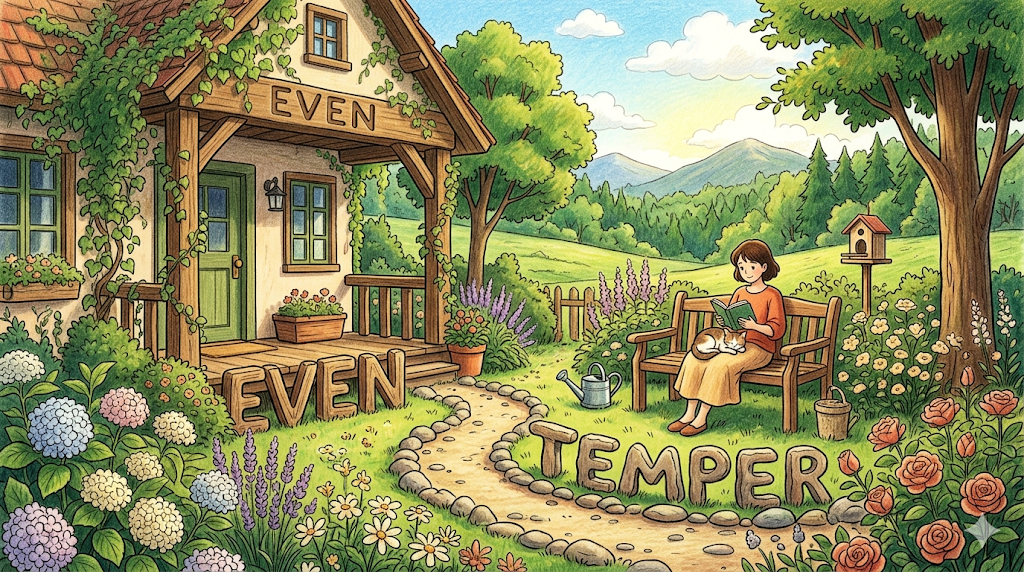
even temper [ˈiːvən ˈtempər]
(명사구) 평온한 성미, 안정적인 기질
어떤 상황에서도 감정의 변화가 크지 않고 항상 안정적인 성격을 강조합니다. 수능 독해 심리·사회 지문에서 자주 등장합니다.
- Her even temper was one of the qualities her students appreciated most — she was as calm and encouraging on a bad day as on a good one, which made her classroom feel safe to make mistakes in. (그녀의 평온한 성미는 학생들이 가장 높이 평가하는 자질 중 하나였다 — 그녀는 좋은 날이나 나쁜 날이나 똑같이 차분하고 격려적이었으며, 이것이 그녀의 교실을 실수하기에 안전한 곳으로 느끼게 했다.)
- He was known for his even temper in negotiations, which made him extremely effective because the other side could never destabilise him by raising their voices or being aggressive. (그는 협상에서 평온한 성미로 알려져 있었으며, 이것이 상대방이 목소리를 높이거나 공격적으로 대함으로써 그를 불안정하게 만들 수 없었기 때문에 그를 매우 효과적으로 만들었다.)
- The essay noted that an even temper is often developed through difficulty rather than ease — and that people who have maintained consistency through genuine hardship tend to carry a quality of reliability that others recognise and trust without necessarily knowing why. (평온한 성미는 종종 쉬움보다 어려움을 통해 개발된다고 에세이는 지적했다 — 그리고 진정한 고난을 통해 일관성을 유지한 사람들은 다른 사람들이 왜인지 반드시 알지 못하면서도 인식하고 신뢰하는 신뢰성의 자질을 지니는 경향이 있다고 했다.)

short temper [ʃɔːrt ˈtempər]
(명사구) 급한 성미, 참을성이 없는 기질
아주 작은 것에도 쉽게 화를 내는 성격을 강조합니다. 수능 독해 심리·사회·일상 지문에서 자주 등장합니다.
- She had always had a short temper about certain things — mostly injustice and dishonesty — but had learned to pause before responding so that her reactions were thoughtful rather than reactive. (그녀는 항상 특정 것들에 대해 급한 성미가 있었다 — 주로 불공평과 부정직함 — 하지만 반응이 충동적이 아닌 사려 깊도록 응답하기 전에 멈추는 것을 배웠다.)
- He had a short temper when it came to lateness because he believed being on time was a form of respect, and being made to wait felt to him like being told that his time did not matter. (그는 늦는 것에 대해 급한 성미가 있었는데, 시간을 지키는 것이 존중의 한 형태라고 믿었으며, 기다리게 되는 것이 그에게 자신의 시간이 중요하지 않다는 말을 듣는 것처럼 느껴졌기 때문이었다.)
- The essay noted that a short temper is frequently a symptom of something deeper — often exhaustion, chronic frustration, or feeling chronically unheard — and that addressing the symptom directly rarely works as well as investigating and dealing with its underlying cause. (급한 성미가 종종 더 깊은 것의 증상이라고 에세이는 지적했다 — 종종 소진, 만성적 좌절, 또는 만성적으로 들리지 않는 느낌 — 그리고 증상을 직접 처리하는 것은 그 근본 원인을 조사하고 다루는 것만큼 잘 작동하는 경우가 드물다고 했다.)
숙어 그룹 묶음 3 — 조절·누그러뜨리기 temper 심화 패턴
표현 의미 핵심 뉘앙스 주요 맥락
| temper with | ~으로 누그러뜨리다 | 강한 것을 다른 것으로 균형 맞추는 것 | 학술·사회·수능 |
| out of temper | 기분이 나쁜 | 현재 화가 나 있거나 기분이 안 좋은 상태 | 일상·심리·수능 |
| good temper | 좋은 성미 | 긍정적이고 유쾌한 성격이나 상태 | 일상·심리·수능 |
이 세 표현은 모두 temper의 "감정 균형의 상태와 조절" 이미지를 공유하되, 각각 강한 것을 의도적으로 부드럽게 균형 맞추는 것(temper with)·현재 균형이 무너진 상태(out of temper)·균형이 좋게 유지되는 유쾌한 상태(good temper)의 관점에서 접근합니다.
- When he was out of temper, she always knew the best approach was not to challenge him directly but to temper the conversation with humour — a small well-timed joke had brought him back to good temper more reliably than any serious conversation ever had. (그가 기분이 나쁜 상태일 때 그녀는 항상 직접적으로 도전하는 것이 아니라 유머로 대화를 누그러뜨리는 것이 최선의 접근법이라는 것을 알았다 — 적시에 던진 작은 농담이 어떤 진지한 대화보다도 더 신뢰할 수 있게 그를 좋은 기분으로 되돌아오게 했다.)
- The essay connected the three by arguing that being out of temper is the natural starting point, that good temper is the destination, and that tempering what you feel with patience, perspective, or humour is the process by which almost everyone eventually travels between the two — though some travel it more gracefully than others. (에세이는 기분이 나쁜 것이 자연스러운 출발점이고, 좋은 기분이 목적지이며, 느끼는 것을 인내, 관점, 또는 유머로 누그러뜨리는 것이 거의 모든 사람이 결국 두 가지 사이를 이동하는 과정이라고 주장하며 세 가지를 연결했다 — 다만 어떤 사람들은 다른 사람들보다 더 우아하게 이동한다고 했다.)
- She concluded that the ability to temper strong feelings with reason and care, to move from out of temper back to good temper without burning bridges, and to make this journey quickly when it matters are three related skills that taken together describe what emotional intelligence actually looks like in practice. (강한 감정을 이성과 배려로 누그러뜨리고, 기분이 나쁜 상태에서 다리를 태우지 않고 좋은 기분으로 돌아오며, 중요할 때 이 여정을 빠르게 하는 능력이 함께하면 실제로 감정 지능이 어떻게 보이는지를 묘사하는 세 가지 관련 기술이라고 그녀는 결론지었다.)

temper with [ˈtempər wɪð]
(동사구) ~으로 누그러뜨리다, ~으로 조절하다
어떤 강한 것을 다른 것으로 균형을 맞추거나 부드럽게 만드는 것을 강조하며, 수능에서 자주 출제되는 표현입니다.
- The judge tempered his ruling with a detailed explanation of why he had reached his decision, which made the outcome easier for everyone involved to understand and accept. (판사는 자신이 결정을 내린 이유에 대한 자세한 설명으로 판결을 누그러뜨렸으며, 이것이 관련된 모든 사람이 결과를 이해하고 받아들이기 더 쉽게 만들었다.)
- She had learned to temper her high expectations with patience — understanding that the people around her were doing their best even when the results did not match what she had hoped for. (그녀는 높은 기대를 인내로 누그러뜨리는 것을 배웠다 — 결과가 바랐던 것과 일치하지 않더라도 주변 사람들이 최선을 다하고 있다는 것을 이해하면서이다.)
- The essay argued that the ability to temper strong convictions with genuine openness to being wrong is what separates people who influence others positively from those who, however brilliant, simply push people away. (에세이는 강한 확신을 틀릴 수 있다는 진정한 개방성으로 누그러뜨리는 능력이 다른 사람들에게 긍정적으로 영향을 미치는 사람들과 아무리 뛰어나도 단순히 사람들을 밀어내는 사람들을 구별한다고 주장했다.)
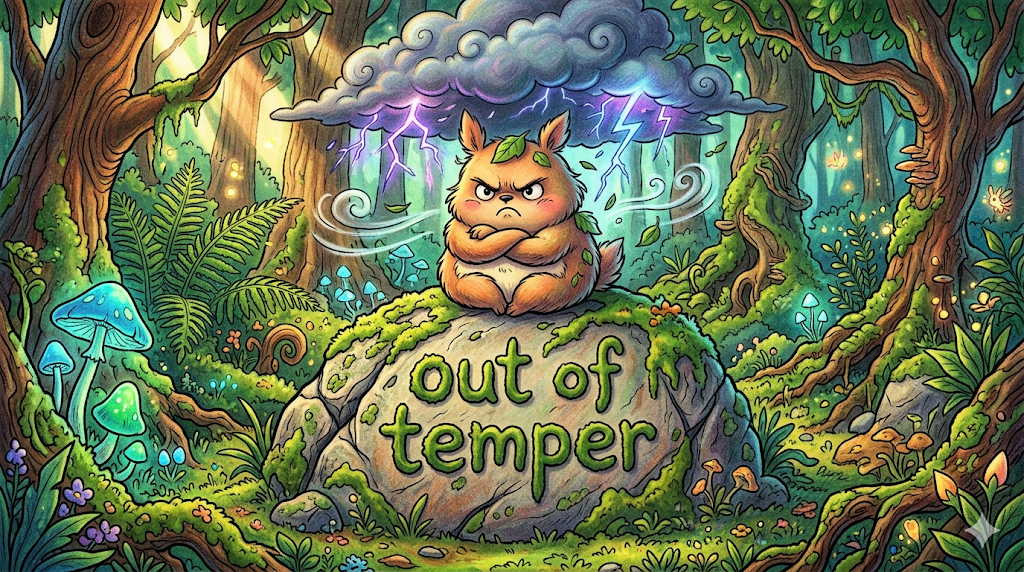
out of temper [aʊt əv ˈtempər]
(형용사구) 기분이 나쁜, 화가 난
현재 기분이 좋지 않거나 화가 나 있는 상태를 강조합니다. 수능 독해 심리·일상·문학 지문에서 자주 등장합니다.
- She arrived home out of temper after a long and difficult day, and her children instinctively gave her ten minutes of quiet before they started asking about homework and dinner. (그녀는 길고 어려운 하루를 보낸 후 기분이 나쁜 상태로 집에 돌아왔으며, 아이들은 숙제와 저녁 식사에 대해 묻기 시작하기 전에 본능적으로 10분간의 조용한 시간을 줬다.)
- He had been out of temper since the early morning phone call that had woken him up with bad news, and despite trying to manage it, the day never quite recovered its normal rhythm. (그는 나쁜 소식으로 그를 깨운 이른 아침 전화 이후 기분이 나빴으며, 그것을 관리하려 노력했음에도 불구하고 하루는 결코 정상적인 리듬을 완전히 회복하지 못했다.)
- The essay noted that the expression out of temper is interesting because it frames emotion as something you can be outside of rather than inside — which subtly suggests that the normal or desired state is equilibrium, and that the emotional disturbance is a temporary departure from it. (에세이는 기분이 나쁜이라는 표현이 흥미롭다고 지적했다 — 그것이 감정을 내부에 있는 것이 아니라 밖에 있을 수 있는 것으로 구성하기 때문이며 — 이것이 은연중에 정상적이거나 원하는 상태가 평형이며, 감정적 혼란이 그것에서 일시적인 이탈이라는 것을 시사한다고 했다.)
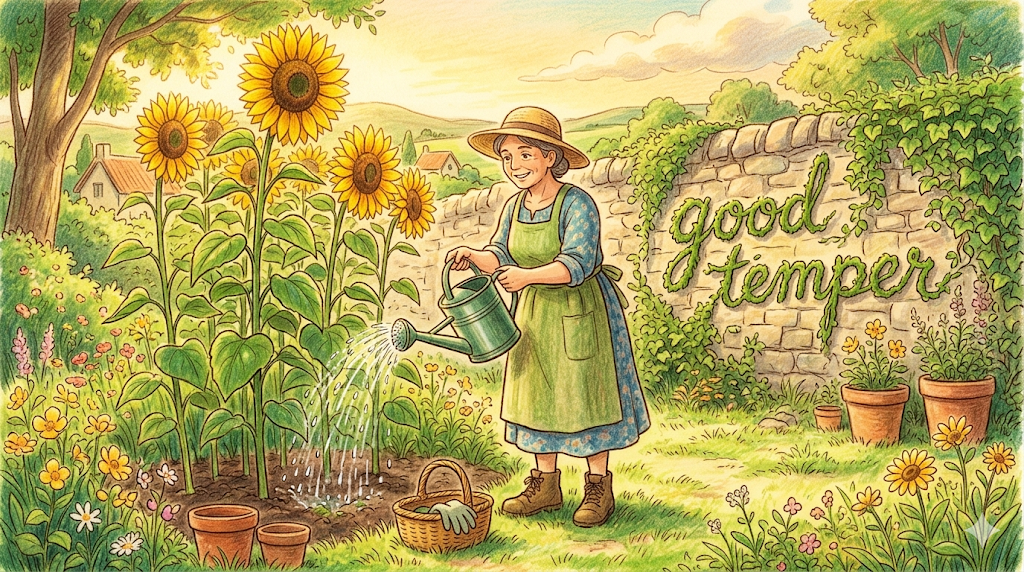
good temper [ɡʊd ˈtempər]
(명사구) 좋은 성미, 유쾌한 기질
항상 긍정적이고 기분이 좋은 성격이나 상태를 강조합니다. 수능 독해 심리·사회·일상 지문에서 자주 등장합니다.
- His good temper was infectious — whenever he was in the room, people found themselves smiling more and worrying less, without quite being able to explain why. (그의 좋은 성미는 전염성이 있었다 — 그가 방에 있을 때마다 사람들은 왜인지 정확히 설명할 수 없으면서 더 많이 미소 짓고 덜 걱정하고 있다는 것을 발견했다.)
- She maintained good temper throughout the delays and cancellations of the journey, which not only made her own experience easier but also made things noticeably better for the people travelling with her. (그녀는 여정의 지연과 취소 내내 좋은 기분을 유지했으며, 이것은 자신의 경험을 더 쉽게 만들었을 뿐만 아니라 함께 여행하는 사람들의 상황도 눈에 띄게 더 좋게 만들었다.)
- The essay argued that good temper is not simply a lucky personality trait but a practice — something that is actively maintained through rest, self-awareness, and the deliberate decision to look for what is working rather than only noticing what is not. (에세이는 좋은 성미가 단순히 운 좋은 성격 특성이 아니라 실천이라고 주장했다 — 휴식, 자기 인식, 그리고 무엇이 작동하지 않는지만 알아채기보다 무엇이 작동하는지 찾으려는 의도적인 결정을 통해 적극적으로 유지되는 것이라고 했다.)
숙어 그룹 묶음 4 — 종합 temper 패턴
표현 의미 핵심 뉘앙스 주요 맥락
| lose one's temper | 화를 내다 | 감정을 조절하지 못하고 화 내는 것 | 심리·사회·수능 |
| keep one's temper | 화를 참다 | 화나는 상황에서도 침착하게 있는 것 | 심리·사회·수능 |
| temper with | ~으로 누그러뜨리다 | 강한 것을 다른 것으로 균형 맞추는 것 | 학술·사회·수능 |
이 세 표현은 수능 독해에서 가장 자주 출제되는 temper의 핵심 패턴입니다. lose one's temper는 감정의 균형을 잃는 것을, keep one's temper는 균형을 유지하는 것을, temper with는 의도적으로 균형을 만드는 것을 각각 나타냅니다.
- She had lost her temper more times than she could count in her first year of teaching, had slowly learned to keep her temper through every kind of provocation, and had finally become someone who could temper even the harshest feedback with genuine encouragement — and she knew that all three phases had been necessary. (그녀는 교직 첫 해에 셀 수 없이 많이 화를 냈으며, 온갖 도발을 통해 천천히 화를 참는 것을 배웠고, 마침내 가장 가혹한 피드백조차 진정한 격려로 누그러뜨릴 수 있는 사람이 됐다 — 그리고 그녀는 세 단계 모두가 필요했다는 것을 알았다.)
- The essay argued that losing one's temper, keeping one's temper, and learning to temper strong feelings with wisdom are not three steps to master in sequence but three modes that all people move between throughout their lives — and that the goal is not to stay permanently in the second or third but to return to them more quickly and more consistently as we mature. (에세이는 화를 내는 것, 화를 참는 것, 그리고 강한 감정을 지혜로 누그러뜨리는 것을 배우는 것이 순서대로 마스터할 세 단계가 아니라 모든 사람이 삶 전체에 걸쳐 이동하는 세 가지 방식이라고 주장했다 — 그리고 목표는 두 번째나 세 번째에 영구적으로 머무는 것이 아니라 성숙해감에 따라 더 빠르고 더 일관되게 그것들로 돌아오는 것이라고 했다.)
- She concluded that the full range of losing one's temper, keeping one's temper, and tempering what we feel with what we know is not a journey from weakness to strength but from unconsciousness to consciousness — and that the most emotionally mature people are not those who never struggle but those who have learned to struggle honestly and well. (그녀는 화를 내는 것, 화를 참는 것, 그리고 우리가 느끼는 것을 우리가 아는 것으로 누그러뜨리는 것의 전체 범위가 약함에서 강함으로의 여정이 아니라 무의식에서 의식으로의 여정이라고 결론지었다 — 그리고 가장 감정적으로 성숙한 사람들은 결코 어려움을 겪지 않는 사람들이 아니라 솔직하고 잘 어려움을 겪는 것을 배운 사람들이라고 했다.)
전체 요약표
표현 의미 핵심 뉘앙스
| temper | 화, 성미 / 조절하다 | 감정의 균형과 조절의 핵심 이미지 |
| lose one's temper | 화를 내다 | 감정을 조절하지 못하고 화 내는 것 |
| keep one's temper | 화를 참다 | 화나는 상황에서도 침착하게 있는 것 |
| bad temper | 나쁜 성미 | 쉽게 화를 내는 성격이나 상태 |
| temper tantrum | 떼쓰기 | 원하는 것을 못 얻을 때 격렬한 감정 폭발 |
| even temper | 평온한 성미 | 항상 안정적이고 균형 잡힌 성격 |
| short temper | 급한 성미 | 아주 작은 것에도 쉽게 화를 내는 성격 |
| temper with | ~으로 누그러뜨리다 | 강한 것을 다른 것으로 균형 맞추는 것 |
| out of temper | 기분이 나쁜 | 현재 화가 나 있거나 기분이 안 좋은 상태 |
| good temper | 좋은 성미 | 긍정적이고 유쾌한 성격이나 상태 |
유의어 비교표
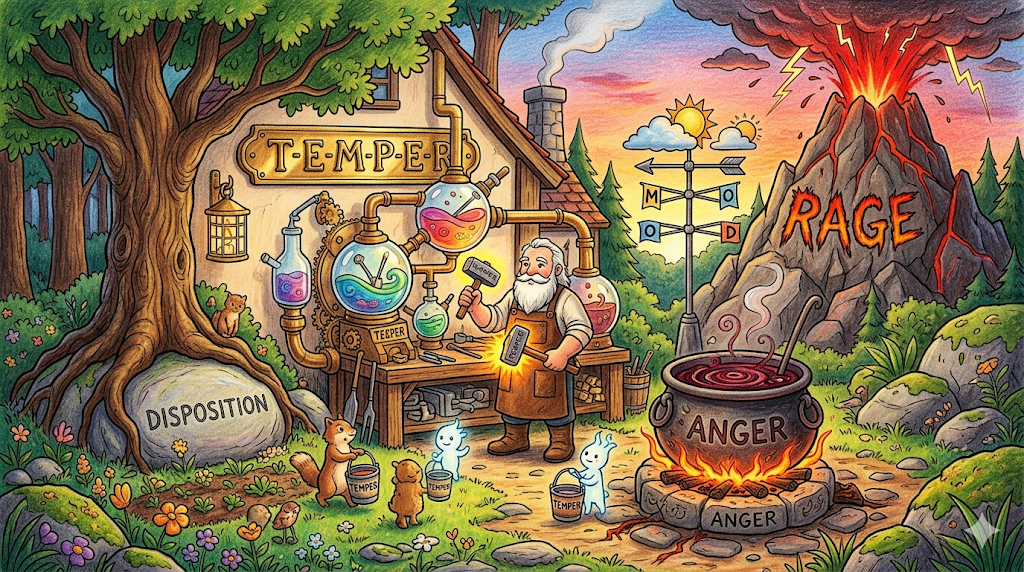
단어 공통점 뉘앙스 차이 예문
| temper | 화, 성미 | 감정 균형·기질·조절, 비유 풍부 | A bad temper. |
| anger | 분노 | 불공평에 대한 감정 자체 | Deep anger. |
| mood | 기분 | 전반적인 감정 상태 | A bad mood. |
| rage | 격노 | 매우 강렬하고 폭발적인 분노 | Filled with rage. |
| disposition | 기질 | 전반적인 성격 경향 (격식) | A cheerful disposition. |
유의어 예문 리스트
- (anger) She directed her anger not at any individual but at the system that had allowed the unfair situation to develop for so long without being challenged. (그녀는 분노를 어떤 개인에게가 아니라 불공평한 상황이 그렇게 오랫동안 도전받지 않고 발전하도록 허용한 시스템에 향했다.)
- (mood) His mood changed noticeably after the phone call, and everyone in the room gave him space without needing to be asked because they could see something had happened. (전화 통화 후 그의 기분이 눈에 띄게 바뀌었으며, 무언가 일어났다는 것을 볼 수 있었기 때문에 방의 모든 사람이 요청받지 않고도 그에게 공간을 줬다.)
- (rage) She felt a cold rage rather than a hot one — the kind that comes not from surprise but from the slow accumulation of things that should have been addressed long ago. (그녀는 뜨거운 분노가 아닌 차가운 분노를 느꼈다 — 놀람에서 오는 것이 아니라 오래전에 처리됐어야 할 것들의 느린 축적에서 오는 종류의 분노이다.)
- (disposition) Her friendly disposition meant that strangers felt comfortable approaching her for directions, advice, or simply a moment of company in a busy place. (그녀의 친근한 기질은 낯선 사람들이 길, 조언, 또는 단순히 바쁜 장소에서 잠깐의 동행을 위해 그녀에게 편안하게 다가가게 만들었다.)
결론 정리
temper는 단순히 "화"가 아니라, 라틴어 temperare(조절하다·혼합하다)에서 출발해 균형을 맞추거나 올바른 비율로 혼합하는 것에서 화·성격의 특성·감정 조절·단련까지 확장되는 단어다 — temper가 있는 곳엔 언제나 '단순한 분노가 아닌, 인간이 감정을 조절하고·성격을 형성하며·어려움으로 단련되고·강함과 부드러움의 균형을 찾아가는 방식이 생생하게 살아숨쉬는' 생동감의 선언이 있다.
💡 temper는 "감정이나 기질의 균형 상태에서 출발한" 생동감 넘치는 언어 — lose one's temper · temper with · keep one's temper가 수능 최빈출.
🌟 초등학생 버전 — temper는 화, 성미이지만, "화를 내다"(lose one's temper), "화를 참다"(keep one's temper), "누그러뜨리다"(temper with)처럼 우리 감정과 성격 곳곳에 살아있는 단어예요! 😤✨


