- 분류 전체보기 (5462)

| 일 | 월 | 화 | 수 | 목 | 금 | 토 |
|---|---|---|---|---|---|---|
| 1 | 2 | |||||
| 3 | 4 | 5 | 6 | 7 | 8 | 9 |
| 10 | 11 | 12 | 13 | 14 | 15 | 16 |
| 17 | 18 | 19 | 20 | 21 | 22 | 23 |
| 24 | 25 | 26 | 27 | 28 | 29 | 30 |
| 31 |
- Sure
- too.
- Yes
- Excuse me
- Sorry
- pick up
- come up with
- oh
- Yeah
- work out
- Actually
- once in a while
- By The Way
- hold on
- I'm sorry
- well
- Please
- OKay
- no
- please?
- I'm glad to hear that.
- make it
- entrance fee
- Read between the lines
- I'm not sure
- Right?
- please.
- call off
- Hey
- Don't worry
- Today
- Total
인과함께
Day363 , pine, pine for, pine away, pine tree, pine cone, pineapple, pine needle, under the pines, pine forest, pine nut, pine after 본문
Day363 , pine, pine for, pine away, pine tree, pine cone, pineapple, pine needle, under the pines, pine forest, pine nut, pine after
미인생 2026. 4. 29. 10:53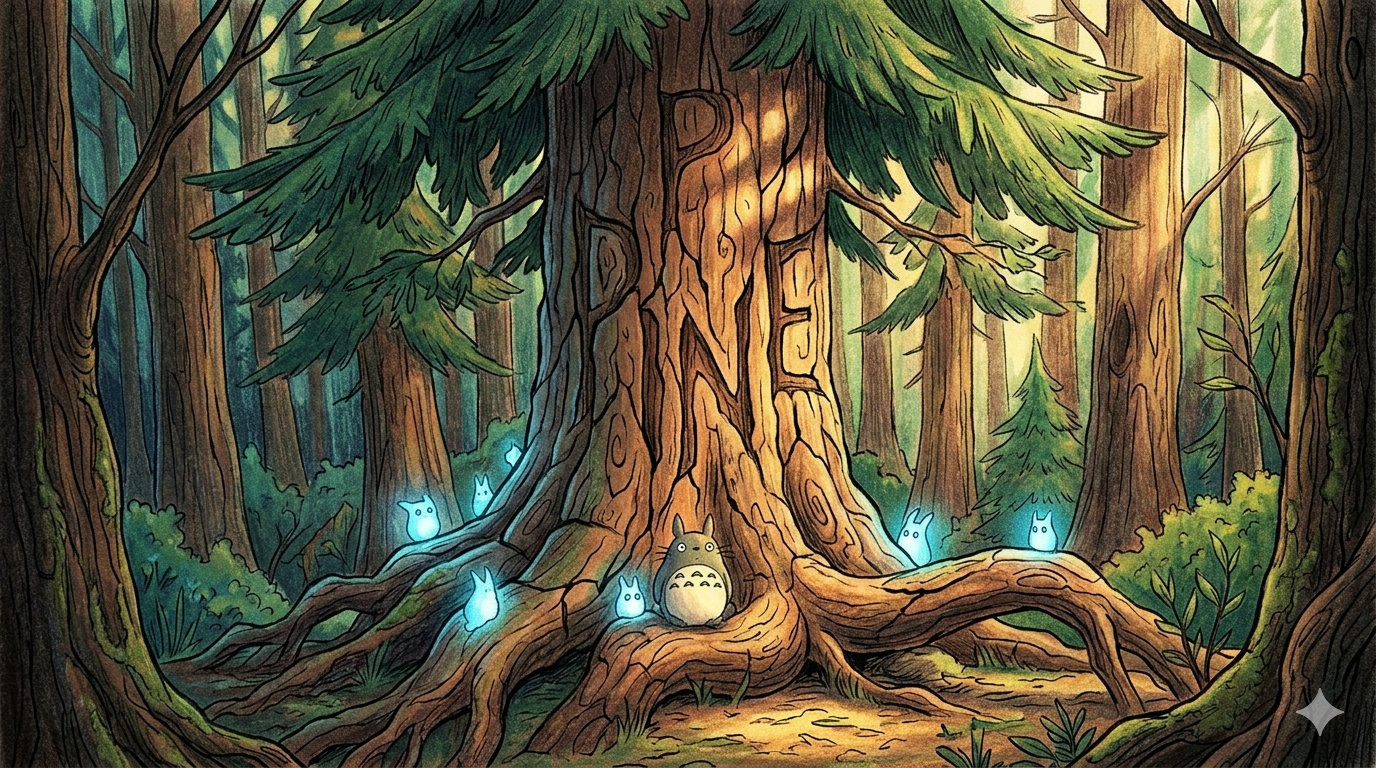
pine [paɪn]
(명사/동사) 소나무, 그리워하다, 그리움으로 쇠약해지다
'pine'을 단순히 "소나무"로만 외우면 수능에서 반드시 틀립니다.
pine은 "단단하고 강인하게 서 있는 소나무처럼 변하지 않는 자리에서 멀리 있거나 잃어버린 것을 간절하게 원하며 조용히 쇠약해지는 것" 이라는 핵심 이미지에서 출발해, 상록수로서의 소나무·깊은 그리움·간절한 갈망·그리움으로 인한 쇠약까지 폭넓게 쓰이는 핵심 다의어입니다. 특히 pine(그리움으로 조용히 쇠약해지는 것) vs. long(강렬하게 원하는 것) vs. yearn(깊이 열망하는 것) 의 뉘앙스 차이, pine for(~을 그리워하다), pine away(그리움으로 쇠약해지다) 패턴은 수능 독해 심리·문학·사회 지문에서 핵심적으로 등장합니다.
'pine'은 고대 영어 pin(소나무)에서 유래했으며, 라틴어 pinus(소나무)에 뿌리를 두고 있습니다. 동사 pine(그리워하다)은 고대 영어 pinian(고통받다, 괴로워하다)에서 유래했으며 라틴어 poena(고통, 벌)에 뿌리를 두고 있습니다. 어원의 핵심 이미지는 "벌처럼 느껴지는 고통을 받으며 간절히 원하는 것" 으로, 단순한 원함이 아닌 얻을 수 없는 것에 대한 고통스럽고 조용한 갈망이 사람을 천천히 약하게 만드는 고통스러운 그리움의 이미지가 이 단어의 본질입니다.
1. pine for [paɪn fɔːr]
(동사구/수능) "~을 그리워하다, ~을 간절히 원하다"를 뜻합니다. 멀리 있거나 잃어버린 사람·장소·것에 대한 깊고 고통스러운 그리움을 강조합니다. 수능 독해 심리·문학·사회 지문의 핵심 표현입니다.
After moving abroad for work, she found herself constantly pining for the smell of her mother's cooking and the sound of familiar voices she had grown up hearing every day. (일 때문에 해외로 이사한 후 그녀는 어머니의 요리 냄새와 매일 들으며 자란 익숙한 목소리들을 끊임없이 그리워하는 자신을 발견했다.)
2. pine away [paɪn əˈweɪ]
(동사구/수능) "그리움으로 쇠약해지다, 애태우며 힘을 잃다"를 뜻합니다. 깊은 그리움이나 슬픔으로 인해 점차적으로 기력이 약해지는 것을 강조합니다. 수능 독해 심리·문학·사회 지문의 핵심 표현입니다.
The old dog had been pining away since his owner left for hospital, refusing to eat properly and lying by the front door all day waiting for someone who never came back. (노견은 주인이 병원에 간 이후로 제대로 먹기를 거부하고 돌아오지 않는 누군가를 기다리며 하루 종일 현관문 옆에 누워 그리움으로 쇠약해지고 있었다.)
3. pine tree [paɪn triː]
(명사구/수능) "소나무"를 뜻합니다. 사철 푸른 상록수로 강인함과 지속성을 상징하는 나무를 강조합니다. 수능 독해 자연·문화·역사·문학 지문에서 자주 등장합니다.
The ancient pine tree at the edge of the village had stood for over three hundred years, surviving every storm and drought that had come and gone in that time. (마을 가장자리의 오래된 소나무는 300년 이상 서서 그 시간 동안 왔다 간 모든 폭풍과 가뭄에서 살아남았다.)
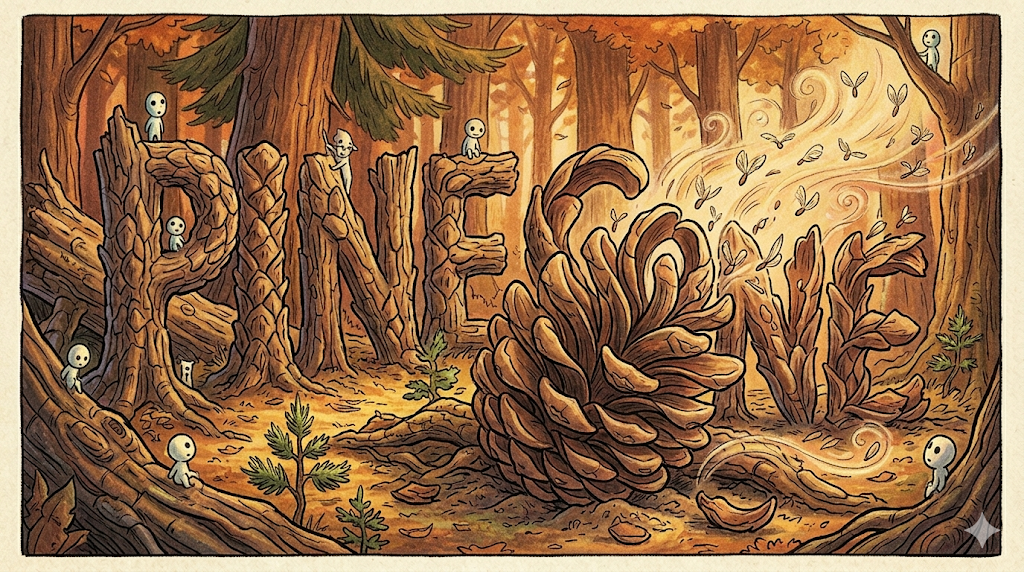
4. pine cone [paɪn koʊn]
(명사구/수능) "솔방울"을 뜻합니다. 소나무의 씨앗을 품은 열매로 자연의 순환과 생명력을 상징하는 것을 강조합니다. 수능 독해 자연·과학·문화 지문에서 자주 등장합니다.
Children filled their pockets with pine cones during the forest walk, planning to use them for the craft project they had been assigned for the following week at school. (아이들은 숲 산책 중에 솔방울로 주머니를 가득 채웠는데 다음 주 학교에서 배정된 공예 프로젝트에 사용할 계획이었다.)
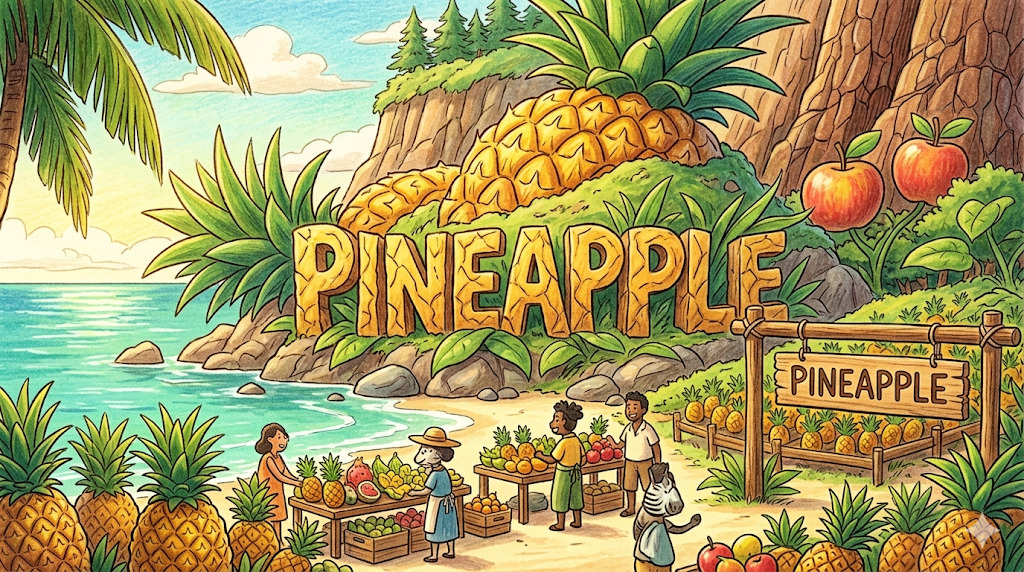
5. pineapple [ˈpaɪnæpəl]
(명사/수능) "파인애플"을 뜻합니다. 솔방울 모양처럼 생긴 열대 과일로, 그 이름 자체가 소나무(pine)와 사과(apple)의 결합에서 유래했음을 강조합니다. 수능 독해 문화·역사·음식·경제 지문에서 자주 등장합니다.
The pineapple was once so rare and expensive in Europe that wealthy families would rent one for the evening simply to display it at a dinner party as a symbol of luxury and status. (파인애플은 한때 유럽에서 너무 희귀하고 비싸서 부유한 가정들이 사치와 지위의 상징으로 저녁 파티에 전시하기 위해 하루 저녁에 하나를 빌리기까지 했다.)
6. pine needle [paɪn ˈniːdəl]
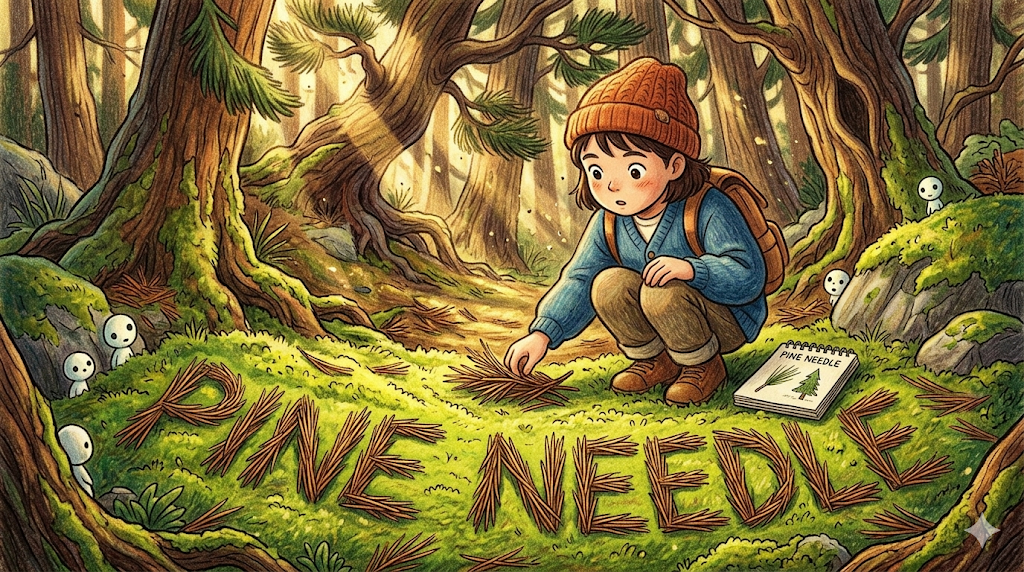
(명사구/수능) "솔잎, 솔바늘"을 뜻합니다. 소나무의 바늘 모양 잎으로 소나무 숲의 특유한 냄새와 분위기를 상징하는 것을 강조합니다. 수능 독해 자연·문학·심리 지문에서 자주 등장합니다.
The soft carpet of pine needles on the forest floor muffled every footstep and made walking through the trees feel completely silent and oddly peaceful. (숲 바닥의 부드러운 솔잎 카펫이 모든 발소리를 죽여서 나무들 사이를 걷는 것이 완전히 조용하고 묘하게 평화롭게 느껴지게 했다.)
7. under the pines [ˈʌndər ðə paɪnz]
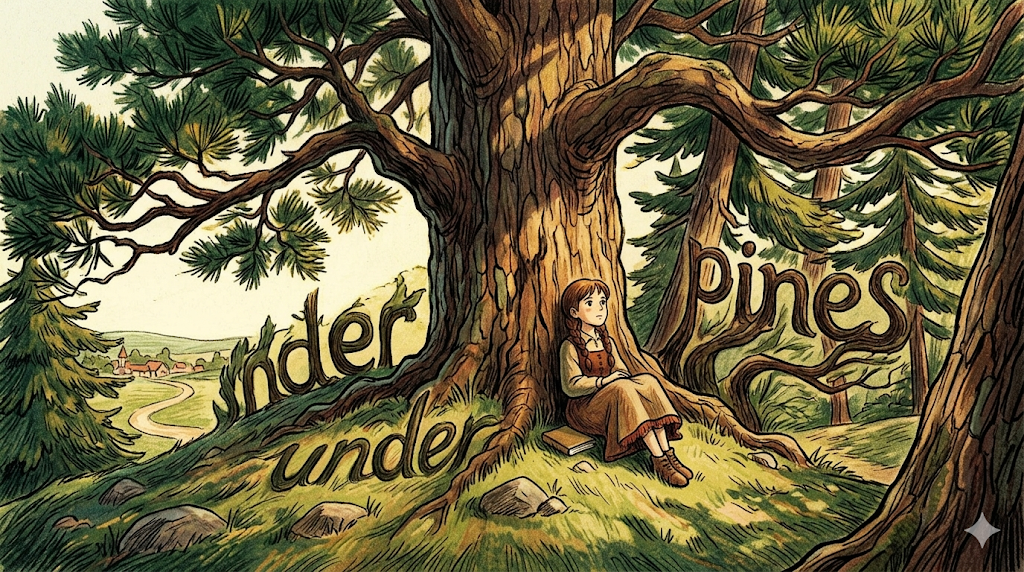
(전치사구/수능) "소나무 아래에서"를 뜻합니다. 소나무 그늘 아래라는 물리적 위치이자 고요함·사색·자연과의 연결을 상징하는 공간을 강조합니다. 수능 독해 문학·자연·심리 지문에서 자주 등장합니다.
She had spent countless summer afternoons reading under the pines at the edge of her grandfather's property, where the shade was cool and the silence felt like it belonged to another world entirely. (그녀는 할아버지 부지 가장자리의 소나무 아래에서 수많은 여름 오후를 독서하며 보냈는데 그늘이 시원하고 침묵이 완전히 다른 세계에 속한 것처럼 느껴지는 곳이었다.)
8. pine forest [paɪn ˈfɒrɪst]
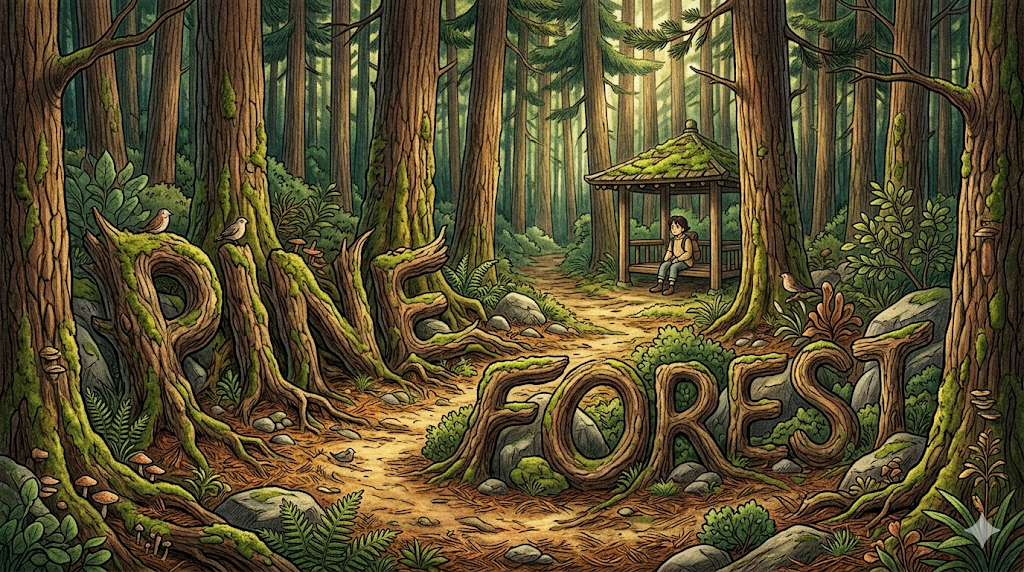
(명사구/수능) "소나무 숲"을 뜻합니다. 소나무들이 빽빽하게 자란 숲으로 자연의 장엄함·고요함·생태적 중요성을 강조합니다. 수능 독해 자연·환경·문학·역사 지문에서 자주 등장합니다.
The ancient pine forest that had covered the hillside for centuries was now under threat from a combination of rising temperatures and a new species of bark beetle that the trees had no natural resistance to. (수세기 동안 언덕 사면을 덮어온 고대 소나무 숲이 이제 나무들이 자연적 저항성이 없는 새로운 종류의 수피 딱정벌레와 상승하는 기온의 결합으로 위협받고 있었다.)
9. pine nut [paɪn nʌt]
(명사구/수능) "잣, 솔씨"를 뜻합니다. 소나무 솔방울 안에 있는 작고 영양이 풍부한 씨앗으로 음식과 문화에서 중요한 역할을 하는 것을 강조합니다. 수능 독해 음식·문화·자연·경제 지문에서 자주 등장합니다.
Pine nuts have been harvested and eaten by people across the Mediterranean and East Asia for thousands of years, and they remain one of the most nutritious and expensive ingredients used in traditional cooking in those regions. (잣은 수천 년 동안 지중해와 동아시아 전역에 걸쳐 사람들에 의해 수확되고 먹어왔으며 그 지역의 전통 요리에 사용되는 가장 영양이 풍부하고 비싼 재료 중 하나로 남아 있다.)
10. pine after [paɪn ˈɑːftər]
(동사구/수능) "~을 그리워하며 쫓다, ~에 대한 그리움으로 고통받다"를 뜻합니다. pine for와 비슷하지만 더 집착적이고 헛되이 쫓는 뉘앙스를 강조합니다. 수능 독해 심리·문학·사회 지문에서 자주 등장합니다.
He spent years pining after a version of his past that had probably never been as perfect as he remembered it, preventing him from fully engaging with the life he actually had in front of him. (그는 아마도 그가 기억하는 것처럼 결코 완벽하지 않았을 과거의 어떤 버전을 그리워하며 쫓는 데 수년을 보냈으며 이것이 실제로 앞에 있는 삶에 완전히 참여하는 것을 막았다.)

POINT 1. pine vs. long vs. yearn — 수능 최빈출 뉘앙스 구별
세 표현 모두 "간절히 원하다"와 관련되지만 뉘앙스가 다릅니다.
pine → 얻을 수 없거나 잃어버린 것에 대한 고통스럽고 조용한 갈망이 사람을 천천히 약하게 만드는 것 (수동적 쇠약·고통스러운 그리움 강조), long → 무언가를 강렬하게 원하는 것으로 반드시 고통이나 쇠약을 수반하지는 않는 것 (강렬한 원함 강조), yearn → 깊고 감정적으로 강렬하게 열망하는 것으로 영혼 깊은 곳에서 우러나오는 갈망 (깊은 감정적 열망 강조). 수능에서 pine은 반드시 그리움이 사람을 조용히 약하게 만드는 수동적이고 고통스러운 갈망이라는 문맥이 함께 등장합니다.
예)
She pined for her homeland in a way that made everyday tasks feel meaningless. (그녀는 일상적인 일들이 무의미하게 느껴지게 만드는 방식으로 고향을 그리워했다.) — 수동적 쇠약·고통스러운 그리움 강조 He longed to travel the world after seeing photographs of distant places. (그는 먼 곳의 사진들을 본 후 세계를 여행하기를 강렬히 원했다.) — 강렬한 원함 강조 She yearned for a deeper connection with the people around her. (그녀는 주변 사람들과의 더 깊은 연결을 깊이 열망했다.) — 깊은 감정적 열망 강조
POINT 2. pine for / pine away — 수능 심리·문학 지문 핵심
pine for와 pine away는 수능 독해 심리·문학·사회 지문에서 가장 자주 출제되는 pine 관련 표현입니다.
pine for → 특정 사람·장소·것에 대한 고통스럽고 지속적인 그리움, pine away → 그 그리움이 너무 깊어서 사람이 점차 기력을 잃고 쇠약해지는 것. 두 표현이 함께 등장하면 글쓴이가 그리움이나 상실의 심리적 영향을 논하고 있다는 신호입니다.
POINT 3. pinus / poena 어근 — 수능 어휘 확장 필수
pine의 두 어원 pinus(소나무)와 poena(고통)와 관련된 단어들이 수능에서 자주 출제됩니다.
pineapple [ˈpaɪnæpəl] → 파인애플 (소나무+사과: 솔방울처럼 생긴 사과), penalty [ˈpenəlti] → 벌칙, 처벌 (고통을 주는 것), pain [peɪn] → 고통 (poena에서 유래), painful [ˈpeɪnfəl] → 고통스러운 (고통이 가득한). 이 단어들은 "소나무" 또는 "고통·벌"이라는 공통 이미지를 가지고 있습니다.
(명사) ① 소나무 (나무)
pine의 가장 기본적인 의미로, 사철 푸른 상록수인 소나무를 나타냅니다. 반드시 강인함·지속성·자연의 상징이라는 문맥이 함께 옵니다.
- The slopes were covered in pine, their dark green canopy stretching as far as she could see in every direction without a single deciduous tree breaking the pattern. (경사면은 소나무로 덮여 있었으며 그녀가 볼 수 있는 모든 방향으로 단 하나의 낙엽수도 패턴을 깨뜨리지 않고 그 짙은 녹색 캐노피가 펼쳐져 있었다.)
- The craftsman had chosen pine for the shelves because it was light enough to work with easily but strong enough to hold the weight of the books without bending. (공예가는 선반으로 소나무를 선택했는데 다루기에 충분히 가볍지만 책의 무게를 구부러지지 않고 지탱하기에 충분히 강했기 때문이다.)
- The scent of pine filled the mountain air so completely that visitors often said it felt as though the forest itself were breathing around them. (소나무 향이 산 공기를 너무 가득 채워서 방문객들은 종종 숲 자체가 그들 주변에서 숨을 쉬는 것 같다고 말했다.)
(동사) ② 그리워하다, 그리움으로 쇠약해지다
잃어버리거나 얻을 수 없는 것에 대한 깊고 고통스러운 그리움으로 천천히 약해지는 것을 나타냅니다. 수능 독해 심리·문학·사회 지문에서 자주 등장하는 핵심 의미입니다.
- The expatriate pined for home so deeply during his first winter abroad that he could not bring himself to decorate his flat or make friends, as though doing so would mean accepting that he was not going back. (그 해외 거주자는 해외에서의 첫 겨울 동안 너무 깊이 고향을 그리워해서 아파트를 꾸미거나 친구를 사귀려 하지 않았는데 그렇게 하는 것이 돌아가지 않는다는 것을 받아들이는 것을 의미하는 것처럼 느껴졌기 때문이다.)
- The novel's protagonist pined in silence for a friendship that had broken apart years before, never quite finding the courage to reach out and try to repair what had been lost. (소설의 주인공은 수년 전에 끊어진 우정을 조용히 그리워하며 손을 뻗어 잃어버린 것을 회복하려는 용기를 결코 찾지 못했다.)
- Rather than pining for a perfect life that did not exist, the essay urged readers to look carefully at what they already had and ask why it was not enough just as it was. (존재하지 않는 완벽한 삶을 그리워하기보다 에세이는 독자들에게 이미 가지고 있는 것을 주의 깊게 바라보고 그것이 있는 그대로 왜 충분하지 않은지 물어보도록 촉구했다.)
(명사) ③ 소나무 목재 (재료)
가구·건축 등에 쓰이는 소나무 목재를 나타냅니다. 수능 독해 경제·문화·사회 지문에서 자주 등장합니다.
- The old farmhouse was built entirely from local pine, giving every room a warm golden hue that deepened with age and made the building feel both modest and timeless. (오래된 농가는 지역 소나무로 완전히 지어져서 모든 방에 나이가 들수록 깊어지고 건물을 소박하면서도 시대를 초월한 느낌이 나게 만드는 따뜻한 황금빛을 줬다.)
- Furniture made from pine has been popular for centuries because it is one of the few materials that can be both affordable enough for ordinary families and beautiful enough to deserve a place in any home. (소나무로 만든 가구는 평범한 가정이 감당할 수 있을 만큼 저렴하면서도 어떤 집에든 있을 자격이 있을 만큼 아름다운 몇 안 되는 재료 중 하나이기 때문에 수세기 동안 인기를 누렸다.)
- The carpenter explained that pine was easier to work with than oak but required more care in finishing because it scratched and dented more easily under daily use. (목수는 소나무가 참나무보다 다루기 쉽지만 일상적인 사용에서 더 쉽게 긁히고 찌그러지기 때문에 마감에 더 주의가 필요하다고 설명했다.)

뉘앙스·의미 연결 흐름 표
핵심 이미지 연결 흐름 뉘앙스 요약
| 그리움·갈망 | ~을 그리워하다 → 그리움으로 쇠약해지다 → ~을 쫓으며 그리워하다 | pine for·pine away·pine after |
| 소나무 자연 | 소나무 → 소나무 숲 → 소나무 아래에서 | pine tree·pine forest·under the pines |
| 소나무 산물 | 솔방울 → 솔잎 → 잣 → 파인애플 | pine cone·pine needle·pine nut·pineapple |
어원 흐름 표
단어 구성 요소 의미 연결 흐름 뉘앙스 요약
| 라틴어 pinus (소나무) | 소나무 → 강인함·지속성 → 소나무 목재·산물 | 사철 푸른 강인한 나무에서 그 산물과 상징으로 확장 |
| 고대 영어 pinian / 라틴어 poena (고통) | 고통받다 → 그리움으로 약해지다 → 간절히 갈망하다 | 벌처럼 느껴지는 고통 속에서 조용히 쇠약해지는 그리움 |
품사별 의미 표
품사 의미 예문
| 명사 | 소나무 (나무) | A pine stood alone on the hill. (언덕에 소나무 한 그루가 홀로 서 있었다.) |
| 명사 | 소나무 목재 | The floor was made of pine. (바닥은 소나무로 만들어졌다.) |
| 동사 | 그리워하다 | She pined for her old home. (그녀는 예전 집을 그리워했다.) |
| 동사 | 그리움으로 쇠약해지다 | He pined away after she left. (그녀가 떠난 후 그는 그리움으로 쇠약해졌다.) |
활용 예문 리스트
- He had spent two years pining for the mountain town he grew up in, until a visit back made him realise that what he truly missed was not the place itself but the person he had been when he lived there. (그는 2년 동안 자신이 자란 산악 도시를 그리워했는데 돌아가 방문하고 나서 진정으로 그리워했던 것은 장소 자체가 아니라 그곳에 살았을 때의 자신이었다는 것을 깨달았다.)
- The cat had been pining away ever since the children went back to school in September, sitting by the window all morning and barely touching its food until they returned in the afternoon. (고양이는 9월에 아이들이 학교로 돌아간 이후로 그리움으로 쇠약해지며 오전 내내 창문 옆에 앉아 오후에 돌아올 때까지 음식에 거의 손도 대지 않고 있었다.)
- The pine forest at the edge of the national park had survived wildfires, logging bans, and decades of drought, and scientists were studying its remarkable resilience to understand what made certain tree communities more capable of recovering from catastrophe than others. (국립공원 가장자리의 소나무 숲은 산불, 벌목 금지, 수십 년의 가뭄에서 살아남았으며 과학자들은 특정 나무 공동체가 다른 것들보다 재해에서 더 잘 회복할 수 있게 만드는 것을 이해하기 위해 그 놀라운 회복력을 연구하고 있었다.)
- The aroma of fresh pine needles after rain was one of those scents that seemed to access a part of the brain that pure logic could not reach, triggering memories and emotions that had no names but felt profoundly familiar. (비 후 신선한 솔잎의 향기는 순수한 논리가 도달할 수 없는 뇌의 일부에 접근하는 것처럼 보이는 향기 중 하나로 이름은 없지만 깊이 친숙하게 느껴지는 기억과 감정을 불러일으켰다.)
- She had spent far too many years pining after an academic career that the rejection letters had long since confirmed was not going to happen, and the conversation with her mentor finally helped her see that letting go was not giving up but simply turning toward something real. (그녀는 거절 편지들이 오래전에 일어나지 않을 것이라고 확인해준 학계 커리어를 쫓으며 그리워하는 데 너무 많은 세월을 보냈으며 멘토와의 대화가 마침내 그녀가 포기하는 것이 아니라 단순히 실제적인 것을 향해 방향을 전환하는 것이라는 것을 알도록 도왔다.)
전체 뉘앙스 설명
pine은 '강인하게 서 있는 소나무처럼 변하지 않는 자리에서 잃어버린 것을 조용히 고통스럽게 원하는 것의 언어'입니다.
long과의 차이: long은 무언가를 강렬하게 원하는 것을 강조하고, pine은 그 원함이 고통스럽고 사람을 조용히 약하게 만든다는 수동적 쇠약의 측면을 강조합니다.
yearn과의 차이: yearn은 깊고 감정적으로 강렬한 열망을 강조하고, pine은 그 열망이 해결되지 않아 사람이 점차 기력을 잃어간다는 지속적 쇠약의 이미지를 강조합니다.
miss과의 차이: miss는 없어진 것에 대해 아쉬움을 느끼는 것을 강조하고, pine은 그 아쉬움이 고통스럽고 깊어서 사람을 약하게 만들 정도라는 것을 강조합니다.
마지막 핵심 정리
pine은 단순히 "소나무"가 아닙니다 — 라틴어 pinus(소나무)와 poena(고통)에서 출발해, ~을 그리워하다(pine for)·그리움으로 쇠약해지다(pine away)·소나무(pine tree)·솔방울(pine cone)·파인애플(pineapple)·솔잎(pine needle)·소나무 아래에서(under the pines)·소나무 숲(pine forest)·잣(pine nut)·그리워하며 쫓다(pine after)까지 확장되는 단어이며, pine vs. long vs. yearn 뉘앙스 구별·pine for / pine away 심리·문학 지문 패턴·pinus/poena 어근 패밀리가 수능 핵심 출제 포인트입니다.
파생어 표
파생어 발음기호 품사 의미
| pining | [ˈpaɪnɪŋ] | 형용사/명사 | 그리워하는, 그리움 |
| pinery | [ˈpaɪnəri] | 명사 | 파인애플 재배 온실, 소나무 숲 |
| piny | [ˈpaɪni] | 형용사 | 소나무의, 소나무 향기가 나는 |
| pinecone | [ˈpaɪnkoʊn] | 명사 | 솔방울 |
| pain | [peɪn] | 명사/동사 | 고통, 아프게 하다 (어원 공유) |
| penalty | [ˈpenəlti] | 명사 | 벌칙, 처벌 (어원 공유) |
유의어 비교표
단어 공통점 뉘앙스 차이 예문
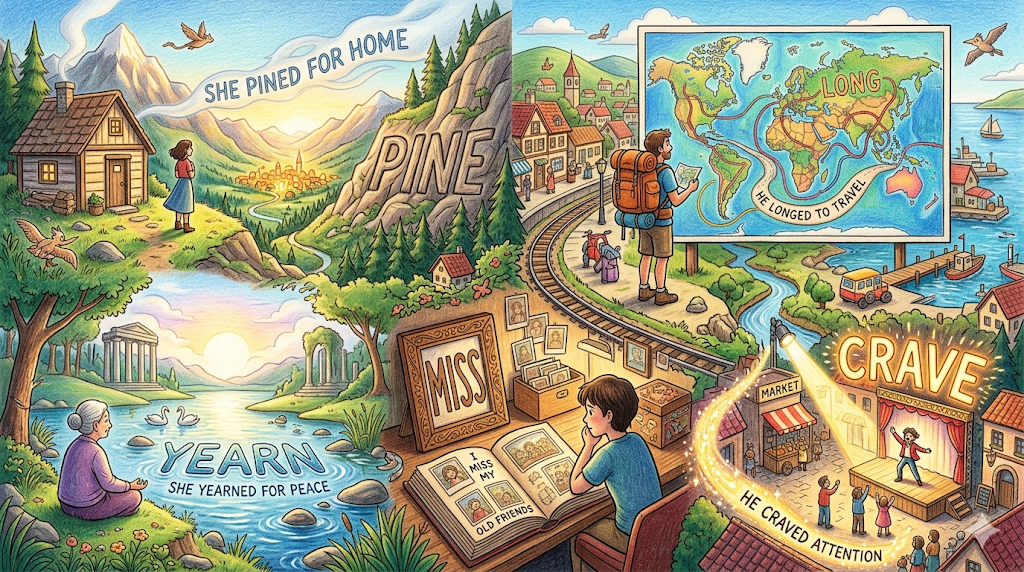
| pine | 그리워하다·열망하다 | 고통스러운 그리움으로 조용히 쇠약해지는 것 강조 | She pined for home. |
| long | 강렬히 원하다 | 무언가를 강렬하게 원하는 것 강조 | He longed to travel. |
| yearn | 깊이 열망하다 | 영혼 깊은 곳에서 우러나오는 감정적 열망 강조 | She yearned for peace. |
| miss | 그리워하다 | 없어진 것에 대해 아쉬움을 느끼는 것 강조 | I miss my old friends. |
| crave | 갈망하다 | 강하게 원하거나 필요로 하는 것 강조 | He craved attention. |
유의어 예문 리스트
- (long) She had longed to visit the old city ever since her grandmother had described it so vividly in the stories she told every Sunday evening after dinner. (그녀는 할머니가 저녁 식사 후 매주 일요일 저녁에 이야기할 때마다 그것을 너무 생생하게 묘사했기 때문에 오래된 도시를 방문하기를 강렬히 원했다.)
- (yearn) He yearned for the kind of deep understanding between two people that he had read about in books but had never quite managed to experience in any of his real relationships. (그는 책에서 읽었지만 실제 관계에서는 경험하지 못한 두 사람 사이의 깊은 이해를 깊이 열망했다.)
- (miss) She missed her old neighbourhood not because it had been particularly beautiful or exciting but because she had known every person on the street and every person had known her. (그녀는 예전 동네가 특별히 아름답거나 흥미로워서가 아니라 거리의 모든 사람을 알았고 모든 사람이 그녀를 알았기 때문에 그리워했다.)
- (crave) The child craved his parents' undivided attention during mealtimes, often doing something unexpected just to make sure both of them were looking at him at the same moment. (아이는 식사 시간에 부모의 온전한 관심을 갈망하며 종종 두 사람 모두 같은 순간에 자신을 보고 있도록 예상치 못한 행동을 했다.)
결론 정리
pine은 단순히 "소나무"가 아니라, 사철 푸른 강인한 소나무와 벌처럼 느껴지는 고통의 두 이미지에서 출발해 소나무의 강인한 자연적 상징·소나무의 다양한 산물·그리움으로 조용히 쇠약해지는 인간의 내면까지 확장되는 단어다 — pine이 있는 곳엔 언제나 '단순한 원함이 아닌, 얻을 수 없거나 잃어버린 것에 대한 고통스럽고 조용한 갈망이 사람을 천천히 약하게 만드는' 깊고 수동적인 그리움의 선언이 있다.
💡 pine은 "강인한 소나무"이자 "잃어버린 것을 고통스럽게 그리워하며 쇠약해지는 것"의 언어 — pine for·pine away·pine after·under the pines가 수능 최빈출.
🌟 초등학생 버전 pine은 두 가지 뜻이 있어요! 첫째로 사철 푸른 소나무 — 겨울에도 싱싱하게 녹색을 유지하며 어떤 추위에도 굳건히 서 있는 나무예요! 둘째로 누군가나 무언가를 너무 그리워해서 그리움 때문에 아무것도 하기 싫고 기운이 없어지는 것 — pine for는 "너무너무 보고 싶고 그리워서 마음이 아픈 것"이에요! 🌲✨

pine for [paɪn fɔːr]
(동사구) ~을 그리워하다, ~을 간절히 원하다
멀리 있거나 잃어버린 사람·장소·것에 대한 깊고 고통스러운 그리움을 강조합니다. 단순한 그리움이 아닌 그 그리움이 일상을 방해할 만큼 강렬하고 지속적이라는 뉘앙스가 강합니다. 수능 독해 심리·문학·사회 지문에서 핵심 표현으로 자주 등장합니다.
- The retired teacher pined for the classroom energy that had kept her going for thirty years, finding that the quiet of her new life, though peaceful, felt oddly hollow without the noise and purpose she had been used to. (은퇴한 선생님은 30년 동안 자신을 지탱해준 교실의 활기를 그리워했으며 새로운 삶의 고요함이 평화롭기는 했지만 익숙했던 소음과 목적 없이는 묘하게 텅 빈 것처럼 느껴진다는 것을 발견했다.)
- He pined for the easy closeness he had once shared with his brother before distance and time and different choices had slowly pushed them into lives with almost nothing in common. (그는 거리와 시간과 다른 선택들이 그들을 거의 공통점이 없는 삶으로 천천히 밀어 넣기 전에 형제와 함께 나눴던 편안한 친밀함을 그리워했다.)
- Research into homesickness suggests that people who pine for a specific place are often actually pining for a specific version of themselves — the person they were when that place was their home — rather than the place itself. (향수에 관한 연구는 특정 장소를 그리워하는 사람들이 종종 실제로는 장소 자체가 아니라 그 장소가 집이었을 때의 자신 — 특정 버전의 자신 — 을 그리워하고 있다는 것을 시사한다.)

pine away [paɪn əˈweɪ]
(동사구) 그리움으로 쇠약해지다, 애태우며 힘을 잃다
깊은 그리움이나 슬픔으로 인해 점차적으로 기력이 약해지는 것을 강조합니다. 그리움이 행동이나 의지로 표현되지 않고 조용히 내면에서 사람을 소진시킨다는 수동적 쇠약의 뉘앙스가 강합니다. 수능 독해 심리·문학·사회 지문에서 핵심 표현으로 자주 등장합니다.
- The novel described how the exiled king had spent his final years pining away in a foreign palace, surrounded by luxury but deprived of everything that had made his life feel meaningful — his language, his people, and the landscape of his childhood. (소설은 추방된 왕이 외국 궁전에서 사치에 둘러싸이지만 자신의 삶을 의미 있게 만들었던 모든 것 — 언어, 백성, 어린 시절의 풍경 — 을 박탈당한 채 마지막 세월을 그리움으로 쇠약해지며 보냈다고 묘사했다.)
- Psychologists warn that allowing yourself to pine away over an irretrievable loss rather than actively grieving and eventually rebuilding can trap people in a state that looks like grief but is actually a kind of suspended life — present in body but absent in spirit. (심리학자들은 적극적으로 슬퍼하고 결국 재건하기보다 회복할 수 없는 상실을 그리움으로 쇠약해지며 보내는 것이 슬픔처럼 보이지만 실제로는 일종의 정지된 삶 — 몸은 있지만 영혼은 없는 — 인 상태에 사람들을 가둘 수 있다고 경고한다.)
- The biography recorded that the composer had spent his last decade largely pining away after the failure of his most ambitious work, rarely leaving his room and writing almost nothing, as though the rejection had convinced him that his creative voice was no longer worth sharing with the world. (전기는 작곡가가 가장 야심찬 작품의 실패 후 마지막 10년을 주로 그리움으로 쇠약해지며 보냈으며 방을 거의 떠나지 않고 거의 아무것도 쓰지 않았다고 기록했는데 마치 거절이 자신의 창의적 목소리가 더 이상 세상과 나눌 가치가 없다고 그를 납득시킨 것 같았다.)

pine tree [paɪn triː]
(명사구) 소나무
사철 푸른 상록수로 강인함과 지속성을 상징하는 나무를 강조합니다. 전 세계적으로 중요한 생태적·문화적·경제적 의미를 가진 나무라는 뉘앙스가 강합니다. 수능 독해 자연·문화·역사·문학 지문에서 자주 등장합니다.
- The pine tree has been used as a symbol of longevity and resilience in East Asian art and literature for thousands of years, often appearing alongside bamboo and plum blossom to represent the three companions of winter. (소나무는 수천 년 동안 동아시아 예술과 문학에서 장수와 회복력의 상징으로 사용됐으며 종종 겨울의 세 친구를 나타내기 위해 대나무와 매화와 함께 등장한다.)
- A single mature pine tree can produce millions of seeds over its lifetime, but because conditions for germination are so exacting, only a tiny fraction of those seeds will ever grow into trees old enough to produce seeds of their own. (성숙한 소나무 한 그루는 일생 동안 수백만 개의 씨앗을 생산할 수 있지만 발아 조건이 너무 까다롭기 때문에 그 씨앗의 극히 일부만이 자신의 씨앗을 생산할 만큼 오래된 나무로 자랄 것이다.)
- The researchers found that planting pine trees in degraded land could help restore soil stability and begin to rebuild the conditions necessary for other plant species to follow, though the process took many decades before the ecosystem started to resemble anything close to its original state. (연구자들은 훼손된 토지에 소나무를 심는 것이 토양 안정성을 회복하고 다른 식물 종이 뒤따를 수 있는 필요한 조건을 재건하기 시작하는 데 도움이 될 수 있다는 것을 발견했지만 생태계가 원래 상태에 가까운 것을 닮기 시작하기까지 수십 년이 걸렸다.)
pine cone [paɪn koʊn]
(명사구) 솔방울
소나무의 씨앗을 품은 열매로 자연의 순환과 생명력을 상징하는 것을 강조합니다. 딱딱한 비늘로 씨앗을 보호하다가 적절한 때 열어 씨앗을 퍼뜨리는 자연의 정교한 메커니즘이라는 뉘앙스가 강합니다. 수능 독해 자연·과학·문화 지문에서 자주 등장합니다.
- Some species of pine cone can remain closed on the tree for decades and will only open in response to the intense heat of a wildfire, a strategy that ensures new seeds are released exactly when the cleared ground offers the best conditions for them to grow. (일부 종류의 솔방울은 수십 년 동안 나무에서 닫힌 채로 있다가 산불의 강렬한 열에 반응해서만 열리는데 이것은 새 씨앗이 빈 땅이 성장에 가장 좋은 조건을 제공하는 정확한 때에 방출되는 것을 보장하는 전략이다.)
- In many cultures around the world, the pine cone has been used as a symbol of consciousness, fertility, and renewal, appearing in artworks ranging from ancient Egyptian sculptures to the staff carried by the Roman god Dionysus. (전 세계 많은 문화에서 솔방울은 의식, 풍요, 갱신의 상징으로 사용됐으며 고대 이집트 조각에서 로마 신 디오니소스가 든 지팡이에 이르기까지 다양한 예술 작품에 등장한다.)
- She arranged the pine cones she had collected on the windowsill in order of size, and looking at them later she thought about how each one was both an ending and a beginning — the finished product of years of growth and the container of everything needed to start again. (그녀는 수집한 솔방울들을 크기 순서대로 창턱에 배열했으며 나중에 그것들을 바라보며 각각이 끝이자 시작이라는 것 — 수년간의 성장의 완성된 산물이자 다시 시작하는 데 필요한 모든 것의 용기 — 에 대해 생각했다.)
pineapple [ˈpaɪnæpəl]
(명사) 파인애플
솔방울 모양처럼 생긴 열대 과일로, 그 이름 자체가 소나무(pine)와 사과(apple)의 결합에서 유래했음을 강조합니다. 역사적으로 사치와 환대의 상징이었다가 오늘날 전 세계적으로 친숙한 과일이 된 흥미로운 문화사를 가진 뉘앙스가 강합니다. 수능 독해 문화·역사·음식·경제 지문에서 자주 등장합니다.
- The pineapple was introduced to Europe by explorers returning from the Americas in the late fifteenth century, and the fruit was so unfamiliar and exotic that its appearance alone — the spiky crown, the golden flesh — made it an object of fascination and desire. (파인애플은 15세기 말 아메리카에서 돌아오는 탐험가들에 의해 유럽에 소개됐으며 그 과일은 너무 낯설고 이국적이어서 가시 모양의 왕관과 황금빛 과육만으로도 매혹과 갈망의 대상이 됐다.)
- The architectural motif of the pineapple appears on buildings across Britain and continental Europe from the seventeenth and eighteenth centuries as a symbol of welcome and hospitality, because displaying a real fruit meant a host was wealthy enough to have access to one of the world's most expensive imported goods. (파인애플의 건축적 모티프는 환영과 환대의 상징으로 17세기와 18세기부터 영국과 유럽 대륙 전역의 건물에 등장하는데 실제 과일을 전시하는 것이 집주인이 세계에서 가장 비싼 수입품 중 하나에 접근할 수 있을 만큼 부유하다는 것을 의미했기 때문이다.)
- The global journey of the pineapple from a revered luxury to an affordable everyday fruit illustrates how trade, technology, and transportation have transformed not just economies but entire cultural frameworks for understanding what is common and what is precious. (숭배받는 사치품에서 저렴한 일상 과일로의 파인애플의 세계적 여정은 무역, 기술, 교통이 경제만이 아니라 무엇이 평범하고 무엇이 귀중한지를 이해하기 위한 전체 문화적 프레임워크를 어떻게 변화시켰는지 보여준다.)
pine needle [paɪn ˈniːdəl]
(명사구) 솔잎, 솔바늘
소나무의 바늘 모양 잎으로 소나무 숲의 특유한 냄새와 분위기를 상징하는 것을 강조합니다. 날카롭고 가늘지만 강하고 지속적인 특성을 가진 자연의 작은 경이로움이라는 뉘앙스가 강합니다. 수능 독해 자연·문학·심리 지문에서 자주 등장합니다.
- The medicinal properties of pine needles have been known for centuries — they are rich in vitamin C and have been used by indigenous communities across the northern hemisphere as a remedy for scurvy long before the vitamin was scientifically identified. (솔잎의 약용 성질은 수세기 동안 알려져 있었다 — 그것들은 비타민 C가 풍부하며 비타민이 과학적으로 확인되기 훨씬 전부터 북반구 전역의 원주민 공동체에 의해 괴혈병 치료제로 사용됐다.)
- The thick layer of pine needles that covered the floor of the old woodland did more than just muffle sound — it acted as a natural mulch that retained moisture, suppressed competing weeds, and slowly decomposed to enrich the soil for future generations of trees. (오래된 삼림 바닥을 덮고 있는 두꺼운 솔잎 층은 단순히 소리를 죽이는 것 이상을 했다 — 그것은 수분을 보유하고 경쟁하는 잡초를 억제하며 미래 세대의 나무들을 위해 토양을 풍요롭게 하기 위해 천천히 분해되는 자연적인 멀치 역할을 했다.)
- Writers have long used the scent of pine needles to evoke a sense of both remoteness and belonging — the smell of a place that is far from the city and its complications, and yet somehow deeply familiar to anyone who has ever stood in a forest and felt, just for a moment, that they had come home. (작가들은 오랫동안 솔잎의 향기를 고립감과 소속감 모두를 불러일으키기 위해 사용해왔다 — 도시와 그 복잡함에서 멀리 떨어진 장소의 냄새이지만 숲에 서서 잠시나마 집에 온 것 같다고 느낀 적 있는 누구에게나 어떻게든 깊이 친숙한 냄새.)
under the pines [ˈʌndər ðə paɪnz]
(전치사구) 소나무 아래에서
소나무 그늘 아래라는 물리적 위치이자 고요함·사색·자연과의 연결을 상징하는 공간을 강조합니다. 세상의 복잡함에서 잠시 벗어나 자연과 가까워지는 공간이라는 뉘앙스가 강합니다. 수능 독해 문학·자연·심리 지문에서 자주 등장합니다.
- The philosopher had written that he did his best thinking not at a desk but under the pines at the edge of his property, where the combination of physical movement, clean air, and the absence of man-made noise seemed to free a part of the mind that indoor concentration kept locked. (철학자는 책상에서가 아니라 부지 가장자리의 소나무 아래에서 최선의 사고를 한다고 썼는데 그곳에서 신체적 움직임, 깨끗한 공기, 인공 소음의 부재의 결합이 실내 집중이 잠가두는 마음의 일부를 해방시키는 것 같았다.)
- For generations the family had gathered under the pines on the last Sunday of every summer, and though the people who gathered had changed entirely over the decades, the ritual itself had remained unchanged and continued to carry the weight of everyone who had ever sat there before. (여러 세대 동안 가족은 매년 여름의 마지막 일요일에 소나무 아래에서 모였으며 수십 년에 걸쳐 모인 사람들이 완전히 바뀌었어도 의식 자체는 변하지 않고 이전에 그곳에 앉았던 모든 사람의 무게를 계속 담아 왔다.)
- There is a particular quality of light under the pines in the early afternoon — dappled, shifting, cool — that painters have tried to capture for centuries and that cameras can record but never quite reproduce, because what makes it beautiful is not just how it looks but how it makes the person standing in it feel. (이른 오후 소나무 아래의 빛에는 특별한 성질이 있다 — 얼룩덜룩하고 변하는 시원한 — 화가들이 수세기 동안 담으려 했고 카메라가 기록할 수 있지만 결코 완전히 재현할 수 없는 것인데 그것을 아름답게 만드는 것은 단순히 어떻게 보이는지가 아니라 그 안에 서 있는 사람이 어떻게 느끼는지이기 때문이다.)
pine forest [paɪn ˈfɒrɪst]
(명사구) 소나무 숲
소나무들이 빽빽하게 자란 숲으로 자연의 장엄함·고요함·생태적 중요성을 강조합니다. 단순한 나무의 집합이 아닌 복잡한 생태계이자 문화적 공간이라는 뉘앙스가 강합니다. 수능 독해 자연·환경·문학·역사 지문에서 자주 등장합니다.
- The scent of a pine forest in summer — resin-warm, clean, and slightly sharp — is so distinctive that scientists have been able to measure changes in regional air composition simply by tracking increases in the aromatic compounds that the trees release during warm months. (여름의 소나무 숲 향기 — 수지처럼 따뜻하고 깨끗하며 약간 날카로운 — 는 너무 독특해서 과학자들이 따뜻한 달 동안 나무들이 방출하는 방향족 화합물의 증가를 추적하는 것만으로 지역 공기 구성의 변화를 측정할 수 있었다.)
- Walking into a large pine forest for the first time is often described by people as a humbling experience, because the scale of the trees — some of them taller than many buildings and older than any living human — confronts the walker with a sense of time that ordinary life almost never provides. (처음으로 큰 소나무 숲에 들어가는 것은 종종 사람들에게 겸허한 경험으로 묘사되는데 나무의 규모 — 일부는 많은 건물보다 높고 살아있는 어떤 인간보다 오래된 — 가 걷는 사람에게 일상 생활이 거의 제공하지 않는 시간의 감각을 직면하게 하기 때문이다.)
- The pine forest plays a crucial role in the water cycle of many mountain regions, capturing moisture from fog and releasing it slowly into the ground in a way that sustains streams and rivers during dry seasons and prevents the kind of rapid runoff that leads to flooding after heavy rain. (소나무 숲은 많은 산악 지역의 물 순환에서 중요한 역할을 하며 안개에서 수분을 포착하고 건기 동안 개울과 강을 지속시키며 폭우 후 홍수로 이어지는 빠른 유출을 방지하는 방식으로 땅으로 천천히 방출한다.)

pine nut [paɪn nʌt]
(명사구) 잣, 솔씨
소나무 솔방울 안에 있는 작고 영양이 풍부한 씨앗으로 음식과 문화에서 중요한 역할을 하는 것을 강조합니다. 작지만 영양과 맛이 농축된 자연의 선물이라는 뉘앙스가 강합니다. 수능 독해 음식·문화·자연·경제 지문에서 자주 등장합니다.
- Harvesting pine nuts is one of the most labour-intensive food production processes in the world because the cones must be collected at exactly the right moment, dried slowly, and then cracked open carefully to extract the tiny seeds inside without damaging them. (잣을 수확하는 것은 세계에서 가장 노동 집약적인 식품 생산 과정 중 하나인데 솔방울을 정확한 순간에 수집하고 천천히 건조시킨 다음 안에 있는 작은 씨앗을 손상 없이 추출하기 위해 조심스럽게 깨야 하기 때문이다.)
- The high price of pine nuts is not a modern phenomenon — historical records show that they have been traded as a luxury food item along ancient Mediterranean and Silk Road routes since at least the time of the Roman Empire, valued both for their rich flavour and their remarkable nutritional density. (잣의 높은 가격은 현대적인 현상이 아니다 — 역사적 기록은 그것들이 적어도 로마 제국 시대부터 고대 지중해와 실크로드 경로를 따라 고급 식품으로 거래됐으며 풍부한 맛과 놀라운 영양 밀도로 모두 가치 있게 여겨졌다는 것을 보여준다.)
- In Korean cuisine, pine nuts have been used for centuries not just as an ingredient but as a finishing touch — scattered over rice dishes, stirred into porridge, or floated on the surface of cold drinks — where their soft texture and gentle flavour signal both care and quality in preparation. (한국 요리에서 잣은 수세기 동안 단순히 재료로만이 아니라 마무리 장식으로 사용됐다 — 밥 요리 위에 뿌리거나 죽에 섞거나 차가운 음료의 표면에 띄우는 — 그곳에서 부드러운 식감과 은은한 맛이 준비에 있어 세심함과 품질을 알린다.)

pine after [paɪn ˈɑːftər]
(동사구) ~을 그리워하며 쫓다, ~에 대한 그리움으로 고통받다
pine for와 비슷하지만 더 집착적이고 헛되이 쫓는 뉘앙스를 강조합니다. 얻을 수 없는 것을 알면서도 그것을 향해 계속 손을 뻗는 것이라는 고통스러운 헛된 갈망의 뉘앙스가 강합니다. 수능 독해 심리·문학·사회 지문에서 자주 등장합니다.
- The researcher observed that people who spent their adult lives pining after the feeling of belonging they had never experienced in childhood were often unable to recognise or appreciate the genuine connections they did manage to form, because they were always measuring what they had against an imagined ideal they had never actually known. (연구자는 어린 시절 한 번도 경험하지 못한 소속감을 그리워하며 쫓으며 성인 생활을 보낸 사람들이 종종 실제로 형성한 진정한 연결을 인식하거나 감사하지 못한다는 것을 관찰했는데 그들이 가진 것을 항상 실제로 알아본 적 없는 상상의 이상과 비교하고 있었기 때문이다.)
- There is a significant difference between pining after what you have lost and grieving what you have lost — the first is a refusal to accept that the thing is gone, while the second is a willingness to acknowledge both the loss and the love it represents, and then to carry that love forward into a different kind of life. (잃어버린 것을 그리워하며 쫓는 것과 잃어버린 것을 애도하는 것 사이에는 중요한 차이가 있다 — 첫 번째는 그것이 사라졌다는 것을 받아들이기를 거부하는 것이고 두 번째는 상실과 그것이 나타내는 사랑 모두를 인정하고 그 사랑을 다른 종류의 삶으로 앞으로 가져가려는 의지이다.)
- The essay explored the irony that the very people who spend the most time pining after a golden past that may never have existed are often the ones least equipped to appreciate the genuinely good things that are present in their lives right now, because nostalgia has a way of making everything it touches seem better than it was and everything in the present seem worse than it is. (에세이는 결코 존재하지 않았을 수도 있는 황금 같은 과거를 그리워하며 쫓는 데 가장 많은 시간을 보내는 사람들이 종종 지금 자신의 삶에 있는 진정으로 좋은 것들을 감사하기 위해 가장 부족한 사람들이라는 아이러니를 탐구했는데 향수는 그것이 손대는 모든 것을 실제보다 더 좋아 보이게 만들고 현재의 모든 것을 실제보다 더 나쁘게 보이게 만드는 방식이 있기 때문이다.)
숙어 그룹 묶음 1 — 그리움·갈망 pine 핵심 패턴
표현 의미 핵심 뉘앙스 주요 맥락
| pine for | ~을 그리워하다 | 고통스럽고 지속적인 깊은 그리움 | 심리·문학·사회 |
| pine away | 그리움으로 쇠약해지다 | 그리움이 사람을 점차 소진시키는 수동적 쇠약 | 심리·문학·사회 |
| pine after | ~을 그리워하며 쫓다 | 헛되이 얻을 수 없는 것을 집착적으로 쫓는 갈망 | 심리·문학·사회 |
이 세 표현은 모두 pine의 "잃어버리거나 얻을 수 없는 것에 대한 고통스러운 그리움"의 이미지를 공유하되, 각각 특정 것에 대한 깊고 지속적인 그리움(pine for)·그 그리움이 사람을 점차 소진시키는 쇠약(pine away)·얻을 수 없음을 알면서도 헛되이 쫓는 집착적 갈망(pine after)의 관점에서 접근합니다.
- He had been pining for his former life so intensely that it had caused him to pine away noticeably over the past year — losing weight, sleeping poorly, withdrawing from friends — and the therapist recognised that unless he stopped pining after something that could never be recovered, he risked losing the life he actually still had. (그는 예전 삶을 너무 강렬하게 그리워해서 지난 1년간 눈에 띄게 그리움으로 쇠약해졌으며 — 살이 빠지고 잠을 못 자고 친구들에게서 멀어졌다 — 치료사는 그가 결코 회복될 수 없는 것을 그리워하며 쫓는 것을 멈추지 않으면 실제로 아직 가진 삶마저 잃을 위험이 있다는 것을 인식했다.)
- What the essay called the difference between pining for what is gone and pining after it was essentially the difference between healthy grief and unhealthy attachment, and the author argued that the first was necessary while the second caused people to pine away rather than allowing themselves to eventually build something new. (에세이가 사라진 것을 그리워하는 것과 그것을 그리워하며 쫓는 것의 차이라고 부른 것은 본질적으로 건강한 슬픔과 건강하지 않은 집착의 차이였으며 작가는 첫 번째는 필요하지만 두 번째는 사람들이 결국 새로운 것을 만들 수 있게 해주기보다 그리움으로 쇠약해지게 만든다고 주장했다.)
- The novel traced how its protagonist moved from simply pining for her lost friendship in the early chapters, to visibly pining away through the middle section as she refused all offers of new connection, to finally recognising in the closing pages that the years she had spent pining after what had ended had effectively stolen the years when something new and better might have begun. (소설은 주인공이 초반 장에서 단순히 잃어버린 우정을 그리워하는 것에서 새 연결의 모든 제안을 거부하면서 중간 부분을 통해 눈에 띄게 그리움으로 쇠약해지는 것으로, 마지막 페이지에서 끝난 것을 그리워하며 쫓으며 보낸 세월이 새롭고 더 나은 무언가가 시작될 수 있었던 세월을 효과적으로 훔쳐갔다는 것을 인식하는 것으로 어떻게 이동했는지 추적했다.)
숙어 그룹 묶음 2 — 소나무 자연 pine 패턴
표현 의미 핵심 뉘앙스 주요 맥락
| pine tree | 소나무 | 강인함·지속성을 상징하는 사철 푸른 나무 | 자연·문화·역사·문학 |
| pine forest | 소나무 숲 | 복잡한 생태계이자 자연의 장엄함을 담은 공간 | 자연·환경·문학·역사 |
| under the pines | 소나무 아래에서 | 고요함·사색·자연과의 연결을 상징하는 공간 | 문학·자연·심리 |
이 세 표현은 모두 pine의 "강인하고 지속적인 소나무의 자연적 존재"의 이미지를 공유하되, 각각 강인함과 지속성의 상징인 단독 소나무(pine tree)·그 나무들이 이루는 복잡한 생태계와 문화적 공간(pine forest)·소나무 그늘 아래라는 고요하고 사색적인 공간(under the pines)의 관점에서 접근합니다.
- The pine tree she had planted as a child now formed part of a small pine forest at the edge of the property, and she returned each year to sit under the pines and think about all that had changed and all that had not since the day she had pressed that first seedling into the ground. (어린 시절 심은 소나무가 이제 부지 가장자리의 작은 소나무 숲의 일부를 이루었으며 그녀는 첫 번째 묘목을 땅에 심었던 날 이후 변한 모든 것과 변하지 않은 모든 것에 대해 생각하기 위해 매년 소나무 아래 앉으러 돌아왔다.)
- The ecologist explained that a healthy pine forest was not just a collection of pine trees growing in the same place but an interconnected community in which the roots shared nutrients, the canopy regulated temperature and moisture, and sitting under the pines was literally breathing air shaped by the whole living system around you. (생태학자는 건강한 소나무 숲이 단순히 같은 장소에서 자라는 소나무들의 집합이 아니라 뿌리가 영양분을 공유하고 캐노피가 온도와 수분을 조절하며 소나무 아래에 앉는 것이 말 그대로 주변의 전체 살아있는 시스템에 의해 형성된 공기를 마시는 것인 상호 연결된 공동체라고 설명했다.)
- Poets across cultures have returned again and again to the image of the lone pine tree, the vast pine forest, and the stillness found under the pines, because these images seem to express something that language alone struggles to reach — the quality of time in a place that has existed far longer than any human life and will continue far after, making the individual who stands within it feel both small and, somehow, free. (다양한 문화의 시인들은 홀로 선 소나무, 광활한 소나무 숲, 소나무 아래에서 발견되는 고요함의 이미지로 계속 돌아왔는데 이 이미지들이 언어만으로는 도달하기 어려운 무언가를 표현하는 것 같기 때문이다 — 어떤 인간의 삶보다 훨씬 오래 존재해왔고 훨씬 오래 계속될 장소의 시간의 성질로 그 안에 서 있는 개인이 작으면서도 어떻게든 자유롭다고 느끼게 만든다.)
숙어 그룹 묶음 3 — 소나무 산물 pine 심화 패턴
표현 의미 핵심 뉘앙스 주요 맥락
| pine cone | 솔방울 | 씨앗을 보호하다 때가 되면 열리는 자연의 순환 | 자연·과학·문화 |
| pine needle | 솔잎 | 소나무 숲 특유의 향과 분위기를 만드는 잎 | 자연·문학·심리 |
| pine nut | 잣 | 작지만 영양과 맛이 농축된 자연의 선물 | 음식·문화·자연·경제 |
이 세 표현은 모두 pine의 "소나무에서 나오는 산물"의 이미지를 공유하되, 각각 씨앗을 보호하며 자연의 순환을 담당하는 열매(pine cone)·소나무 숲의 특유한 감각 경험을 만드는 잎(pine needle)·소나무에서 얻는 영양이 풍부한 작은 씨앗(pine nut)의 관점에서 접근합니다.
- The naturalist pointed out that the pine cone, the pine needle, and the pine nut together told the complete story of how a pine tree fed, defended, and reproduced itself — the cone protecting seeds through harsh winters and releasing them at the perfect moment, the needle creating a thick aromatic layer that deterred competitors, and the nut providing the rich energy store that new seedlings would need to survive. (자연주의자는 솔방울, 솔잎, 잣이 함께 소나무가 어떻게 스스로를 먹이고 방어하고 번식했는지의 완전한 이야기를 말해준다고 지적했다 — 솔방울은 혹독한 겨울 동안 씨앗을 보호하고 완벽한 순간에 방출하며 솔잎은 경쟁자를 억제하는 두꺼운 방향성 층을 만들고 잣은 새 묘목이 생존하는 데 필요한 풍부한 에너지 저장소를 제공한다.)
- Walking through the forest, she collected pine cones for the children, crushed a few pine needles between her fingers to release their sharp clean scent, and paused by a tree that had been stripped of its lower branches by squirrels extracting pine nuts — three small encounters that together gave her more direct knowledge of the forest's workings than any textbook chapter she had ever read. (숲을 걸으며 그녀는 아이들을 위해 솔방울을 모으고 손가락 사이에 솔잎 몇 개를 비벼 날카롭고 깨끗한 향을 내고 다람쥐들이 잣을 추출하기 위해 아래 가지를 벗겨낸 나무 옆에서 멈췄다 — 함께 그녀에게 그녀가 읽어본 어떤 교과서 챕터보다 숲의 작동에 대한 더 직접적인 지식을 준 세 가지 작은 만남.)
- The recipe called for pine nuts toasted until golden, fresh pine needle tips steeped briefly in warm cream, and a garnish of tiny roasted pine cone petals — a dish that the chef described as an attempt to bring the entire experience of walking under the pines into a single bite. (요리법은 황금빛이 될 때까지 구운 잣, 따뜻한 크림에 잠깐 우린 신선한 솔잎 끝, 그리고 작게 구운 솔방울 꽃잎 장식을 요구했다 — 소나무 아래 걷는 전체 경험을 한 입에 담아내려는 시도라고 셰프가 묘사한 요리.)
숙어 그룹 묶음 4 — 문화·상징 pine 심화 패턴
표현 의미 핵심 뉘앙스 주요 맥락
| pineapple | 파인애플 | 한때 사치의 상징이었던 역사적 여정을 가진 과일 | 문화·역사·음식·경제 |
| pine tree | 소나무 | 강인함·지속성을 상징하는 사철 푸른 나무 | 자연·문화·역사·문학 |
| pine for | ~을 그리워하다 | 고통스럽고 지속적인 깊은 그리움 | 심리·문학·사회 |
이 세 표현은 함께 pine이 담고 있는 가장 중요한 문화적·상징적 흐름을 보여줍니다. pine tree → 문화와 역사를 통해 강인함과 지속성의 상징으로 기능하는 소나무, pineapple → 소나무 이름을 가진 과일이 문화를 초월하여 의미를 변화시킨 역사, pine for → 소나무처럼 변하지 않고 서 있는 자리에서 잃어버린 것을 조용히 그리워하는 인간의 감정으로 연결됩니다.
- The cultural history of the pineapple as a status symbol parallels the reverence given to the pine tree in many societies — both objects commanded respect and desire not just for their intrinsic qualities but for what possessing or displaying them said about the person who had them — and both the fruit and the tree have inspired in their admirers something very close to what the language eventually named pining for: a longing so intense it almost hurts. (파인애플의 지위 상징으로서의 문화사는 많은 사회에서 소나무에 주어진 경의와 유사하다 — 두 물건 모두 그 본질적인 자질만이 아니라 그것을 소유하거나 전시하는 것이 그것을 가진 사람에 대해 무엇을 말하는지로 존경과 욕망을 받았다 — 그리고 과일과 나무 모두 그 숭배자들에게 언어가 결국 그리워하는 것이라고 이름 붙인 것에 매우 가까운 무언가를 불러일으켰다: 거의 아프도록 강렬한 갈망.)
- An art historian observed that the pine tree appears in the backgrounds of portraits as a symbol of what remains constant while human lives change, that the pineapple appears in still-life paintings as a symbol of the exotic things humans will pine for when they see others possess them, and that together the two images capture something profound about the human relationship with both time and desire. (미술 역사가는 소나무가 인간의 삶이 변하는 동안 일정하게 남는 것의 상징으로 초상화의 배경에 등장하고 파인애플이 다른 사람들이 소유하는 것을 볼 때 인간이 그리워할 이국적인 것들의 상징으로 정물화에 등장한다고 관찰했으며 두 이미지가 함께 시간과 욕망 모두와의 인간 관계에 대한 심오한 무언가를 포착한다고 했다.)
- The writer suggested that the same quality that made the pine tree a universal symbol of endurance — its refusal to lose its colour in winter, its willingness to stand unchanged through whatever season came — was also what made people pine for their own unchanging past: not because the past had actually been unchanging, but because in memory it looked as green and permanent as a pine tree standing on a hill in January. (작가는 소나무를 지속성의 보편적 상징으로 만든 같은 자질 — 겨울에 색을 잃기를 거부하고 어떤 계절이 오든 변하지 않고 서 있으려는 의지 — 이 또한 사람들이 자신의 변하지 않는 과거를 그리워하게 만드는 것이라고 제안했다: 과거가 실제로 변하지 않았기 때문이 아니라 기억 속에서 1월에 언덕 위에 서 있는 소나무처럼 녹색이고 영구적으로 보이기 때문이다.)
전체 요약표
표현 의미 핵심 뉘앙스
| pine | 소나무, 그리워하다, 쇠약해지다 | 강인한 소나무이자 고통스러운 조용한 그리움 |
| pine for | ~을 그리워하다 | 고통스럽고 지속적인 깊은 그리움 |
| pine away | 그리움으로 쇠약해지다 | 그리움이 사람을 점차 소진시키는 수동적 쇠약 |
| pine tree | 소나무 | 강인함·지속성을 상징하는 사철 푸른 나무 |
| pine cone | 솔방울 | 씨앗을 보호하다 때가 되면 열리는 자연의 순환 |
| pineapple | 파인애플 | 한때 사치의 상징이었던 역사적 여정을 가진 과일 |
| pine needle | 솔잎 | 소나무 숲 특유의 향과 분위기를 만드는 잎 |
| under the pines | 소나무 아래에서 | 고요함·사색·자연과의 연결을 상징하는 공간 |
| pine forest | 소나무 숲 | 복잡한 생태계이자 자연의 장엄함을 담은 공간 |
| pine nut | 잣 | 작지만 영양과 맛이 농축된 자연의 선물 |
| pine after | ~을 그리워하며 쫓다 | 헛되이 얻을 수 없는 것을 집착적으로 쫓는 갈망 |
유의어 비교표
단어 공통점 뉘앙스 차이 예문
| pine | 그리워하다·열망하다 | 고통스러운 그리움으로 조용히 쇠약해지는 것 강조 | She pined for home. |
| long | 강렬히 원하다 | 무언가를 강렬하게 원하는 것 강조 | He longed to travel. |
| yearn | 깊이 열망하다 | 영혼 깊은 곳에서 우러나오는 감정적 열망 강조 | She yearned for peace. |
| miss | 그리워하다 | 없어진 것에 대해 아쉬움을 느끼는 것 강조 | I miss my old friends. |
| crave | 갈망하다 | 강하게 원하거나 필요로 하는 것 강조 | He craved attention. |
결론 정리
pine은 단순히 "소나무"가 아니라, 사철 푸른 강인한 소나무와 벌처럼 느껴지는 고통의 두 이미지에서 출발해 소나무의 강인한 자연적 상징·소나무의 다양한 산물·그리움으로 조용히 쇠약해지는 인간의 내면까지 확장되는 단어다 — pine이 있는 곳엔 언제나 '단순한 원함이 아닌, 얻을 수 없거나 잃어버린 것에 대한 고통스럽고 조용한 갈망이 사람을 천천히 약하게 만드는' 깊고 수동적인 그리움의 선언이 있다.
💡 pine은 "강인한 소나무"이자 "잃어버린 것을 고통스럽게 그리워하며 쇠약해지는 것"의 언어 — pine for·pine away·pine after·under the pines가 수능 최빈출.
🌟 초등학생 버전 pine은 두 가지 뜻이 있어요! 첫째로 사철 푸른 소나무 — 겨울에도 싱싱하게 녹색을 유지하며 어떤 추위에도 굳건히 서 있는 나무예요! 둘째로 누군가나 무언가를 너무 그리워해서 그리움 때문에 아무것도 하기 싫고 기운이 없어지는 것 — pine for는 "너무너무 보고 싶고 그리워서 마음이 아픈 것"이에요! 🌲✨


