
- 분류 전체보기 (5445)

| 일 | 월 | 화 | 수 | 목 | 금 | 토 |
|---|---|---|---|---|---|---|
| 1 | 2 | |||||
| 3 | 4 | 5 | 6 | 7 | 8 | 9 |
| 10 | 11 | 12 | 13 | 14 | 15 | 16 |
| 17 | 18 | 19 | 20 | 21 | 22 | 23 |
| 24 | 25 | 26 | 27 | 28 | 29 | 30 |
| 31 |
- oh
- call off
- please.
- Yeah
- I'm sorry
- Right?
- well
- please?
- hold on
- entrance fee
- Don't worry
- I'm not sure
- By The Way
- come up with
- too.
- Sorry
- Actually
- OKay
- make it
- Excuse me
- no
- Hey
- once in a while
- I'm glad to hear that.
- Sure
- Read between the lines
- work out
- pick up
- Yes
- Please
- Today
- Total
인과함께
Day360 , persuade, persuade someone to, persuade someone of, hard to persuade, persuasion, persuasive, self-persuasion, persuade oneself, fail to persuade, persuaded that, persuade into 본문
Day360 , persuade, persuade someone to, persuade someone of, hard to persuade, persuasion, persuasive, self-persuasion, persuade oneself, fail to persuade, persuaded that, persuade into
미인생 2026. 4. 28. 11:54
persuade [pərˈsweɪd]
(동사) 설득하다, 납득시키다, 믿게 하다
'persuade'를 단순히 "설득하다"로만 외우면 수능에서 반드시 틀립니다.
persuade는 "논리·감정·증거 등을 통해 상대방의 생각이나 행동을 원하는 방향으로 완전히 바꾸어 놓는 것" 이라는 핵심 이미지에서 출발해, 행동 변화 유도·신념 납득·자기 설득·저항 극복까지 폭넓게 쓰이는 핵심 다의어입니다. 특히 persuade(완전히 바꾸어 놓는 것) vs. convince(신념이나 의견을 납득시키는 것) vs. influence(영향을 주는 것) 의 뉘앙스 차이, persuade someone to(~하도록 설득하다), persuaded that(~라는 것을 확신하다) 패턴은 수능 독해 심리·사회·교육·문학 지문에서 핵심적으로 등장합니다.
'persuade'는 라틴어 persuadere(완전히 달콤하게 만들다, 설득하다)에서 유래했으며, per-(완전히, 끝까지) + suadere(권하다, 달콤하게 만들다) 에 뿌리를 두고 있습니다. 어원의 핵심 이미지는 "상대방에게 어떤 생각이나 행동이 달콤하고 좋은 것이라고 완전히 느끼게 만드는 것" 으로, 단순한 요청이나 명령이 아닌 상대방의 내면에서 자발적인 동의와 변화를 이끌어내는 완전한 내적 변화의 이미지가 이 단어의 본질입니다.
1. persuade someone to [pərˈsweɪd ˈsʌmwʌn tuː]
(동사구/수능) "~하도록 설득하다"를 뜻합니다. 어떤 특정 행동을 하도록 상대방의 의지나 결정을 바꾸어 놓는 것을 강조합니다. 수능 독해 심리·사회·교육·문학 지문의 핵심 표현입니다.
It took her three weeks to persuade her father to attend the school concert, but once he was there he admitted it was one of the best evenings he had ever spent. (아버지가 학교 콘서트에 참석하도록 설득하는 데 3주가 걸렸지만 그가 그곳에 오고 나서 그것이 자신이 보낸 가장 좋은 저녁 중 하나라고 인정했다.)
2. persuade someone of [pərˈsweɪd ˈsʌmwʌn əv]
(동사구/수능) "~에 대해 납득시키다, ~임을 설득하다"를 뜻합니다. 어떤 사실이나 생각이 옳다고 상대방을 납득시키는 것을 강조합니다. 수능 독해 심리·사회·법·교육 지문에서 자주 등장합니다.
The lawyer spent the entire afternoon trying to persuade the jury of her client's innocence by presenting every piece of evidence she had collected over the previous six months. (변호사는 오전 내내 지난 6개월에 걸쳐 수집한 모든 증거를 제시하면서 배심원단에게 의뢰인의 무죄를 납득시키려 애썼다.)
3. hard to persuade [hɑːrd tuː pərˈsweɪd]
(형용사구/수능) "설득하기 어려운, 납득시키기 힘든"을 뜻합니다. 어떤 사람이나 집단이 쉽게 생각이나 행동을 바꾸지 않는 것을 강조합니다. 수능 독해 심리·사회·교육 지문에서 자주 등장합니다.
People who have held the same belief for many years are often the hardest to persuade because changing their view requires them to accept that they have been wrong for a very long time. (오랫동안 같은 신념을 가진 사람들은 종종 설득하기 가장 어려운데 그들의 견해를 바꾸는 것이 그들이 매우 오랫동안 틀려왔다는 것을 인정하도록 요구하기 때문이다.)
4. persuasion [pərˈsweɪʒən]
(명사/수능) "설득, 설득력, 확신"을 뜻합니다. 설득하는 행위나 과정, 또는 사람을 납득시키는 능력 자체를 강조합니다. 수능 독해 심리·사회·교육·수사학 지문의 핵심 표현입니다.
The art of persuasion has been studied since ancient times, and modern advertising still draws on many of the same principles that Greek philosophers identified thousands of years ago. (설득의 기술은 고대부터 연구됐으며 현대 광고는 여전히 수천 년 전 그리스 철학자들이 확인한 것과 같은 많은 원칙들을 활용한다.)
5. persuasive [pərˈsweɪsɪv]
(형용사/수능) "설득력 있는, 납득시킬 수 있는"을 뜻합니다. 사람의 생각이나 행동을 바꾸는 데 효과적인 힘을 가진 것을 강조합니다. 수능 독해 심리·사회·교육·수사학 지문에서 자주 등장합니다.
Her argument was so persuasive that even the committee members who had arrived at the meeting firmly opposed to the proposal left agreeing that it deserved serious consideration. (그녀의 논거는 너무 설득력 있어서 그 제안에 강하게 반대하며 회의에 온 위원들도 그것이 진지한 검토를 받을 가치가 있다는 데 동의하며 떠났다.)
6. self-persuasion [selfpərˈsweɪʒən]
(명사/수능) "자기 설득"을 뜻합니다. 자기 자신의 생각이나 행동 방향을 스스로 납득시키는 과정을 강조합니다. 수능 독해 심리·교육·사회 지문의 핵심 표현입니다.
Researchers found that self-persuasion — the process of talking yourself into a belief through your own reasoning — tends to produce more lasting attitude changes than being persuaded by someone else. (연구자들은 자기 설득 — 자신의 추론을 통해 신념으로 스스로를 설득하는 과정 — 이 다른 사람에게 설득되는 것보다 더 지속적인 태도 변화를 낳는 경향이 있다는 것을 발견했다.)
7. persuade oneself [pərˈsweɪd wʌnˈself]
(동사구/수능) "스스로를 설득하다, 자신을 납득시키다"를 뜻합니다. 어떤 것이 옳거나 괜찮다고 스스로 믿게 만드는 것을 강조합니다. 수능 독해 심리·문학·사회 지문에서 자주 등장합니다.
She had to persuade herself that taking a break from work was not laziness but a necessary investment in her long-term ability to perform well. (그녀는 일에서 휴식을 취하는 것이 게으름이 아니라 장기적인 능력을 잘 발휘하기 위한 필요한 투자라고 스스로를 설득해야 했다.)
8. fail to persuade [feɪl tuː pərˈsweɪd]
(동사구/수능) "설득에 실패하다, 납득시키지 못하다"를 뜻합니다. 설득하려는 시도가 상대방의 생각이나 행동을 바꾸는 데 성공하지 못하는 것을 강조합니다. 수능 독해 심리·사회·역사·정치 지문에서 자주 등장합니다.
The campaign failed to persuade enough voters to change their minds, and the final result showed that the majority had remained firmly with their original preference. (그 캠페인은 마음을 바꾸기에 충분한 유권자들을 설득하는 데 실패했으며 최종 결과는 대다수가 원래의 선호도와 함께 굳건히 남아 있었다는 것을 보여줬다.)
9. persuaded that [pərˈsweɪdɪd ðæt]
(동사구/수능) "~라는 것을 확신하는, ~임을 믿게 된"을 뜻합니다. 어떤 사실이나 신념이 옳다고 완전히 납득된 상태를 강조합니다. 수능 독해 심리·사회·역사·과학 지문의 핵심 표현입니다.
By the end of the lecture, most of the audience were persuaded that the scientist's controversial findings deserved far more attention than the mainstream research community had been willing to give them. (강연이 끝날 무렵 청중의 대부분이 그 과학자의 논란이 많은 발견들이 주류 연구 공동체가 기꺼이 줬던 것보다 훨씬 더 많은 관심을 받을 가치가 있다는 것에 확신하게 됐다.)
10. persuade into [pərˈsweɪd ˈɪntuː]
(동사구/수능) "~하도록 설득하여 이끌다, 설득하여 ~하게 만들다"를 뜻합니다. 설득을 통해 어떤 상태나 행동으로 이끌어 가는 것을 강조합니다. 수능 독해 심리·사회·경제·문학 지문에서 자주 등장합니다.
He was persuaded into accepting the offer despite his initial reservations, largely because the terms were so favourable compared to anything else currently available in the market. (그는 처음 주저했음에도 불구하고 주로 조건들이 현재 시장에서 이용 가능한 다른 어떤 것과 비교했을 때 너무 유리했기 때문에 제안을 수락하도록 설득됐다.)

POINT 1. persuade vs. convince vs. influence — 수능 최빈출 뉘앙스 구별
세 표현 모두 "설득·영향"과 관련되지만 뉘앙스가 다릅니다.
persuade → 논리·감정·증거를 통해 상대방의 생각이나 행동을 완전히 바꾸어 놓는 것 (행동 변화·완전한 내적 변화 강조), convince → 어떤 것이 사실이거나 옳다고 상대방을 완전히 납득시키는 것 (신념·의견 변화 강조), influence → 직접적으로 결정하지는 않지만 상대방의 생각이나 행동에 영향을 주는 것 (부분적 영향 강조). 수능에서 persuade는 반드시 상대방의 생각이나 행동을 의도적으로 완전히 바꾸어 놓는다는 문맥이 함께 등장합니다.
예)
She persuaded him to change his mind about quitting. (그녀는 그가 그만두겠다는 마음을 바꾸도록 설득했다.) — 행동 변화·완전한 내적 변화 강조 The evidence convinced him that the theory was correct. (증거가 그 이론이 옳다고 그를 납득시켰다.) — 신념·의견 변화 강조 Her opinion influenced his final decision somewhat. (그녀의 의견이 그의 최종 결정에 어느 정도 영향을 미쳤다.) — 부분적 영향 강조
POINT 2. persuaded that / self-persuasion — 수능 심리·교육 지문 핵심
persuaded that과 self-persuasion은 수능 독해 심리·교육·사회 지문에서 가장 자주 출제되는 persuade 관련 표현입니다.
persuaded that → 어떤 사실이나 신념이 옳다고 완전히 납득된 결과 상태, self-persuasion → 자기 자신이 스스로 설득 과정을 통해 변화를 이끌어내는 것. 두 표현이 함께 등장하면 글쓴이가 신념 형성이나 태도 변화의 심리적 메커니즘을 논하고 있다는 신호입니다.
POINT 3. per- + suadere 어근 — 수능 어휘 확장 필수
persuade의 어근 per-(완전히) + suadere(권하다) 와 관련된 단어들이 수능에서 자주 출제됩니다.
persuasion [pərˈsweɪʒən] → 설득, 설득력 (설득하는 행위), dissuade [dɪˈsweɪd] → 단념시키다 (설득하여 하지 않게 함), assuage [əˈsweɪdʒ] → 달래다, 누그러뜨리다 (달콤하게 만들다), suave [swɑːv] → 부드러운, 매끄러운 (달콤하고 매력적인). 이 단어들은 모두 "달콤하게 만들어 원하는 방향으로 이끄는 것"이라는 공통 이미지를 가지고 있습니다.
(동사) ① ~하도록 설득하다 (행동 변화)
persuade의 가장 기본적인 의미로, 논리나 감정을 통해 상대방이 특정 행동을 하도록 의지를 바꾸어 놓는 것을 나타냅니다. 반드시 상대방의 행동이 실제로 변화한다는 문맥이 함께 옵니다.
- She finally persuaded her younger brother to practise the piano every evening by offering to help him with his homework for a week in return. (그녀는 결국 동생이 매일 저녁 피아노를 연습하도록 설득했는데 그 대가로 일주일 동안 숙제를 도와주겠다고 제안했다.)
- The doctor persuaded the elderly patient to take regular short walks outdoors by explaining very clearly how gentle exercise would help his recovery far more than resting in bed all day. (의사는 노인 환자가 하루 종일 침대에 쉬는 것보다 가벼운 운동이 회복에 훨씬 더 도움이 된다는 것을 매우 명확하게 설명함으로써 정기적인 짧은 야외 산책을 하도록 설득했다.)
- It can be very difficult to persuade someone to make a change they are not yet ready for, no matter how clear the benefits might seem to the person doing the persuading. (아무리 이점이 설득하는 사람에게 명확해 보여도 아직 준비되지 않은 변화를 만들도록 누군가를 설득하는 것은 매우 어려울 수 있다.)
(동사) ② ~임을 납득시키다, 믿게 하다 (신념 변화)
어떤 사실이나 아이디어가 옳다고 상대방을 납득시키는 것을 나타냅니다. 수능 독해 심리·법·사회 지문에서 자주 등장하는 확장 의미입니다.
- The scientist's data was so clear and well-organised that it persuaded even the most sceptical experts in the room that the new treatment approach was worth pursuing further. (과학자의 데이터가 너무 명확하고 잘 정리되어 있어서 방의 가장 회의적인 전문가들도 새 치료 접근법이 더 추구할 가치가 있다고 납득시켰다.)
- No amount of evidence seemed able to persuade him that his original assessment had been flawed, because he had become so emotionally attached to his conclusion that challenging it felt like a personal attack. (그 어떤 양의 증거도 그의 원래 평가가 결함이 있었다고 납득시킬 수 있을 것 같지 않았는데 그는 자신의 결론에 너무 감정적으로 집착하게 되어서 그것에 도전하는 것이 개인적 공격처럼 느껴졌기 때문이다.)
- Great storytellers persuade their readers to believe in entirely fictional worlds not by arguing logically for their existence but by filling them with such specific and vivid detail that the imagination accepts them as real. (위대한 이야기꾼들은 독자들이 완전히 허구의 세계가 존재한다고 논리적으로 주장함으로써가 아니라 그것들을 너무 구체적이고 생생한 세부 사항으로 채워서 상상력이 그것들을 실제로 받아들이게 함으로써 완전히 허구의 세계를 믿도록 납득시킨다.)
(명사) ③ 설득, 설득력 (persuasion)
설득하는 행위나 과정, 또는 어떤 사람의 생각·신념을 나타냅니다. 수능 독해 심리·사회·수사학 지문에서 자주 등장합니다.
- After much persuasion from her close friends, she agreed to submit her writing to the literary magazine, even though she had never thought of herself as good enough to be published. (가까운 친구들의 많은 설득 후에 그녀는 자신이 출판될 만큼 충분히 좋다고 생각한 적이 없었음에도 불구하고 문학 잡지에 글을 제출하기로 동의했다.)
- Modern marketing relies heavily on emotional persuasion rather than purely rational argument, because research consistently shows that feelings drive purchasing decisions far more powerfully than facts alone. (현대 마케팅은 연구가 감정이 사실만으로는 훨씬 더 강력하게 구매 결정을 이끈다는 것을 일관되게 보여주기 때문에 순전히 이성적 논거보다 감정적 설득에 크게 의존한다.)
- The essay explored how the tools of persuasion — storytelling, repetition, emotional appeal, and the use of trusted authority figures — can be used both to educate and to mislead, making media literacy an essential modern skill. (에세이는 설득의 도구들 — 스토리텔링, 반복, 감정적 호소, 신뢰받는 권위 인물의 사용 — 이 교육하는 데도 오도하는 데도 모두 사용될 수 있어서 미디어 리터러시를 필수적인 현대 기술로 만든다는 것을 탐구했다.)
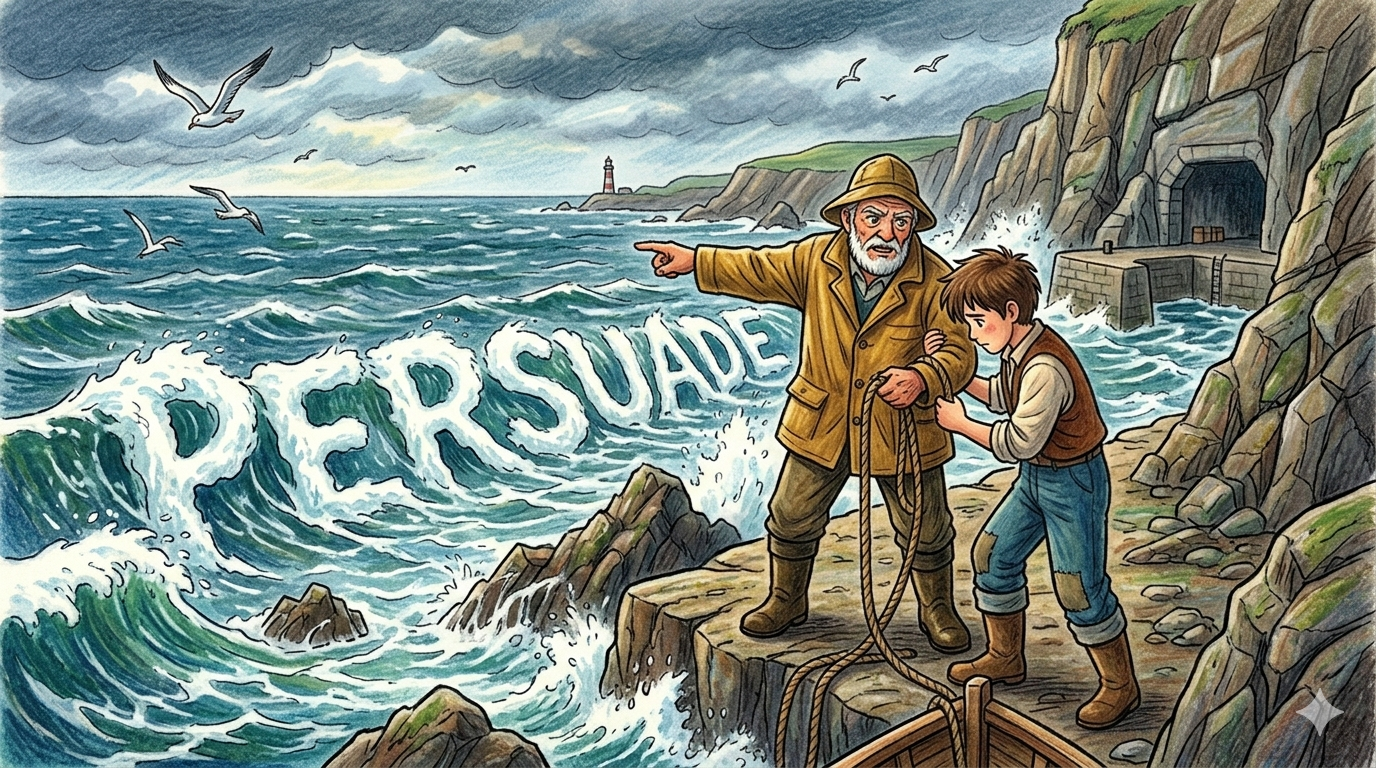
뉘앙스·의미 연결 흐름 표
핵심 이미지 연결 흐름 뉘앙스 요약
| 행동 변화 유도 | ~하도록 설득 → 설득하여 이끌다 → 설득에 실패 | persuade someone to·persuade into·fail to persuade |
| 신념·확신 형성 | ~에 대해 납득 → ~임을 확신 → 설득력 있는 | persuade someone of·persuaded that·persuasive |
| 내부 설득 과정 | 설득하기 어려운 → 스스로 설득 → 자기 설득 | hard to persuade·persuade oneself·self-persuasion |
어원 흐름 표
단어 구성 요소 의미 연결 흐름 뉘앙스 요약
| 라틴어 per-(완전히) + suadere(권하다·달콤하게 만들다) | 완전히 달콤하게 만들다 → 완전히 납득시키다 → 내적 변화 이끌기 | 상대방의 내면에서 자발적인 동의와 변화를 이끌어내는 이미지 |
| persuade (동사) | 행동 변화 유도 → 신념 변화 유도 → 내적 설득 과정 | 외부적 행동 변화에서 내면적 신념 변화와 자기 설득으로 확장 |
품사별 의미 표
품사 의미 예문
| 동사 | ~하도록 설득하다 | She persuaded him to stay. (그녀는 그가 머물도록 설득했다.) |
| 동사 | ~임을 납득시키다 | Facts persuaded her it was true. (사실이 그녀에게 그것이 사실임을 납득시켰다.) |
| 명사 (persuasion) | 설득, 설득력 | Persuasion takes skill. (설득은 기술이 필요하다.) |
| 형용사 (persuasive) | 설득력 있는 | He was very persuasive. (그는 매우 설득력이 있었다.) |
활용 예문 리스트
- No one had been able to persuade her of the value of joining the team before she saw for herself what the group had achieved together over the past year. (아무도 그녀가 지난 1년간 그룹이 함께 이룬 것을 직접 보기 전에 그녀에게 팀에 합류하는 것의 가치를 납득시킬 수 없었다.)
- The documentary was so persuasive that many viewers who had started watching it with strong doubts about the subject matter left feeling that their whole understanding of the issue needed to be revisited. (다큐멘터리는 너무 설득력 있어서 주제에 대해 강한 의심을 가지고 시청을 시작한 많은 시청자들이 문제에 대한 자신의 전체적인 이해를 재검토해야 한다는 느낌으로 떠났다.)
- The government's attempt to persuade the public that the new tax was fair failed to persuade the majority of citizens, who felt that the burden fell disproportionately on those who could least afford to pay. (새 세금이 공평하다고 대중을 설득하려는 정부의 시도는 그 부담이 가장 지불 능력이 없는 사람들에게 불균형적으로 떨어진다고 느끼는 대부분의 시민들을 설득하는 데 실패했다.)
- He had persuaded himself that the project was going well until an honest conversation with a colleague revealed that several critical problems had been quietly building up behind the scenes. (동료와의 솔직한 대화가 몇 가지 중요한 문제들이 뒤에서 조용히 쌓이고 있었다는 것을 드러낼 때까지 그는 프로젝트가 잘 진행되고 있다고 스스로를 설득하고 있었다.)
- Research into self-persuasion suggests that when people are asked to argue for a position they are uncertain about, they often end up being more strongly persuaded by their own arguments than by any external source of information. (자기 설득에 관한 연구는 사람들이 자신이 확신하지 못하는 입장을 주장하도록 요청받을 때 종종 어떤 외부 정보 출처보다 자신의 논거에 의해 더 강하게 설득되게 된다는 것을 시사한다.)
전체 뉘앙스 설명
persuade는 '상대방의 내면에서 자발적인 동의와 변화를 이끌어내는 것의 언어'입니다.
convince와의 차이: convince는 주로 어떤 것이 사실이거나 옳다고 신념과 의견을 납득시키는 것을 강조하고, persuade는 신념 변화를 넘어 실제 행동까지 바꾸게 하는 더 포괄적인 영향을 강조합니다.
influence와의 차이: influence는 상대방의 생각이나 행동에 부분적으로 영향을 주는 것을 강조하고, persuade는 의도적으로 완전히 바꾸어 놓는다는 더 강하고 완전한 변화를 강조합니다.
coerce와의 차이: coerce는 위협이나 강제로 어떤 행동을 하게 만드는 것을 강조하고, persuade는 자발적인 동의와 내적 변화를 이끌어내는 것을 강조합니다.
마지막 핵심 정리
persuade는 단순히 "설득하다"가 아닙니다 — 라틴어 per-(완전히) + suadere(권하다)에서 출발해, ~하도록 설득(persuade someone to)·~에 대해 납득(persuade someone of)·설득하기 어려운(hard to persuade)·설득·설득력(persuasion)·설득력 있는(persuasive)·자기 설득(self-persuasion)·스스로를 설득(persuade oneself)·설득에 실패(fail to persuade)·~임을 확신(persuaded that)·설득하여 이끌다(persuade into)까지 확장되는 단어이며, persuade vs. convince vs. influence 뉘앙스 구별·persuaded that / self-persuasion 심리·교육 지문 패턴·per+suadere 어근 패밀리가 수능 핵심 출제 포인트입니다.
파생어 표
파생어 발음기호 품사 의미
| persuasion | [pərˈsweɪʒən] | 명사 | 설득, 설득력, 확신 |
| persuasive | [pərˈsweɪsɪv] | 형용사 | 설득력 있는 |
| persuasively | [pərˈsweɪsɪvli] | 부사 | 설득력 있게 |
| persuasiveness | [pərˈsweɪsɪvnəs] | 명사 | 설득력 |
| dissuade | [dɪˈsweɪd] | 동사 | 단념시키다, 하지 않도록 설득하다 |
| unpersuaded | [ˌʌnpərˈsweɪdɪd] | 형용사 | 설득되지 않은, 납득하지 못한 |
유의어 비교표
단어 공통점 뉘앙스 차이 예문
| persuade | 설득하다 | 행동·신념을 완전히 바꾸어 놓는 것 강조 | She persuaded him to stay. |
| convince | 납득시키다 | 어떤 것이 사실이거나 옳다고 납득시키는 것 강조 | He convinced her it was true. |
| influence | 영향을 주다 | 부분적으로 생각이나 행동에 영향을 미치는 것 강조 | Music influences our mood. |
| coerce | 강제하다 | 위협이나 강제로 어떤 행동을 하게 만드는 것 강조 | He was coerced into signing. |
| motivate | 동기를 주다 | 내면에서 행동하고 싶은 욕구를 만들어 주는 것 강조 | The prize motivated her. |
유의어 예문 리스트
- (convince) The research team needed to convince the funding committee that their methodology was sound before any money would be released to support the next phase of the project. (연구팀은 프로젝트의 다음 단계를 지원하기 위한 자금이 방출되기 전에 자금 위원회에게 자신들의 방법론이 타당하다는 것을 납득시켜야 했다.)
- (influence) The choice of words in a news headline can profoundly influence how readers feel about a story before they have read a single sentence of the article below it. (뉴스 헤드라인의 단어 선택은 독자들이 그 아래 기사의 단 한 문장도 읽기 전에 이야기에 대해 느끼는 방식에 깊이 영향을 미칠 수 있다.)
- (coerce) The investigation revealed that several employees had been coerced into signing false declarations under threat of losing their jobs if they refused to cooperate. (조사는 여러 직원들이 협조를 거부하면 직업을 잃을 것이라는 위협 하에 거짓 진술에 서명하도록 강제됐다는 것을 드러냈다.)
- (motivate) The coach understood that fear of failure could motivate some athletes in the short term but that it was a sense of personal pride and love for the sport that sustained performance over a full season. (코치는 실패에 대한 두려움이 일부 선수들을 단기적으로 동기 부여할 수 있지만 전체 시즌에 걸쳐 성과를 유지하는 것은 개인적 자부심과 스포츠에 대한 사랑이라는 것을 이해했다.)
결론 정리
persuade는 단순히 "설득하다"가 아니라, 완전히 달콤하게 만들어 원하는 방향으로 이끄는 이미지에서 출발해 행동 변화 유도·신념 납득·자기 설득·저항 극복·설득 실패까지 확장되는 단어다 — persuade가 있는 곳엔 언제나 '단순한 요청이나 명령이 아닌, 논리·감정·증거를 통해 상대방의 내면에서 자발적인 동의와 변화를 이끌어내는' 완전한 내적 변화의 선언이 있다.
💡 persuade는 "논리·감정·증거를 통해 상대방의 생각이나 행동을 완전히 바꾸어 놓는 것"의 언어 — persuade someone to·persuaded that·self-persuasion·fail to persuade가 수능 최빈출.
🌟 초등학생 버전 persuade는 친구가 무서워서 롤러코스터를 타기 싫다고 할 때 "정말 재미있어! 한 번만 타보면 너도 좋아할 거야!"라며 계속 설명해서 결국 친구가 마음을 바꾸고 함께 타게 만드는 것처럼, 상대방이 스스로 "그래, 그게 맞아!"라고 느끼게 만드는 것을 표현하는 단어예요! self-persuasion은 "자기 자신에게 '괜찮아, 할 수 있어!'라고 스스로를 설득하는 것"이에요! 🗣️✨

persuade someone to [pərˈsweɪd ˈsʌmwʌn tuː]
(동사구) ~하도록 설득하다
어떤 특정 행동을 하도록 상대방의 의지나 결정을 바꾸어 놓는 것을 강조합니다. 단순히 요청하거나 명령하는 것이 아닌 상대방이 내면에서 스스로 하고 싶어지게 만드는 완전한 변화의 뉘앙스가 강합니다. 수능 독해 심리·사회·교육·문학 지문에서 핵심 표현으로 자주 등장합니다.
- After years of working alone, she was finally persuaded to join the research team by a colleague who showed her how collaboration could help her achieve results far beyond what she could manage on her own. (수년간 혼자 작업한 후 그녀는 마침내 협업이 혼자 관리할 수 있는 것보다 훨씬 넘어서는 결과를 달성하는 데 어떻게 도움이 될 수 있는지 보여준 동료에 의해 연구팀에 합류하도록 설득됐다.)
- The hardest person to persuade is often the one who is most certain they are already right, because genuine certainty leaves no space for new information to take root and grow into a different understanding. (설득하기 가장 어려운 사람은 종종 이미 자신이 옳다고 가장 확신하는 사람인데 진정한 확신은 새로운 정보가 뿌리를 내리고 다른 이해로 성장할 공간을 남기지 않기 때문이다.)
- The most effective way to persuade someone to change a deeply held habit is rarely to tell them directly what to do, but instead to help them see for themselves what is not working and why a different approach might serve them better. (깊이 자리 잡은 습관을 바꾸도록 누군가를 설득하는 가장 효과적인 방법은 직접 무엇을 해야 할지 말하는 것이 아니라 대신 무엇이 작동하지 않는지와 왜 다른 접근 방식이 더 잘 도움이 될 수 있는지를 스스로 보도록 돕는 것이다.)

persuade someone of [pərˈsweɪd ˈsʌmwʌn əv]
(동사구) ~에 대해 납득시키다, ~임을 설득하다
어떤 사실이나 생각이 옳다고 상대방을 납득시키는 것을 강조합니다. 행동 변화뿐만 아니라 신념이나 의견 자체를 바꾸어 놓는다는 뉘앙스가 강합니다. 수능 독해 심리·사회·법·교육 지문에서 자주 등장합니다.
- It took years for the conservationists to persuade the local farming community of the long-term economic value of protecting the wetlands rather than draining them for agricultural use. (습지를 농업 용도로 개간하지 않고 보호하는 것의 장기적인 경제적 가치를 지역 농업 공동체에 납득시키기까지 보전주의자들에게 수년이 걸렸다.)
- The advertisement had failed to persuade consumers of the product's superior quality because none of its claims were supported by independent testing or credible third-party evidence. (광고는 주장 중 어느 것도 독립적인 테스트나 신뢰할 수 있는 제3자 증거에 의해 뒷받침되지 않았기 때문에 소비자들에게 제품의 우수한 품질을 납득시키는 데 실패했다.)
- One of the greatest challenges facing scientists who work in areas of public health is persuading the general population of risks that are real but not immediately visible, especially when those risks develop slowly over many years and only become obvious once the damage has already been done. (공중 보건 분야의 과학자들이 직면하는 가장 큰 도전 중 하나는 실제적이지만 즉각적으로 보이지 않는 위험에 대해 일반 대중을 납득시키는 것이며 특히 그 위험이 수년에 걸쳐 천천히 발전하고 피해가 이미 발생한 후에야 명백해질 때 그렇다.)

hard to persuade [hɑːrd tuː pərˈsweɪd]
(형용사구) 설득하기 어려운, 납득시키기 힘든
어떤 사람이나 집단이 쉽게 생각이나 행동을 바꾸지 않는 것을 강조합니다. 설득의 대상이 가진 저항이나 완고함이라는 뉘앙스가 강합니다. 수능 독해 심리·사회·교육 지문에서 자주 등장합니다.
- Teenagers are often described as hard to persuade by adults, but researchers have found that they are actually more open to new ideas than many grown-ups — they are simply very sensitive to whether the person doing the persuading genuinely respects their point of view. (십대들은 종종 어른들에게 설득하기 어렵다고 묘사되지만 연구자들은 그들이 실제로 많은 성인들보다 새로운 아이디어에 더 열려 있다는 것을 발견했다 — 그들은 단순히 설득하는 사람이 진정으로 자신들의 관점을 존중하는지에 매우 민감할 뿐이다.)
- When someone is hard to persuade, the most common mistake is to simply repeat the same argument more loudly or more frequently, when what is actually needed is a completely different approach that addresses their specific concerns rather than ignoring them. (누군가가 설득하기 어려울 때 가장 흔한 실수는 단순히 같은 논거를 더 크게 또는 더 자주 반복하는 것인데 실제로 필요한 것은 그들의 우려를 무시하는 것이 아니라 그것들을 다루는 완전히 다른 접근 방식이다.)
- The fact that a group is hard to persuade does not necessarily mean they are unreasonable — it may simply mean that the evidence currently available is not strong enough, the messenger is not trusted enough, or the proposed change feels too costly to them personally. (어떤 집단이 설득하기 어렵다는 사실이 반드시 그들이 비합리적이라는 것을 의미하지는 않는다 — 그것은 단순히 현재 이용 가능한 증거가 충분히 강하지 않거나 전달자가 충분히 신뢰받지 못하거나 제안된 변화가 그들에게 개인적으로 너무 비용이 많이 드는 것처럼 느껴진다는 것을 의미할 수도 있다.)

persuasion [pərˈsweɪʒən]
(명사) 설득, 설득력, 확신
설득하는 행위나 과정, 또는 사람을 납득시키는 능력 자체를 강조합니다. 단순히 말로 요청하는 것을 넘어서 상대방의 내면에 영향을 미치는 기술이라는 뉘앙스가 강합니다. 수능 독해 심리·사회·교육·수사학 지문에서 핵심 표현으로 자주 등장합니다.
- The power of persuasion lies not in forcing people to agree with you but in helping them discover reasons of their own to believe that what you are saying is true and worth acting on. (설득의 힘은 사람들에게 동의하도록 강요하는 것이 아니라 당신이 말하는 것이 사실이고 행동할 가치가 있다고 믿을 자신만의 이유를 발견하도록 돕는 데 있다.)
- The study found that persuasion works differently depending on whether the audience is motivated to think carefully about the message or is simply looking for a quick and easy way to make a decision. (연구는 설득이 청중이 메시지에 대해 신중하게 생각할 동기를 갖고 있는지 아니면 단순히 결정을 내리는 빠르고 쉬운 방법을 찾고 있는지에 따라 다르게 작동한다는 것을 발견했다.)
- The novel's protagonist had a gift for persuasion that made people feel understood and valued rather than pressured, and this quality was what made her both an effective leader and a person whom others genuinely wanted to follow. (소설의 주인공은 사람들이 압박받는 것이 아니라 이해받고 소중히 여겨진다고 느끼게 만드는 설득의 재능을 가지고 있었으며 이 자질이 그녀를 효과적인 지도자이자 다른 사람들이 진정으로 따르고 싶어하는 사람으로 만드는 것이었다.)

persuasive [pərˈsweɪsɪv]
(형용사) 설득력 있는, 납득시킬 수 있는
사람의 생각이나 행동을 바꾸는 데 효과적인 힘을 가진 것을 강조합니다. 단순히 말을 잘하는 것이 아닌 실제로 상대방을 움직이는 힘을 가진다는 뉘앙스가 강합니다. 수능 독해 심리·사회·교육·수사학 지문에서 자주 등장합니다.
- What made her speech so persuasive was not the facts she presented, which most people already knew, but the way she connected those facts to emotions and values that her audience cared deeply about. (그녀의 연설을 그토록 설득력 있게 만든 것은 대부분의 사람들이 이미 알고 있는 그녀가 제시한 사실이 아니라 그 사실들을 청중이 깊이 신경 쓰는 감정과 가치와 연결한 방식이었다.)
- A persuasive argument must do more than simply be correct — it must also be clear, relevant to the audience's concerns, and delivered in a way that makes the listener feel respected rather than lectured. (설득력 있는 논거는 단순히 옳은 것 이상을 해야 한다 — 그것은 또한 명확하고 청중의 우려와 관련이 있어야 하며 청중이 강의를 받기보다 존중받는다고 느끼게 만드는 방식으로 전달돼야 한다.)
- The most persuasive communicators are those who have done the difficult work of genuinely understanding the perspective of the person they are trying to reach, because only from that starting point can they hope to build a bridge that actually connects. (가장 설득력 있는 의사소통자들은 자신이 다가가려는 사람의 관점을 진정으로 이해하는 어려운 작업을 해온 사람들인데 그 출발점에서만 실제로 연결되는 다리를 만들기를 바랄 수 있기 때문이다.)

self-persuasion [selfpərˈsweɪʒən]
(명사) 자기 설득
자기 자신의 생각이나 행동 방향을 스스로 납득시키는 과정을 강조합니다. 외부의 설득보다 자신의 내부에서 이루어지는 납득이 더 깊고 지속적이라는 심리학적 뉘앙스가 강합니다. 수능 독해 심리·교육·사회 지문에서 핵심 표현으로 자주 등장합니다.
- Self-persuasion plays a central role in how people justify their own behaviour, both in positive ways — such as motivating themselves to push through difficulty — and in negative ways, such as convincing themselves that a harmful choice is somehow acceptable. (자기 설득은 사람들이 자신의 행동을 정당화하는 방식에 중심적인 역할을 하며 어려움을 극복하도록 스스로를 동기 부여하는 것과 같은 긍정적인 방식과 해로운 선택이 어떻게든 허용된다고 스스로를 납득시키는 것과 같은 부정적인 방식 모두에서 그렇다.)
- The technique used in the classroom asked students to explain the lesson topic to an imaginary younger sibling, and the reason it worked so well was rooted in the psychology of self-persuasion — the act of forming your own explanation deepens understanding far more effectively than simply receiving it from a teacher. (교실에서 사용된 기법은 학생들에게 가상의 어린 동생에게 수업 주제를 설명하도록 요청했으며 그것이 그렇게 잘 작동한 이유는 자기 설득의 심리학에 뿌리를 두고 있었다 — 자신의 설명을 형성하는 행위가 단순히 선생님으로부터 받는 것보다 훨씬 더 효과적으로 이해를 깊게 한다.)
- The disturbing aspect of self-persuasion is that it can be used to rationalise almost anything, including choices that the person making them would immediately recognise as wrong if they saw someone else making the same choice for the same reasons. (자기 설득의 불안한 측면은 그것이 거의 무엇이든 합리화하는 데 사용될 수 있다는 것이며 그것을 만드는 사람이 같은 이유로 같은 선택을 하는 다른 사람을 보면 즉시 잘못됐다고 인식할 선택들도 포함된다.)

persuade oneself [pərˈsweɪd wʌnˈself]
(동사구) 스스로를 설득하다, 자신을 납득시키다
어떤 것이 옳거나 괜찮다고 스스로 믿게 만드는 것을 강조합니다. 외부 현실과 다를 수 있지만 내면에서 스스로 그것을 받아들이게 만드는 과정이라는 뉘앙스가 강합니다. 수능 독해 심리·문학·사회 지문에서 자주 등장합니다.
- Over the years she had gradually persuaded herself that the isolation of her daily life was a choice she had made freely, when in truth it had begun as an accident and stayed only because she had never challenged it. (수년에 걸쳐 그녀는 점차 일상 생활의 고립이 자신이 자유롭게 한 선택이라고 스스로를 설득했는데 실제로는 그것이 우연으로 시작했으며 그녀가 결코 그것에 도전하지 않았기 때문에 남아 있었다.)
- Athletes sometimes persuade themselves before a competition that they are more prepared than they actually are, and while this can give them a short-term confidence boost, it can also prevent them from doing the preparation work that would have genuinely helped them perform better. (운동선수들은 때로 경기 전에 실제보다 더 준비가 됐다고 스스로를 설득하며 이것이 단기적인 자신감 향상을 줄 수 있지만 진정으로 더 잘 수행하도록 도왔을 준비 작업을 하는 것을 막을 수도 있다.)
- One of the most difficult things in life is recognising when you have been persuading yourself rather than reasoning clearly, because from the inside the two processes can feel almost identical — and it is usually only the results over time that reveal which one was actually happening. (삶에서 가장 어려운 것 중 하나는 명확하게 추론하는 것이 아닌 스스로를 설득하고 있었던 때를 인식하는 것인데 내부에서 두 과정은 거의 동일하게 느껴질 수 있으며 보통 시간이 지남에 따른 결과만이 실제로 어느 것이 일어났는지 드러낸다.)

fail to persuade [feɪl tuː pərˈsweɪd]
(동사구) 설득에 실패하다, 납득시키지 못하다
설득하려는 시도가 상대방의 생각이나 행동을 바꾸는 데 성공하지 못하는 것을 강조합니다. 설득의 노력은 있었지만 결과적으로 변화를 이끌어내지 못했다는 뉘앙스가 강합니다. 수능 독해 심리·사회·역사·정치 지문에서 자주 등장합니다.
- The charity's fundraising letter failed to persuade most recipients to donate, partly because it relied entirely on statistics and never told the story of a single real person whose life had been affected by the issue. (자선단체의 모금 편지는 대부분의 수신자들이 기부하도록 설득하는 데 실패했는데 부분적으로는 그것이 전적으로 통계에만 의존하고 문제의 영향을 받은 실제 사람 한 명의 이야기를 결코 하지 않았기 때문이다.)
- The reform proposal failed to persuade enough members of the committee to pass, and the issue was returned to the working group with instructions to develop a more detailed implementation plan before bringing it back for a second vote. (개혁 제안은 통과될 만큼 충분한 위원회 구성원들을 설득하는 데 실패했으며 문제는 두 번째 투표를 위해 다시 제출하기 전에 더 상세한 이행 계획을 개발하라는 지시와 함께 실무 그룹으로 반환됐다.)
- Understanding why certain arguments consistently fail to persuade particular audiences is just as important as understanding what makes arguments successful, because the gap between the two often reveals fundamental differences in values, trust, and the standards of evidence that different groups find credible. (특정 논거가 왜 일관되게 특정 청중을 설득하는 데 실패하는지 이해하는 것은 논거가 성공하는 것을 만드는 것을 이해하는 것만큼 중요한데 둘 사이의 간격이 종종 다른 집단이 신뢰할 수 있다고 생각하는 가치, 신뢰, 증거 기준의 근본적인 차이를 드러내기 때문이다.)

persuaded that [pərˈsweɪdɪd ðæt]
(동사구) ~라는 것을 확신하는, ~임을 믿게 된
어떤 사실이나 신념이 옳다고 완전히 납득된 결과 상태를 강조합니다. 설득의 과정이 완료되어 확신이라는 결과 상태에 이른 것이라는 뉘앙스가 강합니다. 수능 독해 심리·사회·역사·과학 지문에서 핵심 표현으로 자주 등장합니다.
- After reading several accounts from people who had experienced the same situation, she became persuaded that her own response had not been unusual at all but was in fact exactly what most people felt when placed in similar circumstances. (같은 상황을 경험한 사람들의 여러 설명을 읽은 후 그녀는 자신의 반응이 전혀 특이하지 않았으며 실제로 유사한 상황에 놓였을 때 대부분의 사람들이 느끼는 것과 정확히 같았다는 것에 확신하게 됐다.)
- Scientists had become persuaded that the phenomena they were observing could not be explained by any existing framework, which meant that either new theories needed to be developed or long-held assumptions needed to be fundamentally revised. (과학자들은 자신들이 관찰하고 있는 현상이 기존의 어떤 프레임워크로도 설명될 수 없다는 것에 확신하게 됐으며 이것은 새로운 이론이 개발되거나 오래된 가정이 근본적으로 수정돼야 한다는 것을 의미했다.)
- The jury was not persuaded that the prosecution had provided sufficient evidence to remove all reasonable doubt, and this uncertainty was ultimately the reason the verdict came back as not guilty despite the apparent strength of the case against the defendant. (배심원단은 검찰이 모든 합리적 의심을 없애기에 충분한 증거를 제공했다는 것에 확신하지 못했으며 이 불확실성이 피고인에 대한 사건의 명백한 강점에도 불구하고 평결이 무죄로 돌아온 궁극적인 이유였다.)

persuade into [pərˈsweɪd ˈɪntuː]
(동사구) ~하도록 설득하여 이끌다, 설득하여 ~하게 만들다
설득을 통해 어떤 상태나 행동으로 이끌어 가는 것을 강조합니다. 설득의 결과로 특정 행동이나 상태 안으로 들어가게 된다는 방향성의 뉘앙스가 강합니다. 수능 독해 심리·사회·경제·문학 지문에서 자주 등장합니다.
- She had been persuaded into agreeing to the contract before she had fully read it, and only later discovered that several clauses placed obligations on her that she had never intended to accept. (그녀는 계약서를 완전히 읽기 전에 동의하도록 설득됐으며 나중에야 여러 조항이 그녀가 결코 수락하려 하지 않았던 의무를 그녀에게 부과했다는 것을 발견했다.)
- Many people are persuaded into making financial decisions they later regret not because they were unintelligent but because the information was presented in a way that made the risks feel smaller and the benefits feel larger than they actually were. (많은 사람들이 나중에 후회하는 금융 결정을 내리도록 설득되는데 그들이 똑똑하지 않아서가 아니라 정보가 위험이 실제보다 더 작게 느껴지고 이점이 실제보다 더 크게 느껴지게 만드는 방식으로 제시됐기 때문이다.)
- The essay explored how the gradual process of being persuaded into a new worldview differs from a sudden conversion, arguing that the former is more durable precisely because each small step along the way is experienced as a free and autonomous choice rather than an imposition from outside. (에세이는 새로운 세계관으로 설득되는 점진적인 과정이 갑작스러운 전환과 어떻게 다른지를 탐구하며 전자가 더 지속적인 것은 바로 그 과정의 각 작은 단계가 외부로부터의 강요가 아니라 자유롭고 자율적인 선택으로 경험되기 때문이라고 주장했다.)
숙어 그룹 묶음 1 — 행동 변화 유도 persuade 핵심 패턴
표현 의미 핵심 뉘앙스 주요 맥락
| persuade someone to | ~하도록 설득하다 | 상대방의 의지나 결정을 바꾸어 특정 행동을 이끌기 | 심리·사회·교육·문학 |
| persuade into | 설득하여 ~하게 만들다 | 설득의 결과로 특정 행동이나 상태 안으로 이끌기 | 심리·사회·경제·문학 |
| fail to persuade | 설득에 실패하다 | 설득 시도가 변화를 이끌어내지 못하는 것 | 심리·사회·역사·정치 |
이 세 표현은 모두 persuade의 "상대방의 행동을 의도적으로 바꾸어 놓는" 이미지를 공유하되, 각각 특정 행동을 하도록 상대방의 의지를 성공적으로 바꾸어 놓는 것(persuade someone to)·설득의 결과로 특정 상태나 행동 안으로 이끌어 들이는 것(persuade into)·설득 시도가 실패하여 변화를 이끌어내지 못한 것(fail to persuade)의 관점에서 접근합니다.
- The campaign manager persuaded several undecided voters to attend the town hall meeting, hoping that direct contact with the candidate would do the persuading that advertising alone had so far failed to persuade them of, though she worried that some of them had been persuaded into attending not because they were genuinely interested but simply to please the friends who had invited them. (선거운동 매니저는 몇 명의 미결정 유권자들이 타운 홀 미팅에 참석하도록 설득하며 후보와의 직접적인 접촉이 광고만으로는 지금까지 설득하는 데 실패한 것을 해낼 것이라고 희망했지만 그들 중 일부가 진정으로 관심이 있어서가 아니라 단순히 초대한 친구들을 기쁘게 하기 위해 참석하도록 설득됐을 것이라고 걱정했다.)
- She had been trying for months to persuade her elderly neighbour to accept help with his garden, having so far failed to persuade him that accepting help was not a sign of weakness, and she wondered whether a different approach — perhaps persuading him into starting with just one small task — might work better than the direct requests she had been making. (그녀는 몇 달 동안 노인 이웃이 정원 관리 도움을 받아들이도록 설득하려 했으며 지금까지 도움을 받아들이는 것이 약함의 표시가 아니라는 것을 그에게 설득하는 데 실패했고 다른 접근 방식이 — 아마도 단 하나의 작은 일로 시작하도록 그를 설득하는 것 — 자신이 해온 직접적인 요청보다 더 잘 작동할 수 있을지 궁금해했다.)
- The history of social reform shows that movements often fail to persuade those in power to change things voluntarily, eventually persuading them into action only through sustained public pressure — but that the same movements sometimes persuade ordinary people to demand change from below, which can prove far more powerful and lasting than any top-down approach. (사회 개혁의 역사는 운동들이 종종 권력자들이 자발적으로 변화시키도록 설득하는 데 실패하고 결국 지속적인 대중 압박을 통해서만 행동하도록 설득하지만 같은 운동들이 때로는 일반 사람들이 아래에서부터 변화를 요구하도록 설득하며 이것이 어떤 하향식 접근보다 훨씬 더 강력하고 지속적인 것으로 판명될 수 있다는 것을 보여준다.)
숙어 그룹 묶음 2 — 신념·확신 형성 persuade 패턴
표현 의미 핵심 뉘앙스 주요 맥락
| persuade someone of | ~에 대해 납득시키다 | 어떤 사실이나 생각이 옳다고 신념을 바꾸기 | 심리·사회·법·교육 |
| persuaded that | ~임을 확신하는 | 설득 완료 후 확신이라는 결과 상태 | 심리·사회·역사·과학 |
| persuasive | 설득력 있는 | 상대방의 생각이나 행동을 바꾸는 효과적인 힘 | 심리·사회·교육·수사학 |
이 세 표현은 모두 persuade의 "신념이나 의견을 완전히 바꾸어 놓는" 이미지를 공유하되, 각각 어떤 사실이나 생각이 옳다고 상대방의 신념을 바꾸는 과정(persuade someone of)·그 과정이 완료되어 확신이라는 상태에 이른 것(persuaded that)·신념을 바꾸는 데 효과적인 힘을 가진 것(persuasive)의 관점에서 접근합니다.
- The scientist needed to persuade the funding committee of the importance of the project before they would consider supporting it, and she had prepared a persuasive case with multiple layers of evidence, hoping to leave them persuaded that the investment would yield results worth many times its cost. (과학자는 자금 위원회가 프로젝트 지원을 고려하기 전에 그 중요성을 납득시켜야 했으며 투자가 비용의 여러 배 가치의 결과를 낳을 것이라는 것에 그들이 확신하도록 남겨두기를 바라며 여러 겹의 증거로 설득력 있는 사례를 준비했다.)
- What makes a communicator genuinely persuasive is not just the strength of their argument but their ability to persuade their audience of the sincerity of their own belief — and an audience that becomes persuaded that the speaker truly believes what they are saying will be far more likely to consider the message seriously. (의사소통자를 진정으로 설득력 있게 만드는 것은 그들의 논거의 강도만이 아니라 청중에게 그들 자신의 신념의 진지함을 납득시키는 능력이며 — 연사가 자신이 말하는 것을 진정으로 믿는다는 것에 확신하게 된 청중은 메시지를 진지하게 고려할 가능성이 훨씬 더 높을 것이다.)
- The jury needed to be persuaded of the defendant's guilt beyond all reasonable doubt, but by the end of the trial the evidence on both sides had been presented so persuasively that most jurors found themselves not quite persuaded that either version of events was the whole truth, a state of uncertainty that ultimately led to a verdict of not guilty. (배심원단은 모든 합리적 의심을 넘어서 피고인의 유죄에 납득되어야 했지만 재판이 끝날 무렵 양측의 증거가 너무 설득력 있게 제시되어 대부분의 배심원들이 어느 쪽 사건 버전도 전체 진실이라는 것에 완전히 확신하지 못하게 됐으며 이 불확실성의 상태가 결국 무죄 평결로 이어졌다.)
숙어 그룹 묶음 3 — 내부 설득 과정 persuade 심화 패턴
표현 의미 핵심 뉘앙스 주요 맥락
| hard to persuade | 설득하기 어려운 | 설득의 대상이 가진 저항이나 완고함 | 심리·사회·교육 |
| persuade oneself | 스스로를 설득하다 | 내면에서 스스로 납득을 이끌어내는 과정 | 심리·문학·사회 |
| self-persuasion | 자기 설득 | 외부보다 내부에서 이루어지는 더 깊은 납득 과정 | 심리·교육·사회 |
이 세 표현은 모두 persuade의 "설득이 일어나는 내부 심리적 과정"의 이미지를 공유하되, 각각 외부에서 오는 설득에 쉽게 열리지 않는 내면의 저항(hard to persuade)·스스로 내면에서 납득을 이끌어내는 의식적 행동(persuade oneself)·외부 설득보다 더 깊고 지속적인 내부 설득 과정(self-persuasion)의 관점에서 접근합니다.
- People who seem hard to persuade from outside are often engaged in intense self-persuasion internally, debating the very same ideas they appear to be rejecting — which means that persuading yourself not to push too hard and instead giving them space to work through the argument on their own terms can sometimes be the most effective strategy of all. (설득하기 어려운 것처럼 보이는 사람들은 종종 내면에서 거부하는 것처럼 보이는 바로 그 아이디어들을 논의하는 강렬한 자기 설득에 참여하고 있으며 — 이것은 너무 세게 밀지 않도록 스스로를 설득하고 대신 그들이 자신의 방식으로 논거를 처리할 공간을 주는 것이 때로는 모든 전략 중 가장 효과적일 수 있다는 것을 의미한다.)
- The most hard to persuade person in any situation may in fact be yourself, and recognising the role that self-persuasion plays in maintaining beliefs that are comfortable rather than accurate is one of the most challenging and important acts of intellectual honesty that anyone can undertake — beginning with the willingness to honestly ask whether you are reasoning your way to the truth or persuading yourself toward a conclusion you already wanted to reach. (어떤 상황에서든 설득하기 가장 어려운 사람은 사실 자신일 수 있으며 자기 설득이 정확한 것보다 편안한 신념을 유지하는 데 하는 역할을 인식하는 것은 누구나 할 수 있는 가장 도전적이고 중요한 지적 정직의 행위 중 하나이다 — 진실을 향해 추론하고 있는지 아니면 이미 도달하고 싶었던 결론을 향해 스스로를 설득하고 있는지 솔직하게 묻는 의지에서 시작하여.)
- The psychology of change reveals that people who are most hard to persuade by external arguments often eventually change their minds through internal self-persuasion, particularly when they are placed in situations that require them to articulate their own reasons for a belief rather than simply receiving arguments from outside — suggesting that the most effective form of persuasion is not talking to someone but creating conditions that allow them to persuade themselves. (변화의 심리학은 외부 논거에 의해 설득하기 가장 어려운 사람들이 종종 결국 내부 자기 설득을 통해 마음을 바꾼다는 것을 드러내며 특히 단순히 외부에서 논거를 받기보다 신념에 대한 자신만의 이유를 명확히 표현하도록 요구하는 상황에 놓일 때 — 이것은 가장 효과적인 설득 형태가 누군가에게 말하는 것이 아니라 그들이 스스로를 설득할 수 있는 조건을 만드는 것임을 시사한다.)
숙어 그룹 묶음 4 — 설득력·설득 과정 persuade 심화 패턴
표현 의미 핵심 뉘앙스 주요 맥락
| persuasion | 설득, 설득력 | 상대방의 내면에서 변화를 이끌어내는 기술과 과정 | 심리·사회·교육·수사학 |
| persuasive | 설득력 있는 | 상대방을 움직이는 실제 효과적인 힘을 가진 것 | 심리·사회·교육·수사학 |
| persuade someone of | ~에 대해 납득시키다 | 어떤 사실이나 생각이 옳다고 신념을 바꾸기 | 심리·사회·법·교육 |
이 세 표현은 함께 persuade가 담고 있는 가장 중요한 설득의 기술과 과정의 흐름을 보여줍니다. persuasion → 설득이라는 행위와 기술 자체, persuasive → 그 기술이 실제 효과를 가진 상태, persuade someone of → 그 효과적인 기술을 통해 특정 신념 변화를 이루어내는 것으로 연결됩니다.
- The study of persuasion reveals that being persuasive requires more than having the right answer — it requires understanding your audience well enough to persuade them of the relevance of your message to their own lives and values, because the most brilliantly correct argument will have no effect at all if it speaks a language that the listener cannot connect with. (설득 연구는 설득력이 있는 것이 올바른 답을 갖는 것 이상을 요구한다는 것을 드러내며 — 그것은 메시지가 그들 자신의 삶과 가치에 관련됨을 그들에게 납득시킬 만큼 충분히 청중을 이해하는 것을 요구하는데 왜냐하면 가장 훌륭하게 옳은 논거도 청중이 연결할 수 없는 언어로 말한다면 전혀 효과가 없을 것이기 때문이다.)
- What makes persuasion both powerful and dangerous is precisely its capacity to be persuasive even when the content it is conveying is false or misleading — which is why the ability to recognise persuasive techniques is at least as important as the ability to use them, and why persuading people of the importance of critical thinking may be one of the most valuable things that education can do. (설득을 강력하고 위험하게 만드는 것은 정확히 그것이 전달하는 내용이 거짓이거나 오해의 소지가 있을 때도 설득력 있을 수 있는 능력이며 — 이것이 설득력 있는 기법을 인식하는 능력이 그것들을 사용하는 능력만큼 중요한 이유이고 비판적 사고의 중요성을 사람들에게 납득시키는 것이 교육이 할 수 있는 가장 가치 있는 것 중 하나일 수 있는 이유이다.)
- The greatest practitioners of persuasion in history were typically those who deeply understood that being persuasive was not about projecting strength or certainty but about persuading their audience of something deeper — that the speaker understood them, shared their concerns, and was offering not a solution imposed from outside but a path that felt like it came from within the audience's own hopes and values. (역사상 설득의 가장 위대한 실천가들은 전형적으로 설득력이 있다는 것이 강인함이나 확신을 투영하는 것이 아니라 청중에게 더 깊은 무언가를 납득시키는 것에 관한 것임을 깊이 이해한 사람들이었다 — 연사가 그들을 이해하고 그들의 우려를 공유하며 외부에서 부과된 해결책이 아니라 청중 자신의 희망과 가치에서 온 것처럼 느껴지는 길을 제시하고 있다는 것.)
전체 요약표
표현 의미 핵심 뉘앙스
| persuade | 설득하다, 납득시키다 | 논리·감정·증거로 생각이나 행동을 완전히 바꾸어 놓는 것 |
| persuade someone to | ~하도록 설득하다 | 특정 행동을 하도록 상대방의 의지를 바꾸어 놓기 |
| persuade someone of | ~에 대해 납득시키다 | 어떤 사실이나 생각이 옳다고 신념을 바꾸기 |
| hard to persuade | 설득하기 어려운 | 설득의 대상이 가진 저항이나 완고함 |
| persuasion | 설득, 설득력 | 상대방의 내면에서 변화를 이끌어내는 기술과 과정 |
| persuasive | 설득력 있는 | 상대방을 움직이는 실제 효과적인 힘을 가진 것 |
| self-persuasion | 자기 설득 | 외부보다 내부에서 이루어지는 더 깊은 납득 과정 |
| persuade oneself | 스스로를 설득하다 | 내면에서 스스로 납득을 이끌어내는 의식적 행동 |
| fail to persuade | 설득에 실패하다 | 설득 시도가 변화를 이끌어내지 못하는 것 |
| persuaded that | ~임을 확신하는 | 설득 완료 후 확신이라는 결과 상태 |
| persuade into | 설득하여 ~하게 만들다 | 설득의 결과로 특정 행동이나 상태 안으로 이끌기 |
유의어 비교표

단어 공통점 뉘앙스 차이 예문
| persuade | 설득하다 | 행동·신념을 완전히 바꾸어 놓는 것 강조 | She persuaded him to stay. |
| convince | 납득시키다 | 어떤 것이 사실이거나 옳다고 납득시키는 것 강조 | He convinced her it was true. |
| influence | 영향을 주다 | 부분적으로 생각이나 행동에 영향을 미치는 것 강조 | Music influences our mood. |
| coerce | 강제하다 | 위협이나 강제로 어떤 행동을 하게 만드는 것 강조 | He was coerced into signing. |
| motivate | 동기를 주다 | 내면에서 행동하고 싶은 욕구를 만들어 주는 것 강조 | The prize motivated her. |
결론 정리
persuade는 단순히 "설득하다"가 아니라, 완전히 달콤하게 만들어 원하는 방향으로 이끄는 이미지에서 출발해 행동 변화 유도·신념 납득·자기 설득·저항 극복·설득 실패까지 확장되는 단어다 — persuade가 있는 곳엔 언제나 '단순한 요청이나 명령이 아닌, 논리·감정·증거를 통해 상대방의 내면에서 자발적인 동의와 변화를 이끌어내는' 완전한 내적 변화의 선언이 있다.
💡 persuade는 "논리·감정·증거를 통해 상대방의 생각이나 행동을 완전히 바꾸어 놓는 것"의 언어 — persuade someone to·persuaded that·self-persuasion·fail to persuade가 수능 최빈출.
🌟 초등학생 버전 persuade는 친구가 무서워서 롤러코스터를 타기 싫다고 할 때 "정말 재미있어! 한 번만 타보면 너도 좋아할 거야!"라며 계속 설명해서 결국 친구가 마음을 바꾸고 함께 타게 만드는 것처럼, 상대방이 스스로 "그래, 그게 맞아!"라고 느끼게 만드는 것을 표현하는 단어예요! self-persuasion은 "자기 자신에게 '괜찮아, 할 수 있어!'라고 스스로를 설득하는 것"이에요! 🗣️✨


