- 분류 전체보기 (5448)

| 일 | 월 | 화 | 수 | 목 | 금 | 토 |
|---|---|---|---|---|---|---|
| 1 | 2 | |||||
| 3 | 4 | 5 | 6 | 7 | 8 | 9 |
| 10 | 11 | 12 | 13 | 14 | 15 | 16 |
| 17 | 18 | 19 | 20 | 21 | 22 | 23 |
| 24 | 25 | 26 | 27 | 28 | 29 | 30 |
| 31 |
- I'm not sure
- OKay
- I'm glad to hear that.
- I'm sorry
- Right?
- Actually
- work out
- Read between the lines
- Hey
- oh
- pick up
- Sorry
- once in a while
- please?
- come up with
- too.
- entrance fee
- Yeah
- call off
- Please
- hold on
- Excuse me
- no
- please.
- Sure
- Don't worry
- Yes
- By The Way
- make it
- well
- Today
- Total
인과함께
Day351 , or, or else, or so, or rather, either...or, neither...nor, or not, or better yet, or so I thought, or words to that effect 본문
Day351 , or, or else, or so, or rather, either...or, neither...nor, or not, or better yet, or so I thought, or words to that effect
미인생 2026. 4. 25. 11:24
or [ɔːr]
(접속사) 또는, 혹은, 아니면, 그렇지 않으면
단순히 "또는"으로만 외우면 수능에서 반드시 틀립니다. or는 "두 가지 이상의 선택지를 연결하거나 대안을 제시하는" 이라는 핵심 이미지에서 출발해, 선택·경고·정정·대략적 수·논리적 조건까지 폭넓게 쓰이는 핵심 다의어입니다. 특히 either...or(둘 중 하나), or else(그렇지 않으면), or rather(아니 오히려) 패턴은 수능 독해 심리·사회·논리 지문에서 핵심적으로 등장합니다.
'or'는 고대 영어 oþþe(또는, 아니면)에서 유래했으며, 게르만어 aiþþau와 연결됩니다. 어원의 핵심 이미지는 "하나 혹은 다른 것 사이의 선택" 으로, 단순한 선택지 연결을 넘어 경고·정정·조건·대략적 추정·논리적 배제까지 확장되는 표현의 근원이 된 단어입니다.
1. or else [ɔːr els]
(일상/사회/수능) "그렇지 않으면, 아니면"을 뜻합니다. 앞서 말한 것을 하지 않을 경우 나쁜 결과가 따른다는 경고나 조건을 강조합니다.
She told her little brother to put his shoes away, or else she would not take him to the park that afternoon. (그녀는 남동생에게 신발을 치워두라고, 그렇지 않으면 그날 오후 공원에 데려가지 않겠다고 말했다.)
2. or so [ɔːr səʊ]
(일상/학술/수능) "대략, 약"을 뜻합니다. 정확하지 않은 대략적인 수나 양을 나타낼 때 강조합니다.
She had been waiting for twenty minutes or so when the bus finally arrived and she was able to get on and sit down. (버스가 마침내 도착해 올라타고 앉을 수 있었을 때 그녀는 대략 20분 정도 기다리고 있었다.)
3. or rather [ɔːr ˈrɑːðər]
(일상/학술/수능) "아니 오히려, 더 정확히 말하면"을 뜻합니다. 앞서 말한 것을 더 정확하거나 적절한 표현으로 고쳐 말할 때 강조합니다.
She was happy, or rather relieved, when the difficult exam finally came to an end and she could put her pen down at last. (그녀는 어려운 시험이 마침내 끝나서 마침내 펜을 내려놓을 수 있을 때 행복했다, 더 정확히 말하면 안도했다.)
4. either...or [ˈaɪðər ɔːr]
(일상/학술/수능) "~이거나 ~이거나, 둘 중 하나"를 뜻합니다. 두 가지 선택지 중 하나를 선택해야 한다는 것을 강조합니다.
She told the group that they could either finish the project today or spend another weekend working on it — the choice was entirely theirs. (그녀는 그룹에게 오늘 프로젝트를 끝낼 수도 있고 또는 주말을 하나 더 그것을 하는 데 보낼 수도 있다고 말했다 — 선택은 완전히 그들의 것이었다.)
5. neither...nor [ˈnaɪðər nɔːr]
(일상/학술/수능) "~도 아니고 ~도 아닌"을 뜻합니다. 두 가지 모두 해당되지 않는다는 것을 강조합니다.
She was neither tired nor bored during the long lecture because the speaker was genuinely passionate about the topic and made it come alive. (그 연사가 주제에 대해 진정으로 열정적이었고 그것을 생생하게 만들었기 때문에, 그녀는 긴 강의 동안 피곤하지도 않았고 지루하지도 않았다.)
6. or not [ɔːr nɒt]
(일상/학술/수능) "아니든, 그렇든 아니든"을 뜻합니다. 어떤 것이 사실이든 아니든 모두 해당된다는 것을 강조합니다.
Whether she liked it or not, she had to give the presentation in front of the whole class the following morning. (좋든 싫든, 그녀는 다음 날 아침 전체 학급 앞에서 발표를 해야 했다.)
7. or better yet [ɔːr ˈbetər jet]
(일상/사회/수능) "아니면 더 좋은 것은, 아니 더 나은 방법은"을 뜻합니다. 앞서 제안한 것보다 더 나은 대안을 제시할 때 강조합니다.
You could send her an email to explain the situation, or better yet, go and speak to her directly so she can ask questions straight away. (상황을 설명하는 이메일을 그녀에게 보낼 수도 있고, 아니면 더 좋은 방법은, 그녀가 바로 질문할 수 있도록 직접 가서 말하는 것이다.)
8. or so I thought [ɔːr səʊ aɪ θɔːt]
(일상/문학/수능) "아니 그렇게 생각했지, 그렇다고 생각했는데"를 뜻합니다. 처음에 어떤 것이 사실이라고 믿었지만 나중에 그것이 틀렸음을 발견했다는 것을 강조합니다.
She thought the hardest part of the project was over, or so she thought, until she opened the file and realised that half of her work had not saved properly. (그녀는 프로젝트의 가장 어려운 부분이 끝났다고 생각했다, 아니 그렇게 생각했는데, 파일을 열어서 작업의 절반이 제대로 저장되지 않았다는 것을 깨달을 때까지.)
9. or words to that effect [ɔːr wɜːrdz tə ðæt ɪˈfekt]
(일상/학술/수능) "뭐 그런 식으로, 비슷한 말로"를 뜻합니다. 누군가가 한 말을 정확하게 인용하지 않고 그 의미를 대략적으로 전달할 때 강조합니다.
The teacher said something like "your potential is limitless" or words to that effect, which stayed with her long after the lesson had ended. (선생님은 "당신의 잠재력은 무한하다" 뭐 그런 식으로 뭔가 말했는데, 그것은 수업이 끝난 후에도 오랫동안 그녀의 마음속에 남았다.)
10. or (논리적 조건) [ɔːr]
(학술/수능) 논리적 문장에서 "또는"으로 쓰여 조건이나 가능성을 나타냅니다. 수능 논리·추론 지문에서 핵심적으로 등장합니다.
A shape is a square or a rectangle if all its angles are right angles, though only a square has four sides of equal length. (모든 각도가 직각이면 도형은 정사각형 또는 직사각형이지만, 네 변의 길이가 모두 같은 것은 정사각형뿐이다.)

POINT 1. or — 수능 최빈출 접속사·관용 패턴
or는 수능 독해 심리·사회·논리 지문에서 다양한 용법으로 자주 출제됩니다.
either...or → 두 가지 선택지 중 하나를 선택해야 할 때 예) You must either study hard or accept the consequences. (열심히 공부하거나 결과를 받아들여야 한다.) or else → 경고나 조건을 나타낼 때 예) Finish your homework, or else you will regret it. (숙제를 끝내라, 그렇지 않으면 후회할 것이다.) or rather → 앞서 말한 것을 더 정확하게 고쳐 말할 때 예) He was nervous, or rather terrified. (그는 긴장했다, 더 정확히 말하면 공포에 질렸다.)
POINT 2. or / and / but — 수능 접속사 핵심 비교
이 세 단어는 수능에서 논리적 연결을 위해 핵심적으로 사용됩니다.
or → 선택·대안·경고를 나타내는 연결 예) You can stay home or go out. (집에 있을 수도 있고 또는 나갈 수도 있다.) and → 추가·동시성·순서를 나타내는 연결 예) She studied hard and passed the test. (그녀는 열심히 공부했고 시험에 합격했다.) but → 대조·예외를 나타내는 연결 예) She tried hard but failed. (그녀는 열심히 했지만 실패했다.)
POINT 3. or의 다양한 용법 — 수능 독해 문맥 파악 핵심
or는 수능 독해에서 문맥에 따라 의미가 완전히 달라지는 핵심 접속사입니다.
선택 → Tea or coffee? (차 또는 커피?) 경고 → Stop, or else you will fall. (멈춰라, 그렇지 않으면 넘어진다.) 대략적 수 → Ten minutes or so. (약 10분.) 정정 → Happy, or rather relieved. (행복한, 더 정확히 말하면 안도한.) 부정 강조 → Neither...nor fits here. (~도 ~도 아닌이 여기 맞는다.)
(접속사) ① 또는, 혹은 (선택)
or의 가장 기본적인 의미로, 두 가지 이상의 선택지를 연결하는 것을 나타냅니다.
- She could not decide whether to take the train or the bus, so she arrived at the station early and bought a ticket for whichever one came first. (그녀는 기차를 탈지 또는 버스를 탈지 결정할 수 없어서, 역에 일찍 도착해 먼저 오는 것의 표를 샀다.)
- He asked his teacher whether the answer to the question was A or B, and she told him to go back and read the text more carefully before making his final choice. (그는 선생님에게 문제의 답이 A 또는 B인지 물었으며, 그녀는 최종 선택을 하기 전에 돌아가 글을 더 주의 깊게 읽으라고 말했다.)
- The assignment could be submitted as a written essay or as a short video, and most students chose the format they felt most comfortable expressing themselves in. (과제는 서면 에세이 또는 짧은 비디오로 제출될 수 있었으며, 대부분의 학생들은 자신을 표현하는 데 가장 편안하다고 느끼는 형식을 선택했다.)
(접속사) ② 그렇지 않으면 (경고·조건)
or는 앞서 말한 것을 하지 않을 경우 나쁜 결과가 생긴다는 것을 나타냅니다.
- You need to eat something before you leave, or you will be starving by the time we reach the museum and there may not be anywhere good to stop for food. (떠나기 전에 무언가를 먹어야 한다, 그렇지 않으면 박물관에 도착할 때쯤 굶주릴 것이고 음식을 위해 멈출 좋은 곳이 없을 수 있다.)
- She had to leave by seven, or she would miss the first bus of the morning and be late for the most important interview of her career so far. (그녀는 7시까지 출발해야 했다, 그렇지 않으면 아침 첫 번째 버스를 놓치고 지금까지의 커리어에서 가장 중요한 인터뷰에 늦을 것이었다.)
- Write your name on the top of every page, or the examiner will not know which paper belongs to you if the sheets get separated in the marking process. (모든 페이지 상단에 이름을 쓰세요, 그렇지 않으면 채점 과정에서 시트가 분리되면 시험관이 어느 시험지가 당신의 것인지 알 수 없을 것이다.)
(접속사) ③ 즉, 다시 말해서 (정의·설명)
or는 앞서 말한 것을 다르게 표현하거나 설명을 추가할 때 사용됩니다.
- The assignment was due on Friday, or the last school day of the week, which meant that students who had a day off on Thursday would need to hand it in by Wednesday at the latest. (과제 마감일은 금요일, 즉 한 주의 마지막 학교 일이었으며, 이것은 목요일에 하루를 쉬는 학생들이 늦어도 수요일까지 제출해야 한다는 것을 의미했다.)
- The teacher explained that photosynthesis, or the process by which plants make food from sunlight, is one of the most important chemical reactions that takes place on Earth. (선생님은 광합성, 즉 식물이 햇빛에서 음식을 만드는 과정이 지구에서 일어나는 가장 중요한 화학 반응 중 하나라고 설명했다.)
- She studied etymology, or the history of how words are formed and change over time, because she found it gave her a much deeper understanding of the language than simply memorising vocabulary lists. (그녀는 어원학, 즉 단어가 어떻게 형성되고 시간이 지남에 따라 변하는지의 역사를 공부했는데, 그것이 단순히 어휘 목록을 외우는 것보다 언어에 대한 훨씬 더 깊은 이해를 준다는 것을 알았기 때문이다.)

뉘앙스·의미 연결 흐름 표
핵심 이미지 연결 흐름 뉘앙스 요약
| 선택지를 연결하는 것 | 단순 선택 → 논리적 조건 → 배제 | either...or, neither...nor, or not |
| 대안이나 수정을 제시하는 것 | 정정 → 더 나은 대안 → 대략적 추정 | or rather, or better yet, or so |
| 기대와 현실의 차이 | 예상 → 반전 → 대략적 전달 | or so I thought, or words to that effect |
어원 흐름 표
단어 구성 요소 의미 연결 흐름 뉘앙스 요약
| 고대 영어 oþþe(또는·아니면) → 게르만어 aiþþau | 하나 혹은 다른 것 사이의 선택 → or | 선택과 대안의 핵심 이미지 |
| or (접속사) | 선택 → 경고 → 정정 → 조건 → 대략 → 반전 | 단순 선택에서 논리·정정·경고·추정까지 확장 |
품사별 의미 표
품사 의미 예문
| 접속사 | 또는, 혹은 (선택) | Tea or coffee? |
| 접속사 | 그렇지 않으면 (경고) | Hurry, or you'll be late. |
| 접속사 | 즉, 다시 말해서 (설명) | Photosynthesis, or how plants make food. |
| 관용구 | 그렇지 않으면 (강조 경고) | Come now, or else. |
| 관용구 | 대략, 약 | An hour or so. |
| 관용구 | 더 정확히 말하면 | Happy, or rather relieved. |
활용 예문 리스트
- She told herself that she would finish the chapter in an hour or so and then reward herself with a short break before starting on the next section of the essay. (그녀는 대략 한 시간 정도 안에 챕터를 끝내고 에세이의 다음 섹션을 시작하기 전에 짧은 휴식으로 자신에게 보상을 주겠다고 스스로에게 말했다.)
- She was confident the problem was solved, or so she thought, until her classmate pointed out a step she had skipped near the beginning that changed the entire answer. (그녀는 문제가 해결됐다고 확신했다, 아니 그렇게 생각했는데, 학급 친구가 전체 답을 바꾸는 처음 부분 근처에서 건너뛴 단계를 지적할 때까지.)
- The coach told the team they needed to train harder and be more focused, or words to that effect, and the message clearly had an impact because the next practice session was the best they had ever had. (코치는 팀에게 더 열심히 훈련하고 더 집중해야 한다, 뭐 그런 식으로 말했으며, 메시지는 분명히 영향을 미쳤는데 다음 연습 세션이 그들이 지금까지 한 것 중 최고였기 때문이다.)
- Either you apologise to her today or you risk losing one of the best friendships you have, and I think if you really stop and think about it you will know which choice you should make. (오늘 그녀에게 사과하거나 당신이 가진 최고의 우정 중 하나를 잃을 위험을 감수해야 하며, 진정으로 멈추고 생각해보면 어떤 선택을 해야 하는지 알 것이라고 생각한다.)
- She was neither pleased nor disappointed by the result — she simply felt that it was fair and reflected exactly the effort she had put in, which gave her a clear picture of what she needed to do differently next time. (그녀는 결과에 기쁘지도 실망하지도 않았다 — 그냥 그것이 공정하고 자신이 기울인 노력을 정확히 반영한다고 느꼈으며, 이것이 다음에 다르게 해야 할 것이 무엇인지 명확한 그림을 줬다.)
전체 뉘앙스 설명
or는 '하나 혹은 다른 것 사이의 선택에서 출발해 경고·정정·조건·대략적 추정·논리적 배제·기대 반전까지 확장되는 생동감 넘치는 언어'입니다.
and와의 차이: and는 두 가지를 함께 연결하고 추가하는 것을 강조하고, or는 두 가지 중 선택을 제시하거나 대안을 나타냅니다. but과의 차이: but은 앞서 말한 것과 반대되거나 예외적인 것을 연결하고, or는 선택이나 대안을 제시합니다. nor와의 차이: nor는 neither와 함께 쓰여 두 가지 모두 부정하고, or는 두 가지 중 하나를 선택하거나 제시합니다.
마지막 핵심 정리
or는 단순히 "또는"이 아닙니다 — 고대 영어 oþþe(또는·아니면)에서 출발해, 단순 선택(tea or coffee)에서 경고(or else)·정정(or rather)·대략적 수(or so)·반전(or so I thought)·대략적 인용(or words to that effect)·더 나은 대안(or better yet)까지 확장되는 단어이며, either...or·neither...nor·or else의 논리적 의미 파악이 수능 핵심 출제 포인트입니다.
파생어 표
파생어 발음기호 품사 의미
| either | [ˈaɪðər] | 접속사/부사 | ~이거나 ~이거나, 둘 중 하나 |
| neither | [ˈnaɪðər] | 접속사/대명사 | ~도 아니고 ~도 아닌 |
| nor | [nɔːr] | 접속사 | ~도 아닌 (neither와 함께) |
| otherwise | [ˈʌðərwaɪz] | 부사/접속사 | 그렇지 않으면, 다른 방식으로 |
| else | [els] | 부사 | 그렇지 않으면, 다른 |
| alternatively | [ɔːlˈtɜːrnətɪvli] | 부사 | 또는, 대안으로 |
유의어 비교표
단어 공통점 뉘앙스 차이 예문
| or | 선택·대안 연결 | 선택·경고·정정·조건, 가장 기본적 | Tea or coffee? |
| otherwise | 그렇지 않으면 | 앞서 말한 것과 다른 상황을 강조 | Do it now, otherwise it'll be late. |
| alternatively | 또는, 대안으로 | 격식적으로 다른 선택지를 제시 | Alternatively, you could call her. |
| either | 어느 쪽이든 | 두 선택지 중 어느 하나를 나타냄 | Take either one you like. |
| nor | ~도 아닌 | neither와 함께 쓰여 두 가지 부정 | Nor did she know the answer. |
유의어 예문 리스트
- (otherwise) She needed to leave for the station by half past six, otherwise she would miss the only direct train of the evening and have to take two connecting ones instead. (그녀는 6시 반까지 역으로 출발해야 했다, 그렇지 않으면 저녁의 유일한 직통 기차를 놓치고 대신 두 번 환승해야 할 것이었다.)
- (alternatively) She could stay in the city for the weekend and visit the museums she had always wanted to see, alternatively she could take the short train ride to the coast and spend two days by the sea. (그녀는 항상 보고 싶었던 박물관을 방문하며 주말을 도시에서 보낼 수도 있었고, 또는 짧은 기차를 타고 해안으로 가서 바다 옆에서 이틀을 보낼 수도 있었다.)
- (either) The teacher said that either version of the assignment would be acceptable, as long as it was submitted by the deadline and met all the requirements set out in the marking rubric. (선생님은 마감일까지 제출되고 채점 기준에 명시된 모든 요건을 충족하는 한 과제의 어느 쪽 버전이든 허용될 것이라고 말했다.)
- (nor) She had not studied for the test, nor had she slept well the night before, which meant she went into the examination hall feeling underprepared and more anxious than she had ever felt before an exam. (그녀는 시험을 위해 공부하지 않았으며, 전날 밤 잘 자지도 못했다, 이것은 그녀가 이전의 어떤 시험보다 준비가 부족하고 더 불안하게 느끼며 시험장에 들어갔다는 것을 의미했다.)
결론 정리
or는 단순히 "또는"이 아니라, 고대 영어 oþþe(또는·아니면)에서 출발해 단순 선택에서 경고·정정·대략적 수·논리적 조건·기대 반전까지 확장되는 단어다 — or가 있는 곳엔 언제나 '단순한 선택이 아닌, 인간이 가능성·조건·대안·한계·놀라움을 어떻게 표현하는지가 생생하게 살아숨쉬는' 생동감의 선언이 있다.
💡 or는 "선택과 대안에서 출발한" 생동감 넘치는 언어 — either...or · neither...nor · or else가 수능 최빈출.
🌟 초등학생 버전 — or는 "또는"이라는 뜻이지만, "그렇지 않으면"(or else), "둘 중 하나"(either...or), "약, 대략"(or so)처럼 우리 일상 대화와 논리적 생각 곳곳에 살아있는 단어예요! 🔀✨

or else [ɔːr els]
(관용구) 그렇지 않으면, 아니면
앞서 말한 것을 하지 않을 경우 나쁜 결과가 따른다는 경고나 조건을 강조합니다. 수능 독해 사회·심리·논리 지문에서 핵심적으로 등장합니다.
- She reminded her team to double-check all the figures in the report before sending it to the client, or else any errors would be extremely difficult to correct once the document had already been shared. (그녀는 팀에게 보고서를 고객에게 보내기 전에 모든 수치를 다시 확인하라고 상기시켰다, 그렇지 않으면 문서가 이미 공유된 후에는 어떤 오류든 수정하기 매우 어려울 것이었다.)
- You have to submit the form by Friday, or else your application will be automatically rejected and you will have to wait until the next round of applications opens in six months. (금요일까지 양식을 제출해야 한다, 그렇지 않으면 지원서가 자동으로 거부되고 6개월 후 다음 지원 라운드가 열릴 때까지 기다려야 할 것이다.)
- She kept reminding herself to save her work every few minutes, or else she risked losing everything she had written if the computer suddenly crashed the way it had done twice already that week. (그녀는 몇 분마다 작업을 저장하라고 스스로에게 계속 상기시켰다, 그렇지 않으면 컴퓨터가 그 주에 이미 두 번 했던 것처럼 갑자기 충돌하면 쓴 모든 것을 잃을 위험이 있었다.)

or so [ɔːr səʊ]
(부사구) 대략, 약
정확하지 않은 대략적인 수나 양을 나타낼 때 강조합니다. 수능 독해 학술·일상 지문에서 자주 등장합니다.
- The walk from the school to the town centre takes about thirty minutes or so, depending on how fast you go and whether you stop to look at anything along the way. (학교에서 시내 중심까지 걷는 데는 대략 30분 정도 걸리며, 얼마나 빨리 가느냐와 가는 길에 무언가를 보기 위해 멈추느냐에 따라 다르다.)
- She had read a hundred pages or so when she realised it was already past midnight and she had completely lost track of time while getting absorbed in the story. (그녀는 약 100페이지 정도 읽었을 때 이미 자정이 지났고 이야기에 몰입하는 동안 완전히 시간 가는 것을 잊어버렸다는 것을 깨달았다.)
- A week or so after the lesson, the teacher gave the class a short quiz to check how much they had retained from what they had learned, and was pleased to find that most students had remembered the key points. (수업 약 일주일 후, 선생님은 학급에 짧은 퀴즈를 내 배운 것에서 얼마나 많은 것을 기억했는지 확인했으며, 대부분의 학생들이 핵심 요점을 기억했다는 것을 발견하고 기뻐했다.)
숙어 그룹 묶음 1 — 조건·대략 or 핵심 패턴
표현 의미 핵심 뉘앙스 주요 맥락
| or else | 그렇지 않으면 | 앞서 말한 것을 안 할 경우 나쁜 결과를 경고 | 사회·심리·수능 |
| or so | 대략, 약 | 정확하지 않은 대략적인 수나 양을 나타냄 | 학술·일상·수능 |
| or rather | 더 정확히 말하면 | 앞서 말한 것을 더 정확하게 고쳐 말하는 것 | 일상·학술·수능 |
이 세 표현은 모두 or의 "대안이나 수정을 제시하는" 이미지를 공유하되, 각각 나쁜 결과를 경고하는 조건(or else)·정확하지 않은 대략적 수(or so)·더 정확한 표현으로의 정정(or rather)의 관점에서 접근합니다.
- She had been waiting for an hour or so, feeling worried, or rather anxious about what might have happened, and was about to call for help or else start walking home alone when her friend finally appeared around the corner looking completely fine. (그녀는 대략 한 시간 정도 기다리며 걱정스러운, 더 정확히 말하면 무슨 일이 일어났을지에 대해 불안한 기분이었으며, 친구가 마침내 완전히 괜찮은 모습으로 모퉁이에 나타났을 때 도움을 요청하거나 그렇지 않으면 혼자 집으로 걷기 시작하려고 했다.)
- The teacher told the students they had ten minutes or so to finish, or rather she said they should aim to be done in ten minutes since the next class needed the room, and that anyone who had not finished by then would need to hand in whatever they had or else lose the marks for the unanswered questions. (선생님은 학생들에게 끝낼 시간이 대략 10분 정도 있다고 말했다, 더 정확히 말하면 다음 수업에서 방이 필요하기 때문에 10분 안에 끝내는 것을 목표로 해야 한다고 말했으며, 그때까지 끝내지 못한 사람은 갖고 있는 것을 제출해야 그렇지 않으면 답하지 않은 질문의 점수를 잃을 것이었다.)
- She had expected the journey to take two hours or so, or rather she had hoped it would, but it turned out to be nearly three and she arrived looking tired — or rather exhausted — and immediately regretted not setting off earlier or else taking the faster route her friend had suggested. (그녀는 여정이 대략 두 시간 정도 걸릴 것이라고 기대했다, 더 정확히 말하면 그러기를 바랐는데, 거의 세 시간이 걸렸고 피곤해 보이며 — 더 정확히 말하면 기진맥진해서 — 도착했으며, 더 일찍 출발하지 않은 것을 즉시 후회했다, 그렇지 않으면 친구가 제안한 더 빠른 경로를 택했더라면.)

or rather [ɔːr ˈrɑːðər]
(관용구) 아니 오히려, 더 정확히 말하면
앞서 말한 것을 더 정확하거나 적절한 표현으로 고쳐 말할 때 강조합니다. 수능 독해 학술·일상·논리 지문에서 핵심적으로 등장합니다.
- The film was interesting, or rather it was fascinating — she had gone in expecting nothing special and come out three hours later still thinking about it. (그 영화는 흥미로웠다, 더 정확히 말하면 매혹적이었다 — 그녀는 특별한 것을 기대하지 않고 들어갔다가 3시간 후에도 여전히 그것에 대해 생각하며 나왔다.)
- She found the question easy, or rather she found it straightforward once she had re-read it carefully and realised that it was asking something slightly different from what she had assumed at first. (그녀는 질문이 쉽다고 생각했다, 더 정확히 말하면 주의 깊게 다시 읽고 처음에 가정했던 것과 약간 다른 것을 묻고 있다는 것을 깨닫자 단순하다고 느꼈다.)
- She said she did not mind helping, or rather that she was happy to help, because there is a small but meaningful difference between tolerating something and genuinely welcoming it that deserves to be named accurately. (그녀는 도움을 주는 것이 괜찮다고 말했다, 더 정확히 말하면 기꺼이 돕겠다고 했는데, 무언가를 견디는 것과 진정으로 환영하는 것 사이에는 정확하게 명명될 자격이 있는 작지만 의미 있는 차이가 있기 때문이다.)

either...or [ˈaɪðər ɔːr]
(상관접속사) ~이거나 ~이거나, 둘 중 하나
두 가지 선택지 중 하나를 선택해야 한다는 것을 강조합니다. 수능 독해 논리·사회·심리 지문에서 핵심적으로 등장합니다.
- The doctor said it was either a minor infection or an allergic reaction — there was no way to know for certain without running a few tests first. (의사는 그것이 경미한 감염이거나 알레르기 반응이라고 말했다 — 몇 가지 검사를 먼저 실행하지 않고는 확실하게 알 방법이 없었다.)
- He told himself that he was going to either finish the whole chapter that evening or make a clear plan for exactly when he would come back to it, because leaving things half-done was the habit he most wanted to break. (그는 그날 저녁 챕터 전체를 끝내거나 또는 언제 다시 돌아올지 명확한 계획을 세우겠다고 스스로에게 말했는데, 일을 반쯤 끝내는 것이 가장 바꾸고 싶은 습관이었기 때문이다.)
- The essay argued that most decisions in life are not truly either/or — that what looks like a binary choice between two options often has more possibilities hidden within it if you are willing to look beyond the obvious. (에세이는 삶의 대부분의 결정이 진정으로 둘 중 하나가 아니라 — 두 가지 선택지 사이의 이진 선택처럼 보이는 것이 분명한 것을 넘어 볼 의지가 있다면 종종 더 많은 가능성이 그 안에 숨겨져 있다고 주장했다.)
숙어 그룹 묶음 2 — 선택·배제 or 패턴
표현 의미 핵심 뉘앙스 주요 맥락
| either...or | 둘 중 하나 | 두 가지 선택지 중 하나를 선택해야 하는 것 | 논리·사회·수능 |
| neither...nor | ~도 아니고 ~도 아닌 | 두 가지 모두 해당되지 않는다는 것 | 논리·학술·수능 |
| or not | 아니든, 그렇든 아니든 | 어떤 것이 사실이든 아니든 모두 해당됨 | 일상·논리·수능 |
이 세 표현은 모두 or의 "두 가지 가능성 사이의 관계" 이미지를 공유하되, 각각 둘 중 하나를 선택해야 하는 것(either...or)·두 가지 모두 아닌 것(neither...nor)·사실 여부에 관계없이 적용되는 것(or not)의 관점에서 접근합니다.
- She had to decide either to speak up or to stay silent, knowing that neither choice would be easy and that whether she said something or not would affect the rest of the group as well as herself. (그녀는 말을 할지 아니면 침묵을 유지할지 결정해야 했으며, 어느 선택도 쉽지 않을 것이고 무언가를 말하든 아니든 자신뿐만 아니라 나머지 그룹에도 영향을 미칠 것임을 알고 있었다.)
- The rules applied to everyone in the class, either they liked it or not, and she made sure everyone understood that neither a note from home nor a personal excuse would change what was expected of them during the examination. (규칙은 좋든 싫든 학급의 모든 사람에게 적용됐으며, 그녀는 집에서의 메모도 아니고 개인적인 변명도 시험 중에 그들에게 기대되는 것을 바꾸지 않을 것임을 모든 사람이 이해하도록 했다.)
- She argued that it is rarely a pure either/or situation — that most real problems are neither fully one thing nor fully another, and that accepting this grey area, or not, is often the biggest factor in whether someone is able to find a workable solution. (그녀는 순수한 둘 중 하나의 상황은 드물다고 주장했다 — 대부분의 실제 문제는 완전히 하나도 아니고 완전히 다른 것도 아니며, 이 회색 지대를 받아들이든 아니든, 그것이 종종 누군가가 실행 가능한 해결책을 찾을 수 있는지의 가장 큰 요인이라고.)
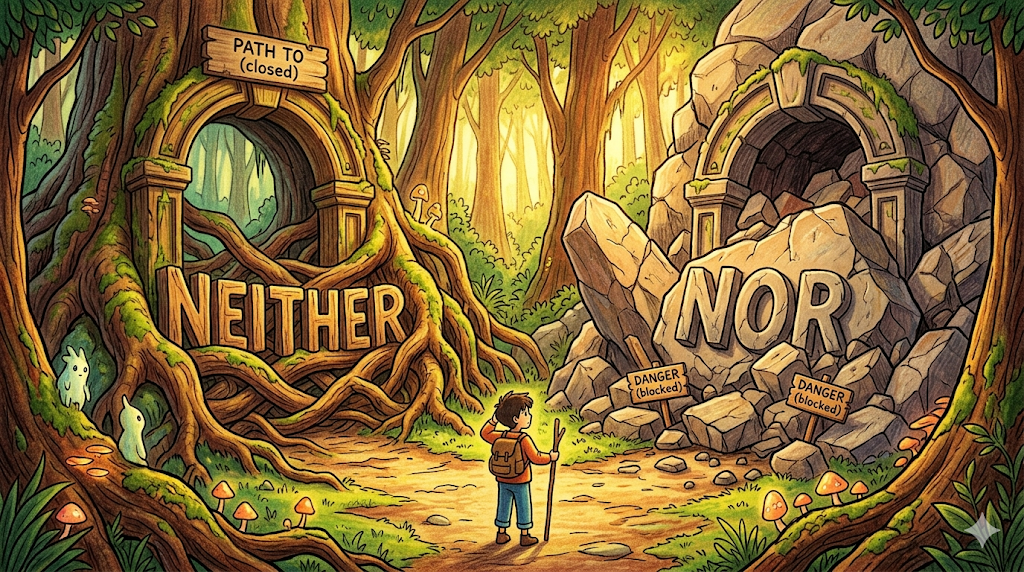
neither...nor [ˈnaɪðər nɔːr]
(상관접속사) ~도 아니고 ~도 아닌
두 가지 모두 해당되지 않는다는 것을 강조합니다. 수능 독해 논리·학술·심리 지문에서 핵심적으로 등장합니다.
- The result was neither as good as she had hoped nor as bad as she had feared, which left her feeling strangely calm and ready to move on to the next challenge. (결과는 그녀가 바랐던 것만큼 좋지도 않았고 두려워했던 것만큼 나쁘지도 않았으며, 이것이 그녀를 이상하게 차분하고 다음 도전으로 나아갈 준비가 됐다고 느끼게 했다.)
- She was neither the best student in the class nor the most confident speaker, but she had a quiet determination and consistency that eventually earned her the respect of everyone around her. (그녀는 학급에서 가장 뛰어난 학생도 아니었고 가장 자신감 있는 발표자도 아니었지만, 결국 주변 모든 사람의 존경을 얻은 조용한 결단력과 일관성이 있었다.)
- The teacher explained that the word neither is used when you want to make clear that two things are both excluded, not just one, which is why it always needs to be paired with nor rather than or. (선생님은 neither라는 단어는 하나만이 아니라 두 가지가 모두 제외된다는 것을 명확히 하고 싶을 때 사용되며, 그래서 항상 or가 아닌 nor와 짝을 이뤄야 한다고 설명했다.)

or not [ɔːr nɒt]
(관용구) 아니든, 그렇든 아니든
어떤 것이 사실이든 아니든 모두 해당된다는 것을 강조합니다. 수능 독해 일상·논리 지문에서 자주 등장합니다.
- Whether she felt ready or not, the deadline was approaching fast and she had no choice but to submit whatever she had and trust that she had done enough. (준비가 됐든 아니든, 마감일이 빠르게 다가오고 있었으며 갖고 있는 것을 제출하고 충분히 했다고 믿는 것 외에 선택이 없었다.)
- Healthy habits need to be maintained consistently, whether you feel motivated or not, because the whole point of a habit is that it becomes automatic and does not depend on how you feel on any given day. (건강한 습관은 동기부여가 되든 아니든 일관되게 유지될 필요가 있는데, 습관의 핵심은 자동적이 되고 특정 날 어떻게 느끼는지에 달려있지 않기 때문이다.)
- The rule applies to all students, whether they agree with it or not, and the fairest way to change a rule you disagree with is to raise the issue through the proper channels rather than simply ignoring it. (규칙은 그것에 동의하든 아니든 모든 학생에게 적용되며, 동의하지 않는 규칙을 바꾸는 가장 공정한 방법은 단순히 무시하기보다 적절한 채널을 통해 문제를 제기하는 것이다.)
숙어 그룹 묶음 3 — 대안·반전 or 심화 패턴
표현 의미 핵심 뉘앙스 주요 맥락
| or better yet | 아니면 더 좋은 것은 | 앞서 제안한 것보다 더 나은 대안을 제시하는 것 | 일상·사회·수능 |
| or so I thought | 아니 그렇게 생각했는데 | 처음 믿었던 것이 나중에 틀렸음을 발견하는 것 | 문학·일상·수능 |
| or words to that effect | 뭐 그런 식으로 | 말을 정확하게 인용하지 않고 의미를 전달하는 것 | 일상·학술·수능 |
이 세 표현은 모두 or의 "앞서 말한 것을 수정하거나 보완하는" 이미지를 공유하되, 각각 더 나은 대안을 제시하는 것(or better yet)·기대가 틀렸음을 드러내는 반전(or so I thought)·대략적 인용(or words to that effect)의 관점에서 접근합니다.
- She suggested leaving a note on his desk, or better yet, speaking to him in person — or so she thought would be the better choice — but when she arrived at his office he was already gone for the day, which led her to send the message she had been avoiding anyway, or words to that effect, at least according to what she told everyone later. (그녀는 그의 책상에 메모를 남기거나, 아니면 더 좋은 것은, 직접 말하는 것을 제안했다 — 그것이 더 나은 선택이라고 생각했는데 — 하지만 사무실에 도착했을 때 그는 이미 그날 떠나있어서 어쨌든 피하고 있던 메시지를 보내게 됐으며, 뭐 그런 식으로, 적어도 나중에 모든 사람에게 말한 것에 따르면.)
- You could try explaining it by email, or better yet, make a short video demonstration — she had tried just writing about it, or so she thought was clear enough, but everyone kept misunderstanding, which is why she eventually just called the person and talked through it directly, or words to that effect, as she described it to her colleague the next day. (이메일로 설명해볼 수도 있고, 아니면 더 좋은 것은, 짧은 비디오 시연을 만드는 것이다 — 그녀는 그것에 대해 쓰는 것만으로도 충분히 명확하다고 그렇게 생각했는데, 모든 사람이 계속 오해했으며 그래서 결국 그냥 그 사람에게 전화해 직접 이야기했다, 뭐 그런 식으로, 다음날 동료에게 설명하면서.)
- The essay pointed out that what people say they will do and what they actually do when the moment comes are often different — or so I thought too, she wrote, until she started tracking her own behaviour and realised that or better yet, paying attention to small daily actions rather than grand intentions is the most reliable guide to what a person truly values, or words to that effect, though she admitted the idea was not originally hers. (에세이는 사람들이 할 것이라고 말하는 것과 순간이 왔을 때 실제로 하는 것이 종종 다르다고 지적했다 — 저도 그렇게 생각했는데, 그녀는 썼다, 자신의 행동을 추적하기 시작하고 아니면 더 좋은 것은, 웅장한 의도보다 작은 일상 행동에 주의를 기울이는 것이 사람이 진정으로 가치를 두는 것에 대한 가장 신뢰할 수 있는 안내라는 것을 깨달을 때까지, 뭐 그런 식으로, 비록 그 아이디어가 원래 자신의 것이 아니라고 인정했지만.)

or better yet [ɔːr ˈbetər jet]
(관용구) 아니면 더 좋은 것은, 아니 더 나은 방법은
앞서 제안한 것보다 더 나은 대안을 제시할 때 강조합니다. 수능 독해 사회·일상 지문에서 자주 등장합니다.
- You could write down your ideas in a notebook, or better yet, record a short voice note on your phone so you can capture your thoughts exactly as they come to you without losing any details. (아이디어를 공책에 적을 수도 있고, 아니면 더 좋은 것은, 핸드폰에 짧은 음성 메모를 녹음해 어떤 세부 사항도 잃지 않고 떠오르는 대로 생각을 포착할 수 있다.)
- She could spend another hour going over her notes, or better yet, get a good night's sleep and come back to the material in the morning when her mind was fresh and better able to absorb what she was trying to learn. (그녀는 한 시간 더 메모를 검토할 수도 있었고, 아니면 더 좋은 방법은, 충분한 수면을 취하고 마음이 상쾌하고 배우려는 것을 더 잘 흡수할 수 있는 아침에 자료로 돌아오는 것이었다.)
- He could apologise by text, or better yet, call her so she could hear from the tone of his voice that he genuinely meant what he was saying rather than just sending words on a screen that could be read in any number of ways. (그는 문자로 사과할 수도 있었고, 아니면 더 좋은 것은, 그녀에게 전화해서 화면에 여러 방식으로 읽힐 수 있는 단어를 보내는 것이 아니라 목소리 톤에서 말하는 것을 진심으로 의미한다는 것을 들을 수 있게 하는 것이었다.)

or so I thought [ɔːr səʊ aɪ θɔːt]
(관용구) 아니 그렇게 생각했는데, 그렇다고 생각했는지
처음에 어떤 것이 사실이라고 믿었지만 나중에 그것이 틀렸음을 발견했다는 것을 강조합니다. 수능 독해 문학·심리·일상 지문에서 자주 등장합니다.
- She had already mastered the hardest part of the new skill, or so she thought, until her teacher pointed out that what she had been practising was actually the easier version and the genuinely difficult work was still ahead of her. (그녀는 새 기술의 가장 어려운 부분을 이미 마스터했다고, 아니 그렇게 생각했는데, 선생님이 그녀가 연습해온 것이 실제로 더 쉬운 버전이고 진정으로 어려운 작업이 아직 그녀 앞에 있다고 지적할 때까지.)
- He had everything under control, or so he thought, until he arrived at the venue and discovered that the projector he had been counting on was not available and he would have to deliver his entire presentation from memory. (그는 모든 것을 통제하고 있다고, 아니 그렇게 생각했는데, 장소에 도착해서 의존하고 있던 프로젝터를 사용할 수 없고 전체 발표를 기억에서 해야 한다는 것을 발견할 때까지.)
- Or so I thought is one of the most useful phrases in storytelling because it signals to the reader that what seemed true at one point in the narrative is about to be overturned — and the best writers use it to build suspense, not just to explain what went wrong. (그렇게 생각했는데는 이야기에서 가장 유용한 표현 중 하나인데, 독자에게 서사의 한 시점에서 사실처럼 보였던 것이 곧 뒤집힐 것이라는 신호를 보내기 때문이다 — 그리고 최고의 작가들은 단지 무엇이 잘못됐는지 설명하기 위해서가 아니라 긴장감을 쌓기 위해 그것을 사용한다.)

or words to that effect [ɔːr wɜːrdz tə ðæt ɪˈfekt]
(관용구) 뭐 그런 식으로, 비슷한 말로
누군가가 한 말을 정확하게 인용하지 않고 그 의미를 대략적으로 전달할 때 강조합니다. 수능 독해 학술·일상 지문에서 자주 등장합니다.
- The principal said that the school's most important achievement that year was not the trophies or the exam results but the community it had built, or words to that effect, and the students in the hall felt that whatever the exact phrasing had been, it was true. (교장 선생님은 그 해 학교의 가장 중요한 성취는 트로피나 시험 결과가 아니라 구축한 공동체라고, 뭐 그런 식으로 말했으며, 홀에 있는 학생들은 정확한 표현이 무엇이었든 그것이 사실이라고 느꼈다.)
- She remembered the doctor saying that the recovery would take a few weeks or words to that effect, but she had not expected it to feel quite this long or this uncomfortable during the process. (그녀는 의사가 회복에 몇 주가 걸릴 것이라고, 뭐 그런 식으로 말한 것을 기억했지만, 그 과정 동안 그렇게 오래 걸리거나 그렇게 불편하게 느껴질 것이라고는 예상하지 못했다.)
- He had told her that he admired her persistence more than her talent, or words to that effect, and though she could not recall the exact sentence, she had held onto the meaning of it and come back to it every time things got difficult. (그는 그녀의 재능보다 그녀의 끈기가 더 인상적이라고, 뭐 그런 식으로 말했으며, 정확한 문장은 기억하지 못했지만 그것의 의미를 붙들고 어려울 때마다 그것으로 돌아왔다.)
숙어 그룹 묶음 4 — 종합 or 패턴
표현 의미 핵심 뉘앙스 주요 맥락
| either...or | 둘 중 하나 | 두 가지 선택지 중 하나를 선택해야 하는 것 | 논리·사회·수능 |
| neither...nor | ~도 아니고 ~도 아닌 | 두 가지 모두 해당되지 않는다는 것 | 논리·학술·수능 |
| or else | 그렇지 않으면 | 앞서 말한 것을 안 할 경우 나쁜 결과를 경고 | 사회·심리·수능 |
이 세 표현은 수능 독해에서 가장 자주 출제되는 or의 핵심 패턴입니다. either...or는 두 가지 선택지 중 하나를 골라야 하는 상황을, neither...nor는 두 가지 모두 부정하는 상황을, or else는 경고와 조건을 각각 나타냅니다.
- She told herself that she had to make a decision — either commit to the project fully or let it go entirely, because she was neither moving forward nor stopping, which was the worst position of all, and if she did not choose one path clearly or else she would end up drifting indefinitely without getting anything done. (그녀는 결정을 내려야 한다고 스스로에게 말했다 — 프로젝트에 완전히 헌신하거나 아니면 완전히 포기하거나, 왜냐하면 그녀가 앞으로 나아가지도 않고 멈추지도 않고 있었는데, 그것이 가장 나쁜 상황이었으며, 하나의 경로를 명확하게 선택하지 않으면 그렇지 않으면 아무것도 이루지 못하고 무기한 표류하게 될 것이었다.)
- The essay argued that when making ethical decisions, people are often told it is either right or wrong — but real situations are rarely that simple; they are usually neither fully right nor fully wrong, and pretending or else forcing a choice between two extremes is itself a kind of intellectual dishonesty that makes genuinely good reasoning impossible. (에세이는 윤리적 결정을 내릴 때 사람들은 종종 옳거나 아니면 틀렸다는 말을 듣는다 — 하지만 실제 상황은 그렇게 단순한 경우가 드물다; 완전히 옳지도 않고 완전히 틀리지도 않으며, 두 극단 사이에서 선택을 가장하거나 강요하는 것은 그렇지 않으면 진정으로 좋은 추론을 불가능하게 만드는 지적 불성실의 한 종류라고 주장했다.)
- She explained to the students that in formal writing, either...or is used when both options are possible and the writer is pointing to a genuine choice, neither...nor is used when both are impossible or untrue, and or else carries a warning — and that choosing the wrong one can completely change what a sentence means, or else cause serious confusion for the reader. (그녀는 학생들에게 격식 있는 글쓰기에서 either...or는 두 선택지 모두 가능하고 작가가 진정한 선택을 가리킬 때 사용되고, neither...nor는 두 가지 모두 불가능하거나 사실이 아닐 때 사용되며, or else는 경고를 전달한다고 설명했다 — 그리고 잘못된 것을 선택하면 문장의 의미를 완전히 바꿀 수 있으며, 그렇지 않으면 독자에게 심각한 혼란을 줄 수 있다.)
전체 요약표
표현 의미 핵심 뉘앙스
| or | 또는, 혹은, 그렇지 않으면 | 선택에서 경고·정정·조건·대략·반전까지 확장 |
| or else | 그렇지 않으면 | 앞서 말한 것을 안 할 경우 나쁜 결과를 경고 |
| or so | 대략, 약 | 정확하지 않은 대략적인 수나 양을 나타냄 |
| or rather | 더 정확히 말하면 | 앞서 말한 것을 더 정확하게 고쳐 말하는 것 |
| either...or | 둘 중 하나 | 두 가지 선택지 중 하나를 선택해야 하는 것 |
| neither...nor | ~도 아니고 ~도 아닌 | 두 가지 모두 해당되지 않는다는 것 |
| or not | 아니든, 그렇든 아니든 | 어떤 것이 사실이든 아니든 모두 해당됨 |
| or better yet | 아니면 더 좋은 것은 | 앞서 제안한 것보다 더 나은 대안을 제시하는 것 |
| or so I thought | 아니 그렇게 생각했는데 | 처음 믿었던 것이 나중에 틀렸음을 발견하는 것 |
| or words to that effect | 뭐 그런 식으로 | 말을 정확하게 인용하지 않고 의미를 전달하는 것 |
유의어 비교표

단어 공통점 뉘앙스 차이 예문
| or | 선택·대안 연결 | 선택·경고·정정·조건, 가장 기본적 | Tea or coffee? |
| otherwise | 그렇지 않으면 | 앞서 말한 것과 다른 상황을 강조 | Do it now, otherwise it'll be late. |
| alternatively | 또는, 대안으로 | 격식적으로 다른 선택지를 제시 | Alternatively, you could call her. |
| either | 어느 쪽이든 | 두 선택지 중 어느 하나를 나타냄 | Take either one you like. |
| nor | ~도 아닌 | neither와 함께 쓰여 두 가지 부정 | Nor did she know the answer. |
유의어 예문 리스트
- (otherwise) She made sure to set three alarms for the morning, otherwise she knew from experience that she was likely to sleep through a single one and miss the start of the most important day of the whole year. (그녀는 아침을 위해 세 개의 알람을 설정했다, 그렇지 않으면 경험에서 하나로는 잠자다 넘어가서 한 해 전체에서 가장 중요한 날의 시작을 놓칠 가능성이 있다는 것을 알았기 때문이다.)
- (alternatively) He could take the long route around the park, which would add twenty minutes to his journey but would allow him to avoid the busy road altogether, alternatively he could cut through the park and hope the shortcut would be as quick as he remembered from last time. (그는 여정에 20분을 더하지만 바쁜 도로를 완전히 피할 수 있는 공원 둘레의 긴 경로를 택할 수도 있었고, 또는 공원을 가로질러 지름길이 지난번에 기억하는 것만큼 빠르기를 바랄 수도 있었다.)
- (either) The teacher said that either version of the closing paragraph would be acceptable — the one she had written first or the shorter version she had drafted afterwards — but that she should commit to one and not try to combine elements of both, as that rarely produces a clean result. (선생님은 마무리 단락의 어느 버전이든 허용될 것이라고 말했다 — 처음 쓴 것이나 나중에 작성한 짧은 버전이든 — 하지만 하나를 선택하고 두 가지의 요소를 결합하려 하지 말아야 한다고 했는데, 그것은 좀처럼 깔끔한 결과를 만들어내지 못하기 때문이다.)
- (nor) She had nor forgotten the kindness she had been shown when she was new, nor had she underestimated how much a small act of welcome can mean to someone arriving somewhere unfamiliar for the first time. (그녀는 처음 왔을 때 받은 친절을 잊지 않았으며, 낯선 곳에 처음 도착하는 누군가에게 작은 환영 행동이 얼마나 의미 있는지를 과소평가하지도 않았다.)
결론 정리
or는 단순히 "또는"이 아니라, 고대 영어 oþþe(또는·아니면)에서 출발해 단순 선택에서 경고·정정·대략적 수·논리적 조건·기대 반전까지 확장되는 단어다 — or가 있는 곳엔 언제나 '단순한 선택이 아닌, 인간이 가능성·조건·대안·한계·놀라움을 어떻게 표현하는지가 생생하게 살아숨쉬는' 생동감의 선언이 있다.
💡 or는 "선택과 대안에서 출발한" 생동감 넘치는 언어 — either...or · neither...nor · or else가 수능 최빈출.
🌟 초등학생 버전 — or는 "또는"이라는 뜻이지만, "그렇지 않으면"(or else), "둘 중 하나"(either...or), "약, 대략"(or so)처럼 우리 일상 대화와 논리적 생각 곳곳에 살아있는 단어예요! 🔀✨


