- 분류 전체보기 (5462)

| 일 | 월 | 화 | 수 | 목 | 금 | 토 |
|---|---|---|---|---|---|---|
| 1 | 2 | |||||
| 3 | 4 | 5 | 6 | 7 | 8 | 9 |
| 10 | 11 | 12 | 13 | 14 | 15 | 16 |
| 17 | 18 | 19 | 20 | 21 | 22 | 23 |
| 24 | 25 | 26 | 27 | 28 | 29 | 30 |
| 31 |
- make it
- hold on
- call off
- entrance fee
- please.
- I'm glad to hear that.
- pick up
- please?
- well
- Actually
- Hey
- work out
- Yeah
- come up with
- Yes
- no
- Please
- Excuse me
- once in a while
- Right?
- I'm not sure
- By The Way
- Read between the lines
- OKay
- Sure
- Don't worry
- I'm sorry
- Sorry
- too.
- oh
- Today
- Total
인과함께
Day348 , observe, observe the rules, observe a moment of silence, observe closely, observe nature, under observation, observe a tradition, keen observer, observe the stars, observatory 본문
Day348 , observe, observe the rules, observe a moment of silence, observe closely, observe nature, under observation, observe a tradition, keen observer, observe the stars, observatory
미인생 2026. 4. 24. 10:03
observe [əbˈzɜːrv]
(동사/명사 파생) 관찰하다, 주목하다, 지키다, 언급하다
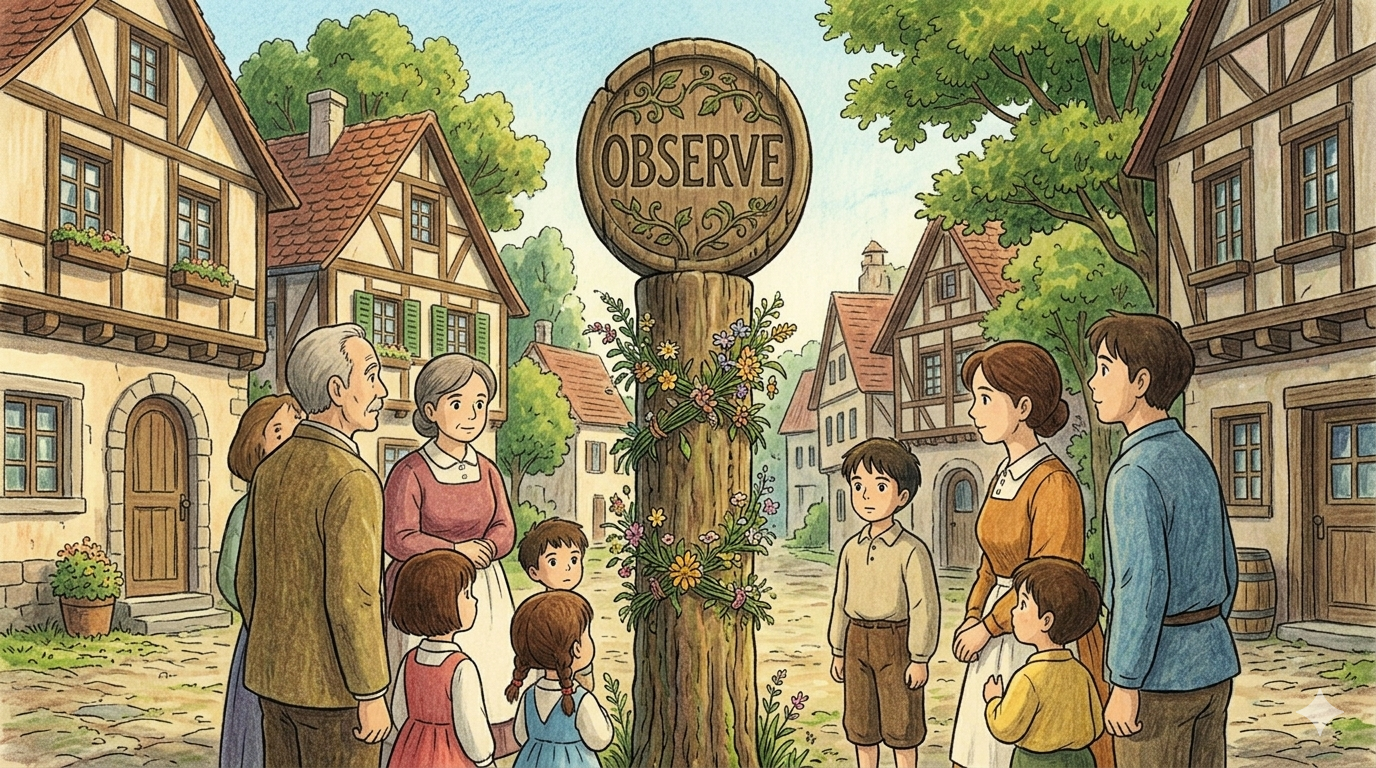
단순히 "관찰하다"로만 외우면 수능에서 반드시 틀립니다. observe는 "주의 깊게 보거나 지키는 것" 이라는 핵심 이미지에서 출발해, 실제 눈으로 주의 깊게 보는 것·규칙이나 전통을 지키는 것·의미 있는 무언가를 기념하는 것·의견을 말하는 것까지 폭넓게 쓰이는 핵심 다의어입니다. 특히 keen observer(예리한 관찰자), under observation(관찰 중인), observe closely(면밀히 관찰하다) 패턴은 수능 독해 심리·과학·사회·논리 지문에서 핵심적으로 등장합니다.
'observe'는 라틴어 observare(지키다, 주목하다)에서 유래했으며, ob(향하여) + servare(지키다, 살피다)로 구성됩니다. 어원의 핵심 이미지는 "무언가를 향해 주의를 기울이고 지키는 것" 으로, 단순히 보는 것을 넘어 주의 깊은 관찰·규칙 준수·전통 기념·언급·과학적 측정까지 확장되는 표현의 근원이 된 단어입니다.
🔭 observe의 핵심 뉘앙스
"주의 깊게 바라보는 것이자, 규칙·전통·의식을 지키는 행위."
observe는 두 가지 큰 뿌리를 가집니다. **'지켜보다·관찰하다'**와 '(규칙·전통을) 지키다·준수하다'. 눈으로 세심하게 살피는 것과 마음으로 예를 갖추어 따르는 것 — 이 두 방향이 하나의 단어 안에 공존해요.
1️ 규칙·전통을 준수하는 observe
- observe the rules → 규칙을 지키다. obey보다 자발적이고 품위 있는 뉘앙스. 강요보다 존중의 느낌
- observe a tradition → 전통을 지키다. 세대를 이어온 관습이나 의식을 이어가는 것. 문화적 연속성의 표현
- observe a moment of silence → 묵념하다. 죽은 이를 추모하거나 경의를 표하는 조용한 의식. 깊은 존중의 행위
2️ 세심하게 지켜보는 observe
- observe closely → 면밀히 관찰하다. 단순히 보는 게 아니라 세부 사항까지 주의 깊게 살피는 것
- observe nature → 자연을 관찰하다. 과학적 탐구나 감상의 맥락에서 자연현상을 살피는 것
- observe the stars → 별을 관측하다. 천문학적 관찰. 망원경이나 육안으로 하늘을 살피는 행위
- keen observer → 예리한 관찰자. 사소한 것도 놓치지 않는 날카로운 눈을 가진 사람
3️ 감시·점검을 담은 observe
- under observation → 관찰 중에 있는. 의료적으로 상태를 지켜보거나 감시·조사를 받는 상황
- observatory → 천문대, 관측소. 별이나 기상을 체계적으로 관측하는 시설
💡 아들에게 이렇게 설명해보세요
"observe는 '관찰하다'이기도 하고 '(규칙·전통을) 지키다'이기도 해. observe the rules는 obey the rules와 비슷한데, observe가 더 자발적이고 품위 있는 느낌이야. '강요받아서'가 아니라 '스스로 존중해서' 지키는 느낌이지. observe a moment of silence는 '묵념하다'인데, 중요한 추모 행사에서 다 함께 조용히 경의를 표하는 거야. keen observer는 아무것도 놓치지 않는 예리한 관찰자야. 탐정이나 과학자처럼 세심하게 살피는 사람이지. under observation은 병원에서 상태를 지켜보거나 경찰의 감시를 받는 상황에 써."
observe = 눈으로 살피고, 마음으로 지키는 단어. 세심한 관찰에서 전통의 준수, 묵념의 경의까지 — '바라봄'과 '따름'이 하나로 이어진다.
1. observe the rules [əbˈzɜːrv ðə ruːlz]
(일상/사회/수능) "규칙을 지키다, 규칙을 준수하다"를 뜻합니다. 단순히 규칙을 따르는 것을 넘어 주의 깊게 규칙의 의미를 이해하고 지키는 것을 강조합니다.
All players are expected to observe the rules of the game so that the competition stays fair and enjoyable for everyone involved. (모든 선수는 대회가 관련된 모든 사람에게 공정하고 즐겁게 유지되도록 게임의 규칙을 지킬 것을 기대받는다.)
2. observe a moment of silence [əbˈzɜːrv ə ˈməʊmənt əv ˈsaɪləns]
(일상/사회/수능) "묵념을 하다, 침묵의 시간을 갖다"를 뜻합니다. 중요한 사건이나 사람을 기리기 위해 잠시 조용히 있는 것을 강조합니다.
The whole school gathered in the hall to observe a moment of silence in memory of those who had given their lives for their country. (전교생이 나라를 위해 목숨을 바친 사람들을 추모하기 위해 묵념을 하러 강당에 모였다.)
3. observe closely [əbˈzɜːrv ˈkləʊsli]
(학술/과학/수능) "면밀히 관찰하다, 가까이서 주의 깊게 보다"를 뜻합니다. 세밀한 주의를 기울여 대상을 깊이 살펴보는 것을 강조합니다.
The scientist asked the students to observe closely as she mixed the two chemicals together so that they would not miss any part of the reaction. (과학자는 학생들에게 반응의 어떤 부분도 놓치지 않도록 두 화학 물질을 섞는 동안 면밀히 관찰하도록 요청했다.)
4. observe nature [əbˈzɜːrv ˈneɪtʃər]
(학술/환경/수능) "자연을 관찰하다"를 뜻합니다. 자연 현상이나 생물의 행동을 주의 깊게 살펴보는 것을 강조하며, 과학적 탐구와 경이로움을 나타냅니다.
She spent her summer holiday observing nature in the woodland behind her house and filled three notebooks with drawings and descriptions of what she saw. (그녀는 집 뒤 숲속에서 자연을 관찰하며 여름 방학을 보내고 본 것의 그림과 설명으로 세 권의 공책을 채웠다.)
5. under observation [ˈʌndər ˌɒbzəˈveɪʃən]
(의학/사회/수능) "관찰 중인, 감시 하에 있는"을 뜻합니다. 의학적으로 상태를 지켜보거나 사회적으로 행동을 감시받는 상황을 강조합니다.
The patient was kept under observation in the hospital for one more night to make sure the new medicine was working properly and had no side effects. (환자는 새 약이 제대로 작동하고 부작용이 없는지 확인하기 위해 하룻밤 더 병원에서 관찰 중에 있었다.)
6. observe a tradition [əbˈzɜːrv ə trəˈdɪʃən]
(일상/사회/수능) "전통을 지키다, 전통을 따르다"를 뜻합니다. 오랫동안 내려온 관습이나 의식을 기억하고 계속 이어나가는 것을 강조합니다.
Her family had always observed the tradition of eating together every Sunday, and she found that this simple habit was one of the things she missed most when she moved away. (그녀의 가족은 항상 매주 일요일에 함께 식사하는 전통을 지켜왔으며, 그녀는 이 간단한 습관이 멀리 이사했을 때 가장 그리운 것 중 하나라는 것을 발견했다.)
7. keen observer [kiːn əbˈzɜːrvər]
(학술/심리/수능) "예리한 관찰자, 날카로운 관찰자"를 뜻합니다. 사물이나 상황을 빠르고 정확하게 알아채는 능력이 뛰어난 사람을 강조합니다.
She was a keen observer of human behaviour and could often tell how someone was feeling just from the way they walked into a room. (그녀는 인간 행동의 예리한 관찰자였으며, 종종 누군가가 방에 들어오는 방식만으로 그들이 어떻게 느끼는지 알 수 있었다.)
8. observe the stars [əbˈzɜːrv ðə stɑːrz]
(과학/문학/수능) "별을 관찰하다"를 뜻합니다. 밤하늘의 별이나 천체를 주의 깊게 살펴보는 것을 강조하며, 과학적 탐구와 인간의 경이로움을 나타냅니다.
He used the old telescope his grandfather had given him to observe the stars every clear night and slowly began to recognise the names and positions of the main constellations. (그는 할아버지가 준 낡은 망원경을 사용해 맑은 밤마다 별을 관찰하며 주요 별자리의 이름과 위치를 천천히 알아가기 시작했다.)
9. observatory [əbˈzɜːrvətri]
(과학/학술/수능) "천문대, 관측소"를 뜻합니다. 별·날씨·자연 현상 등을 전문적으로 관찰하기 위해 만들어진 건물이나 시설을 강조합니다.
The school trip to the observatory gave students a chance to look through a professional telescope and see craters on the moon for the very first time. (학교의 천문대 견학은 학생들에게 전문 망원경을 통해 처음으로 달의 분화구를 볼 기회를 줬다.)
10. observe (비유적: 언급하다) [əbˈzɜːrv]
(학술/일상/수능) 비유적으로 "언급하다, 말하다, 지적하다"를 뜻합니다. 무언가를 주의 깊게 생각한 후 그것에 대해 의견을 말하거나 지적하는 것을 강조합니다.
The teacher observed that the class had made real progress over the term and that the improvement in everyone's writing was clearly visible. (선생님은 학급이 학기 동안 진정한 발전을 이뤘으며 모든 사람의 글쓰기 향상이 분명히 보인다고 언급했다.)
POINT 1. observe — 수능 최빈출 다의어·패턴
observe는 수능 독해 심리·과학·사회·논리 지문에서 다양한 용법으로 자주 출제됩니다.
keen observer → 세밀한 주의를 기울이는 사람을 강조할 때
예)
A keen observer notices what others miss. (예리한 관찰자는 다른 사람들이 놓치는 것을 알아챈다.) under observation → 의학적·사회적으로 감시받는 상황을 나타낼 때 예) The patient is under observation. (환자는 관찰 중이다.) observe closely → 과학적이고 세밀한 관찰을 나타낼 때 예) Observe closely before drawing any conclusions. (결론을 내리기 전에 면밀히 관찰하라.)
POINT 2. observe / watch / notice — 수능 어휘 핵심 비교
이 세 단어는 수능에서 자주 혼동되는 어휘입니다.
observe → 주의 깊고 목적 있는 관찰, 규칙·전통을 지키다, 언급하다 예) She observed the ant's behaviour carefully. (그녀는 개미의 행동을 주의 깊게 관찰했다.) watch → 움직이는 것을 시간을 두고 바라보다 예) She watched the bird fly away. (그녀는 새가 날아가는 것을 지켜봤다.) notice → 우연히 무언가를 알아채다 예) She noticed a small crack in the wall. (그녀는 벽에 작은 균열을 알아챘다.)
POINT 3. observe의 다양한 용법 — 수능 독해 문맥 파악 핵심
observe는 수능 독해에서 문맥에 따라 의미가 완전히 달라지는 핵심 단어입니다.
관찰 → She observed the experiment carefully. (그녀는 실험을 주의 깊게 관찰했다.) 규칙 준수 → They observed the rules strictly. (그들은 규칙을 엄격하게 지켰다.) 전통 기념 → They observed the holiday. (그들은 공휴일을 기념했다.) 언급 → He observed that it was getting late. (그는 늦어지고 있다고 언급했다.) 감시 → The patient was under observation. (환자는 관찰 중이었다.)
(동사) ① 관찰하다, 주의 깊게 보다 (과학·탐구)
observe의 가장 기본적인 의미로, 주의와 목적을 가지고 무언가를 자세히 살펴보는 것을 나타냅니다.
- The biology teacher asked everyone to observe the cell under the microscope carefully and write down at least three things they noticed about its structure. (생물 선생님은 모든 사람에게 현미경 아래 세포를 주의 깊게 관찰하고 구조에 대해 알아챈 것을 최소 세 가지 적어달라고 요청했다.)
- She sat very still at the edge of the pond for over an hour, observing the frogs and insects that moved through the water without disturbing them. (그녀는 한 시간 이상 연못 가장자리에 아주 조용히 앉아 물을 방해하지 않고 움직이는 개구리와 곤충을 관찰했다.)
- Good scientists do not just run experiments — they observe the results with open minds and are willing to change their theories when what they see does not match what they expected. (좋은 과학자들은 단지 실험을 수행하는 것이 아니라 — 그들은 열린 마음으로 결과를 관찰하고 본 것이 기대한 것과 맞지 않을 때 이론을 바꿀 의지가 있다.)
(동사) ② 지키다, 준수하다 (규칙·전통)
observe는 규칙·법·관습·전통을 지키거나 따르는 것을 나타냅니다.
- She was careful to observe all the customs of the country she was visiting so as not to cause offence to any of the people she met. (그녀는 만나는 사람 중 누구에게도 불쾌감을 주지 않기 위해 방문한 나라의 모든 관습을 지키도록 주의했다.)
- The rules of the library were simple and clearly displayed on the wall, and most students observed them without needing to be reminded more than once. (도서관 규칙은 간단하고 벽에 분명하게 게시됐으며, 대부분의 학생들은 한 번 이상 상기시킬 필요 없이 그것들을 지켰다.)
- Even after moving to a different country, she continued to observe the religious practices she had grown up with because they gave her a sense of connection to her family and her roots. (다른 나라로 이사한 후에도, 그녀는 가족과 뿌리에 대한 연결 감각을 줬기 때문에 자라면서 해온 종교적 관행을 계속 지켰다.)
(동사) ③ 언급하다, 말하다 (격식적)
observe는 격식적인 맥락에서 무언가를 주의 깊게 생각한 후 그것을 말하거나 지적하는 것을 나타냅니다.
- The judge observed that the evidence presented was not strong enough to support the argument and asked for more detailed information before making any decision. (판사는 제시된 증거가 주장을 뒷받침하기에 충분하지 않다고 언급하며 결정을 내리기 전에 더 자세한 정보를 요청했다.)
- She observed at the end of the meeting that the group had covered a great deal of ground and that everyone deserved credit for the quality of the discussion. (그녀는 회의 끝에 그룹이 많은 내용을 다뤘으며 토론의 질에 대해 모든 사람이 공을 받을 자격이 있다고 언급했다.)
- He observed quietly that the same mistake seemed to be appearing in several different students' work, which suggested that the concept itself needed to be explained again in a different way. (그는 같은 실수가 여러 학생의 작업에서 나타나는 것 같으며, 이것은 개념 자체가 다른 방식으로 다시 설명되어야 한다는 것을 시사한다고 조용히 언급했다.)

뉘앙스·의미 연결 흐름 표
핵심 이미지 연결 흐름 뉘앙스 요약
| 주의를 기울여 살펴보는 것 | 눈으로 보다 → 면밀히 관찰 → 과학적 탐구 | observe closely, observe nature, observe the stars |
| 주의를 기울여 지키는 것 | 규칙 준수 → 전통 기념 → 묵념 | observe the rules, observe a tradition, observe a moment of silence |
| 주의 깊은 사람과 장소 | 관찰 능력 → 관찰 상태 → 관찰 시설 | keen observer, under observation, observatory |
어원 흐름 표
단어 구성 요소 의미 연결 흐름 뉘앙스 요약
| 라틴어 ob(향하여) + servare(지키다·살피다) → observare | 무언가를 향해 주의를 기울여 지키다 → observe | 주의 깊게 향하고 지키는 것의 핵심 이미지 |
| observe (동사) | 관찰 → 규칙 준수 → 전통 기념 → 언급 | 보는 것에서 지키는 것·말하는 것까지 확장 |
품사별 의미 표
품사 의미 예문
| 동사 | 관찰하다, 주의 깊게 보다 | She observed the experiment. |
| 동사 | 지키다, 준수하다 | He observes the rules carefully. |
| 동사 | 언급하다, 말하다 | She observed that it was late. |
| 동사구 | 면밀히 관찰하다 | Observe closely before deciding. |
| 명사구 | 예리한 관찰자 | She is a keen observer. |
| 형용사구 | 관찰 중인 | The patient is under observation. |
활용 예문 리스트
- She had always been a keen observer of the natural world, and it was this quality that had first drawn her towards a career in environmental science. (그녀는 항상 자연 세계의 예리한 관찰자였으며, 바로 이 자질이 처음으로 그녀를 환경 과학 커리어로 이끌었다.)
- The class was asked to observe closely as the teacher demonstrated the technique, because they would need to replicate it exactly in their own practical session later that afternoon. (학급은 그날 오후 나중에 자신의 실습 세션에서 그것을 정확히 재현해야 하기 때문에 선생님이 기술을 시연하는 동안 면밀히 관찰하도록 요청받았다.)
- After the operation, the doctor explained that the patient would need to stay under observation for at least twenty-four hours to make sure there were no complications before she was allowed to go home. (수술 후, 의사는 환자가 집에 가기 전에 합병증이 없는지 확인하기 위해 최소 24시간 동안 관찰 중에 있어야 할 것이라고 설명했다.)
- The school decided to observe a moment of silence at the start of the assembly to mark the anniversary of a tragedy that had affected many families in the local community. (학교는 지역 사회의 많은 가족에게 영향을 미친 비극의 기념일을 표시하기 위해 조회 시작 시 묵념을 하기로 결정했다.)
- The visit to the observatory turned out to be one of the most memorable trips the science club had ever taken, especially when the guide pointed out the rings of Saturn through the main telescope. (천문대 방문은 과학 동아리가 가본 것 중 가장 기억에 남는 여행 중 하나가 됐으며, 특히 안내인이 주 망원경을 통해 토성의 고리를 가리켰을 때 더욱 그랬다.)
전체 뉘앙스 설명
observe는 '무언가를 향해 주의를 기울여 보고 지키는 것에서 출발해 과학적 탐구·규칙 준수·전통 기념·격식적 언급까지 확장되는 생동감 넘치는 언어'입니다.
watch와의 차이: watch는 움직이는 것을 시간을 두고 바라보는 것을 강조하고, observe는 주의 깊고 목적 있는 관찰이나 규칙·전통을 지키는 것을 강조합니다. notice와의 차이: notice는 우연히 무언가를 알아채는 것을 강조하고, observe는 의도적이고 집중된 주의를 기울이는 것을 강조합니다. follow와의 차이: follow는 단순히 지시를 따르는 것을 강조하고, observe는 주의 깊게 이해하고 지키는 것을 강조합니다.
마지막 핵심 정리
observe는 단순히 "관찰하다"가 아닙니다 — 라틴어 observare(향해 지키고 살피다)에서 출발해, 주의 깊은 관찰(observe closely)에서 자연 탐구(observe nature)·전통 준수(observe a tradition)·묵념(observe a moment of silence)·격식적 언급(observe that)·예리한 관찰자(keen observer)까지 확장되는 단어이며, keen observer·under observation·observe closely의 비유적 의미 파악이 수능 핵심 출제 포인트입니다.
파생어 표
파생어 발음기호 품사 의미
| observation | [ˌɒbzəˈveɪʃən] | 명사 | 관찰, 관측, 언급 |
| observer | [əbˈzɜːrvər] | 명사 | 관찰자, 참관인 |
| observable | [əbˈzɜːrvəbl] | 형용사 | 관찰할 수 있는 |
| observatory | [əbˈzɜːrvətri] | 명사 | 천문대, 관측소 |
| observant | [əbˈzɜːrvənt] | 형용사 | 관찰력이 있는, 주의 깊은 |
| unobserved | [ˌʌnəbˈzɜːrvd] | 형용사 | 관찰되지 않은, 눈에 띄지 않는 |
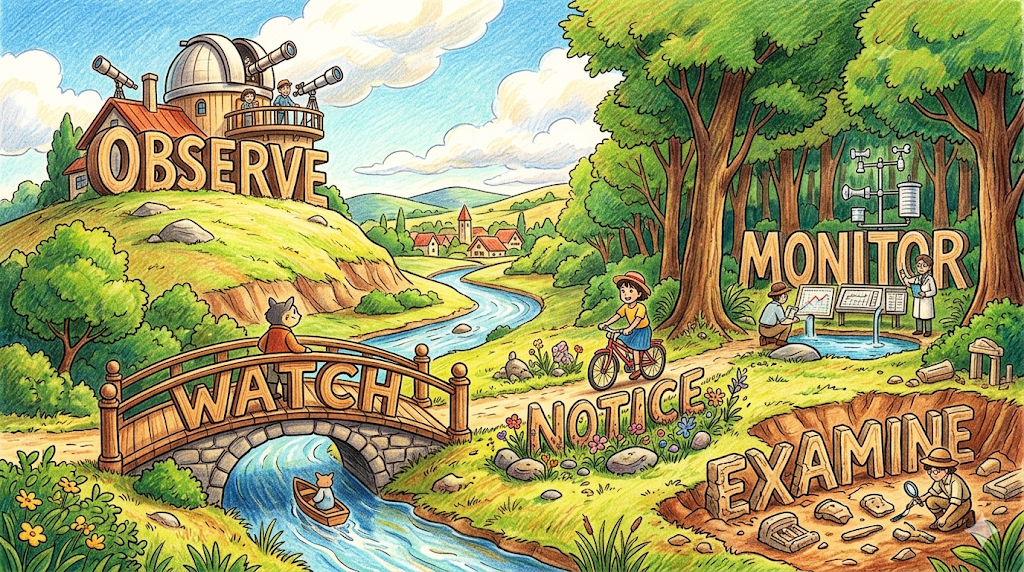
유의어 비교표
단어 공통점 뉘앙스 차이 예문
| observe | 보다, 지키다 | 목적있는 관찰·규칙 준수·언급, 비유 풍부 | She observed the reaction. |
| watch | 보다 | 움직이는 것을 시간을 두고 바라보는 것 | He watched the game. |
| notice | 알아채다 | 우연히 무언가를 알아채는 것 | She noticed the mistake. |
| monitor | 감시하다 | 지속적으로 상태를 체크하고 기록하는 것 | He monitored the patient. |
| examine | 조사하다 | 세밀하게 검토하거나 검사하는 것 | She examined the evidence. |
유의어 예문 리스트
- (watch) He watched the storm rolling in from the window for over an hour, mesmerised by the way the clouds moved and changed colour as they crossed the hills. (그는 창문에서 1시간 이상 폭풍이 몰려오는 것을 지켜봤으며, 구름이 언덕을 가로질러 이동하고 색이 변하는 방식에 매료됐다.)
- (notice) She noticed that the plant on the windowsill was starting to lean towards the light, and she decided to turn the pot slightly so that it would grow more evenly on all sides. (그녀는 창가의 식물이 빛을 향해 기울기 시작한다는 것을 알아채고, 모든 면에서 더 고르게 자랄 수 있도록 화분을 약간 돌리기로 결심했다.)
- (monitor) The teacher agreed to monitor the new student's progress closely for the first four weeks and meet with her parents at the end of that period to discuss how things were going. (선생님은 처음 4주 동안 새 학생의 진행 상황을 면밀히 모니터링하고 그 기간 말에 부모님을 만나 어떻게 되고 있는지 논의하기로 동의했다.)
- (examine) The doctor examined the X-ray image carefully before explaining to the patient exactly what she had found and what the next steps in the treatment plan would be. (의사는 환자에게 자신이 발견한 것과 치료 계획의 다음 단계가 무엇인지 정확히 설명하기 전에 X선 이미지를 주의 깊게 검사했다.)
결론 정리
observe는 단순히 "관찰하다"가 아니라, 라틴어 observare(향해 지키고 살피다)에서 출발해 주의 깊은 관찰에서 과학적 탐구·규칙 준수·전통 기념·격식적 언급까지 확장되는 단어다 — observe가 있는 곳엔 언제나 '단순히 보는 것이 아닌, 인간이 세상을 향해 주의를 기울이고 이해하며 지키려는 진지한 태도가 생생하게 살아숨쉬는' 생동감의 선언이 있다.
💡 observe는 "무언가를 향해 주의를 기울이고 지키는 것에서 출발한" 생동감 넘치는 언어 — keen observer · under observation · observe closely가 수능 최빈출.
🌟 초등학생 버전 — observe는 "주의 깊게 살펴보다"는 뜻이지만, "예리한 관찰자가 되다"(keen observer), "면밀히 관찰하다"(observe closely), "전통을 지키다"(observe a tradition)처럼 우리 과학 시간과 일상 곳곳에 살아있는 단어예요! 🔭✨
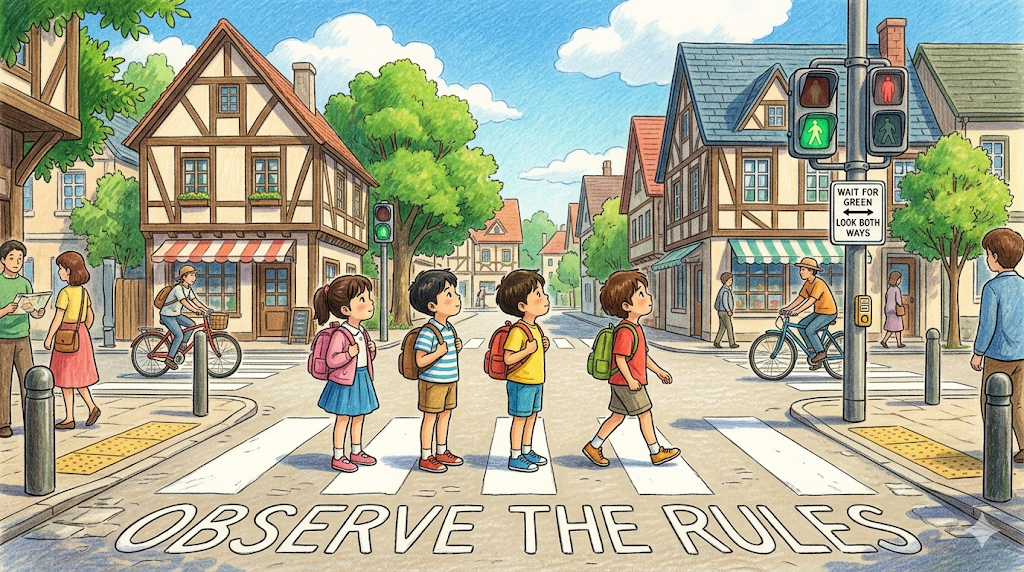
observe the rules [əbˈzɜːrv ðə ruːlz]
(동사구) 규칙을 지키다, 규칙을 준수하다
단순히 규칙을 따르는 것을 넘어 주의 깊게 규칙의 의미를 이해하고 지키는 것을 강조합니다. 수능 독해 사회·심리 지문에서 자주 등장합니다.
- The referee reminded both teams before the match began that they were expected to observe the rules at all times and that any deliberate foul would result in an immediate yellow card. (심판은 경기 시작 전 양팀에게 항상 규칙을 지킬 것을 기대하며 의도적인 파울은 즉각적인 옐로 카드를 받게 될 것이라고 상기시켰다.)
- She was careful to observe the rules of the laboratory, making sure to wear gloves and safety goggles before handling any chemicals, even the ones she had used many times before. (그녀는 이전에 여러 번 사용한 것이라도 어떤 화학 물질을 다루기 전에 장갑과 안전 고글을 착용하며 실험실 규칙을 지키도록 주의했다.)
- Observing the rules of a community is about more than just avoiding punishment — it is about showing respect for the people around you and contributing to an environment where everyone feels safe. (공동체의 규칙을 지키는 것은 단지 처벌을 피하는 것 이상이다 — 그것은 주변 사람들에 대한 존중을 보여주고 모든 사람이 안전하다고 느끼는 환경에 기여하는 것이다.)

observe a moment of silence [əbˈzɜːrv ə ˈməʊmənt əv ˈsaɪləns]
(동사구) 묵념을 하다, 침묵의 시간을 갖다
중요한 사건이나 사람을 기리기 위해 잠시 조용히 있는 것을 강조합니다. 수능 독해 사회·문화 지문에서 자주 등장합니다.
- At exactly eleven o'clock in the morning, the entire town stopped what it was doing to observe a moment of silence in honour of those who had lost their lives in the war many years ago. (정확히 오전 11시에, 마을 전체가 수년 전 전쟁에서 목숨을 잃은 사람들을 기리기 위해 하던 일을 멈추고 묵념을 했다.)
- The sports club decided to observe a moment of silence at the beginning of its next tournament after hearing the sad news that one of its founding members had passed away. (스포츠 클럽은 창립 회원 중 한 명이 세상을 떠났다는 슬픈 소식을 들은 후 다음 대회 시작 시 묵념을 하기로 결정했다.)
- She found that observing a moment of silence before a difficult task helped her clear her mind and approach the work with much greater calm and focus than if she had rushed straight into it. (그녀는 어려운 과제 전에 잠시 침묵의 시간을 갖는 것이 마음을 정리하고 곧장 서두르는 것보다 훨씬 더 침착하고 집중적으로 작업에 접근하는 데 도움이 된다는 것을 발견했다.)
숙어 그룹 묶음 1 — 준수·기념 observe 핵심 패턴
표현 의미 핵심 뉘앙스 주요 맥락
| observe the rules | 규칙을 지키다 | 주의 깊게 규칙의 의미를 이해하고 지키는 것 | 사회·심리·수능 |
| observe a moment of silence | 묵념을 하다 | 중요한 사건이나 사람을 기리며 잠시 조용히 있는 것 | 사회·문화·수능 |
| observe a tradition | 전통을 지키다 | 오랫동안 내려온 관습을 이어나가는 것 | 사회·문화·수능 |
이 세 표현은 모두 observe의 "주의 깊게 지키는 것" 이미지를 공유하되, 각각 공동체의 규정(observe the rules)·특별한 순간을 기념하는 침묵(observe a moment of silence)·오래된 관습의 전승(observe a tradition)의 관점에서 접근합니다.
- The ceremony began with the whole school observing a moment of silence, after which the principal spoke about the importance of observing the traditions that connect them to generations of students who had come before, including the long-standing tradition of observing the rules of respect and fairness in everything the school stands for. (행사는 전교생이 묵념으로 시작됐으며, 그 후 교장 선생님은 이전에 다녀간 세대의 학생들과 그들을 연결하는 전통을 지키는 것의 중요성에 대해 말했는데, 이는 학교가 대표하는 모든 것에서 존중과 공정성의 규칙을 지키는 오랜 전통을 포함했다.)
- She explained to her children that observing a moment of silence at remembrance events is one way of observing a tradition of honouring the past, and that observing the rules of quiet and respect during such events shows that you understand why those moments matter so much. (그녀는 아이들에게 추모 행사에서 묵념을 하는 것이 과거를 기리는 전통을 지키는 한 가지 방법이며, 그러한 행사 중에 조용함과 존중의 규칙을 지키는 것이 왜 그 순간들이 그렇게 중요한지 이해한다는 것을 보여주는 것이라고 설명했다.)
- The sports day began with everyone observing a moment of silence in memory of a former student, then observed the tradition of singing the school song together, and then the teacher reminded all participants to observe the rules carefully for the rest of the day so that every event could be run safely and fairly. (운동회는 모든 사람이 전 학생을 추모하며 묵념을 하는 것으로 시작됐으며, 그런 다음 함께 교가를 부르는 전통을 지켰고, 모든 행사가 안전하고 공정하게 진행될 수 있도록 선생님이 나머지 하루 동안 모든 참가자에게 규칙을 지키도록 주의 깊게 상기시켰다.)

observe closely [əbˈzɜːrv ˈkləʊsli]
(동사구) 면밀히 관찰하다, 가까이서 주의 깊게 보다
세밀한 주의를 기울여 대상을 깊이 살펴보는 것을 강조합니다. 수능 독해 과학·학술·심리 지문에서 핵심적으로 등장합니다.
- She was asked to observe closely as the surgeon demonstrated the technique on a model so that she could understand every small step before trying it herself. (그녀는 외과 의사가 모델에서 기술을 시연하는 동안 스스로 시도하기 전에 모든 작은 단계를 이해할 수 있도록 면밀히 관찰하도록 요청받았다.)
- Observing closely is a skill that takes practice — most people see things at a surface level, but a trained observer looks for patterns, exceptions, and connections that others walk right past without noticing. (면밀히 관찰하는 것은 연습이 필요한 기술이다 — 대부분의 사람들은 표면적인 수준에서 사물을 보지만, 훈련된 관찰자는 다른 사람들이 알아채지 못하고 그냥 지나치는 패턴, 예외, 연결을 찾는다.)
- The art teacher encouraged students to observe closely before putting pencil to paper, explaining that the most common reason for a drawing not looking right is that the artist drew what they thought they saw rather than what was actually in front of them. (미술 선생님은 학생들에게 종이에 연필을 대기 전에 면밀히 관찰하도록 격려하며, 그림이 제대로 보이지 않는 가장 일반적인 이유는 예술가가 실제로 앞에 있는 것이 아니라 봤다고 생각하는 것을 그렸기 때문이라고 설명했다.)

observe nature [əbˈzɜːrv ˈneɪtʃər]
(동사구) 자연을 관찰하다
자연 현상이나 생물의 행동을 주의 깊게 살펴보는 것을 강조하며, 과학적 탐구와 경이로움을 나타냅니다. 수능 독해 환경·과학·심리 지문에서 자주 등장합니다.
- He had been observing nature for so many years that he could tell the season simply by looking at which insects were flying and which flowers were in bloom. (그는 수년 동안 자연을 관찰해 어떤 곤충이 날고 있고 어떤 꽃이 피어있는지만 보고도 계절을 알 수 있었다.)
- The class spent an entire morning observing nature in the school garden, and by the end most students were surprised by how much was going on in a space they walked past every day without ever looking closely. (학급은 학교 정원에서 자연을 관찰하며 아침 전체를 보냈으며, 끝에는 대부분의 학생들이 매일 주의 깊게 보지 않고 지나치는 공간에서 얼마나 많은 일이 일어나고 있는지에 놀랐다.)
- Observing nature does not require expensive equipment or a trip to a distant rainforest — even in a small garden or local park, patient and careful attention will reveal a world of complexity and beauty that most people never stop to see. (자연을 관찰하는 것은 비싼 장비나 먼 열대 우림으로의 여행이 필요하지 않다 — 작은 정원이나 지역 공원에서도 인내심 있고 주의 깊은 관심은 대부분의 사람들이 멈추고 보지 않는 복잡함과 아름다움의 세계를 드러낼 것이다.)
숙어 그룹 묶음 2 — 탐구·발견 observe 패턴
표현 의미 핵심 뉘앙스 주요 맥락
| observe closely | 면밀히 관찰하다 | 세밀한 주의를 기울여 깊이 살펴보는 것 | 과학·학술·수능 |
| observe nature | 자연을 관찰하다 | 자연 현상이나 생물의 행동을 주의 깊게 살피는 것 | 환경·과학·수능 |
| observe the stars | 별을 관찰하다 | 밤하늘의 천체를 주의 깊게 살펴보는 것 | 과학·문학·수능 |
이 세 표현은 모두 observe의 "주의 깊게 살펴보는 것" 이미지를 공유하되, 각각 세밀하고 집중적인 관찰 방식(observe closely)·지구상의 자연 현상 관찰(observe nature)·우주의 천체 관찰(observe the stars)의 관점에서 접근합니다.
- The science camp was designed around three activities: observing nature during the day, observing the stars at night, and observing closely — at every moment — the small details that most people overlook because they are moving too quickly to pay proper attention. (과학 캠프는 세 가지 활동을 중심으로 설계됐다: 낮에는 자연을 관찰하고, 밤에는 별을 관찰하며, 그리고 — 매 순간 — 제대로 주의를 기울이기에 너무 빠르게 움직이기 때문에 대부분의 사람들이 간과하는 작은 세부 사항을 면밀히 관찰하는 것이다.)
- She had started by observing nature in her back garden, then moved on to observing the stars from her bedroom window, and gradually developed such a habit of observing closely in all areas of her life that her teacher described her as the most naturally scientific thinker she had ever taught. (그녀는 뒤뜰에서 자연을 관찰하는 것으로 시작해, 침실 창문에서 별을 관찰하는 것으로 이동했으며, 점차 삶의 모든 영역에서 면밀히 관찰하는 습관을 길러 선생님이 자신이 가르친 것 중 가장 자연스럽게 과학적인 사상가라고 묘사했다.)
- The essay argued that whether you are observing closely the behaviour of an insect when you observe nature, or tracking the movement of a distant galaxy when you observe the stars, the underlying skill is the same — patient, open, honest attention to what is actually there, rather than what you expected or hoped to see. (에세이는 자연을 관찰할 때 곤충의 행동을 면밀히 관찰하든, 별을 관찰할 때 먼 은하의 움직임을 추적하든, 근본적인 기술은 같다고 주장했다 — 기대하거나 보기를 바랐던 것이 아니라 실제로 있는 것에 대한 인내심 있고, 열린, 정직한 주의.)

under observation [ˈʌndər ˌɒbzəˈveɪʃən]
(형용사구) 관찰 중인, 감시 하에 있는
의학적으로 상태를 지켜보거나 사회적으로 행동을 감시받는 상황을 강조합니다. 수능 독해 의학·사회·심리 지문에서 자주 등장합니다.
- After the minor accident, the doctor decided it was safest to keep the child under observation in the hospital overnight so that any delayed symptoms would be caught early. (작은 사고 후, 의사는 지연된 증상을 일찍 발견할 수 있도록 어린이를 밤새 병원에서 관찰 하에 두는 것이 가장 안전하다고 결정했다.)
- The scientist kept the new bacteria sample under observation for six weeks, recording any changes in its behaviour every twelve hours to build up a detailed picture of how it responded to different temperatures. (과학자는 새 박테리아 샘플을 6주 동안 관찰 하에 두며, 다른 온도에 어떻게 반응하는지에 대한 자세한 그림을 구축하기 위해 12시간마다 행동의 변화를 기록했다.)
- The essay explored the idea that when people know they are under observation, they often change their behaviour — not always for the better — and asked whether a society where everyone is constantly monitored is one that truly produces better behaviour or just better-hidden misbehaviour. (에세이는 사람들이 관찰 하에 있다는 것을 알면 종종 행동을 바꾼다는 — 항상 더 나은 방향으로는 아니지만 — 아이디어를 탐구했으며, 모든 사람이 지속적으로 모니터링되는 사회가 진정으로 더 나은 행동을 만들어내는지 아니면 단지 더 잘 숨겨진 불량 행동을 만들어내는지 물었다.)

observe a tradition [əbˈzɜːrv ə trəˈdɪʃən]
(동사구) 전통을 지키다, 전통을 따르다
오랫동안 내려온 관습이나 의식을 기억하고 계속 이어나가는 것을 강조합니다. 수능 독해 사회·문화 지문에서 자주 등장합니다.
- Even after moving to a new country, she continued to observe the tradition of lighting candles on Friday evenings because it connected her to her family and to the community she had grown up in. (새 나라로 이사한 후에도, 그녀는 금요일 저녁에 촛불을 켜는 전통을 계속 지켰는데, 그것이 그녀를 자신의 가족과 자라온 공동체에 연결시켜줬기 때문이다.)
- The school observed the tradition of reading the names of its most distinguished former students aloud at the annual prize-giving ceremony, a practice that had been going on for over eighty years. (학교는 80년 이상 이어온 관행인 연간 시상식에서 가장 뛰어난 전 학생들의 이름을 소리 내어 읽는 전통을 지켰다.)
- She argued that observing a tradition is not the same as being trapped in the past — it is a conscious choice to carry something valuable forward in time, and the most meaningful traditions are the ones that manage to stay relevant even as the world around them changes. (그녀는 전통을 지키는 것이 과거에 갇히는 것과 같지 않다고 주장했다 — 그것은 가치 있는 것을 시간 속에서 앞으로 나아가게 하는 의식적인 선택이며, 가장 의미 있는 전통은 주변 세계가 변하면서도 관련성을 유지하는 데 성공하는 것들이다.)
숙어 그룹 묶음 3 — 관찰자·시설 observe 심화 패턴
표현 의미 핵심 뉘앙스 주요 맥락
| keen observer | 예리한 관찰자 | 세밀하고 빠르게 알아채는 관찰 능력이 뛰어난 사람 | 심리·학술·수능 |
| under observation | 관찰 중인 | 의학적·사회적으로 감시받는 상황 | 의학·사회·수능 |
| observatory | 천문대, 관측소 | 천체나 자연을 전문적으로 관찰하는 시설 | 과학·학술·수능 |
이 세 표현은 모두 observe의 "관찰이라는 행위의 주체와 환경" 이미지를 공유하되, 각각 탁월한 관찰 능력을 가진 사람(keen observer)·관찰받는 상태에 있는 것(under observation)·전문적 관찰을 위한 장소(observatory)의 관점에서 접근합니다.
- She was a keen observer who noticed things that others missed, which was partly why her work at the observatory was so valued — but she also knew that even the most careful scientist needs to acknowledge the limits of what can be seen, and that being under observation by peers is one of the best ways to make sure you are not seeing only what you want to see. (그녀는 다른 사람들이 놓치는 것을 알아채는 예리한 관찰자였으며, 이것이 부분적으로 천문대에서의 그녀의 작업이 그렇게 가치 있는 이유였다 — 하지만 그녀는 또한 가장 주의 깊은 과학자도 볼 수 있는 것의 한계를 인정해야 하며, 동료들에게 관찰을 받는 것이 보고 싶은 것만 보지 않도록 하는 가장 좋은 방법 중 하나라는 것도 알고 있었다.)
- The guide at the observatory was a keen observer of the night sky and could identify dozens of different star clusters without a telescope, which was impressive — but she also explained that the most important discoveries in astronomy had been made when scientists allowed their work to be under observation by others who might challenge their conclusions. (천문대의 안내인은 망원경 없이도 수십 개의 다른 성단을 식별할 수 있는 밤하늘의 예리한 관찰자였으며, 그것은 인상적이었다 — 하지만 그녀는 또한 천문학의 가장 중요한 발견들은 과학자들이 결론에 의문을 제기할 수 있는 다른 사람들에게 관찰을 받도록 작업을 허용했을 때 이루어졌다고 설명했다.)
- Being a keen observer means accepting that you too need to be under observation from time to time — because the same qualities that make you good at noticing things in others also make you uniquely qualified to appreciate why a well-designed observatory, whether literal or metaphorical, is such an essential part of how human beings come to understand the world. (예리한 관찰자가 된다는 것은 때때로 자신도 관찰을 받을 필요가 있다는 것을 받아들이는 것을 의미한다 — 다른 사람들의 것을 잘 알아채게 만드는 같은 자질이 문자 그대로든 비유적이든 잘 설계된 천문대가 왜 인간이 세상을 이해하는 방법의 그토록 필수적인 부분인지 감사할 수 있는 독특한 자격을 부여하기 때문이다.)

keen observer [kiːn əbˈzɜːrvər]
(명사구) 예리한 관찰자, 날카로운 관찰자
사물이나 상황을 빠르고 정확하게 알아채는 능력이 뛰어난 사람을 강조합니다. 수능 독해 심리·학술·문학 지문에서 자주 등장합니다.
- Great writers are almost always keen observers of the world around them — they notice details that most people filter out, and it is precisely this attention to the small and overlooked that makes their work feel so true. (훌륭한 작가들은 거의 항상 주변 세계의 예리한 관찰자이다 — 그들은 대부분의 사람들이 걸러내는 세부 사항을 알아채며, 바로 작고 간과된 것에 대한 이 주의가 그들의 작업을 그렇게 진실하게 느끼게 만드는 것이다.)
- She was not the loudest student in the class, but she was a keen observer, and the quality of her written work showed a depth of understanding that surprised even the teacher when it came to describing the behaviour of different characters in the story. (그녀는 학급에서 가장 크게 말하는 학생이 아니었지만, 예리한 관찰자였으며, 그녀의 글 작업의 질은 이야기에서 다른 등장인물들의 행동을 묘사할 때조차 선생님을 놀라게 하는 깊이 있는 이해를 보여줬다.)
- The coach told the young players that becoming a keen observer of the game — watching how the best players moved, made decisions, and communicated with their teammates — was one of the fastest ways to improve without having to do any additional physical training. (코치는 젊은 선수들에게 게임의 예리한 관찰자가 되는 것 — 최고의 선수들이 어떻게 움직이고, 결정을 내리며, 팀원들과 소통하는지 지켜보는 것 — 이 추가적인 신체 훈련 없이 개선하는 가장 빠른 방법 중 하나라고 말했다.)

observe the stars [əbˈzɜːrv ðə stɑːrz]
(동사구) 별을 관찰하다
밤하늘의 별이나 천체를 주의 깊게 살펴보는 것을 강조하며, 과학적 탐구와 인간의 경이로움을 나타냅니다. 수능 독해 과학·문학 지문에서 자주 등장합니다.
- For thousands of years before modern technology existed, sailors observed the stars to find their position at sea, using patterns in the sky that had been mapped and named by generations of people long before them. (현대 기술이 존재하기 수천 년 전, 선원들은 훨씬 이전 세대의 사람들에 의해 지도화되고 이름 붙여진 하늘의 패턴을 사용하며 바다에서 자신의 위치를 찾기 위해 별을 관찰했다.)
- She found that observing the stars on a clear night had a unique way of putting her own problems into perspective — it was hard to feel that her worries were especially important when faced with the sheer scale of what stretched above her. (그녀는 맑은 밤에 별을 관찰하는 것이 자신의 문제를 적절한 시각으로 바라보게 하는 독특한 방법이 있다는 것을 발견했다 — 위로 펼쳐지는 것의 순수한 규모에 직면했을 때 자신의 걱정이 특별히 중요하다고 느끼기가 어려웠다.)
- Observing the stars requires patience above all else — the most significant discoveries in astronomy have come not from a single dramatic moment but from the slow accumulation of careful measurements made night after night over many years. (별을 관찰하는 것은 무엇보다도 인내심을 필요로 한다 — 천문학의 가장 중요한 발견들은 단 한 번의 극적인 순간에서가 아니라 수년에 걸쳐 밤마다 이루어진 신중한 측정의 느린 축적에서 왔다.)

observatory [əbˈzɜːrvətri]
(명사) 천문대, 관측소
별·날씨·자연 현상 등을 전문적으로 관찰하기 위해 만들어진 건물이나 시설을 강조합니다. 수능 독해 과학·학술 지문에서 자주 등장합니다.
- The observatory on top of the hill had been there for over a century, and the records it had kept of weather patterns and star positions had become an invaluable resource for scientists studying how the climate had changed over time. (언덕 위의 천문대는 1세기 이상 그곳에 있었으며, 날씨 패턴과 별 위치에 대해 보관한 기록은 시간이 지남에 따라 기후가 어떻게 변했는지 연구하는 과학자들에게 귀중한 자원이 됐다.)
- She had always wanted to visit the famous observatory in her country's capital, not just for the chance to look through its famous telescope but because she knew that the building itself was a piece of history that had contributed to some of the most important astronomical discoveries ever made. (그녀는 항상 나라의 수도에 있는 유명한 천문대를 방문하고 싶었는데, 단지 유명한 망원경을 통해 볼 기회뿐만 아니라 그 건물 자체가 역사의 일부이며 지금까지 이루어진 가장 중요한 천문학적 발견 중 일부에 기여했다는 것을 알았기 때문이다.)
- The word observatory comes from the same Latin root as observe, which is a reminder that all scientific understanding begins with the same simple act — turning your attention carefully towards something and being willing to see what is actually there. (천문대라는 단어는 observe와 같은 라틴어 어원에서 왔으며, 이것은 모든 과학적 이해가 같은 단순한 행위에서 시작된다는 것을 상기시켜준다 — 무언가를 향해 주의 깊게 주의를 기울이고 실제로 있는 것을 기꺼이 보려는 것.)
숙어 그룹 묶음 4 — 종합 observe 패턴
표현 의미 핵심 뉘앙스 주요 맥락
| keen observer | 예리한 관찰자 | 사물을 빠르고 정확하게 알아채는 능력이 뛰어난 사람 | 심리·학술·수능 |
| under observation | 관찰 중인 | 의학적·사회적으로 감시받는 상황 | 의학·사회·수능 |
| observe closely | 면밀히 관찰하다 | 세밀한 주의를 기울여 깊이 살펴보는 것 | 과학·학술·수능 |
이 세 표현은 수능 독해에서 가장 자주 출제되는 observe의 핵심 패턴입니다. keen observer는 탁월한 관찰 능력을 가진 사람을, under observation은 관찰받는 상태를, observe closely는 집중적이고 세밀한 관찰 방식을 각각 나타냅니다.
- She was a keen observer who always chose to observe closely before drawing any conclusions, which was partly why she had been asked to check on the experiment that had been left under observation — because the team knew she would catch anything that a less careful person might overlook. (그녀는 항상 결론을 내리기 전에 면밀히 관찰하기로 선택하는 예리한 관찰자였으며, 이것이 부분적으로 그녀가 관찰 하에 놓여있던 실험을 확인하도록 요청받은 이유였다 — 팀은 그녀가 덜 주의 깊은 사람이 간과할 수 있는 것을 발견할 것이라는 것을 알았기 때문이다.)
- The scientist argued that being a keen observer does not mean noticing everything — it means knowing which things are worth observing closely and which can safely be left under observation by a monitoring system, so that human attention can be focused where it makes the most difference. (과학자는 예리한 관찰자가 된다는 것이 모든 것을 알아채는 것을 의미하지 않는다고 주장했다 — 어떤 것이 면밀히 관찰할 가치가 있고 어떤 것이 모니터링 시스템에 의해 관찰 하에 안전하게 남겨질 수 있는지를 아는 것을 의미하며, 그래서 인간의 주의가 가장 큰 차이를 만드는 곳에 집중될 수 있다.)
- To become a keen observer of anything, you first have to learn to observe closely without trying to explain or interpret what you are seeing before you have seen it properly — and it helps to occasionally put yourself under observation too, whether that means asking a mentor to watch your work or simply reviewing your own past records to see how your understanding has changed over time. (무엇이든 예리한 관찰자가 되려면, 먼저 제대로 보기 전에 보고 있는 것을 설명하거나 해석하려 하지 않고 면밀히 관찰하는 법을 배워야 한다 — 그리고 때때로 자신도 관찰 하에 두는 것이 도움이 되는데, 그것이 멘토에게 작업을 지켜봐 달라고 요청하든 아니면 단순히 자신의 과거 기록을 검토해 이해가 시간이 지남에 따라 어떻게 변했는지 보든 상관없이.)
전체 요약표
표현 의미 핵심 뉘앙스
| observe | 관찰하다, 지키다, 언급하다 | 주의 기울여 보는 것에서 지키는 것·말하는 것까지 확장 |
| observe the rules | 규칙을 지키다 | 주의 깊게 규칙의 의미를 이해하고 지키는 것 |
| observe a moment of silence | 묵념을 하다 | 중요한 사건이나 사람을 기리며 잠시 조용히 있는 것 |
| observe closely | 면밀히 관찰하다 | 세밀한 주의를 기울여 깊이 살펴보는 것 |
| observe nature | 자연을 관찰하다 | 자연 현상이나 생물의 행동을 주의 깊게 살피는 것 |
| under observation | 관찰 중인 | 의학적·사회적으로 감시받는 상황 |
| observe a tradition | 전통을 지키다 | 오랫동안 내려온 관습을 이어나가는 것 |
| keen observer | 예리한 관찰자 | 사물을 빠르고 정확하게 알아채는 능력이 뛰어난 사람 |
| observe the stars | 별을 관찰하다 | 밤하늘의 천체를 주의 깊게 살펴보는 것 |
| observatory | 천문대, 관측소 | 천체나 자연을 전문적으로 관찰하는 시설 |
유의어 비교표
단어 공통점 뉘앙스 차이 예문
| observe | 보다, 지키다 | 목적있는 관찰·규칙 준수·언급, 비유 풍부 | She observed the reaction. |
| watch | 보다 | 움직이는 것을 시간을 두고 바라보는 것 | He watched the game. |
| notice | 알아채다 | 우연히 무언가를 알아채는 것 | She noticed the mistake. |
| monitor | 감시하다 | 지속적으로 상태를 체크하고 기록하는 것 | He monitored the patient. |
| examine | 조사하다 | 세밀하게 검토하거나 검사하는 것 | She examined the evidence. |
유의어 예문 리스트
- (watch) He sat by the window and watched the rain falling steadily onto the empty street below, finding the rhythm of it strangely calming after such a stressful and exhausting week at school. (그는 창가에 앉아 아래 빈 거리에 꾸준히 내리는 비를 지켜봤으며, 학교에서 그렇게 스트레스받고 지친 한 주 후에 이상하게 차분해지는 그것의 리듬을 발견했다.)
- (notice) He was just about to leave when he noticed a small note that had been tucked under the corner of his keyboard, and when he unfolded it he found a message that changed his plans for the entire afternoon. (그는 막 나가려던 참에 키보드 모서리 아래에 끼워진 작은 메모를 알아챘으며, 그것을 펼쳤을 때 오후 전체의 계획을 바꾸는 메시지를 발견했다.)
- (monitor) The nurse would monitor the patient's blood pressure and temperature every two hours through the night and call the doctor immediately if there was any sign of a change that fell outside the expected range. (간호사는 밤새 2시간마다 환자의 혈압과 체온을 모니터링하고 예상 범위 밖의 변화의 어떤 신호가 있으면 즉시 의사에게 전화할 것이었다.)
- (examine) The mechanic examined the engine carefully for almost an hour before telling the driver exactly what was wrong and giving a clear explanation of which parts needed to be replaced and why. (기계공은 운전자에게 정확히 무엇이 잘못됐는지 말하고 어떤 부품을 교체해야 하는지와 그 이유를 명확하게 설명하기 전에 거의 한 시간 동안 엔진을 주의 깊게 검사했다.)
결론 정리
observe는 단순히 "관찰하다"가 아니라, 라틴어 observare(향해 지키고 살피다)에서 출발해 주의 깊은 관찰에서 과학적 탐구·규칙 준수·전통 기념·격식적 언급까지 확장되는 단어다 — observe가 있는 곳엔 언제나 '단순히 보는 것이 아닌, 인간이 세상을 향해 주의를 기울이고 이해하며 지키려는 진지한 태도가 생생하게 살아숨쉬는' 생동감의 선언이 있다.
💡 observe는 "무언가를 향해 주의를 기울이고 지키는 것에서 출발한" 생동감 넘치는 언어 — keen observer · under observation · observe closely가 수능 최빈출.
🌟 초등학생 버전 — observe는 "주의 깊게 살펴보다"는 뜻이지만, "예리한 관찰자가 되다"(keen observer), "면밀히 관찰하다"(observe closely), "전통을 지키다"(observe a tradition)처럼 우리 과학 시간과 일상 곳곳에 살아있는 단어예요! 🔭✨


