- 분류 전체보기 (5462)

| 일 | 월 | 화 | 수 | 목 | 금 | 토 |
|---|---|---|---|---|---|---|
| 1 | 2 | |||||
| 3 | 4 | 5 | 6 | 7 | 8 | 9 |
| 10 | 11 | 12 | 13 | 14 | 15 | 16 |
| 17 | 18 | 19 | 20 | 21 | 22 | 23 |
| 24 | 25 | 26 | 27 | 28 | 29 | 30 |
| 31 |
- call off
- oh
- Don't worry
- Yes
- Excuse me
- Yeah
- well
- no
- I'm sorry
- please?
- I'm not sure
- pick up
- Actually
- too.
- Please
- work out
- Sorry
- Hey
- once in a while
- Read between the lines
- Right?
- come up with
- By The Way
- hold on
- please.
- make it
- entrance fee
- I'm glad to hear that.
- Sure
- OKay
- Today
- Total
인과함께
Day348 , obey, obey the rules, obey orders, obey the law, refuse to obey, obey blindly, obey without question, fail to obey, obey one's conscience, obey instinct 본문
Day348 , obey, obey the rules, obey orders, obey the law, refuse to obey, obey blindly, obey without question, fail to obey, obey one's conscience, obey instinct
미인생 2026. 4. 24. 09:49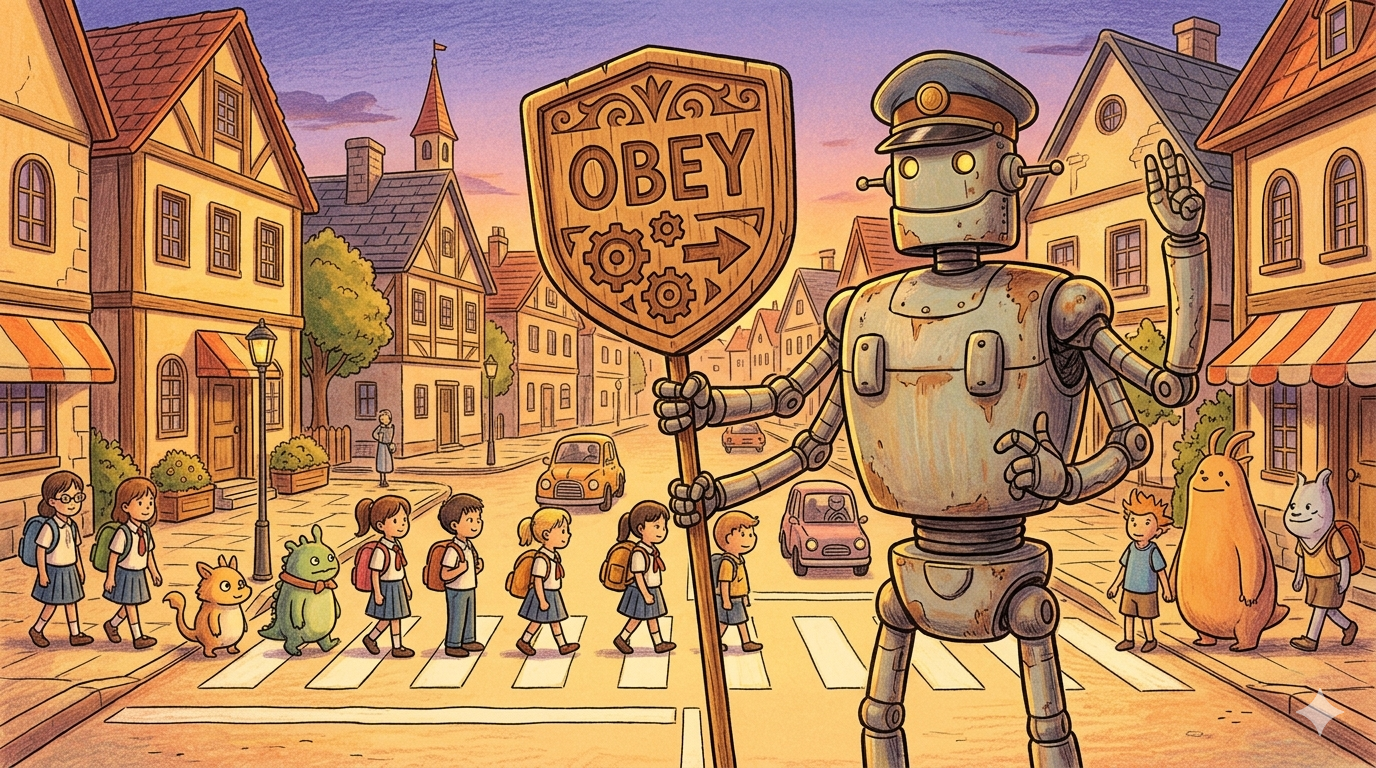
obey [əˈbeɪ]
(동사) 따르다, 복종하다, 지키다
단순히 "복종하다"로만 외우면 수능에서 반드시 틀립니다. obey는 "권위나 규칙이 요구하는 것을 따르다" 라는 핵심 이미지에서 출발해, 단순한 규칙 준수·명령 이행·법 준수·양심에 따르는 것·본능을 따르는 것까지 폭넓게 쓰이는 핵심 다의어입니다. 특히 obey blindly(맹목적으로 따르다), obey one's conscience(양심에 따르다), refuse to obey(따르기를 거부하다) 패턴은 수능 독해 심리·사회·논리·윤리 지문에서 핵심적으로 등장합니다.
'obey'는 라틴어 oboedire(듣다, 따르다)에서 유래했으며, ob(향하여) + audire(듣다)로 구성됩니다. 어원의 핵심 이미지는 "누군가의 말을 향하여 귀 기울이고 따르는 것" 으로, 단순한 복종을 넘어 규칙·법·명령·양심·본능을 따르는 행위까지 확장되는 표현의 근원이 된 단어입니다.
🤖 obey의 핵심 뉘앙스
"규칙·명령·본능에 따르는 행위. 그리고 그 따름이 자발적이냐, 강제적이냐의 차이."
obey는 '따르다, 복종하다'가 기본이지만, 무엇에 따르느냐, 어떻게 따르느냐에 따라 법 앞의 시민, 명령에 복종하는 군인, 양심을 따르는 개인, 본능에 이끌리는 존재까지 전혀 다른 뉘앙스를 담습니다. 같은 '따름'이라도 맹목적이냐 의지적이냐에 따라 완전히 달라져요.
1️ 규칙·법을 따르는 obey
- obey the rules → 규칙을 따르다. 가장 일상적인 용법. 학교·직장·사회의 규범에 순응하는 것
- obey the law → 법을 준수하다. 사회 구성원으로서 법적 의무를 이행하는 것. 시민성의 기본
- fail to obey → 따르지 못하다, 불복하다. 의도적이든 실수든 규칙을 지키지 못한 결과. 처벌이나 결과를 암시
2️ 명령에 따르는 방식을 담은 obey
- obey orders → 명령에 따르다. 군대·직장 등 위계 구조에서 상관의 지시를 수행하는 것
- obey blindly → 맹목적으로 복종하다. 옳고 그름을 따지지 않고 무조건 따르는 위험한 순응
- obey without question → 의심 없이 따르다. obey blindly와 유사하지만 비판적 사고를 포기한 뉘앙스가 강함
- refuse to obey → 복종을 거부하다. 명령이나 규칙에 맞서는 저항. 도덕적 용기 또는 반항의 뉘앙스
3️ 내면의 목소리를 따르는 obey
- obey one's conscience → 양심에 따르다. 외부 명령이 아닌 내면의 도덕적 판단을 따르는 것. 때로 규칙과 충돌하는 더 높은 복종
- obey instinct → 본능에 따르다. 이성적 판단 없이 내재된 충동이나 직감을 따르는 것
💡 아들에게 이렇게 설명해보세요
"obey는 '따르다, 복종하다'인데, 어떻게 따르느냐가 핵심이야. obey the rules는 그냥 규칙을 지키는 거고, obey blindly는 '눈 감고 무조건 따른다'는 뜻이야. 옳은지 그른지 생각도 안 하고 따르는 거라 위험할 수 있어. refuse to obey는 반대로 '따르기를 거부한다'는 건데, 부당한 명령에 맞서는 용기 있는 행동일 수도 있어. obey one's conscience는 '양심에 따른다'는 건데, 규칙이 잘못됐을 때 규칙 대신 자기 양심을 따르는 거야. 가장 어렵지만 가장 용기 있는 obey야."
obey = 따름의 방향과 태도. 법·규칙·명령에 복종하는 것에서 맹목적 순응, 저항, 양심과 본능을 따르는 것까지 — '따른다'는 한 단어가 담아내는 인간 행동의 스펙트럼이다.
1. obey the rules [əˈbeɪ ðə ruːlz]
(일상/사회/수능) "규칙을 지키다, 규칙에 따르다"를 뜻합니다. 사회나 집단이 정한 규정을 지키고 따르는 것을 강조합니다.
Everyone in the class agreed to obey the rules so that the game would be fair and enjoyable for all players. (모든 학급 학생은 게임이 모든 선수에게 공정하고 즐거울 수 있도록 규칙을 지키기로 동의했다.)
2. obey orders [əˈbeɪ ˈɔːrdərz]
(일상/사회/수능) "명령에 따르다, 지시를 이행하다"를 뜻합니다. 권위 있는 사람이나 조직에서 내려진 지시를 따르는 것을 강조합니다.
The soldier was trained to obey orders quickly and without hesitation, but he also knew there were some orders that no person should ever follow. (그 군인은 빠르고 주저함 없이 명령에 따르도록 훈련받았지만, 어떤 명령은 어떤 사람도 절대 따라서는 안 된다는 것도 알고 있었다.)
3. obey the law [əˈbeɪ ðə lɔː]
(일상/사회/수능) "법을 따르다, 법을 지키다"를 뜻합니다. 사회 전체가 지켜야 할 법적 규범을 준수하는 것을 강조합니다.
She taught her children from a very young age that obeying the law is not just about avoiding punishment but about respecting the rights of other people. (그녀는 아주 어릴 때부터 자녀들에게 법을 지키는 것이 단지 처벌을 피하는 것이 아니라 다른 사람들의 권리를 존중하는 것이라고 가르쳤다.)
4. refuse to obey [rɪˈfjuːz tə əˈbeɪ]
(일상/사회/수능) "따르기를 거부하다, 복종하기를 거부하다"를 뜻합니다. 규칙이나 명령을 의도적으로 따르지 않기로 결심하는 것을 강조합니다.
She refused to obey the rule that she felt was unfair, and instead wrote a letter to the school council explaining her reasons clearly and respectfully. (그녀는 불공평하다고 느끼는 규칙을 따르기를 거부하고, 대신 자신의 이유를 명확하고 정중하게 설명하는 편지를 학생 자치회에 썼다.)
5. obey blindly [əˈbeɪ ˈblaɪndli]
(심리/사회/수능) "맹목적으로 따르다, 생각 없이 복종하다"를 뜻합니다. 비판적으로 생각하거나 이유를 묻지 않고 무조건적으로 따르는 것을 강조하며, 수능에서 이것이 위험할 수 있다는 논지로 자주 출제됩니다.
History shows that great harm can be done when people obey blindly without stopping to ask whether what they are being told to do is truly right. (역사는 사람들이 자신이 하라는 말이 진정으로 옳은지 멈추고 묻지 않고 맹목적으로 따를 때 큰 해가 일어날 수 있다는 것을 보여준다.)
6. obey without question [əˈbeɪ wɪˈðaʊt ˈkwestʃən]
(심리/사회/수능) "의문 없이 따르다, 묻지도 따지지도 않고 복종하다"를 뜻합니다. 어떠한 이의도 제기하지 않고 완전히 복종하는 것을 강조합니다.
The students were expected to obey without question, but the new teacher believed that asking why was just as important as doing what was asked. (학생들이 의문 없이 따르도록 기대됐지만, 새 선생님은 왜냐고 묻는 것이 요청된 것을 하는 것만큼 중요하다고 믿었다.)
7. fail to obey [feɪl tə əˈbeɪ]
(일상/사회/수능) "따르지 못하다, 복종하는 데 실패하다"를 뜻합니다. 의도하든 그렇지 않든 규칙이나 명령을 지키지 못하는 것을 강조합니다.
Anyone who fails to obey the school's fire safety rules will be asked to attend an extra safety briefing the following day. (학교 화재 안전 규칙을 따르지 못하는 사람은 다음 날 추가 안전 브리핑에 참석하도록 요청받을 것이다.)
8. obey one's conscience [əˈbeɪ wʌnz ˈkɒnʃəns]
(심리/윤리/수능) "양심에 따르다, 양심의 명령을 따르다"를 뜻합니다. 외부 규칙보다 자신의 내면의 도덕적 판단을 따르는 것을 강조하며, 수능 윤리·심리 지문에서 핵심적으로 등장합니다.
When the official rule seemed wrong to her, she chose to obey her conscience instead and did what she truly believed was the right thing to do. (공식 규칙이 그녀에게 잘못된 것처럼 보였을 때, 그녀는 대신 양심에 따르기로 선택하고 진정으로 옳다고 믿는 것을 했다.)
9. obey instinct [əˈbeɪ ˈɪnstɪŋkt]
(심리/과학/수능) "본능에 따르다, 본능을 따르다"를 뜻합니다. 생각하거나 배운 것이 아닌 자연적인 내적 충동을 따르는 것을 강조합니다.
Animals obey instinct when they migrate south in winter, following patterns that have been built into them over thousands of years of evolution. (동물들은 겨울에 남쪽으로 이동할 때 본능에 따르며, 수천 년의 진화를 통해 그들 안에 구축된 패턴을 따른다.)
10. obey (비유적) [əˈbeɪ]
(학술/과학/수능) 비유적으로 "~에 따르다, ~의 법칙을 따르다"를 뜻합니다. 사람뿐만 아니라 자연 현상·물리적 법칙 등이 특정 원리를 따르는 것을 강조합니다.
All objects in the universe obey the laws of gravity, pulling towards each other with a force that depends on their mass and the distance between them. (우주의 모든 물체는 중력의 법칙을 따르며, 질량과 그들 사이의 거리에 의존하는 힘으로 서로를 끌어당긴다.)

POINT 1. obey — 수능 최빈출 동사·관용 패턴
obey는 수능 독해 심리·사회·윤리·논리 지문에서 다양한 용법으로 자주 출제됩니다.
obey blindly → 비판 없이 무조건 따르는 것의 위험성을 강조할 때 예) Never obey blindly — always think for yourself. (절대 맹목적으로 따르지 마라 — 항상 스스로 생각하라.) obey one's conscience → 외부 명령보다 내적 도덕 판단을 따르는 것을 나타낼 때 예) She chose to obey her conscience over the rules. (그녀는 규칙보다 양심에 따르기로 선택했다.) refuse to obey → 부당하다고 느끼는 것에 저항하는 것을 나타낼 때 예) He refused to obey an unjust order. (그는 부당한 명령을 따르기를 거부했다.)
POINT 2. obey / follow / comply — 수능 어휘 핵심 비교
이 세 단어는 수능에서 자주 혼동되는 어휘입니다.
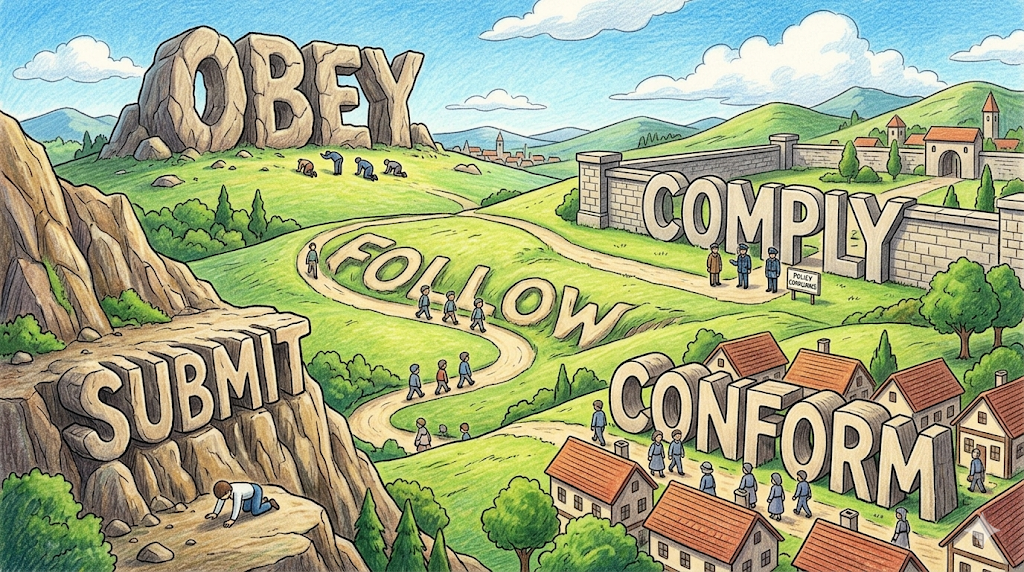
obey → 권위나 명령을 따르는 것, 복종의 의미가 강함 예) She obeyed the teacher's instruction. (그녀는 선생님의 지시를 따랐다.) follow → 지시나 방향을 따르는 것, 더 중립적인 의미 예) She followed the recipe carefully. (그녀는 조리법을 조심스럽게 따랐다.) comply → 공식적인 요청이나 규정을 따르는 것, 격식적인 의미 예) All students must comply with the rules. (모든 학생은 규칙을 준수해야 한다.)
POINT 3. obey의 다양한 용법 — 수능 독해 문맥 파악 핵심
obey는 수능 독해에서 문맥에 따라 의미가 완전히 달라지는 핵심 단어입니다.
규칙 준수 → Obey the rules at all times. (항상 규칙을 지켜라.) 법 준수 → Citizens must obey the law. (시민들은 법을 지켜야 한다.) 맹목적 복종 위험 → Never obey blindly. (절대 맹목적으로 따르지 마라.) 양심 따르기 → She obeyed her conscience. (그녀는 양심에 따랐다.) 저항 → He refused to obey. (그는 따르기를 거부했다.)
(동사) ① 따르다, 복종하다 (사람·권위에)
obey의 가장 기본적인 의미로, 사람이나 권위 있는 존재의 명령이나 요구를 따르는 것을 나타냅니다.
- The young puppy was slowly learning to obey its owner's commands and would sit, stay, and come when called without any hesitation. (그 어린 강아지는 천천히 주인의 명령을 따르는 법을 배우고 있었으며 주저함 없이 앉고, 기다리고, 불릴 때 다가왔다.)
- She had always obeyed her parents not out of fear but because she genuinely trusted their judgment and knew they had her best interests at heart. (그녀는 두려움이 아니라 그들의 판단을 진심으로 신뢰하고 그들이 자신의 최선의 이익을 마음에 두고 있다는 것을 알았기 때문에 항상 부모님을 따랐다.)
- He found it difficult to obey the substitute teacher because the rules she set were very different from the ones they were used to, and nobody had explained the reasons for them. (그는 대체 선생님이 정한 규칙이 그들이 익숙한 것과 매우 달랐고 아무도 그 이유를 설명하지 않았기 때문에 대체 선생님을 따르기 어렵다고 느꼈다.)
(동사) ② 법·규칙을 지키다 (사회적 규범)
obey는 사회가 정한 법이나 규칙을 지키는 것을 나타냅니다.
- Drivers are expected to obey all traffic signs and speed limits at all times, regardless of whether or not they think anyone is watching them. (운전자들은 누군가 자신을 지켜보는지 여부에 관계없이 항상 모든 교통 표지판과 속도 제한을 지킬 것을 기대받는다.)
- It is not enough to obey the rules only when it is convenient — true respect for a community means following its agreements even when nobody would ever know if you did not. (편리할 때만 규칙을 지키는 것으로는 충분하지 않다 — 공동체에 대한 진정한 존중은 아무도 알지 못할 때도 그것의 협약을 따르는 것을 의미한다.)
- The class discussed whether a law that is clearly unjust still needs to be obeyed, or whether there are circumstances when breaking it could actually be the more moral choice. (학급은 명백히 부당한 법이 여전히 지켜져야 하는지, 아니면 그것을 어기는 것이 실제로 더 도덕적인 선택이 될 수 있는 상황이 있는지 토론했다.)
(동사) ③ ~에 따르다 (자연 법칙·원리)
obey는 비유적으로 자연 현상이나 물리적 원리를 따르는 것을 나타냅니다.
- Water obeys the law of gravity and always flows downward unless something stops it or redirects its path. (물은 중력의 법칙을 따라 무언가 그것을 막거나 경로를 바꾸지 않는 한 항상 아래로 흐른다.)
- Plants obey the signal of changing light and temperature, growing upward in spring and dropping their leaves when the cold of autumn arrives. (식물들은 변화하는 빛과 온도의 신호를 따라, 봄에 위로 자라고 가을의 추위가 오면 잎을 떨어뜨린다.)
- The essay argued that human behaviour does not simply obey biological instincts but is shaped by a complex combination of culture, education, and personal experience. (에세이는 인간의 행동이 단순히 생물학적 본능을 따르는 것이 아니라 문화, 교육, 개인적 경험의 복잡한 조합에 의해 형성된다고 주장했다.)

뉘앙스·의미 연결 흐름 표
핵심 이미지 연결 흐름 뉘앙스 요약
| 누군가의 말을 따르는 것 | 권위에 복종 → 규칙 준수 → 법 준수 | obey the rules, obey the law, obey orders |
| 복종의 방식과 정도 | 완전 복종 → 맹목적 복종 → 저항 | obey without question, obey blindly, refuse to obey |
| 복종의 내적 기준 | 외부 명령 → 내면의 목소리 → 본능 | obey one's conscience, obey instinct |
어원 흐름 표
단어 구성 요소 의미 연결 흐름 뉘앙스 요약
| 라틴어 ob(향하여) + audire(듣다) → oboedire | 말을 향해 귀 기울이다 → 따르다 → obey | 귀 기울이고 따르는 것의 핵심 이미지 |
| obey (동사) | 권위 복종 → 규칙 준수 → 양심·본능 따르기 | 외적 복종에서 내적 따름까지 확장 |
품사별 의미 표
품사 의미 예문
| 동사 | 따르다, 복종하다 | She obeyed the teacher. |
| 동사 | 법·규칙을 지키다 | He always obeys the law. |
| 동사 | 자연 법칙을 따르다 | Objects obey gravity. |
| 동사구 | 맹목적으로 따르다 | Never obey blindly. |
| 동사구 | 양심에 따르다 | She obeyed her conscience. |
| 동사구 | 따르기를 거부하다 | He refused to obey. |
활용 예문 리스트
- She had always believed that obeying the law was not enough on its own — a truly good person also tries to understand the spirit behind each law and acts accordingly even in situations the law does not directly cover. (그녀는 항상 법을 지키는 것만으로는 충분하지 않다고 믿었다 — 진정으로 좋은 사람은 또한 각 법 뒤에 있는 정신을 이해하려 하고 법이 직접 다루지 않는 상황에서도 그에 따라 행동한다.)
- The hardest moment came when she had to choose between obeying orders and obeying her conscience, and she knew that whatever she decided, she would have to be able to live with the choice for the rest of her life. (가장 어려운 순간은 명령에 따르는 것과 양심에 따르는 것 중에서 선택해야 할 때 왔으며, 그녀는 무엇을 결정하든 나머지 삶 동안 그 선택과 함께 살 수 있어야 한다는 것을 알았다.)
- The psychology lesson explored why people sometimes obey blindly, and what it takes for someone to refuse to obey even when everyone around them is going along with something they know is wrong. (심리 수업은 왜 사람들이 때때로 맹목적으로 따르는지, 그리고 주변 모든 사람이 잘못됐다는 것을 아는 무언가에 동조하고 있을 때도 누군가가 따르기를 거부하는 데 무엇이 필요한지 탐구했다.)
- She chose to obey her conscience rather than obey without question, and although it meant going against the group, she later found out that most of her classmates had privately agreed with her all along. (그녀는 의문 없이 따르는 것보다 양심에 따르기로 선택했으며, 그것이 그룹에 반하는 것을 의미했지만, 나중에 학급 친구들 대부분이 내심 내내 그녀에게 동의했다는 것을 알게 됐다.)
- The science teacher explained that atoms and molecules obey instinct in the sense that they always follow predictable rules — but that human beings, unlike atoms, have the remarkable ability to choose which rules they will obey and which ones they will refuse to obey. (과학 선생님은 원자와 분자가 항상 예측 가능한 규칙을 따른다는 의미에서 본능에 따른다고 설명했다 — 하지만 원자와 달리 인간은 어떤 규칙을 따르고 어떤 규칙을 따르기를 거부할지 선택할 수 있는 놀라운 능력을 가지고 있다.)
전체 뉘앙스 설명
obey는 '누군가의 말을 향해 귀 기울이고 따르는 것에서 출발해 규칙 준수·법 준수·맹목적 복종·양심 따르기·본능 따르기까지 확장되는 생동감 넘치는 언어'입니다.
follow와의 차이: follow는 방향이나 지시를 따르는 것을 중립적으로 강조하고, obey는 권위나 명령을 따르는 것에 복종의 뉘앙스를 강조합니다. comply와의 차이: comply는 공식적이고 격식적인 규정을 따르는 것을 강조하고, obey는 더 직접적인 명령이나 권위에 복종하는 것을 강조합니다. submit과의 차이: submit은 저항을 포기하고 굴복하는 것을 강조하고, obey는 적극적으로 명령이나 규칙을 따르는 행위를 강조합니다.
마지막 핵심 정리
obey는 단순히 "복종하다"가 아닙니다 — 라틴어 oboedire(귀 기울이고 따르다)에서 출발해, 규칙 준수(obey the rules)에서 법 준수(obey the law)·맹목적 복종의 위험(obey blindly)·저항(refuse to obey)·양심 따르기(obey one's conscience)·본능 따르기(obey instinct)까지 확장되는 단어이며, obey blindly·obey one's conscience·refuse to obey의 비유적 의미 파악이 수능 핵심 출제 포인트입니다.
파생어 표
파생어 발음기호 품사 의미
| obedience | [əˈbiːdiəns] | 명사 | 복종, 순종 |
| obedient | [əˈbiːdiənt] | 형용사 | 복종하는, 순종적인 |
| obediently | [əˈbiːdiəntli] | 부사 | 복종하여, 순종적으로 |
| disobey | [ˌdɪsəˈbeɪ] | 동사 | 따르지 않다, 거역하다 |
| disobedience | [ˌdɪsəˈbiːdiəns] | 명사 | 불복종, 반항 |
| disobedient | [ˌdɪsəˈbiːdiənt] | 형용사 | 말을 듣지 않는, 반항적인 |
유의어 비교표
단어 공통점 뉘앙스 차이 예문
| obey | 따르다, 복종하다 | 권위·명령에 복종, 비유 풍부 | She obeyed the rule. |
| follow | 따르다 | 방향·지시를 따름, 중립적 의미 | He followed the instructions. |
| comply | 따르다, 준수하다 | 공식적·격식적 규정을 따름 | They complied with the policy. |
| submit | 굴복하다, 따르다 | 저항을 포기하고 굴복하는 것 | She submitted to the decision. |
| conform | 따르다, 순응하다 | 사회적 기준·관습에 맞추는 것 | He conformed to the norms. |
유의어 예문 리스트
- (follow) She followed the map carefully but still managed to take one wrong turn near the end, which added an extra twenty minutes to what should have been a simple journey. (그녀는 지도를 조심스럽게 따랐지만 끝 근처에서 한 번 잘못된 방향으로 꺾어 간단했어야 할 여정에 추가로 20분을 더 냈다.)
- (comply) The new student was asked to comply with the school's uniform policy from day one, and he did so without any complaints, understanding that shared rules help everyone feel equal. (새 학생은 첫날부터 학교 교복 정책을 준수하도록 요청받았으며, 공유된 규칙이 모든 사람이 평등하다고 느끼는 데 도움이 된다는 것을 이해하며 불평 없이 그렇게 했다.)
- (submit) She did not agree with the judge's final decision but chose to submit to it gracefully rather than making a scene, because she believed that accepting outcomes with dignity was a sign of true character. (그녀는 판사의 최종 결정에 동의하지 않았지만 소란을 피우기보다 그것에 품위 있게 굴복하기로 선택했는데, 결과를 품위 있게 받아들이는 것이 진정한 품성의 표시라고 믿었기 때문이다.)
- (conform) He was not naturally the kind of person who liked to conform to what others expected, but he learned over time that there were some social norms worth respecting because they made life more comfortable for everyone around him. (그는 자연적으로 다른 사람들이 기대하는 것에 순응하는 것을 좋아하는 사람이 아니었지만, 주변 모든 사람의 삶을 더 편안하게 만들기 때문에 존중할 가치가 있는 일부 사회적 규범이 있다는 것을 시간이 지남에 따라 배웠다.)
결론 정리
obey는 단순히 "복종하다"가 아니라, 라틴어 oboedire(귀 기울이고 따르다)에서 출발해 규칙 준수에서 법 준수·맹목적 복종의 위험·저항·양심 따르기·본능 따르기까지 확장되는 단어다 — obey가 있는 곳엔 언제나 '단순한 복종이 아닌, 인간이 권위·규칙·양심·본능 사이에서 어떻게 선택하는지를 보여주는' 생동감의 선언이 있다.
💡 obey는 "귀 기울이고 따르는 것에서 출발한" 생동감 넘치는 언어 — obey blindly · obey one's conscience · refuse to obey가 수능 최빈출.
🌟 초등학생 버전 — obey는 "규칙이나 어른 말을 따르다"는 뜻이지만, "맹목적으로 따르는 것의 위험"(obey blindly), "양심에 따르는 것의 중요성"(obey one's conscience), "불공평한 것을 거부하는 용기"(refuse to obey)처럼 삶의 중요한 선택과 연결된 단어예요! 💭✨

obey the rules [əˈbeɪ ðə ruːlz]
(동사구) 규칙을 지키다, 규칙에 따르다
사회나 집단이 정한 규정을 지키고 따르는 것을 강조합니다. 수능 독해 사회·심리 지문에서 자주 등장합니다.
- The teacher reminded the class that obeying the rules is not about losing freedom — it is about creating a safe space where everyone can work and learn together without anyone being harmed. (선생님은 학급에게 규칙을 지키는 것은 자유를 잃는 것이 아니라 아무도 해를 입지 않고 모두가 함께 일하고 배울 수 있는 안전한 공간을 만드는 것이라고 상기시켰다.)
- She obeyed the rules of the competition carefully, making sure every part of her entry met the official requirements before she submitted it. (그녀는 제출하기 전에 제출물의 모든 부분이 공식 요건을 충족하는지 확인하며 대회 규칙을 꼼꼼히 지켰다.)
- Obeying the rules becomes easier when you understand the reasons behind them, because it is much harder to follow a rule that seems arbitrary than one whose purpose you can clearly see and agree with. (규칙을 지키는 것은 그 뒤에 있는 이유를 이해할 때 더 쉬워지는데, 목적을 명확하게 볼 수 있고 동의할 수 있는 규칙보다 임의적으로 보이는 규칙을 따르기가 훨씬 더 어렵기 때문이다.)

obey orders [əˈbeɪ ˈɔːrdərz]
(동사구) 명령에 따르다, 지시를 이행하다
권위 있는 사람이나 조직에서 내려진 지시를 따르는 것을 강조합니다. 수능 독해 사회·역사·윤리 지문에서 자주 등장합니다.
- The firefighter was trained to obey orders from her commanding officer in an emergency, because fast and coordinated action saves lives when every second counts. (그 소방관은 비상시에 지휘관의 명령에 따르도록 훈련받았는데, 매 초가 중요할 때 빠르고 협력적인 행동이 생명을 구하기 때문이다.)
- He felt deeply uncomfortable being asked to obey orders that he had not been given any reason for, because he believed that good leadership should always be willing to explain the thinking behind its decisions. (그는 이유도 주어지지 않은 명령에 따르도록 요청받는 것이 매우 불편하게 느껴졌는데, 좋은 리더십은 항상 결정 뒤에 있는 생각을 기꺼이 설명해야 한다고 믿었기 때문이다.)
- The history class debated the idea that obeying orders is never a sufficient excuse for doing something wrong — that every person has a responsibility to think about whether what they are being asked to do is ethical before they agree to do it. (역사 수업은 명령에 따르는 것이 잘못된 일을 하는 것에 대한 충분한 변명이 결코 아니라는 아이디어를 토론했다 — 모든 사람은 동의하기 전에 자신이 하도록 요청받은 것이 윤리적인지 생각할 책임이 있다.)
숙어 그룹 묶음 1 — 사회·규범 obey 핵심 패턴
표현 의미 핵심 뉘앙스 주요 맥락
| obey the rules | 규칙을 지키다 | 사회나 집단이 정한 규정을 따르는 것 | 사회·심리·수능 |
| obey orders | 명령에 따르다 | 권위 있는 사람의 지시를 이행하는 것 | 사회·역사·수능 |
| obey the law | 법을 따르다 | 사회 전체가 지켜야 할 법적 규범을 준수하는 것 | 사회·윤리·수능 |
이 세 표현은 모두 obey의 "권위나 규범을 따르는 것" 이미지를 공유하되, 각각 특정 집단의 규정(obey the rules)·특정 권위자의 지시(obey orders)·사회 전체의 법적 규범(obey the law)의 관점에서 접근합니다.
- She believed that obeying the law was non-negotiable, but that obeying the rules of any specific group and obeying orders from any specific authority figure were both things that required a degree of critical thinking — because rules and orders made by humans are always imperfect and can sometimes need to be challenged. (그녀는 법을 지키는 것은 협상할 수 없지만, 특정 집단의 규칙을 지키는 것과 특정 권위자의 명령에 따르는 것은 모두 어느 정도의 비판적 사고가 필요하다고 믿었다 — 인간이 만든 규칙과 명령은 항상 불완전하고 때로는 이의를 제기해야 할 수도 있기 때문이다.)
- The discussion centred on the difference between obeying the law as a citizen, obeying orders as an employee, and obeying the rules as a member of a team — and how the level of questioning and resistance that is appropriate differs depending on which kind of authority is involved and how high the stakes are. (토론은 시민으로서 법을 지키는 것, 직원으로서 명령에 따르는 것, 팀 구성원으로서 규칙을 지키는 것의 차이에 집중됐다 — 그리고 어떤 종류의 권위가 관련돼 있고 얼마나 큰 문제인지에 따라 적절한 질문과 저항의 수준이 어떻게 다른지에 대해.)
- He always obeyed the law and tried to obey the rules wherever he went, but he had never found it easy to simply obey orders from someone he did not respect — and he had gradually come to accept that this was not a flaw but a sign of healthy independent thinking. (그는 항상 법을 지키고 어디를 가든 규칙을 지키려 했지만, 존경하지 않는 누군가의 명령에 단순히 따르는 것은 한 번도 쉽게 느끼지 못했다 — 그리고 그는 이것이 결함이 아니라 건강한 독립적 사고의 표시라는 것을 점차 받아들이게 됐다.)

obey the law [əˈbeɪ ðə lɔː]
(동사구) 법을 따르다, 법을 지키다
사회 전체가 지켜야 할 법적 규범을 준수하는 것을 강조합니다. 수능 독해 사회·윤리·논리 지문에서 핵심적으로 등장합니다.
- She explained to her younger brother that obeying the law is something everyone has to do, not because the police are watching but because laws exist to protect everyone equally. (그녀는 남동생에게 법을 지키는 것은 경찰이 지켜보기 때문이 아니라 법이 모든 사람을 평등하게 보호하기 위해 존재하기 때문에 모든 사람이 해야 하는 것이라고 설명했다.)
- The debate in class focused on whether it is ever morally acceptable to break a law that one believes to be unjust, or whether obeying the law must always come first regardless of personal belief. (학급 토론은 부당하다고 믿는 법을 어기는 것이 도덕적으로 허용될 수 있는지, 아니면 법을 지키는 것이 개인적 믿음에 관계없이 항상 먼저 이루어져야 하는지에 집중됐다.)
- Obeying the law does not make you a passive person — it makes you someone who understands that civilised life depends on people keeping their agreements with each other, even when those agreements are not always perfectly fair. (법을 지키는 것이 당신을 수동적인 사람으로 만들지 않는다 — 그것은 문명화된 삶이 그 협약이 항상 완벽하게 공정하지 않을 때도 사람들이 서로의 협약을 지키는 것에 달려 있다는 것을 이해하는 사람으로 만든다.)
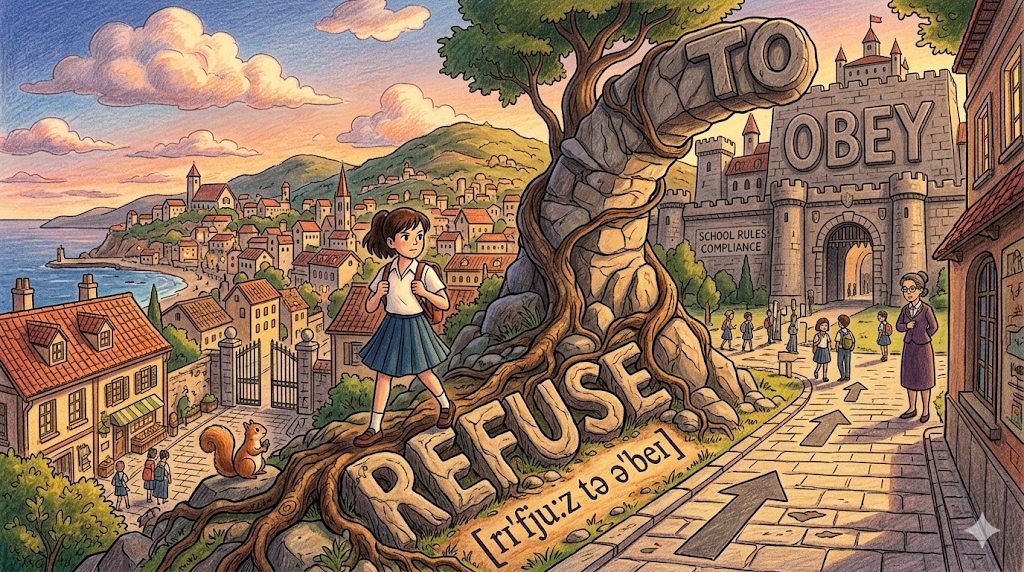
refuse to obey [rɪˈfjuːz tə əˈbeɪ]
(동사구) 따르기를 거부하다, 복종하기를 거부하다
규칙이나 명령을 의도적으로 따르지 않기로 결심하는 것을 강조합니다. 수능 독해 사회·윤리·심리 지문에서 핵심적으로 등장합니다.
- She calmly refused to obey the instruction that she believed crossed an ethical line, and her composure in the face of pressure made many of her colleagues privately admire her courage. (그녀는 윤리적 선을 넘는다고 믿는 지시를 따르기를 차분히 거부했으며, 압박에 직면한 그녀의 침착함은 많은 동료들이 내심 그녀의 용기를 감탄하게 만들었다.)
- History is full of examples of ordinary people who chose to refuse to obey unjust systems and whose small acts of resistance eventually led to large and lasting change. (역사는 부당한 시스템을 따르기를 거부하기로 선택한 평범한 사람들의 예로 가득하며, 그들의 작은 저항 행동은 결국 크고 지속적인 변화로 이어졌다.)
- The teacher made clear that refusing to obey a rule without explaining your reasons is simply rebellion, but refusing to obey while making your case respectfully and calmly is a form of civic courage that every democratic society needs. (선생님은 이유를 설명하지 않고 규칙을 따르기를 거부하는 것은 단순한 반항이지만, 자신의 입장을 정중하고 차분하게 주장하면서 따르기를 거부하는 것은 모든 민주 사회가 필요로 하는 시민적 용기의 한 형태라고 분명히 했다.)
숙어 그룹 묶음 2 — 비판·저항 obey 패턴
표현 의미 핵심 뉘앙스 주요 맥락
| refuse to obey | 따르기를 거부하다 | 규칙이나 명령을 의도적으로 따르지 않는 것 | 사회·윤리·수능 |
| obey blindly | 맹목적으로 따르다 | 비판 없이 무조건 따르는 것 | 심리·사회·수능 |
| obey without question | 의문 없이 따르다 | 어떠한 이의도 제기하지 않고 완전히 복종하는 것 | 심리·사회·수능 |
이 세 표현은 모두 obey의 "복종의 방식과 정도" 이미지를 공유하되, 각각 완전히 거부하는 것(refuse to obey)·비판 없이 무조건 따르는 것(obey blindly)·이의 없이 완전히 복종하는 것(obey without question)의 관점에서 접근합니다.
- She argued that there is an important difference between obeying blindly, obeying without question, and thoughtfully choosing to follow something because you have considered it and decided it is right — and that only the third option reflects the kind of moral agency that makes a person truly responsible for their own actions. (그녀는 맹목적으로 따르는 것, 의문 없이 따르는 것, 그리고 고려하고 옳다고 결정했기 때문에 신중하게 무언가를 따르기로 선택하는 것 사이에 중요한 차이가 있다고 주장했다 — 그리고 세 번째 옵션만이 사람을 자신의 행동에 진정으로 책임있게 만드는 도덕적 주체성의 종류를 반영한다.)
- The psychology class discussed why people sometimes obey blindly or obey without question, and concluded that the most common reason is not cowardice but the very human need to belong to a group and avoid the discomfort of standing apart from everyone around them. (심리 수업은 왜 사람들이 때때로 맹목적으로 따르거나 의문 없이 따르는지 토론했으며, 가장 일반적인 이유는 비겁함이 아니라 집단에 속하고 주변 모든 사람으로부터 분리되는 불편함을 피하려는 매우 인간적인 필요라는 결론을 내렸다.)
- When she finally chose to refuse to obey rather than continue to obey without question, she realised that she had been obeying blindly for far longer than she had been aware of — and that the courage it took to stop had been inside her the whole time, waiting for the right moment to speak. (그녀가 마침내 의문 없이 계속 따르는 것보다 따르기를 거부하기로 선택했을 때, 그녀는 자신이 인식했던 것보다 훨씬 더 오래 맹목적으로 따르고 있었다는 것을 깨달았다 — 그리고 멈추는 데 필요한 용기는 내내 그녀 안에 있었으며 말할 적절한 순간을 기다리고 있었다.)

obey blindly [əˈbeɪ ˈblaɪndli]
(동사구) 맹목적으로 따르다, 생각 없이 복종하다
비판적으로 생각하거나 이유를 묻지 않고 무조건적으로 따르는 것을 강조하며, 수능에서 이것이 위험할 수 있다는 논지로 자주 출제됩니다. 수능 독해 심리·사회·논리 지문에서 핵심적으로 등장합니다.
- She warned her students that obeying blindly might make life easier in the short term but could lead to serious mistakes if the person or system you are following turns out to be wrong or corrupt. (그녀는 학생들에게 맹목적으로 따르는 것이 단기적으로 삶을 더 쉽게 만들 수 있지만 자신이 따르는 사람이나 시스템이 잘못되거나 부패한 것으로 밝혀지면 심각한 실수로 이어질 수 있다고 경고했다.)
- The greatest thinkers in history were rarely people who obeyed blindly — they were usually the ones who asked difficult questions, challenged accepted ideas, and were willing to be unpopular in pursuit of truth. (역사상 가장 위대한 사상가들은 맹목적으로 따르는 사람들이 거의 없었다 — 그들은 보통 어려운 질문을 하고, 받아들여진 아이디어에 의문을 제기하며, 진실을 추구하는 데 있어 인기 없을 것을 감수할 의지가 있는 사람들이었다.)
- She was not arguing that rules should never be followed — she was arguing that following them thoughtfully is always better than obeying blindly, because a person who understands why a rule exists will apply it with judgment rather than just mechanically following its words. (그녀는 규칙이 결코 따라져서는 안 된다고 주장하는 것이 아니었다 — 그녀는 신중하게 그것들을 따르는 것이 맹목적으로 따르는 것보다 항상 낫다고 주장하고 있었는데, 규칙이 존재하는 이유를 이해하는 사람은 그것의 말을 기계적으로 따르는 것이 아니라 판단을 가지고 적용하기 때문이다.)

obey without question [əˈbeɪ wɪˈðaʊt ˈkwestʃən]
(동사구) 의문 없이 따르다, 묻지도 따지지도 않고 복종하다
어떠한 이의도 제기하지 않고 완전히 복종하는 것을 강조합니다. 수능 독해 심리·사회·윤리 지문에서 자주 등장합니다.
- She had grown up in a household where children were expected to obey without question, and it had taken her years to feel comfortable speaking up when she disagreed with something. (그녀는 아이들이 의문 없이 따르도록 기대되는 가정에서 자랐으며, 무언가에 동의하지 않을 때 편안하게 말을 꺼내는 데 수년이 걸렸다.)
- A good teacher does not expect students to obey without question but instead creates an environment where asking why something is true is treated as a sign of genuine curiosity rather than disrespect. (좋은 선생님은 학생들이 의문 없이 따르도록 기대하지 않고 대신 무언가가 왜 사실인지 묻는 것이 무례함이 아니라 진정한 호기심의 표시로 취급되는 환경을 만든다.)
- The essay argued that expecting anyone to obey without question is always a sign of weak leadership — because strong leaders know that the best ideas often come from people who are willing to challenge existing ways of doing things, not from those who simply go along with whatever they are told. (에세이는 누구에게나 의문 없이 따르도록 기대하는 것은 항상 약한 리더십의 표시라고 주장했다 — 강한 리더들은 최고의 아이디어가 종종 말해지는 것에 단순히 동조하는 사람들이 아니라 기존의 방식에 의문을 제기할 의지가 있는 사람들에게서 나온다는 것을 알기 때문이다.)
숙어 그룹 묶음 3 — 내면·본능 obey 심화 패턴
표현 의미 핵심 뉘앙스 주요 맥락
| fail to obey | 따르지 못하다 | 의도하든 아니든 규칙이나 명령을 지키지 못하는 것 | 사회·일상·수능 |
| obey one's conscience | 양심에 따르다 | 외부 규칙보다 내면의 도덕적 판단을 따르는 것 | 심리·윤리·수능 |
| obey instinct | 본능에 따르다 | 자연적인 내적 충동을 따르는 것 | 심리·과학·수능 |
이 세 표현은 모두 obey의 "무엇을 따르는가" 이미지를 공유하되, 각각 외부 규칙을 따르지 못하는 것(fail to obey)·내면의 도덕적 기준(obey one's conscience)·선천적인 자연적 충동(obey instinct)의 관점에서 접근합니다.
- She had been trying to obey her conscience more than her instinct, but when she failed to obey the social pressure around her and chose to obey instinct instead by saying exactly what she felt, the reaction was far kinder than she had expected. (그녀는 본능보다 양심에 따르려 했지만, 주변의 사회적 압박을 따르지 못하고 대신 느끼는 것을 정확히 말함으로써 본능에 따르기로 선택했을 때, 반응은 그녀가 예상했던 것보다 훨씬 더 친절했다.)
- The philosopher argued that humans are unique because they can choose whether to obey instinct, obey their conscience, or deliberately fail to obey both in favour of a third option — one guided by reason rather than feeling or habit. (철학자는 인간이 본능에 따를지, 양심에 따를지, 아니면 의도적으로 둘 다 따르지 않을지 — 감정이나 습관보다 이성에 의해 인도되는 세 번째 옵션을 위해 — 선택할 수 있기 때문에 독특하다고 주장했다.)
- She failed to obey the instruction not to look out of the window, because in that moment her curiosity was so powerful that it was as if she were simply obeying instinct — and later she would obey her conscience by admitting honestly to the teacher that she had not been able to stop herself. (그 순간 호기심이 너무 강력해서 단순히 본능에 따르는 것 같았기 때문에, 그녀는 창문 밖을 보지 말라는 지시를 따르지 못했다 — 그리고 나중에 그녀는 스스로를 멈출 수 없었다고 선생님에게 솔직하게 인정함으로써 양심에 따를 것이었다.)

fail to obey [feɪl tə əˈbeɪ]
(동사구) 따르지 못하다, 복종하는 데 실패하다
의도하든 그렇지 않든 규칙이나 명령을 지키지 못하는 것을 강조합니다. 수능 독해 사회·일상 지문에서 자주 등장합니다.
- Students who fail to obey the library's noise rules are asked to leave quietly so that others who are trying to study can continue their work without interruption. (도서관의 소음 규칙을 따르지 못하는 학생들은 공부하려는 다른 사람들이 방해 없이 계속 작업할 수 있도록 조용히 나가달라는 요청을 받는다.)
- The car failed to obey the driver's steering because one of the tyres had burst, and he had to use all his skill and calm to bring it safely to a stop without hitting anything. (타이어 하나가 터져서 차가 운전자의 조향에 따르지 못했으며, 그는 아무것도 치지 않고 안전하게 멈추기 위해 모든 기술과 침착함을 사용해야 했다.)
- The report found that some children fail to obey not because they are difficult or disrespectful but because the instructions they have been given are unclear, inconsistent, or have never been properly explained to them. (보고서는 일부 아이들이 어렵거나 무례해서가 아니라 주어진 지시가 불명확하거나 일관성이 없거나 제대로 설명된 적이 없기 때문에 따르지 못한다는 것을 발견했다.)

obey one's conscience [əˈbeɪ wʌnz ˈkɒnʃəns]
(동사구) 양심에 따르다, 양심의 명령을 따르다
외부 규칙보다 자신의 내면의 도덕적 판단을 따르는 것을 강조하며, 수능 윤리·심리 지문에서 핵심적으로 등장합니다.
- She obeyed her conscience when she noticed that the person next to her on the bus had left their wallet behind — even though it would have been easier and safer to pretend she had not seen it. (그녀는 버스에서 옆에 있는 사람이 지갑을 두고 갔다는 것을 알아챘을 때 양심에 따랐다 — 비록 보지 못한 척하는 것이 더 쉽고 안전했을 지라도.)
- Obeying one's conscience is not always the most comfortable choice — it often means doing something that is harder, slower, or less popular than the alternative — but it is usually the one that a person can feel truly at peace with in the long run. (양심에 따르는 것이 항상 가장 편안한 선택은 아니다 — 그것은 종종 대안보다 더 어렵고, 느리고, 덜 인기 있는 것을 하는 것을 의미한다 — 하지만 그것은 보통 장기적으로 사람이 진정으로 평화롭게 느낄 수 있는 것이다.)
- The class discussed whether obeying one's conscience is always the right thing to do, or whether there are situations where personal conscience can be mistaken and where social rules or laws need to take priority over individual moral feeling. (학급은 양심에 따르는 것이 항상 옳은 일인지, 아니면 개인적 양심이 잘못될 수 있고 사회적 규칙이나 법이 개인적 도덕 감정보다 우선시되어야 하는 상황이 있는지 토론했다.)

obey instinct [əˈbeɪ ˈɪnstɪŋkt]
(동사구) 본능에 따르다, 본능을 따르다
생각하거나 배운 것이 아닌 자연적인 내적 충동을 따르는 것을 강조합니다. 수능 독해 심리·과학 지문에서 자주 등장합니다.
- Young babies obey instinct when they turn towards a sound or reach out to touch something near them, long before they have learned anything about the world through experience. (어린 아기들은 경험을 통해 세상에 대해 무언가를 배우기 훨씬 전에 소리를 향해 돌아서거나 가까이 있는 것을 만지기 위해 손을 뻗을 때 본능에 따른다.)
- She had learned through experience that obeying instinct when meeting new people was often reliable — that the quiet feeling that something was not right was usually worth paying attention to, even when she could not explain exactly why. (그녀는 경험을 통해 새 사람들을 만날 때 본능에 따르는 것이 종종 신뢰할 수 있다는 것을 배웠다 — 무언가 옳지 않다는 조용한 느낌은 왜 그런지 정확히 설명할 수 없을 때도 보통 주의를 기울일 가치가 있었다.)
- The essay argued that one of the key differences between humans and other animals is that humans do not simply obey instinct but can reflect on their impulses, choose to act against them, and build habits that gradually reshape the instincts themselves over time. (에세이는 인간과 다른 동물 사이의 주요 차이 중 하나는 인간이 단순히 본능에 따르는 것이 아니라 충동을 반성하고, 그에 반하여 행동하기로 선택하며, 시간이 지남에 따라 본능 자체를 점차 재형성하는 습관을 만들 수 있다는 것이라고 주장했다.)
숙어 그룹 묶음 4 — 종합 obey 패턴
표현 의미 핵심 뉘앙스 주요 맥락
| obey blindly | 맹목적으로 따르다 | 비판 없이 무조건 따르는 것의 위험성 | 심리·사회·수능 |
| obey one's conscience | 양심에 따르다 | 외부 규칙보다 내면의 도덕적 판단을 따르는 것 | 심리·윤리·수능 |
| refuse to obey | 따르기를 거부하다 | 규칙이나 명령을 의도적으로 따르지 않는 것 | 사회·윤리·수능 |
이 세 표현은 수능 독해에서 가장 자주 출제되는 obey의 핵심 패턴입니다. obey blindly는 비판 없이 무조건 따르는 위험성을, obey one's conscience는 내면의 도덕적 판단을 따르는 것을, refuse to obey는 의도적으로 따르지 않는 것을 각각 나타냅니다.
- The most difficult moment in any person's moral life is the one where they must choose between obeying blindly because it is safe and comfortable, obeying their conscience because it is right even though it is hard, or finding the courage to refuse to obey entirely because what is being asked of them crosses a line that they cannot in good faith cross. (어떤 사람의 도덕적 삶에서 가장 어려운 순간은 안전하고 편안하기 때문에 맹목적으로 따르는 것, 어렵더라도 옳기 때문에 양심에 따르는 것, 또는 자신에게 요청된 것이 선의로는 넘을 수 없는 선을 넘기 때문에 완전히 따르기를 거부하는 용기를 찾는 것 사이에서 선택해야 하는 것이다.)
- She had spent years obeying blindly before she learned to obey her conscience, and once she made the shift it became much harder to understand how she had ever been comfortable not refusing to obey the things she had always quietly known were wrong. (그녀는 양심에 따르는 법을 배우기 전에 수년을 맹목적으로 따랐으며, 일단 변화를 만들자 항상 조용히 잘못됐다는 것을 알았던 것들을 따르기를 거부하지 않는 것에 어떻게 편안함을 느꼈는지 이해하기가 훨씬 더 어려워졌다.)
- The story showed three characters — one who obeyed blindly and caused harm without meaning to, one who obeyed their conscience and accepted the consequences with dignity, and one who refused to obey but without thinking things through, which led to chaos — and asked the reader to decide which of the three had ultimately acted most wisely. (이야기는 세 인물을 보여줬다 — 의도하지 않고 맹목적으로 따르며 해를 끼친 사람, 양심에 따르고 품위 있게 결과를 받아들인 사람, 그리고 따르기를 거부했지만 충분히 생각하지 않아 혼란을 초래한 사람 — 그리고 독자에게 셋 중 누가 궁극적으로 가장 현명하게 행동했는지 결정하도록 요청했다.)
전체 요약표
표현 의미 핵심 뉘앙스
| obey | 따르다, 복종하다 | 귀 기울이고 따르는 것에서 내적·외적 따름까지 확장 |
| obey the rules | 규칙을 지키다 | 사회나 집단이 정한 규정을 따르는 것 |
| obey orders | 명령에 따르다 | 권위 있는 사람의 지시를 이행하는 것 |
| obey the law | 법을 따르다 | 사회 전체가 지켜야 할 법적 규범을 준수하는 것 |
| refuse to obey | 따르기를 거부하다 | 규칙이나 명령을 의도적으로 따르지 않는 것 |
| obey blindly | 맹목적으로 따르다 | 비판 없이 무조건 따르는 것의 위험성 |
| obey without question | 의문 없이 따르다 | 어떠한 이의도 제기하지 않고 완전히 복종하는 것 |
| fail to obey | 따르지 못하다 | 의도하든 아니든 규칙이나 명령을 지키지 못하는 것 |
| obey one's conscience | 양심에 따르다 | 외부 규칙보다 내면의 도덕적 판단을 따르는 것 |
| obey instinct | 본능에 따르다 | 자연적인 내적 충동을 따르는 것 |
유의어 비교표
단어 공통점 뉘앙스 차이 예문
| obey | 따르다, 복종하다 | 권위·명령에 복종, 비유 풍부 | She obeyed the rule. |
| follow | 따르다 | 방향·지시를 따름, 중립적 의미 | He followed the instructions. |
| comply | 따르다, 준수하다 | 공식적·격식적 규정을 따름 | They complied with the policy. |
| submit | 굴복하다, 따르다 | 저항을 포기하고 굴복하는 것 | She submitted to the decision. |
| conform | 따르다, 순응하다 | 사회적 기준·관습에 맞추는 것 | He conformed to the norms. |
유의어 예문 리스트
- (follow) She followed the recipe step by step and was pleased to find that the cake came out exactly as described — golden, soft, and smelling of vanilla all the way through. (그녀는 레시피를 단계별로 따랐으며 케이크가 설명대로 — 황금색이고, 부드러우며, 전체적으로 바닐라 향이 나게 — 나왔다는 것을 알고 기뻐했다.)
- (comply) The school asked all parents to comply with the new drop-off rules at the gate, explaining that the changes had been made after a safety review had identified several potential risks. (학교는 모든 학부모들에게 문에서의 새 하차 규칙을 준수해 달라고 요청하며, 변경 사항이 안전 검토에서 몇 가지 잠재적 위험을 발견한 후 이루어졌다고 설명했다.)
- (submit) She did not enjoy having to submit to a decision she disagreed with, but she accepted that the group had voted fairly and that going along with the outcome was the most constructive thing she could do. (그녀는 자신이 동의하지 않는 결정에 굴복해야 하는 것을 좋아하지 않았지만, 그룹이 공정하게 투표했고 결과에 따르는 것이 자신이 할 수 있는 가장 건설적인 것이라는 것을 받아들였다.)
- (conform) He had always found it difficult to conform to the unwritten social rules about how to dress and how to behave in different settings, not because he wanted to be difficult but because they had never felt natural to him. (그는 항상 다른 상황에서 어떻게 입고 어떻게 행동하는지에 대한 성문화되지 않은 사회적 규칙에 순응하기가 어렵다는 것을 발견했는데, 어렵게 굴고 싶어서가 아니라 그것들이 그에게 한 번도 자연스럽게 느껴지지 않았기 때문이다.)
결론 정리
obey는 단순히 "복종하다"가 아니라, 라틴어 oboedire(귀 기울이고 따르다)에서 출발해 규칙 준수에서 법 준수·맹목적 복종의 위험·저항·양심 따르기·본능 따르기까지 확장되는 단어다 — obey가 있는 곳엔 언제나 '단순한 복종이 아닌, 인간이 권위·규칙·양심·본능 사이에서 어떻게 선택하는지를 보여주는' 생동감의 선언이 있다.
💡 obey는 "귀 기울이고 따르는 것에서 출발한" 생동감 넘치는 언어 — obey blindly · obey one's conscience · refuse to obey가 수능 최빈출.
🌟 초등학생 버전 — obey는 "규칙이나 어른 말을 따르다"는 뜻이지만, "맹목적으로 따르는 것의 위험"(obey blindly), "양심에 따르는 것의 중요성"(obey one's conscience), "불공평한 것을 거부하는 용기"(refuse to obey)처럼 삶의 중요한 선택과 연결된 단어예요! 💭✨


