
- 분류 전체보기 (5098)

| 일 | 월 | 화 | 수 | 목 | 금 | 토 |
|---|---|---|---|---|---|---|
| 1 | 2 | 3 | 4 | |||
| 5 | 6 | 7 | 8 | 9 | 10 | 11 |
| 12 | 13 | 14 | 15 | 16 | 17 | 18 |
| 19 | 20 | 21 | 22 | 23 | 24 | 25 |
| 26 | 27 | 28 | 29 | 30 |
- OKay
- I'm not sure
- Please
- hold back
- make it
- Show Up
- Excuse me
- come up with
- please.
- too.
- set up
- I'm glad to hear that.
- oh
- please?
- Don't worry
- work out
- no
- Hey
- Sorry
- entrance fee
- Sure
- pick up
- By The Way
- hold on
- Yeah
- Yes
- well
- Right?
- Actually
- I'm sorry
- Today
- Total
인과함께
Day319 , island, island of calm, island of hope, desert island, island mentality, no man is an island, island hopping, be stranded on an island, island of stability, island of peace 본문
Day319 , island, island of calm, island of hope, desert island, island mentality, no man is an island, island hopping, be stranded on an island, island of stability, island of peace
미인생 2026. 4. 14. 06:40
island [ˈaɪlənd]
(명사/형용사) 섬 / 섬의, 고립된
단순히 "섬"으로만 외우면 수능에서 반드시 틀립니다. island는 "물로 둘러싸인 고립된 땅" 이라는 핵심 이미지에서 출발해, 실제 지리적 섬·혼란 속의 평화로운 공간·고립된 상태·안정된 곳까지 폭넓게 쓰이는 핵심 다의어입니다. 특히 island of calm(평온의 섬), no man is an island(어떤 사람도 혼자 살 수 없다), island mentality(섬나라 근성) 패턴은 수능 독해 심리·사회·철학 지문에서 핵심적으로 등장합니다.
'island'는 고대 영어 iegland(물 위의 땅)에서 유래했으며, ieg(물 위의 땅)과 land(땅)이 결합된 단어입니다. 어원의 핵심 이미지는 "물로 둘러싸여 혼자 떠 있는 땅" 으로, 단순한 지리적 개념을 넘어 고립·평화·안정·독립까지 확장되는 표현의 근원이 된 단어입니다.
🏝️ island의 핵심 뉘앙스
"사방이 물로 둘러싸인 섬에서 출발해, 고립·피난처·단절·연결의 모든 이미지를 담은 단어."
1️⃣ 기본 뉘앙스 — '섬, 고립된 공간'
물로 둘러싸인 지형 — 동시에 '세상으로부터 분리된 공간'이라는 심리적 이미지
- desert island → 무인도 (사람이 살지 않는 섬 — 고립·생존의 상징)
- be stranded on an island → 섬에 고립되다, 조난당하다
- island hopping → 섬 여행, 여러 섬을 돌아다니는 여행 방식
2️⃣ 평화·안정의 뉘앙스 — island of calm / island of peace / island of stability
혼란 속에서 유독 조용하고 안전한 장소나 상태를 비유할 때
- island of calm → 고요함의 섬 (소란 속에서 유독 평온한 공간이나 사람)
- island of peace → 평화의 섬 (갈등이 없는 평화로운 영역)
- island of stability → 안정의 섬 (불안정한 환경 속 안정된 거점)
- 💡 세 표현 모두 '주변은 혼란스러운데 여기만 다르다'는 대조의 뉘앙스
3️⃣ 희망의 뉘앙스 — island of hope
절망적인 상황 속에서 유일하게 희망을 품을 수 있는 곳이나 것
- island of hope → 희망의 섬 (어두운 현실 속 빛나는 가능성)
- 💡 Ellis Island(엘리스섬) — 미국으로 이민 오는 사람들이 처음 발 딛던 곳, 희망의 상징으로 유명
4️⃣ 폐쇄적 사고의 뉘앙스 — island mentality
섬처럼 고립된 사고방식 — 외부와 단절되고 자기중심적인 태도
- island mentality → 섬나라 근성, 폐쇄적 사고방식 (외부 세계에 닫혀 있는 태도)
- 💡 영국·일본 같은 섬나라의 보수적·배타적 성향을 비판할 때 자주 쓰이는 표현
5️⃣ 연결의 뉘앙스 — no man is an island
island의 가장 철학적이고 유명한 표현 — 존 던의 시에서 유래
- No man is an island → 어떤 사람도 섬이 아니다 (= 인간은 혼자 살 수 없다)
- 모든 사람은 서로 연결되어 있고 의존적이라는 뜻
- 💡 island mentality(단절)와 정반대의 메시지 — island가 연결의 필요성을 역설적으로 표현
💡 아들에게 이렇게 설명해보세요
"island는 그냥 '섬'이지만, 영어에서는 정말 다양한 감정과 상황을 비유하는 데 쓰여. 주변이 시끄럽고 복잡한데 나만 조용하면 'island of calm', 절망 속에서 유일한 희망이 있으면 'island of hope'라고 해. 그런데 island mentality는 섬처럼 폐쇄적으로 생각한다는 뜻으로 부정적이야. 가장 기억에 남는 건 'No man is an island'야 — '어떤 사람도 섬이 아니다', 즉 우리는 모두 연결되어 있고 혼자서는 살 수 없다는 뜻이야. 섬이라는 단어가 '고립'을 상징하면서 동시에 '연결의 필요성'을 일깨워주는 게 정말 재미있지?"
✨ 최종 한 줄 요약 island는 지리적 섬에서 출발해 평화의 피난처·절망 속 희망·폐쇄적 사고·인간 연결의 필요성까지, 고립과 연결의 역설을 모두 담은 단어다.
1. island of calm [ˈaɪlənd əv kɑːm]
(일상/심리/수능) "평온의 섬, 혼란 속의 평화로운 공간"을 뜻합니다. 주변이 시끄럽고 혼란스러울 때 유일하게 조용하고 평화로운 공간이나 상태를 강조합니다.
The school library was an island of calm where she could escape from the noise of the busy hallways and focus completely on her reading. (학교 도서관은 그녀가 붐비는 복도의 소음에서 벗어나 독서에 완전히 집중할 수 있는 평온의 섬이었다.)
2. island of hope [ˈaɪlənd əv həʊp]
(일상/사회/수능) "희망의 섬, 절망 속에서 유일하게 희망을 주는 것"을 뜻합니다. 어렵고 힘든 상황 속에서 유일하게 희망을 주는 사람·장소·상황을 강조합니다.
For many struggling students, the after-school tutoring programme was an island of hope that helped them believe they could still do well in their studies. (어려움을 겪고 있는 많은 학생들에게, 방과 후 보충 수업 프로그램은 그들이 여전히 학업에서 잘할 수 있다고 믿도록 도와주는 희망의 섬이었다.)
3. desert island [ˈdezərt ˈaɪlənd]
(일상/문학/수능) "무인도"를 뜻합니다. 사람이 살지 않는 외딴 섬을 가리키며, 완전한 고립이나 혼자만의 상황을 강조합니다.
If she were stuck on a desert island with only three things, she said she would choose a book, a notebook, and a warm blanket to keep herself busy and comfortable. (만약 세 가지만 가지고 무인도에 갇힌다면, 그녀는 바쁘고 편안하게 지내기 위해 책, 공책, 따뜻한 담요를 선택하겠다고 말했다.)
4. island mentality [ˈaɪlənd menˈtæləti]
(사회/수능) "섬나라 근성, 좁은 시야"를 뜻합니다. 섬에 갇힌 것처럼 외부 세계나 새로운 생각을 받아들이지 않으려는 편협하고 닫힌 사고방식을 강조합니다.
The teacher warned the students against having an island mentality and encouraged them to listen to different opinions before making up their minds. (선생님은 학생들에게 섬나라 근성을 갖지 말라고 경고하고 마음을 결정하기 전에 다양한 의견을 들으라고 격려했다.)
5. no man is an island [nəʊ mæn ɪz ən ˈaɪlənd]
(일상/철학/수능) "어떤 사람도 혼자 살 수 없다, 인간은 서로 연결되어 있다"를 뜻합니다. 모든 사람은 서로에게 의존하며 혼자서는 완전할 수 없다는 것을 강조합니다.
She finally understood the meaning of no man is an island when she realised that asking her friends for help made the project much better than anything she could have done alone. (그녀는 친구들에게 도움을 요청하는 것이 혼자서 할 수 있었던 어떤 것보다 프로젝트를 훨씬 더 좋게 만들었다는 것을 깨달았을 때 어떤 사람도 혼자 살 수 없다는 말의 의미를 마침내 이해했다.)
6. island hopping [ˈaɪlənd ˈhɒpɪŋ]
(일상/여행/수능) "섬 여행, 여러 섬을 돌아다니는 것"을 뜻합니다. 한 섬에서 다른 섬으로 이동하며 여러 섬을 여행하는 것을 강조하며, 비유적으로 여러 장소나 상황을 빠르게 옮겨 다니는 것을 나타내기도 합니다.
During the summer holiday, the family went island hopping and visited five different islands in ten days, each with its own unique beaches and local food. (여름 방학 동안, 가족은 섬 여행을 하며 10일 동안 각각 고유한 해변과 지역 음식이 있는 다섯 개의 다른 섬을 방문했다.)
7. be stranded on an island [biː ˈstrænd ɒn ən ˈaɪlənd]
(일상/문학/수능) "섬에 고립되다, 무인도에 갇히다"를 뜻합니다. 도움을 받을 수 없는 외딴곳에 혼자 갇혀 있는 상태를 강조하며, 비유적으로 어떤 상황에서 도움 없이 혼자 남겨진 것을 나타내기도 합니다.
In the story, the boy was stranded on an island after a storm destroyed his boat, and he had to learn how to find food and build a shelter all by himself. (이야기에서, 소년은 폭풍이 그의 보트를 부순 후 섬에 고립되었고, 혼자서 음식을 찾고 피난처를 만드는 방법을 배워야 했다.)
8. island of stability [ˈaɪlənd əv stəˈbɪləti]
(학술/사회/수능) "안정의 섬, 불안정한 상황 속의 안정적인 공간"을 뜻합니다. 주변이 불안하고 불확실할 때 유일하게 안정적이고 믿을 수 있는 공간이나 상황을 강조합니다.
In a time when everything seemed to be changing too fast, her daily reading routine became an island of stability that helped her feel grounded and in control. (모든 것이 너무 빠르게 변하는 것처럼 보이는 시간에, 그녀의 매일 독서 루틴은 그녀가 안정감을 느끼고 통제력을 유지하도록 도와주는 안정의 섬이 됐다.)
9. island of peace [ˈaɪlənd əv piːs]
(일상/심리/수능) "평화의 섬, 갈등 속의 평화로운 공간"을 뜻합니다. 갈등이나 어려움이 많은 상황 속에서 유일하게 평화롭고 조용한 공간이나 상태를 강조합니다.
Her grandmother's house in the countryside was an island of peace where she could forget about all her worries and just enjoy the simple pleasure of being somewhere quiet. (시골에 있는 할머니의 집은 그녀가 모든 걱정을 잊고 조용한 곳에 있는 단순한 즐거움을 그냥 즐길 수 있는 평화의 섬이었다.)
10. island mentality (심화) [ˈaɪlənd menˈtæləti]
(사회/수능) 수능 독해에서 island mentality는 사회·심리 지문의 핵심 개념으로 특히 자주 등장합니다. 외부의 다양한 관점이나 변화를 거부하고 자신의 좁은 세계 안에만 머물려는 사고방식을 나타냅니다.
A person with an island mentality often misses out on great opportunities because they are too afraid to try new things or listen to ideas that are different from their own. (섬나라 근성을 가진 사람은 새로운 것을 시도하거나 자신과 다른 아이디어를 듣는 것이 너무 두려워서 종종 훌륭한 기회를 놓친다.)

POINT 1. island — 수능 최빈출 비유적 표현 패턴
island는 수능 독해 심리·사회·철학 지문에서 비유적 표현으로 자주 출제됩니다. island of calm → 혼란 속에서 평화로운 공간을 나타낼 때 예) The park was an island of calm in the busy city. (공원은 바쁜 도시 속 평온의 섬이었다.) no man is an island → 인간의 상호 의존성을 강조할 때 예) No man is an island — we all need each other. (어떤 사람도 혼자 살 수 없다 — 우리 모두는 서로가 필요하다.) island mentality → 편협하고 닫힌 사고방식을 비판할 때 예) An island mentality stops people from growing. (섬나라 근성은 사람들이 성장하는 것을 막는다.)
POINT 2. island of calm / island of stability / island of peace — 수능 심리·사회 지문 핵심
이 세 표현은 수능 독해 심리·사회 지문에서 가장 자주 출제되는 island 관련 비유 표현입니다. island of calm → 소음·혼란 속에서 유일하게 조용하고 평화로운 공간 island of stability → 불안과 변화 속에서 유일하게 안정적이고 믿을 수 있는 공간 island of peace → 갈등과 어려움 속에서 유일하게 평화롭고 편안한 공간 세 표현 모두 island의 "물로 둘러싸인 고립된 땅" 이미지에서 비롯된 비유적 표현입니다.
POINT 3. island의 비유적 용법 — 수능 독해 문맥 파악 핵심
island는 수능 독해에서 문맥에 따라 의미가 완전히 달라지는 핵심 표현입니다. 실제 섬 → The boat stopped at a small island. (보트가 작은 섬에 멈췄다.) 평화로운 공간 → The garden was an island of calm. (정원은 평온의 섬이었다.) 고립된 사람 → He felt like he was stranded on an island. (그는 섬에 고립된 것 같은 기분이 들었다.) 편협한 사고 → She tried to overcome her island mentality. (그녀는 섬나라 근성을 극복하려 했다.) 인간의 연결 → No man is an island. (어떤 사람도 혼자 살 수 없다.)
(명사) ① 섬 (지리적)
island의 가장 기본적인 의미로, 물로 둘러싸인 실제 땅을 가리킵니다.
- The small island in the middle of the lake was covered with tall trees and wild flowers and could only be reached by a short boat ride from the shore. (호수 한가운데에 있는 작은 섬은 키 큰 나무와 야생화로 덮여 있었으며 해안에서 짧은 보트 여행으로만 갈 수 있었다.)
- The class learned that some islands in the Pacific Ocean are so small that only a few hundred people can live on them at any one time. (학급은 태평양의 일부 섬들이 너무 작아서 한 번에 몇 백 명만 그곳에 살 수 있다는 것을 배웠다.)
- She had always dreamed of visiting the island her grandmother had grown up on and seeing the old house where her family had lived for generations. (그녀는 항상 할머니가 자란 섬을 방문하고 가족이 수 세대 동안 살았던 오래된 집을 보는 것을 꿈꿔왔다.)
(명사) ② 고립된 공간, 평화로운 곳 (비유적)
island는 주변의 혼란이나 어려움 속에서 유일하게 평화롭거나 안정적인 공간을 비유적으로 나타냅니다.
- His bedroom was his personal island where he could shut out all the noise and stress of the outside world and simply rest, read, or think in peace. (그의 침실은 그가 외부 세계의 모든 소음과 스트레스를 차단하고 그냥 평화롭게 쉬거나 읽거나 생각할 수 있는 개인적인 섬이었다.)
- In the middle of a very busy and difficult week, the one-hour art class felt like a calm island where nobody was judging her and she could just enjoy creating something with her hands. (매우 바쁘고 어려운 주 중간에, 한 시간짜리 미술 수업은 아무도 그녀를 판단하지 않고 그냥 손으로 무언가를 만드는 것을 즐길 수 있는 조용한 섬처럼 느껴졌다.)
- The small café at the end of the street became their favourite island where they could sit for hours and talk about anything without feeling rushed or watched by anyone. (거리 끝에 있는 작은 카페는 서두르거나 누군가에게 지켜보인다는 느낌 없이 몇 시간 동안 앉아 무엇이든 이야기할 수 있는 그들이 가장 좋아하는 섬이 됐다.)
(명사) ③ 고립된 사람·상황 (비유적)
island는 외부와 단절되거나 혼자 고립된 사람이나 상황을 비유적으로 나타내기도 합니다.
- After moving to a new school where she knew nobody, she felt like an island — completely surrounded by people but completely alone at the same time. (아무도 모르는 새 학교로 이사한 후, 그녀는 섬처럼 느껴졌다 — 사람들로 완전히 둘러싸여 있지만 동시에 완전히 혼자였다.)
- The new student sat alone at lunch every day for the first week and felt like a lonely island that nobody wanted to visit or get to know. (새 학생은 첫 주 동안 매일 혼자 점심을 먹으며 아무도 방문하거나 알고 싶어 하지 않는 외로운 섬처럼 느껴졌다.)
- He realised that trying to do everything alone had turned him into an island — cut off from his friends and too proud to ask anyone for the help he really needed. (그는 모든 것을 혼자 하려고 노력하는 것이 그를 섬으로 만들었다는 것을 깨달았다 — 친구들과 단절되고 정말 필요한 도움을 누구에게도 요청하기에는 너무 자존심이 강했다.)

뉘앙스·의미 연결 흐름 표
핵심 이미지 연결 흐름 뉘앙스 요약
| 물로 둘러싸인 고립된 땅 | 실제 섬 → 고립된 공간·사람의 비유 | 섬 (지리적), 고립된 존재 (비유적) |
| 혼란 속의 평화로운 공간 | 주변의 어려움 → 유일한 평화·안정의 공간 | island of calm, island of peace, island of stability |
| 단절된 사고방식 | 섬처럼 갇힌 사고 → 편협하고 닫힌 관점 | island mentality, no man is an island |
어원 흐름 표
단어 구성 요소 의미 연결 흐름 뉘앙스 요약
| 고대영어 ieg(물 위의 땅) + land(땅) | 물 위의 땅 → iegland(섬) | 물로 둘러싸여 혼자 떠 있는 땅의 핵심 이미지 |
| island (명사/형용사) | 실제 섬 → 고립·평화·안정의 비유 → 편협한 사고 | 지리적 섬에서 인간의 감정·사고·사회까지 확장 |
품사별 의미 표
품사 의미 예문
| 명사 | 섬 (지리적) | They sailed to a small island. |
| 명사 | 평화로운 공간 (비유) | The park was an island of calm. |
| 명사 | 고립된 사람·상황 | He felt like a lonely island. |
| 명사구 | 무인도 | She was stuck on a desert island. |
| 명사구 | 편협한 사고방식 | Avoid having an island mentality. |
| 관용구 | 인간의 상호 의존 | No man is an island. |
활용 예문 리스트
- The quiet corner of the classroom became an island of calm for students who needed a few minutes to think before they could focus on their work again. (교실의 조용한 구석은 다시 공부에 집중하기 전에 몇 분 동안 생각이 필요한 학생들을 위한 평온의 섬이 됐다.)
- She had always believed she could do everything on her own, but after struggling alone for months she finally understood that no man is an island and that asking for help was not a sign of weakness. (그녀는 항상 모든 것을 혼자 할 수 있다고 믿었지만, 몇 달 동안 혼자 고투한 후 어떤 사람도 혼자 살 수 없다는 것과 도움을 요청하는 것이 약함의 표시가 아니라는 것을 마침내 이해했다.)
- The book was about a young girl who was stranded on a desert island after a storm and had to use everything she had learned in school to survive until a passing ship finally spotted her and came to her rescue. (그 책은 폭풍 후 무인도에 고립된 어린 소녀에 대한 것으로, 지나가는 배가 마침내 그녀를 발견하고 구조하러 올 때까지 살아남기 위해 학교에서 배운 모든 것을 사용해야 했다.)
- The teacher explained that an island mentality is dangerous in today's connected world because people and countries need to work together to solve the big problems that no single group can fix alone. (선생님은 섬나라 근성이 오늘날의 연결된 세계에서 위험하다고 설명했는데, 왜냐하면 사람들과 나라들이 어떤 단일 그룹도 혼자 해결할 수 없는 큰 문제들을 해결하기 위해 함께 일해야 하기 때문이다.)
- For the family, their summer island hopping trip became one of the best memories they had ever made together, because every new island brought a completely different landscape, culture, and set of foods to try. (가족에게, 여름 섬 여행 여행은 그들이 함께 만든 최고의 추억 중 하나가 됐는데, 왜냐하면 모든 새 섬이 완전히 다른 풍경, 문화, 그리고 시도할 음식들을 가져왔기 때문이다.)
전체 뉘앙스 설명
island는 '물로 둘러싸인 고립된 땅에서 출발해 평화로운 공간·고립된 존재·편협한 사고·인간의 상호 의존까지 확장되는 생동감 넘치는 언어'입니다.
peninsula와의 차이: peninsula는 삼면이 물로 둘러싸이고 한쪽은 육지와 연결된 반도를 가리키고, island는 사면이 모두 물로 둘러싸여 완전히 분리된 섬을 가리킵니다. isolated와의 차이: isolated는 고립된 상태를 나타내는 형용사이고, island는 고립된 상태를 비유적으로 표현하는 명사로, 더 구체적이고 생동감 있는 이미지를 강조합니다. refuge와의 차이: refuge는 위험이나 어려움에서 피하는 피난처를 강조하고, island는 주변의 혼란이나 어려움 속에서 유일하게 평화롭고 안정적인 공간을 강조합니다.
마지막 핵심 정리
island는 단순히 "섬"이 아닙니다 — 고대 영어 iegland(물 위의 땅)에서 출발해, 실제 지리적 섬(visit the island)에서 혼란 속의 평화로운 공간(island of calm)·고립된 사람(feel like an island)·편협한 사고(island mentality)·인간의 상호 의존(no man is an island)까지 확장되는 단어이며, island of calm·no man is an island·island mentality의 비유적 의미 파악이 수능 핵심 출제 포인트입니다.
파생어 표
파생어 발음기호 품사 의미
| islander | [ˈaɪləndər] | 명사 | 섬 주민, 섬사람 |
| isle | [aɪl] | 명사 | 작은 섬 (격식·문학체) |
| islet | [ˈaɪlɪt] | 명사 | 아주 작은 섬 |
| island-like | [ˈaɪlənd laɪk] | 형용사 | 섬과 같은, 고립된 것 같은 |
| overland | [ˈəʊvərˌlænd] | 부사/형용사 | 육로로, 육상의 |
| mainland | [ˈmeɪnlænd] | 명사 | 본토, 대륙 |
유의어 비교표
단어 공통점 뉘앙스 차이 예문
| island | 고립된 땅·공간 | 사면이 물로 둘러싸인 완전한 고립, 비유 풍부 | The island was very small. |
| peninsula | 반도 | 삼면이 물로 둘러싸이고 한쪽은 육지와 연결 | Korea is a peninsula. |
| refuge | 피난처 | 위험·어려움에서 피하는 안전한 곳 | The cave was their refuge. |
| haven | 안식처 | 평화롭고 안전한 피난처 | The park was a haven of peace. |
| retreat | 은신처, 피정 | 세상에서 물러나 쉬거나 생각하는 조용한 곳 | The cabin was her retreat. |
유의어 예문 리스트
- (peninsula) The geography teacher pointed to the map and explained that a peninsula is different from an island because it is still connected to the mainland by a strip of land on one side. (지리 선생님은 지도를 가리키며 반도는 한쪽에 육지의 좁은 땅으로 본토와 여전히 연결되어 있기 때문에 섬과 다르다고 설명했다.)
- (refuge) When the argument between her parents got too loud, she would go to her room and treat it as a refuge where she could close the door, put on her headphones, and wait for things to calm down. (부모님 사이의 다툼이 너무 시끄러워질 때, 그녀는 방으로 가서 문을 닫고 헤드폰을 끼고 상황이 진정되기를 기다릴 수 있는 피난처로 취급했다.)
- (haven) The old bookshop at the end of the road was a haven for students who loved reading, with its low shelves, soft chairs, and the smell of old paper filling every corner of the room. (길 끝에 있는 오래된 서점은 낮은 선반, 부드러운 의자, 방의 모든 구석을 가득 채우는 오래된 종이 냄새로 독서를 좋아하는 학생들을 위한 안식처였다.)
- (retreat) Every weekend, he would go to the small garden behind the house as his personal retreat — a quiet place where he could sit, think, and recharge before the busy week began again. (매주 주말, 그는 집 뒤의 작은 정원을 개인적인 은신처로 삼아 갔다 — 바쁜 주가 다시 시작되기 전에 앉고, 생각하고, 재충전할 수 있는 조용한 곳이었다.)
결론 정리
island는 단순히 "섬"이 아니라, 고대 영어 iegland(물 위의 땅)에서 출발해 물로 둘러싸인 고립된 땅에서 혼란 속의 평화로운 공간·고립된 존재·편협한 사고방식·인간의 상호 의존까지 확장되는 단어다 — island가 있는 곳엔 언제나 '단순한 지리적 땅이 아닌, 인간의 고독·평화·연결·사고방식을 담아내는' 생동감의 선언이 있다.
💡 island는 "물로 둘러싸인 고립된 땅에서 출발한" 생동감 넘치는 언어 — island of calm · no man is an island · island mentality가 수능 최빈출.
🌟 초등학생 버전 — island는 바다 한가운데 혼자 떠 있는 섬이지만, "도서관이 시끄러운 학교 속 평온의 섬이야!"처럼 주변이 시끄럽고 혼란스러울 때 유일하게 조용하고 평화로운 곳을 나타내기도 해요! no man is an island는 "어떤 사람도 혼자서는 살 수 없어!"라는 뜻이에요! 🏝️✨

island of calm [ˈaɪlənd əv kɑːm]
(명사구) 평온의 섬, 혼란 속의 평화로운 공간
주변이 시끄럽고 혼란스러울 때 유일하게 조용하고 평화로운 공간이나 상태를 강조합니다. 수능 독해 심리·사회 지문에서 스트레스와 혼란 속에서의 안정을 나타낼 때 핵심적으로 등장합니다.
- During the busiest week of the school year, the small garden next to the gym became an island of calm where students could sit quietly and breathe before going back to their next class. (학년 중 가장 바쁜 주 동안, 체육관 옆의 작은 정원은 학생들이 다음 수업으로 돌아가기 전에 조용히 앉아 숨을 쉴 수 있는 평온의 섬이 됐다.)
- Her teacher's calm voice was an island of calm in the middle of the noisy, stressful exam week, and just hearing it made the students feel a little less nervous about everything they had to face. (선생님의 침착한 목소리는 시끄럽고 스트레스 많은 시험 주 중간의 평온의 섬이었으며, 그것을 듣기만 해도 학생들은 자신들이 직면해야 하는 모든 것에 대해 조금 덜 긴장하게 됐다.)
- Finding an island of calm during a difficult day does not have to mean going somewhere special — sometimes it is as simple as sitting by a window for five minutes and watching the clouds move slowly across the sky. (어려운 날 평온의 섬을 찾는 것이 어딘가 특별한 곳에 가는 것을 의미할 필요는 없다 — 때로는 5분 동안 창가에 앉아 구름이 하늘을 천천히 가로질러 이동하는 것을 바라보는 것만큼 간단하다.)

island of hope [ˈaɪlənd əv həʊp]
(명사구) 희망의 섬, 절망 속에서 유일하게 희망을 주는 것
어렵고 힘든 상황 속에서 유일하게 희망을 주는 사람·장소·상황을 강조합니다. 수능 독해 심리·사회 지문에서 역경 속의 희망을 나타낼 때 자주 등장합니다.
- The kind teacher who always made time to listen to struggling students became an island of hope for many young people who felt that nobody else in the school cared about how they were doing. (어려움을 겪고 있는 학생들의 말을 들을 시간을 항상 만들어주는 친절한 선생님은 학교에서 아무도 자신들이 어떻게 지내는지 신경 쓰지 않는다고 느낀 많은 젊은 사람들에게 희망의 섬이 됐다.)
- For students who came from families with very little money, the free after-school reading programme was an island of hope that showed them a path to a better future through education and hard work. (돈이 거의 없는 가정 출신의 학생들에게, 무료 방과 후 독서 프로그램은 교육과 노력을 통해 더 나은 미래로의 길을 보여주는 희망의 섬이었다.)
- Even one small act of kindness from a stranger can become an island of hope for someone who is going through a very difficult time and beginning to feel like things will never get better. (낯선 사람의 작은 친절한 행동 하나도 매우 어려운 시간을 보내며 상황이 결코 나아지지 않을 것 같다고 느끼기 시작한 누군가에게 희망의 섬이 될 수 있다.)
숙어 그룹 묶음 1 — 평화·희망 island 핵심 패턴
표현 의미 핵심 뉘앙스 주요 맥락
| island of calm | 평온의 섬 | 혼란 속에서 유일하게 조용하고 평화로운 공간 | 심리·사회·수능 |
| island of hope | 희망의 섬 | 절망 속에서 유일하게 희망을 주는 것 | 심리·사회·수능 |
| island of peace | 평화의 섬 | 갈등 속에서 유일하게 평화롭고 편안한 공간 | 심리·일상·수능 |
이 세 표현은 모두 island의 "물로 둘러싸인 고립된 공간" 이미지를 공유하되, 각각 혼란 속의 조용한 평온(island of calm)·절망 속의 유일한 희망(island of hope)·갈등 속의 평화로운 안식(island of peace)의 관점에서 접근합니다.
- The small community centre in the poor part of the town was an island of hope for local families, an island of calm for tired parents who needed somewhere to sit and rest, and an island of peace for children who wanted a safe place to play after school without worrying about the troubles outside. (마을의 가난한 지역에 있는 작은 커뮤니티 센터는 지역 가족들에게는 희망의 섬이었고, 앉아서 쉴 곳이 필요한 지친 부모들에게는 평온의 섬이었으며, 방과 후 외부의 문제들을 걱정하지 않고 안전하게 놀고 싶은 아이들에게는 평화의 섬이었다.)
- For the new student who felt completely lost during her first week at the new school, her kind form teacher was an island of hope, the small reading corner in the classroom was an island of calm, and the lunch table where two friendly classmates invited her to sit became her first island of peace in a place that had felt very frightening at first. (새 학교에서의 첫 주 동안 완전히 길을 잃은 것 같았던 새 학생에게, 친절한 담임 선생님은 희망의 섬이었고, 교실의 작은 독서 구석은 평온의 섬이었으며, 두 명의 친절한 반 친구들이 앉으라고 초대한 점심 테이블은 처음에 매우 무섭게 느껴졌던 곳에서의 첫 번째 평화의 섬이 됐다.)
- A good book can be an island of calm when your mind is too busy to rest, an island of hope when you are feeling sad and need to believe that things can get better, and an island of peace when the world around you feels too loud and too fast to handle. (좋은 책은 마음이 너무 바빠서 쉬지 못할 때 평온의 섬이 될 수 있고, 슬프고 상황이 나아질 수 있다고 믿어야 할 때 희망의 섬이 될 수 있으며, 주변 세계가 너무 시끄럽고 너무 빠르게 느껴질 때 평화의 섬이 될 수 있다.)
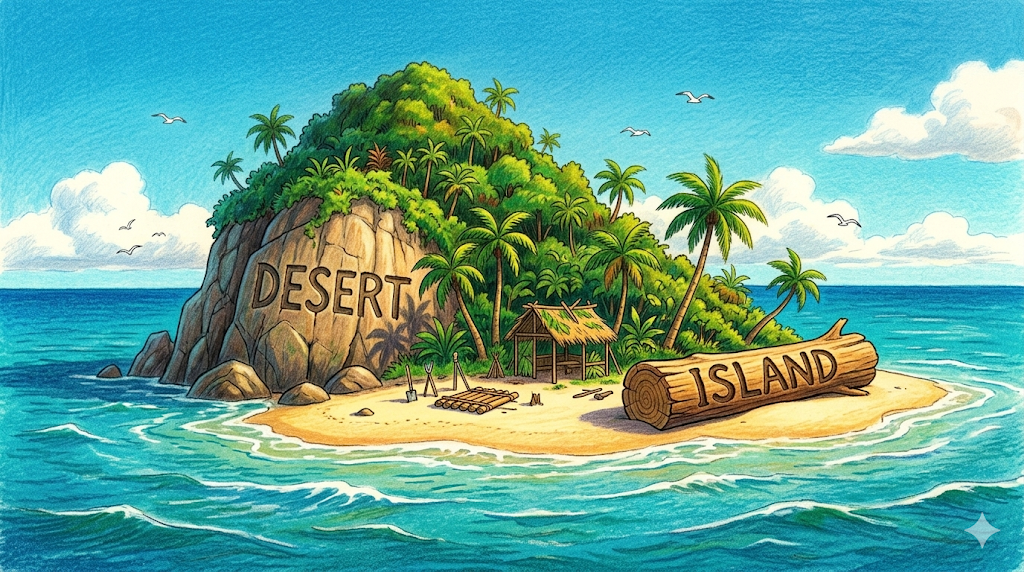
desert island [ˈdezərt ˈaɪlənd]
(명사구) 무인도
사람이 살지 않는 외딴 섬을 가리키며, 완전한 고립이나 혼자만의 상황을 강조합니다. 수능 독해 문학·심리 지문에서 고립이나 생존을 주제로 할 때 핵심적으로 등장합니다.
- The English teacher asked the class to imagine being stuck on a desert island for a year and to write a story about how they would survive and what they would miss most about their normal life. (영어 선생님은 학급에게 1년 동안 무인도에 갇히는 것을 상상하고 어떻게 살아남을지, 그리고 보통 생활에서 무엇을 가장 그리워할지에 대한 이야기를 쓰라고 요청했다.)
- The popular classroom game of choosing which three things you would take to a desert island is actually a clever way to learn about what people value most in their lives and what they believe they cannot live without. (무인도에 가져갈 세 가지를 선택하는 인기 있는 교실 게임은 사실 사람들이 자신의 삶에서 가장 소중히 여기는 것과 없이는 살 수 없다고 믿는 것에 대해 배우는 영리한 방법이다.)
- After two weeks of non-stop tests and homework, she joked that she would love nothing more than to be left alone on a desert island with a pile of books, a hammock, and nobody asking her to do anything for a whole month. (2주간의 쉬지 않는 시험과 숙제 후, 그녀는 책 더미, 해먹, 그리고 한 달 동안 아무것도 해달라고 요청하는 사람 없이 무인도에 혼자 남겨지는 것 이상을 원하지 않을 것이라고 농담했다.)
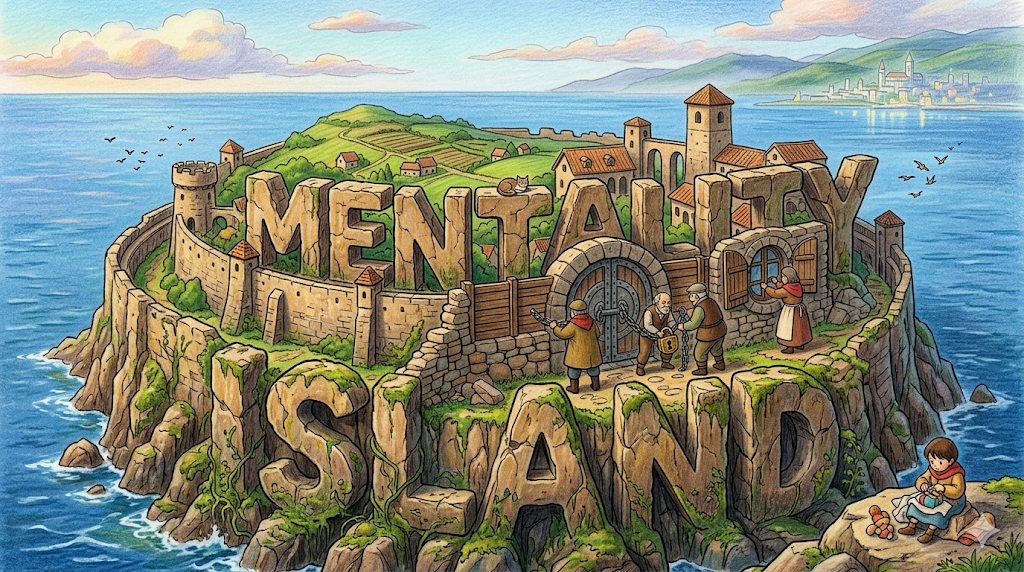
island mentality [ˈaɪlənd menˈtæləti]
(명사구) 섬나라 근성, 좁은 시야, 편협한 사고방식
섬에 갇힌 것처럼 외부 세계나 새로운 생각을 받아들이지 않으려는 편협하고 닫힌 사고방식을 강조합니다. 수능 독해 사회·심리 지문에서 편협한 사고방식을 비판할 때 핵심적으로 등장합니다.
- The student had such an island mentality that she refused to even listen to ideas from her classmates, always insisting that her own way of doing things was the only correct approach. (그 학생은 섬나라 근성이 너무 강해서 반 친구들의 아이디어를 듣기조차 거부했으며, 항상 자신의 방식이 유일하게 올바른 접근 방식이라고 주장했다.)
- An island mentality can develop when a person grows up in a place where everyone thinks and lives in exactly the same way, because they never have the chance to see how different and rich the wider world really is. (섬나라 근성은 모든 사람이 정확히 같은 방식으로 생각하고 사는 곳에서 자라날 때 생길 수 있는데, 더 넓은 세계가 실제로 얼마나 다양하고 풍부한지 볼 기회가 없기 때문이다.)
- The best way to overcome an island mentality is to travel, read widely, and spend time with people whose backgrounds and ideas are very different from your own, because this opens your mind to possibilities you had never even thought of before. (섬나라 근성을 극복하는 가장 좋은 방법은 여행하고, 폭넓게 읽고, 자신과 배경과 생각이 매우 다른 사람들과 시간을 보내는 것인데, 이것이 이전에는 생각조차 하지 못했던 가능성에 마음을 열어주기 때문이다.)
숙어 그룹 묶음 2 — 고립·사고 island 패턴
표현 의미 핵심 뉘앙스 주요 맥락
| desert island | 무인도 | 사람이 없는 완전한 고립의 섬 | 문학·심리·수능 |
| island mentality | 섬나라 근성 | 외부 세계를 거부하는 편협하고 닫힌 사고 | 사회·심리·수능 |
| no man is an island | 어떤 사람도 혼자 살 수 없다 | 모든 사람은 서로에게 의존하며 연결되어 있음 | 철학·사회·수능 |
이 세 표현은 모두 island가 고립·사고·연결과 연결되는 방식을 보여줍니다. desert island는 완전히 혼자인 물리적 고립을, island mentality는 스스로 선택한 정신적 고립을, no man is an island는 고립이 불가능하고 인간은 서로 연결되어 있다는 것을 각각 나타냅니다.
- She had been living with an island mentality for so long that she sometimes felt like she really was on a desert island — completely alone and cut off from everything — until she finally understood that no man is an island and decided to open herself up to the people around her. (그녀는 너무 오랫동안 섬나라 근성을 가지고 살아와서 가끔 정말로 무인도에 있는 것 같은 기분이 들었다 — 모든 것으로부터 완전히 혼자이고 단절된 — 어떤 사람도 혼자 살 수 없다는 것을 마침내 이해하고 주변 사람들에게 자신을 열기로 결심할 때까지.)
- The philosophy lesson began with the teacher writing no man is an island on the board and then asking the class to think about whether a person who had grown up completely alone on a desert island would have developed an island mentality or would have naturally sought out other people the moment they had the chance to. (철학 수업은 선생님이 칠판에 어떤 사람도 혼자 살 수 없다고 쓰고 무인도에서 완전히 혼자 자란 사람이 섬나라 근성을 발전시켰을지 아니면 기회가 생기는 순간 자연스럽게 다른 사람들을 찾았을지 생각해 보라고 학급에 요청하는 것으로 시작됐다.)
- A person with an island mentality might think that living like they are on a desert island is a sign of strength and independence, but as the saying no man is an island reminds us, true strength comes from building connections with others rather than shutting the world out. (섬나라 근성을 가진 사람은 무인도에 있는 것처럼 사는 것이 힘과 독립의 표시라고 생각할 수 있지만, 어떤 사람도 혼자 살 수 없다는 말이 우리에게 상기시켜 주듯이, 진정한 힘은 세상을 차단하는 것이 아니라 다른 사람들과 연결을 구축하는 것에서 온다.)
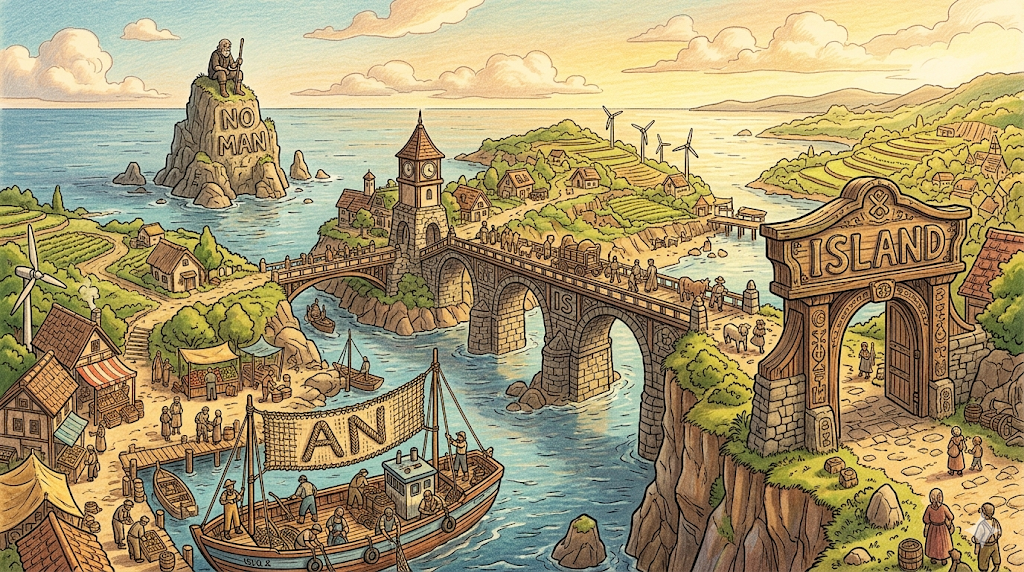
no man is an island [nəʊ mæn ɪz ən ˈaɪlənd]
(관용구) 어떤 사람도 혼자 살 수 없다, 인간은 서로 연결되어 있다
모든 사람은 서로에게 의존하며 혼자서는 완전할 수 없다는 것을 강조합니다. 수능 독해 철학·사회·심리 지문에서 인간의 상호 의존성을 강조할 때 핵심적으로 등장합니다.
- After refusing help from everyone around him for months, he finally accepted that no man is an island and allowed his closest friend to step in and support him through the hardest part of his school year. (몇 달 동안 주변의 모든 사람의 도움을 거부한 후, 그는 어떤 사람도 혼자 살 수 없다는 것을 마침내 받아들이고 가장 친한 친구가 그의 학년 중 가장 힘든 부분을 통해 그를 지원하도록 허용했다.)
- The idea that no man is an island is one of the most important lessons a young person can learn, because it teaches them that asking for help, sharing problems, and relying on others is not weak but wise. (어떤 사람도 혼자 살 수 없다는 생각은 젊은 사람이 배울 수 있는 가장 중요한 교훈 중 하나인데, 왜냐하면 도움을 요청하고, 문제를 나누고, 다른 사람들에게 의존하는 것이 약한 것이 아니라 현명한 것이라고 가르쳐 주기 때문이다.)
- The science project was a perfect example of why no man is an island — each student brought a different skill to the group, and it was only because they worked together that the final result was something none of them could ever have achieved on their own. (과학 프로젝트는 어떤 사람도 혼자 살 수 없는 이유의 완벽한 예였다 — 각 학생이 그룹에 다른 기술을 가져왔으며, 그들이 함께 일했기 때문에만 최종 결과가 그들 중 누구도 혼자서는 달성할 수 없었던 것이 됐다.)
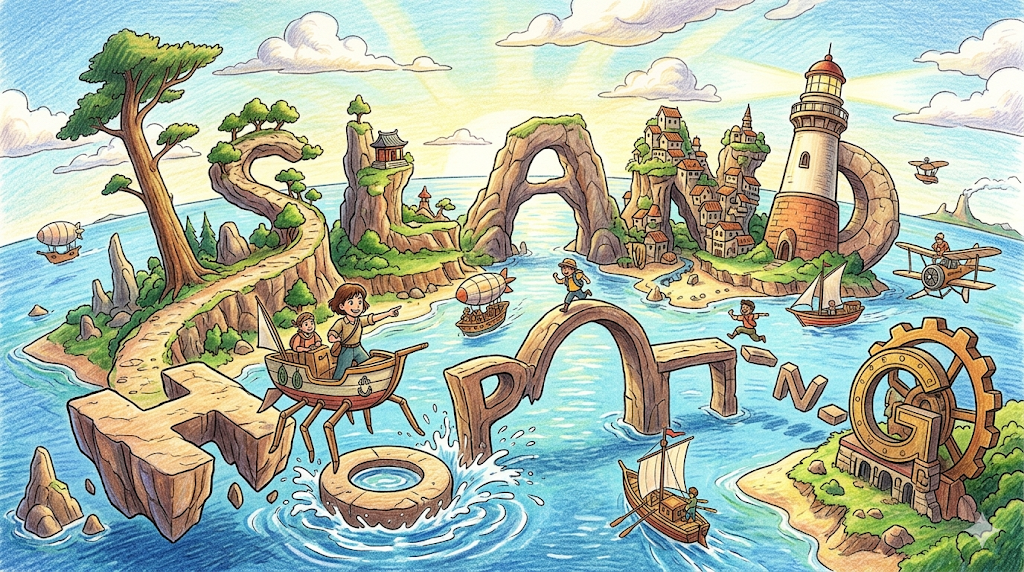
island hopping [ˈaɪlənd ˈhɒpɪŋ]
(명사구/동사구) 섬 여행, 여러 섬을 돌아다니는 것
한 섬에서 다른 섬으로 이동하며 여러 섬을 여행하는 것을 강조하며, 비유적으로 여러 장소나 상황을 빠르게 옮겨 다니는 것을 나타내기도 합니다. 수능 독해 사회·여행 지문에서 자주 등장합니다.
- The travel magazine article described island hopping as one of the most exciting ways to explore a part of the world because every new island offers a completely fresh experience with its own landscape, food, and way of life. (여행 잡지 기사는 섬 여행을 세계의 한 부분을 탐험하는 가장 흥미로운 방법 중 하나로 묘사했는데, 왜냐하면 모든 새 섬이 자체적인 풍경, 음식, 생활 방식으로 완전히 새로운 경험을 제공하기 때문이다.)
- The students who went on the geography trip spent three days island hopping around the bay, visiting each small island to study the differences in plant life, soil type, and the way the local people used the natural resources around them. (지리 여행을 간 학생들은 식물 생명, 토양 유형, 그리고 지역 사람들이 주변의 천연 자원을 사용하는 방식의 차이를 연구하기 위해 각 작은 섬을 방문하면서 3일 동안 만 주변을 섬 여행했다.)
- She described her habit of moving from one interest to another every few weeks as a kind of mental island hopping — never staying long enough in one place to go deep but always finding something new and exciting to explore. (그녀는 몇 주마다 하나의 관심사에서 다른 것으로 이동하는 자신의 습관을 일종의 정신적 섬 여행으로 묘사했다 — 깊이 들어가기 위해 한 곳에 충분히 오래 머물지 않지만 항상 새롭고 흥미로운 것을 탐험하는 것을 찾는다.)
숙어 그룹 묶음 3 — 여행·경험 island 심화 패턴
표현 의미 핵심 뉘앙스 주요 맥락
| island hopping | 섬 여행 | 한 섬에서 다른 섬으로 이동하며 여러 섬을 여행 | 여행·사회·수능 |
| be stranded on an island | 섬에 고립되다 | 도움 없이 외딴곳에 혼자 갇혀 있는 상태 | 문학·심리·수능 |
| desert island | 무인도 | 사람이 없는 완전한 고립의 섬 | 문학·심리·수능 |
이 세 표현은 모두 island가 여행·경험·고립과 연결되는 방식을 보여줍니다. island hopping은 능동적으로 여러 섬을 이동하는 즐거운 경험을, be stranded on an island는 원하지 않게 혼자 고립된 상태를, desert island는 사람이 없는 완전한 고립의 공간을 각각 나타냅니다.
- What started as a fun island hopping trip quickly turned into a nightmare when their small boat broke down and they found themselves stranded on an island that turned out to be a completely desert island with no people, no shelter, and no way to call for help. (섬 여행으로 시작된 즐거운 여행이 작은 보트가 고장나고 완전히 사람도, 피난처도, 도움을 요청할 방법도 없는 완전한 무인도임이 밝혀진 섬에 고립된 자신들을 발견했을 때 빠르게 악몽으로 변했다.)
- The geography teacher used the contrast between island hopping as a tourist and being stranded on a desert island as a survival situation to show students how the same physical place can feel completely different depending on whether you are there by choice or by accident. (지리 선생님은 관광객으로서의 섬 여행과 생존 상황으로서의 무인도에 고립되는 것 사이의 대조를 사용해 학생들에게 선택으로 거기 있는지 우연으로 거기 있는지에 따라 같은 물리적 장소가 완전히 다르게 느껴질 수 있는지 보여줬다.)
- She had dreamed of island hopping through the Pacific for years, but the thought of being stranded on a desert island with no phone signal and no way home had always stopped her from booking the trip — until her friend reminded her that the chance of that happening was about as likely as finding a real desert island in the middle of a busy city. (그녀는 수년 동안 태평양을 통해 섬 여행을 꿈꿔왔지만, 핸드폰 신호도 없고 집으로 가는 방법도 없는 무인도에 고립되는 생각이 항상 여행을 예약하는 것을 막았다 — 친구가 그것이 일어날 가능성이 바쁜 도시 한가운데서 실제 무인도를 찾는 것만큼 가능성이 낮다고 상기시켜 줄 때까지.)
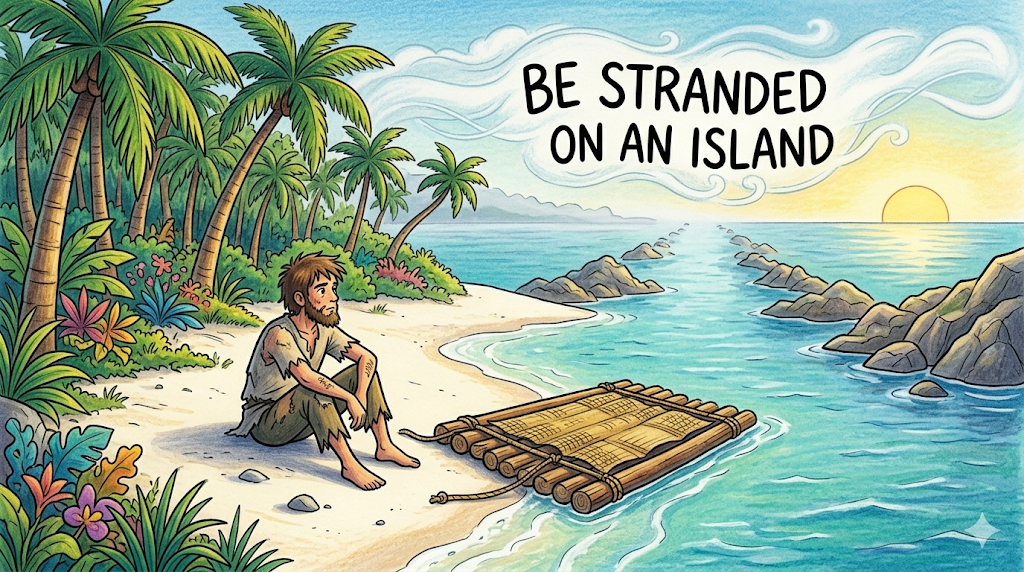
be stranded on an island [biː ˈstrænd ɒn ən ˈaɪlənd]
(동사구) 섬에 고립되다, 무인도에 갇히다
도움을 받을 수 없는 외딴곳에 혼자 갇혀 있는 상태를 강조하며, 비유적으로 어떤 상황에서 도움 없이 혼자 남겨진 것을 나타내기도 합니다. 수능 독해 문학·심리 지문에서 자주 등장합니다.
- The character in the novel was stranded on an island for three years before a passing ship finally spotted the signal fire he had built on the highest point of the island every single evening without giving up hope. (소설의 인물은 지나가는 배가 그가 희망을 버리지 않고 매일 저녁 섬의 가장 높은 지점에 피운 신호 불을 마침내 발견하기 전까지 3년 동안 섬에 고립되었다.)
- She felt as though she was stranded on an island at her new school — surrounded by people who all seemed to know each other already, speaking in a way she did not always understand, and with nobody reaching out to help her find her way. (그녀는 새 학교에서 섬에 고립된 것 같은 기분이 들었다 — 이미 서로 아는 것 같은 사람들에게 둘러싸여, 항상 이해하지 못하는 방식으로 말하며, 길을 찾도록 도와주기 위해 다가오는 사람도 없었다.)
- When the power went out and the internet stopped working during the heavy storm, the whole family felt completely stranded on an island with nothing to do but sit together, talk, and play board games until the lights finally came back on the next morning. (폭풍 동안 전원이 나가고 인터넷이 작동을 멈췄을 때, 온 가족은 다음 날 아침 마침내 불이 다시 켜질 때까지 함께 앉아 이야기하고 보드 게임을 하는 것 외에는 아무것도 할 것이 없는 섬에 완전히 고립된 기분이 들었다.)

island of stability [ˈaɪlənd əv stəˈbɪləti]
(명사구) 안정의 섬, 불안정한 상황 속의 안정적인 공간
주변이 불안하고 불확실할 때 유일하게 안정적이고 믿을 수 있는 공간이나 상황을 강조합니다. 수능 독해 사회·심리 지문에서 변화와 불안 속의 안정을 나타낼 때 자주 등장합니다.
- During a period when her family was going through many changes, her weekly music lesson became an island of stability that she could always count on to be exactly the same, safe, and enjoyable every single week without fail. (가족이 많은 변화를 겪고 있는 기간 동안, 그녀의 주간 음악 수업은 매주 빠짐없이 항상 똑같고, 안전하고, 즐겁다고 믿을 수 있는 안정의 섬이 됐다.)
- A good friendship can serve as an island of stability during the difficult teenage years when everything — from how you look to how you feel about yourself — seems to be changing faster than you can keep up with. (좋은 우정은 외모에서 자신에 대해 느끼는 방식까지 모든 것이 따라갈 수 있는 것보다 빠르게 변하는 것 같은 어려운 십대 시절 동안 안정의 섬 역할을 할 수 있다.)
- The researchers described the school's breakfast programme as an island of stability for children who came from difficult home situations, because it gave them at least one part of the day that was calm, nourishing, and the same every morning. (연구자들은 학교의 아침 식사 프로그램을 어려운 가정 상황 출신의 아이들을 위한 안정의 섬으로 묘사했는데, 왜냐하면 그것이 그들에게 매일 아침 조용하고, 영양이 있으며, 똑같은 하루의 적어도 한 부분을 제공했기 때문이다.)

island of peace [ˈaɪlənd əv piːs]
(명사구) 평화의 섬, 갈등 속의 평화로운 공간
갈등이나 어려움이 많은 상황 속에서 유일하게 평화롭고 조용한 공간이나 상태를 강조합니다. 수능 독해 심리·사회 지문에서 갈등과 스트레스 속의 안식을 나타낼 때 자주 등장합니다.
- The school counsellor's office was an island of peace in the middle of the busy school day, a place where students could come to talk honestly without being judged and leave feeling a little lighter than when they came in. (학교 상담사의 사무실은 바쁜 학교 일과 중간의 평화의 섬으로, 학생들이 판단받지 않고 솔직하게 이야기하고 들어올 때보다 조금 가벼운 기분으로 떠날 수 있는 곳이었다.)
- Even in a house full of loud brothers and sisters, her small desk by the window became an island of peace where she could study, draw, or simply sit and look outside at the garden without anyone disturbing her. (시끄러운 형제자매들로 가득 찬 집에서도, 창가에 있는 그녀의 작은 책상은 아무도 방해하지 않고 공부하거나, 그림을 그리거나, 아니면 그냥 앉아 밖의 정원을 바라볼 수 있는 평화의 섬이 됐다.)
- The music that she listened to on her way to school every morning was her personal island of peace — a fifteen-minute space between the busy world of home and the busy world of school where she could simply breathe and be herself without any demands from anyone. (그녀가 매일 아침 학교 가는 길에 듣는 음악은 그녀의 개인적인 평화의 섬이었다 — 아무에게도 어떤 요구도 없이 그냥 숨을 쉬고 자신이 될 수 있는 집의 바쁜 세계와 학교의 바쁜 세계 사이의 15분 공간이었다.)
숙어 그룹 묶음 4 — 종합 island 패턴
표현 의미 핵심 뉘앙스 주요 맥락
| island of calm | 평온의 섬 | 혼란 속에서 유일하게 조용하고 평화로운 공간 | 심리·사회·수능 |
| no man is an island | 어떤 사람도 혼자 살 수 없다 | 모든 사람은 서로에게 의존하며 연결되어 있음 | 철학·사회·수능 |
| island mentality | 섬나라 근성 | 외부 세계를 거부하는 편협하고 닫힌 사고 | 사회·심리·수능 |
이 세 표현은 수능 독해에서 가장 자주 출제되는 island의 핵심 패턴입니다. island of calm은 혼란 속에서 유일하게 평화로운 공간을, no man is an island는 인간이 혼자 살 수 없고 서로 연결되어 있다는 것을, island mentality는 스스로 고립을 선택하는 편협한 사고방식을 각각 나타냅니다.
- A person with an island mentality who refuses to connect with others will never be able to find a true island of calm in their life, because real peace comes not from shutting people out but from building the kind of relationships that remind you that no man is an island and that you are never truly alone as long as you are willing to reach out. (섬나라 근성으로 다른 사람들과 연결을 거부하는 사람은 삶에서 진정한 평온의 섬을 찾을 수 없을 것인데, 왜냐하면 진정한 평화는 사람들을 차단하는 것이 아니라 어떤 사람도 혼자 살 수 없으며 손을 내밀 의지가 있는 한 결코 진정으로 혼자가 아니라는 것을 상기시켜주는 종류의 관계를 구축하는 것에서 오기 때문이다.)
- The school's new wellbeing programme was designed to help students find their own island of calm during stressful times, overcome the island mentality that stopped them from sharing their problems with others, and truly internalise the message that no man is an island — that being strong enough to ask for support is one of the most important skills a young person can develop. (학교의 새 웰빙 프로그램은 학생들이 스트레스받는 시간 동안 자신만의 평온의 섬을 찾고, 다른 사람들과 문제를 나누는 것을 막는 섬나라 근성을 극복하고, 어떤 사람도 혼자 살 수 없다는 — 지원을 요청할 만큼 강한 것이 젊은 사람이 개발할 수 있는 가장 중요한 기술 중 하나라는 메시지를 진정으로 내면화하도록 돕기 위해 설계됐다.)
- She had spent so long building walls around herself and developing an island mentality that she had forgotten what it felt like to have a true island of calm that came from being truly connected to other people, and it was only after reading the old poem that reminded her that no man is an island that she finally decided to take down those walls and let the people who cared about her back into her life. (그녀는 너무 오랫동안 자신 주위에 벽을 쌓고 섬나라 근성을 발전시켜서 다른 사람들과 진정으로 연결되는 것에서 오는 진정한 평온의 섬이 어떤 느낌인지 잊어버렸으며, 어떤 사람도 혼자 살 수 없다는 것을 상기시켜준 오래된 시를 읽은 후에야 마침내 그 벽을 허물고 자신을 아끼는 사람들을 다시 삶으로 들어오게 하기로 결심했다.)
전체 요약표
표현 의미 핵심 뉘앙스
| island | 섬, 고립된 공간 | 물로 둘러싸인 고립된 땅에서 평화·고립으로 확장 |
| island of calm | 평온의 섬 | 혼란 속에서 유일하게 조용하고 평화로운 공간 |
| island of hope | 희망의 섬 | 절망 속에서 유일하게 희망을 주는 것 |
| desert island | 무인도 | 사람이 없는 완전한 고립의 섬 |
| island mentality | 섬나라 근성 | 외부 세계를 거부하는 편협하고 닫힌 사고 |
| no man is an island | 어떤 사람도 혼자 살 수 없다 | 모든 사람은 서로에게 의존하며 연결되어 있음 |
| island hopping | 섬 여행 | 한 섬에서 다른 섬으로 이동하며 여러 섬을 여행 |
| be stranded on an island | 섬에 고립되다 | 도움 없이 외딴곳에 혼자 갇혀 있는 상태 |
| island of stability | 안정의 섬 | 불안정한 상황 속의 안정적인 공간 |
| island of peace | 평화의 섬 | 갈등 속에서 유일하게 평화롭고 편안한 공간 |
유의어 비교표
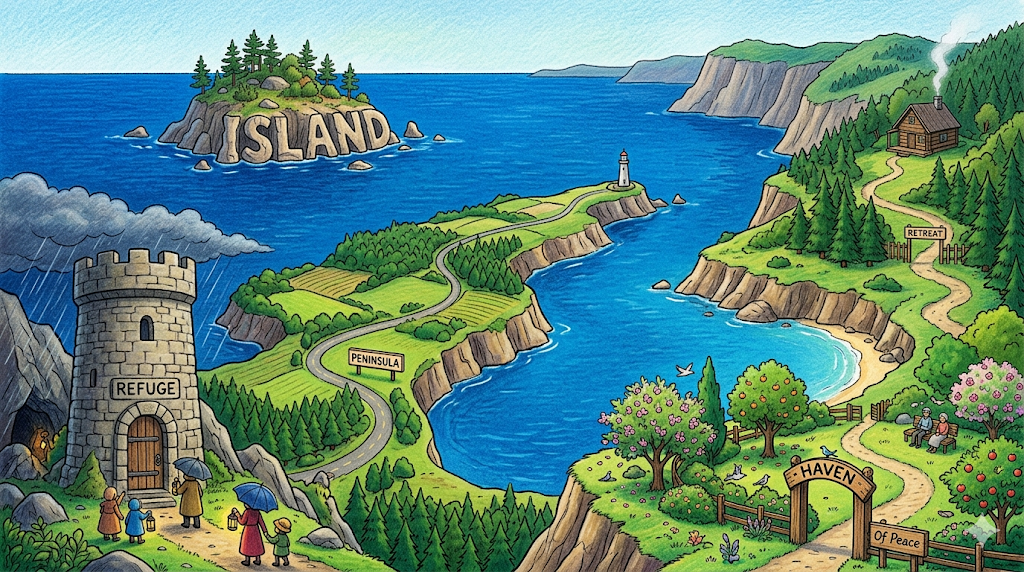
단어 공통점 뉘앙스 차이 예문
| island | 고립된 땅·공간 | 사면이 물로 둘러싸인 완전한 고립, 비유 풍부 | The island was very small. |
| peninsula | 반도 | 삼면이 물로 둘러싸이고 한쪽은 육지와 연결 | Korea is a peninsula. |
| refuge | 피난처 | 위험·어려움에서 피하는 안전한 곳 | The cave was their refuge. |
| haven | 안식처 | 평화롭고 안전한 피난처 | The park was a haven of peace. |
| retreat | 은신처, 피정 | 세상에서 물러나 쉬거나 생각하는 조용한 곳 | The cabin was her retreat. |
유의어 예문 리스트
- (peninsula) The geography teacher pointed to the map and explained that a peninsula is different from an island because it is still connected to the mainland by a strip of land on one side, which means people can travel to and from it without needing a boat or a plane. (지리 선생님은 지도를 가리키며 반도는 한쪽에 육지의 좁은 땅으로 본토와 여전히 연결되어 있기 때문에 섬과 다르며, 이것은 사람들이 보트나 비행기 없이도 왕래할 수 있다는 것을 의미한다고 설명했다.)
- (refuge) When the argument between her parents got too loud and she could not think clearly, she would go to the small bathroom at the end of the hall and use it as a quiet refuge where she could sit on the floor, breathe slowly, and wait for her heart to stop racing. (부모님 사이의 다툼이 너무 시끄러워지고 명확하게 생각할 수 없을 때, 그녀는 복도 끝의 작은 화장실로 가서 바닥에 앉아 천천히 숨을 쉬고 심장이 두근거림을 멈출 때까지 기다릴 수 있는 조용한 피난처로 사용했다.)
- (haven) The small animal shelter at the edge of town became a true haven for abandoned dogs and cats who had nowhere else to go, and the kind volunteers who worked there every weekend made sure that every animal felt safe, loved, and well cared for. (마을 가장자리에 있는 작은 동물 보호소는 갈 곳이 없는 버려진 개와 고양이들을 위한 진정한 안식처가 됐으며, 매주 주말 그곳에서 일하는 친절한 자원봉사자들은 모든 동물이 안전하고, 사랑받고, 잘 돌봄을 받는다고 느끼도록 했다.)
- (retreat) Once a month, the teachers would go on a professional retreat together to talk about new teaching ideas, share what had been working well in their classrooms, and support each other through the challenges that came with working with young people every day. (한 달에 한 번, 선생님들은 새로운 교수 아이디어에 대해 이야기하고, 교실에서 잘 작동하고 있는 것을 나누며, 매일 젊은 사람들과 함께 일하는 것에서 오는 도전들을 통해 서로를 지원하기 위해 함께 전문적인 피정을 떠났다.)
결론 정리
island는 단순히 "섬"이 아니라, 고대 영어 iegland(물 위의 땅)에서 출발해 물로 둘러싸인 고립된 땅에서 혼란 속의 평화로운 공간·고립된 존재·편협한 사고방식·인간의 상호 의존까지 확장되는 단어다 — island가 있는 곳엔 언제나 '단순한 지리적 땅이 아닌, 인간의 고독·평화·연결·사고방식을 담아내는' 생동감의 선언이 있다.
💡 island는 "물로 둘러싸인 고립된 땅에서 출발한" 생동감 넘치는 언어 — island of calm · no man is an island · island mentality가 수능 최빈출.
🌟 초등학생 버전 — island는 바다 한가운데 혼자 떠 있는 섬이지만, "도서관이 시끄러운 학교 속 평온의 섬이야!"처럼 주변이 시끄럽고 혼란스러울 때 유일하게 조용하고 평화로운 곳을 나타내기도 해요! no man is an island는 "어떤 사람도 혼자서는 살 수 없어!"라는 뜻이에요! 🏝️✨


