- 분류 전체보기 (5433)

| 일 | 월 | 화 | 수 | 목 | 금 | 토 |
|---|---|---|---|---|---|---|
| 1 | 2 | |||||
| 3 | 4 | 5 | 6 | 7 | 8 | 9 |
| 10 | 11 | 12 | 13 | 14 | 15 | 16 |
| 17 | 18 | 19 | 20 | 21 | 22 | 23 |
| 24 | 25 | 26 | 27 | 28 | 29 | 30 |
| 31 |
- Don't worry
- Sorry
- I'm sorry
- make it
- Yeah
- entrance fee
- oh
- please.
- pick up
- Read between the lines
- By The Way
- call off
- Right?
- Sure
- too.
- Actually
- I'm not sure
- work out
- come up with
- Hey
- hold on
- no
- OKay
- Please
- I'm glad to hear that.
- Yes
- well
- Excuse me
- please?
- once in a while
- Today
- Total
인과함께
Day377 , read, read between the lines, read out loud, a good read, read into, read up on, read someone's mind, well-read, read the room, read through 본문
Day377 , read, read between the lines, read out loud, a good read, read into, read up on, read someone's mind, well-read, read the room, read through
미인생 2026. 5. 5. 09:29
read [riːd]
(동사/명사) 읽다, 이해하다, 판단하다 / 독서, 읽을거리
You need to read between the lines to understand his true intentions.
(그의 진심을 이해하려면 속뜻을 파악할 줄 알아야 한다.)
단순히 "읽다"로만 외우면 수능에서 반드시 틀립니다. read는 "글자나 상황에서 의미를 파악하는" 이라는 핵심 이미지에서 출발해, 실제 독서·숨은 의미 파악·상황 판단·마음 읽기까지 폭넓게 쓰이는 핵심 다의어입니다. 특히 read between the lines(행간을 읽다), read the room(분위기를 읽다), read into(과도하게 해석하다) 패턴은 수능 독해 심리·사회·논리 지문에서 핵심적으로 등장합니다.
'read'는 고대 영어 rǣdan(조언하다, 해석하다, 읽다)에서 유래했으며, 인도유럽어 *rē-(생각하다, 이유를 찾다)와 연결됩니다. 어원의 핵심 이미지는 "글이나 상황에서 의미를 찾아내는 것" 으로, 단순한 독서를 넘어 해석·판단·이해·공감·통찰까지 확장되는 표현의 근원이 된 단어입니다.
1. read between the lines [riːd bɪˈtwiːn ðə laɪnz]
(일상/심리/수능) "행간을 읽다, 숨은 의미를 파악하다"를 뜻합니다. 직접 말하지 않은 것을 글이나 말 속에서 찾아내는 것을 강조하며, 수능에서 가장 자주 출제되는 표현입니다.
Her message sounded happy, but when I read between the lines, I could tell she was actually quite upset about what had happened. (그녀의 메시지는 행복하게 들렸지만, 행간을 읽었을 때 나는 그녀가 사실 일어난 일에 대해 꽤 화가 나 있다는 것을 알 수 있었다.)
2. read out loud [riːd aʊt laʊd]
(일상/학술/수능) "큰 소리로 읽다, 소리 내어 읽다"를 뜻합니다. 글을 혼자 조용히 읽는 것이 아니라 목소리를 내어 읽는 것을 강조합니다.
The teacher asked her to read out loud so that the whole class could hear the passage and follow along together. (선생님은 전체 학급이 지문을 듣고 함께 따라갈 수 있도록 그녀에게 큰 소리로 읽으라고 했다.)
3. a good read [ə ɡʊd riːd]
(일상/문학/수능) "잘 읽히는 책, 재미있는 읽을거리"를 뜻합니다. 읽기 쉽고 재미있어서 즐겁게 읽을 수 있는 책이나 글을 강조합니다.
She told her friend that the new novel was a good read — exciting from the first page and impossible to put down. (그녀는 친구에게 새 소설이 재미있는 읽을거리라고 말했다 — 첫 페이지부터 흥미롭고 내려놓을 수 없었다고.)
4. read into [riːd ˈɪntə]
(심리/학술/수능) "과도하게 해석하다, 없는 의미를 찾다"를 뜻합니다. 실제로 의도하지 않은 의미나 중요성을 글이나 행동에서 찾아내는 것을 강조합니다.
Don't read into his short reply — he was just busy and didn't mean anything negative by it. (그의 짧은 답장을 과도하게 해석하지 마라 — 그는 그냥 바빴고 그것으로 부정적인 의미를 전달하려 한 것이 아니었다.)
5. read up on [riːd ʌp ɒn]
(학술/일상/수능) "~에 대해 공부하다, 자세히 읽어 알다"를 뜻합니다. 어떤 주제에 대해 더 많이 알기 위해 책이나 자료를 읽는 것을 강조합니다.
She spent the weekend reading up on the history of the country before her trip so she would understand what she was seeing. (그녀는 여행 전에 보는 것을 이해하기 위해 주말에 그 나라의 역사를 읽어 공부하며 보냈다.)
6. read someone's mind [riːd ˈsʌmwʌnz maɪnd]
(일상/심리/수능) "마음을 읽다, 생각을 알아채다"를 뜻합니다. 다른 사람이 말하지 않아도 그 사람이 생각하는 것을 파악하는 것을 강조합니다.
She always seemed to read my mind — just as I was about to say I was hungry, she would ask if I wanted to get some food. (그녀는 항상 내 마음을 읽는 것 같았다 — 내가 배고프다고 막 말하려는 순간 그녀가 음식을 먹을지 물어보곤 했다.)
7. well-read [welˈred]
(학술/사회/수능) "독서를 많이 한, 박식한"을 뜻합니다. 많은 책을 읽어서 다양한 분야에 대한 지식이 풍부한 사람을 강조합니다.
He was clearly well-read, as he could talk confidently and with great detail about history, science, and literature. (그는 역사, 과학, 문학에 대해 자신감 있고 자세하게 이야기할 수 있었기 때문에 분명히 독서를 많이 한 사람이었다.)
8. read the room [riːd ðə ruːm]
(일상/심리/수능) "분위기를 읽다, 상황을 파악하다"를 뜻합니다. 방 안의 사람들이 어떻게 느끼는지 눈치채고 그에 맞게 행동하는 것을 강조합니다.
She could tell the joke was going badly and quickly read the room, stopping mid-sentence and changing the subject before things got too awkward. (그녀는 농담이 잘못되고 있다는 것을 알아채고 빠르게 분위기를 읽어, 상황이 너무 어색해지기 전에 문장 중간에 멈추고 주제를 바꿨다.)
9. read through [riːd θruː]
(학술/일상/수능) "처음부터 끝까지 읽다, 검토하다"를 뜻합니다. 글 전체를 빠짐없이 쭉 읽거나 확인하는 것을 강조합니다.
She read through her essay one more time before handing it in to check for any spelling or grammar mistakes. (그녀는 제출하기 전에 철자나 문법 실수를 확인하기 위해 에세이를 한 번 더 처음부터 끝까지 읽었다.)
10. read (동사: 나타내다, 보여주다) [riːd]
(학술/과학/수능) 동사로 쓰여 "나타내다, ~라고 되어 있다"를 뜻합니다. 온도계나 표지판처럼 어떤 기기나 글이 특정 값이나 내용을 나타내는 것을 강조합니다.
The sign read "No Entry", but the door was open and nobody seemed to be watching. (표지판에는 "진입 금지"라고 쓰여 있었지만, 문은 열려 있었고 아무도 감시하는 것 같지 않았다.)

POINT 1. read — 수능 최빈출 비유·어휘 패턴
read는 수능 독해 심리·사회·논리 지문에서 비유적 표현으로 자주 출제됩니다.
read between the lines → 말하지 않은 숨은 의미를 파악할 때 예) You need to read between the lines. (행간을 읽어야 한다.) read the room → 주변 상황과 분위기를 파악할 때 예) She knew how to read the room. (그녀는 분위기를 읽을 줄 알았다.) read into → 없는 의미를 과도하게 해석할 때 예) Don't read into it too much. (그것을 너무 과도하게 해석하지 마라.)
POINT 2. read / skim / scan — 수능 어휘 핵심 비교
이 세 단어는 수능에서 자주 혼동되는 어휘입니다.
read → 글을 꼼꼼하게 이해하며 읽는 것 예) She read the letter slowly. (그녀는 편지를 천천히 읽었다.) skim → 중요한 부분만 빠르게 훑어 읽는 것 예) He skimmed the article in a minute. (그는 1분 만에 기사를 훑어 읽었다.) scan → 특정 정보를 찾기 위해 빠르게 살펴보는 것 예) She scanned the page for her name. (그녀는 이름을 찾기 위해 페이지를 훑었다.)
POINT 3. read의 다양한 용법 — 수능 독해 문맥 파악 핵심
read는 수능 독해에서 문맥에 따라 의미가 완전히 달라지는 핵심 단어입니다.
독서 → She read the book twice. (그녀는 책을 두 번 읽었다.) 행간 → Read between the lines. (행간을 읽어라.) 분위기 → He read the room well. (그는 분위기를 잘 읽었다.) 나타내다 → The sign reads "Open". (표지판에 "영업 중"이라고 쓰여 있다.) 공부하다 → Read up on the topic. (그 주제를 읽어 공부해라.)
(동사) ① 읽다 (일반적)
read의 가장 기본적인 의미로, 글을 보고 그 내용을 이해하는 것을 나타냅니다.
- She read the same chapter three times before she finally understood what the author was trying to say about the relationship between the two characters. (그녀는 작가가 두 인물 사이의 관계에 대해 말하려는 것을 마침내 이해하기 전에 같은 챕터를 세 번 읽었다.)
- He reads for at least thirty minutes every night before going to sleep, saying it helps him relax and think about something other than his worries. (그는 매일 밤 잠들기 전에 적어도 30분씩 읽으며, 그것이 긴장을 풀고 걱정 외의 다른 것을 생각하는 데 도움이 된다고 말한다.)
- She had read so many books by the time she was ten that her teacher said her language skills were well above those of most children her age. (그녀는 열 살이 될 때까지 너무 많은 책을 읽어서 선생님이 그녀의 언어 능력이 같은 나이의 대부분의 아이들보다 훨씬 높다고 말했다.)
(동사) ② 판단하다, 파악하다 (비유적)
read는 비유적으로 상황이나 사람의 감정·의도를 파악하는 것을 나타냅니다.
- A good leader must be able to read people quickly — to understand what they need, what they fear, and what will motivate them to do their best work. (좋은 리더는 사람들을 빠르게 파악할 수 있어야 한다 — 그들이 무엇이 필요하고, 무엇을 두려워하며, 무엇이 그들이 최선을 다하도록 동기를 부여할지 이해하는 것이다.)
- She was good at reading the mood of a group and knowing when to push forward with an idea and when to wait for a better moment to raise it. (그녀는 그룹의 분위기를 읽고 아이디어를 언제 밀어붙이고 언제 더 좋은 순간을 기다려야 하는지 알았다.)
- He could not read her expression at all and had no idea whether the news had made her happy or disappointed. (그는 그녀의 표정을 전혀 읽을 수 없었으며 그 소식이 그녀를 행복하게 했는지 실망시켰는지 전혀 알 수 없었다.)
(동사) ③ 나타내다, ~라고 되어 있다 (기기·표지)
read는 온도계·계기판·표지판 등이 특정 값이나 내용을 나타내는 것을 나타냅니다.
- The thermometer read thirty-eight degrees, which was high enough for the doctor to decide to keep the child in hospital overnight. (체온계는 38도를 나타냈으며, 이는 의사가 아이를 밤새 병원에 입원시키기로 결정하기에 충분히 높았다.)
- The speedometer read forty kilometres per hour even though the road felt like they were going much faster because of the noise and the sharp turns. (속도계는 시속 40킬로미터를 나타냈지만 소음과 급격한 커브 때문에 훨씬 더 빠르게 가는 것처럼 느껴졌다.)
- The label on the bottle read "Take one tablet twice a day with food", and she followed the instructions carefully for the full ten days. (병의 라벨에는 "하루에 두 번 식사와 함께 한 알 복용"이라고 쓰여 있었으며, 그녀는 꼬박 열흘 동안 지시를 주의 깊게 따랐다.)

뉘앙스·의미 연결 흐름 표
핵심 이미지 연결 흐름 뉘앙스 요약
| 글에서 의미를 찾는 것 | 일반 독서 → 처음부터 끝까지 읽기 → 소리 내어 읽기 | read through, read out loud, a good read |
| 상황에서 의미를 찾는 것 | 분위기 읽기 → 행간 읽기 → 과도한 해석 | read the room, read between the lines, read into |
| 지식과 통찰을 쌓는 것 | 공부하며 읽기 → 박식해짐 → 마음 읽기 | read up on, well-read, read someone's mind |
어원 흐름 표
단어 구성 요소 의미 연결 흐름 뉘앙스 요약
| 고대 영어 rǣdan(조언하다·해석하다·읽다) | 글이나 상황에서 의미를 찾는 것 → read | 의미를 파악하고 해석하는 핵심 이미지 |
| read (동사/명사) | 독서 → 해석 → 판단 → 통찰 → 나타내다 | 읽기에서 해석·판단·공감·지식까지 확장 |
품사별 의미 표
품사 의미 예문
| 동사 | 읽다 | She reads every day. |
| 동사 | 판단하다, 파악하다 | He read her expression. |
| 동사 | 나타내다 | The sign reads "Stop". |
| 명사 | 읽을거리, 독서 | It's a good read. |
| 형용사 | 박식한 | She is very well-read. |
| 관용구 | 행간을 읽다 | Read between the lines. |
활용 예문 리스트
- She always reads between the lines of her friend's messages, which sometimes helps her notice when something is wrong before her friend says anything directly. (그녀는 항상 친구의 메시지에서 행간을 읽으며, 이것이 때때로 친구가 직접 말하기 전에 무언가 잘못됐다는 것을 알아채는 데 도움이 된다.)
- The comedian failed to read the room and kept telling jokes even after it became clear that the audience was tired and wanted the show to end. (코미디언은 분위기를 읽는 데 실패해 청중이 피곤하고 공연이 끝나기를 원한다는 것이 분명해진 후에도 계속 농담을 했다.)
- He was clearly well-read on the topic and answered every question with confidence, giving examples from different books and studies that supported his points. (그는 분명히 그 주제에 대해 독서를 많이 했으며 모든 질문에 자신감 있게 답하며 자신의 요점을 뒷받침하는 다양한 책과 연구의 예를 들었다.)
- She told her brother not to read into the teacher's comment too much — a short piece of feedback does not always mean what you think it does. (그녀는 오빠에게 선생님의 의견을 너무 과도하게 해석하지 말라고 말했다 — 짧은 피드백이 항상 생각하는 것을 의미하지는 않는다.)
- He spent two evenings reading up on the science of sleep before the school debate so that he would have strong facts to support his argument. (그는 학교 토론 전에 주장을 뒷받침할 강력한 사실을 갖기 위해 수면 과학에 대해 읽어 공부하며 이틀 저녁을 보냈다.)
전체 뉘앙스 설명
read는 '글이나 상황에서 의미를 찾아내는 것에서 출발해 독서·행간 파악·분위기 읽기·마음 읽기·지식 쌓기·과도한 해석까지 확장되는 생동감 넘치는 언어'입니다.
skim과의 차이: skim은 전체적인 내용을 빠르게 파악하기 위해 중요한 부분만 훑어 읽는 것을 강조하고, read는 내용을 꼼꼼하게 이해하며 읽는 것을 강조합니다. understand와의 차이: understand는 이미 접한 정보를 이해하는 것을 강조하고, read는 글이나 상황에서 적극적으로 의미를 찾아내는 과정을 강조합니다. interpret와의 차이: interpret는 어떤 것의 의미를 설명하거나 번역하는 것을 강조하고, read는 더 직관적으로 의미를 파악하는 것을 강조합니다.
마지막 핵심 정리
read는 단순히 "읽다"가 아닙니다 — 고대 영어 rǣdan(조언하다·해석하다·읽다)에서 출발해, 일반 독서(read through)에서 소리 내어 읽기(read out loud)·행간 읽기(read between the lines)·분위기 읽기(read the room)·과도한 해석(read into)·지식 쌓기(read up on)·마음 읽기(read someone's mind)·박식함(well-read)까지 확장되는 단어이며, read between the lines·read the room·read into의 비유적 의미 파악이 수능 핵심 출제 포인트입니다.
파생어 표
파생어 발음기호 품사 의미
| reader | [ˈriːdər] | 명사 | 독자, 읽는 사람 |
| reading | [ˈriːdɪŋ] | 명사 | 독서, 읽기 |
| readable | [ˈriːdəbl] | 형용사 | 읽기 쉬운, 읽을 만한 |
| unread | [ʌnˈred] | 형용사 | 읽지 않은 |
| misread | [ˌmɪsˈriːd] | 동사 | 잘못 읽다, 오해하다 |
| reread | [ˌriːˈriːd] | 동사 | 다시 읽다 |
유의어 비교표
단어 공통점 뉘앙스 차이 예문
| read | 읽다, 파악하다 | 독서·해석·판단·나타내다, 비유 풍부 | She read the letter. |
| skim | 훑어 읽다 | 빠르게 중요 부분만 훑는 것 | He skimmed the article. |
| scan | 훑어보다 | 특정 정보를 찾기 위해 빠르게 보는 것 | She scanned the page. |
| browse | 가볍게 살펴보다 | 특별한 목적 없이 가볍게 보는 것 | He browsed the book. |
| study | 공부하다 | 이해하기 위해 집중해서 읽는 것 | She studied the text. |
유의어 예문 리스트
- (skim) He quickly skimmed through the long report to find the key points before the meeting, as there was not enough time to read every word carefully. (회의 전에 모든 단어를 주의 깊게 읽을 시간이 충분하지 않아서 그는 핵심 요점을 찾기 위해 긴 보고서를 빠르게 훑어 읽었다.)
- (scan) She scanned the list of names quickly, looking for her own, and felt relieved when she spotted it near the top. (그녀는 이름 목록을 빠르게 훑어보며 자신의 이름을 찾았고 상단 근처에서 발견했을 때 안도했다.)
- (browse) He spent an hour browsing through the shelves of the second-hand bookshop without looking for anything specific, just enjoying the feeling of finding something unexpected. (그는 특별히 찾는 것 없이 단지 예상치 못한 것을 발견하는 느낌을 즐기며 중고 서점 선반을 한 시간 동안 가볍게 살펴봤다.)
- (study) She studied each paragraph of the contract carefully before signing, making sure she understood exactly what she was agreeing to. (그녀는 자신이 동의하는 것이 정확히 무엇인지 이해했는지 확인하며 서명하기 전에 계약서의 각 단락을 꼼꼼히 읽었다.)
결론 정리
read는 단순히 "읽다"가 아니라, 고대 영어 rǣdan(조언하다·해석하다·읽다)에서 출발해 글이나 상황에서 의미를 찾아내는 것에서 독서·행간 파악·분위기 읽기·마음 읽기·지식 쌓기·과도한 해석까지 확장되는 단어다 — read가 있는 곳엔 언제나 '단순한 독서가 아닌, 인간이 글과 상황과 사람 속에서 더 깊은 의미를 찾으려 하는 본능이 생생하게 살아숨쉬는' 생동감의 선언이 있다.
💡 read는 "글이나 상황에서 의미를 찾는 것에서 출발한" 생동감 넘치는 언어 — read between the lines · read the room · read into가 수능 최빈출.
🌟 초등학생 버전 — read는 읽다이지만, "행간을 읽다"(read between the lines), "분위기를 읽다"(read the room), "박식한"(well-read)처럼 우리 생활과 감정 곳곳에 살아있는 단어예요! 📚✨
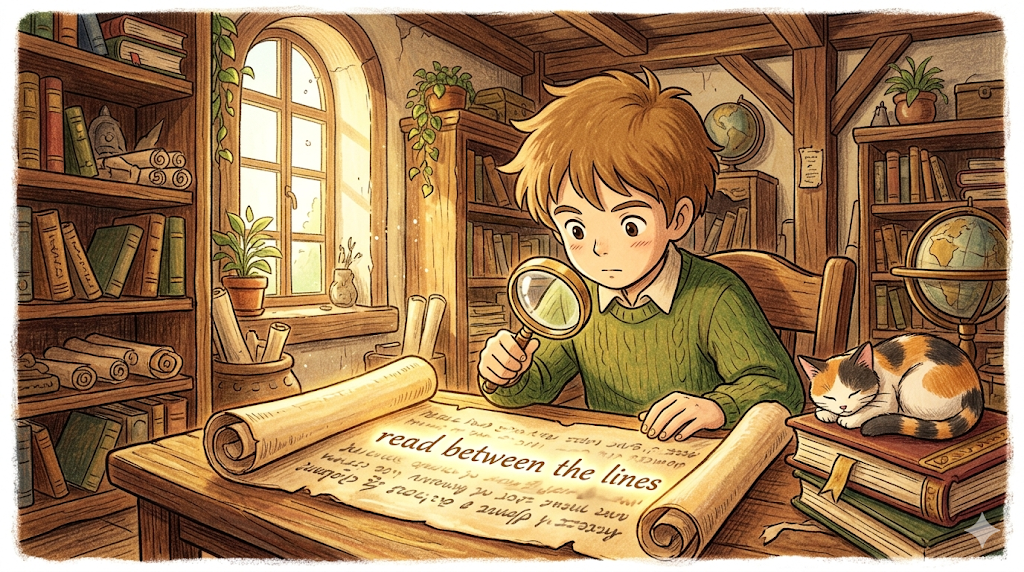
read between the lines [riːd bɪˈtwiːn ðə laɪnz]
(동사구) 행간을 읽다, 숨은 의미를 파악하다
직접 말하지 않은 것을 글이나 말 속에서 찾아내는 것을 강조하며, 수능에서 가장 자주 출제되는 표현입니다. 수능 독해 심리·사회·논리 지문에서 핵심적으로 등장합니다.
- She did not say she was unhappy, but if you read between the lines of her email, it was clear she was not at all pleased with how the project had gone. (그녀는 불행하다고 말하지 않았지만, 이메일의 행간을 읽으면 프로젝트가 진행된 방식에 전혀 만족하지 않는다는 것이 분명했다.)
- Good readers always read between the lines — they don't just take the words at face value but think carefully about what the writer might really be trying to say. (좋은 독자는 항상 행간을 읽는다 — 그들은 단순히 글자 그대로 받아들이지 않고 작가가 진짜로 말하려는 것이 무엇인지 신중하게 생각한다.)
- The essay argued that learning to read between the lines is one of the most useful skills a person can develop, because most important human communication happens not in the words spoken but in everything that surrounds them. (에세이는 행간을 읽는 법을 배우는 것이 사람이 개발할 수 있는 가장 유용한 기술 중 하나라고 주장했는데, 가장 중요한 인간 소통의 대부분이 말해진 단어가 아닌 그것을 둘러싼 모든 것에서 일어나기 때문이다.)
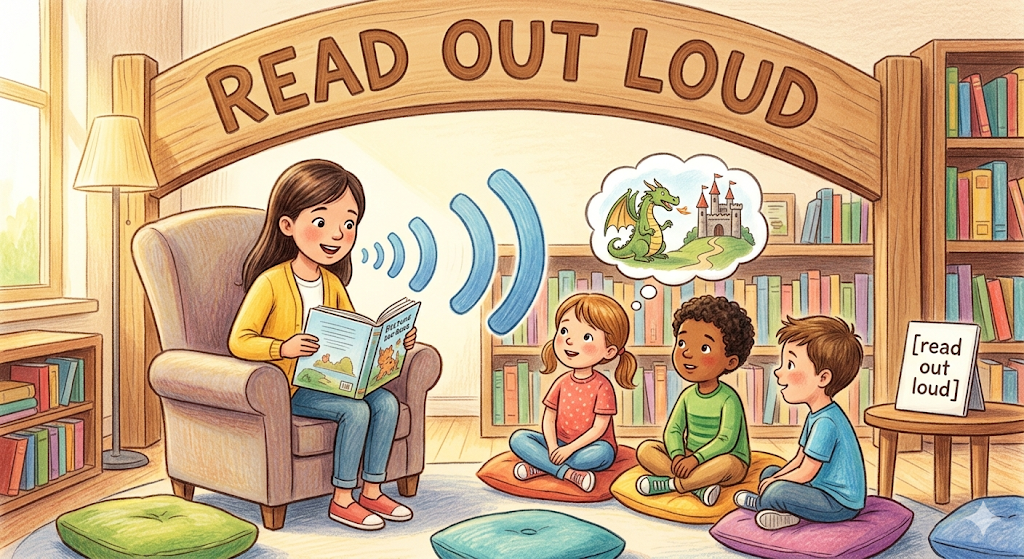
read out loud [riːd aʊt laʊd]
(동사구) 큰 소리로 읽다, 소리 내어 읽다
글을 혼자 조용히 읽는 것이 아니라 목소리를 내어 읽는 것을 강조합니다. 수능 독해 학술·일상·심리 지문에서 자주 등장합니다.
- The teacher asked them to read out loud in pairs so they could practise their pronunciation and help each other with any words they found difficult. (선생님은 발음을 연습하고 어려운 단어를 서로 도울 수 있도록 쌍으로 큰 소리로 읽으라고 했다.)
- She always read her essays out loud before handing them in, as she found that hearing the words helped her spot mistakes that she would miss when reading silently. (그녀는 항상 제출하기 전에 에세이를 큰 소리로 읽었는데, 단어를 듣는 것이 조용히 읽을 때 놓칠 실수를 발견하는 데 도움이 된다는 것을 알았기 때문이었다.)
- Research suggests that children who are read out loud to regularly from a young age develop stronger language skills than those who are not, which is why many teachers encourage parents to read with their children every evening. (연구에 따르면 어릴 때부터 정기적으로 큰 소리로 읽어주면 그렇지 않은 아이들보다 더 강한 언어 능력을 발달시킨다고 하며, 이것이 많은 선생님들이 부모들에게 매일 저녁 아이들과 함께 읽도록 장려하는 이유이다.)
숙어 그룹 묶음 1 — 독서·이해 read 핵심 패턴
표현 의미 핵심 뉘앙스 주요 맥락
| read between the lines | 행간을 읽다 | 직접 말하지 않은 숨은 의미를 찾아내는 것 | 심리·사회·수능 |
| read out loud | 큰 소리로 읽다 | 목소리를 내어 읽는 것 | 학술·일상·수능 |
| a good read | 재미있는 읽을거리 | 읽기 쉽고 재미있어서 즐겁게 읽을 수 있는 것 | 일상·문학·수능 |
이 세 표현은 모두 read의 "글에서 의미를 찾는" 이미지를 공유하되, 각각 표면 아래의 숨은 의미를 찾는 것(read between the lines)·소리를 내어 적극적으로 읽는 것(read out loud)·즐겁고 쉽게 읽히는 것(a good read)의 관점에서 접근합니다.
- The new novel was a good read — easy to follow when you read it out loud with a friend, but full of hidden ideas that rewarded anyone who took the time to read between the lines and think carefully about what the author was really trying to say. (새 소설은 재미있는 읽을거리였다 — 친구와 큰 소리로 읽으면 따라가기 쉬웠지만, 시간을 내어 행간을 읽고 작가가 진짜로 말하려는 것에 대해 신중하게 생각하는 사람에게 보답하는 숨겨진 아이디어로 가득했다.)
- She read the chapter out loud to help herself understand it better, and as she did she found herself naturally beginning to read between the lines, picking up on details she had completely missed the first time — which was what made the book such a good read. (그녀는 더 잘 이해하기 위해 챕터를 큰 소리로 읽었으며, 그렇게 하면서 자연스럽게 행간을 읽기 시작해 처음에 완전히 놓쳤던 세부 사항을 발견했다 — 이것이 책을 그렇게 재미있는 읽을거리로 만드는 것이었다.)
- A good read does not always need to be a great work of literature — sometimes it is simply something you enjoy reading out loud to someone you care about, full of moments that make you want to stop and read between the lines together to work out what happened next. (재미있는 읽을거리가 항상 훌륭한 문학 작품일 필요는 없다 — 때로는 단순히 아끼는 누군가에게 큰 소리로 읽기 즐거운 것으로, 멈추고 다음에 무슨 일이 일어났는지 알아내기 위해 함께 행간을 읽고 싶게 만드는 순간으로 가득한 것이다.)

a good read [ə ɡʊd riːd]
(명사구) 잘 읽히는 책, 재미있는 읽을거리
읽기 쉽고 재미있어서 즐겁게 읽을 수 있는 책이나 글을 강조합니다. 수능 독해 일상·문학 지문에서 자주 등장합니다.
- She told everyone she met that the author's latest book was a good read — not too long, full of great characters, and with an ending that she did not see coming at all. (그녀는 만나는 모든 사람에게 그 작가의 최신 책이 재미있는 읽을거리라고 말했다 — 너무 길지 않고, 훌륭한 등장인물로 가득하며, 전혀 예상치 못한 결말이 있었다고.)
- The review described it as a good read for a long journey, saying the story moved quickly and kept the reader guessing right up to the final page. (리뷰는 그것을 긴 여행에 재미있는 읽을거리로 묘사하며, 이야기가 빠르게 진행되고 마지막 페이지까지 독자가 계속 추측하게 만든다고 했다.)
- She believed that being a good read does not mean a book has to be easy — it means the writing pulls you in and makes you care about what happens, whether the story is simple or complex. (그녀는 재미있는 읽을거리가 되는 것이 책이 쉬워야 한다는 의미가 아니라고 믿었다 — 이야기가 단순하든 복잡하든 글이 당신을 끌어들이고 무슨 일이 일어나는지 관심을 갖게 만든다는 것을 의미한다는 것이었다.)

read into [riːd ˈɪntə]
(동사구) 과도하게 해석하다, 없는 의미를 찾다
실제로 의도하지 않은 의미나 중요성을 글이나 행동에서 찾아내는 것을 강조합니다. 수능 독해 심리·사회·논리 지문에서 자주 등장합니다.
- She told herself not to read into his silence too much — sometimes people are just tired, and it does not mean anything is wrong. (그녀는 그의 침묵을 너무 과도하게 해석하지 말라고 스스로에게 말했다 — 때로는 사람들이 단지 피곤할 뿐이고 그것이 문제가 있다는 의미가 아니라고.)
- The teacher warned the class not to read too much into a character's actions — sometimes a writer simply needed someone to open a door, and it did not carry any deeper symbolic meaning. (선생님은 학급에게 등장인물의 행동을 너무 과도하게 해석하지 말라고 경고했다 — 때로는 작가가 단순히 문을 열 누군가가 필요했을 뿐이며 더 깊은 상징적 의미를 담고 있지 않다고.)
- The essay argued that it is possible to read into almost any piece of writing more than its author intended, and that the best critics are those who can tell the difference between genuine meaning and something they have brought to the text themselves. (에세이는 거의 모든 글에서 작가가 의도한 것보다 더 많이 과도하게 해석하는 것이 가능하며, 가장 좋은 비평가는 진정한 의미와 자신이 텍스트에 가져온 것의 차이를 구별할 수 있는 사람이라고 주장했다.)
숙어 그룹 묶음 2 — 해석·판단 read 패턴
표현 의미 핵심 뉘앙스 주요 맥락
| read into | 과도하게 해석하다 | 실제 의도하지 않은 의미를 찾아내는 것 | 심리·사회·수능 |
| read up on | ~에 대해 공부하다 | 어떤 주제를 알기 위해 읽는 것 | 학술·일상·수능 |
| read someone's mind | 마음을 읽다 | 말하지 않아도 생각을 파악하는 것 | 일상·심리·수능 |
이 세 표현은 모두 read의 "겉 너머의 것을 파악하는" 이미지를 공유하되, 각각 없는 의미를 만들어내는 것(read into)·지식을 위해 능동적으로 읽는 것(read up on)·말하지 않은 생각을 파악하는 것(read someone's mind)의 관점에서 접근합니다.
- She had been reading up on psychology and had learned that people tend to read into others' behaviour far more than is usually warranted, and that true empathy is more like reading someone's mind through listening carefully than through guessing alone. (그녀는 심리학을 읽어 공부하고 있었으며 사람들이 보통 정당한 것보다 훨씬 더 많이 다른 사람의 행동을 과도하게 해석하는 경향이 있고, 진정한 공감은 추측만으로보다 주의 깊게 듣는 것을 통해 마음을 읽는 것에 더 가깝다는 것을 배웠다.)
- His ability to read people's minds was not magic — it came from years of reading up on human behaviour and learning not to read into what people did, but to listen and watch carefully before drawing any conclusions. (사람들의 마음을 읽는 그의 능력은 마법이 아니었다 — 그것은 수년간 인간 행동을 읽어 공부하고 사람들이 하는 것을 과도하게 해석하지 않고 어떤 결론을 내리기 전에 주의 깊게 듣고 관찰하는 법을 배운 데서 나온 것이었다.)
- She told her team to read up on the client before the meeting so they would not read into ordinary questions as complaints, and so they could almost read the client's mind by knowing enough about their background and concerns in advance. (그녀는 팀에게 회의 전에 고객에 대해 읽어 공부하라고 해서 평범한 질문을 불만으로 과도하게 해석하지 않도록 하고, 배경과 관심사에 대해 충분히 미리 알면 거의 고객의 마음을 읽을 수 있도록 했다.)

read up on [riːd ʌp ɒn]
(동사구) ~에 대해 공부하다, 자세히 읽어 알다
어떤 주제에 대해 더 많이 알기 위해 책이나 자료를 읽는 것을 강조합니다. 수능 독해 학술·일상 지문에서 자주 등장합니다.
- She read up on the disease before the doctor's appointment so she could understand what the doctor was saying and ask the right questions. (그녀는 의사가 하는 말을 이해하고 올바른 질문을 할 수 있도록 의사 예약 전에 그 질병에 대해 읽어 공부했다.)
- He decided to read up on the history of the area before moving there so he would feel more connected to where he was living from the first day. (그는 이사 첫날부터 살고 있는 곳에 더 연결된 느낌을 받기 위해 그곳으로 이사하기 전에 그 지역의 역사에 대해 읽어 공부하기로 결심했다.)
- The essay argued that students who take time to read up on a topic before class tend to get far more out of the lesson because they already have a framework for understanding what the teacher says. (에세이는 수업 전에 주제에 대해 읽어 공부하는 시간을 갖는 학생들이 선생님이 하는 말을 이해하는 틀이 이미 있기 때문에 수업에서 훨씬 더 많은 것을 얻는 경향이 있다고 주장했다.)

read someone's mind [riːd ˈsʌmwʌnz maɪnd]
(동사구) 마음을 읽다, 생각을 알아채다
다른 사람이 말하지 않아도 그 사람이 생각하는 것을 파악하는 것을 강조합니다. 수능 독해 심리·일상·문학 지문에서 자주 등장합니다.
- Her teacher seemed to read her mind — every time she was confused but too shy to ask, he would stop and explain the exact thing she was wondering about. (선생님은 그녀의 마음을 읽는 것 같았다 — 그녀가 혼란스럽지만 너무 부끄러워서 물어볼 수 없을 때마다 그는 멈추고 그녀가 궁금해하던 바로 그것을 설명했다.)
- She could not read his mind, so she decided the best thing to do was simply to ask directly rather than guess and risk getting it completely wrong. (그녀는 그의 마음을 읽을 수 없어서 추측해서 완전히 잘못될 위험을 감수하기보다 그냥 직접 물어보는 것이 최선이라고 결심했다.)
- The essay argued that good communication depends on making it unnecessary to read someone's mind — that when people express themselves clearly and honestly, they remove the need for guessing and create real understanding between each other. (에세이는 좋은 소통은 마음을 읽을 필요를 없애는 데 달려있다고 주장했다 — 사람들이 명확하고 솔직하게 자신을 표현할 때 추측의 필요성을 제거하고 서로 사이의 진정한 이해를 만든다는 것이었다.)
숙어 그룹 묶음 3 — 박식·상황 read 심화 패턴
표현 의미 핵심 뉘앙스 주요 맥락
| well-read | 독서를 많이 한, 박식한 | 많은 책을 읽어 다양한 분야에 지식이 풍부한 사람 | 학술·사회·수능 |
| read the room | 분위기를 읽다 | 사람들이 어떻게 느끼는지 눈치채고 행동하는 것 | 심리·사회·수능 |
| read through | 처음부터 끝까지 읽다 | 글 전체를 빠짐없이 쭉 읽거나 검토하는 것 | 학술·일상·수능 |
이 세 표현은 모두 read의 "의미를 완전히 파악하는" 이미지를 공유하되, 각각 책을 많이 읽어 지식이 풍부한 것(well-read)·상황을 빠르게 파악해 행동하는 것(read the room)·글 전체를 빠짐없이 확인하는 것(read through)의 관점에서 접근합니다.
- She was well-read enough to know that the best way to read the room in difficult situations is to pause, listen, and read through every signal the group is sending before deciding what to say or do next. (그녀는 어려운 상황에서 분위기를 읽는 가장 좋은 방법이 멈추고, 듣고, 다음에 무엇을 말하거나 할지 결정하기 전에 그룹이 보내는 모든 신호를 꼼꼼히 파악하는 것임을 알 만큼 독서를 많이 했다.)
- He read through the speech one final time before standing up, made a few small changes, and then — having spent years becoming well-read on the subject — trusted himself to read the room and adjust his delivery based on how the audience was responding. (그는 일어서기 전에 연설을 마지막으로 한 번 처음부터 끝까지 읽었으며, 몇 가지 작은 변경을 했고, 그 다음 — 수년간 그 주제에 대해 독서를 많이 해온 — 자신을 믿고 청중이 어떻게 반응하는지에 따라 전달 방식을 조정하기 위해 분위기를 읽었다.)
- The essay argued that being well-read is not only about knowing a lot — it is about developing the mental habits that make it easier to read the room in real life and to read through complex situations without jumping to conclusions. (에세이는 독서를 많이 하는 것이 단지 많이 아는 것이 아니라 실생활에서 분위기를 읽고 섣불리 결론을 내리지 않고 복잡한 상황을 꼼꼼히 파악하는 것을 더 쉽게 만드는 정신적 습관을 개발하는 것이라고 주장했다.)

well-read [welˈred]
(형용사) 독서를 많이 한, 박식한
많은 책을 읽어서 다양한 분야에 대한 지식이 풍부한 사람을 강조합니다. 수능 독해 학술·사회·일상 지문에서 자주 등장합니다.
- She was the most well-read person in the class, always able to connect what they were studying to something she had read in a different subject or book. (그녀는 학급에서 가장 독서를 많이 한 사람으로, 항상 공부하는 것을 다른 과목이나 책에서 읽은 것과 연결할 수 있었다.)
- Being well-read did not make him arrogant — it made him more curious, because the more he learned the more he realised how much he still did not know. (독서를 많이 하는 것이 그를 거만하게 만들지 않았다 — 그것이 그를 더 호기심 있게 만들었는데, 더 많이 배울수록 아직 알지 못하는 것이 얼마나 많은지 더 깨달았기 때문이었다.)
- The essay argued that being well-read is one of the best ways to develop empathy, because reading widely exposes people to lives, cultures, and experiences very different from their own, making it easier to understand and care about others. (에세이는 독서를 많이 하는 것이 공감을 개발하는 가장 좋은 방법 중 하나라고 주장했는데, 광범위하게 읽는 것이 사람들을 자신과 매우 다른 삶, 문화, 경험에 노출시켜 다른 사람들을 이해하고 아끼는 것을 더 쉽게 만들기 때문이다.)

read the room [riːd ðə ruːm]
(동사구) 분위기를 읽다, 상황을 파악하다
방 안의 사람들이 어떻게 느끼는지 눈치채고 그에 맞게 행동하는 것을 강조합니다. 수능 독해 심리·사회·일상 지문에서 핵심적으로 등장합니다.
- The speaker quickly read the room and understood that the audience wanted a shorter talk, so he cut out three sections and finished fifteen minutes ahead of schedule. (연사는 빠르게 분위기를 읽고 청중이 더 짧은 강의를 원한다는 것을 이해해서 세 섹션을 제거하고 일정보다 15분 일찍 끝냈다.)
- She had always been good at reading the room — she knew when people were bored, when they were excited, and when they just needed a short break before continuing. (그녀는 항상 분위기를 읽는 데 능숙했다 — 사람들이 지루할 때, 흥분할 때, 그리고 계속하기 전에 짧은 휴식이 필요할 때를 알았다.)
- The essay argued that reading the room is a social skill that can be learned — it involves paying attention to body language, the speed and tone of conversation, and the energy level of the people around you, rather than focusing only on what is being said. (에세이는 분위기를 읽는 것이 배울 수 있는 사회적 기술이라고 주장했다 — 그것은 말해지는 것에만 집중하기보다 몸짓 언어, 대화의 속도와 어조, 그리고 주변 사람들의 에너지 수준에 주의를 기울이는 것을 포함한다.)

read through [riːd θruː]
(동사구) 처음부터 끝까지 읽다, 검토하다
글 전체를 빠짐없이 쭉 읽거나 확인하는 것을 강조합니다. 수능 독해 학술·일상 지문에서 자주 등장합니다.
- She read through her notes after each lesson to make sure she had understood everything correctly and to fill in any gaps while the information was still fresh. (그녀는 각 수업 후에 메모를 처음부터 끝까지 읽어 모든 것을 올바르게 이해했는지 확인하고 정보가 아직 새로울 때 빈 부분을 채웠다.)
- He read through the agreement three times before signing it, because he knew that once he had signed, it would be very difficult to change anything without going through a long process. (그는 서명하기 전에 동의서를 세 번 처음부터 끝까지 읽었는데, 서명하면 긴 절차 없이는 어떤 것도 바꾸기 매우 어렵다는 것을 알았기 때문이었다.)
- The essay suggested that reading through a piece of writing from start to finish before making any changes is one of the most useful habits a writer can develop, because it helps you see the work as a whole rather than just as a collection of individual parts. (에세이는 어떤 변경을 하기 전에 글을 처음부터 끝까지 읽는 것이 작가가 개발할 수 있는 가장 유용한 습관 중 하나라고 제안했는데, 작품을 개별 부분의 모음이 아닌 전체로 보는 데 도움이 되기 때문이다.)
숙어 그룹 묶음 4 — 종합 read 패턴
표현 의미 핵심 뉘앙스 주요 맥락
| read between the lines | 행간을 읽다 | 직접 말하지 않은 숨은 의미를 찾아내는 것 | 심리·사회·수능 |
| read the room | 분위기를 읽다 | 사람들이 어떻게 느끼는지 눈치채고 행동하는 것 | 심리·사회·수능 |
| read into | 과도하게 해석하다 | 실제 의도하지 않은 의미를 찾아내는 것 | 심리·사회·수능 |
이 세 표현은 수능 독해에서 가장 자주 출제되는 read의 핵심 패턴입니다. read between the lines는 숨은 의미를 파악하는 것을, read the room은 사회적 상황을 파악하는 것을, read into는 없는 의미를 과도하게 해석하는 것을 각각 나타냅니다.
- She had learned the hard way that there is a thin line between reading between the lines and reading into things — the first helps you understand people better, while the second makes you see problems that are not really there, and the only way to tell the difference is to read the room carefully before deciding which one you are doing. (그녀는 어렵게 행간을 읽는 것과 과도하게 해석하는 것 사이에는 얇은 선이 있다는 것을 배웠다 — 첫 번째는 사람들을 더 잘 이해하는 데 도움이 되는 반면, 두 번째는 실제로 없는 문제를 보게 만든다, 그리고 어느 쪽을 하고 있는지 결정하기 전에 분위기를 주의 깊게 읽는 것이 구별하는 유일한 방법이다.)
- The essay argued that good communication requires all three skills — reading between the lines to understand what people are not saying, reading the room to know when and how to respond, and knowing when you are starting to read into things in a way that creates problems rather than solving them. (에세이는 좋은 소통은 세 가지 기술을 모두 필요로 한다고 주장했다 — 사람들이 말하지 않는 것을 이해하기 위한 행간 읽기, 언제 어떻게 반응할지 알기 위한 분위기 읽기, 그리고 문제를 해결하기보다 만드는 방식으로 과도하게 해석하기 시작하는 시점을 아는 것이다.)
- She concluded that the best relationships are built on trust, and that trust makes it possible to read between the lines accurately, to read the room without overthinking, and to catch yourself when you start to read into things simply because you are worried or tired — which is when most misunderstandings begin. (그녀는 가장 좋은 관계는 신뢰에 기반하며, 신뢰가 정확하게 행간을 읽고, 과도하게 생각하지 않고 분위기를 읽으며, 단지 걱정하거나 피곤할 때 — 대부분의 오해가 시작되는 때 — 에 과도하게 해석하기 시작하는 자신을 잡을 수 있게 한다고 결론지었다.)
전체 요약표
표현 의미 핵심 뉘앙스
| read | 읽다, 판단하다, 나타내다 | 읽기에서 해석·판단·공감·지식까지 확장 |
| read between the lines | 행간을 읽다 | 직접 말하지 않은 숨은 의미를 찾아내는 것 |
| read out loud | 큰 소리로 읽다 | 목소리를 내어 읽는 것 |
| a good read | 재미있는 읽을거리 | 읽기 쉽고 재미있어서 즐겁게 읽을 수 있는 것 |
| read into | 과도하게 해석하다 | 실제 의도하지 않은 의미를 찾아내는 것 |
| read up on | ~에 대해 공부하다 | 어떤 주제를 알기 위해 읽는 것 |
| read someone's mind | 마음을 읽다 | 말하지 않아도 생각을 파악하는 것 |
| well-read | 독서를 많이 한, 박식한 | 많은 책을 읽어 다양한 분야에 지식이 풍부한 사람 |
| read the room | 분위기를 읽다 | 사람들이 어떻게 느끼는지 눈치채고 행동하는 것 |
| read through | 처음부터 끝까지 읽다 | 글 전체를 빠짐없이 쭉 읽거나 검토하는 것 |
유의어 비교표

단어 공통점 뉘앙스 차이 예문
| read | 읽다, 파악하다 | 독서·해석·판단·나타내다, 비유 풍부 | She read the letter. |
| skim | 훑어 읽다 | 빠르게 중요 부분만 훑는 것 | He skimmed the article. |
| scan | 훑어보다 | 특정 정보를 찾기 위해 빠르게 보는 것 | She scanned the page. |
| browse | 가볍게 살펴보다 | 특별한 목적 없이 가볍게 보는 것 | He browsed the book. |
| study | 공부하다 | 이해하기 위해 집중해서 읽는 것 | She studied the text. |
유의어 예문 리스트
- (skim) She only had a few minutes before class so she skimmed the article to get the main idea, planning to come back and read it properly later in the day. (수업 전에 몇 분밖에 없어서 그녀는 주요 아이디어를 파악하기 위해 기사를 훑어 읽었으며, 그날 나중에 다시 돌아와 제대로 읽을 계획이었다.)
- (scan) He scanned the page for the word "deadline" so he could find out exactly when the work needed to be submitted without reading every line from the top. (그는 맨 위부터 모든 줄을 읽지 않고도 작업을 정확히 언제 제출해야 하는지 알아내기 위해 페이지에서 "마감일"이라는 단어를 훑어봤다.)
- (browse) She loved browsing through cookbooks even when she was not planning to make anything — just looking at the pictures and reading the descriptions made her feel happy and calm. (그녀는 아무것도 만들 계획이 없어도 요리책을 가볍게 살펴보는 것을 좋아했다 — 그냥 사진을 보고 설명을 읽는 것만으로도 행복하고 차분하게 느꼈다.)
- (study) She sat at her desk for two hours studying each paragraph of the poem carefully, making notes about every word choice and thinking about why the poet had decided to write it that way. (그녀는 책상에 앉아 두 시간 동안 시의 각 단락을 주의 깊게 공부하며, 모든 단어 선택에 대해 메모하고 시인이 왜 그런 방식으로 쓰기로 결정했는지 생각했다.)
결론 정리
read는 단순히 "읽다"가 아니라, 고대 영어 rǣdan(조언하다·해석하다·읽다)에서 출발해 글이나 상황에서 의미를 찾아내는 것에서 독서·행간 파악·분위기 읽기·마음 읽기·지식 쌓기·과도한 해석까지 확장되는 단어다 — read가 있는 곳엔 언제나 '단순한 독서가 아닌, 인간이 글과 상황과 사람 속에서 더 깊은 의미를 찾으려 하는 본능이 생생하게 살아숨쉬는' 생동감의 선언이 있다.
💡 read는 "글이나 상황에서 의미를 찾는 것에서 출발한" 생동감 넘치는 언어 — read between the lines · read the room · read into가 수능 최빈출.
🌟 초등학생 버전 — read는 읽다이지만, "행간을 읽다"(read between the lines), "분위기를 읽다"(read the room), "박식한"(well-read)처럼 우리 생활과 감정 곳곳에 살아있는 단어예요! 📚✨


