
- 분류 전체보기 (5448)

| 일 | 월 | 화 | 수 | 목 | 금 | 토 |
|---|---|---|---|---|---|---|
| 1 | 2 | |||||
| 3 | 4 | 5 | 6 | 7 | 8 | 9 |
| 10 | 11 | 12 | 13 | 14 | 15 | 16 |
| 17 | 18 | 19 | 20 | 21 | 22 | 23 |
| 24 | 25 | 26 | 27 | 28 | 29 | 30 |
| 31 |
- Excuse me
- call off
- Yeah
- Hey
- oh
- well
- By The Way
- I'm sorry
- Sure
- I'm not sure
- Actually
- work out
- make it
- Read between the lines
- too.
- Don't worry
- please.
- entrance fee
- Yes
- please?
- Sorry
- come up with
- I'm glad to hear that.
- once in a while
- OKay
- no
- hold on
- Please
- pick up
- Right?
- Today
- Total
인과함께
Day376 , rail, by rail, rail against, go off the rails, rail line, guard rail, third rail, on the rails, rail pass, over the rail 본문
Day376 , rail, by rail, rail against, go off the rails, rail line, guard rail, third rail, on the rails, rail pass, over the rail
미인생 2026. 5. 5. 05:47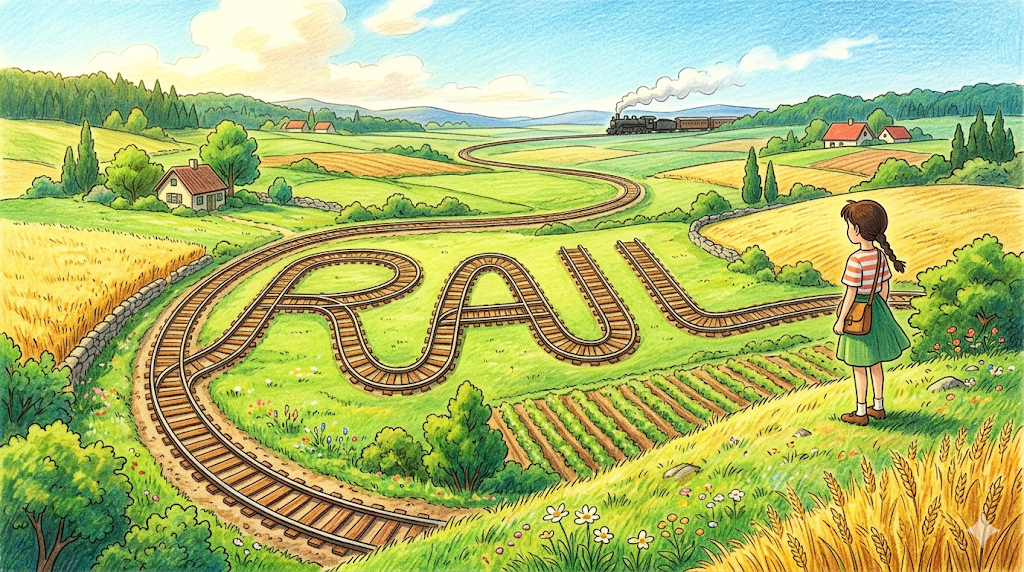
rail [reɪl]
(명사/동사) 철도, 난간, 레일 / 강하게 비난하다, 불평하다
The ambitious project began to go off the rails due to a lack of proper management.
(그 야심 찬 프로젝트는 적절한 관리의 부족으로 인해 궤도를 벗어나기 시작했다.)
단순히 "철도"로만 외우면 수능에서 반드시 틀립니다. rail은 "무언가를 안내하거나 지지하는 가늘고 긴 막대" 라는 핵심 이미지에서 출발해, 실제 기차 레일·난간·방향 이탈·강한 비판까지 폭넓게 쓰이는 핵심 다의어입니다. 특히 go off the rails(탈선하다, 잘못된 방향으로 가다), rail against(강하게 비난하다), on the rails(제대로 가고 있는) 패턴은 수능 독해 사회·심리·논리 지문에서 핵심적으로 등장합니다.
'rail'은 고대 프랑스어 reille(막대, 철봉)에서 유래했으며, 라틴어 regula(규칙, 막대)와 연결됩니다. 어원의 핵심 이미지는 "길을 안내하고 지지하는 긴 막대" 로, 단순한 철도 레일을 넘어 안내·지지·방향 이탈·비판·보호까지 확장되는 표현의 근원이 된 단어입니다.
1. by rail [baɪ reɪl]
(일상/사회/수능) "기차로, 철도로"를 뜻합니다. 교통수단으로서 기차나 철도를 이용하는 것을 강조합니다.
She decided to travel by rail because it was cheaper than flying and she could enjoy the view along the way. (그녀는 비행기보다 저렴하고 가는 길에 경치를 즐길 수 있기 때문에 기차로 여행하기로 결심했다.)
2. rail against [reɪl əˈɡenst]
(일상/심리/수능) "강하게 비난하다, 맹렬히 불평하다"를 뜻합니다. 어떤 것에 대해 매우 화가 나서 강하게 반대 의견을 표현하는 것을 강조합니다.
He railed against the new rule that stopped students from using their phones at lunch, saying it was unfair and treated them like children. (그는 학생들이 점심에 폰을 사용하지 못하게 하는 새 규칙에 강하게 반대하며, 불공평하고 아이처럼 대한다고 말했다.)
3. go off the rails [ɡəʊ ɒf ðə reɪlz]
(일상/심리/수능) "탈선하다, 잘못된 방향으로 가다"를 뜻합니다. 사람이나 계획이 올바른 방향을 잃고 통제할 수 없는 상태가 되는 것을 강조하며, 수능에서 가장 자주 출제되는 표현입니다.
The project went off the rails when two team members could not agree and stopped working together. (두 팀원이 동의하지 못하고 함께 일하기를 멈췄을 때 프로젝트가 탈선했다.)
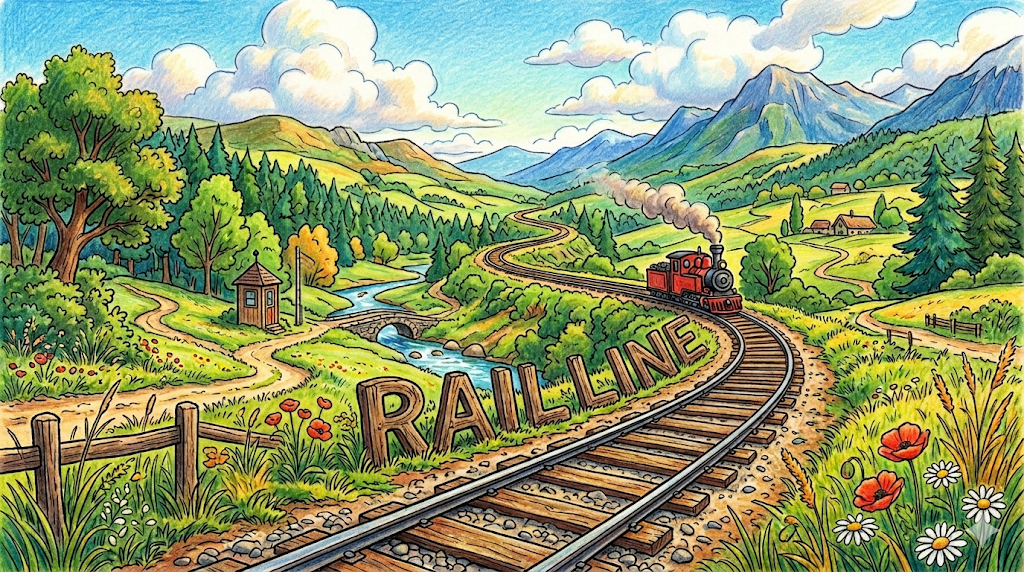
4. rail line [reɪl laɪn]
(일상/사회/수능) "철도 노선, 기찻길"을 뜻합니다. 기차가 운행하는 특정 노선이나 경로를 강조합니다.
The new rail line connecting the two cities cut the travel time from three hours to just one. (두 도시를 연결하는 새 철도 노선은 이동 시간을 3시간에서 단 1시간으로 줄였다.)
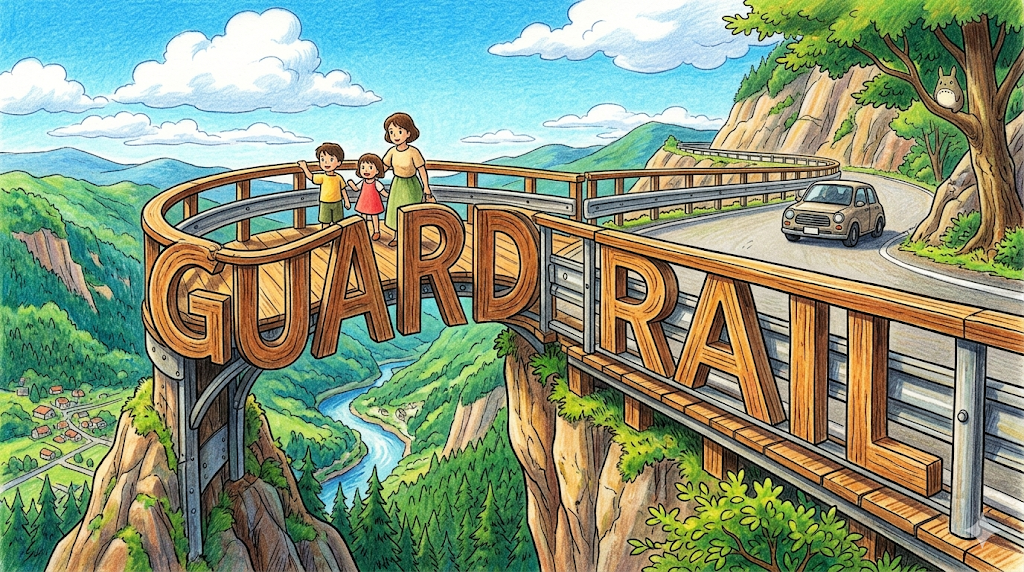
5. guard rail [ɡɑːrd reɪl]
(일상/안전/수능) "안전 난간, 가드레일"을 뜻합니다. 사람이나 차가 위험한 곳으로 떨어지는 것을 막기 위한 보호 막대를 강조합니다.
The workers put up a guard rail along the edge of the road where the hill dropped sharply so that drivers would be safe. (공사 인부들은 언덕이 급하게 내려가는 도로 가장자리를 따라 안전 난간을 설치해 운전자들이 안전할 수 있도록 했다.)
6. third rail [θɜːrd reɪl]
(사회/정치/수능) "제3의 레일 / 건드리면 안 되는 위험한 주제"를 뜻합니다. 전기가 흐르는 지하철 레일처럼, 비유적으로 너무 민감해서 건드리면 안 되는 정치적·사회적 주제를 강조합니다.
Healthcare costs are the third rail of politics in that country — any politician who tries to cut the budget quickly loses public support. (의료비는 그 나라 정치에서 건드리면 안 되는 주제이다 — 예산을 삭감하려는 정치인은 빠르게 대중의 지지를 잃는다.)
7. on the rails [ɒn ðə reɪlz]
(일상/심리/수능) "제대로 가고 있는, 올바른 방향으로 가는"을 뜻합니다. 계획이나 상황이 예상대로 잘 진행되고 있다는 것을 강조합니다.
After a difficult start, the project finally felt on the rails and the team was confident they would finish on time. (어려운 시작 후에, 프로젝트가 마침내 제대로 가고 있는 것 같았고 팀은 제때 끝낼 것이라고 확신했다.)
8. rail pass [reɪl pæs]
(일상/사회/수능) "철도 패스, 기차 정기권"을 뜻합니다. 정해진 기간 동안 기차를 자유롭게 이용할 수 있는 티켓을 강조합니다.
She bought a rail pass for the whole month, which let her travel anywhere in the country by train without paying for each trip separately. (그녀는 한 달 전체 철도 패스를 샀으며, 이것이 각 여행을 별도로 지불하지 않고도 기차로 나라 어디든 여행할 수 있게 해줬다.)
9. over the rail [ˈəʊvər ðə reɪl]
(일상/문학/수능) "난간 너머로, 경계를 넘어서"를 뜻합니다. 물리적으로 난간이나 경계 너머로 떨어지거나 넘어가는 것을 강조하며, 비유적으로 한계를 벗어나는 것을 나타냅니다.
The child leaned too far over the rail of the balcony, and her father quickly pulled her back to safety. (아이가 발코니 난간 너머로 너무 멀리 몸을 기울였으며, 아버지가 빠르게 안전하게 끌어당겼다.)
10. rail (동사: 강하게 비난하다) [reɪl]
(일상/심리/수능) 동사로 쓰여 "강하게 비난하다, 크게 불평하다"를 뜻합니다. 어떤 것에 대해 매우 강하고 화가 난 방식으로 말하는 것을 강조합니다.
She railed at the unfair decision for days, telling anyone who would listen that the result had been completely wrong. (그녀는 결과가 완전히 잘못됐다고 들을 사람 누구에게든 며칠 동안 불공평한 결정에 대해 강하게 비난했다.)

POINT 1. rail — 수능 최빈출 비유·어휘 패턴
rail은 수능 독해 사회·심리·논리 지문에서 비유적 표현으로 자주 출제됩니다.
go off the rails → 사람이나 계획이 통제를 잃고 잘못될 때 예) Everything went off the rails. (모든 것이 탈선했다.) rail against → 어떤 것에 강하게 반대하고 비난할 때 예) She railed against the system. (그녀는 시스템에 강하게 반대했다.) third rail → 너무 민감해서 건드리면 안 되는 주제를 나타낼 때 예) This issue is the third rail. (이 문제는 건드리면 안 되는 주제이다.)
POINT 2. rail / track / line — 수능 어휘 핵심 비교
이 세 단어는 수능에서 자주 혼동되는 어휘입니다.
rail → 레일 자체, 난간, 비유적으로 방향·비판 예) The train runs on rails. (기차는 레일 위를 달린다.) track → 기차나 동물이 지나간 길이나 자국 예) Follow the track into the forest. (길을 따라 숲으로 들어가라.) line → 노선, 줄, 선 예) Take line two to the station. (역까지 2호선을 타라.)
POINT 3. rail의 다양한 용법 — 수능 독해 문맥 파악 핵심
rail은 수능 독해에서 문맥에 따라 의미가 완전히 달라지는 핵심 단어입니다.
기차 레일 → The train runs on rails. (기차는 레일을 달린다.) 탈선 → He went off the rails. (그는 탈선했다.) 비난 → She railed against the law. (그녀는 법에 강하게 반대했다.) 제대로 → The plan is on the rails. (계획이 잘 진행되고 있다.) 위험 주제 → It is the third rail. (그것은 위험한 주제이다.)
(명사) ① 레일, 철도 (교통)
rail의 가장 기본적인 의미로, 기차가 달리는 금속 막대나 철도 시스템을 나타냅니다.
- The train moved smoothly along the rails at high speed, and the passengers could barely feel any movement inside the warm and quiet carriage. (기차는 빠른 속도로 레일을 따라 부드럽게 이동했으며, 승객들은 따뜻하고 조용한 객차 안에서 거의 움직임을 느낄 수 없었다.)
- Heavy rain had caused part of the rail to buckle overnight, so all morning services were cancelled and passengers were advised to find other ways to travel. (폭우로 인해 밤새 레일 일부가 뒤틀렸기 때문에 모든 아침 서비스가 취소됐으며 승객들은 다른 이동 방법을 찾도록 권고받았다.)
- The old rail network had been built over a hundred years ago and now needed major repairs to keep the trains running safely and on time. (오래된 철도 네트워크는 백 년 이상 전에 지어졌으며 기차가 안전하고 제때 운행되려면 이제 대규모 수리가 필요했다.)
(명사) ② 난간, 막대 (지지물)
rail은 사람이나 물건을 지지하거나 보호하기 위한 가로 막대를 나타냅니다.
- She held the rail tightly as she walked down the wet stairs, knowing one wrong step could be dangerous on such a slippery surface. (그녀는 젖은 계단을 걸어내려가면서 한 발짝만 잘못 디뎌도 그렇게 미끄러운 표면에서는 위험할 수 있다는 것을 알면서 난간을 꽉 잡았다.)
- The old man used the rail along the hospital corridor to steady himself as he practised walking again after his operation. (노인은 수술 후 다시 걷는 연습을 하면서 병원 복도를 따라 있는 난간을 이용해 몸을 지탱했다.)
- The children ran up to the rail at the top of the hill and looked out across the valley, pointing at the tiny farms and rivers far below. (아이들은 언덕 꼭대기의 난간으로 달려가 골짜기를 내다보며, 저 아래 작은 농장들과 강을 가리켰다.)
(동사) ③ 강하게 비난하다, 불평하다
rail은 동사로 쓰여 어떤 것에 대해 매우 강하고 화가 난 방식으로 말하는 것을 나타냅니다.
- She railed against the long wait at the hospital, saying the system needed to change so that patients did not have to sit for hours before seeing a doctor. (그녀는 병원에서의 긴 대기에 강하게 반대하며, 환자들이 의사를 만나기 전에 몇 시간씩 앉아있지 않아도 되도록 시스템이 바뀌어야 한다고 말했다.)
- He railed at the unfair marking of his test, pointing out several answers that he felt had been marked wrong when they were clearly correct. (그는 시험의 불공평한 채점에 강하게 반발하며, 분명히 맞는데 틀리게 채점됐다고 느끼는 여러 답을 지적했다.)
- The crowd railed against the decision to close the local sports centre, gathering outside the town hall to show how angry they were. (군중은 지역 스포츠 센터를 닫기로 한 결정에 강하게 반대하며, 얼마나 화가 났는지 보여주기 위해 시청 밖에 모였다.)

뉘앙스·의미 연결 흐름 표
핵심 이미지 연결 흐름 뉘앙스 요약
| 길을 안내하는 막대 | 철도 레일 → 철도 노선 → 기차로 | by rail, rail line, rail pass |
| 지지하고 보호하는 막대 | 난간 → 가드레일 → 난간 너머 | guard rail, over the rail |
| 방향과 상태의 비유 | 올바른 방향 → 탈선 → 위험한 주제 | on the rails, go off the rails, third rail |
어원 흐름 표
단어 구성 요소 의미 연결 흐름 뉘앙스 요약
| 라틴어 regula(규칙·막대) → 고대 프랑스어 reille | 길을 안내하고 지지하는 긴 막대 → rail | 안내와 지지의 핵심 이미지 |
| rail (명사/동사) | 레일 → 난간 → 철도 → 탈선 → 비판 | 안내 막대에서 방향·지지·비판까지 확장 |
품사별 의미 표
품사 의미 예문
| 명사 | 레일, 철도 | The train runs on rails. |
| 명사 | 난간, 지지대 | Hold the rail on the stairs. |
| 동사 | 강하게 비난하다 | She railed against the rule. |
| 관용구 | 기차로 | Travel by rail. |
| 관용구 | 탈선하다 | He went off the rails. |
| 관용구 | 제대로 가는 | The plan is on the rails. |
활용 예문 리스트
- After months of hard work, the team was finally on the rails and making real progress toward the finish line they had all been working so hard to reach. (수개월간의 열심히 한 작업 끝에, 팀은 마침내 제대로 가고 있었으며 모두가 열심히 도달하려고 일했던 결승선을 향해 진정한 진전을 이루고 있었다.)
- She railed against the new homework policy every evening at dinner, insisting that the amount was too much and left no time for sport or rest. (그녀는 매일 저녁 식사 시간에 새 숙제 정책에 강하게 반대하며, 양이 너무 많아서 운동이나 휴식을 위한 시간이 없다고 주장했다.)
- The local community was shocked when the popular youth club went off the rails after its leader left and nobody was there to keep things organised. (인기 있는 청소년 클럽이 리더가 떠난 후 아무도 일을 정리할 사람이 없어 탈선했을 때 지역 공동체는 충격을 받았다.)
- Travelling by rail across the country gave her a chance to see small towns and green fields that she would have missed completely if she had flown from one city to another. (나라를 횡단해 기차로 여행하는 것이 그녀에게 한 도시에서 다른 도시로 비행했다면 완전히 놓쳤을 작은 마을들과 초록 들판을 볼 기회를 줬다.)
- Tax increases for elderly people are the third rail of politics in this country — no government has been willing to touch the issue since the last one lost the election after trying. (노인들을 위한 세금 인상은 이 나라 정치에서 건드리면 안 되는 주제이다 — 마지막 정부가 시도한 후 선거에서 진 이후 어떤 정부도 이 문제를 건드리려 하지 않는다.)
전체 뉘앙스 설명
rail은 '길을 안내하고 지지하는 긴 막대에서 출발해 철도·난간·방향 유지·탈선·강한 비판·위험한 주제까지 확장되는 생동감 넘치는 언어'입니다.
track과의 차이: track은 기차나 동물이 지나간 길이나 자국을 강조하고, rail은 레일 자체나 난간, 비유적 방향을 강조합니다. bar와의 차이: bar는 가로막는 막대나 술집을 강조하고, rail은 안내하고 지지하는 막대와 철도를 강조합니다. criticise와의 차이: criticise는 분석적으로 단점을 지적하는 것을 강조하고, rail against는 감정적으로 매우 강하게 비난하는 것을 강조합니다.
마지막 핵심 정리
rail은 단순히 "철도"가 아닙니다 — 라틴어 regula(규칙·막대)에서 출발해, 철도 레일(by rail)에서 난간(guard rail)·철도 노선(rail line)·패스(rail pass)·방향 유지(on the rails)·탈선(go off the rails)·강한 비판(rail against)·위험한 주제(third rail)까지 확장되는 단어이며, go off the rails·rail against·on the rails의 비유적 의미 파악이 수능 핵심 출제 포인트입니다.
파생어 표
파생어 발음기호 품사 의미
| railing | [ˈreɪlɪŋ] | 명사 | 난간, 울타리 |
| railroad | [ˈreɪlrəʊd] | 명사/동사 | 철도 / 강요하다 |
| railway | [ˈreɪlweɪ] | 명사 | 철도, 기찻길 |
| derail | [dɪˈreɪl] | 동사 | 탈선시키다, 방해하다 |
| derailment | [dɪˈreɪlmənt] | 명사 | 탈선, 방해 |
| railing | [ˈreɪlɪŋ] | 명사 | 강한 비난, 욕설 |
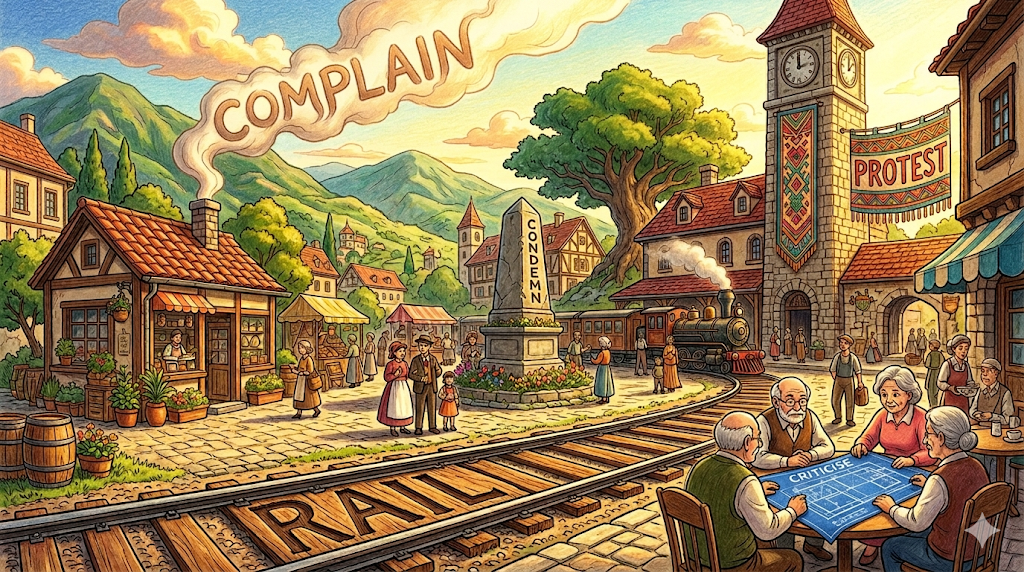
유의어 비교표
단어 공통점 뉘앙스 차이 예문
| rail | 막대, 비난 | 레일·난간·탈선·강한 비판, 비유 풍부 | She railed against the rule. |
| criticise | 비판하다 | 분석적으로 단점을 지적하는 것 | He criticised the plan. |
| complain | 불평하다 | 일상적으로 불만을 표현하는 것 | She complained about the noise. |
| protest | 항의하다 | 공개적으로 반대 의사를 표현하는 것 | They protested the decision. |
| condemn | 강하게 비난하다 | 도덕적으로 옳지 않다고 강하게 비난하는 것 | She condemned the action. |
유의어 예문 리스트
- (criticise) The teacher criticised the essay not to be unkind but to help the student see exactly what needed to be improved before the final version was handed in. (선생님은 불친절하게 구는 것이 아니라 학생이 최종 버전을 제출하기 전에 무엇이 개선되어야 하는지 정확히 볼 수 있도록 에세이를 비판했다.)
- (complain) He complained to the teacher that the group work was unfair because some students were doing most of the work while others were not doing their share. (그는 일부 학생들이 대부분의 일을 하는 반면 다른 학생들은 자신의 몫을 하지 않아 모둠 활동이 불공평하다고 선생님에게 불평했다.)
- (protest) The students protested outside the school office to show that they disagreed with the new rule about not being allowed to bring food from home. (학생들은 집에서 음식을 가져오지 못하게 하는 새 규칙에 동의하지 않는다는 것을 보여주기 위해 학교 사무실 밖에서 항의했다.)
- (condemn) The head teacher condemned the bullying that had taken place, making it clear to all students that such behaviour would never be accepted in their school. (교장 선생님은 발생한 괴롭힘을 강하게 비난하며, 그런 행동이 학교에서 결코 받아들여지지 않을 것임을 모든 학생에게 분명히 했다.)
결론 정리
rail은 단순히 "철도"가 아니라, 라틴어 regula(규칙·막대)에서 출발해 길을 안내하고 지지하는 긴 막대에서 철도·난간·방향 유지·탈선·강한 비판·위험한 주제까지 확장되는 단어다 — rail이 있는 곳엔 언제나 '단순한 막대가 아닌, 인간이 방향을 찾고·지지를 받고·탈선을 경험하고·강하게 맞서는 방식이 생생하게 살아숨쉬는' 생동감의 선언이 있다.
💡 rail은 "길을 안내하고 지지하는 막대에서 출발한" 생동감 넘치는 언어 — go off the rails · rail against · on the rails가 수능 최빈출.
🌟 초등학생 버전 — rail은 기차가 달리는 레일이지만, "탈선하다"(go off the rails), "강하게 반대하다"(rail against), "잘 되고 있는"(on the rails)처럼 우리 생활과 감정 곳곳에 살아있는 단어예요! 🚂✨

by rail [baɪ reɪl]
(전치사구) 기차로, 철도로
교통수단으로서 기차나 철도를 이용하는 것을 강조합니다. 수능 독해 일상·사회·환경 지문에서 자주 등장합니다.
- The school trip was planned to go by rail because it was the safest and most affordable option for a large group of students travelling together. (학교 여행은 함께 여행하는 대규모 학생 그룹에게 가장 안전하고 저렴한 선택이었기 때문에 기차로 가도록 계획됐다.)
- She always preferred to travel by rail because she could read, sleep, or just watch the changing landscape from the window without having to focus on driving. (그녀는 운전에 집중하지 않고도 책을 읽거나, 자거나, 창문에서 변화하는 풍경을 바라볼 수 있기 때문에 항상 기차로 여행하는 것을 선호했다.)
- The essay argued that sending goods by rail instead of by road reduces fuel use and cuts pollution, making it a much smarter choice for the environment in the long run. (에세이는 도로 대신 기차로 상품을 보내면 연료 사용을 줄이고 오염을 낮춰, 장기적으로 환경에 훨씬 더 현명한 선택이라고 주장했다.)

rail against [reɪl əˈɡenst]
(동사구) 강하게 비난하다, 맹렬히 불평하다
어떤 것에 대해 매우 화가 나서 강하게 반대 의견을 표현하는 것을 강조합니다. 수능 독해 사회·심리·문학 지문에서 핵심적으로 등장합니다.
- She spent the whole bus ride home railing against the teacher's decision to cancel the class trip, saying it was unfair on students who had been looking forward to it for weeks. (그녀는 집으로 가는 버스 전체를 수업 여행을 취소하기로 한 선생님의 결정에 강하게 반대하며, 몇 주 동안 기대해왔던 학생들에게 불공평하다고 말하면서 보냈다.)
- The author railed against the idea that young people do not read books anymore, pointing out that library visits and book sales had actually gone up in the past five years. (작가는 젊은 사람들이 더 이상 책을 읽지 않는다는 생각에 강하게 반대하며, 지난 5년 동안 도서관 방문과 도서 판매가 실제로 증가했다고 지적했다.)
- The essay noted that railing against something can feel satisfying in the moment but rarely leads to real change unless it is paired with a clear idea of what should happen instead. (에세이는 무언가에 강하게 반대하는 것이 그 순간에는 만족스럽게 느껴질 수 있지만 대신 무슨 일이 일어나야 하는지에 대한 명확한 아이디어와 함께하지 않으면 거의 실제 변화로 이어지지 않는다고 지적했다.)
숙어 그룹 묶음 1 — 방향·이동 rail 핵심 패턴
표현 의미 핵심 뉘앙스 주요 맥락
| by rail | 기차로 | 교통수단으로서 철도를 이용하는 것 | 일상·사회·수능 |
| rail against | 강하게 비난하다 | 화가 나서 강하게 반대 의견을 표현하는 것 | 사회·심리·수능 |
| go off the rails | 탈선하다 | 올바른 방향을 잃고 통제 불능이 되는 것 | 심리·사회·수능 |
이 세 표현은 모두 rail의 "방향을 안내하는 막대" 이미지를 공유하되, 각각 레일을 따라 이동하는 것(by rail)·레일 위의 방향에 강하게 반발하는 것(rail against)·레일에서 완전히 벗어나는 것(go off the rails)의 관점에서 접근합니다.
- She used to travel by rail every week, but after the service went off the rails with repeated delays and cancellations, she started railing against the train company at every opportunity. (그녀는 매주 기차로 여행하곤 했지만, 반복되는 지연과 취소로 서비스가 탈선한 후 모든 기회마다 기차 회사에 강하게 반대하기 시작했다.)
- The project had started well, travelling by rail toward its goals as planned, but when two key members left, it went off the rails completely, and the team leader spent weeks railing against the poor planning that had allowed such important people to leave without replacement. (프로젝트는 계획대로 목표를 향해 기차를 타고 잘 시작됐지만, 두 명의 핵심 구성원이 떠났을 때 완전히 탈선했으며, 팀 리더는 그렇게 중요한 사람들이 대체자 없이 떠나게 한 형편없는 계획에 강하게 반대하며 몇 주를 보냈다.)
- She argued that travelling by rail rather than by car teaches you patience — and that learning to deal with delays calmly rather than railing against them is good practice for life in general, since most things worth having require you to stay on the rails even when everything seems to be going off them. (그녀는 차보다 기차로 여행하는 것이 인내를 가르쳐준다고 주장했다 — 그리고 지연에 강하게 반대하는 것이 아니라 차분하게 대처하는 법을 배우는 것이 일반적으로 인생에 좋은 연습이며, 가질 가치가 있는 대부분의 것들은 모든 것이 탈선하는 것처럼 보일 때도 제대로 가도록 요구하기 때문이라고 했다.)

go off the rails [ɡəʊ ɒf ðə reɪlz]
(동사구) 탈선하다, 잘못된 방향으로 가다
사람이나 계획이 올바른 방향을 잃고 통제할 수 없는 상태가 되는 것을 강조하며, 수능에서 가장 자주 출제되는 표현입니다. 수능 독해 심리·사회·논리 지문에서 핵심적으로 등장합니다.
- The school play went off the rails on the first night when the lead actor forgot his lines and the whole cast had to improvise for several minutes. (학교 연극은 주연 배우가 대사를 잊어버리고 전체 출연진이 몇 분 동안 즉흥 연기를 해야 했을 때 첫날 밤 탈선했다.)
- She could see that her friend was going off the rails and took the time to sit with her and listen without judging, which turned out to be the most helpful thing anyone could have done. (그녀는 친구가 탈선하고 있다는 것을 알아채고 판단하지 않고 함께 앉아 들어주는 시간을 가졌는데, 이것이 누구라도 할 수 있는 가장 도움이 되는 일로 밝혀졌다.)
- The essay argued that people usually do not go off the rails suddenly — it happens gradually, one small step at a time, which is why early support and honest conversations matter so much before things get too hard to fix. (에세이는 사람들이 보통 갑자기 탈선하지 않는다고 주장했다 — 한 번에 한 작은 단계씩 점진적으로 일어나며, 이것이 일이 너무 고치기 어렵게 되기 전에 초기 지원과 솔직한 대화가 그렇게 중요한 이유라고 했다.)
rail line [reɪl laɪn]
(명사구) 철도 노선, 기찻길
기차가 운행하는 특정 노선이나 경로를 강조합니다. 수능 독해 사회·환경·역사 지문에서 자주 등장합니다.
- The new rail line made it easy for people in small towns to get to the city for work, which reduced the number of cars on the road every morning. (새 철도 노선이 작은 마을의 사람들이 일하러 도시에 가기 쉽게 만들었으며, 매일 아침 도로의 차 수를 줄였다.)
- She studied the map carefully to find the best rail line to take, since some routes required changing trains twice and others went all the way without stopping. (그녀는 어떤 노선은 기차를 두 번 갈아타야 하고 다른 노선은 멈추지 않고 끝까지 가기 때문에 타기 가장 좋은 철도 노선을 찾기 위해 지도를 주의 깊게 연구했다.)
- The essay noted that building a rail line through a mountain area is very expensive and difficult, but it can connect communities that were previously cut off and open up economic opportunities that would not otherwise exist. (에세이는 산악 지역을 통해 철도 노선을 건설하는 것이 매우 비싸고 어렵지만, 이전에 고립됐던 지역 사회를 연결하고 그렇지 않으면 존재하지 않았을 경제적 기회를 열 수 있다고 지적했다.)
숙어 그룹 묶음 2 — 안전·보호 rail 패턴
표현 의미 핵심 뉘앙스 주요 맥락
| rail line | 철도 노선 | 기차가 운행하는 특정 노선이나 경로 | 사회·환경·수능 |
| guard rail | 안전 난간 | 위험한 곳으로 떨어지는 것을 막는 보호 막대 | 일상·안전·수능 |
| over the rail | 난간 너머로 | 난간이나 경계 너머로 넘어가는 것 | 일상·문학·수능 |
이 세 표현은 모두 rail의 "경계와 보호를 나타내는" 이미지를 공유하되, 각각 이동을 안내하는 경계(rail line)·위험으로부터 보호하는 경계(guard rail)·그 경계를 넘어가는 것(over the rail)의 관점에서 접근합니다.
- The new rail line along the coast was built with guard rails on both sides where the track ran close to the cliff edge, and strict rules were put in place to stop anyone from leaning over the rail while the train was moving. (절벽 가장자리에 가까운 곳을 달리는 트랙 양쪽에 안전 난간을 설치하고 기차가 달리는 동안 아무도 난간 너머로 몸을 기울이지 못하도록 엄격한 규칙이 마련된 해안을 따라 새 철도 노선이 건설됐다.)
- She walked along the mountain path carefully, staying close to the guard rail and looking straight ahead rather than over the rail into the steep drop below, while keeping in mind that the rail line they could hear in the distance was the way they would eventually return to the town. (그녀는 아래 급경사 아래로 난간 너머를 보기보다 안전 난간 가까이에 머물며 똑바로 앞을 바라보면서 산길을 주의 깊게 걸었으며, 멀리서 들리는 철도 노선이 결국 마을로 돌아갈 길이라는 것을 명심했다.)
- The essay used all three images together — the rail line as the path you are meant to follow, the guard rail as the protection that keeps you from falling off, and the temptation to look over the rail as the human tendency to be drawn to the very edge of what is safe — to describe how good systems both guide people and protect them from their own worst impulses. (에세이는 세 가지 이미지를 모두 함께 사용했다 — 철도 노선을 따라야 할 경로로, 안전 난간을 떨어지는 것을 막는 보호로, 난간 너머를 보고 싶은 유혹을 안전한 것의 바로 가장자리로 이끌리는 인간의 경향으로 — 좋은 시스템이 사람들을 안내하는 동시에 자신의 최악의 충동으로부터 보호하는 방법을 묘사하기 위해.)
guard rail [ɡɑːrd reɪl]
(명사구) 안전 난간, 가드레일
사람이나 차가 위험한 곳으로 떨어지는 것을 막기 위한 보호 막대를 강조합니다. 수능 독해 일상·안전·사회 지문에서 자주 등장합니다.
- The council put guard rails along the edge of the school's outdoor stage so that young children could perform without their parents worrying about them falling off. (위원회는 어린 아이들이 부모님이 떨어질 것을 걱정하지 않고 공연할 수 있도록 학교 야외 무대 가장자리를 따라 안전 난간을 설치했다.)
- After the accident on the mountain road, everyone agreed that guard rails should be put in place before the winter, when ice made the roads far more dangerous than they already were. (산길에서의 사고 이후, 모든 사람이 이미 위험한 도로를 훨씬 더 위험하게 만드는 얼음이 생기는 겨울 전에 안전 난간이 설치되어야 한다고 동의했다.)
- The essay used guard rails as a metaphor for the kind of rules and boundaries that help young people stay safe while still giving them space to explore and grow without feeling that everything is locked down. (에세이는 안전 난간을 젊은 사람들이 모든 것이 잠겨있다고 느끼지 않으면서도 탐험하고 성장할 공간을 주면서 안전하게 지내도록 돕는 규칙과 경계의 일종에 대한 은유로 사용했다.)

third rail [θɜːrd reɪl]
(명사구) 제3의 레일 / 건드리면 안 되는 위험한 주제
전기가 흐르는 지하철 레일처럼, 비유적으로 너무 민감해서 건드리면 안 되는 정치적·사회적 주제를 강조합니다. 수능 독해 사회·정치·논리 지문에서 핵심적으로 등장합니다.
- The essay question asked students to discuss a third rail issue in their community — something that people felt strongly about but rarely talked about openly because they feared conflict or being judged. (에세이 질문은 학생들에게 지역 사회에서 건드리면 안 되는 주제, 즉 사람들이 강하게 느끼지만 갈등이나 판단받는 것이 두려워서 공개적으로 거의 이야기하지 않는 것에 대해 토론하도록 요청했다.)
- She knew the topic was a third rail in her classroom, but she felt that avoiding it entirely would not help her students think clearly about the world they were growing up in. (그녀는 그 주제가 교실에서 건드리면 안 되는 주제라는 것을 알았지만, 그것을 완전히 피하는 것이 학생들이 자라고 있는 세상에 대해 명확하게 생각하는 데 도움이 되지 않을 것이라고 느꼈다.)
- The essay argued that every society has its own third rails — subjects that have become so charged with emotion and identity that rational discussion becomes almost impossible — and that learning to talk about them calmly is one of the most important and most difficult things a democracy can try to do. (에세이는 모든 사회는 자체 건드리면 안 되는 주제를 갖고 있다고 주장했다 — 감정과 정체성으로 너무 충전되어 합리적인 토론이 거의 불가능해진 주제들 — 그리고 그것들에 대해 차분하게 이야기하는 법을 배우는 것이 민주주의가 하려고 할 수 있는 가장 중요하고 가장 어려운 일 중 하나라고 했다.)
숙어 그룹 묶음 3 — 상태·능력 rail 심화 패턴
표현 의미 핵심 뉘앙스 주요 맥락
| third rail | 건드리면 안 되는 주제 | 너무 민감해서 건드리기 위험한 정치·사회적 주제 | 사회·정치·수능 |
| on the rails | 제대로 가고 있는 | 계획이나 상황이 예상대로 잘 진행되고 있는 것 | 심리·사회·수능 |
| rail pass | 철도 패스 | 정해진 기간 동안 기차를 자유롭게 이용하는 티켓 | 일상·사회·수능 |
이 세 표현은 모두 rail의 "방향과 이동을 통제하는" 이미지를 공유하되, 각각 건드리기 위험한 레일(third rail)·레일 위에서 올바르게 이동하는 것(on the rails)·레일 시스템을 자유롭게 이용하는 권한(rail pass)의 관점에서 접근합니다.
- Once she had a rail pass, travelling felt wonderfully easy — everything was on the rails, she could go where she liked without worrying about cost, and for the first time in weeks she stopped railing against the stress of planning every detail in advance. (철도 패스가 생기자마자 여행은 놀랍도록 쉽게 느껴졌다 — 모든 것이 제대로 가고 있었고, 비용 걱정 없이 원하는 곳 어디든 갈 수 있었으며, 몇 주 만에 처음으로 모든 세부 사항을 미리 계획하는 스트레스에 강하게 반대하는 것을 멈췄다.)
- The debate about whether to change the rules of the rail pass scheme became a third rail in local politics — everyone had strong views, nobody wanted to make the first move, and the project stayed on the rails only because the argument was never fully resolved and the old system continued by default. (철도 패스 제도의 규칙을 바꿀지에 대한 논쟁이 지역 정치에서 건드리면 안 되는 주제가 됐다 — 모든 사람이 강한 의견을 갖고 있었고, 아무도 먼저 나서려 하지 않았으며, 프로젝트가 논쟁이 완전히 해결되지 않고 구 시스템이 기본적으로 계속됐기 때문에 제대로 가고 있었다.)
- Getting a project on the rails after it has gone off them is a bit like buying a rail pass after you have already missed several trains — it is still possible, and it may still take you where you want to go, but you have to be honest about what you lost along the way and what it will take to recover the time and trust of everyone involved. (프로젝트가 탈선한 후 제대로 되게 하는 것은 이미 기차를 여러 번 놓친 후 철도 패스를 사는 것과 약간 비슷하다 — 여전히 가능하며 원하는 곳으로 데려다 줄 수 있지만, 가는 길에 잃어버린 것과 관련된 모든 사람의 시간과 신뢰를 회복하는 데 무엇이 필요한지에 대해 솔직해야 한다.)

on the rails [ɒn ðə reɪlz]
(관용구) 제대로 가고 있는, 올바른 방향으로 가는
계획이나 상황이 예상대로 잘 진행되고 있다는 것을 강조합니다. 수능 독해 심리·사회·일상 지문에서 자주 등장합니다.
- It had been a rough few weeks, but by the end of the month the team felt that things were finally on the rails again and everyone could focus on doing good work rather than dealing with problems. (몇 주가 힘들었지만, 달 말까지 팀은 일이 마침내 다시 제대로 가고 있다고 느꼈으며 모든 사람이 문제를 처리하는 것이 아닌 좋은 일을 하는 데 집중할 수 있었다.)
- Her teacher told her that as long as she kept her homework on the rails and stayed organised, she had every chance of doing well in the final exams. (선생님은 그녀가 숙제를 제대로 하고 체계적으로 유지하는 한 기말 시험에서 잘할 모든 기회가 있다고 말했다.)
- The essay noted that keeping a long project on the rails requires not just a good plan at the start but regular check-ins along the way to make sure things have not quietly drifted off course without anyone noticing. (에세이는 긴 프로젝트를 제대로 유지하는 것은 처음의 좋은 계획뿐만 아니라 아무도 알아채지 못한 채 조용히 방향을 잃지 않았는지 확인하기 위한 정기적인 점검이 필요하다고 지적했다.)

rail pass [reɪl pæs]
(명사구) 철도 패스, 기차 정기권
정해진 기간 동안 기차를 자유롭게 이용할 수 있는 티켓을 강조합니다. 수능 독해 일상·사회·여행 지문에서 자주 등장합니다.
- She bought a seven-day rail pass before her trip and used it to visit six different towns, spending very little and seeing far more than she would have done if she had driven. (그녀는 여행 전에 7일 철도 패스를 사서 여섯 개의 다른 마을을 방문하는 데 사용했으며, 운전했을 경우보다 훨씬 적은 비용으로 훨씬 더 많은 것을 봤다.)
- He had forgotten to bring his rail pass to the station and had to pay for a single ticket instead, which ended up costing him three times as much as the pass itself would have on a daily basis. (그는 역에 철도 패스를 가져오는 것을 잊어서 대신 단일 티켓을 사야 했으며, 이것이 하루 기준으로 패스 자체보다 세 배나 더 많은 비용이 들었다.)
- The essay pointed out that a rail pass encourages people to explore places they might never have chosen if they had to pay for each trip separately, which is one of the reasons why they are such a popular and effective way to encourage travel by train. (에세이는 철도 패스가 사람들이 각 여행을 별도로 지불해야 한다면 결코 선택하지 않았을 장소를 탐험하도록 장려한다고 지적했으며, 이것이 그것이 기차 여행을 장려하는 그렇게 인기 있고 효과적인 방법인 이유 중 하나라고 했다.)

over the rail [ˈəʊvər ðə reɪl]
(전치사구) 난간 너머로, 경계를 넘어서
물리적으로 난간이나 경계 너머로 떨어지거나 넘어가는 것을 강조하며, 비유적으로 한계를 벗어나는 것을 나타냅니다. 수능 독해 일상·문학·심리 지문에서 자주 등장합니다.
- She leaned carefully over the rail of the viewing platform to take a photo, making sure to keep a firm hold with one hand so she stayed safe at the great height. (그녀는 한 손으로 단단히 잡아 그 높은 곳에서 안전하게 있으면서 사진을 찍기 위해 전망대 난간 너머로 조심스럽게 몸을 기울였다.)
- He dropped his hat over the rail of the bridge by accident and watched it land on a flat rock below, wondering whether there was any way to get it back. (그는 실수로 다리 난간 너머로 모자를 떨어뜨렸으며, 아래 평평한 바위에 착지하는 것을 바라보며 다시 가져올 방법이 있는지 궁금해했다.)
- The essay used the image of looking over the rail to describe the moment when a person can see clearly both where they are standing and how far they could fall — and argued that this dual awareness is essential to making wise choices, since someone who cannot see the drop does not value the safety of solid ground. (에세이는 난간 너머를 바라보는 이미지를 사람이 자신이 서 있는 곳과 얼마나 멀리 떨어질 수 있는지를 명확하게 볼 수 있는 순간을 묘사하기 위해 사용했다 — 그리고 이 이중적 인식이 현명한 선택을 하는 데 필수적이라고 주장했는데, 떨어지는 것을 볼 수 없는 사람은 단단한 땅의 안전을 가치 있게 여기지 않기 때문이라고 했다.)
숙어 그룹 묶음 4 — 종합 rail 패턴
표현 의미 핵심 뉘앙스 주요 맥락
| go off the rails | 탈선하다 | 올바른 방향을 잃고 통제 불능이 되는 것 | 심리·사회·수능 |
| rail against | 강하게 비난하다 | 화가 나서 강하게 반대 의견을 표현하는 것 | 사회·심리·수능 |
| on the rails | 제대로 가고 있는 | 계획이나 상황이 예상대로 잘 진행되고 있는 것 | 심리·사회·수능 |
이 세 표현은 수능 독해에서 가장 자주 출제되는 rail의 핵심 패턴입니다. go off the rails는 방향을 잃는 것을, rail against는 강하게 맞서는 것을, on the rails는 올바른 방향으로 가는 것을 각각 나타냅니다.
- She had railed against the new system for months, convinced it would cause everything to go off the rails, but once she saw it working in practice she had to admit that things were actually on the rails and running more smoothly than before. (그녀는 모든 것이 탈선할 것이라고 확신하며 수개월 동안 새 시스템에 강하게 반대했지만, 실제로 작동하는 것을 보자 일이 실제로 제대로 가고 이전보다 더 원활하게 돌아가고 있다는 것을 인정해야 했다.)
- The essay argued that the best teams are ones that can recognize when things are starting to go off the rails before they have gone too far, that do not waste energy railing against whoever they blame for it, and that focus instead on the practical question of how to get things back on the rails as quickly as possible. (에세이는 가장 좋은 팀은 일이 너무 멀리 가기 전에 탈선하기 시작한다는 것을 알아채고, 누구를 비난하든 그것에 강하게 반대하는 데 에너지를 낭비하지 않으며, 대신 가능한 한 빨리 다시 제대로 가는 방법에 대한 실질적인 질문에 집중하는 팀이라고 주장했다.)
- She concluded that whether we go off the rails, spend time railing against what went wrong, or manage to stay on the rails through a difficult patch depends less on our circumstances than on our habits of thinking — on whether we have learned to be honest about problems early, to stay calm when things get hard, and to ask for help before a small difficulty becomes a large one. (그녀는 우리가 탈선하거나, 무엇이 잘못됐는지에 강하게 반대하며 시간을 보내거나, 어려운 시기에도 제대로 가는 것을 유지하는지가 우리의 상황보다 우리의 사고 습관에 더 달려있다고 결론지었다 — 일찍 문제에 대해 솔직해지고, 일이 어려워질 때 차분하게 있으며, 작은 어려움이 큰 것이 되기 전에 도움을 요청하는 것을 배웠는지에 달려있다고.)
전체 요약표
표현 의미 핵심 뉘앙스
| rail | 레일, 난간 / 강하게 비난하다 | 안내 막대에서 방향·지지·비판까지 확장 |
| by rail | 기차로 | 교통수단으로서 철도를 이용하는 것 |
| rail against | 강하게 비난하다 | 화가 나서 강하게 반대 의견을 표현하는 것 |
| go off the rails | 탈선하다 | 올바른 방향을 잃고 통제 불능이 되는 것 |
| rail line | 철도 노선 | 기차가 운행하는 특정 노선이나 경로 |
| guard rail | 안전 난간 | 위험한 곳으로 떨어지는 것을 막는 보호 막대 |
| third rail | 건드리면 안 되는 주제 | 너무 민감해서 건드리기 위험한 정치·사회적 주제 |
| on the rails | 제대로 가고 있는 | 계획이나 상황이 예상대로 잘 진행되고 있는 것 |
| rail pass | 철도 패스 | 정해진 기간 동안 기차를 자유롭게 이용하는 티켓 |
| over the rail | 난간 너머로 | 난간이나 경계 너머로 넘어가는 것 |
유의어 비교표
단어 공통점 뉘앙스 차이 예문
| rail | 막대, 비난 | 레일·난간·탈선·강한 비판, 비유 풍부 | She railed against the rule. |
| criticise | 비판하다 | 분석적으로 단점을 지적하는 것 | He criticised the plan. |
| complain | 불평하다 | 일상적으로 불만을 표현하는 것 | She complained about the noise. |
| protest | 항의하다 | 공개적으로 반대 의사를 표현하는 것 | They protested the decision. |
| condemn | 강하게 비난하다 | 도덕적으로 옳지 않다고 강하게 비난하는 것 | She condemned the action. |
유의어 예문 리스트
- (criticise) The coach criticised the team's slow start to the second half, not to make anyone feel bad but to help them understand what they needed to do differently in the final ten minutes. (코치는 아무도 나쁜 기분이 들게 하기 위해서가 아니라 마지막 10분에 다르게 해야 할 것이 무엇인지 이해하도록 돕기 위해 팀의 후반 시작이 느린 것을 비판했다.)
- (complain) She complained to the school office that the heating in her classroom had not worked for three days and that it was too cold for the students to concentrate properly. (그녀는 3일 동안 교실 난방이 작동하지 않아 학생들이 제대로 집중하기에 너무 춥다고 학교 사무실에 불평했다.)
- (protest) The students protested peacefully outside the school gate, holding signs that explained why they thought the new uniform rule was unfair and asking for a meeting to discuss it. (학생들은 왜 새 교복 규칙이 불공평하다고 생각하는지 설명하는 표지판을 들고 학교 문 밖에서 평화롭게 항의하며, 그것을 논의하기 위한 회의를 요청했다.)
- (condemn) The teacher condemned the cheating that had taken place in the exam, reminding the class that it was unfair to every student who had prepared honestly and worked hard. (선생님은 시험에서 발생한 부정 행위를 강하게 비난하며, 정직하게 준비하고 열심히 일한 모든 학생에게 불공평하다고 학급에 상기시켰다.)
결론 정리
rail은 단순히 "철도"가 아니라, 라틴어 regula(규칙·막대)에서 출발해 길을 안내하고 지지하는 긴 막대에서 철도·난간·방향 유지·탈선·강한 비판·위험한 주제까지 확장되는 단어다 — rail이 있는 곳엔 언제나 '단순한 막대가 아닌, 인간이 방향을 찾고·지지를 받고·탈선을 경험하고·강하게 맞서는 방식이 생생하게 살아숨쉬는' 생동감의 선언이 있다.
💡 rail은 "길을 안내하고 지지하는 막대에서 출발한" 생동감 넘치는 언어 — go off the rails · rail against · on the rails가 수능 최빈출.
🌟 초등학생 버전 — rail은 기차가 달리는 레일이지만, "탈선하다"(go off the rails), "강하게 반대하다"(rail against), "잘 되고 있는"(on the rails)처럼 우리 생활과 감정 곳곳에 살아있는 단어예요! 🚂✨


