
- 분류 전체보기 (5737)

| 일 | 월 | 화 | 수 | 목 | 금 | 토 |
|---|---|---|---|---|---|---|
| 1 | 2 | 3 | ||||
| 4 | 5 | 6 | 7 | 8 | 9 | 10 |
| 11 | 12 | 13 | 14 | 15 | 16 | 17 |
| 18 | 19 | 20 | 21 | 22 | 23 | 24 |
| 25 | 26 | 27 | 28 | 29 | 30 | 31 |
- Sorry
- Hey
- Show Up
- please.
- OKay
- hold on
- Actually
- get through
- Please
- Yes
- I'm sorry
- no
- Read between the lines
- Right?
- Don't worry
- Excuse me
- make it
- Sure
- By The Way
- oh
- Yeah
- please?
- I'm glad to hear that.
- entrance fee
- well
- come up with
- too.
- pick up
- set up
- work out
- Today
- Total
인과함께
Day446 , occupational, occupational hazard, occupational health, occupational therapy, occupational disease, occupational safety, occupational exposure, occupational stress, occupational skill, occupational risk, occupational injury 본문
Day446 , occupational, occupational hazard, occupational health, occupational therapy, occupational disease, occupational safety, occupational exposure, occupational stress, occupational skill, occupational risk, occupational injury
미인생 2026. 10. 20. 17:08
occupational [ˌɒkjʊˈpeɪʃənəl]
(형용사) 직업의, 직업적인, 직업과 관련된
Getting a sore throat is a common occupational hazard for school teachers.
(목이 아픈 것은 학교 선생님들에게 흔한 직업적 위험(직업병)이다.)
단순히 "직업의"로만 외우면 수능에서 반드시 틀립니다. occupational은 "단순히 직업이라는 분야에 속한다는 것이 아니라, 특정 직업이나 일을 수행하는 것 자체에서 비롯되거나 그것과 직접적으로 연결된 것 — 그 직업을 가진 사람이기 때문에 필연적으로 접하게 되거나 경험하게 되는 위험·질병·건강·치료·기술·스트레스·노출을 가리키는 것" 이라는 핵심 이미지에서 출발해, 직업 관련 건강·안전·치료·위험·교육·재활까지 폭넓게 쓰이는 핵심 다의어입니다. 특히 occupational(직업 수행 자체에서 비롯된) vs. professional(전문직적인·직업 윤리의) vs. vocational(특정 직업을 위한 훈련의) 의 뉘앙스 차이, occupational hazard(직업적 위험), occupational health(직업 건강) 패턴은 수능 독해 사회·과학·교육·심리·역사 지문에서 핵심적으로 등장합니다.
'occupational'은 라틴어 occupatio(점유, 종사, 일에 몰두함)에서 유래했습니다. occupare(점령하다, 차지하다, 몰두하다)에서 파생되어, 원래 "어떤 일이나 활동에 완전히 몰두하거나 종사하는 것" 을 뜻했습니다. occupational의 핵심 이미지는 "어떤 일이나 직업에 완전히 몰두하여 종사하는 것에서 비롯되는 모든 것 — 마치 하루 대부분의 시간을 그 일에 쏟아붓기 때문에 그 일이 만들어내는 신체적·심리적·환경적 조건이 사람에게 깊은 영향을 미치는 것처럼, 직업 수행 자체에서 필연적으로 발생하거나 연결되는 건강·위험·기술·스트레스의 모든 것" 으로, 이 이미지에서 직업 건강·직업 위험·직업 치료·직업 안전·직업 질환·직업 기술이 모두 확장되었습니다.
💡 occupational의 핵심 뉘앙스
"일에 몰두하는 데서 비롯되는 모든 조건, occupational."
1️⃣ 기본 뜻: 직업의·직업적인·직업과 관련된
- occupational → 형용사로 "직업의, 직업적인, 직업 수행에서 비롯된" — 라틴어 occupare(차지하다, 몰두하다)에서 온 occupatio(종사, 일에 몰두함)에서 유래, 하루 대부분을 쏟아붓는 직업이 만들어내는 신체적·심리적·환경적 조건이 사람에게 필연적으로 영향을 미친다는 이미지가 핵심이다.
- occupational vs. professional vs. vocational → occupational은 직업 수행 과정이나 환경 자체에서 비롯되는 조건과 결과, professional은 전문직에 요구되는 능력과 윤리와 기준, vocational은 특정 직업을 위한 훈련과 교육 — 수능 최빈출 구별 포인트.
2️⃣ 건강과 안전 핵심 세트
- occupational hazard → 직업적 위험 요소. "Emotional distance from suffering is described by emergency doctors as an occupational hazard." — 수능 최빈출.
- occupational health → 직업 건강. "Occupational health services that only treat injuries respond to symptoms rather than causes." — 수능 최빈출.
- occupational safety → 직업 안전. "Safety culture predicts injury rates more strongly than the existence of procedures alone."
3️⃣ 피해와 질환 핵심 세트
- occupational disease → 직업병. "Occupational diseases are hard to prove because of the long latency between exposure and symptoms."
- occupational injury → 직업적 부상. "Minor occupational injuries can have significant long-term consequences."
- occupational exposure → 직업적 노출. "Exposure limits set decades ago have repeatedly proved inadequate to prevent harm."
4️⃣ 심리와 능력 핵심 세트
- occupational stress → 직업적 스트레스. "Stress is highest when job demands are high and worker control is low." — 수능 최빈출.
- occupational skill → 직업적 기술. "The skills most valued by employers shift as technology automates routine tasks."
- occupational risk → 직업적 위험. "The informal economy's workers bear risks without the protections formal workers have."
5️⃣ 치료 핵심 세트
- occupational therapy → 작업 치료. "Occupational therapy helps stroke survivors relearn everyday tasks like dressing and cooking." — 수능 최빈출.
💡 아들에게 이렇게 설명해보세요
"occupational은 '직업의'인데 핵심은 어떤 일을 하루 종일 하다 보면 그 일 때문에 저절로 생기는 몸과 마음과 환경의 조건이야. 어원이 '일에 몰두하다'라서 일이 사람을 차지해 버리는 모습이야. 먼저 건강과 안전부터 보자. occupational hazard는 그 직업을 택하면 따라오는 '직업적 위험'이고, 응급실 의사가 고통에 무뎌지는 것도 그 예야. occupational health는 일이 몸과 마음의 건강에 미치는 영향을 다루는 '직업 건강', occupational safety는 다치지 않고 일하게 만드는 '직업 안전'이야. 다음은 피해야. occupational disease는 일 때문에 생기는 '직업병'인데 몇 년 뒤에야 나타나서 원인을 입증하기 어렵고, occupational injury는 일하다 입는 '직업적 부상', occupational exposure는 일하면서 해로운 물질에 '노출되는 것'이야. 그다음은 마음과 능력이야. occupational stress는 개인이 약해서가 아니라 업무 구조 때문에 생기는 '직업적 스트레스'고, occupational skill은 일에 필요한 '직업적 기술'인데 기술이 바뀌면 가치도 변해. occupational risk는 직업마다 위험이 다르게 쌓이는 '직업적 위험'이야. 마지막으로 occupational therapy는 다치거나 아파서 잃어버린 옷 입기, 요리하기 같은 일상 동작을 다시 하게 돕는 '작업 치료'야. occupational은 professional(전문직의 윤리와 기준)이나 vocational(직업 훈련)이랑 다르게 '일을 하는 것 자체에서 생기는 조건과 결과'가 핵심이라는 걸 기억해! 파생어로 occupation(직업, 점령), occupy(차지하다), occupant(거주자), preoccupy(사로잡다)도 같이 알아두면 좋아."
최종 한 줄 요약: 하루 대부분을 차지하는 일에 몰두하는 데서 필연적으로 생기는 조건의 이미지에서 출발해 직업적 위험·건강·안전, 직업병과 부상과 노출, 스트레스와 기술과 위험, 일상 기능을 되찾는 작업 치료까지 확장되는 직업 수행에서 비롯된 조건과 결과의 언어.
1. occupational hazard [ˌɒkjʊˈpeɪʃənəl ˈhæzərd]
(사회/교육/수능) "직업적 위험 요소, 직업상 불가피한 위험"을 뜻합니다. 특정 직업이나 업무 환경에서 필연적으로 수반되는 위험이나 불이익을 강조합니다. 수능 독해 사회·교육·심리 지문의 핵심 표현입니다.
The back pain that affects so many nurses is sometimes dismissed as an occupational hazard of lifting patients — a framing that treats the condition as inevitable when ergonomic research has clearly shown that proper equipment and training can substantially reduce its incidence. (많은 간호사에게 영향을 미치는 허리 통증은 때로 환자를 들어올리는 것의 직업적 위험 요소로 일축된다 — 인간공학 연구가 적절한 장비와 훈련이 그 발생률을 상당히 줄일 수 있다는 것을 명확히 보여줬을 때 그 상태를 불가피한 것으로 취급하는 프레이밍이다.)
2. occupational health [ˌɒkjʊˈpeɪʃənəl helθ]
(과학/사회/수능) "직업 건강, 직업의학"을 뜻합니다. 직업 환경이 노동자의 신체적·정신적 건강에 미치는 영향을 다루는 분야나 상태를 강조합니다. 수능 독해 과학·사회·교육 지문의 핵심 표현입니다.
Occupational health services that focus exclusively on treating injuries after they occur — rather than identifying and addressing the workplace conditions that produce them — are responding to symptoms rather than causes, and are therefore likely to be both more expensive and less effective than prevention-oriented approaches would be. (부상이 발생한 후에 치료하는 것에만 집중하는 직업 건강 서비스 — 부상을 만들어내는 직장 조건을 파악하고 해결하기보다 — 는 원인이 아닌 증상에 반응하는 것이어서 예방 지향적 접근 방식보다 더 비싸고 덜 효과적일 가능성이 있다.)
3. occupational therapy [ˌɒkjʊˈpeɪʃənəl ˈθerəpi]
(의학/교육/수능) "작업 치료"를 뜻합니다. 신체적·정신적 장애가 있는 사람들이 일상 활동이나 직업 활동을 수행할 수 있도록 돕는 치료를 강조합니다. 수능 독해 의학·교육·심리 지문에서 자주 등장합니다.
Occupational therapy for stroke survivors focuses not just on regaining lost physical function but on relearning the specific sequences of action that allow people to perform the everyday tasks — dressing, cooking, using a phone — that most people perform automatically but that must be consciously reacquired after neurological damage. (뇌졸중 생존자를 위한 작업 치료는 잃어버린 신체적 기능을 되찾는 것만이 아니라 옷 입기, 요리, 전화 사용과 같은 일상 과제를 수행할 수 있게 하는 행동의 특정 순서를 재학습하는 데 집중한다 — 대부분의 사람들이 자동으로 수행하지만 신경학적 손상 후에는 의식적으로 재습득해야 하는 것들이다.)
4. occupational disease [ˌɒkjʊˈpeɪʃənəl dɪˈziːz]
(과학/사회/수능) "직업병"을 뜻합니다. 특정 직업이나 직업 환경에서의 노출로 인해 발생하는 질병을 강조합니다. 수능 독해 과학·사회·역사 지문의 핵심 표현입니다.
The legal recognition of occupational diseases — establishing that certain conditions are caused by workplace exposure rather than by individual lifestyle factors — has historically been resisted by employers who stood to bear the costs of compensation and prevention, creating a long pattern of delayed acknowledgement that has cost workers their health. (직업병의 법적 인정 — 특정 상태가 개인의 생활 방식 요인이 아닌 직장 노출로 인해 발생한다는 것을 확립하는 것 — 은 역사적으로 보상과 예방 비용을 부담해야 할 고용주들에 의해 저항받았으며 노동자들이 건강을 잃게 한 지연된 인정의 오랜 패턴을 만들었다.)
5. occupational safety [ˌɒkjʊˈpeɪʃənəl ˈseɪfti]
(사회/과학/수능) "직업 안전, 산업 안전"을 뜻합니다. 직장에서 노동자가 부상이나 질병 없이 안전하게 일할 수 있는 상태나 그것을 보장하기 위한 조치를 강조합니다. 수능 독해 사회·과학·역사 지문의 핵심 표현입니다.
The history of occupational safety regulation is largely a history of disasters — major industrial accidents that revealed systematic failures of safety management and created the political momentum to impose requirements that industries had previously resisted as unnecessary or too costly. (직업 안전 규정의 역사는 대체로 재해의 역사이다 — 안전 관리의 체계적 실패를 드러내고 산업계가 이전에 불필요하거나 너무 비용이 많이 든다고 저항했던 요건을 부과하는 정치적 모멘텀을 만든 주요 산업 사고들이다.)
6. occupational exposure [ˌɒkjʊˈpeɪʃənəl ɪkˈspəʊʒər]
(과학/사회/수능) "직업적 노출"을 뜻합니다. 직업 수행 과정에서 유해한 물질이나 조건에 노출되는 것을 강조합니다. 수능 독해 과학·사회·역사 지문에서 자주 등장합니다.
Standards for occupational exposure to hazardous substances are set at levels intended to protect the average healthy worker over a working lifetime, but this approach systematically fails those who are more vulnerable than average — workers with pre-existing conditions, workers who are pregnant, and workers who face additional non-occupational exposures from their living environment. (유해 물질에 대한 직업적 노출 기준은 근무 기간 동안 평균적으로 건강한 노동자를 보호하도록 설정되지만 이 접근 방식은 평균보다 더 취약한 사람들을 체계적으로 실패시킨다 — 기저 질환이 있는 노동자, 임신한 노동자, 그리고 생활 환경에서 추가적인 비직업적 노출에 직면한 노동자들이다.)
7. occupational stress [ˌɒkjʊˈpeɪʃənəl stres]
(심리/사회/수능) "직업적 스트레스, 직장 스트레스"를 뜻합니다. 직업 수행 과정에서 발생하는 심리적·신체적 긴장 상태를 강조합니다. 수능 독해 심리·사회·교육 지문에서 자주 등장합니다.
Occupational stress that arises from role ambiguity — from not being clear about what one is responsible for, what authority one has, or how one's performance will be evaluated — is particularly corrosive because it cannot be addressed by working harder, only by clarifying the structural features of the role itself. (역할 모호성에서 비롯되는 직업적 스트레스 — 자신이 무엇에 책임이 있는지, 어떤 권한이 있는지, 또는 자신의 성과가 어떻게 평가될지에 대해 명확하지 않은 것에서 — 는 더 열심히 일함으로써가 아니라 역할 자체의 구조적 특성을 명확히 함으로써만 해결될 수 있기 때문에 특히 부식적이다.)
8. occupational skill [ˌɒkjʊˈpeɪʃənəl skɪl]
(교육/사회/수능) "직업적 기술, 직무 능력"을 뜻합니다. 특정 직업을 수행하는 데 필요한 전문적인 능력이나 기술을 강조합니다. 수능 독해 교육·사회·경제 지문에서 자주 등장합니다.
The occupational skills that are most valued in labour markets shift over time as technology changes what tasks humans must perform versus what machines can do more cheaply or reliably — a shift that creates both opportunities for those whose skills remain relevant and serious challenges for those whose occupational skills have become obsolete. (노동 시장에서 가장 가치 있는 직업적 기술은 기술이 인간이 수행해야 하는 과제와 기계가 더 저렴하거나 신뢰할 수 있게 할 수 있는 것을 변화시킴에 따라 시간이 지나면서 이동한다 — 기술이 관련성을 유지하는 사람들에게 기회와 직업적 기술이 쓸모없어진 사람들에게 심각한 도전 모두를 만드는 이동이다.)
9. occupational risk [ˌɒkjʊˈpeɪʃənəl rɪsk]
(사회/과학/수능) "직업적 위험, 직업상 위험"을 뜻합니다. 특정 직업을 수행하면서 발생할 수 있는 손해나 피해의 가능성을 강조합니다. 수능 독해 사회·과학·교육 지문에서 자주 등장합니다.
The occupational risks borne by workers in the informal economy — who lack the legal protections, safety regulations, and compensation mechanisms available to formal sector workers — illustrate how labour market structure determines who bears the costs of economic activity rather than those costs simply being borne by those who create them. (비공식 경제의 노동자들이 부담하는 **직업적 위험 — 공식 부문 노동자들이 이용할 수 있는 법적 보호, 안전 규정, 보상 메커니즘이 없는 — 은 노동 시장 구조가 누가 경제 활동의 비용을 부담하는지를 결정하는 방식을 보여주는데 그 비용이 단순히 그것을 만드는 사람들에 의해 부담되는 것이 아니다.)
10. occupational injury [ˌɒkjʊˈpeɪʃənəl ˈɪndʒəri]
(사회/과학/수능) "직업적 부상, 산업 재해"를 뜻합니다. 직업 수행 중에 발생하는 신체적 손상을 강조합니다. 수능 독해 사회·과학·역사 지문에서 자주 등장합니다.
The true costs of occupational injuries extend far beyond the immediate medical expenses — they include lost productivity during recovery, permanent disability costs, psychological effects on the injured worker and their family, and the indirect costs of reduced morale and increased turnover in workplaces where injuries are common. (직업적 부상의 실제 비용은 즉각적인 의료비를 훨씬 넘어선다 — 회복 기간 동안의 생산성 손실, 영구적인 장애 비용, 부상 당한 노동자와 가족에 대한 심리적 영향, 그리고 부상이 흔한 직장에서의 감소된 사기와 증가된 이직률의 간접 비용을 포함한다.)
대한민국 입시 및 학술 주요 POINT
POINT 1. occupational vs. professional vs. vocational — 수능 최빈출 뉘앙스 구별
세 단어 모두 "직업과 관련된"과 관련되지만 뉘앙스가 결정적으로 다릅니다. occupational → 특정 직업이나 일을 수행하는 것 자체에서 비롯되거나 그것과 직접 연결된 것, 직업 수행의 과정이나 환경이 핵심 (직업 수행 과정의 결과·직업 환경의 영향·직업 수행 자체에서 기인함 강조) professional → 특정 전문직이나 직업에서 요구되는 높은 수준의 능력, 윤리, 행동 기준과 관련된 것 (전문성·직업 윤리·높은 기준·전문직다운 태도 강조) vocational → 특정 직업을 위한 훈련이나 교육에 관련된 것, 직업 훈련의 내용이나 과정 (직업 훈련·직업 교육·특정 직업 준비 강조) 예) He suffered an occupational injury while assembling parts. (그는 부품을 조립하다가 직업적 부상을 입었다.) — 직업 수행 과정에서 발생한 것 She maintained professional standards in all her work. (그녀는 모든 업무에서 전문직다운 기준을 유지했다.) — 높은 수준의 윤리와 능력 He enrolled in a vocational training programme. (그는 직업 훈련 프로그램에 등록했다.) — 특정 직업 준비를 위한 교육
POINT 2. occupational health / occupational safety / occupational therapy — 수능 과학·사회 지문 핵심
세 표현 모두 occupational의 "직업 수행 자체에서 비롯된" 이미지를 공유하지만 초점이 다릅니다. occupational health → 직업 환경이 노동자의 신체적·정신적 건강에 미치는 영향을 다루는 분야나 상태 (건강 보호·직업 환경의 건강 영향·예방과 관리 강조) occupational safety → 직장에서 노동자가 부상이나 질병 없이 안전하게 일할 수 있는 상태나 그것을 보장하기 위한 조치 (사고 예방·안전한 환경 조성·위험 요소 제거 강조) occupational therapy → 신체적·정신적 장애가 있는 사람들이 일상 활동이나 직업 활동을 수행할 수 있도록 돕는 치료 (기능 회복·일상 활동 재학습·재활 강조) 이 세 표현이 등장하면 글쓴이가 직업과 건강의 관계나 재활을 논하고 있다는 신호입니다.
POINT 3. occupational 어근 확장 — 수능 어휘 확장 필수
라틴어 occupatio(종사, 일에 몰두함)에서 유래한 단어들이 수능에서 자주 출제됩니다. occupational [ˌɒkjʊˈpeɪʃənəl] → 직업의, 직업적인 occupation [ˌɒkjʊˈpeɪʃən] → 직업, 점령, 종사 occupy [ˈɒkjʊpaɪ] → 차지하다, 점령하다, 종사하다 occupant [ˈɒkjʊpənt] → 거주자, 점유자 preoccupy [priˈɒkjʊpaɪ] → (마음을) 사로잡다, 몰두하게 하다 이 단어들은 모두 "어떤 것을 차지하거나 그 안에 완전히 몰두하는 것"의 공통 이미지에서 시작합니다.
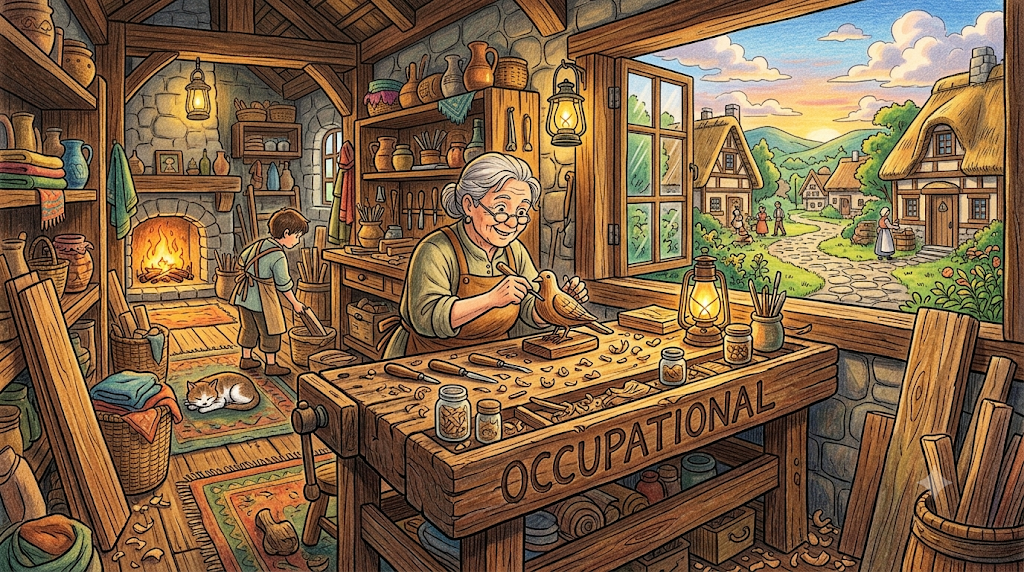
(형용사) ① 직업의, 직업적인 (위험·건강·부상)
occupational의 가장 기본적인 의미로, 직업 수행 자체에서 비롯되거나 직접 연결된 위험·건강·부상을 나타냅니다.
- The shift from manufacturing to service work has changed the profile of occupational illness — the physical injuries associated with heavy industry have declined in countries where such industries have moved offshore, while occupational stress, musculoskeletal disorders from repetitive office work, and psychological conditions associated with emotional labour have become more prevalent. (제조업에서 서비스업으로의 전환은 직업적 질병의 양상을 바꿨다 — 중공업과 관련된 물리적 부상은 그런 산업들이 해외로 이전한 나라들에서 감소했지만 직업적 스트레스, 반복적인 사무 작업으로부터의 근골격계 장애, 그리고 감정 노동과 관련된 심리적 상태가 더 만연해졌다.)
- The occupational risks that workers face are not distributed randomly across the workforce — they are strongly correlated with socioeconomic status, since lower-income workers are disproportionately concentrated in the industries and roles that carry the highest occupational risks, from construction to meat processing to domestic work. (노동자들이 직면하는 직업적 위험은 인력 전반에 걸쳐 무작위로 분배되지 않는다 — 그것들은 사회경제적 지위와 강하게 상관되는데 저소득 노동자들이 건설에서 육류 가공, 가사 노동까지 가장 높은 직업적 위험을 수반하는 산업과 역할에 불균형적으로 집중되기 때문이다.)
- Recognising and compensating occupational illness is complicated by the long latency between exposure and symptoms that characterises many occupational diseases — workers who were exposed to asbestos decades ago may only now be developing mesothelioma, making it difficult to establish the causal chain that compensation systems require. (직업적 질병을 인정하고 보상하는 것은 많은 직업적 질병의 특성인 노출과 증상 사이의 긴 잠복기로 인해 복잡하다 — 수십 년 전에 석면에 노출된 노동자들은 이제야 중피종을 발전시키고 있어 보상 시스템이 요구하는 인과 사슬을 확립하기 어렵게 만든다.)

(형용사) ② 직업과 관련된 (치료·재활·기술)
직업이나 일상 활동의 수행 능력과 관련된 치료·재활·기술을 나타냅니다. 수능 독해 의학·교육 지문에서 자주 등장합니다.
- Occupational therapists who work with children with developmental disabilities focus on the functional skills that will allow those children to participate in the activities that matter in their daily lives — not just the deficit-reduction goals that clinical measures tend to focus on, but the capacity to play, learn, and eventually work alongside peers without disabilities. (발달 장애가 있는 아이들과 함께 일하는 작업 치료사들은 그 아이들이 일상 생활에서 중요한 활동에 참여할 수 있게 하는 기능적 기술에 집중한다 — 단순히 임상 측정이 집중하는 경향이 있는 결핍 감소 목표가 아니라 장애가 없는 동료들과 함께 놀고, 배우고, 결국 일하는 능력이다.)
- The distinction between occupational skills that are transferable across industries and those that are highly specific to a particular job or employer has become increasingly important as labour markets have grown more dynamic — workers who possess only highly specific skills face greater vulnerability when those specific jobs disappear than those who have developed a portfolio of more portable capabilities. (산업 간에 이전 가능한 직업적 기술과 특정 직업이나 고용주에 매우 특화된 기술 사이의 구분은 노동 시장이 더 역동적으로 성장함에 따라 점점 더 중요해졌다 — 고도로 특화된 기술만 보유한 노동자들은 그 특정 일자리가 사라질 때 더 이동 가능한 능력의 포트폴리오를 개발한 사람들보다 더 큰 취약성에 직면한다.)
- Occupational rehabilitation programmes for workers recovering from serious injuries must address not just the physical capacity to perform work tasks but the psychological dimensions of return — the fear of reinjury, the loss of confidence that can accompany a period away from work, and the social dynamics of returning to a workplace as a person who has been absent. (심각한 부상에서 회복 중인 노동자를 위한 직업 재활 프로그램은 단순히 업무 과제를 수행하는 신체적 능력만이 아니라 복귀의 심리적 차원도 다루어야 한다 — 재부상에 대한 두려움, 직장에서 떨어져 있는 기간 동안 수반될 수 있는 자신감 상실, 그리고 결석한 사람으로 직장에 복귀하는 사회적 역학이다.)
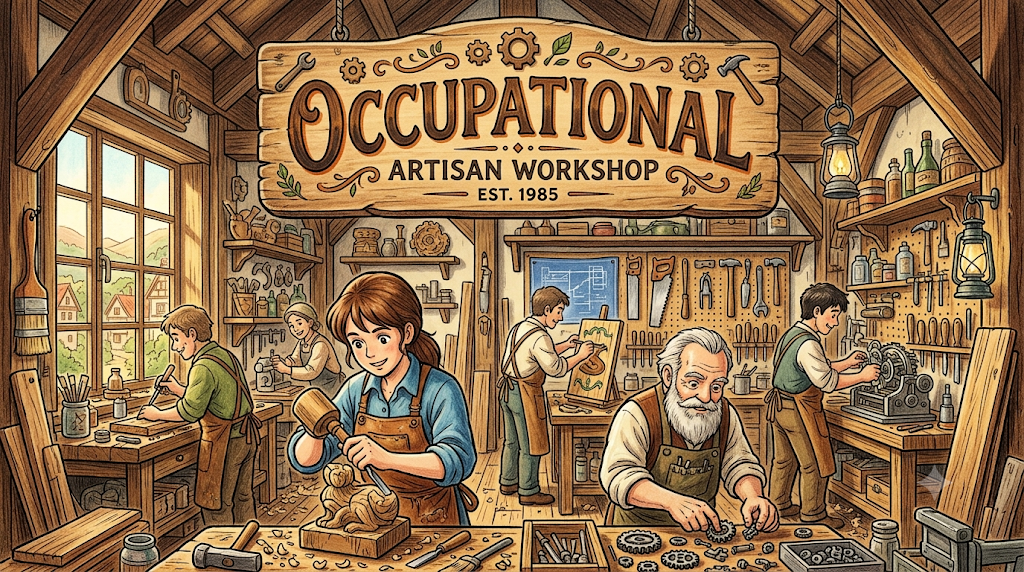
(형용사) ③ 직업적 노출·스트레스·구조와 관련된
직업 환경이 만들어내는 심리적·사회적 조건과 구조를 나타냅니다.
- The occupational structure of modern economies — the distribution of jobs across different sectors, skill levels, and employment conditions — shapes social inequality in ways that go beyond wage differences, since occupational position determines not just income but access to benefits, pension entitlements, workplace autonomy, and the degree to which one's work contributes to or detracts from one's wellbeing. (현대 경제의 직업적 구조 — 다른 부문, 기술 수준, 고용 조건에 걸친 일자리 분배 — 는 임금 차이를 훨씬 넘어서는 방식으로 사회적 불평등을 형성하는데 직업적 위치가 소득만이 아니라 혜택에 대한 접근, 연금 권리, 직장 자율성, 그리고 자신의 일이 웰빙에 기여하거나 손상시키는 정도를 결정하기 때문이다.)
- Occupational socialisation — the process by which new entrants to a profession learn not just the technical skills of their work but its norms, values, and unwritten rules — can transmit both valuable professional wisdom and problematic cultural patterns that might be better abandoned, which is why professional training involves ongoing critical reflection on practice rather than simply absorbing existing professional culture. (직업적 사회화 — 직업에 새로 입문하는 사람들이 업무의 기술적 기술만이 아니라 그 규범, 가치, 불문율을 배우는 과정 — 은 귀중한 전문적 지혜와 더 잘 버려야 할 문제적 문화 패턴 모두를 전달할 수 있는데 이것이 왜 전문적 훈련이 단순히 기존 전문 문화를 흡수하기보다 실천에 대한 지속적인 비판적 성찰을 포함하는 이유이다.)
- The occupational identity that people derive from their work — the sense of who they are that comes from what they do — becomes a source of profound disruption when that work disappears, which helps explain why unemployment produces psychological harms that go beyond the financial hardship, and why policies that address only income replacement often fail to fully support workers through major occupational transitions. (사람들이 일에서 얻는 직업적 정체성 — 자신이 하는 것에서 오는 자신이 누구인지의 감각 — 은 그 일이 사라질 때 심오한 혼란의 원천이 되며 이것이 왜 실업이 재정적 어려움을 넘어서는 심리적 피해를 만들고 수입 대체만을 다루는 정책이 종종 주요 직업적 전환을 통해 노동자를 완전히 지원하지 못하는지를 설명하는 데 도움이 된다.)
뉘앙스·의미 연결 흐름 표
핵심 이미지 연결 흐름 뉘앙스 요약
| 어떤 일이나 직업에 완전히 몰두하여 종사하는 것에서 비롯되는 모든 것 — 직업 수행 자체에서 필연적으로 발생하거나 연결되는 건강·위험·기술·스트레스의 모든 것 | 직업 건강 → 직업 안전 → 직업 위험 → 직업 부상 → 직업 질환 → 작업 치료 → 직업 기술 → 직업 스트레스 | 하루 대부분의 시간을 그 일에 쏟아붓기 때문에 그 일이 만들어내는 조건이 사람에게 깊은 영향을 미치는 이미지 |
| 직업의 긍정적·부정적 영향 | occupational skill → occupational health → occupational hazard | 기술 획득→건강 관리→위험 요소의 이미지 |
| 직업 관련 피해와 대응 | occupational injury → occupational disease → occupational therapy | 부상→질병→치료의 이미지 |
어원 흐름 표
단어 구성 요소 의미 연결 흐름 뉘앙스 요약
| 라틴어 occupare (차지하다·점령하다·몰두하다) → occupatio (종사·일에 몰두함) → occupation → occupational | 어떤 것을 차지하고 그 안에 몰두하다 → 직업이나 일에 완전히 종사하다 → 직업 수행 자체에서 비롯되는 모든 조건과 결과 | 하루 대부분을 차지하는 직업이 만들어내는 필연적 조건의 핵심 이미지 |
| occupational (형용사→명사·occupation→동사·occupy→명사·occupant) | 직업의·직업적인 → 직업·점령·종사 → 차지하다·점령하다 → 거주자·점유자 | 차지하고 몰두하는 것에서 직업과 그 영향으로 확장되는 이미지 |
품사별 의미 표
품사 의미 예문
| 형용사 | 직업의, 직업적인 | occupational training (직업 훈련) |
| 형용사 | 직업 수행에서 비롯된 | occupational disease (직업병) |
| 형용사 | 작업 활동과 관련된 | occupational therapy (작업 치료) |
| 파생 명사 (occupation) | 직업, 점령, 종사 | his occupation is teaching (그의 직업은 교직이다) |
활용 예문 리스트
- The occupational health challenges facing workers in the gig economy — who lack the employer-provided health coverage, workers' compensation, and sick leave that protect formal employees — highlight how occupational health as a legal and institutional category was designed around a model of employment that no longer describes how a growing proportion of the workforce is actually employed. (긱 이코노미 노동자들이 직면하는 직업 건강 도전 — 공식 직원을 보호하는 고용주 제공 건강 보험, 산재 보상, 그리고 병가가 없는 — 은 법적이고 제도적 범주로서의 직업 건강이 점점 더 많은 비율의 인력이 실제로 고용되는 방식을 더 이상 묘사하지 않는 고용 모델을 중심으로 설계됐다는 것을 강조한다.)
- The occupational skills most valued by employers have shifted substantially over the past several decades — routine cognitive tasks that once required human workers have been increasingly automated, raising the premium on skills that are harder to automate, including complex problem-solving, interpersonal communication, and the ability to work with incomplete information. (고용주들이 가장 가치 있게 여기는 직업적 기술은 지난 수십 년 동안 상당히 이동했다 — 한때 인간 노동자를 필요로 했던 일상적인 인지 과제가 점점 더 자동화되어 복잡한 문제 해결, 대인 관계 소통, 불완전한 정보로 작업하는 능력을 포함하여 자동화하기 더 어려운 기술에 대한 프리미엄을 높였다.)
- Occupational therapy interventions for elderly people at risk of falls focus not just on the individual's physical capabilities but on the environment in which they live — identifying and modifying the occupational hazards in their homes, from uneven floor surfaces to poorly lit staircases, that increase fall risk in ways that strength and balance exercises alone cannot address. (낙상 위험이 있는 노인을 위한 작업 치료 개입은 개인의 신체적 능력만이 아니라 그들이 사는 환경에도 집중한다 — 고르지 않은 바닥 표면에서 조명이 불량한 계단까지 근력과 균형 운동만으로는 해결할 수 없는 방식으로 낙상 위험을 증가시키는 집의 직업적 위험 요소를 파악하고 수정한다.)
- The recognition that occupational stress is not simply a personal weakness but a systemic problem shaped by job design, workload, management practices, and organisational culture has shifted the focus of intervention from helping individual workers cope better to addressing the structural features of workplaces that produce stress in the first place. (직업적 스트레스가 단순히 개인적 약점이 아니라 직무 설계, 업무량, 관리 관행, 조직 문화에 의해 형성된 체계적 문제라는 인식이 개입의 초점을 개별 노동자가 더 잘 대처하도록 돕는 것에서 애초에 스트레스를 만들어내는 직장의 구조적 특성을 다루는 것으로 이동시켰다.)
- The occupational injuries sustained by agricultural workers — including pesticide exposures, musculoskeletal injuries from manual harvesting, and heat-related illness — are often underreported and undercompensated compared to those in other industries, partly because agricultural workers are disproportionately represented by migrant workers who may be reluctant to report injuries for fear of losing their employment status. (농업 노동자들이 입는 직업적 부상 — 살충제 노출, 수동 수확으로 인한 근골격계 부상, 열 관련 질병을 포함하여 — 은 종종 다른 산업의 것들에 비해 과소 보고되고 과소 보상되는데 부분적으로 농업 노동자들이 고용 상태를 잃을 것을 두려워하여 부상을 보고하기 꺼릴 수 있는 이주 노동자들에 의해 불균형적으로 대표되기 때문이다.)
전체 뉘앙스 설명
occupational은 '어떤 일이나 직업에 완전히 몰두하여 종사하는 것에서 비롯되는 모든 것 — 직업 수행 자체에서 필연적으로 발생하거나 연결되는 건강·위험·기술·스트레스의 모든 것에서 출발하는 직업 건강·직업 안전·직업 위험·직업 부상·직업 질환·작업 치료·직업 기술·직업 스트레스의 언어'입니다.
professional과의 차이: professional은 특정 전문직이나 직업에서 요구되는 높은 수준의 능력, 윤리, 행동 기준과 관련된 것을 강조하고, occupational은 더 구체적으로 직업 수행 과정이나 환경 자체에서 비롯되는 건강·위험·조건을 강조합니다. vocational과의 차이: vocational은 특정 직업을 위한 훈련이나 교육에 관련된 것을 강조하고, occupational은 더 넓게 직업 수행 자체에서 비롯되는 모든 조건과 결과를 강조합니다. work-related와의 차이: work-related는 더 일반적으로 일과 관련된 것을 나타내고, occupational은 더 구체적으로 직업의 특성이나 수행에서 직접 기인하는 것을 강조합니다.
마지막 핵심 정리
occupational은 단순히 "직업의"가 아닙니다 — 라틴어 occupatio(종사, 일에 몰두함)에서 출발해, 직업적 위험(occupational hazard)·직업 건강(occupational health)·작업 치료(occupational therapy)·직업병(occupational disease)·직업 안전(occupational safety)·직업적 노출(occupational exposure)·직업적 스트레스(occupational stress)·직업적 기술(occupational skill)·직업적 위험(occupational risk)·직업적 부상(occupational injury)까지 확장되는 단어이며, occupational vs. professional vs. vocational의 뉘앙스 구별·occupational health·occupational hazard·occupational therapy 패턴이 수능 핵심 출제 포인트입니다.
파생어 표 (발음기호 포함)
파생어 발음기호 품사 의미
| occupation | [ˌɒkjʊˈpeɪʃən] | 명사 | 직업, 점령, 종사 |
| occupy | [ˈɒkjʊpaɪ] | 동사 | 차지하다, 점령하다, 종사하다 |
| occupant | [ˈɒkjʊpənt] | 명사 | 거주자, 점유자 |
| preoccupy | [priˈɒkjʊpaɪ] | 동사 | (마음을) 사로잡다, 몰두하게 하다 |
| preoccupation | [priˌɒkjʊˈpeɪʃən] | 명사 | 사로잡힘, 몰두, 집착 |
유의어 비교표
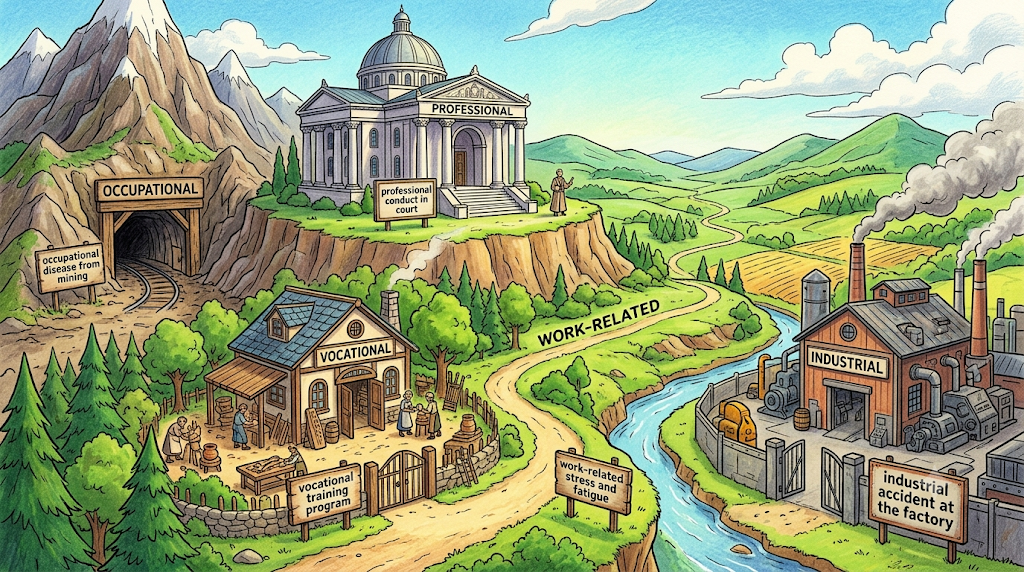
단어 공통점 뉘앙스 차이 예문
| occupational | 직업 관련 | 직업 수행 과정이나 환경 자체에서 비롯되는 조건·결과 강조 | occupational disease from mining |
| professional | 직업 관련 | 전문직에서 요구되는 높은 수준의 능력·윤리·기준 강조 | professional conduct in court |
| vocational | 직업 관련 | 특정 직업을 위한 훈련이나 교육의 내용 강조 | vocational training programme |
| work-related | 직업 관련 | 일과 연관된 것을 일반적으로 나타내는 것 강조 | work-related stress and fatigue |
| industrial | 직업 관련 | 산업이나 제조업과 관련된 것, 규모와 체계 강조 | industrial accident at the factory |
유의어 예문 리스트
- (professional) The distinction between professional development — improving one's skills, knowledge, and capabilities as a practitioner — and occupational development — moving into different roles or sectors — reflects two different ways in which a person's relationship to their work can change over a career, and the support systems that help people with each differ substantially. (전문직 개발 — 실무자로서 기술, 지식, 능력을 향상시키는 것 — 과 직업적 개발 — 다른 역할이나 부문으로 이동하는 것 — 사이의 구분은 경력 전반에 걸쳐 개인의 일과의 관계가 변할 수 있는 두 가지 다른 방식을 반영하며 각각 사람들을 돕는 지원 시스템이 상당히 다르다.)
- (vocational) Vocational education has historically been regarded as a less prestigious track than academic education — a perception that undervalues the genuine intellectual content of skilled trades and that has contributed to shortages of qualified tradespeople in many economies that placed excessive emphasis on university education for its own sake. (직업 교육은 역사적으로 학문적 교육보다 덜 권위 있는 진로로 여겨져 왔다 — 숙련된 기술의 진정한 지적 내용을 과소평가하고 그 자체를 위한 대학 교육에 과도한 중점을 둔 많은 경제에서 자격 있는 기술자의 부족에 기여한 인식이다.)
- (work-related) The line between work-related stress and clinical anxiety disorder is not always clinically clear — stress responses that are triggered by work but that persist and generalise beyond the work context shade into clinical conditions that may require professional treatment regardless of whether the original trigger was occupational or not. (업무 관련 스트레스와 임상적 불안 장애 사이의 경계는 항상 임상적으로 명확하지 않다 — 일에 의해 촉발되지만 일의 맥락을 넘어 지속되고 일반화되는 스트레스 반응은 원래 촉발 요인이 직업적이었는지 아닌지에 관계없이 전문적 치료를 필요로 할 수 있는 임상적 상태로 변한다.)
- (industrial) The industrial injuries that defined the early decades of factory work — severed fingers from unguarded machinery, burns from hot metal, lung disease from textile dust — were not simply accidents but predictable and largely preventable consequences of management decisions to prioritise production speed over worker safety, a pattern that regulation has since addressed but not eliminated. (공장 노동 초기 수십 년을 특징지었던 산업 부상 — 보호되지 않은 기계로부터의 절단된 손가락, 뜨거운 금속으로부터의 화상, 직물 먼지로부터의 폐 질환 — 은 단순히 사고가 아니라 노동자 안전보다 생산 속도를 우선시하는 관리 결정의 예측 가능하고 대체로 예방 가능한 결과였으며 이후 규정이 다루었지만 제거하지 못한 패턴이다.)
결론 정리
occupational은 단순히 "직업의"가 아니라, 어떤 일이나 직업에 완전히 몰두하여 종사하는 것에서 비롯되는 모든 것 — 직업 수행 자체에서 필연적으로 발생하거나 연결되는 건강·위험·기술·스트레스의 모든 것의 이미지에서 출발해 직업적 위험·직업 건강·작업 치료·직업병·직업 안전·직업적 노출·직업적 스트레스·직업적 기술·직업적 위험·직업적 부상까지 확장되는 단어다 — occupational이 있는 곳엔 언제나 '하루 대부분의 시간을 그 일에 쏟아붓기 때문에 그 일이 만들어내는 신체적·심리적·환경적 조건이 사람에게 깊은 영향을 미치는' 직업 수행 자체에서 비롯되는 필연적 조건의 이미지가 있다.
💡 occupational은 "특정 직업이나 일을 수행하는 것 자체에서 비롯되거나 그것과 직접적으로 연결된 것 — 그 직업을 가진 사람이기 때문에 필연적으로 접하게 되거나 경험하게 되는 위험·질병·건강·치료·기술·스트레스를 가리키는" 단어 — occupational hazard·occupational health·occupational therapy 가 수능 최빈출. professional(전문직 윤리·능력 기준)·vocational(직업 훈련·교육)과의 구별이 핵심 출제 포인트.
🌟 초등학생 버전 occupational은 단순히 "직업의"가 아니에요! occupational hazard는 소방관 아저씨가 불을 끄러 갈 때마다 뜨거운 열기와 유독 가스에 노출되는 것처럼 그 직업을 갖고 있기 때문에 어쩔 수 없이 맞닥뜨리게 되는 직업 특유의 위험한 상황이나 조건이고, occupational therapy는 사고로 손을 다쳐서 젓가락질을 못하게 된 사람이 밥 먹기, 글쓰기, 단추 끼우기 같은 일상 동작을 다시 할 수 있도록 특별한 연습을 통해 도와주는 치료처럼 병이나 사고로 잃어버린 일상 활동 능력을 다시 되찾도록 도와주는 특별한 치료예요! 🌍✨
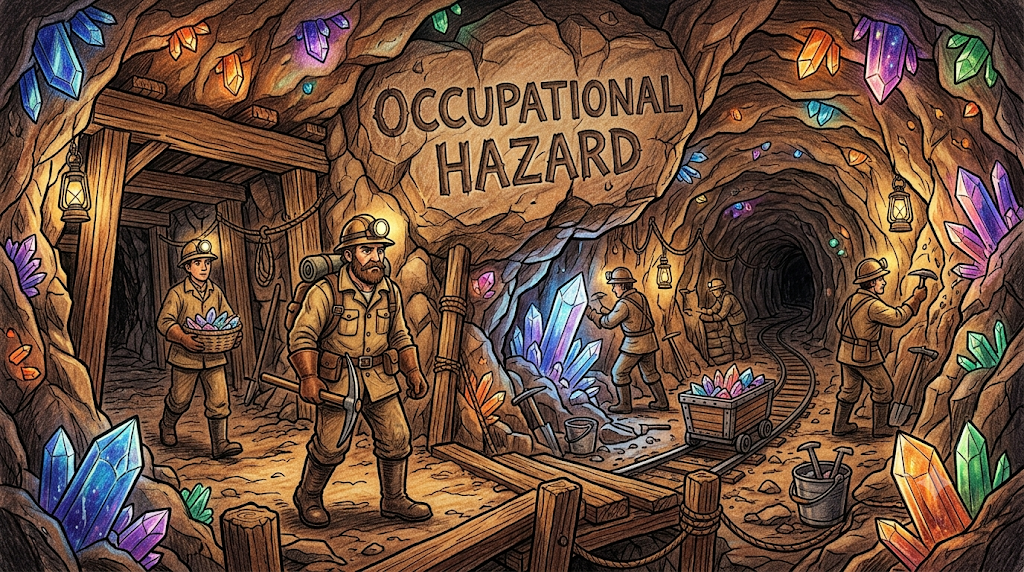
occupational hazard [ˌɒkjʊˈpeɪʃənəl ˈhæzərd]
품사/뉘앙스 설명
(명사구) 직업적 위험 요소, 직업상 불가피한 위험
특정 직업이나 업무 환경에서 필연적으로 수반되는 위험이나 불이익을 강조합니다. 불가피성의 인정과 그 인정이 가져오는 위험이 핵심 뉘앙스입니다. 수능 독해 사회·교육·심리 지문의 핵심 표현입니다.
- The term occupational hazard carries an implicit normalisation — by labelling something a hazard of the occupation rather than a failure of workplace design or management, it can discourage challenges to conditions that are genuinely preventable, which is why occupational health researchers have increasingly challenged its application to conditions that evidence shows could be substantially reduced with appropriate intervention. (직업적 위험 요소라는 용어는 암묵적인 정상화를 내포한다 — 어떤 것을 직장 설계나 관리의 실패가 아닌 직업의 위험 요소로 명명함으로써 진정으로 예방 가능한 조건에 대한 도전을 억제할 수 있는데 이것이 왜 직업 건강 연구자들이 적절한 개입으로 상당히 줄일 수 있음을 증거가 보여주는 조건에 대한 그것의 적용에 점점 더 이의를 제기해 왔는지의 이유이다.)
- Doctors who work in emergency settings describe the emotional distance they develop from suffering as an occupational hazard — not a desirable trait but a psychological adaptation that allows them to function effectively under conditions that would be otherwise overwhelming, and one that they must manage carefully to prevent it from generalising beyond the clinical context. (응급 환경에서 일하는 의사들은 고통으로부터 자신들이 개발하는 감정적 거리를 직업적 위험 요소로 묘사한다 — 바람직한 특성이 아니라 그렇지 않으면 압도될 조건에서 효과적으로 기능할 수 있게 하는 심리적 적응이며 임상적 맥락을 넘어 일반화되는 것을 방지하기 위해 신중하게 관리해야 하는 것이다.)
- When the effects of an occupational hazard become apparent only after years of exposure — as with asbestos, coal dust, and many chemical agents — the workers most severely harmed are often those from earlier generations who worked under conditions that were later recognised as dangerous but that were standard practice at the time, creating legal and ethical challenges about what duties of care applied before the hazard was fully understood. (직업적 위험 요소의 영향이 수년간의 노출 후에야 명백해질 때 — 석면, 석탄 가루, 많은 화학 물질의 경우처럼 — 가장 심하게 피해를 입은 노동자들은 종종 나중에 위험하다고 인정됐지만 당시에는 표준 관행이었던 조건에서 일한 이전 세대의 사람들이어서 위험이 완전히 이해되기 전에 어떤 주의 의무가 적용됐는지에 대한 법적이고 윤리적 도전을 만든다.)
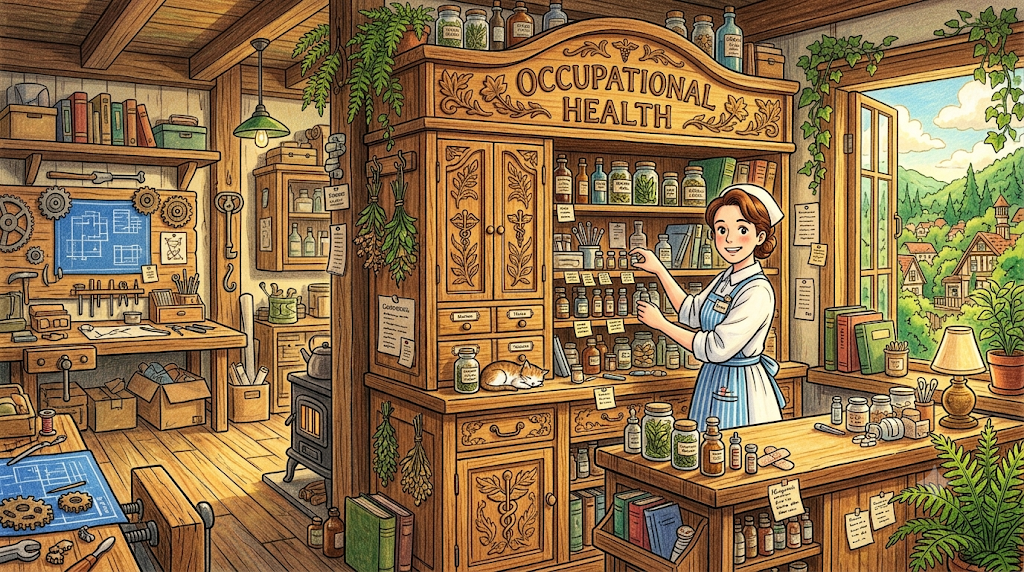
occupational health [ˌɒkjʊˈpeɪʃənəl helθ]
품사/뉘앙스 설명
(명사구) 직업 건강, 직업의학
직업 환경이 노동자의 신체적·정신적 건강에 미치는 영향을 다루는 분야나 상태를 강조합니다. 예방과 치료의 통합적 접근이 핵심 뉘앙스입니다. 수능 독해 과학·사회·교육 지문의 핵심 표현입니다.
- The expansion of occupational health as a discipline beyond its original focus on physical injury and chemical exposure to encompass psychological wellbeing, ergonomics, and work-life balance reflects a growing recognition that the workplace affects human health through many pathways that traditional workplace medicine was not designed to address. (직업 건강이라는 학문의 심리적 웰빙, 인간공학, 일-생활 균형을 포괄하도록 물리적 부상과 화학 물질 노출에 대한 원래 집중을 넘어서는 확장은 직장이 전통적인 직업 의학이 다루도록 설계되지 않은 많은 경로를 통해 인간 건강에 영향을 미친다는 증가하는 인식을 반영한다.)
- Occupational health practitioners who work within organisations face an inherent tension between their professional obligation to the health of individual workers and their employment relationship with the organisation that funds their services — a tension that requires careful management to avoid the compromise of professional independence that could occur when workers' health interests and employers' interests conflict. (조직 내에서 일하는 직업 건강 실무자들은 개별 노동자의 건강에 대한 전문적 의무와 서비스에 자금을 제공하는 조직과의 고용 관계 사이의 내재된 긴장에 직면한다 — 노동자의 건강 이익과 고용주의 이익이 충돌할 때 발생할 수 있는 전문적 독립성의 타협을 피하기 위해 신중한 관리를 필요로 하는 긴장이다.)
- The evidence that good occupational health practices benefit employers as well as workers — through reduced absenteeism, lower staff turnover, higher productivity, and reduced legal liability — has helped shift the business case framing for occupational health investment from compliance with regulations to competitive advantage, making the financial as well as moral case for investing in worker wellbeing. (좋은 직업 건강 관행이 고용주와 노동자 모두에게 혜택을 준다는 증거 — 감소된 결근, 낮은 직원 이직률, 더 높은 생산성, 감소된 법적 책임을 통해 — 는 직업 건강 투자를 위한 비즈니스 케이스 프레이밍을 규정 준수에서 경쟁 우위로 이동시키는 데 도움이 됐으며 노동자 웰빙 투자를 위한 도덕적 케이스뿐만 아니라 재정적 케이스도 만들었다.)
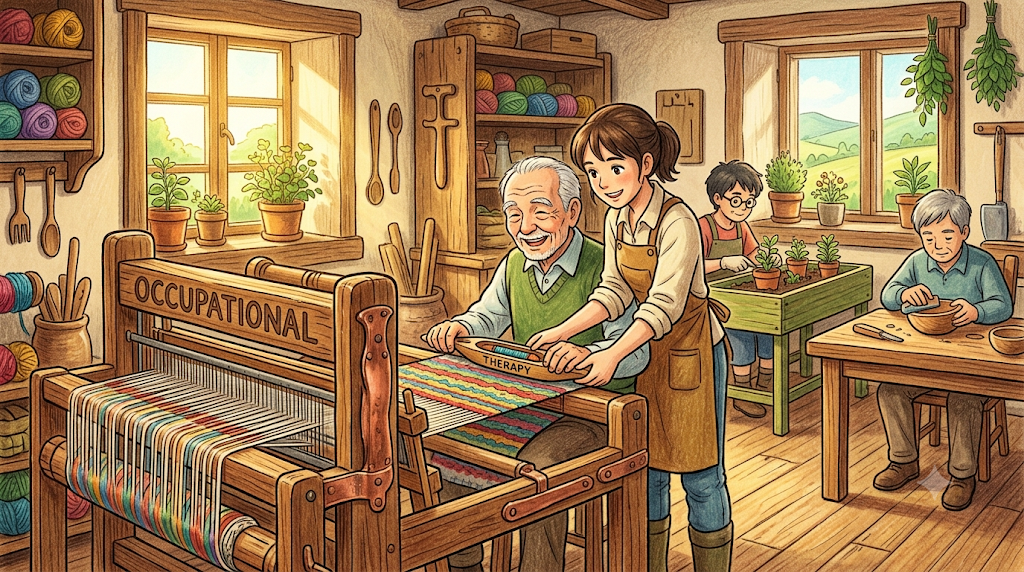
occupational therapy [ˌɒkjʊˈpeɪʃənəl ˈθerəpi]
품사/뉘앙스 설명
(명사구) 작업 치료
신체적·정신적 장애가 있는 사람들이 일상 활동이나 직업 활동을 수행할 수 있도록 돕는 치료를 강조합니다. 기능 회복이 삶의 의미와 연결된다는 것이 핵심 뉘앙스입니다. 수능 독해 의학·교육·심리 지문에서 자주 등장합니다.
- The theoretical foundation of occupational therapy — that engagement in meaningful activity is central to human health and wellbeing, not just instrumental to it — distinguishes it from approaches that view activity purely as exercise or as a means of maintaining physical function, and supports a broader view of what constitutes therapeutic intervention. (작업 치료의 이론적 기반 — 의미 있는 활동 참여가 인간 건강과 웰빙의 도구적 수단이 아닌 핵심이라는 것 — 은 그것을 활동을 순전히 운동이나 신체적 기능 유지의 수단으로 보는 접근 방식과 구별하며 무엇이 치료적 개입을 구성하는지에 대한 더 광범위한 시각을 지지한다.)
- Occupational therapy assessments for children with sensory processing difficulties involve observing how the child responds to and integrates different types of sensory input across real-world activities rather than in isolated tests — an ecological approach that provides information about functional performance that standardised tests cannot capture. (감각 처리 어려움이 있는 아이들을 위한 작업 치료 평가는 고립된 테스트가 아닌 실제 세계 활동에 걸쳐 아이가 다양한 유형의 감각 입력에 어떻게 반응하고 통합하는지를 관찰하는 것을 포함한다 — 표준화된 테스트가 포착할 수 없는 기능적 수행에 대한 정보를 제공하는 생태학적 접근 방식이다.)
- The role of occupational therapy in mental health settings — where the focus is on helping people develop the daily living skills, social participation, and meaningful roles that severe mental illness can disrupt — represents one of the less visible but crucial aspects of recovery-oriented mental health care, addressing the functional consequences of illness rather than just its symptoms. (정신 건강 환경에서의 작업 치료의 역할 — 중증 정신 질환이 방해할 수 있는 일상 생활 기술, 사회적 참여, 의미 있는 역할을 개발하도록 사람들을 돕는 데 초점을 맞추는 — 은 회복 지향 정신 건강 치료의 덜 가시적이지만 중요한 측면 중 하나를 나타내며 단순히 증상이 아닌 질병의 기능적 결과를 다룬다.)
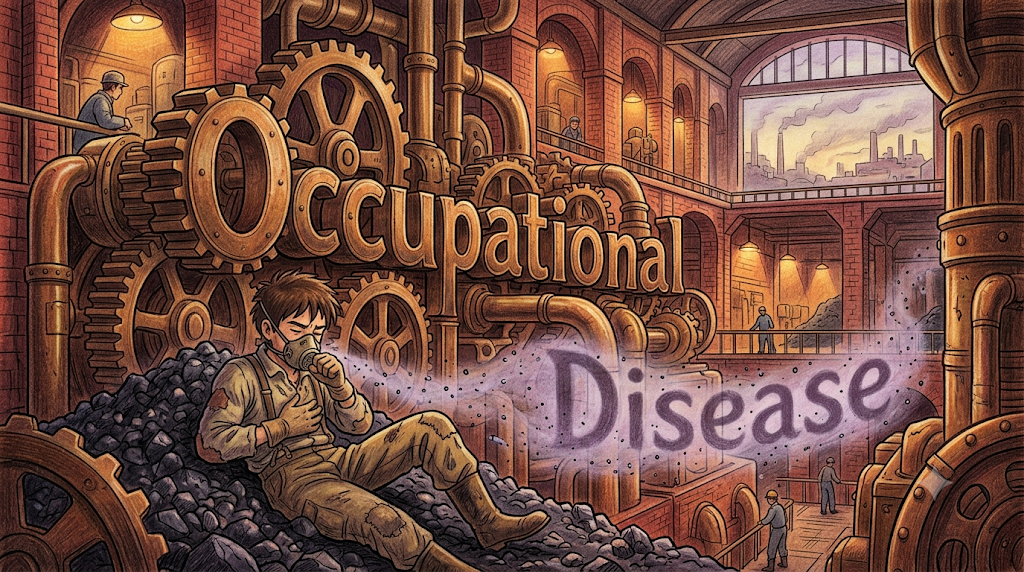
occupational disease [ˌɒkjʊˈpeɪʃənəl dɪˈziːz]
품사/뉘앙스 설명
(명사구) 직업병
특정 직업이나 직업 환경에서의 노출로 인해 발생하는 질병을 강조합니다. 인과 관계 입증의 어려움이 핵심 뉘앙스입니다. 수능 독해 과학·사회·역사 지문의 핵심 표현입니다.
- The recognition of new occupational diseases has historically followed a pattern: workers notice elevated rates of illness, advocates bring the pattern to medical attention, industry contests the causal link, independent research eventually establishes the connection, and regulation follows — a cycle that has played out over decades for each new category of occupational disease from asbestosis to carpal tunnel syndrome. (새로운 직업병의 인정은 역사적으로 하나의 패턴을 따랐다: 노동자들이 질병의 높은 발생률을 발견하고, 지지자들이 패턴을 의학적 관심에 가져오며, 산업계가 인과 관계를 반박하고, 독립적인 연구가 결국 연결을 확립하며, 규정이 뒤따른다 — 석면증에서 손목 터널 증후군까지 각 새로운 직업병 범주에 대해 수십 년에 걸쳐 전개된 순환이다.)
- The distinction between occupational disease and disease that happens to affect workers is legally and practically important — only the former typically qualifies for workers' compensation, which is why employers and insurers have a financial interest in characterising conditions as general health problems rather than occupational in origin, and why independent medical expertise is essential to adjudicating contested claims. (직업병과 노동자에게 우연히 영향을 미치는 질병 사이의 구분은 법적이고 실질적으로 중요하다 — 전자만이 전형적으로 산재 보상을 받을 자격이 있어 고용주와 보험자가 상태를 직업적 기원이 아닌 일반 건강 문제로 특징지을 재정적 이해관계를 갖는 이유이고 독립적인 의학적 전문성이 논쟁적인 청구를 판결하는 데 필수적인 이유이다.)
- The long-term trajectory of occupational disease burden is shaped by both the emergence of new hazards — new chemicals, new processes, new forms of work — and the delayed consequences of past exposures that are only now manifesting as disease in ageing workforces, making occupational disease a challenge that requires attention to both current and historical conditions simultaneously. (직업병 부담의 장기적 궤적은 새로운 위험 요소의 출현 — 새로운 화학 물질, 새로운 프로세스, 새로운 형태의 일 — 과 노령화하는 인력에서 이제야 질병으로 나타나고 있는 과거 노출의 지연된 결과 모두에 의해 형성되어 직업병을 현재와 역사적 조건 모두에 동시에 주의를 필요로 하는 도전으로 만든다.)
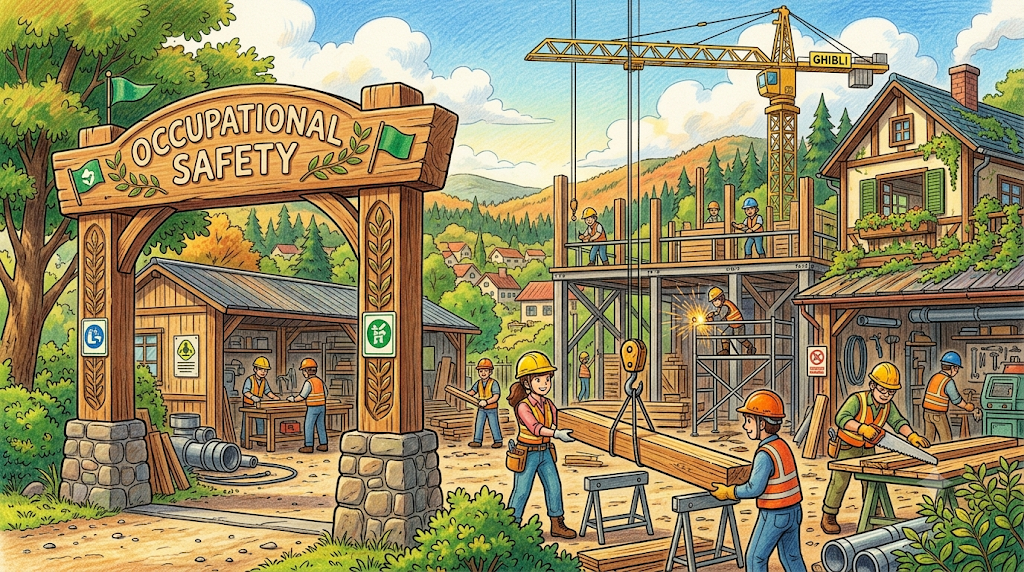
occupational safety [ˌɒkjʊˈpeɪʃənəl ˈseɪfti]
품사/뉘앙스 설명
(명사구) 직업 안전, 산업 안전
직장에서 노동자가 부상이나 질병 없이 안전하게 일할 수 있는 상태나 그것을 보장하기 위한 조치를 강조합니다. 안전과 생산성의 관계가 핵심 뉘앙스입니다. 수능 독해 사회·과학·역사 지문의 핵심 표현입니다.
- Occupational safety culture — the shared beliefs and norms within an organisation about the importance of safety relative to other goals — predicts injury rates more strongly than the existence of safety procedures alone, because cultures that treat safety as genuinely paramount make it likely that procedures will be followed even when doing so is inconvenient, while cultures that treat safety as secondary allow procedures to be bypassed when they slow down production. (직업 안전 문화 — 다른 목표에 대한 안전의 중요성에 대한 조직 내의 공유된 믿음과 규범 — 은 안전 절차의 존재만보다 부상률을 더 강하게 예측하는데 안전을 진정으로 최우선으로 취급하는 문화가 그렇게 하는 것이 불편할 때도 절차가 따라질 가능성을 높이는 반면 안전을 부차적으로 취급하는 문화는 절차가 생산을 늦출 때 우회되도록 허용하기 때문이다.)
- The enforcement of occupational safety regulations creates a collective action dilemma — individual firms that comply with safety requirements face higher costs than those that do not, creating competitive pressure to underinvest in safety that can only be resolved by ensuring that compliance is universal through credible regulatory enforcement. (직업 안전 규정의 시행은 집단 행동 딜레마를 만든다 — 안전 요건을 준수하는 개별 회사들이 그렇지 않은 회사들보다 더 높은 비용에 직면하여 신뢰할 수 있는 규제 시행을 통해 준수가 보편적임을 보장함으로써만 해결될 수 있는 안전에 대한 과소 투자에 대한 경쟁 압박을 만든다.)
- The relationship between occupational safety and productivity is more complex than the assumption that safety requirements impose costs on productive activity — well-designed safety interventions often improve productivity by reducing downtime from accidents, improving worker morale and concentration, and eliminating the disruption caused by high turnover that results from dangerous working conditions. (직업 안전과 생산성 사이의 관계는 안전 요건이 생산 활동에 비용을 부과한다는 가정보다 더 복잡하다 — 잘 설계된 안전 개입은 종종 사고로부터의 중단 시간을 줄이고, 노동자의 사기와 집중력을 개선하며, 위험한 작업 조건으로 인한 높은 이직률로 야기되는 혼란을 제거함으로써 생산성을 향상시킨다.)
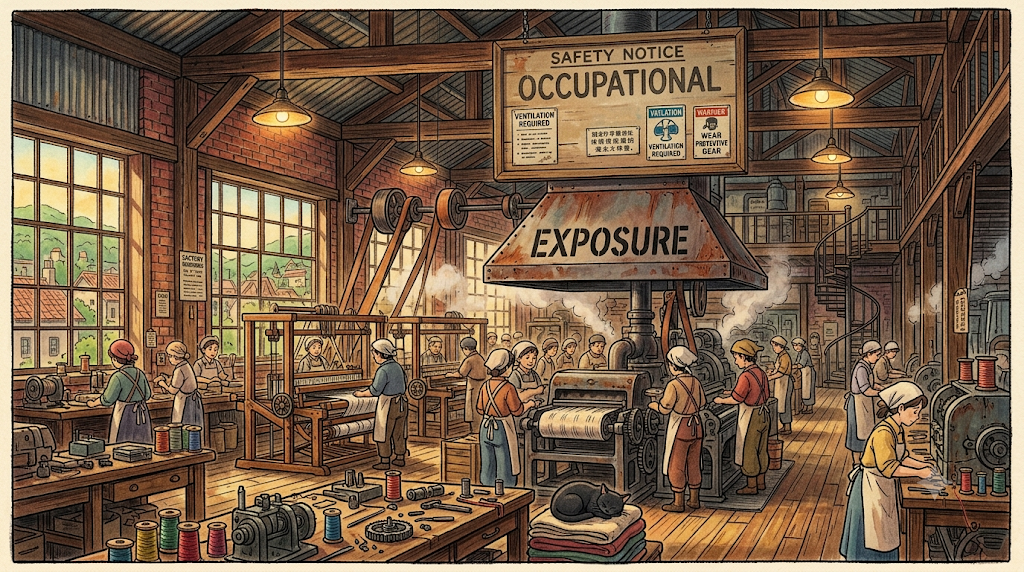
occupational exposure [ˌɒkjʊˈpeɪʃənəl ɪkˈspəʊʒər]
품사/뉘앙스 설명
(명사구) 직업적 노출
직업 수행 과정에서 유해한 물질이나 조건에 노출되는 것을 강조합니다. 노출 수준과 기간의 통합적 고려가 핵심 뉘앙스입니다. 수능 독해 과학·사회·역사 지문에서 자주 등장합니다.
- The science of quantifying occupational exposure — measuring how much of a hazardous substance a worker actually absorbs through inhalation, skin contact, and ingestion across a working day — has become increasingly sophisticated, but the translation of exposure measurements into health risk assessments remains complicated by individual variation in susceptibility, the effects of combined exposures, and uncertainty about low-dose effects. (직업적 노출을 정량화하는 과학 — 노동자가 실제로 하루 동안 흡입, 피부 접촉, 섭취를 통해 얼마나 많은 유해 물질을 흡수하는지 측정하는 것 — 은 점점 더 정교해졌지만 노출 측정을 건강 위험 평가로 번역하는 것은 개인 감수성의 변동, 복합 노출의 영향, 저용량 효과에 대한 불확실성으로 인해 복잡하게 남아있다.)
- Occupational exposure limits set in the mid-twentieth century for many industrial chemicals were established before the full range of health effects was understood, and subsequent research has repeatedly shown that limits considered safe at the time of their establishment were inadequate to prevent harm — a pattern that argues for applying the precautionary principle more stringently when setting new limits. (20세기 중반에 많은 산업 화학 물질에 대해 설정된 직업적 노출 한계는 건강 영향의 전체 범위가 이해되기 전에 확립됐으며 이후 연구는 반복적으로 확립 당시 안전하다고 여겨진 한계가 피해를 방지하기에 부적절했다는 것을 보여줬다 — 새로운 한계를 설정할 때 예방 원칙을 더 엄격하게 적용해야 한다는 것을 주장하는 패턴이다.)
- Workers who experience significant occupational exposure to radiation — including medical radiographers, nuclear power plant employees, and radiation therapy technicians — are subject to regular monitoring that tracks cumulative dose over their careers, reflecting recognition that the health effects of radiation exposure accumulate over time in ways that make career-long tracking more appropriate than assessment of individual incidents. (방사선에 상당한 직업적 노출을 경험하는 노동자들 — 의료 방사선 기사, 핵 발전소 직원, 방사선 치료 기술자를 포함하여 — 은 경력에 걸쳐 누적 선량을 추적하는 정기적인 모니터링을 받는데 방사선 노출의 건강 영향이 시간이 지나면서 누적되어 개별 사건의 평가보다 경력 전반에 걸친 추적이 더 적절하게 만드는 방식을 인식한 것을 반영한다.)
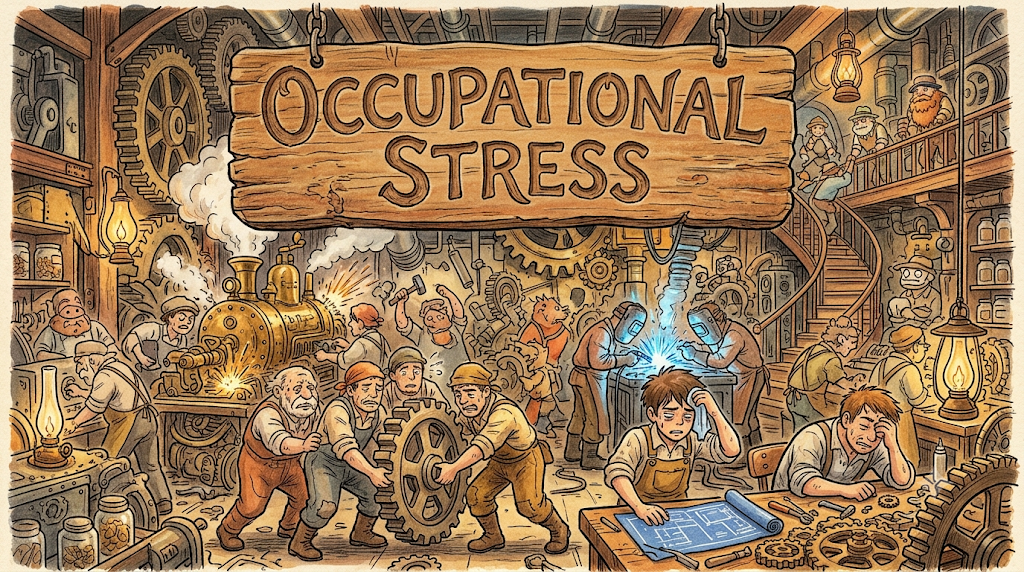
occupational stress [ˌɒkjʊˈpeɪʃənəl stres]
품사/뉘앙스 설명
(명사구) 직업적 스트레스, 직장 스트레스
직업 수행 과정에서 발생하는 심리적·신체적 긴장 상태를 강조합니다. 개인적 취약성보다 구조적 원인이 핵심 뉘앙스입니다. 수능 독해 심리·사회·교육 지문에서 자주 등장합니다.
- The demand-control model of occupational stress — which predicts that stress is highest when job demands are high and worker control over how to meet those demands is low — helps explain why highly paid, high-status jobs can be less stressful than lower-status positions that combine heavy demands with limited autonomy, a finding that challenges assumptions that stress is simply a function of how hard one works. (직업적 스트레스의 요구-통제 모델 — 업무 요구가 높고 그 요구를 충족하는 방법에 대한 노동자 통제가 낮을 때 스트레스가 가장 높다고 예측하는 — 은 왜 고임금, 높은 지위의 직업이 많은 요구와 제한된 자율성을 결합하는 낮은 지위의 직위보다 덜 스트레스를 받을 수 있는지를 설명하는 데 도움이 되는데 이것은 스트레스가 단순히 얼마나 열심히 일하는지의 기능이라는 가정에 도전하는 발견이다.)
- The chronic occupational stress that characterises many public sector roles — particularly in health, social care, and education — is not simply a function of individual workloads but reflects the accumulation of unrealistic expectations, inadequate resources, administrative burdens that displace the meaningful work that attracted practitioners to these roles, and limited influence over decisions that affect one's ability to do the job well. (많은 공공 부문 역할을 특징짓는 만성적인 직업적 스트레스 — 특히 건강, 사회 돌봄, 교육에서 — 는 단순히 개인 업무량의 기능이 아니라 비현실적인 기대의 축적, 부적절한 자원, 실무자들이 이러한 역할에 끌린 의미 있는 일을 대체하는 행정적 부담, 그리고 일을 잘하는 능력에 영향을 미치는 결정에 대한 제한된 영향력을 반영한다.)
- Research on occupational stress interventions consistently finds that those targeting organisational factors — workload, work design, management practices, and support structures — produce more durable improvements than those targeting only individual coping skills, because individual resilience cannot compensate indefinitely for structural conditions that create excessive demands on workers. (직업적 스트레스 개입에 대한 연구는 지속적으로 조직적 요인 — 업무량, 업무 설계, 관리 관행, 지원 구조 — 을 목표로 하는 것들이 개인 대처 기술만을 목표로 하는 것들보다 더 지속적인 개선을 만들어낸다는 것을 발견하는데 개인의 회복탄력성이 노동자에게 과도한 요구를 만드는 구조적 조건을 무기한 보완할 수 없기 때문이다.)
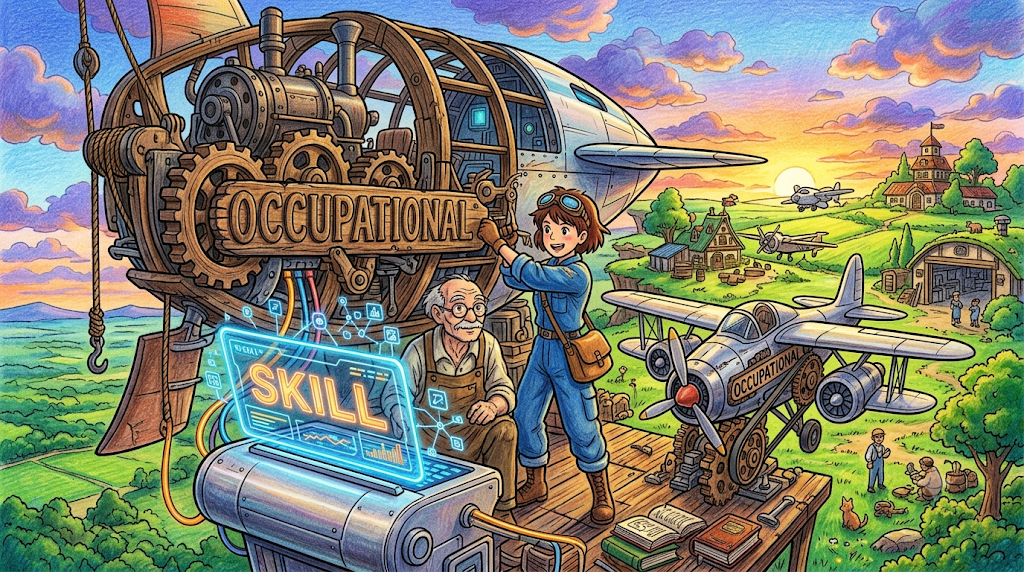
occupational skill [ˌɒkjʊˈpeɪʃənəl skɪl]
품사/뉘앙스 설명
(명사구) 직업적 기술, 직무 능력
특정 직업을 수행하는 데 필요한 전문적인 능력이나 기술을 강조합니다. 기술의 가치가 시대와 기술 변화에 따라 달라진다는 것이 핵심 뉘앙스입니다. 수능 독해 교육·사회·경제 지문에서 자주 등장합니다.
- The occupational skills required in healthcare have expanded significantly with the growth of technology — clinicians who once needed only clinical judgment now also need data literacy, the ability to work with electronic health records, and an understanding of how algorithmic decision support tools work and what their limitations are. (의료에서 요구되는 직업적 기술은 기술의 성장으로 상당히 확장됐다 — 한때 임상적 판단만 필요했던 임상의들이 이제 데이터 리터러시, 전자 건강 기록으로 작업하는 능력, 그리고 알고리즘 의사결정 지원 도구가 어떻게 작동하고 그 한계가 무엇인지에 대한 이해도 필요하다.)
- The undervaluation of occupational skills in female-dominated professions compared to male-dominated ones — despite comparable levels of training, responsibility, and the demands made on practitioners — reflects gender bias embedded in wage-setting institutions and social norms about what kinds of work are intrinsically valuable. (여성 지배적 직업의 직업적 기술 저평가는 남성 지배적 직업에 비해 — 비슷한 수준의 훈련, 책임, 실무자에 대한 요구에도 불구하고 — 임금 결정 기관과 어떤 종류의 일이 본질적으로 가치 있는지에 대한 사회적 규범에 내재된 성별 편향을 반영한다.)
- The question of how to maintain occupational skill levels in workers who are increasingly assisted by automated tools — whether the assistance improves performance by freeing workers to focus on higher-order tasks or degrades skill by reducing the practice that maintains it — is one of the central concerns of automation research, since the answer has significant implications for how work should be designed. (점점 더 자동화된 도구의 도움을 받는 노동자들의 직업적 기술 수준을 어떻게 유지할지에 대한 질문 — 도움이 노동자들이 고차원 과제에 집중할 수 있도록 해방시켜 성과를 향상시키는지 아니면 그것을 유지하는 연습을 줄여 기술을 저하시키는지 — 은 자동화 연구의 핵심 관심사 중 하나인데 답이 일이 어떻게 설계되어야 하는지에 대한 중요한 의미를 갖기 때문이다.)
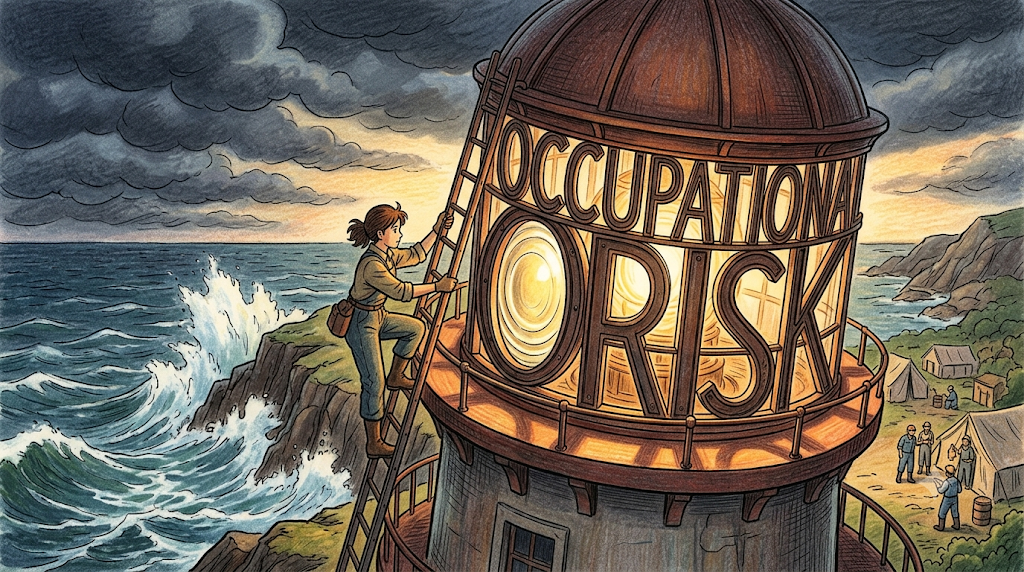
occupational risk [ˌɒkjʊˈpeɪʃənəl rɪsk]
품사/뉘앙스 설명
(명사구) 직업적 위험, 직업상 위험
특정 직업을 수행하면서 발생할 수 있는 손해나 피해의 가능성을 강조합니다. 위험의 불평등한 분배가 핵심 뉘앙스입니다. 수능 독해 사회·과학·교육 지문에서 자주 등장합니다.
- Compensation systems for occupational risk — including workers' compensation insurance, disability pay, and hazard pay — are designed to internalise the costs of dangerous work into the production process, but their effectiveness depends on whether they actually cover workers who experience harm and whether the compensation they provide is adequate to offset the harm sustained. (직업적 위험에 대한 보상 시스템 — 산재 보험, 장애 급여, 위험 수당을 포함하여 — 은 위험한 일의 비용을 생산 과정에 내부화하도록 설계됐지만 그 효과는 실제로 피해를 경험하는 노동자들을 보호하는지와 제공하는 보상이 입은 피해를 상쇄하기에 적절한지에 달려있다.)
- The occupational risks of creative and media professions — project-based employment, income volatility, periods of unemployment between contracts, limited access to benefits — have been partly normalised as the cost of doing creative work, but researchers who have studied these industries argue that many of these conditions reflect power imbalances rather than inherent features of creative work that cannot be changed. (창의적이고 미디어 직업의 직업적 위험 — 프로젝트 기반 고용, 소득 변동성, 계약 사이의 실업 기간, 혜택에 대한 제한된 접근 — 은 부분적으로 창의적 일을 하는 비용으로 정상화됐지만 이 산업들을 연구한 연구자들은 이러한 많은 조건이 변경될 수 없는 창의적 일의 고유한 특성이 아닌 권력 불균형을 반영한다고 주장한다.)
- Understanding occupational risk requires not just data on which jobs are most dangerous but analysis of why — whether high injury rates reflect the inherent physical demands of the work, the quality of equipment provided, the adequacy of training, management attitudes toward safety, or the extent to which workers feel they can raise safety concerns without adverse consequences. (직업적 위험을 이해하는 것은 어떤 직업이 가장 위험한지에 대한 데이터만이 아니라 왜 그런지에 대한 분석을 필요로 한다 — 높은 부상률이 일의 고유한 신체적 요구, 제공된 장비의 품질, 훈련의 적절성, 안전에 대한 관리 태도, 또는 노동자들이 불이익 없이 안전 우려를 제기할 수 있다고 느끼는 정도를 반영하는지 여부이다.)

occupational injury [ˌɒkjʊˈpeɪʃənəl ˈɪndʒəri]
품사/뉘앙스 설명
(명사구) 직업적 부상, 산업 재해
직업 수행 중에 발생하는 신체적 손상을 강조합니다. 보이는 비용과 숨겨진 비용의 차이가 핵심 뉘앙스입니다. 수능 독해 사회·과학·역사 지문에서 자주 등장합니다.
- The reduction in occupational injuries in many high-income countries over the past half century reflects genuine improvements in safety management, but also partly reflects the offshoring of hazardous production to lower-income countries where safety standards are less stringent — a pattern that reduces injury statistics in wealthy countries while transferring injury burdens elsewhere. (지난 반 세기 동안 많은 고소득 나라에서 직업적 부상의 감소는 안전 관리의 진정한 개선을 반영하지만 또한 부분적으로 안전 기준이 덜 엄격한 저소득 나라로의 위험한 생산의 해외 이전을 반영한다 — 부유한 나라의 부상 통계를 줄이면서 부상 부담을 다른 곳으로 이전하는 패턴이다.)
- Occupational injuries that are classified as minor because they do not require time off work can nonetheless have significant long-term consequences — repeated minor injuries to the same anatomical site, cumulative exposure to vibration or noise at sub-threshold levels, and psychological effects of working in an environment where minor injuries are frequent can all contribute to deteriorating health outcomes that emerge only gradually. (직업적 부상이 업무 휴가를 필요로 하지 않기 때문에 사소하다고 분류될 수 있지만 그럼에도 불구하고 상당한 장기적 결과를 가질 수 있다 — 같은 해부학적 부위에 대한 반복적인 사소한 부상, 역치 이하 수준에서의 진동이나 소음에 대한 누적 노출, 그리고 사소한 부상이 잦은 환경에서 일하는 심리적 영향은 모두 점진적으로만 나타나는 악화되는 건강 결과에 기여할 수 있다.)
- The prevention of occupational injuries in construction — one of the most dangerous industries in most countries — requires attention to factors that operate at multiple levels simultaneously: the design of buildings to make their construction safer, the procurement practices that affect whether contractors prioritise safety, the supervision of work practices on site, and the safety culture that determines how workers respond to hazardous conditions they encounter. (건설업에서의 직업적 부상 예방 — 대부분의 나라에서 가장 위험한 산업 중 하나인 — 은 동시에 여러 수준에서 작동하는 요인에 대한 주의를 필요로 한다: 건설을 더 안전하게 만들기 위한 건물 설계, 계약자가 안전을 우선시하는지에 영향을 미치는 조달 관행, 현장에서의 작업 관행 감독, 그리고 노동자들이 접하는 위험한 조건에 어떻게 반응하는지를 결정하는 안전 문화이다.)
숙어 그룹 묶음 1 — 직업과 건강·안전 occupational 핵심 패턴
표현 의미 핵심 뉘앙스 주요 맥락
| occupational health | 직업 건강 | 예방과 치료의 통합적 접근 | 과학·사회·교육 |
| occupational safety | 직업 안전 | 안전과 생산성의 관계 | 사회·과학·역사 |
| occupational hazard | 직업적 위험 요소 | 불가피성의 인정과 그 위험 | 사회·교육·심리 |
이 세 표현은 모두 occupational의 "직업 수행에서 비롯되는 건강과 안전" 이미지를 공유하되, 각각 직업 환경이 노동자의 건강에 미치는 영향을 다루는 분야(occupational health)·직장에서 부상이나 질병 없이 안전하게 일하는 상태(occupational safety)·특정 직업에서 수반되는 위험이나 불이익(occupational hazard)의 관점에서 접근합니다.
- Strong occupational health and occupational safety systems working together can substantially reduce occupational hazards — not by eliminating the underlying demands of dangerous work but by ensuring that workers are adequately protected, informed, and supported, and that employers are held accountable for creating the conditions that allow safe work. (강한 직업 건강과 직업 안전 시스템이 함께 작동하면 직업적 위험 요소를 상당히 줄일 수 있다 — 위험한 일의 기본적인 요구를 제거함으로써가 아니라 노동자들이 적절히 보호받고, 정보를 받으며, 지원받도록 보장하고 고용주들이 안전한 일을 허용하는 조건을 만드는 데 책임을 지도록 함으로써이다.)
- The distinction between occupational health and occupational safety is not always sharp in practice — many conditions that begin as occupational safety concerns become occupational health issues when they are not addressed, and many occupational health interventions improve occupational safety as a side effect by creating workers who are healthier and therefore more alert. (직업 건강과 직업 안전 사이의 구분은 실제로 항상 명확하지 않다 — 직업 안전 우려로 시작하는 많은 조건이 해결되지 않으면 직업 건강 문제가 되고 많은 직업 건강 개입이 더 건강하고 따라서 더 경계하는 노동자를 만들어 부수적 효과로 직업 안전을 개선한다.)
- Treating conditions as occupational hazards rather than addressing them through occupational health and occupational safety systems reflects a fundamentally different theory of responsibility — one that locates the problem in the inherent nature of the work rather than in the manageable conditions under which it is performed, and that accepts harm as inevitable rather than reducible. (조건을 직업 건강과 직업 안전 시스템을 통해 다루기보다 직업적 위험 요소로 취급하는 것은 근본적으로 다른 책임 이론을 반영한다 — 문제를 수행되는 관리 가능한 조건이 아닌 일의 고유한 성격에 위치하고 피해를 줄일 수 있기보다 불가피한 것으로 받아들이는 이론이다.)
숙어 그룹 묶음 2 — 직업과 피해·질환 occupational 심화 패턴
표현 의미 핵심 뉘앙스 주요 맥락
| occupational disease | 직업병 | 인과 관계 입증의 어려움 | 과학·사회·역사 |
| occupational injury | 직업적 부상 | 보이는 비용과 숨겨진 비용의 차이 | 사회·과학·역사 |
| occupational exposure | 직업적 노출 | 노출 수준과 기간의 통합적 고려 | 과학·사회·역사 |
이 세 표현은 모두 occupational의 "직업 수행에서 발생하는 신체적 피해" 이미지를 공유하되, 각각 직업 환경에서의 노출로 인해 발생하는 질병(occupational disease)·직업 수행 중 발생하는 신체적 손상(occupational injury)·직업 수행 과정에서 유해한 것에 노출되는 것(occupational exposure)의 관점에서 접근합니다.
- Occupational exposure is the mechanism through which occupational diseases and occupational injuries develop — understanding what workers are exposed to, for how long, and at what intensity is the foundation of both identifying occupational disease patterns and preventing occupational injuries before they occur. (직업적 노출은 직업병과 직업적 부상이 발생하는 메커니즘이다 — 노동자들이 무엇에, 얼마나 오래, 어떤 강도로 노출되는지를 이해하는 것이 직업병 패턴을 파악하고 발생 전에 직업적 부상을 예방하는 기초이다.)
- The latency between occupational exposure and occupational disease is typically much longer than between occupational exposure and occupational injury — injuries are usually immediately apparent, while diseases may take years or decades to develop, creating very different challenges for compensation systems that must determine when a condition became disabling and what work caused it. (직업적 노출과 직업병 사이의 잠복기는 전형적으로 직업적 노출과 직업적 부상 사이보다 훨씬 더 길다 — 부상은 보통 즉시 명백하지만 질병은 발전하는 데 몇 년 또는 수십 년이 걸릴 수 있어 상태가 언제 장애가 됐는지와 어떤 일이 그것을 야기했는지를 결정해야 하는 보상 시스템에 매우 다른 도전을 만든다.)
- The data systems that track occupational injuries, occupational diseases, and occupational exposures are rarely comprehensive — underreporting is common for all three, for different reasons: injuries may go unreported to avoid blame or affecting safety statistics, diseases may go unrecognised as occupational in origin, and exposures may not be measured because monitoring programmes are resource-intensive. (직업적 부상, 직업병, 직업적 노출을 추적하는 데이터 시스템은 거의 포괄적이지 않다 — 과소 보고는 세 가지 모두에서 다른 이유로 흔하다: 부상은 비난을 피하거나 안전 통계에 영향을 주는 것을 피하기 위해 보고되지 않을 수 있고, 질병은 직업적 기원으로 인식되지 않을 수 있으며, 노출은 모니터링 프로그램이 자원 집약적이기 때문에 측정되지 않을 수 있다.)
숙어 그룹 묶음 3 — 직업과 심리·기술 occupational 심화 패턴
표현 의미 핵심 뉘앙스 주요 맥락
| occupational stress | 직업적 스트레스 | 개인적 취약성보다 구조적 원인 | 심리·사회·교육 |
| occupational skill | 직업적 기술 | 기술의 가치가 시대에 따라 달라짐 | 교육·사회·경제 |
| occupational risk | 직업적 위험 | 위험의 불평등한 분배 | 사회·과학·교육 |
이 세 표현은 모두 occupational의 "직업 수행이 사람에게 미치는 심리적·사회적 영향" 이미지를 공유하되, 각각 직업 수행 과정에서 발생하는 심리적·신체적 긴장(occupational stress)·특정 직업을 수행하는 데 필요한 전문적 능력(occupational skill)·특정 직업을 수행하면서 발생할 수 있는 피해 가능성(occupational risk)의 관점에서 접근합니다.
- Workers who possess high levels of occupational skill may experience lower occupational stress in the short term — because competence reduces the anxiety that comes from uncertainty about whether one can meet demands — but may paradoxically experience higher occupational risk over longer time horizons if their skills are highly specialised in ways that make them vulnerable to disruption. (높은 수준의 직업적 기술을 보유한 노동자들은 단기적으로 더 낮은 직업적 스트레스를 경험할 수 있다 — 역량이 요구를 충족할 수 있는지에 대한 불확실성에서 오는 불안을 줄이기 때문에 — 하지만 기술이 혼란에 취약하게 만드는 방식으로 고도로 전문화되어 있다면 역설적으로 더 긴 시간 지평에 걸쳐 더 높은 직업적 위험을 경험할 수 있다.)
- The occupational stress that workers experience when their occupational skills become obsolete — when the work they have mastered is automated or offshored — illustrates that the concept of occupational risk must include not just the risk of physical harm during work but the risk that the economic value of one's capabilities will decline, with consequences for income, identity, and sense of purpose. (노동자들의 직업적 기술이 쓸모없어질 때 경험하는 직업적 스트레스 — 그들이 익힌 일이 자동화되거나 해외로 이전될 때 — 는 직업적 위험의 개념이 단순히 일하는 동안의 신체적 피해 위험만이 아니라 자신의 역량의 경제적 가치가 감소할 위험도 포함해야 한다는 것을 보여주는데 소득, 정체성, 목적 의식에 대한 결과를 갖는다.)
- Addressing occupational stress, supporting the development of occupational skills, and reducing occupational risk all require attention to the same fundamental question: what conditions make it possible for people to do meaningful work well without paying unacceptable costs in their health, security, and autonomy? (직업적 스트레스 해결, 직업적 기술 개발 지원, 직업적 위험 감소는 모두 같은 근본적인 질문에 대한 주의를 필요로 한다: 어떤 조건이 사람들이 건강, 안전, 자율성에 허용할 수 없는 비용을 지불하지 않고 의미 있는 일을 잘할 수 있게 하는가?)
숙어 그룹 묶음 4 — 치료와 완성 occupational 완성 패턴
표현 의미 핵심 뉘앙스 주요 맥락
| occupational therapy | 작업 치료 | 기능 회복이 삶의 의미와 연결됨 | 의학·교육·심리 |
| occupational health | 직업 건강 | 예방과 치료의 통합적 접근 | 과학·사회·교육 |
| occupational skill | 직업적 기술 | 기술의 가치가 시대에 따라 달라짐 | 교육·사회·경제 |
이 세 표현은 함께 occupational이 나타내는 직업과 인간 능력의 회복·유지·개발이라는 스펙트럼을 보여줍니다. occupational therapy는 잃어버린 기능을 되찾는 치료를, occupational health는 현재의 건강을 보호하고 증진하는 것을, occupational skill은 직업 수행에 필요한 능력을 개발하고 유지하는 것을 각각 강조합니다.
- The connection between occupational therapy, occupational health, and occupational skill development reflects a common insight: that the ability to do meaningful work is central to human wellbeing, and that supporting people's capacity to engage with purposeful activity — whether through rehabilitation, health promotion, or skill development — addresses one of the most fundamental dimensions of a good life. (작업 치료, 직업 건강, 직업적 기술 개발 사이의 연결은 공통된 통찰을 반영한다: 의미 있는 일을 할 능력이 인간 웰빙의 핵심이며 재활, 건강 증진, 기술 개발을 통해 사람들의 목적 있는 활동 참여 능력을 지원하는 것이 좋은 삶의 가장 근본적인 차원 중 하나를 다룬다는 것이다.)
- Occupational health systems that focus only on preventing injury and disease — without attention to supporting occupational skill development and recognising when occupational therapy interventions could prevent more serious deterioration — are addressing only part of what is needed to support workers throughout their working lives. (직업 건강 시스템이 부상과 질병 예방에만 집중하는 것 — 직업적 기술 개발 지원과 작업 치료 개입이 더 심각한 악화를 예방할 수 있는 시기를 인식하는 것에 대한 주의 없이 — 은 노동자들의 직업 생활 전반에 걸쳐 지원하는 데 필요한 것의 일부만을 다루는 것이다.)
- The integration of occupational therapy approaches into occupational health programmes — using activity-based interventions to support workers recovering from injury or illness, to prevent the deconditioning that prolonged absence from work can cause, and to support the gradual return to the occupational skills and roles that give work its meaning — represents one of the more promising developments in workplace wellbeing practice. (직업 건강 프로그램에 작업 치료 접근 방식 통합 — 부상이나 질병에서 회복 중인 노동자를 지원하고, 업무에서의 장기간 결근이 야기할 수 있는 컨디션 저하를 예방하며, 일에 의미를 부여하는 직업적 기술과 역할로의 점진적 복귀를 지원하기 위해 활동 기반 개입을 사용하는 것 — 은 직장 웰빙 실천에서 더 유망한 발전 중 하나를 나타낸다.)
전체 요약표
표현 의미 핵심 뉘앙스
| occupational | 직업의, 직업적인 | 하루 대부분을 차지하는 직업이 만들어내는 필연적 조건의 이미지 |
| occupational hazard | 직업적 위험 요소 | 불가피성의 인정과 그 위험 |
| occupational health | 직업 건강 | 예방과 치료의 통합적 접근 |
| occupational therapy | 작업 치료 | 기능 회복이 삶의 의미와 연결됨 |
| occupational disease | 직업병 | 인과 관계 입증의 어려움 |
| occupational safety | 직업 안전 | 안전과 생산성의 관계 |
| occupational exposure | 직업적 노출 | 노출 수준과 기간의 통합적 고려 |
| occupational stress | 직업적 스트레스 | 개인적 취약성보다 구조적 원인 |
| occupational skill | 직업적 기술 | 기술의 가치가 시대에 따라 달라짐 |
| occupational risk | 직업적 위험 | 위험의 불평등한 분배 |
| occupational injury | 직업적 부상 | 보이는 비용과 숨겨진 비용의 차이 |
유의어 비교표
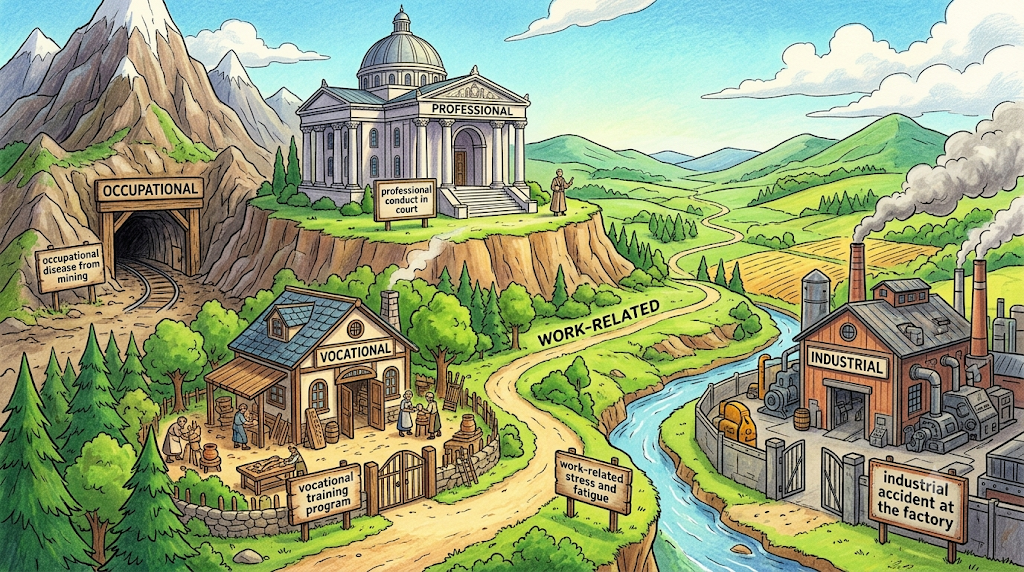
단어 공통점 뉘앙스 차이 예문
| occupational | 직업 관련 | 직업 수행 과정이나 환경 자체에서 비롯되는 조건·결과 강조 | occupational disease from mining |
| professional | 직업 관련 | 전문직에서 요구되는 높은 수준의 능력·윤리·기준 강조 | professional conduct in court |
| vocational | 직업 관련 | 특정 직업을 위한 훈련이나 교육의 내용 강조 | vocational training programme |
| work-related | 직업 관련 | 일과 연관된 것을 일반적으로 나타내는 것 강조 | work-related stress and fatigue |
| industrial | 직업 관련 | 산업이나 제조업과 관련된 것, 규모와 체계 강조 | industrial accident at the factory |
결론 정리
occupational은 단순히 "직업의"가 아니라, 어떤 일이나 직업에 완전히 몰두하여 종사하는 것에서 비롯되는 모든 것 — 직업 수행 자체에서 필연적으로 발생하거나 연결되는 건강·위험·기술·스트레스의 모든 것의 이미지에서 출발해 직업적 위험·직업 건강·작업 치료·직업병·직업 안전·직업적 노출·직업적 스트레스·직업적 기술·직업적 위험·직업적 부상까지 확장되는 단어다 — occupational이 있는 곳엔 언제나 '하루 대부분의 시간을 그 일에 쏟아붓기 때문에 그 일이 만들어내는 신체적·심리적·환경적 조건이 사람에게 깊은 영향을 미치는' 직업 수행 자체에서 비롯되는 필연적 조건의 이미지가 있다.
💡 occupational은 "특정 직업이나 일을 수행하는 것 자체에서 비롯되거나 그것과 직접적으로 연결된 것 — 그 직업을 가진 사람이기 때문에 필연적으로 접하게 되거나 경험하게 되는 위험·질병·건강·치료·기술·스트레스를 가리키는" 단어 — occupational hazard·occupational health·occupational therapy 가 수능 최빈출. professional(전문직 윤리·능력 기준)·vocational(직업 훈련·교육)과의 구별이 핵심 출제 포인트.
🌟 초등학생 버전 occupational은 단순히 "직업의"가 아니에요! occupational hazard는 소방관 아저씨가 불을 끄러 갈 때마다 뜨거운 열기와 유독 가스에 노출되는 것처럼 그 직업을 갖고 있기 때문에 어쩔 수 없이 맞닥뜨리게 되는 직업 특유의 위험한 상황이나 조건이고, occupational therapy는 사고로 손을 다쳐서 젓가락질을 못하게 된 사람이 밥 먹기, 글쓰기, 단추 끼우기 같은 일상 동작을 다시 할 수 있도록 특별한 연습을 통해 도와주는 치료처럼 병이나 사고로 잃어버린 일상 활동 능력을 다시 되찾도록 도와주는 특별한 치료예요! 🌍✨


