
- 분류 전체보기 (5659)

| 일 | 월 | 화 | 수 | 목 | 금 | 토 |
|---|---|---|---|---|---|---|
| 1 | ||||||
| 2 | 3 | 4 | 5 | 6 | 7 | 8 |
| 9 | 10 | 11 | 12 | 13 | 14 | 15 |
| 16 | 17 | 18 | 19 | 20 | 21 | 22 |
| 23 | 24 | 25 | 26 | 27 | 28 | 29 |
| 30 | 31 |
- work out
- Actually
- Read between the lines
- Please
- come up with
- set up
- no
- please.
- get through
- please?
- I'm sorry
- Sure
- OKay
- Don't worry
- Yes
- hold on
- Sorry
- Hey
- Excuse me
- Right?
- Show Up
- too.
- I'm glad to hear that.
- entrance fee
- By The Way
- well
- pick up
- make it
- oh
- Yeah
- Today
- Total
인과함께
Day432 , pledge, pledge support, pledge allegiance, take a pledge, pledge money, break a pledge, honor a pledge, pledge of loyalty, make a pledge, pledge to do 본문
Day432 , pledge, pledge support, pledge allegiance, take a pledge, pledge money, break a pledge, honor a pledge, pledge of loyalty, make a pledge, pledge to do
미인생 2026. 8. 26. 14:16
pledge [pledʒ]
(명사/동사) 서약, 맹세, 약속 / 서약하다, 맹세하다, 약속하다
단순히 "약속"으로만 외우면 수능에서 반드시 틀립니다. pledge는 "공개적으로 또는 공식적으로 어떤 것을 하겠다고 굳게 약속하는" 이라는 핵심 이미지에서 출발해, 실제 공식 맹세·재정적 약속·충성 서약·정치적 공약·도덕적 헌신까지 폭넓게 쓰이는 핵심 다의어입니다. 특히 pledge allegiance(충성을 서약하다), honor a pledge(서약을 지키다), break a pledge(서약을 어기다) 패턴은 수능 독해 사회·심리·논리 지문에서 핵심적으로 등장합니다.
'pledge'는 고대 프랑스어 plege(보증인, 담보)에서 유래했으며, 중세 라틴어 plebium(보증)과 연결됩니다. 어원의 핵심 이미지는 "자신을 담보로 내세워 반드시 지키겠다고 보장하는 것" 으로, 단순한 약속을 넘어 공식적 헌신·충성·재정적 보증·도덕적 의무·사회적 책임까지 확장되는 표현의 근원이 된 단어입니다.
1. pledge support [pledʒ səˈpɔːrt]
(사회/정치/수능) "지지를 약속하다, 지원을 서약하다"를 뜻합니다. 어떤 사람이나 계획을 공식적으로 지지하겠다고 약속하는 것을 강조합니다.
Five major companies pledged support for the new clean energy project and agreed to provide funding for the first three years. (5개의 주요 회사가 새로운 청정 에너지 프로젝트에 대한 지지를 약속하고 처음 3년 동안 자금을 제공하기로 동의했다.)
2. pledge allegiance [pledʒ əˈliːdʒəns]
(사회/역사/수능) "충성을 서약하다, 충성을 맹세하다"를 뜻합니다. 국가, 지도자, 또는 단체에 충성을 공식적으로 맹세하는 것을 강조합니다.
Students in many countries pledge allegiance to their nation's flag at the start of the school day as a way of showing respect and loyalty. (많은 나라의 학생들이 존경과 충성을 나타내는 방법으로 하루를 시작할 때 국기에 충성을 서약한다.)
3. take a pledge [teɪk ə pledʒ]
(일상/사회/수능) "서약을 하다, 맹세를 하다"를 뜻합니다. 공식적으로 또는 공개적으로 어떤 것을 지키겠다고 약속하는 것을 강조합니다.
She took a pledge to stop eating meat for a whole year and wrote it down to make the commitment feel more real. (그녀는 1년 동안 고기를 먹지 않겠다는 서약을 하고 그 헌신이 더 실제적으로 느껴지도록 그것을 적어두었다.)
4. pledge money [pledʒ ˈmʌni]
(사회/경제/수능) "돈을 기부하기로 약속하다, 기부를 서약하다"를 뜻합니다. 특정 목적을 위해 돈을 내겠다고 공식적으로 약속하는 것을 강조합니다.
Over a thousand people pledged money to help rebuild the school that had been damaged in the storm. (천 명 이상의 사람들이 폭풍으로 피해를 입은 학교를 재건하는 데 도움이 되도록 돈을 기부하기로 약속했다.)
5. break a pledge [breɪk ə pledʒ]
(사회/심리/수능) "서약을 어기다, 맹세를 깨다"를 뜻합니다. 공식적으로 약속한 것을 지키지 않는 것을 강조하며, 수능에서 자주 출제되는 표현입니다.
The politician was heavily criticised for breaking a pledge he had made to voters about reducing taxes during the election campaign. (정치인은 선거 운동 기간 동안 세금 감면에 대해 유권자들에게 한 서약을 어긴 것에 대해 강하게 비판받았다.)
6. honor a pledge [ˈɒnər ə pledʒ]
(사회/심리/수능) "서약을 지키다, 맹세를 이행하다"를 뜻합니다. 공식적으로 약속한 것을 실제로 지켜내는 것을 강조합니다.
Even when it was difficult and costly, she chose to honor her pledge to the community rather than find an excuse to get out of it. (힘들고 비용이 많이 들 때도 그녀는 빠져나갈 핑계를 찾기보다 지역 사회에 한 서약을 지키기로 선택했다.)
7. pledge of loyalty [pledʒ əv ˈlɔɪəlti]
(사회/역사/수능) "충성 서약, 충성 맹세"를 뜻합니다. 한 사람이나 단체에 충성하겠다는 공식적인 약속을 강조합니다.
The new members of the group made a pledge of loyalty to each other, promising to support one another no matter what happened. (그룹의 새 구성원들은 무슨 일이 일어나든 서로를 지지하겠다고 약속하며 서로에게 충성 서약을 했다.)
8. make a pledge [meɪk ə pledʒ]
(일상/사회/수능) "서약을 하다, 약속을 하다"를 뜻합니다. 공개적이거나 공식적인 약속을 만드는 것을 강조합니다.
He made a pledge to himself that he would finish reading one book every month for the whole year. (그는 1년 내내 매달 책 한 권을 다 읽겠다는 서약을 스스로에게 했다.)
9. pledge to do [pledʒ tə duː]
(사회/정치/수능) "~하겠다고 서약하다, ~하겠다고 약속하다"를 뜻합니다. 특정 행동을 하겠다고 공식적으로 또는 강하게 약속하는 것을 강조합니다.
The new school head pledged to do everything she could to make sure every student had the resources they needed to learn. (새 교장은 모든 학생이 배우는 데 필요한 자원을 갖도록 하기 위해 할 수 있는 모든 것을 하겠다고 서약했다.)
10. pledge (명사: 서약, 담보) [pledʒ]
(사회/법률/수능) 명사로 쓰여 "서약, 맹세, 담보, 보증"을 뜻합니다. 공식적으로 한 약속이나 담보로 내어준 것을 강조합니다.
The country's pledge to reduce carbon emissions by fifty percent within ten years was welcomed by environmental groups around the world. (10년 안에 탄소 배출을 50% 줄이겠다는 그 나라의 서약은 전 세계 환경 단체들의 환영을 받았다.)
POINT 1. pledge — 수능 최빈출 비유·어휘 패턴
pledge는 수능 독해 사회·심리·논리 지문에서 핵심 표현으로 자주 출제됩니다. break a pledge → 서약을 지키지 않을 때의 도덕적 결과 예) Don't break a pledge. 서약을 어기지 마라. honor a pledge → 어렵더라도 약속을 지키는 것의 중요성 예) Honor a pledge. 서약을 지켜라. pledge allegiance → 국가나 단체에 대한 공식적 충성 예) Pledge allegiance to the flag. 국기에 충성을 서약하다.
POINT 2. pledge / promise / vow — 수능 어휘 핵심 비교
이 세 단어는 수능에서 자주 혼동되는 어휘입니다. pledge → 공식적·공개적 약속 (사회적·정치적 맥락) 예) A pledge to the nation. 국가에 대한 서약. promise → 일반적인 약속 (일상적 맥락) 예) A promise to a friend. 친구에게 한 약속. vow → 매우 엄숙하고 신성한 약속 (결혼·종교적 맥락) 예) Marriage vows. 결혼 서약.
POINT 3. pledge의 다양한 용법 — 수능 독해 문맥 파악 핵심
pledge는 수능 독해에서 문맥에 따라 의미가 달라지는 핵심 단어입니다. 충성 → Pledge allegiance. 충성을 서약하다. 재정 → Pledge money. 돈을 기부하기로 약속하다. 이행 → Honor a pledge. 서약을 지키다. 위반 → Break a pledge. 서약을 어기다. 공개 → Make a pledge. 서약을 하다.

(명사) ① 서약, 맹세 (공식적 약속)
pledge의 가장 기본적인 의미로, 공식적이거나 공개적으로 한 약속을 나타냅니다.
- The pledge she had made to her grandmother before she died stayed with her for the rest of her life, reminding her what kind of person she had promised to be. (그녀가 할머니가 돌아가시기 전에 한 서약은 평생 그녀와 함께 남아, 어떤 사람이 되겠다고 약속했는지를 상기시켜줬다.)
- The organisation's pledge to transparency meant that all its financial records were made available to the public every year without being asked. (투명성에 대한 그 단체의 서약은 모든 재정 기록이 요청 없이 매년 대중에게 공개된다는 것을 의미했다.)
- The essay argued that a pledge carries a different moral weight from a simple promise because it is made in a public or formal context — which means that breaking it damages not only the specific relationship in which it was made but one's general reputation for honesty and commitment. (에세이는 서약이 공개적이거나 공식적인 맥락에서 이루어지기 때문에 단순한 약속과 다른 도덕적 무게를 갖는다고 주장했다 — 이것은 그것을 어기는 것이 그것이 이루어진 특정 관계뿐만 아니라 정직성과 헌신에 대한 전반적인 평판도 손상시킨다는 것을 의미한다고 했다.)

(동사) ② 서약하다, 약속하다 (공식적 행동)
pledge는 동사로 쓰여 공식적으로 또는 강하게 약속하는 것을 나타냅니다.
- The athletes pledged to compete fairly and respect all the rules, then signed their names on the document to make it official. (운동선수들은 공정하게 경쟁하고 모든 규칙을 준수하겠다고 서약한 다음, 공식적으로 만들기 위해 서류에 이름을 서명했다.)
- She pledged to use half of everything she earned above a certain amount to help people who had not had the same opportunities she had. (그녀는 일정 금액 이상으로 버는 것의 절반을 자신이 가진 것과 같은 기회를 갖지 못한 사람들을 돕는 데 사용하겠다고 서약했다.)
- The essay explored what it means to pledge something — arguing that the act of pledging is itself transformative, because making a public commitment changes how we think about the thing we have pledged, making it feel less like a choice and more like a responsibility. (에세이는 무언가를 서약한다는 것이 무엇을 의미하는지 탐구했다 — 서약하는 행위 자체가 변화를 만들어내는데, 공개적인 헌신을 하는 것이 우리가 서약한 것에 대해 생각하는 방식을 바꿔 선택보다 책임처럼 느끼게 만들기 때문이라고 주장했다.)

(명사) ③ 담보, 보증 (물질적 약속)
pledge는 비유적으로 무언가를 보증으로 내어주는 것을 나타냅니다.
- In the old story, the merchant used his most valuable ring as a pledge to prove he was serious about the deal and intended to return with the full payment. (오래된 이야기에서 상인은 거래에 대해 진지하고 전액 지불을 갖고 돌아올 것임을 증명하기 위해 가장 귀중한 반지를 담보로 사용했다.)
- Her good name in the community was a pledge of her intentions — people knew that she would not make commitments she was not prepared to follow through on. (지역 사회에서 그녀의 좋은 이름이 그녀의 의도에 대한 보증이었다 — 사람들은 그녀가 이행할 준비가 되지 않은 약속을 하지 않을 것이라는 것을 알았다.)
- The essay used the historical meaning of pledge as collateral to illuminate its modern uses — arguing that when we make any kind of pledge, we are still in a sense putting something of value on the line, whether that is money, reputation, or relationship. (에세이는 담보로서의 pledge의 역사적 의미를 사용해 현대적 사용을 조명했다 — 우리가 어떤 종류의 서약을 할 때 돈, 명성, 또는 관계든 여전히 어떤 의미에서 가치 있는 것을 걸고 있다고 주장했다.)
뉘앙스·의미 연결 흐름 표
핵심 이미지 연결 흐름 뉘앙스 요약
| 공식적 헌신과 충성 | 충성 서약 → 서약을 하다 → ~하겠다고 서약하다 → 충성 서약 | pledge allegiance, make a pledge, pledge to do, pledge of loyalty |
| 서약의 이행과 위반 | 서약을 지키다 → 서약을 어기다 → 서약을 하다 | honor a pledge, break a pledge, take a pledge |
| 재정과 지지의 약속 | 지지를 약속하다 → 돈을 기부하기로 약속하다 | pledge support, pledge money |
어원 흐름 표
단어 구성 요소 의미 연결 흐름 뉘앙스 요약
| 중세 라틴어 plebium(보증) → 고대 프랑스어 plege(담보) → pledge | 자신을 담보로 내세워 반드시 지키겠다고 보장하는 것 | 담보와 헌신의 핵심 이미지 |
| pledge (명사/동사) | 담보 → 공식 서약 → 충성 → 재정적 약속 → 도덕적 의무 | 담보에서 서약·충성·헌신·책임까지 확장 |
품사별 의미 표
품사 의미 예문
| 명사 | 서약, 맹세 | A pledge to help. |
| 명사 | 담보, 보증 | Used as a pledge. |
| 동사 | 서약하다, 약속하다 | Pledged to try. |
| 동사구 | 지지를 약속하다 | Pledge support. |
| 동사구 | 충성을 서약하다 | Pledge allegiance. |
| 관용구 | 서약을 어기다 | Break a pledge. |
활용 예문 리스트
- The team pledged allegiance to the new coach and promised to give their best effort in every training session and every match for the rest of the season. (팀은 새 코치에게 충성을 서약하고 시즌의 남은 기간 동안 모든 훈련 세션과 모든 경기에서 최선을 다하겠다고 약속했다.)
- She made a pledge to volunteer at the community centre every Saturday morning and kept it for over two years without missing a single session. (그녀는 매주 토요일 아침 지역 사회 센터에서 자원봉사를 하겠다는 서약을 하고 한 번의 세션도 빠지지 않고 2년 이상 그것을 지켰다.)
- The government was accused of breaking a pledge it had made to protect the area from development, and many residents felt deeply let down by what they saw as a betrayal of trust. (정부는 그 지역을 개발로부터 보호하겠다고 한 서약을 어겼다는 비판을 받았으며, 많은 주민들은 신뢰의 배신으로 보이는 것에 깊이 실망했다.)
- Over five hundred people pledged money to the campaign in just forty-eight hours, showing how strongly the local community felt about the issue. (500명 이상의 사람들이 단 48시간 만에 캠페인에 돈을 기부하기로 약속해서, 지역 사회가 그 문제에 대해 얼마나 강하게 느끼는지를 보여줬다.)
- The committee chose to honor the pledge made by its founders decades earlier, refusing to accept donations from sources that did not meet the ethical standards that had been set at the very beginning. (위원회는 수십 년 전 창립자들이 한 서약을 지키기로 선택해서, 처음부터 설정된 윤리적 기준을 충족하지 않는 출처로부터의 기부를 거부했다.)
전체 뉘앙스 설명
pledge는 '자신을 담보로 내세워 반드시 지키겠다고 보장하는 것에서 출발해 공식적 헌신·충성·재정적 보증·도덕적 의무·사회적 책임까지 확장되는 생동감 넘치는 언어'입니다.
promise와의 차이: promise는 일상적이고 개인적인 약속을 강조하고, pledge는 더 공식적이고 공개적이며 무게 있는 약속을 강조합니다. vow와의 차이: vow는 결혼이나 종교적 맥락에서 신성하고 엄숙한 약속을 강조하고, pledge는 정치·사회·도덕적 맥락에서 공식적인 약속을 강조합니다. commit과의 차이: commit은 어떤 방향으로 헌신하는 것을 강조하고, pledge는 구체적인 행동이나 결과를 공개적으로 약속하는 것을 강조합니다.
마지막 핵심 정리
pledge는 단순히 "약속"이 아닙니다 — 고대 프랑스어 plege(보증인·담보)에서 출발해, 서약(pledge)에서 지지를 약속하다(pledge support)·충성을 서약하다(pledge allegiance)·서약을 하다(take a pledge)·돈을 기부하기로 약속하다(pledge money)·서약을 어기다(break a pledge)·서약을 지키다(honor a pledge)·충성 서약(pledge of loyalty)·서약을 하다(make a pledge)·~하겠다고 서약하다(pledge to do)까지 확장되는 단어이며, break a pledge·honor a pledge·pledge allegiance의 맥락적 의미 파악이 수능 핵심 출제 포인트입니다.
파생어 표
파생어 발음기호 품사 의미
| pledger | [ˈpledʒər] | 명사 | 서약자, 약속하는 사람 |
| pledgee | [pledʒˈiː] | 명사 | 서약을 받는 사람 |
| unpledged | [ʌnˈpledʒd] | 형용사 | 서약하지 않은 |
유의어 비교표

단어 공통점 뉘앙스 차이 예문
| pledge | 약속, 서약 | 공식적·공개적·담보 이미지·비유 풍부 | A pledge to help. |
| promise | 약속 | 일상적이고 개인적인 약속 | A promise to try. |
| vow | 서약 | 신성하고 엄숙한 약속 | Marriage vows. |
| commitment | 헌신 | 방향이나 원칙에 대한 헌신 | A commitment to work. |
| oath | 선서 | 공식 자리에서 하는 법적 선서 | An oath in court. |
유의어 예문 리스트
- (promise) She made a promise to her little brother that she would teach him to ride a bike during the summer holiday, and she meant it. (그녀는 여름 방학 동안 자전거 타는 법을 가르쳐주겠다는 약속을 남동생에게 했으며, 진심으로 그것을 의미했다.)
- (vow) He made a vow to himself never to speak unkindly about someone who was not in the room to defend themselves, which he considered one of the most basic forms of respect. (그는 스스로를 방어하기 위해 방에 없는 사람에 대해 불친절하게 말하지 않겠다는 서약을 스스로에게 했으며, 그것을 가장 기본적인 형태의 존중 중 하나로 생각했다.)
- (commitment) Her commitment to finishing the project was clear from the fact that she had turned down two other opportunities that would have taken her attention away from it. (프로젝트를 완성하겠다는 그녀의 헌신은 그녀가 그것에서 주의를 돌릴 수 있는 두 가지 다른 기회를 거절했다는 사실에서 명확했다.)
- (oath) The new officials took an oath to uphold the law and serve the public honestly before they were allowed to begin their duties. (새로운 공무원들은 직무를 시작하도록 허락받기 전에 법을 지키고 공정하게 대중을 섬기겠다는 선서를 했다.)
결론 정리
pledge는 단순히 "약속"이 아니라, 고대 프랑스어 plege(보증인·담보)에서 출발해 자신을 담보로 내세워 반드시 지키겠다고 보장하는 것에서 공식적 헌신·충성·재정적 보증·도덕적 의무·사회적 책임까지 확장되는 단어다 — pledge가 있는 곳엔 언제나 '단순한 약속이 아닌, 인간이 자신을 걸고·공개적으로 헌신하며·충성을 맹세하고·약속의 무게를 짊어지는 방식이 생생하게 살아숨쉬는' 생동감의 선언이 있다.
💡 pledge는 "자신을 담보로 내세워 반드시 지키겠다고 보장하는 것에서 출발한" 생동감 넘치는 언어 — break a pledge · honor a pledge · pledge allegiance가 수능 최빈출.
🌟 초등학생 버전 — pledge는 서약, 맹세이지만, "서약을 지키다"(honor a pledge), "서약을 어기다"(break a pledge), "충성을 서약하다"(pledge allegiance)처럼 우리 생활과 사회 곳곳에 살아있는 단어예요! 🤲✨
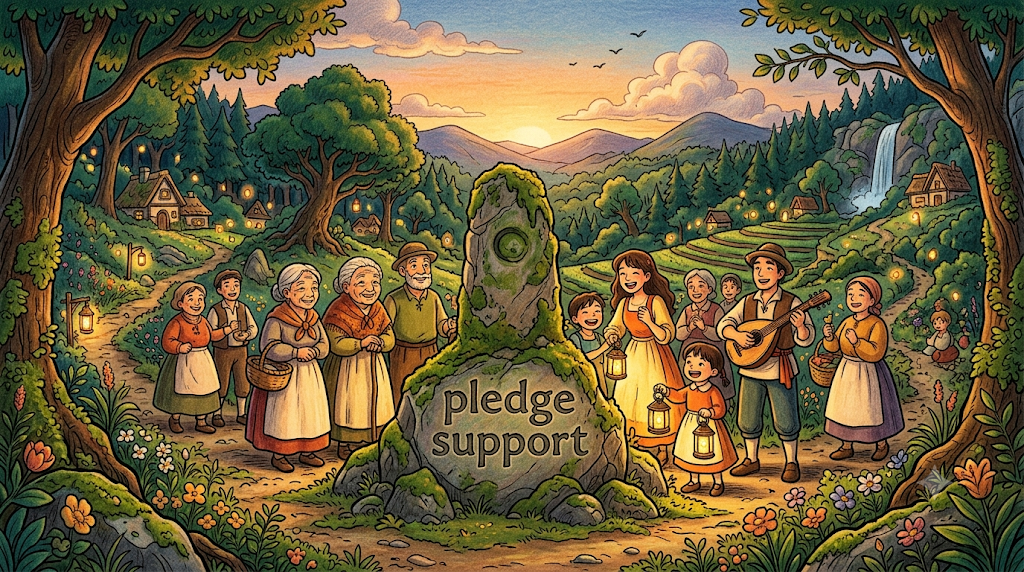
pledge support [pledʒ səˈpɔːrt]
(동사구) 지지를 약속하다, 지원을 서약하다
어떤 사람이나 계획을 공식적으로 지지하겠다고 약속하는 것을 강조합니다. 수능 독해 사회·정치·학술 지문에서 자주 등장합니다.
- All twelve members of the board pledged support for the new director before the announcement was made public, which helped her start her role with confidence. (이사회 12명 전원이 발표가 공개되기 전에 새 이사에 대한 지지를 약속해서, 그녀가 자신감을 갖고 역할을 시작하는 데 도움이 됐다.)
- The football club pledged support for the charity drive by donating a portion of every ticket sold during the month of April to the cause. (축구 클럽은 4월 한 달 동안 판매되는 모든 티켓의 일부를 그 목적에 기부함으로써 자선 캠페인에 대한 지지를 약속했다.)
- The essay argued that pledging support is meaningless without follow-through — because in politics and public life, the gap between what is promised and what is delivered is often large enough to make the initial pledge feel like a form of deception rather than genuine commitment. (에세이는 지지를 약속하는 것이 이행 없이는 의미가 없다고 주장했다 — 정치와 공공 생활에서 약속한 것과 실제로 실행된 것의 간격이 종종 초기 서약이 진정한 헌신보다 속임의 한 형태처럼 느껴지게 만들 만큼 크기 때문이라고 했다.)

pledge allegiance [pledʒ əˈliːdʒəns]
(동사구) 충성을 서약하다, 충성을 맹세하다
국가, 지도자, 또는 단체에 충성을 공식적으로 맹세하는 것을 강조합니다. 수능 독해 사회·역사·심리 지문에서 자주 등장합니다.
- Soldiers pledge allegiance to their country when they join the armed forces, which is one of the most serious commitments a person can make. (군인들은 군에 입대할 때 나라에 충성을 서약하는데, 이것은 사람이 할 수 있는 가장 심각한 헌신 중 하나이다.)
- When she joined the team, the captain asked each new member to pledge allegiance not to him personally but to the values the team stood for — fairness, effort, and respect. (그녀가 팀에 합류했을 때 주장은 각 새 구성원에게 그 개인에게가 아니라 팀이 대표하는 가치 — 공정함, 노력, 존중 — 에 충성을 서약하도록 요청했다.)
- The essay explored the psychology of pledging allegiance — arguing that the act of publicly declaring loyalty to something larger than oneself changes the pledger's relationship to the group, because it creates a public record of commitment that becomes part of how the person sees their own identity. (에세이는 충성을 서약하는 심리학을 탐구했다 — 자신보다 더 큰 무언가에 대한 충성을 공개적으로 선언하는 행위가 서약자의 집단과의 관계를 변화시킨다고 주장했다 — 그것이 사람이 자신의 정체성을 보는 방식의 일부가 되는 헌신의 공개 기록을 만들기 때문이라고 했다.)
숙어 그룹 묶음 1 — 공식적 헌신 pledge 핵심 패턴
표현 의미 핵심 뉘앙스 주요 맥락
| pledge support | 지지를 약속하다 | 어떤 사람이나 계획을 공식적으로 지지하는 것 | 사회·정치·수능 |
| pledge allegiance | 충성을 서약하다 | 국가나 단체에 공식적으로 충성을 맹세하는 것 | 사회·역사·수능 |
| take a pledge | 서약을 하다 | 공식적으로 어떤 것을 지키겠다고 약속하는 것 | 일상·사회·수능 |
이 세 표현은 모두 pledge의 "공식적이고 공개적인 헌신" 이미지를 공유하되, 각각 외부 목적이나 사람에 대한 지지 약속(pledge support)·집단이나 국가에 대한 충성 선언(pledge allegiance)·자신이 지킬 행동 기준에 대한 개인적 헌신(take a pledge)의 관점에서 접근합니다.
- After she took a pledge to volunteer regularly, she found that pledging support for causes she believed in became easier, and she eventually even stood at the school assembly to pledge allegiance to the values the student council had agreed to uphold. (그녀가 정기적으로 자원봉사를 하겠다는 서약을 한 후, 믿는 명분에 대한 지지를 약속하는 것이 더 쉬워졌으며, 결국에는 학교 조회에서 학생회가 지키기로 동의한 가치에 충성을 서약하기 위해 나서기도 했다.)
- The essay connected the three by arguing that taking a pledge, pledging support, and pledging allegiance represent increasing scales of commitment — from the personal, to the social, to the political — and that each level requires not just good intentions but a willingness to be held accountable by others. (에세이는 서약을 하는 것, 지지를 약속하는 것, 그리고 충성을 서약하는 것이 개인적, 사회적, 정치적으로 증가하는 헌신의 규모를 나타낸다고 주장하며 세 가지를 연결했다 — 각 단계가 좋은 의도뿐만 아니라 다른 사람들에 의해 책임을 질 의지를 필요로 한다고 했다.)
- She concluded that whether you take a pledge, pledge your support, or pledge your allegiance, the most important moment is not when the words are spoken but what follows — because a pledge that changes nothing about how you act is simply words, and words without action have no real weight. (서약을 하든, 지지를 약속하든, 충성을 서약하든, 가장 중요한 순간은 말이 발화되는 때가 아니라 그 이후라고 그녀는 결론지었다 — 행동 방식에 대해 아무것도 바꾸지 않는 서약은 단순히 말에 불과하며, 행동 없는 말은 진정한 무게가 없기 때문이라고 했다.)

take a pledge [teɪk ə pledʒ]
(동사구) 서약을 하다, 맹세를 하다
공식적으로 또는 공개적으로 어떤 것을 지키겠다고 약속하는 것을 강조합니다. 수능 독해 일상·심리·사회 지문에서 자주 등장합니다.
- The students in the class were invited to take a pledge to treat each other with respect for the whole school year, and most of them found that signing their name made the commitment feel more serious. (학급 학생들은 1년 내내 서로를 존중하겠다는 서약을 하도록 초대받았으며, 대부분이 이름을 서명하는 것이 헌신을 더 진지하게 느끼게 만든다는 것을 알았다.)
- He took a pledge not to spend money on things he did not need for a full month, which turned out to be both harder and more revealing than he had expected. (그는 꼬박 한 달 동안 필요하지 않은 것에 돈을 쓰지 않겠다는 서약을 했는데, 이것이 예상보다 더 어렵고 더 많은 것을 드러내는 것으로 밝혀졌다.)
- The essay used the act of taking a pledge to explore the psychology of commitment — arguing that making a formal promise, even to oneself, changes behaviour more effectively than simply intending to change because it creates a specific point in time that the person can look back on as the beginning of something new. (서약을 하는 행위를 사용해 헌신의 심리학을 탐구했다 — 자기 자신에게라도 공식적인 약속을 하는 것이 단순히 변하려는 의도보다 행동을 더 효과적으로 변화시키는데, 그것이 사람이 새로운 것의 시작으로서 돌아볼 수 있는 시간의 특정 지점을 만들기 때문이라고 주장했다.)

pledge money [pledʒ ˈmʌni]
(동사구) 돈을 기부하기로 약속하다, 기부를 서약하다
특정 목적을 위해 돈을 내겠다고 공식적으로 약속하는 것을 강조합니다. 수능 독해 사회·경제·심리 지문에서 자주 등장합니다.
- The charity was overwhelmed when so many people pledged money after the documentary was shown that their website crashed and they had to set up a phone line to handle all the calls. (다큐멘터리가 방영된 후 너무 많은 사람들이 돈을 기부하기로 약속해서 그 자선단체는 압도됐으며 웹사이트가 다운됐고 모든 전화를 처리하기 위해 전화 회선을 설치해야 했다.)
- She pledged money to the local library's book fund every year because she believed that access to books had changed her own life and wanted to give others the same opportunity. (그녀는 책에 대한 접근이 자신의 삶을 변화시켰다고 믿었으며 다른 사람들에게 같은 기회를 주고 싶었기 때문에 매년 지역 도서관 도서 기금에 돈을 기부하기로 약속했다.)
- The essay argued that pledging money is one of the most concrete forms of commitment because it ties a promise to something measurable and creates a specific obligation that is much harder to ignore or redefine than a vaguer pledge of time or effort. (돈을 기부하기로 약속하는 것이 가장 구체적인 형태의 헌신 중 하나라고 에세이는 주장했다 — 그것이 약속을 측정 가능한 것과 연결시키고 시간이나 노력에 대한 더 모호한 서약보다 무시하거나 재정의하기 훨씬 더 어려운 특정 의무를 만들기 때문이라고 했다.)
숙어 그룹 묶음 2 — 이행과 위반 pledge 패턴
표현 의미 핵심 뉘앙스 주요 맥락
| pledge money | 돈을 기부하기로 약속하다 | 특정 목적을 위해 돈을 내겠다고 공식적으로 약속하는 것 | 사회·경제·수능 |
| break a pledge | 서약을 어기다 | 공식적으로 약속한 것을 지키지 않는 것 | 사회·심리·수능 |
| honor a pledge | 서약을 지키다 | 공식적으로 약속한 것을 실제로 지켜내는 것 | 사회·심리·수능 |
이 세 표현은 모두 pledge의 "서약과 그 결과" 이미지를 공유하되, 각각 재정적 약속을 통한 구체적 헌신(pledge money)·약속을 지키지 않을 때의 도덕적 결과(break a pledge)·어렵더라도 약속을 이행하는 성실성(honor a pledge)의 관점에서 접근합니다.
- When the organisation decided to break the pledge it had made to honor every donation from those who had pledged money, it lost far more than the funds it had saved — it lost the trust of the people who had believed in it. (단체가 돈을 기부하기로 약속한 모든 기부를 이행하겠다는 서약을 어기기로 결정했을 때, 절약한 자금보다 훨씬 더 많은 것을 잃었다 — 그것을 믿었던 사람들의 신뢰를 잃었다.)
- The essay connected the three by arguing that pledging money, honoring pledges, and breaking pledges all reveal the same thing from different angles — the real relationship between what a person or organisation values and what they are willing to give up to protect it. (돈을 기부하기로 약속하는 것, 서약을 지키는 것, 그리고 서약을 어기는 것이 모두 다른 각도에서 같은 것을 드러낸다고 주장하며 세 가지를 연결했다 — 사람이나 단체가 가치 있게 여기는 것과 그것을 보호하기 위해 기꺼이 포기하는 것 사이의 진정한 관계이다.)
- She concluded that a community's character is best measured not by how freely its members pledge money or make promises, but by how consistently they honor those pledges even when breaking them would be easier — because anyone can make a promise, but keeping it under pressure is what actually demonstrates integrity. (공동체의 성격은 구성원들이 얼마나 자유롭게 돈을 기부하기로 약속하거나 약속을 하는지가 아니라, 서약을 어기는 것이 더 쉬울 때도 얼마나 일관되게 서약을 지키는지로 가장 잘 측정된다고 그녀는 결론지었다 — 누구나 약속을 할 수 있지만 압박 아래서 그것을 지키는 것이 진정으로 성실성을 보여주기 때문이라고 했다.)

break a pledge [breɪk ə pledʒ]
(동사구) 서약을 어기다, 맹세를 깨다
공식적으로 약속한 것을 지키지 않는 것을 강조하며, 수능에서 자주 출제되는 표현입니다.
- The company broke its pledge to keep all jobs in the local area and moved production overseas, which caused lasting anger in a community that had trusted it for decades. (회사는 지역 내 모든 일자리를 유지하겠다는 서약을 어기고 해외로 생산을 이전했는데, 이것이 수십 년 동안 그것을 신뢰해온 지역 사회에서 지속적인 분노를 일으켰다.)
- She had never broken a pledge she had made to a friend in her adult life, which meant that when she finally said she would do something, people knew she meant it completely. (그녀는 성인 생활에서 친구에게 한 서약을 한 번도 어긴 적이 없었는데, 이것은 그녀가 마침내 무언가를 하겠다고 말할 때 사람들이 그것을 완전히 의미한다는 것을 알았다는 것을 의미했다.)
- The essay used the concept of breaking a pledge to explore the difference between mistake and betrayal — arguing that while a mistake is unintentional, breaking a pledge is a deliberate choice that undermines the foundations of whatever relationship the pledge was part of, which is why it carries such a heavy moral cost. (서약을 어기는 개념을 사용해 실수와 배신의 차이를 탐구했다 — 실수는 의도하지 않은 것이지만 서약을 어기는 것은 서약이 속한 관계의 기반을 약화시키는 의도적인 선택이라고 주장했다 — 이것이 그것이 그렇게 무거운 도덕적 대가를 치르는 이유라고 했다.)

honor a pledge [ˈɒnər ə pledʒ]
(동사구) 서약을 지키다, 맹세를 이행하다
공식적으로 약속한 것을 실제로 지켜내는 것을 강조합니다. 수능 독해 사회·심리·윤리 지문에서 자주 등장합니다.
- The country chose to honor the pledge it had made to its allies even though the political situation had changed significantly since the original agreement, because it understood that trustworthiness is not conditional. (원래 합의 이후 정치 상황이 크게 바뀌었음에도 그 나라는 동맹국에게 한 서약을 지키기로 선택했는데, 신뢰성이 조건적이지 않다는 것을 이해했기 때문이었다.)
- She honored every pledge she had made to her team, which meant they trusted her completely when things got difficult — because they had seen, many times, that she did not use changing circumstances as an excuse to walk away from her commitments. (그녀는 팀에게 한 모든 서약을 지켰으며, 이것은 일이 어려워질 때 그들이 그녀를 완전히 신뢰했다는 것을 의미했다 — 바뀐 상황을 헌신에서 벗어나는 핑계로 사용하지 않는다는 것을 많은 번 봤기 때문이었다.)
- The essay argued that honoring a pledge requires something different from simply wanting to do the right thing — it requires the discipline to follow through when the original motivation has faded, the cost has increased, or easier alternatives have appeared, which is precisely when the pledge matters most. (서약을 지키는 것이 단순히 옳은 일을 하고 싶은 것과는 다른 것을 필요로 한다고 에세이는 주장했다 — 그것은 원래의 동기가 사라지고, 비용이 증가하거나, 더 쉬운 대안이 나타났을 때 이행하는 규율을 필요로 하는데, 이것이 정확히 서약이 가장 중요한 때라고 했다.)
숙어 그룹 묶음 3 — 충성·약속 pledge 심화 패턴
표현 의미 핵심 뉘앙스 주요 맥락
| pledge of loyalty | 충성 서약 | 한 사람이나 단체에 충성하겠다는 공식적 약속 | 사회·역사·수능 |
| make a pledge | 서약을 하다 | 공개적이거나 공식적인 약속을 만드는 것 | 일상·사회·수능 |
| pledge to do | ~하겠다고 서약하다 | 특정 행동을 하겠다고 공식적으로 약속하는 것 | 사회·정치·수능 |
이 세 표현은 모두 pledge의 "구체적인 약속의 형태와 내용" 이미지를 공유하되, 각각 관계나 집단에 대한 충성을 공식화하는 것(pledge of loyalty)·약속을 만드는 행위 자체(make a pledge)·특정 행동에 대한 구체적인 공약(pledge to do)의 관점에서 접근합니다.
- She made a pledge that was essentially a pledge of loyalty to her small team — pledging to do whatever she could to protect their jobs and their working conditions even if it cost her personally. (그녀는 본질적으로 작은 팀에 대한 충성 서약인 서약을 했다 — 개인적으로 비용이 들더라도 그들의 일자리와 근무 조건을 보호하기 위해 할 수 있는 모든 것을 하겠다고 서약하면서.)
- The essay connected the three by arguing that making a pledge, giving a pledge of loyalty, and pledging to do something specific are all versions of the same act — the public commitment of oneself to something beyond immediate self-interest — and that this act is one of the foundations of social trust. (서약을 하는 것, 충성 서약을 주는 것, 그리고 특정한 것을 하겠다고 서약하는 것이 모두 같은 행위의 버전이라고 주장하며 세 가지를 연결했다 — 즉각적인 자기 이익을 넘어선 무언가에 대한 자신의 공개적 헌신 — 그리고 이 행위가 사회적 신뢰의 기반 중 하나라고 했다.)
- She concluded that making a pledge, offering a pledge of loyalty, and pledging to do specific things together describe the complete arc of commitment — the decision, the relationship, and the action — and that each without the others is incomplete: you can decide without acting, commit without specific actions, and act without any formal decision, but only when all three are present does a pledge carry its full moral weight. (서약을 하는 것, 충성 서약을 제공하는 것, 그리고 특정한 것들을 하겠다고 서약하는 것이 함께 헌신의 완전한 호를 묘사한다고 그녀는 결론지었다 — 결정, 관계, 그리고 행동 — 그리고 다른 것들 없이는 각각이 불완전하다: 행동 없이 결정할 수 있고, 구체적인 행동 없이 헌신할 수 있으며, 어떤 공식 결정 없이 행동할 수 있지만, 세 가지 모두 존재할 때만 서약이 완전한 도덕적 무게를 갖는다고 했다.)

pledge of loyalty [pledʒ əv ˈlɔɪəlti]
(명사구) 충성 서약, 충성 맹세
한 사람이나 단체에 충성하겠다는 공식적인 약속을 강조합니다. 수능 독해 사회·역사·심리 지문에서 자주 등장합니다.
- The small team had developed such a strong culture of trust that a simple pledge of loyalty at the start of each new season was enough to set the tone for everything that followed. (작은 팀은 신뢰의 강한 문화를 개발해서 각 새 시즌 시작 시의 간단한 충성 서약이 뒤따르는 모든 것의 분위기를 설정하기에 충분했다.)
- She was asked to give a pledge of loyalty to the organisation before being given access to sensitive information, which she understood as reasonable given how much was at stake. (그녀는 민감한 정보에 접근하기 전에 단체에 충성 서약을 하도록 요청받았는데, 관련된 것이 얼마나 많은지를 감안하면 합리적이라고 이해했다.)
- The essay explored pledges of loyalty in historical and modern contexts — noting that while the form has changed dramatically, the function remains the same: to create a formal record of commitment that binds people together and gives them something to hold each other to when circumstances become difficult. (에세이는 역사적이고 현대적인 맥락에서 충성 서약을 탐구했다 — 형태는 극적으로 변했지만 기능은 같다고 지적했다: 사람들을 함께 묶고 상황이 어려워질 때 서로에게 기댈 것을 주는 공식적인 헌신 기록을 만드는 것이다.)

make a pledge [meɪk ə pledʒ]
(동사구) 서약을 하다, 약속을 하다
공개적이거나 공식적인 약속을 만드는 것을 강조합니다. 수능 독해 일상·사회·심리 지문에서 자주 등장합니다.
- The school made a pledge to become entirely plastic-free within two years and immediately began replacing all single-use items with alternatives that could be reused or recycled. (학교는 2년 안에 완전히 플라스틱 없는 상태가 되겠다는 서약을 하고 즉시 모든 일회용 품목을 재사용하거나 재활용할 수 있는 대안으로 교체하기 시작했다.)
- She made a pledge at her grandmother's funeral to carry on the community work that her grandmother had started forty years earlier, and kept it for the rest of her own life. (그녀는 할머니의 장례식에서 할머니가 40년 전에 시작한 지역 사회 봉사를 계속하겠다는 서약을 하고 평생 그것을 지켰다.)
- The essay used the phrase making a pledge to explore why public commitment is psychologically different from private intention — arguing that when we make a promise in front of others, we engage a social mechanism that private promises do not, because we are now accountable not just to ourselves but to everyone who heard us. (서약을 하는 표현을 사용해 공개적 헌신이 심리적으로 개인적 의도와 왜 다른지 탐구했다 — 다른 사람들 앞에서 약속을 할 때 개인적 약속이 갖지 않는 사회적 메커니즘을 작동시킨다고 주장했다 — 이제 우리 자신에게뿐만 아니라 우리의 말을 들은 모든 사람에게 책임이 있기 때문이라고 했다.)

pledge to do [pledʒ tə duː]
(동사구) ~하겠다고 서약하다, ~하겠다고 약속하다
특정 행동을 하겠다고 공식적으로 또는 강하게 약속하는 것을 강조합니다. 수능 독해 사회·정치·심리 지문에서 자주 등장합니다.
- The mayor pledged to do whatever was necessary to fix the city's roads before the end of the year, and then followed up with a detailed plan and a timeline that residents could track. (시장은 연말 전에 도시의 도로를 고치기 위해 필요한 모든 것을 하겠다고 서약한 다음 주민들이 추적할 수 있는 자세한 계획과 일정을 발표했다.)
- She pledged to do more to support her junior colleagues after realising that she had benefited enormously from the mentoring she had received when she was starting out and had not yet found ways to pay that back. (그녀는 시작할 때 받은 멘토링에서 엄청난 혜택을 받았지만 아직 그것을 갚을 방법을 찾지 못했다는 것을 깨달은 후 후배 동료들을 더 지지하겠다고 서약했다.)
- The essay argued that pledging to do something specific is more powerful than making a general commitment because specificity makes it possible to judge whether the pledge has been kept — and the possibility of being judged against a specific standard is one of the most effective ways of making sure someone follows through. (특정한 것을 하겠다고 서약하는 것이 일반적인 헌신을 하는 것보다 더 강력한데, 구체성이 서약이 지켜졌는지 판단하는 것을 가능하게 하기 때문이라고 에세이는 주장했다 — 특정 기준에 의해 판단받을 가능성이 누군가가 이행하도록 만드는 가장 효과적인 방법 중 하나라고 했다.)
숙어 그룹 묶음 4 — 종합 pledge 패턴
표현 의미 핵심 뉘앙스 주요 맥락
| break a pledge | 서약을 어기다 | 공식적으로 약속한 것을 지키지 않는 것 | 사회·심리·수능 |
| honor a pledge | 서약을 지키다 | 공식적으로 약속한 것을 실제로 지켜내는 것 | 사회·심리·수능 |
| pledge allegiance | 충성을 서약하다 | 국가나 단체에 공식적으로 충성을 맹세하는 것 | 사회·역사·수능 |
이 세 표현은 수능 독해에서 가장 자주 출제되는 pledge의 핵심 패턴입니다. break a pledge는 서약 위반의 도덕적 결과를, honor a pledge는 어려움 속에서도 약속을 지키는 성실성을, pledge allegiance는 공식적인 충성 선언의 사회적 의미를 각각 나타냅니다.
- She had pledged allegiance to the values of the organisation when she joined, and even when pressure came from outside to change them, she chose to honor that pledge rather than break it — because she understood that the value of a pledge lies precisely in its unconditional nature. (그녀는 가입할 때 단체의 가치에 충성을 서약했으며, 외부에서 그것들을 바꾸라는 압력이 왔을 때도 서약을 어기기보다 지키기로 선택했다 — 서약의 가치가 정확히 그것의 무조건적인 성격에 있다는 것을 이해했기 때문이었다.)
- The essay argued that pledging allegiance, honoring pledges, and the consequences of breaking pledges together form the social architecture of trust — defining who we are to each other, whether we can be counted on, and what happens to relationships when commitments are not kept. (충성을 서약하는 것, 서약을 지키는 것, 그리고 서약을 어기는 것의 결과가 함께 신뢰의 사회적 구조를 형성한다고 에세이는 주장했다 — 우리가 서로에게 누구인지, 신뢰할 수 있는지, 그리고 헌신이 지켜지지 않을 때 관계에 무슨 일이 일어나는지를 정의한다고 했다.)
- She concluded that pledging allegiance sets the direction, honoring pledges proves the character, and breaking pledges reveals it — and that the truest measure of any person, institution, or nation is not the grandeur of the pledges they make but the consistency with which they keep them, especially when keeping them is hard. (충성을 서약하는 것이 방향을 설정하고, 서약을 지키는 것이 성격을 증명하며, 서약을 어기는 것이 그것을 드러낸다고 그녀는 결론지었다 — 그리고 어떤 사람, 기관, 또는 국가의 가장 진정한 척도는 그들이 하는 서약의 웅장함이 아니라 특히 지키기가 어려울 때 그것들을 지키는 일관성이라고 했다.)
전체 요약표
표현 의미 핵심 뉘앙스
| pledge | 서약, 맹세 / 서약하다 | 담보와 헌신의 핵심 이미지 |
| pledge support | 지지를 약속하다 | 어떤 사람이나 계획을 공식적으로 지지하는 것 |
| pledge allegiance | 충성을 서약하다 | 국가나 단체에 공식적으로 충성을 맹세하는 것 |
| take a pledge | 서약을 하다 | 공식적으로 어떤 것을 지키겠다고 약속하는 것 |
| pledge money | 돈을 기부하기로 약속하다 | 특정 목적을 위해 돈을 내겠다고 공식적으로 약속하는 것 |
| break a pledge | 서약을 어기다 | 공식적으로 약속한 것을 지키지 않는 것 |
| honor a pledge | 서약을 지키다 | 공식적으로 약속한 것을 실제로 지켜내는 것 |
| pledge of loyalty | 충성 서약 | 한 사람이나 단체에 충성하겠다는 공식적 약속 |
| make a pledge | 서약을 하다 | 공개적이거나 공식적인 약속을 만드는 것 |
| pledge to do | ~하겠다고 서약하다 | 특정 행동을 하겠다고 공식적으로 약속하는 것 |
유의어 비교표

단어 공통점 뉘앙스 차이 예문
| pledge | 약속, 서약 | 공식적·공개적·담보 이미지·비유 풍부 | A pledge to help. |
| promise | 약속 | 일상적이고 개인적인 약속 | A promise to try. |
| vow | 서약 | 신성하고 엄숙한 약속 | Marriage vows. |
| commitment | 헌신 | 방향이나 원칙에 대한 헌신 | A commitment to work. |
| oath | 선서 | 공식 자리에서 하는 법적 선서 | An oath in court. |
유의어 예문 리스트
- (promise) He made a promise to call her as soon as he arrived, and she trusted him because he had never once failed to do exactly what he said he would. (그는 도착하자마자 전화하겠다는 약속을 했으며, 그녀는 그를 신뢰했는데 그가 말한 것을 정확히 하지 않은 적이 한 번도 없었기 때문이었다.)
- (vow) They exchanged vows in front of their closest friends and family, each promising to support the other through whatever life brought and to choose the relationship again every day. (그들은 가장 가까운 친구들과 가족 앞에서 서약을 교환했으며, 각각 삶이 가져오는 어떤 것을 통해서도 서로를 지지하고 매일 그 관계를 다시 선택하겠다고 약속했다.)
- (commitment) Her commitment to the project was obvious from the hours she put in and the way she talked about it — she was not just doing a job but genuinely invested in the outcome. (프로젝트에 대한 그녀의 헌신은 투자한 시간과 그것에 대해 말하는 방식에서 명백했다 — 그녀는 단지 일을 하는 것이 아니라 결과에 진정으로 투자했다.)
- (oath) The doctor took an oath when she qualified that committed her to placing the wellbeing of her patients above all other considerations, and she took it seriously every day of her career. (의사는 자격을 취득할 때 환자의 복지를 다른 모든 고려 사항보다 우선시하겠다는 선서를 했으며, 커리어의 매일 그것을 진지하게 받아들였다.)
결론 정리
pledge는 단순히 "약속"이 아니라, 고대 프랑스어 plege(보증인·담보)에서 출발해 자신을 담보로 내세워 반드시 지키겠다고 보장하는 것에서 공식적 헌신·충성·재정적 보증·도덕적 의무·사회적 책임까지 확장되는 단어다 — pledge가 있는 곳엔 언제나 '단순한 약속이 아닌, 인간이 자신을 걸고·공개적으로 헌신하며·충성을 맹세하고·약속의 무게를 짊어지는 방식이 생생하게 살아숨쉬는' 생동감의 선언이 있다.
💡 pledge는 "자신을 담보로 내세워 반드시 지키겠다고 보장하는 것에서 출발한" 생동감 넘치는 언어 — break a pledge · honor a pledge · pledge allegiance가 수능 최빈출.
🌟 초등학생 버전 — pledge는 서약, 맹세이지만, "서약을 지키다"(honor a pledge), "서약을 어기다"(break a pledge), "충성을 서약하다"(pledge allegiance)처럼 우리 생활과 사회 곳곳에 살아있는 단어예요! 🤲✨


