Day134 - similarity, striking similarity, bear a similarity to, genetic similarity, superficial similarity, cosine similarity, similarity index, uncanny similarity, fundamental similarity, similarity in nature, similarity of interests

AI Audio Overview
'similarity'는 기본적으로 "유사성", "닮은 점"이라는 뜻으로 쓰이며, 두 개 이상의 대상이 서로 비슷하거나 공통된 특징을 공유하는 성질을 의미합니다. 비교, 분류, 패턴 인식을 다루는 과학, 수학, 인문, 사회 분야에서 핵심 단어로 등장합니다.
1. striking similarity (놀라운 유사성/현저한 유사점)
- 해석: 우연이라고 하기에는 믿기 힘들 만큼 매우 강하고 분명하게 닮은 점.
- 예문: The two portraits painted centuries apart show a striking similarity in composition. (수세기의 시차를 두고 그려진 두 초상화는 구도에서 놀라운 유사성을 보여준다.)
- 예문: There is a striking similarity between the twins' handwriting. (쌍둥이의 필체 사이에는 현저한 유사점이 있다.)
2. bear a similarity to (~와 유사하다/닮다)
- 해석: 어떤 대상과 비슷한 특징이나 모양을 가지고 있다. (bear a resemblance to와 유사)
- 예문: The new architectural design bears a similarity to ancient Greek temples. (새로운 건축 디자인은 고대 그리스 신전과 유사하다.)
3. genetic similarity (유전적 유사성)
- 해석: 생물 종이나 개체 간에 DNA나 유전자 구조가 얼마나 비슷한지를 나타내는 척도. (생물학, 진화론 지문에서 중요)
- 예문: The high genetic similarity between humans and chimpanzees suggests a common ancestor. (인간과 침팬지 사이의 높은 유전적 유사성은 공통 조상을 시사한다.)
4. superficial similarity (표면적인 유사성)
- 해석: 겉모습은 비슷해 보이지만, 실제 본질이나 구조는 다른 경우. (비판적 사고 지문에서 중요)
- 예문: Don't be fooled by the superficial similarity; the underlying mechanisms are completely different. (표면적인 유사성에 속지 마라. 근본적인 메커니즘은 완전히 다르다.)
5. cosine similarity (코사인 유사도)
- 해석: 데이터 분석이나 인공지능에서, 두 벡터 사이의 각도를 이용하여 유사한 정도를 측정하는 방법. (기술, 수학 지문에서 중요)
- 예문: Search engines use cosine similarity to rank documents based on relevance to the query. (검색 엔진은 질의와의 관련성에 따라 문서를 순위 매기기 위해 코사인 유사도를 사용한다.)
6. similarity index (유사성 지수/일치도)
- 해석: 두 대상이 얼마나 비슷한지를 수치나 비율로 나타낸 지표. (표절 검사 등에서 사용)
- 예문: The plagiarism detection software reported a high similarity index for the submitted essay. (표절 탐지 소프트웨어는 제출된 에세이에 대해 높은 유사성 지수를 보고했다.)
7. uncanny similarity (묘한 유사성/소름 끼치는 닮음)
- 해석: 설명하기 힘들 정도로 이상하고 신비롭게 닮은 점.
- 예문: The actor has an uncanny similarity to the historical figure he is portraying. (그 배우는 그가 연기하는 역사적 인물과 묘한 유사성을 가지고 있다.)
8. fundamental similarity (근본적인 유사성)
- 해석: 세부 사항은 다를지라도, 핵심적인 원리나 본질이 서로 같은 상태.
- 예문: Despite cultural differences, there is a fundamental similarity in how humans express basic emotions. (문화적 차이에도 불구하고, 인간이 기본 감정을 표현하는 방식에는 근본적인 유사성이 있다.)
9. similarity in nature (본질상의 유사함/성격의 유사성)
- 해석: 성격, 성질, 또는 특성이 서로 비슷한 상태.
- 예문: The chemicals were grouped together due to their similarity in nature and reactivity. (그 화학 물질들은 성질의 유사성과 반응성 때문에 함께 그룹화되었다.)
10. similarity of interests (관심사의 유사성)
- 해석: 서로 좋아하는 것이나 흥미를 느끼는 분야가 같은 상태. (사회적 관계 형성에서 중요)
- 예문: Their friendship began with a shared similarity of interests in classical music. (그들의 우정은 클래식 음악에 대한 공유된 관심사의 유사성으로 시작되었다.)

대한민국 입시 주요 POINT
'similarity'는 비교와 대조, 분류의 기준, 그리고 진화와 모방을 다루는 모든 학술 지문에서 논리적 사고의 기초가 되는 개념입니다.
1. 비교와 유추 (Comparison & Analogy)
- 지문은 similarity를 통해 서로 다른 두 대상을 비교하고, **유추(analogy)**를 통해 낯선 개념을 설명합니다. fundamental similarity를 찾는 것은 복잡한 현상 속에 숨겨진 보편적 원리를 파악하는 핵심 능력입니다.
2. 겉과 속의 구별 (Superficial vs. Fundamental)
- superficial similarity와 fundamental similarity의 대비는 비판적 사고의 핵심입니다. 겉모습만 보고 판단하는 오류(error)를 범하지 않고, 내재된 본질의 유사성을 파악해야 정확한 결론에 도달할 수 있다는 논리가 자주 출제됩니다.
3. 분류와 패턴 인식 (Pattern Recognition)
- 과학 및 기술 지문에서 similarity는 **데이터를 분류(classification)**하고 패턴을 인식하는 기준이 됩니다. genetic similarity나 cosine similarity는 대상을 그룹화하고 관계를 정의하는 정량적 기준으로 활용됩니다.

similarity [ˌsɪməˈlærəti] 둘 이상의 것이 비슷한 점
핵심 뜻
서로 비슷하거나 닮은 유사성, 닮음; 또는 공통적으로 가지고 있는 유사한 점, 특징.
단어별 뉘앙스, 의미 연결 흐름 (표)
단어 구성 요소 의미 연결 흐름 뉘앙스 요약
| similis (라틴어) | '같은', '닮은' | 다른 대상과 같은 특징을 공유함. | 닮음 (Resemblance) |
| -ity (접미사) | 명사형 접미사 | '성질' 또는 '상태' | 비슷한 성질이나 상태 |
| 종합 뉘앙스 | 두 대상이 완전히 똑같지는 않지만(not identical), 상당 부분 성질이나 외형을 공유하고 있는 상태. | '공유된 특징/닮은 상태' |
단어 어원적 의미 핵심 뉘앙스 현대적 의미 연결 흐름
| 라틴어 similis (닮은, 비슷한) | "특징을 공유하는 상태" | 유사성/닮음 → 공통점 (유사한 점) → (수학/기하학) 닮음 |

품사별 의미와 쉬운 예문 (표)
품사 의미 상세 설명 쉬운 예문
| 명사 (N.) | 유사성, 닮음 | 서로 비슷하게 보이거나 같은 성질을 가진 상태. | The similarity between the twins is amazing. (쌍둥이 사이의 유사성/닮음은 놀랍다.) |
| 명사 (N.) | 유사점, 공통점 | 구체적으로 서로 비슷한 특징이나 측면. | There are many similarities between the two cultures. (두 문화 사이에는 많은 유사점들이 있다.) |
활용 예문 (리스트)
- I noticed a striking similarity between his voice and his father's. (나는 그의 목소리와 그의 아버지 목소리 사이의 놀라운 유사성을 알아차렸다.)
- The teacher pointed out the similarities in the two essays. (선생님은 두 에세이의 유사점들을 지적했다.)
- Despite their differences, they share a fundamental similarity in values. (차이점들에도 불구하고, 그들은 가치관에서 근본적인 유사성을 공유한다.)
- The software detects similarity in images to find duplicates. (그 소프트웨어는 중복을 찾기 위해 이미지의 유사도를 감지한다.)
- Is there any similarity between these two cases? (이 두 사건 사이에 어떤 유사점이라도 있습니까?)
전체 뉘앙스 설명
similarity는 **'비슷하다(similar)'**는 형용사의 명사형으로, 두 개 이상의 대상이 완전히 똑같지는 않지만(identical하지 않음), 외형, 성격, 구조 등에서 공통된 특징을 공유하고 있는 상태를 의미합니다. 이는 사람 얼굴의 닮음부터 추상적인 아이디어의 공통점까지 폭넓게 사용됩니다.
마지막 핵심 정리
similarity는 '서로 비슷하거나 닮은 상태(유사성)' 또는 **'구체적인 공통점'**을 의미하는 명사입니다.

파생어 (발음 포함) (리스트)
- similar [ˈsɪmələr] (형용사): 비슷한, 유사한
- similarly [ˈsɪmələli] (부사): 비슷하게, 마찬가지로
유의어 비교 (표)
단어 품사 뉘앙스 차이 및 사용 맥락
| Similarity | 명사 | 성질이나 외모가 서로 비슷한 상태나 공통점. (공유된 특징 강조) |
| Resemblance | 명사 | 주로 사람이나 사물의 외모가 닮은 것. (시각적 닮음 강조) |
| Likeness | 명사 | 아주 비슷함 또는 초상화/사진 (외형적 유사성). (본질적/외형적 같음 강조) |
| Analogy | 명사 | 서로 다른 것들 사이의 부분적인 유사성 (주로 설명이나 비유를 위함). (구조적/논리적 비유 강조) |

유의어 예문 (해석 포함) (리스트)
- Resemblance: She bears a strong resemblance to her grandmother. (그녀는 할머니와 강하게 닮았다.)
- Likeness: The portrait is a good likeness of him. (그 초상화는 그를 아주 잘 닮게 그렸다.)
- Analogy: The teacher used an analogy to explain the complex theory. (선생님은 복잡한 이론을 설명하기 위해 유추/비유를 사용했다.)
결론 정리
similarity는 **'같은 성질을 공유함'**이라는 의미를 통해, 서로 다른 개체들 사이에서 발견되는 닮은 점이나 공통된 특징을 설명하는 가장 일반적이고 포괄적인 단어입니다.

similarity [ˌsɪməˈlærəti]
(명사) 유사성, 닮은 점, 비슷함
둘 이상의 사람, 사물, 또는 상황이 서로 완전히 같지는 않지만 공통된 특징이나 성질을 공유하고 있는 상태를 의미합니다. 외모, 성격, 구조, 또는 패턴 등 다양한 측면에서의 닮음을 포괄적으로 나타냅니다.
- The professor pointed out the similarity between the two historical events. (교수님은 두 역사적 사건 사이의 유사성을 지적했다.)
- There is a strong similarity in the writing style of the two authors. (두 작가의 글쓰기 스타일에는 강한 유사성이 있다.)
- The manager noticed a similarity between the new product and the competitor's model. (관리자는 새 제품과 경쟁사 모델 사이의 유사성을 알아챘다.)
- Genetic similarity explains why family members often look alike. (유전적 유사성은 왜 가족 구성원들이 종종 닮아 보이는지를 설명한다.)

striking similarity [ˈstraɪkɪŋ ˌsɪməˈlærəti]
(숙어) 놀라운 유사성, 두드러진 닮음
누구나 즉시 알아차릴 수 있을 만큼 매우 분명하고 인상적인 유사성을 의미합니다. 우연이라고 하기에는 너무나 똑같거나 놀라울 정도로 닮았을 때 사용됩니다.
- There is a striking similarity between the father and his son. (아버지와 아들 사이에는 놀라운 유사성이 있다.)
- The landscape bears a striking similarity to the painting I saw in the museum. (그 풍경은 내가 박물관에서 보았던 그림과 놀라운 유사성을 지닌다.)
- The judge noted a striking similarity in the methods used in both crimes. (판사는 두 범죄에 사용된 수법에서 두드러진 유사성을 주목했다.)
- I was surprised by the striking similarity of our life experiences. (나는 우리 인생 경험의 놀라운 유사성에 놀랐다.)

bear a similarity to [bɛr ə ˌsɪməˈlærəti tuː]
(숙어) ~와 유사점을 지니다, ~와 닮다
어떤 대상이 다른 대상과 비슷한 특징이나 모양을 가지고 있다는 것을 격식 있게 표현할 때 사용합니다. 단순히 '비슷하다'는 것보다 '유사성을 품고 있다'는 뉘앙스를 줍니다.
- This situation bears a similarity to what happened during the last financial crisis. (이 상황은 지난 금융 위기 동안 일어났던 일과 유사점을 지닌다.)
- The new building bears a similarity to classic Roman architecture. (새 건물은 고전 로마 건축과 유사점을 지닌다.)
- His argument bears a similarity to the points raised by the opposition party. (그의 주장은 야당에 의해 제기된 요점들과 유사점을 지닌다.)
- Does this story bear a similarity to any real events? (이 이야기가 어떤 실제 사건들과 유사점을 지니나요?)

superficial similarity [ˌsuːpərˈfɪʃəl ˌsɪməˈlærəti]
(숙어) 표면적인 유사성, 피상적인 닮음
겉으로 보기에는 비슷해 보이지만, 실제로는 본질적이고 깊은 부분에서 다르다는 것을 의미합니다. 외형이나 첫인상만 비슷할 뿐, 내용이나 성질은 다르다는 것을 강조할 때 사용됩니다.
- There is only a superficial similarity between the two political ideologies. (두 정치 이념 사이에는 오직 표면적인 유사성만 있다.)
- Don't be fooled by the superficial similarity of the cheap imitation. (싸구려 모조품의 표면적인 유사성에 속지 마라.)
- The manager said the problems have only a superficial similarity but different root causes. (관리자는 그 문제들이 오직 표면적인 유사성만 가질 뿐 근본 원인은 다르다고 말했다.)
- The judge ruled that the cases had a superficial similarity but different legal grounds. (판사는 그 사건들이 표면적인 유사성을 가졌지만 법적 근거는 다르다고 판결했다.)

uncanny similarity [ʌnˈkæni ˌsɪməˈlærəti]
(숙어) 묘한 유사성, 기이할 정도로 닮음
설명하기 어려울 정도로 이상하고 신비롭게, 혹은 소름 끼칠 정도로 정확하게 닮은 것을 의미합니다. 우연의 일치라고 보기 힘들 만큼 기이한 느낌을 주는 유사성을 강조합니다.
- The stranger had an uncanny similarity to my late grandfather. (그 낯선 사람은 돌아가신 내 할아버지와 묘한 유사성을 가지고 있었다.)
- There is an uncanny similarity between the two historical events separated by a century. (한 세기 떨어져 있는 두 역사적 사건 사이에는 기이한 유사성이 있다.)
- The actor's voice has an uncanny similarity to the real person he portrayed. (그 배우의 목소리는 그가 연기한 실존 인물과 묘한 유사성을 가진다.)
- The engineer found an uncanny similarity in the error patterns of the two systems. (엔지니어는 두 시스템의 오류 패턴에서 기이한 유사성을 발견했다.)
similarity, striking similarity, bear a similarity to, superficial similarity, uncanny similarity
(명사) 유사성, 닮음 / (숙어) 놀라운 유사성, ~와 유사하다, 피상적인 유사성, 묘한 유사성
'similarity'는 '두 개 이상의 대상이' '서로 비슷하거나 닮은' '성질이나 상태'를 의미하는 가장 기본적인 단어입니다. 'striking similarity'는 '누가 봐도 알 수 있을 만큼' '매우 뚜렷하고 놀라운 유사성'을 강조합니다. 'bear a similarity to'는 '~와 유사성을 지니다', 즉 '~와 닮았다'는 뜻의 숙어입니다. 'superficial similarity'는 '겉모습만 비슷하고' '본질은 다른' 경우를, 'uncanny similarity'는 '설명하기 힘들 정도로' '이상하고 묘하게 닮은' 느낌을 나타냅니다.
- There is a striking similarity between the two paintings. (그 두 그림 사이에는 놀라운 유사성이 있다.)
- The new model bears a similarity to the old one. (새 모델은 구형 모델과 유사하다.)
- Their relationship has a superficial similarity to friendship, but it's purely business. (그들의 관계는 우정과 피상적인 유사성이 있지만, 순전히 비즈니스 관계이다.)
- The twins have an uncanny similarity in their habits. (그 쌍둥이는 습관에서 묘한 유사성을 가지고 있다.)
- I noticed a similarity in their writing styles. (나는 그들의 글쓰기 스타일에서 유사성을 발견했다.)
- Despite the superficial similarity, the two species are genetically different. (피상적인 유사성에도 불구하고, 그 두 종은 유전적으로 다르다.)
- His voice bears a striking similarity to his father's. (그의 목소리는 그의 아버지의 목소리와 놀라울 정도로 유사하다.)
- The uncanny similarity of the events scared me. (그 사건들의 묘한 유사성이 나를 겁먹게 했다.)
핵심 뜻
유사성, 닮음. 서로 비슷한 성질이나 상태, 그 정도와 느낌.
| similarity | 유사성 | 명사로, '닮음' '의' '상태'. | '두' '대상' '이' '공통점' '을' '가지고' '비슷함' '을' '나타내는' '기본' '개념'. |
| striking | 놀라운, 두드러진 | 형용사로, '강도'. | '유사성' '이' '매우' '뚜렷하고' '강해서' '단번에' '알아차릴' '수' '있음' '을' '강조함'. |
| bear a ... to | ~와 ...을 지니다 | 숙어구로, '관계'. | '주어' '가' '목적어' '와' '유사한' '특징' '을' '가지고' '있음' '을' '나타냄'. |
| superficial | 피상적인 | 형용사로, '깊이'. | '겉' '으로만' '비슷하고' '실제' '본질' '이나' '내용' '은' '다를' '수' '있음' '을' '의미함'. |
| uncanny | 묘한, 이상한 | 형용사로, '느낌'. | '너무' '닮아서' '기이하거나' '설명하기' '힘든' '느낌' '을' '줌' '을' '나타냄'. |
비슷한 어휘 깔끔하게 표로 정리하고 밑에 예문,해석 하나씩 나열하기
| resemblance | 닮음, 유사함 (외모) |
| likeness | 유사성, 화상 (그림) |
| analogy | 유추, 유사점 (논리적) |
resemblance
예문: There is a strong resemblance between the sisters.
해석: 그 자매 사이에는 강한 닮음이 있다.
likeness
예문: The portrait captures her likeness perfectly.
해석: 그 초상화는 그녀의 **모습(유사성)**을 완벽하게 포착한다.
analogy
예문: The teacher used an analogy to explain the concept.
해석: 선생님은 개념을 설명하기 위해 유추를 사용했다.

genetic similarity [dʒəˈnetɪk ˌsɪməˈlærəti]
(명사) 유전적 유사성
생물학(biology)에서 두 개체나 종(species) 사이의 DNA 서열이나 유전적 구성이 얼마나 일치하는지를 나타내는 정도를 의미합니다. 진화론적 관계나 친자 확인, 질병 연구 등에 사용됩니다.
- Chimpanzees share a high genetic similarity with humans.1 (침팬지는 인간과 높은 유전적 유사성을 공유한다.)
- The doctor explained that genetic similarity can determine the risk of inherited diseases. (의사는 유전적 유사성이 유전 질환의 위험을 결정할 수 있다고 설명했다.)
- DNA testing confirmed the genetic similarity between the two siblings. (DNA 검사는 두 형제자매 사이의 유전적 유사성을 확인했다.)
- The professor's study analyzed the genetic similarity of the isolated population. (교수님의 연구는 고립된 인구의 유전적 유사성을 분석했다.)

cosine similarity [ˈkoʊsaɪn ˌsɪməˈlærəti]
(명사) 코사인 유사도 (데이터 분석)
데이터 분석이나 텍스트 마이닝에서 두 벡터(vector) 사이의 각도를 측정하여 유사성을 판단하는 척도를 의미합니다. 크기보다는 방향성이나 패턴의 일치 정도를 보는 데 유용하며, 검색 엔진이나 추천 시스템에서 자주 사용됩니다.
- The engineer used cosine similarity to compare the two text documents.2 (엔지니어는 두 텍스트 문서를 비교하기 위해 코사인 유사도를 사용했다.)
- The recommendation system relies on cosine similarity to find products you might like.3 (추천 시스템은 당신이 좋아할 만한 제품을 찾기 위해 코사인 유사도에 의존한다.)
- The data scientist explained how cosine similarity ignores the magnitude of the vectors.4 (데이터 과학자는 코사인 유사도가 벡터의 크기를 무시하는 방식을 설명했다.)
- We calculated the cosine similarity to measure the relevance of the search query. (우리는 검색 질의의 관련성을 측정하기 위해 코사인 유사도를 계산했다.)
similarity index [ˌsɪməˈlærəti ˈɪndeks]
(명사) 유사도 지수, 유사성 지표
두 대상이 얼마나 비슷한지를 수치(number)나 백분율(percent)로 나타낸 값을 의미합니다. 논문 표절 검사(plagiarism check)나 생태학에서 종의 다양성을 비교할 때 주로 사용되는 정량적인 지표입니다.
- The software reported a high similarity index for the student's essay. (소프트웨어는 학생의 에세이에 대해 높은 유사도 지수를 보고했다.)
- The professor checked the similarity index to ensure the paper was original. (교수님은 논문이 독창적인지 보장하기 위해 유사도 지수를 확인했다.)
- Ecologists use a similarity index to compare species diversity between two areas.5 (생태학자들은 두 지역 사이의 종 다양성을 비교하기 위해 유사도 지수를 사용한다.)
- A low similarity index indicates that the two data sets are distinct. (낮은 유사도 지수는 두 자료 집합이 뚜렷이 다르다는 것을 나타낸다.)

fundamental similarity [ˌfʌndəˈmentl ˌsɪməˈlærəti]
(명사) 근본적인 유사성
겉으로 보이는 차이점에도 불구하고, 가장 기본적이고 본질적인(essential) 성격이나 원리(principle) 면에서 서로 같음을 의미합니다. 표면적인 것보다 깊은 내면의 공통점을 강조할 때 사용합니다.
- Despite their different appearances, there is a fundamental similarity in their design. (그들의 다른 외모에도 불구하고, 그들의 설계에는 근본적인 유사성이 있다.)
- The philosopher argued that there is a fundamental similarity between all religions. (그 철학자는 모든 종교 사이에 근본적인 유사성이 있다고 주장했다.)
- The manager noted a fundamental similarity in the way both teams approach problems. (관리자는 두 팀이 문제에 접근하는 방식에서 근본적인 유사성을 주목했다.)
- We found a fundamental similarity in the economic policies of the two nations. (우리는 두 나라의 경제 정책에서 근본적인 유사성을 발견했다.)

similarity in nature [ˌsɪməˈlærəti ɪn ˈneɪtʃər]
(숙어) 성질상의 유사함, 본질적인 비슷함
두 대상이 가진 고유한 성격(nature), 기질, 또는 품질(quality)이 서로 비슷함을 의미합니다. 형태나 외형보다는 그 대상이 무엇인지, 혹은 어떻게 행동하는지에 대한 본질적인 특성을 비교할 때 사용됩니다.
- The two chemicals show a similarity in nature but react differently to heat. (두 화학 물질은 성질상 유사함을 보이지만 열에는 다르게 반응한다.)
- The judge said the crimes were distinct but showed a disturbing similarity in nature. (판사는 그 범죄들은 별개였지만 충격적인 본질적 유사성을 보여주었다고 말했다.)
- I noticed a similarity in nature between his leadership style and his father's. (나는 그의 리더십 스타일과 그의 아버지의 것 사이에 성질상의 유사함을 알아챘다.)
- The problems are different in scale but have a similarity in nature. (그 문제들은 규모 면에서는 다르지만 본질적으로는 유사하다.)
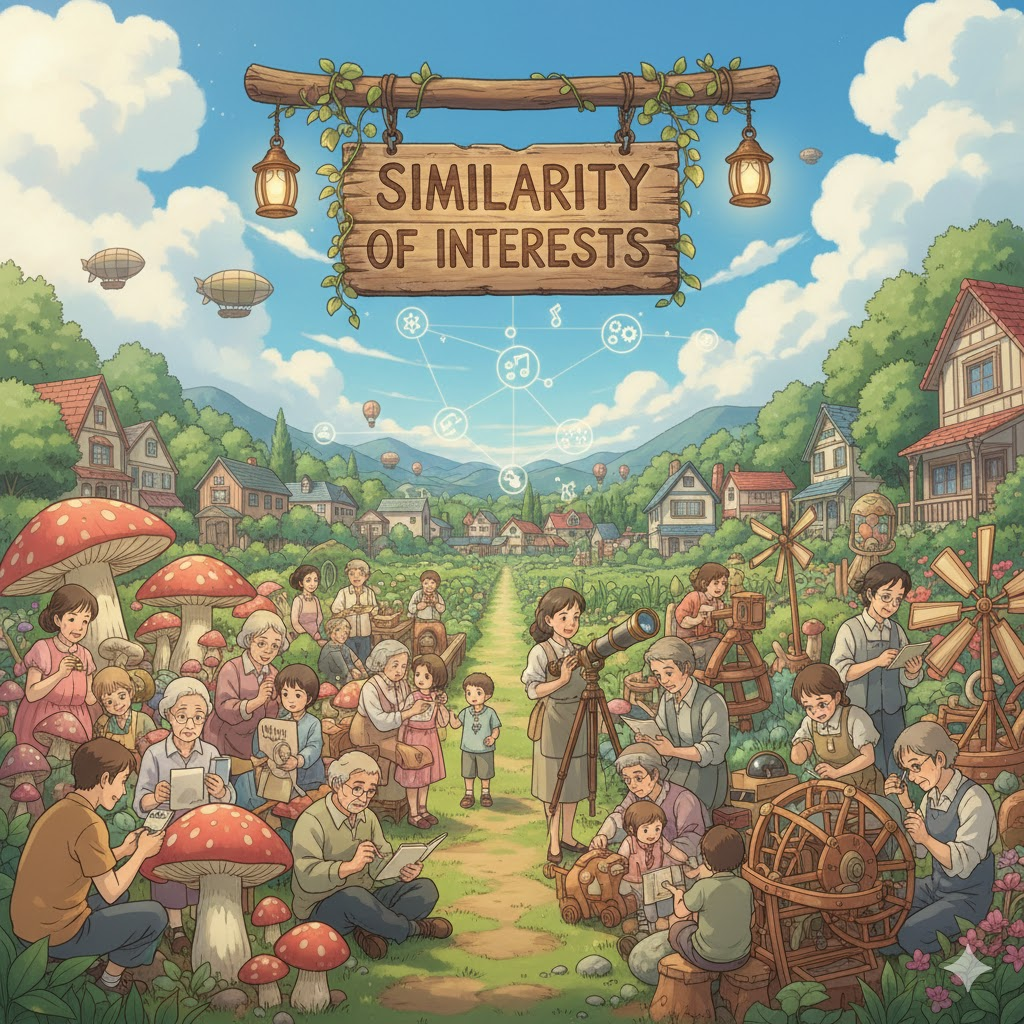
similarity of interests [ˌsɪməˈlærəti əv ˈɪntrəsts]
(숙어) 관심사의 유사성, 이해관계의 일치
사람들 사이에 취미(hobbies), 목표(goals), 또는 이익(benefits)을 공유하고 있는 상태를 의미합니다. 우정(friendship)이나 사업적 파트너십(partnership)을 형성하는 중요한 기반이 됩니다.
- Their friendship began due to a strong similarity of interests. (그들의 우정은 강한 관심사의 유사성 때문에 시작되었다.)
- The manager said a similarity of interests is vital for a successful partnership. (관리자는 관심사의 유사성이 성공적인 파트너십에 필수적이라고 말했다.)
- We joined the club because of our similarity of interests in outdoor activities. (우리는 야외 활동에 대한 관심사의 유사성 때문에 클럽에 가입했다.)
- The negotiation was successful because of the similarity of interests between the two companies. (협상은 두 회사 사이의 이해관계의 일치 때문에 성공적이었다.)
genetic similarity, cosine similarity, similarity index, fundamental similarity, similarity in nature, similarity of interests
(숙어) 유전적 유사성, 코사인 유사도, 유사성 지수, 근본적 유사성, 본질적 유사성, 관심사의 유사성
이 표현들은 유사성의 '과학적', '수학적', '본질적', '사회적' 측면을 나타냅니다. 'genetic similarity'는 '유전자 구성의' '비슷한 정도'를 의미하는 생물학 용어입니다. 'cosine similarity'는 '두 벡터 간의 각도를 이용하여' '유사도를 측정하는' 수학/컴퓨터 과학 용어입니다. 'similarity index'는 '표절 검사 등에서' '일치하는 정도를 수치로 나타낸 지수'입니다. 'fundamental/in nature'는 '겉모습이 아닌' '근본적인 성질이나 본질의 유사성'을, 'similarity of interests'는 '취미나 관심사가' '비슷함'을 의미합니다.
- Chimpanzees share a high genetic similarity with humans. (침팬지는 인간과 높은 유전적 유사성을 공유한다.)
- The algorithm uses cosine similarity to find related documents. (그 알고리즘은 관련 문서를 찾기 위해 코사인 유사도를 사용한다.)
- The report had a high similarity index, indicating possible plagiarism. (그 보고서는 높은 유사성 지수를 보여, 표절 가능성을 나타냈다.)
- Despite their differences, there is a fundamental similarity between the two theories. (차이점에도 불구하고, 두 이론 사이에는 근본적인 유사성이 있다.)
- Their friendship grew due to a similarity of interests. (그들의 우정은 관심사의 유사성 때문에 자라났다.)
- The two chemicals show a similarity in nature. (그 두 화학 물질은 본질적인 유사성을 보인다.)
- We calculated the cosine similarity between the two user profiles. (우리는 두 사용자 프로필 간의 코사인 유사도를 계산했다.)
- The study explores the genetic similarity among different populations. (그 연구는 다른 인구 집단 간의 유전적 유사성을 탐구한다.)
핵심 뜻
전문적/본질적 유사성. 유전학, 수학, 데이터 분석, 그리고 성격이나 관심사의 일치.
| genetic | 유전적인 | 형용사로, '생물학'. | 'DNA' '나' '유전자' '수준' '에서' '얼마나' '비슷한지' '를' '나타냄'. |
| cosine | 코사인 | 명사로, '수학' '적' '측정'. | '벡터' '공간' '에서' '방향' '의' '유사성' '을' '코사인' '값' '으로' '계산' '하는' '방식' '임을' '나타냄'. |
| index | 지수 | 명사로, '수치'. | '유사' '한' '정도' '를' '백분율' '이나' '숫자' '로' '표시' '한' '지표' '임을' '나타냄'. |
| fundamental/in nature | 근본적인/본질적인 | 형용사/숙어구로, '본질'. | '표면적' '인' '것이' '아닌' '속성' '이나' '성질' '의' '깊은' '유사성' '을' '강조함'. |
| of interests | 관심사의 | 숙어구로, '사회적' '공유'. | '사람' '간' '에' '좋아하는' '것이나' '취미' '가' '같음' '을' '나타냄'. |
비슷한 어휘 깔끔하게 표로 정리하고 밑에 예문,해석 하나씩 나열하기
| affinity | 친밀감, 유사성 |
| congruence | 일치, 조화 (수학/논리) |
| parallel | 유사점, 평행 |
affinity
예문: He felt a strong affinity with nature.
해석: 그는 자연과 강한 **친밀감(유사성)**을 느꼈다.
congruence
예문: There is a lack of congruence between your words and actions.
해석: 당신의 말과 행동 사이에는 일치가 부족하다.
parallel
예문: You can draw a parallel between the two historical events.
해석: 두 역사적 사건 사이에 유사점을 찾을 수 있다.
결론 정리
이 표현들은 유사성의 '생물학적 근거', '수학적 측정', '본질적 성격', '사회적 공유'라는 다양한 전문적이고 추상적인 측면을 나타냅니다.